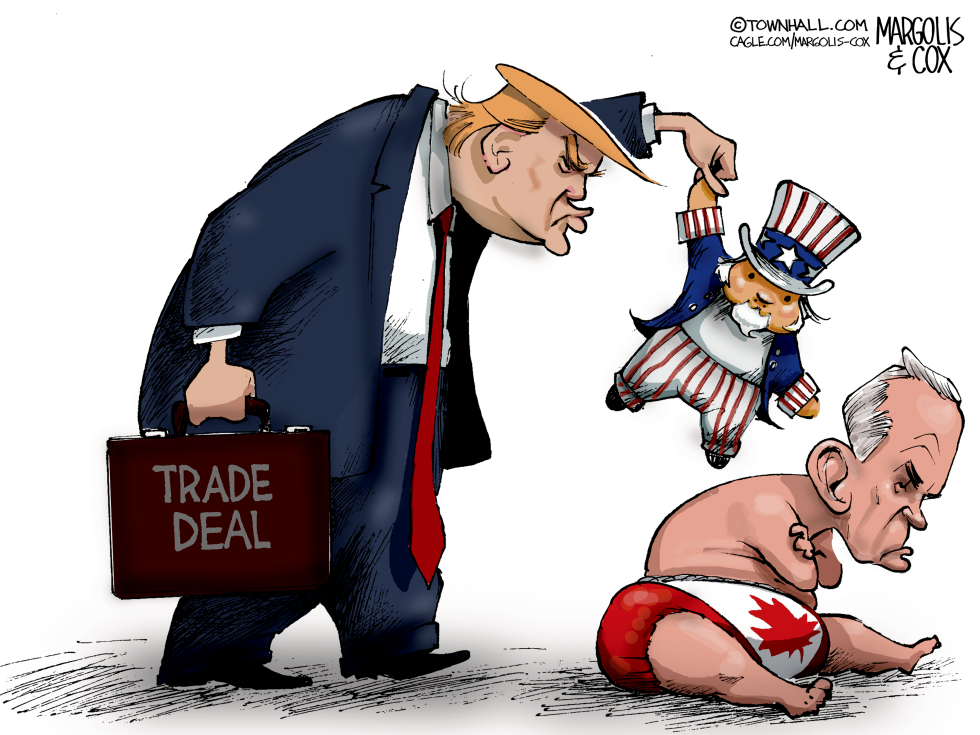
Donald Trump holds a briefcase labeled trade deal while dangling an Uncle Sam puppet above a baby figure wearing a Canadian flag diaper, identified as Mark Carney. The September 2026 cartoon responds to ongoing US-Canada trade tensions under the Trump administration. Carney, a prominent Canadian figure eyed for leadership, faces portrayal as vulnerable in negotiations. The piece argues that Trump exerts direct control over Canadian interests through economic leverage rather than equal partnership.
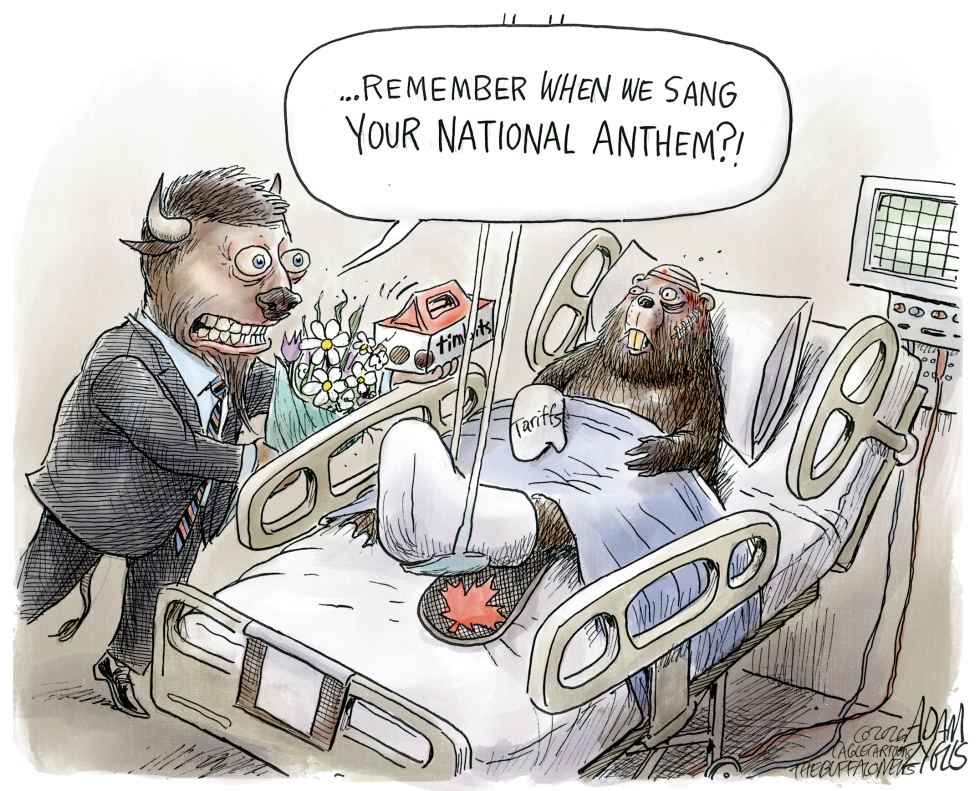
The cartoon depicts a suited bull figure at the bedside of an injured beaver wearing a hospital gown labeled Tariffs. The beaver lies in a hospital bed with a maple leaf emblem visible. A speech bubble from the bull references singing the national anthem. Medical equipment and a Tim Hortons box appear in the room. The image addresses ongoing tariff policies affecting US Canada trade relations as of the September 2026 publication date. The visual metaphor highlights economic harm to the Canadian side of the partnership while recalling past cooperative gestures between the two nations.
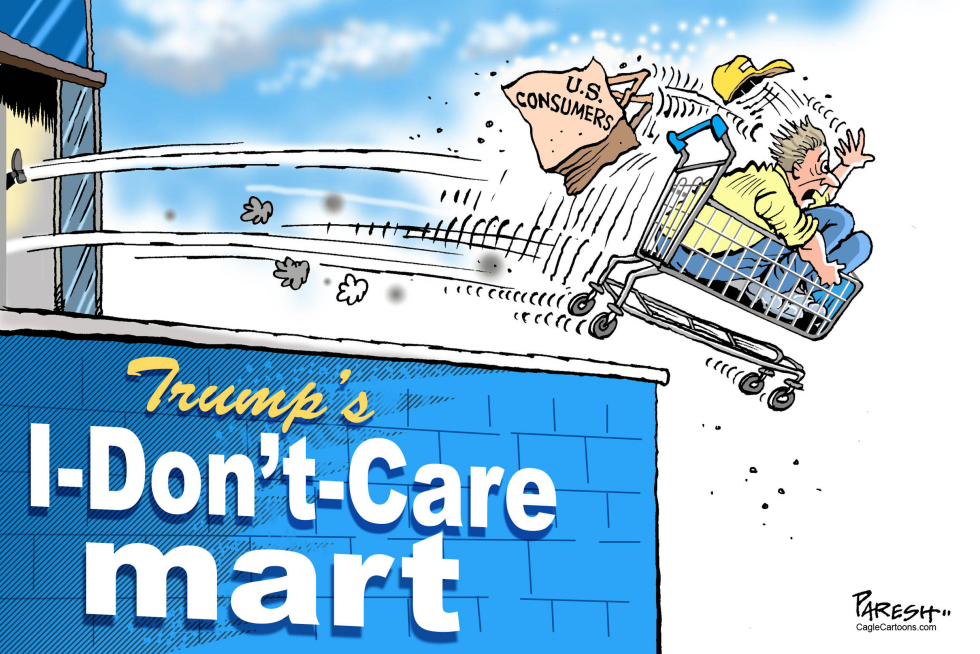
Trump administration policies on trade and spending have contributed to higher prices for everyday goods. American households face increased costs at stores as tariffs and other measures take effect. The cartoon argues these policies prioritize other goals over consumer welfare and leave families paying more.
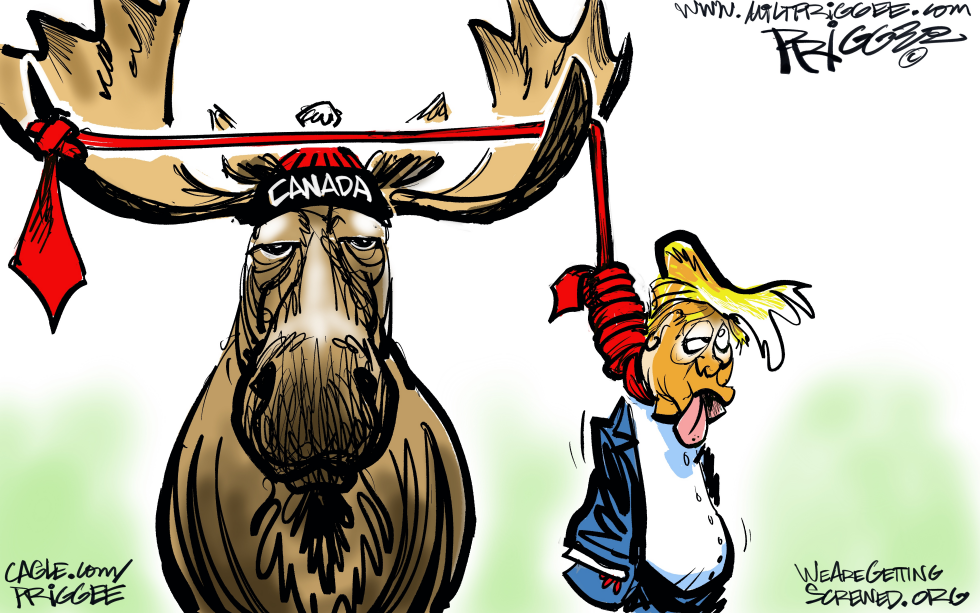
The cartoon shows a large moose labeled Canada with a weary expression as a caricature of Donald Trump yanks on its antler using a red strap. The moose wears a black cap with Canada written on it and has a red bar across its antlers. Trump appears disheveled with tongue out and sweat drops. Text at the bottom reads WEAREGETTINGS CREWED.ORG suggesting Canada feels exploited. Published on September 3 2026 the piece addresses US Canada relations under renewed Trump influence on trade and diplomacy.
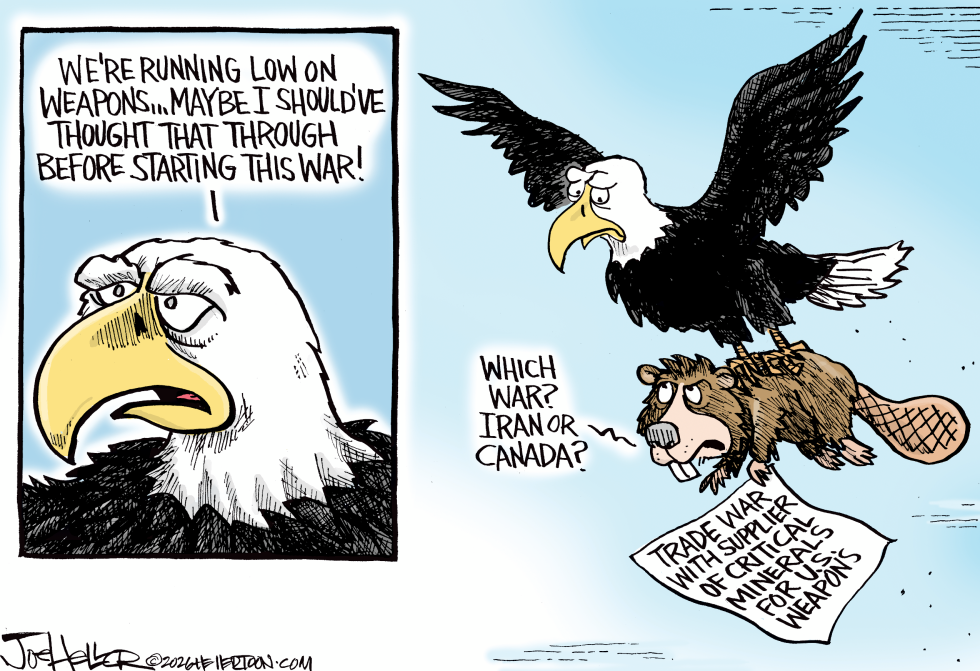
The United States faces potential weapons shortages linked to trade tensions with Canada, a key supplier of critical minerals, while also managing conflicts involving Iran. The situation highlights risks to military readiness from disrupted supply chains. The piece argues that initiating trade disputes with essential partners undermines defense capabilities at a critical time.
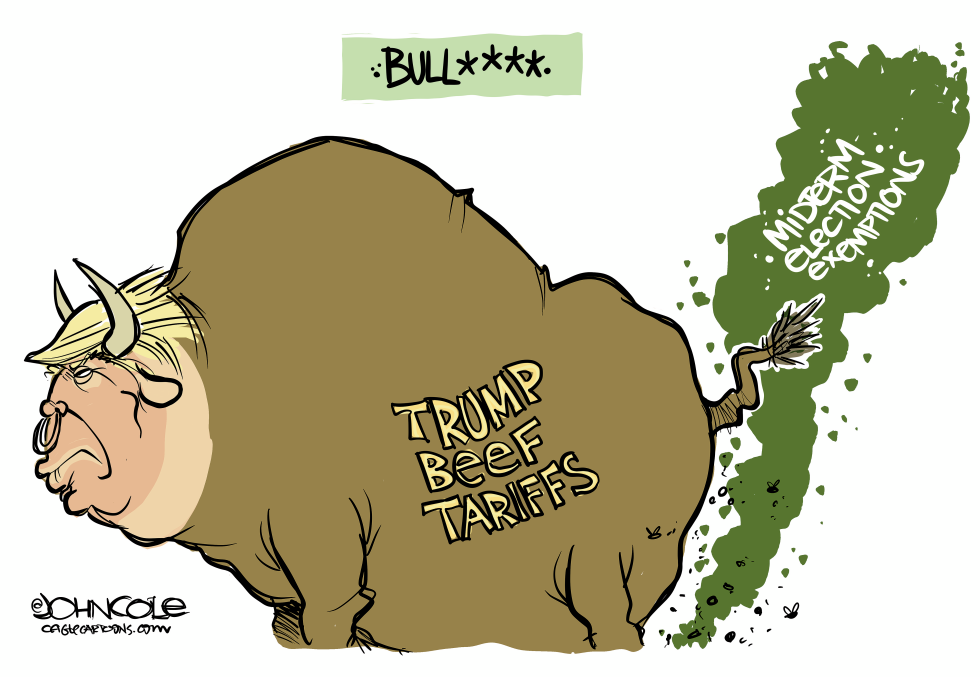
Tariff policy under the Trump administration faces scrutiny as midterm elections near. Exemptions tied to political timing draw criticism for undermining consistent trade enforcement. The piece portrays the approach as inconsistent and driven by electoral concerns rather than economic principle.
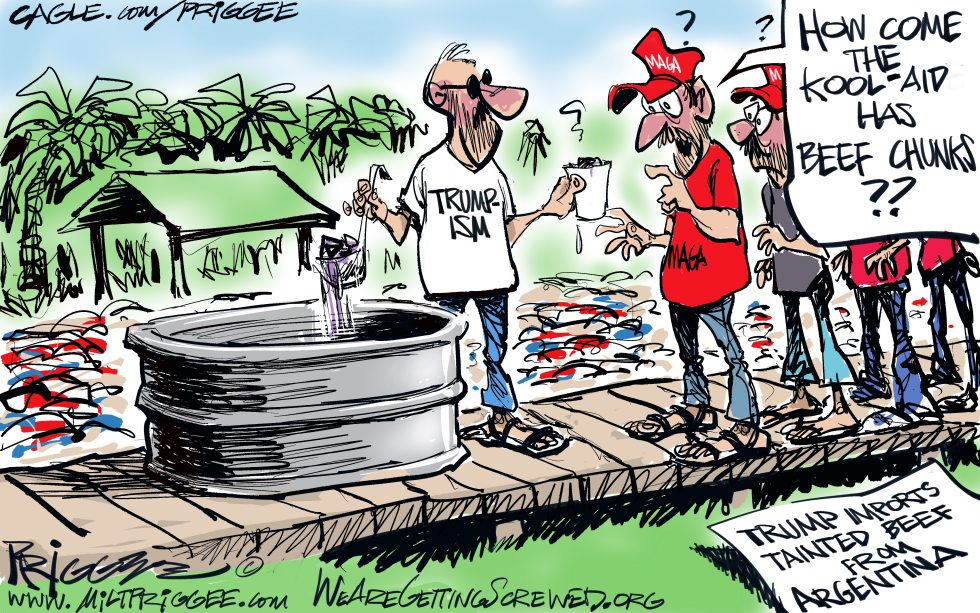
The cartoon depicts a figure labeled Trumpism pouring liquid into a well while two men in MAGA hats question why the Kool-Aid contains beef chunks. A sign at the bottom states Trump imports tainted beef from Argentina. The scene references recent policy allowing beef imports from Argentina amid concerns over quality. Supporters appear puzzled by the outcome of the trade decision. The image uses the classic Kool-Aid metaphor to illustrate how backers process the news of the imports.
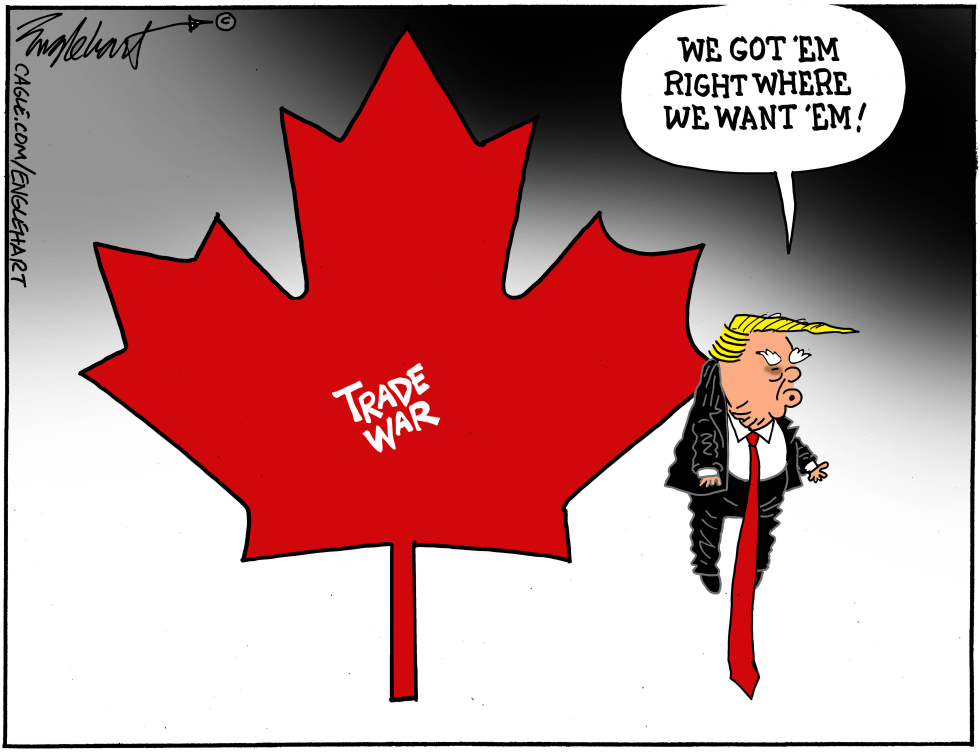
President Donald Trump has escalated tariffs on Canadian goods in a widening trade dispute. Ottawa responded with targeted countermeasures that hit key US exports. The standoff raises costs for American consumers and businesses while straining long-standing alliance ties. The cartoon portrays Trump as overconfident in a confrontation where Canada holds leverage.
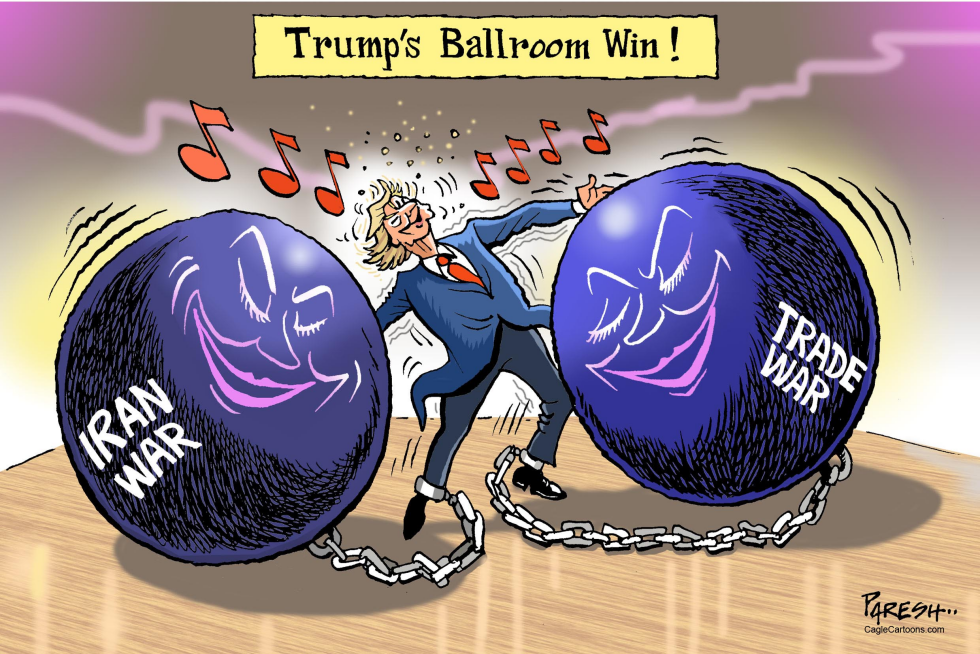
A political cartoon published September 1, 2026, portrays Donald Trump dancing energetically in a ballroom while his ankles are chained to two large balls labeled Iran War and Trade War. The image suggests the president is weighed down by simultaneous foreign policy and economic conflicts. Music notes and a banner reading Trump's Ballroom Win add ironic flair to the scene. The cartoon responds to ongoing tensions involving U.S. relations with Iran and persistent trade disputes. It visually argues that these issues continue to constrain administration actions despite any claimed victories.
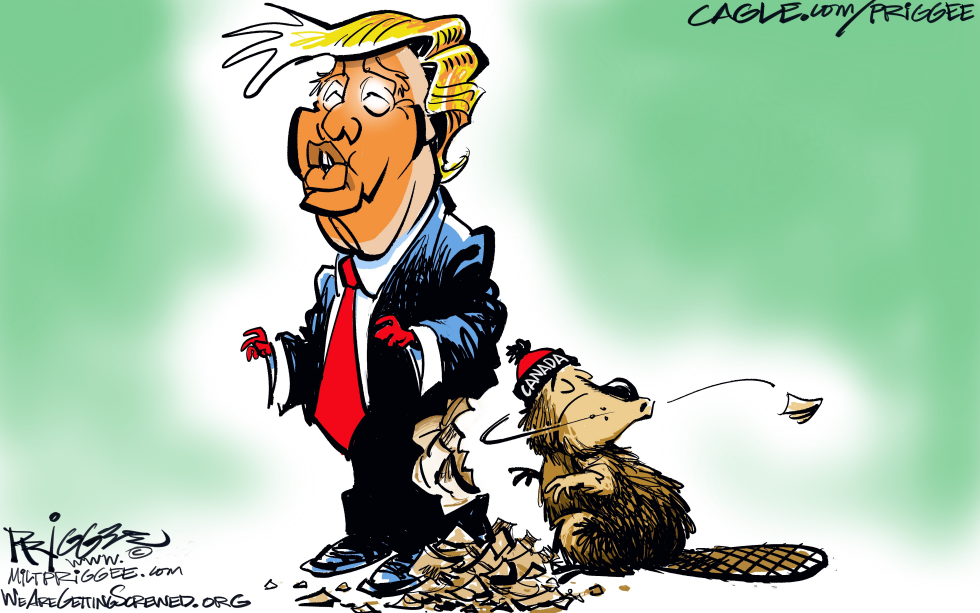
A political cartoon shows Donald Trump with his pants chewed by a beaver wearing a Canada hat. Wood chips litter the ground around his feet. The image captures friction in U.S.-Canada relations as of September 2026. The beaver represents Canada responding to policies from the Trump administration. Trade and diplomatic issues form the backdrop for the visual metaphor.
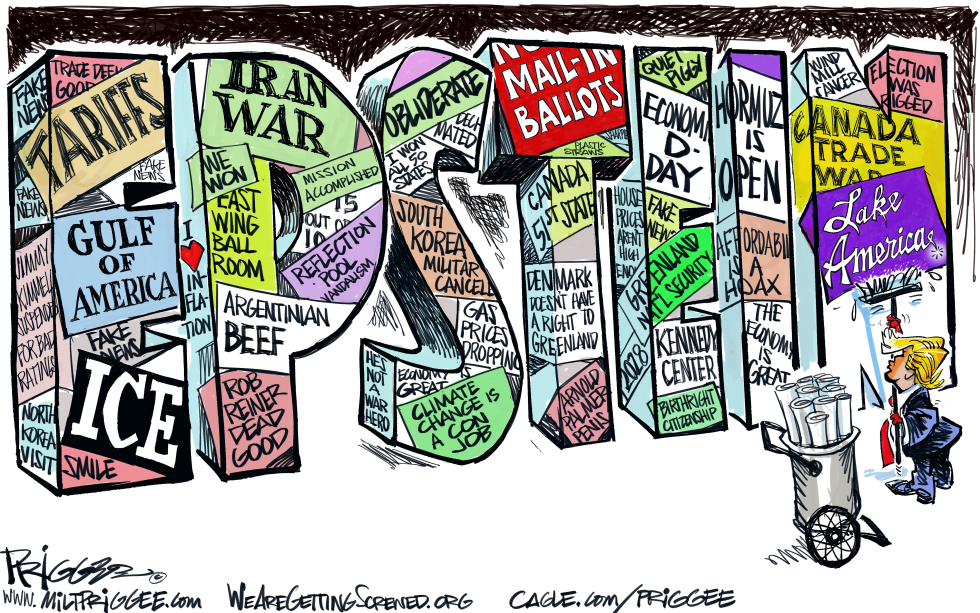
Donald Trump appears in a September 2026 cartoon pushing a cart stacked with signs promoting tariffs, questioning mail-in ballots, and asserting claims about Iran, Canada trade, and domestic issues. The image captures a pattern of public messaging that blends economic nationalism with repeated challenges to established processes. The editorial position frames these statements as a deliberate strategy to keep multiple controversies in motion at once.
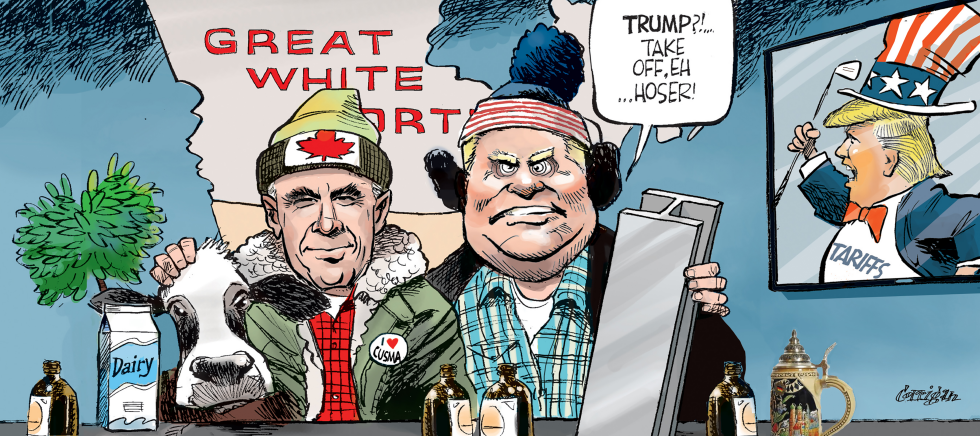
President Trump renewed tariff threats against Canada focused on dairy imports in late August 2026. Canadian leaders responded by highlighting domestic protections and cultural stakes. The move risks straining long-standing trade ties under existing agreements. The cartoon frames the confrontation as a direct challenge to Canadian sovereignty in agriculture. It portrays US policy as aggressive posturing that ignores mutual economic interests.
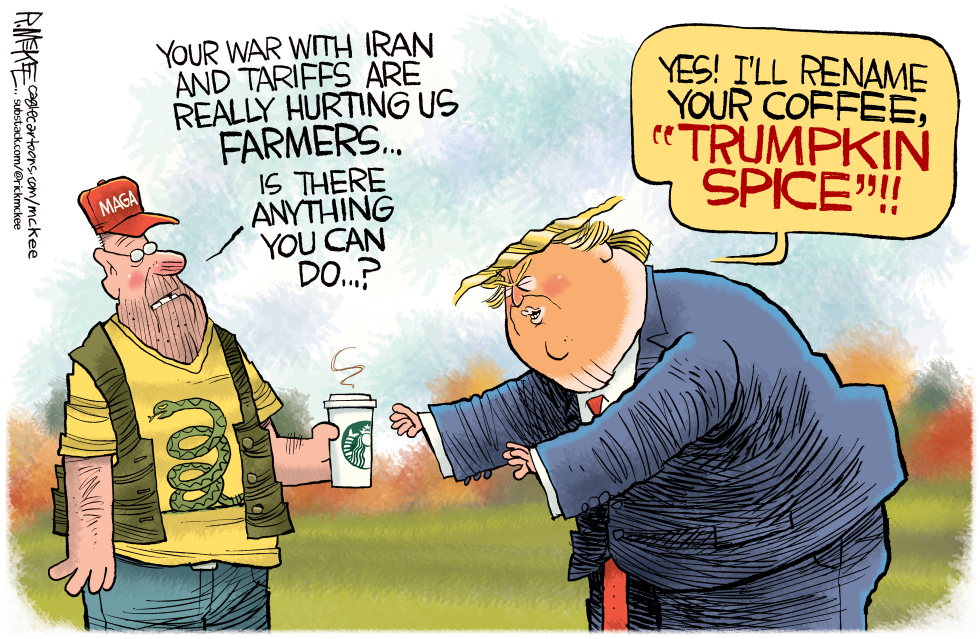
Farmers have raised concerns over the effects of tariffs and tensions with Iran on their livelihoods. President Trump responded by proposing to rename their coffee Trumpkin Spice rather than adjusting policy. The exchange underscores the administration's approach to addressing rural economic complaints through branding gestures instead of substantive relief measures. Critics argue this misses the core issues facing agricultural communities. The cartoon presents the interaction as emblematic of misplaced priorities in handling trade disputes and international relations.
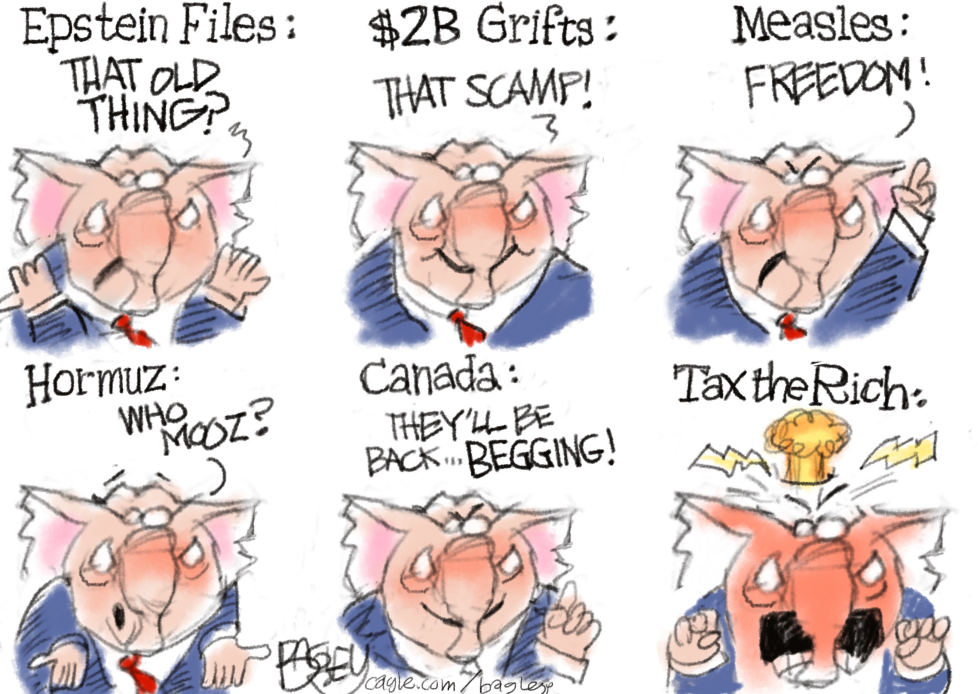
A political figure downplays the Epstein files, billion-dollar grifts, measles outbreaks, Hormuz tensions, Canada relations and wealth taxes. The piece critiques selective indifference to ongoing controversies and policy flashpoints.
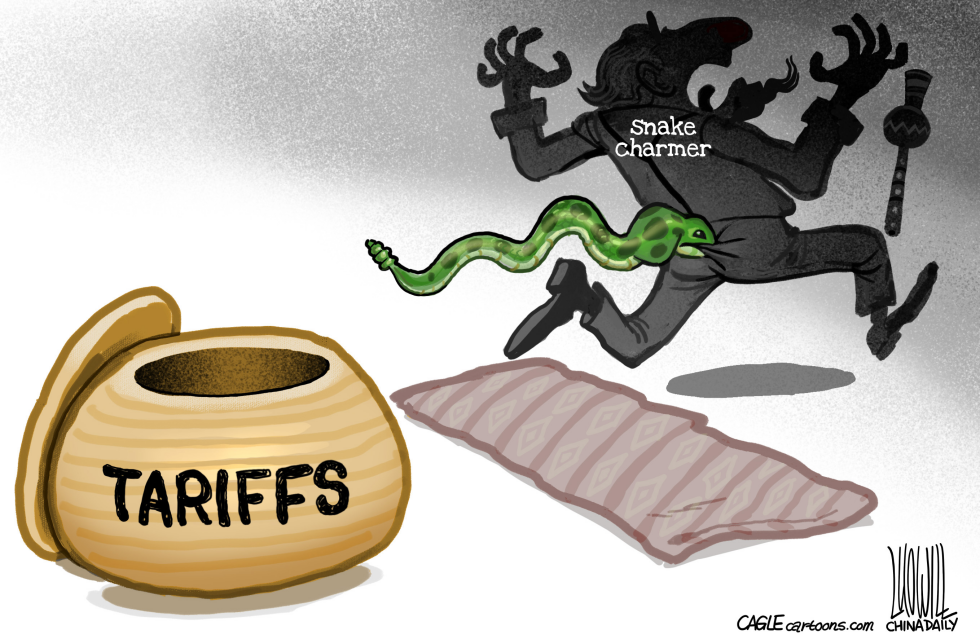
A political cartoon published August 28, 2026, shows a snake charmer fleeing as a green snake emerges from a pot labeled tariffs. The image uses the snake charmer metaphor to comment on tariff policies. The cartoon appeared in China Daily and was distributed via Cagle Cartoons. It responds to ongoing trade tensions involving tariffs. The visual suggests tariffs carry uncontrolled risks similar to an escaped snake.