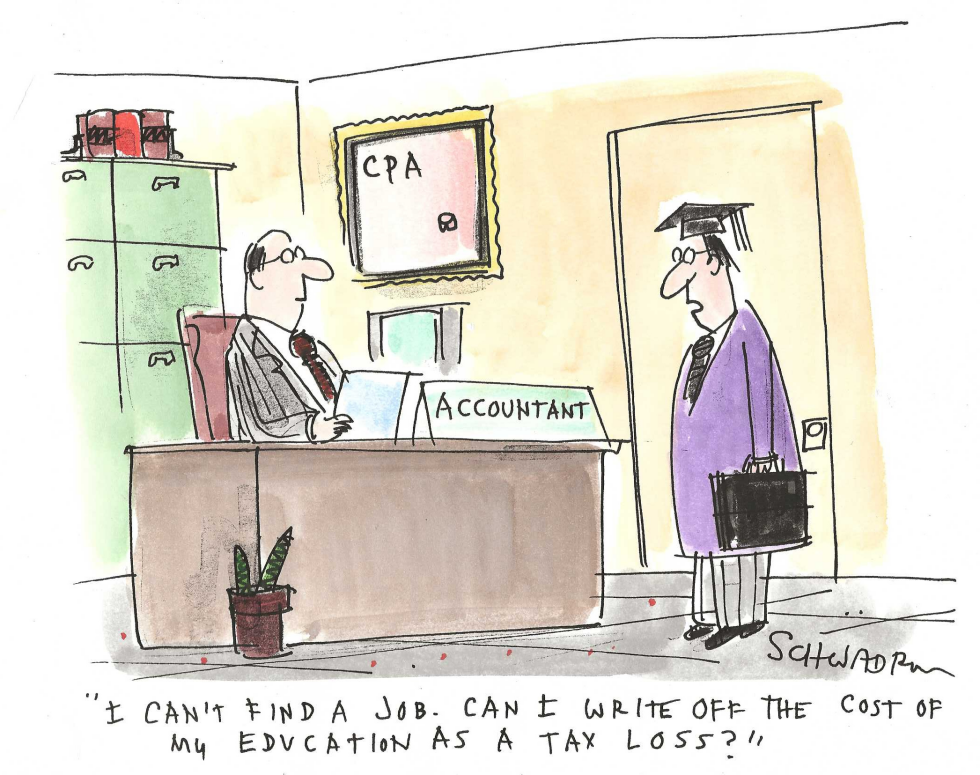
Recent college graduates facing extended unemployment have begun inquiring whether the cost of their degrees can be treated as a tax-deductible loss. Accountants report fielding more such questions as hiring in some sectors remains slow. The inquiry reflects broader frustration with the return on investment for higher education when entry-level positions are scarce. The cartoon captures this practical, if unconventional, approach to offsetting student debt through the tax code. It underscores ongoing debates about the value of degrees and the limits of existing tax relief for education expenses.
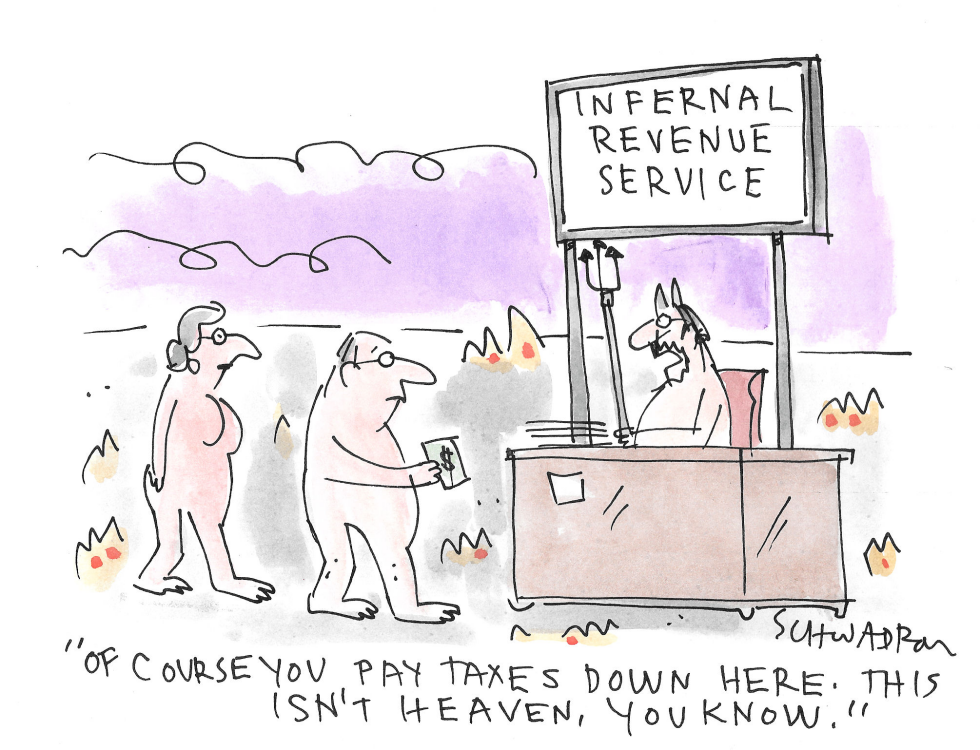
The long-standing adage that only death and taxes are certain receives fresh treatment in a cartoon depicting an IRS outpost operating in hell. No specific policy change or ruling prompted the piece, which instead plays on the enduring public frustration with tax collection as an inescapable force. The editorial stance pokes at bureaucratic persistence, suggesting the tax man follows citizens beyond the grave with the same relentless efficiency seen in life.
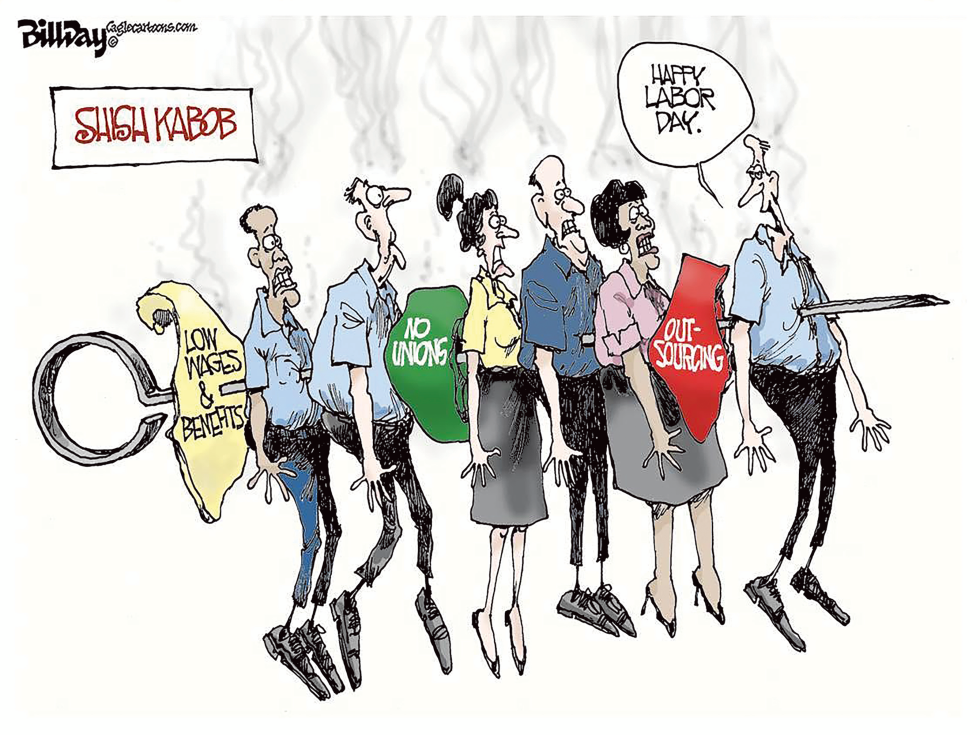
On Labor Day 2026, American workers continue to confront stagnant wages, union suppression, and widespread outsourcing that erode job security and benefits. These pressures persist amid corporate strategies that prioritize cost-cutting over employee welfare. The cartoon argues that such practices turn the holiday into a grim reminder of labor's weakened position rather than a celebration of worker gains.
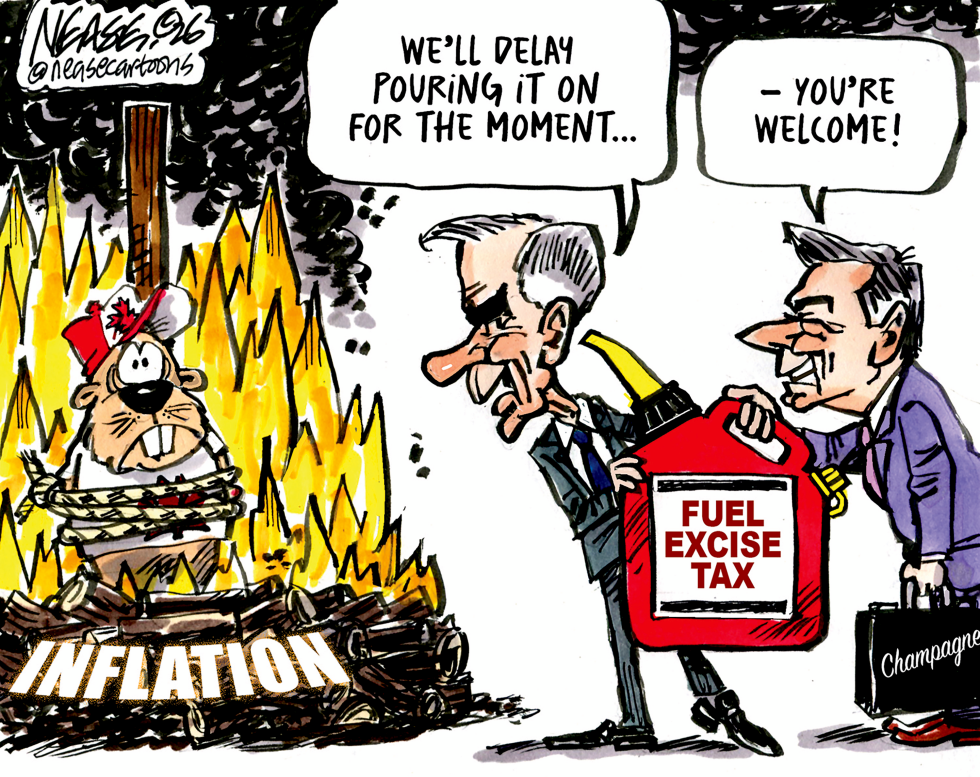
President Biden announced a delay in implementing a fuel excise tax increase amid ongoing inflation pressures. The move aims to ease costs at the pump for consumers. Critics argue the delay offers only temporary relief without addressing root causes. Supporters see it as a pragmatic step to stabilize prices. The editorial takes the position that such delays highlight inconsistent economic leadership.
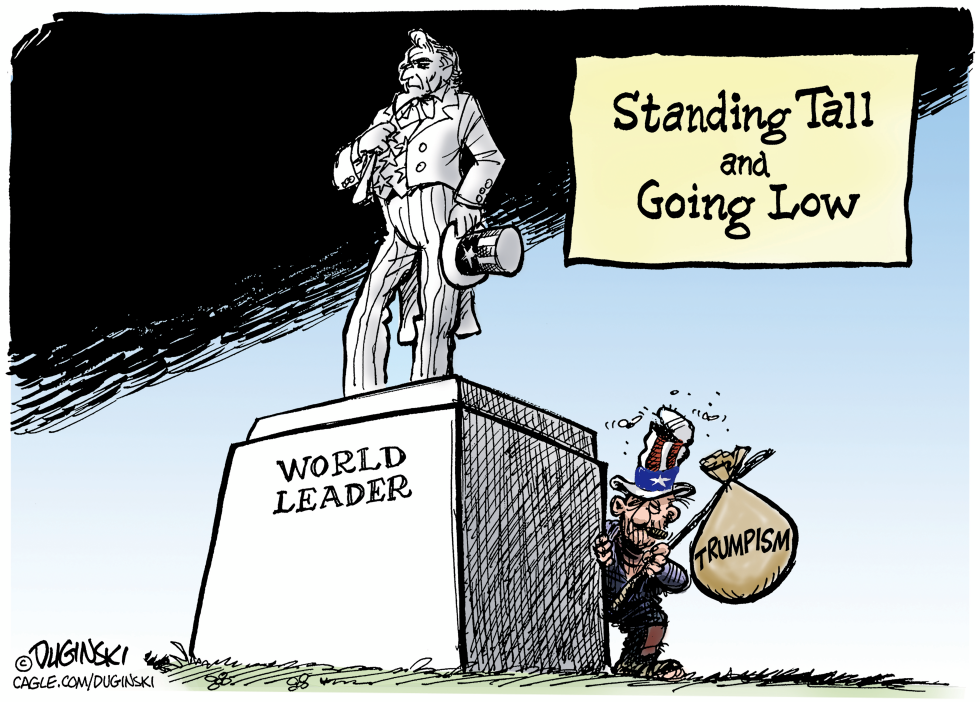
Donald J. Trump’s ideological legacy continues to shape Republican politics and foreign policy debates into 2026. Critics argue that Trumpism’s emphasis on transactional deals and nationalist rhetoric has eroded traditional US alliances and moral authority on the global stage. The cartoon presents this influence as a literal weight pulling the nation downward from its claimed leadership role, underscoring concerns that short-term domestic appeals come at the cost of long-term international credibility.
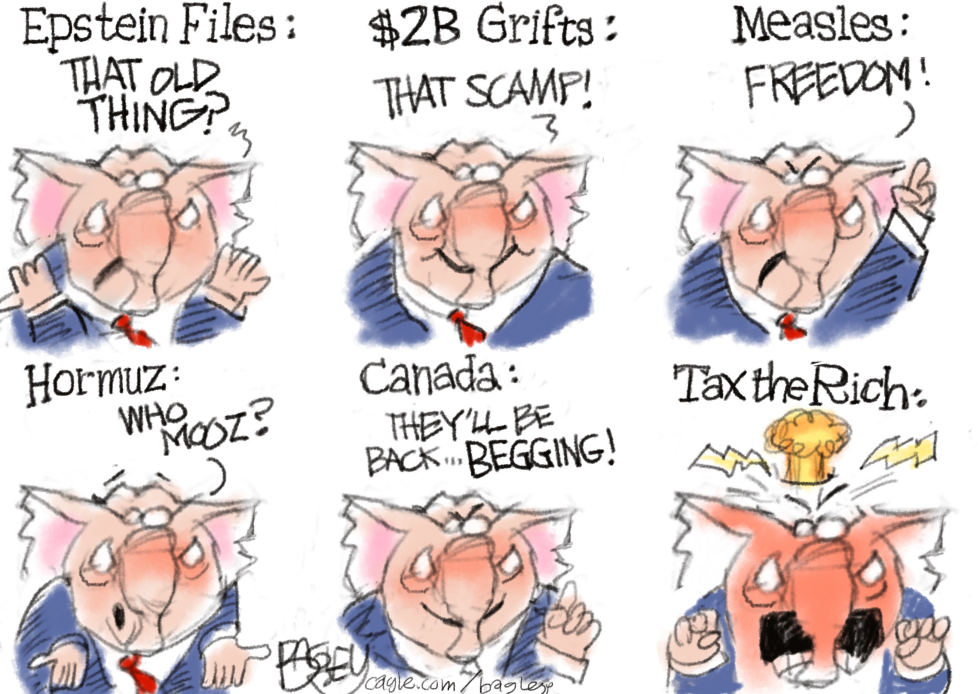
A political figure downplays the Epstein files, billion-dollar grifts, measles outbreaks, Hormuz tensions, Canada relations and wealth taxes. The piece critiques selective indifference to ongoing controversies and policy flashpoints.
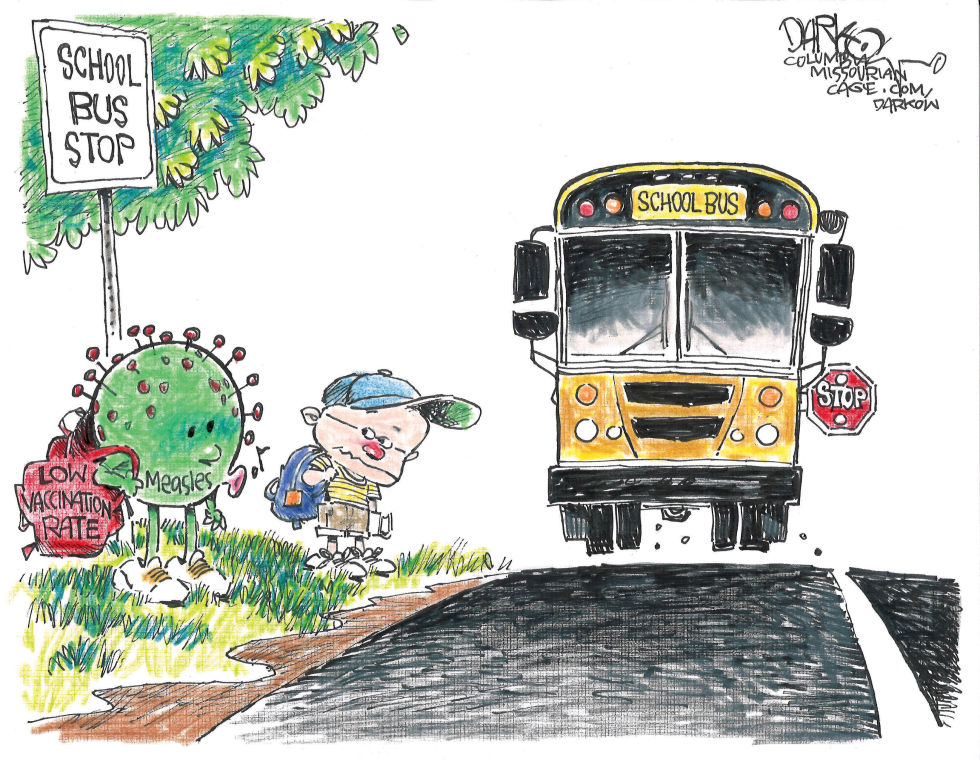
Declining childhood vaccination rates have allowed measles cases to rise in communities across the country. The highly contagious virus now poses direct risks to unvaccinated students waiting for school transportation. The editorial argues that parents who skip shots are endangering classmates who rely on herd immunity for protection.
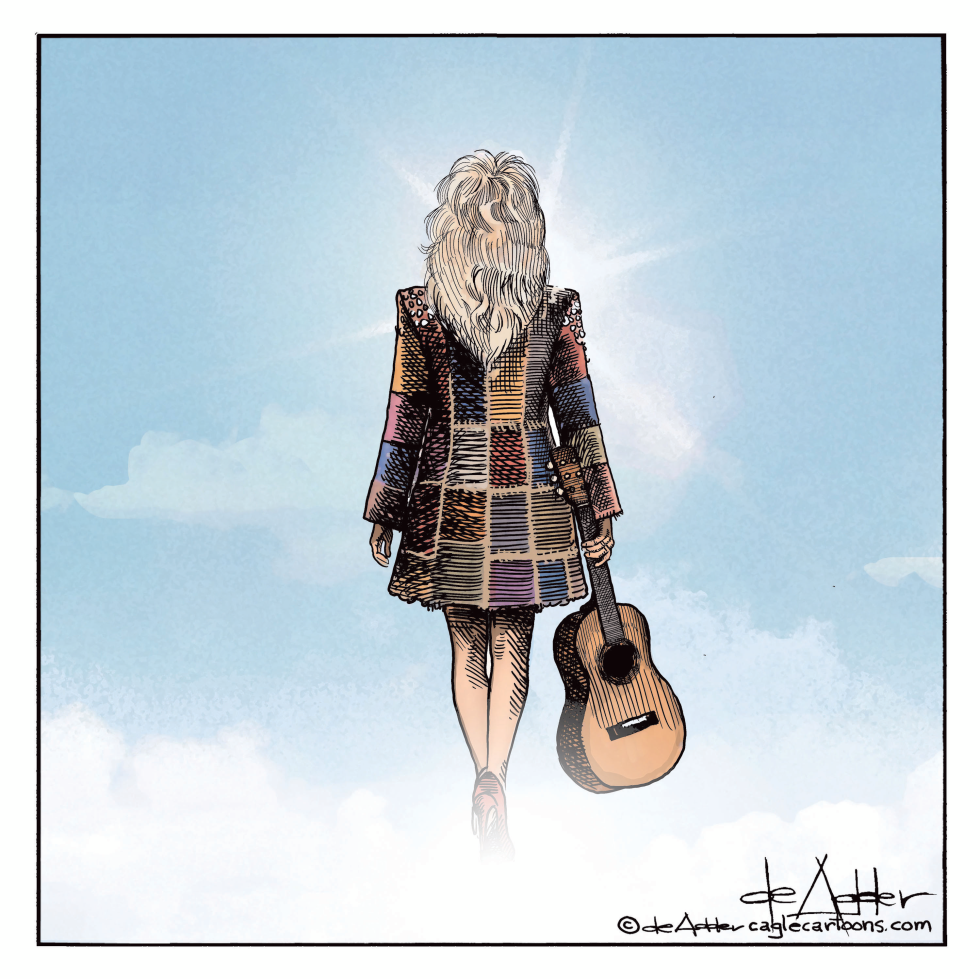
Dolly Parton remains a defining voice in American music with decades of hits and business success. Her public image continues to emphasize authenticity and generosity. The image captures her enduring presence without tying to any specific recent event.
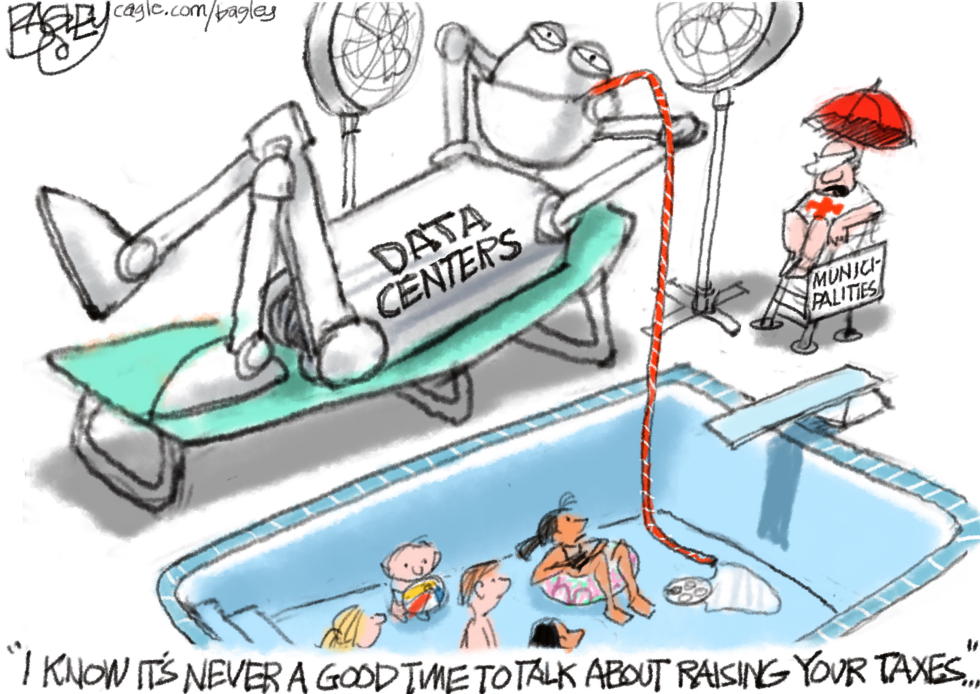
Data centers are expanding rapidly and placing heavy demands on local water and power supplies. Municipalities must decide whether to raise taxes to cover the costs. The piece argues that residents bear the burden while data centers consume resources without contributing enough back.
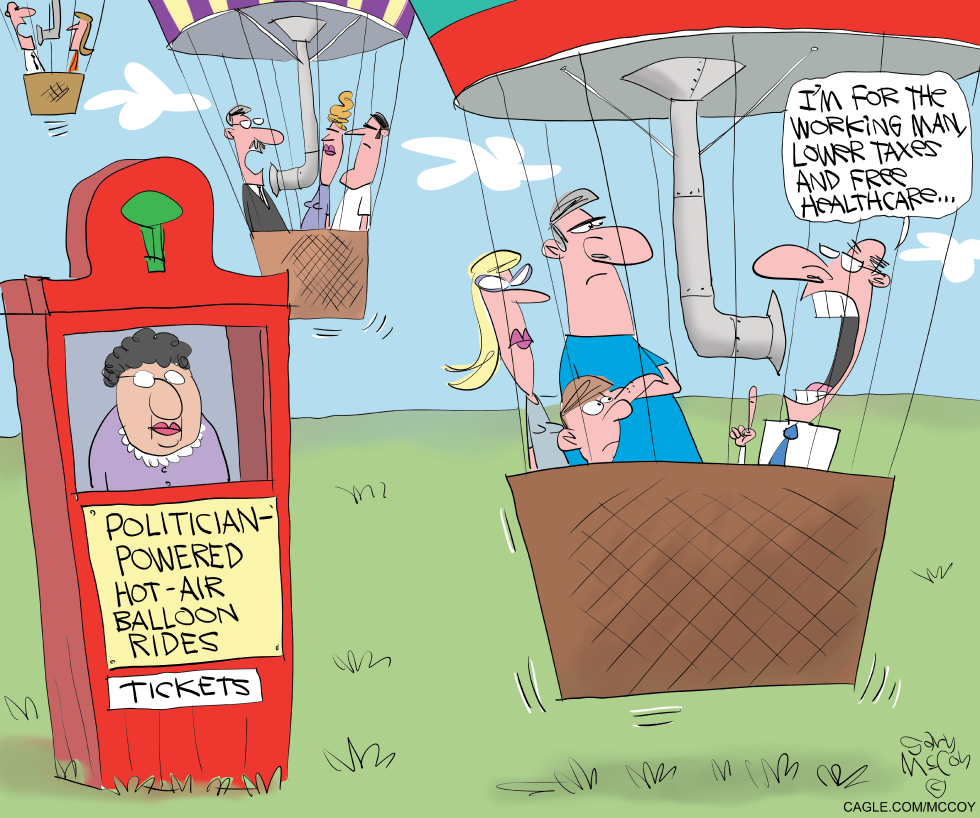
Politicians continue to campaign on lower taxes for workers and free healthcare access. These pledges remain central to attracting voter support ahead of elections. The piece portrays such promises as inflated rhetoric detached from delivery.
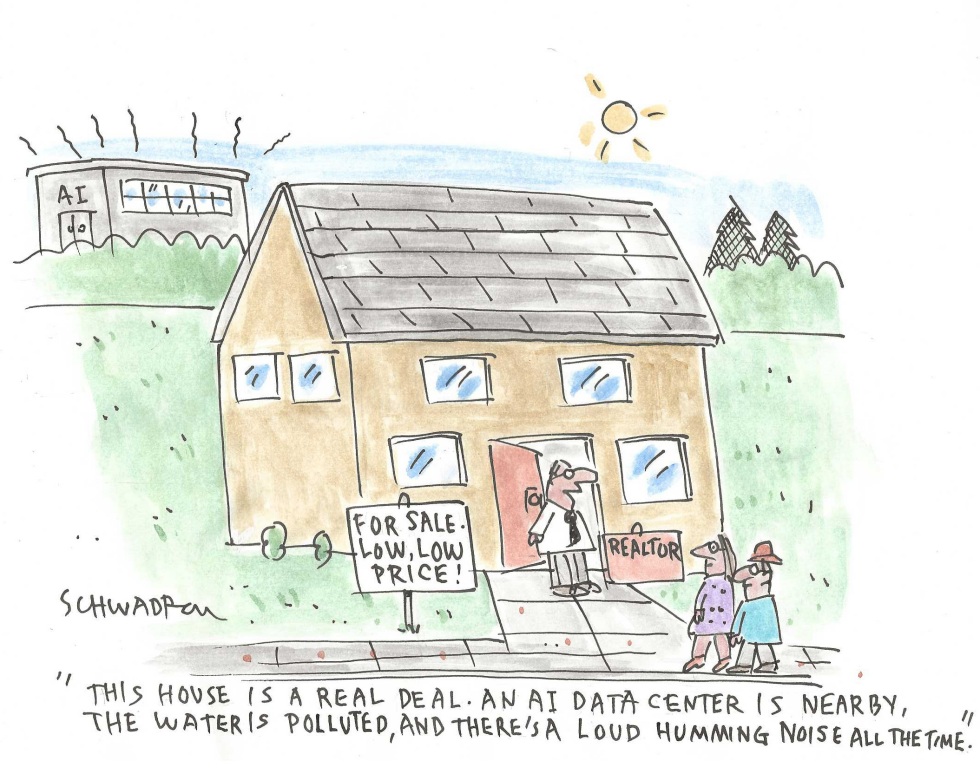
AI data centers are expanding rapidly across suburban areas, bringing jobs and infrastructure but also raising local concerns over noise, water use, and environmental effects. Home values near these facilities have begun to soften as buyers factor in constant humming and potential pollution. The cartoon highlights how real estate agents market such properties at steep discounts while openly disclosing the drawbacks to prospective buyers.
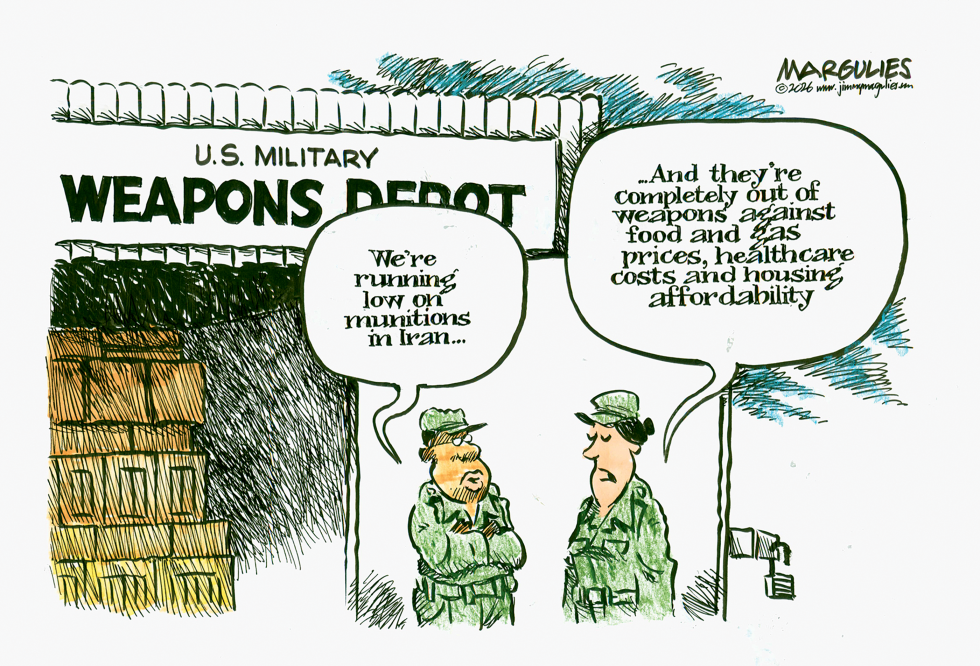
The cartoon depicts two U.S. soldiers outside a weapons depot labeled U.S. Military Weapons Depot. One soldier states the facility is running low on munitions in Iran. The second replies that domestic fronts are out of weapons against food and gas prices, healthcare costs and housing affordability. The image responds to ongoing debates over U.S. military aid commitments abroad and competing budget pressures at home as of the August 2026 publication date. It uses the depot setting and dialogue to contrast foreign military demands with economic challenges facing American households.
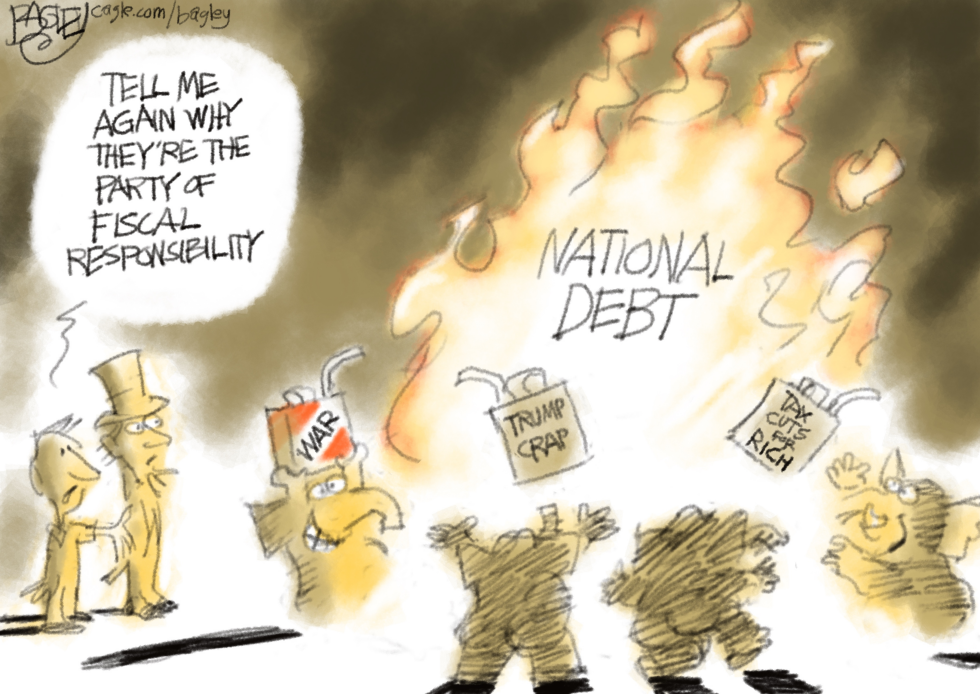
Republicans continue to promote themselves as the party of fiscal responsibility even as national debt rises sharply from sustained war spending and tax cuts favoring the wealthy. The editorial takes the position that these policies directly contradict the fiscal responsibility label.
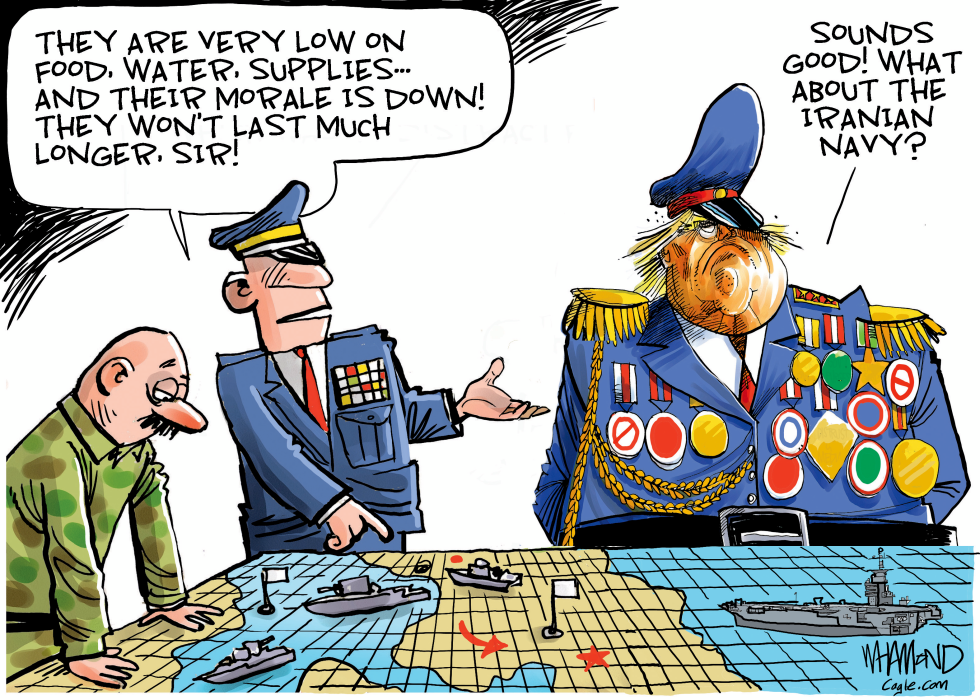
A U.S. Navy carrier faces reported shortages of food, water and supplies along with declining morale in mid-2026. Senior officers brief the president on the situation. The president responds by inquiring about the Iranian Navy instead. The piece portrays the administration as detached from operational readiness concerns in the region.
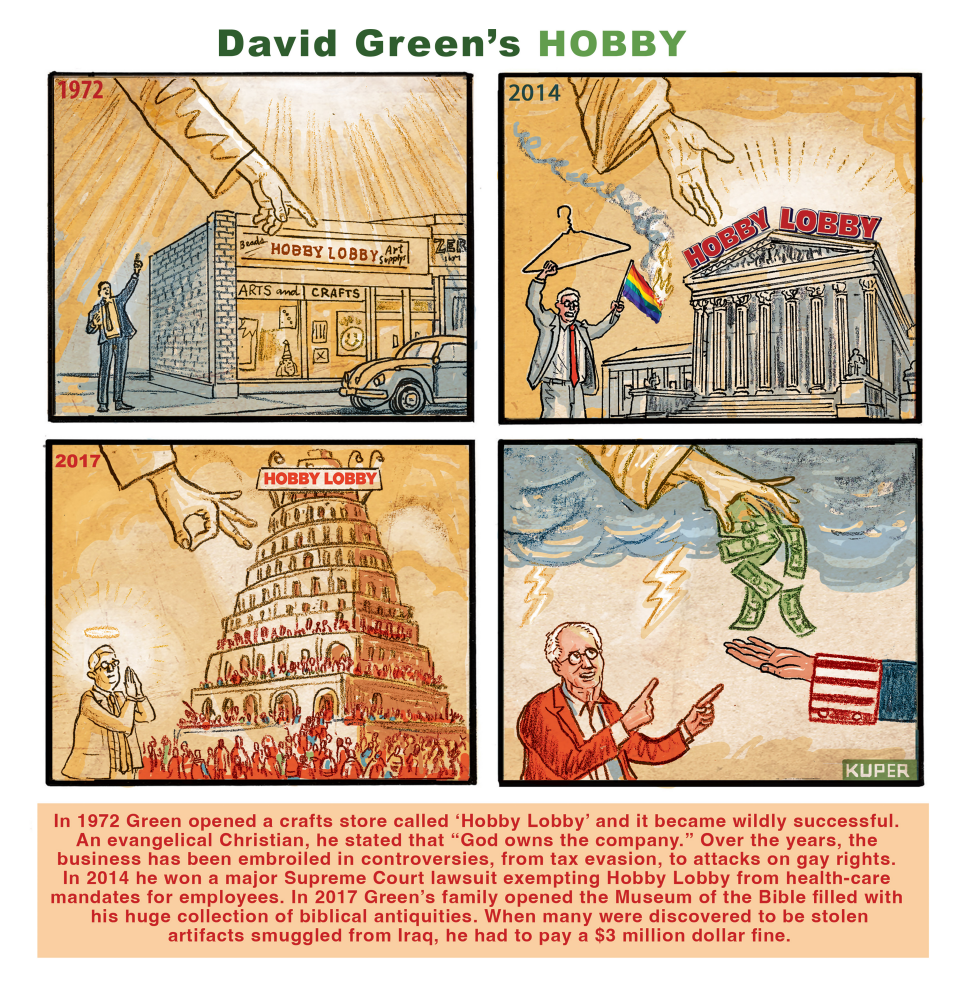
David Green opened Hobby Lobby in 1972 and built it into a major chain while declaring God owns the company. The business faced repeated controversies including a 2014 Supreme Court case on health care mandates and a 2017 Bible Museum scandal involving smuggled Iraqi artifacts that resulted in a $3 million fine. The piece presents these events as a pattern of legal and ethical issues tied to the company's evangelical leadership.