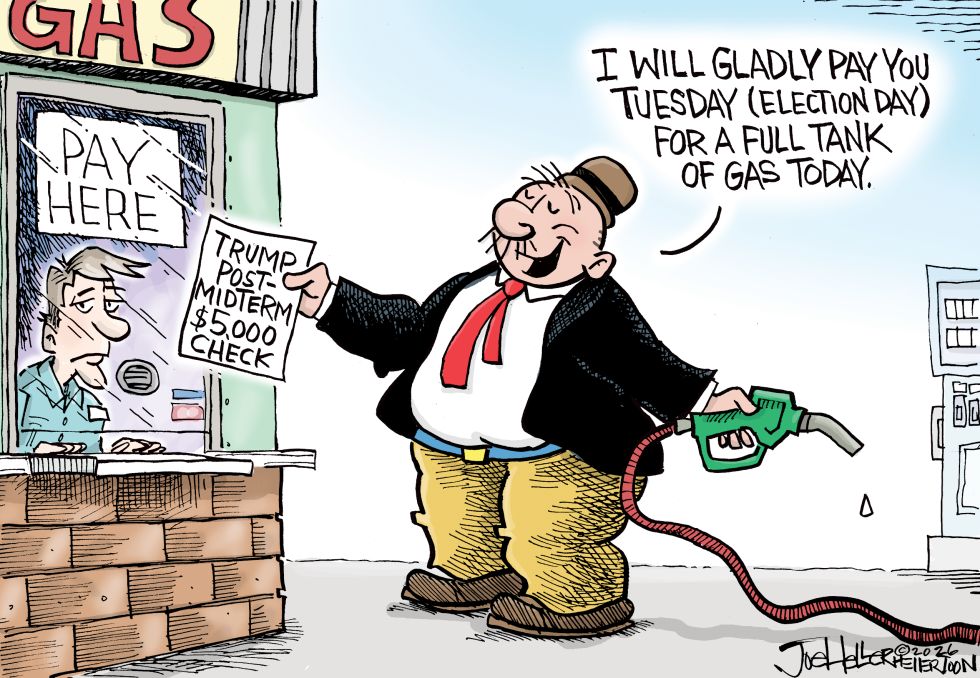
Donald Trump issued a post-midterm gas payment pledge tied to the 2026 election cycle. The promise revives a classic deferral line to link fuel costs with voting day. The cartoon argues the offer functions as an empty election tactic rather than a concrete policy step.
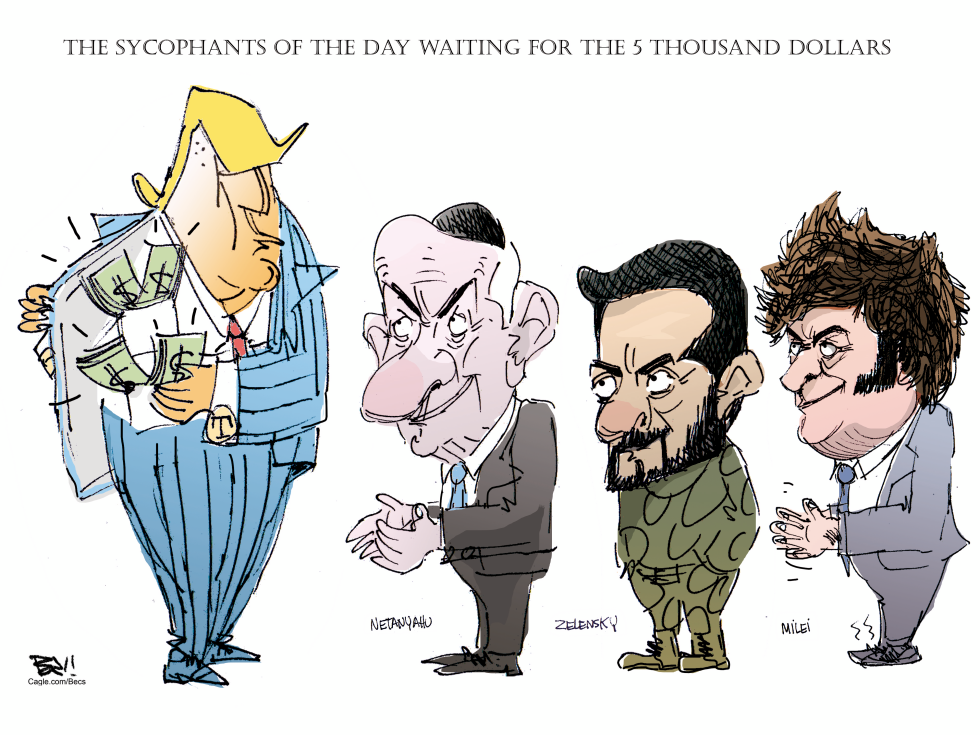
Donald Trump stands at the center of attention from Israeli Prime Minister Benjamin Netanyahu, Ukrainian President Volodymyr Zelensky and Argentine President Javier Milei. The scene reflects ongoing questions about how foreign leaders court favor with the U.S. president through displays of loyalty. The cartoon argues that these relationships reduce international diplomacy to transactional waiting for payoffs.
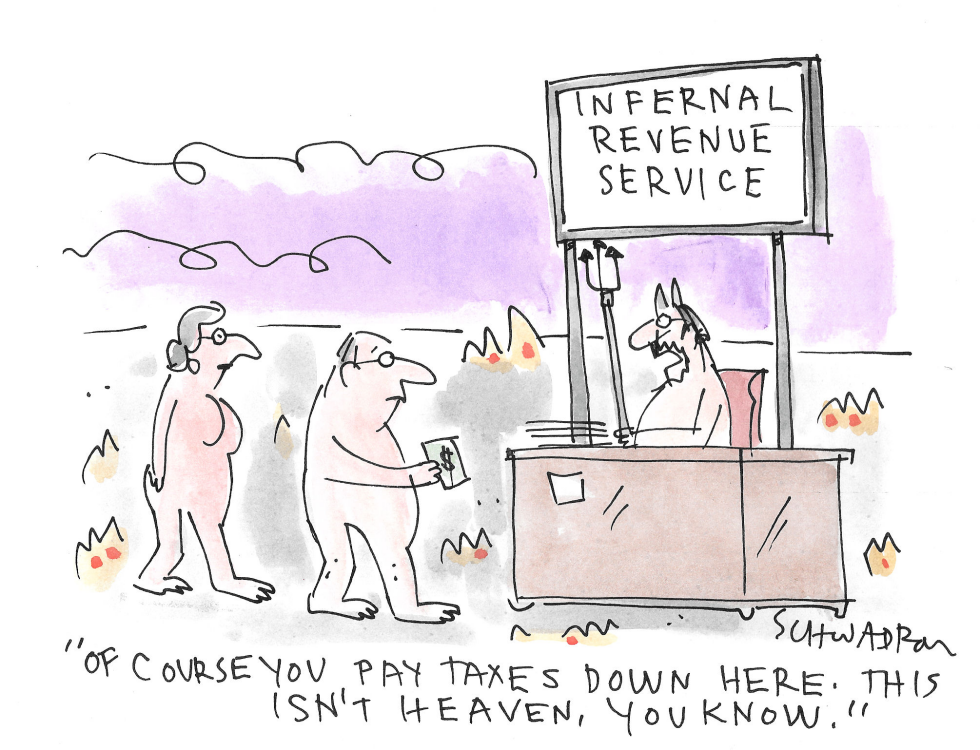
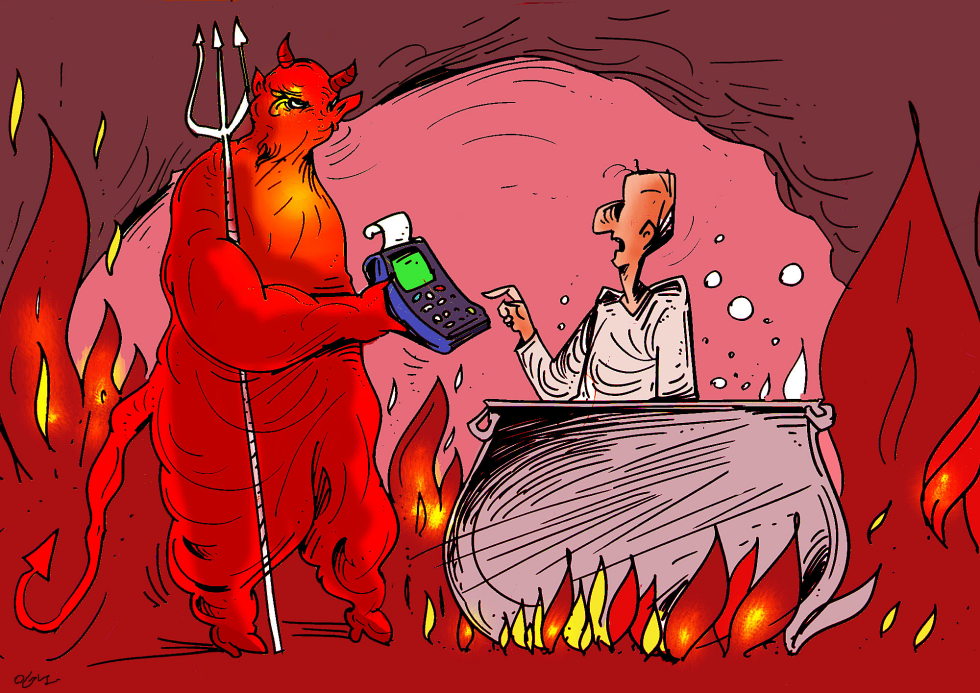
The long-standing adage that only death and taxes are certain receives fresh treatment in a cartoon depicting an IRS outpost operating in hell. No specific policy change or ruling prompted the piece, which instead plays on the enduring public frustration with tax collection as an inescapable force. The editorial stance pokes at bureaucratic persistence, suggesting the tax man follows citizens beyond the grave with the same relentless efficiency seen in life.
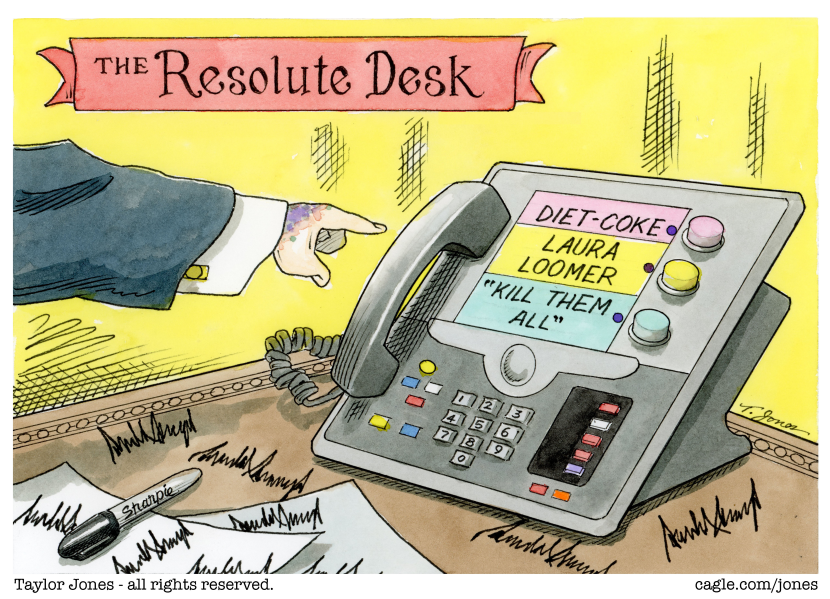
Donald Trump has publicly offered $5000 payments to Americans who follow his directives, framing the incentive as a direct reward for alignment. The pledge has drawn immediate questions from his own base about the status of related DOGE checks previously promised. The move underscores ongoing efforts to maintain supporter enthusiasm through financial inducements. Critics view the tactic as an attempt to convert political loyalty into personal obedience. The cartoon highlights the transactional nature of the offer and the skepticism it has already generated among core supporters.
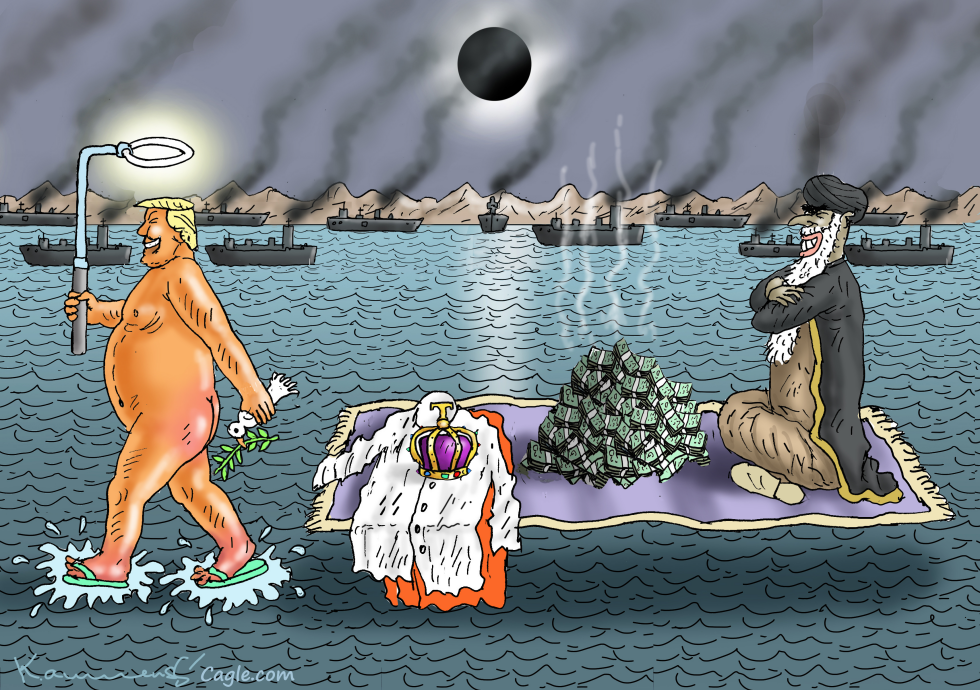
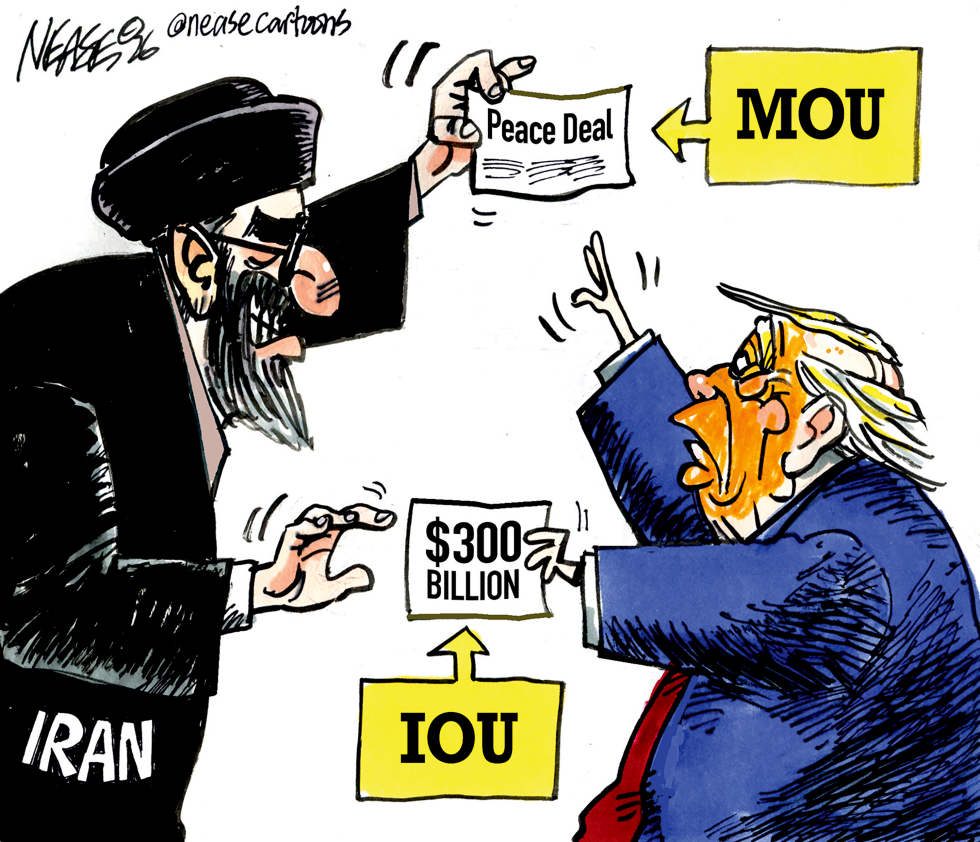
Donald Trump has floated a direct peace gesture toward Iran at a moment of heightened naval presence in the region. The move arrives against a backdrop of longstanding tensions over nuclear ambitions, sanctions, and proxy conflicts. Observers note the offer coincides with visible military assets and financial incentives. The editorial position frames the gesture as an attempt to reset relations through symbolic and material means rather than sustained diplomacy.
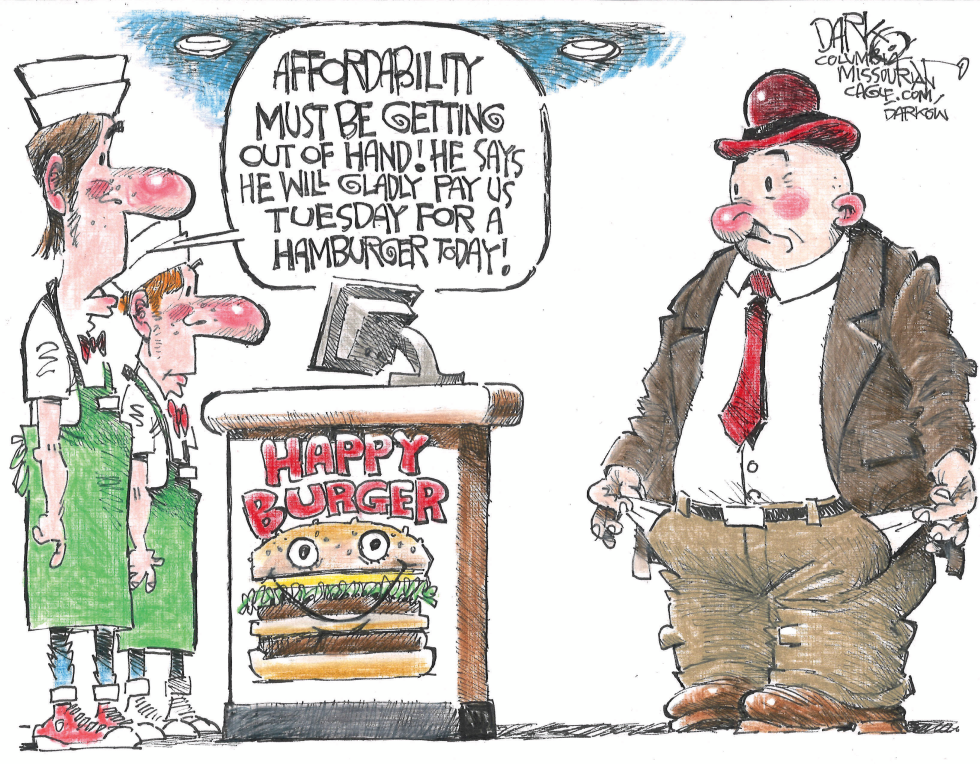
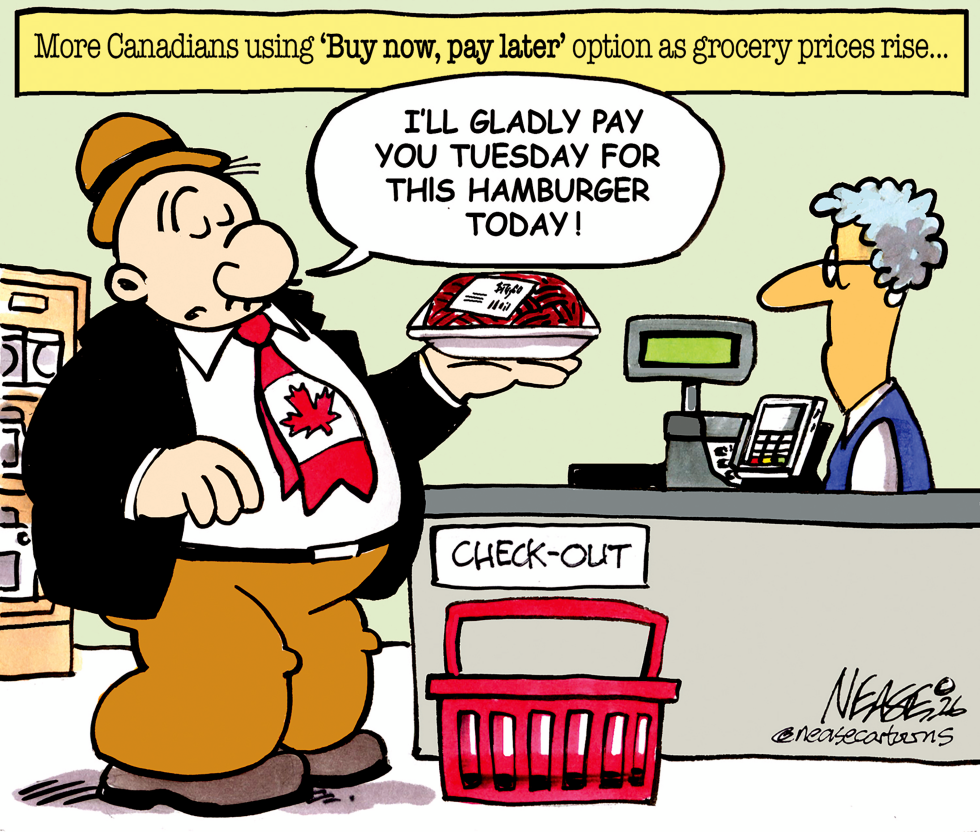
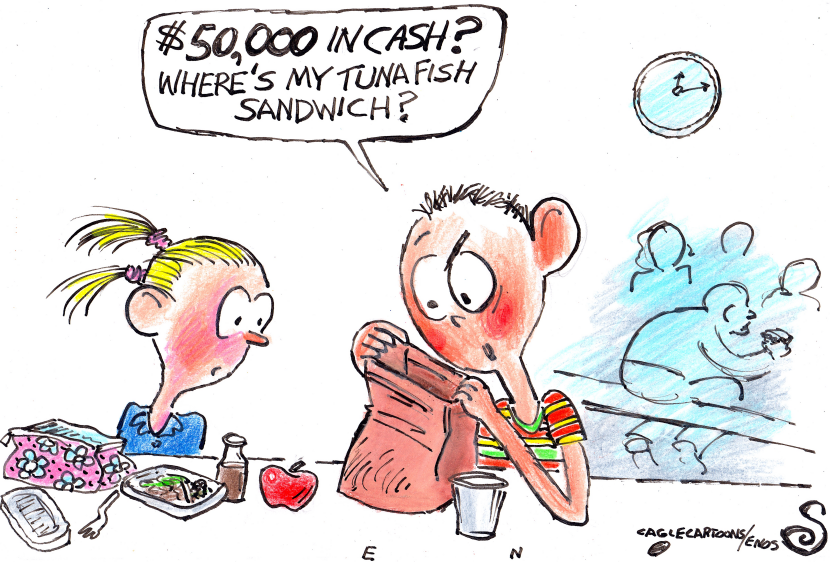
Rising living costs continue to strain household budgets across the country as consumers delay payments and stretch resources. The situation reflects persistent pressure on everyday purchases like meals. The piece takes the position that such affordability challenges have become so widespread they invite classic cultural comparisons to underscore the frustration.
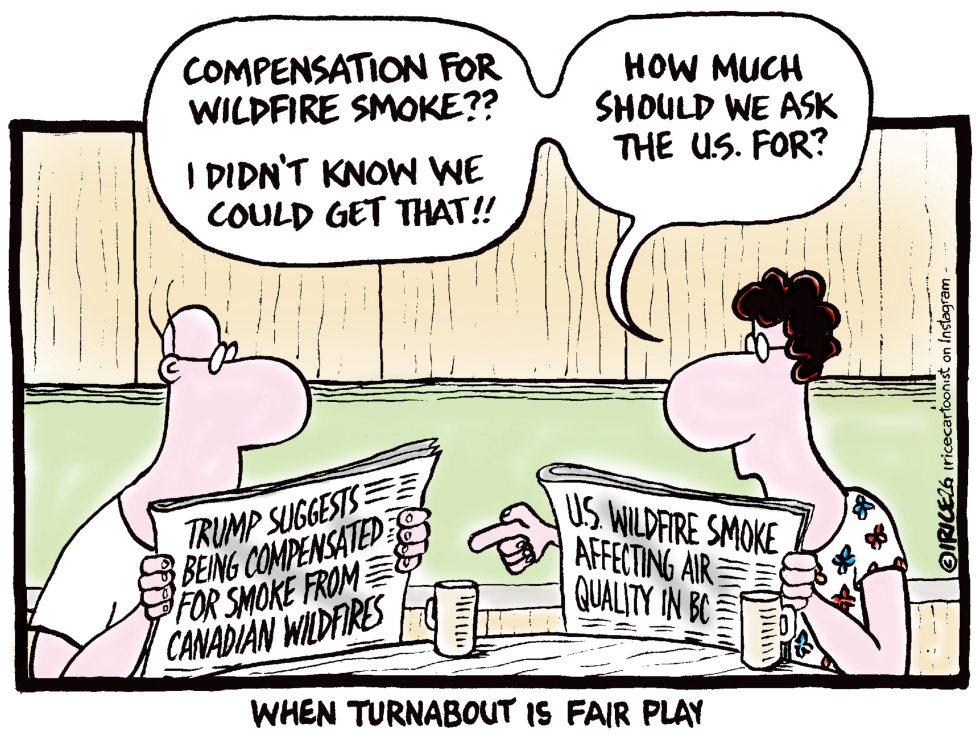
Donald Trump suggested the U.S. should receive compensation for smoke from Canadian wildfires. The cartoon responds by showing Canadians considering a reciprocal claim for smoke from U.S. wildfires affecting British Columbia air quality. It underscores the political dynamic of mutual environmental grievances between the two nations.
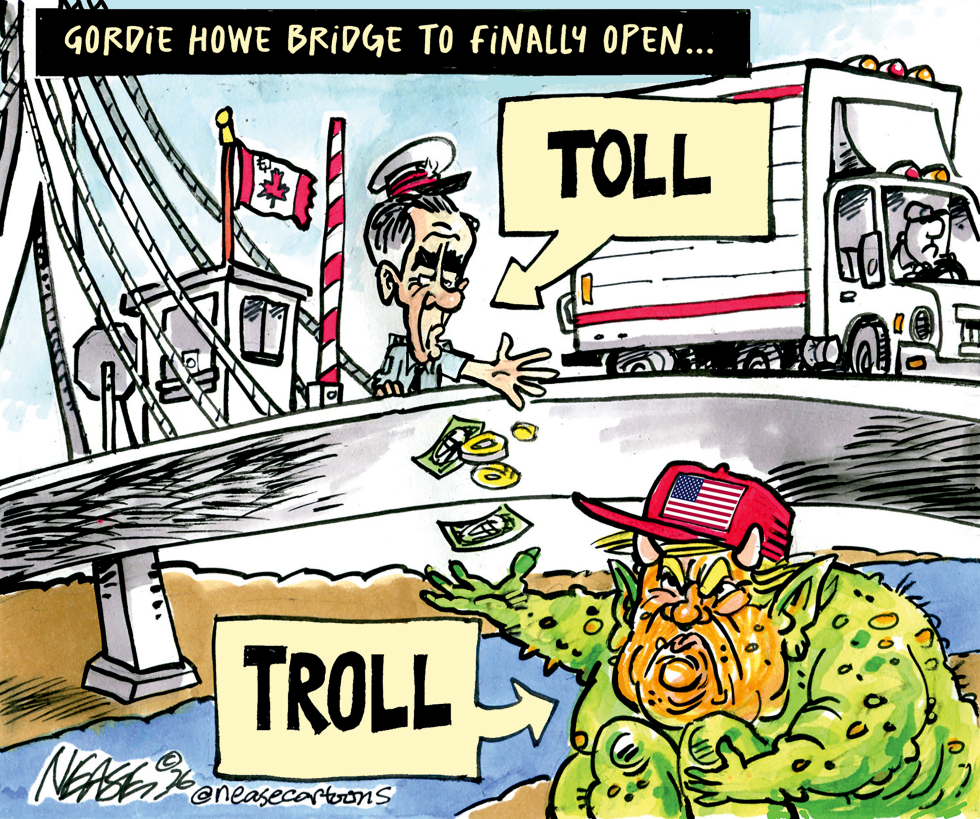
The Gordie Howe Bridge between Canada and the United States is set to open, allowing truck traffic across the border. The cartoon shows a toll booth attendant calling out to a large green troll figure positioned beneath the structure, with dollar bills and coins scattered on the ground. The troll wears a red cap with an American flag emblem and extends a clawed hand toward the money. A speech bubble from the booth reads TOLL while a label points to the creature as TROLL. The scene plays on the classic fairy tale motif of a troll under a bridge collecting payment from those who cross.
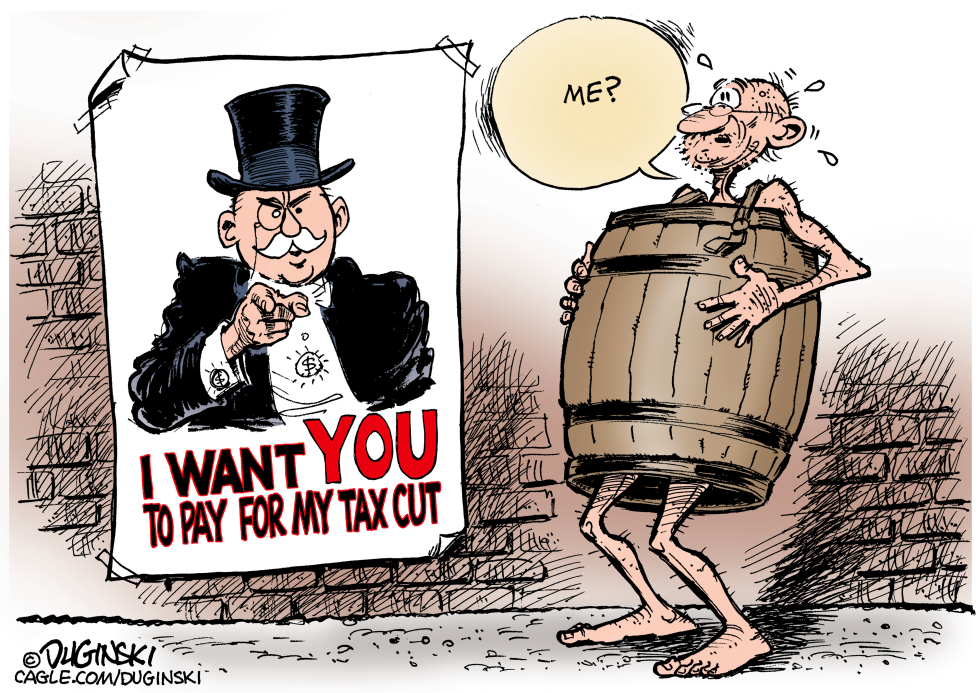
A poster of Uncle Sam points directly at a thin man trapped in a barrel, with bold text demanding that the man pay for the tax cut. The barefoot figure reacts with surprise in a speech bubble. The scene unfolds against brick walls, highlighting tension between authority and the economically disadvantaged.
A cartoon published July 8, 2026, shows a Canadian shopper at a grocery checkout counter holding a package of hamburger meat while declaring he will gladly pay Tuesday for the item today. The scene references the classic Wimpy line and highlights growing use of buy now pay later services as grocery prices continue to climb in Canada.
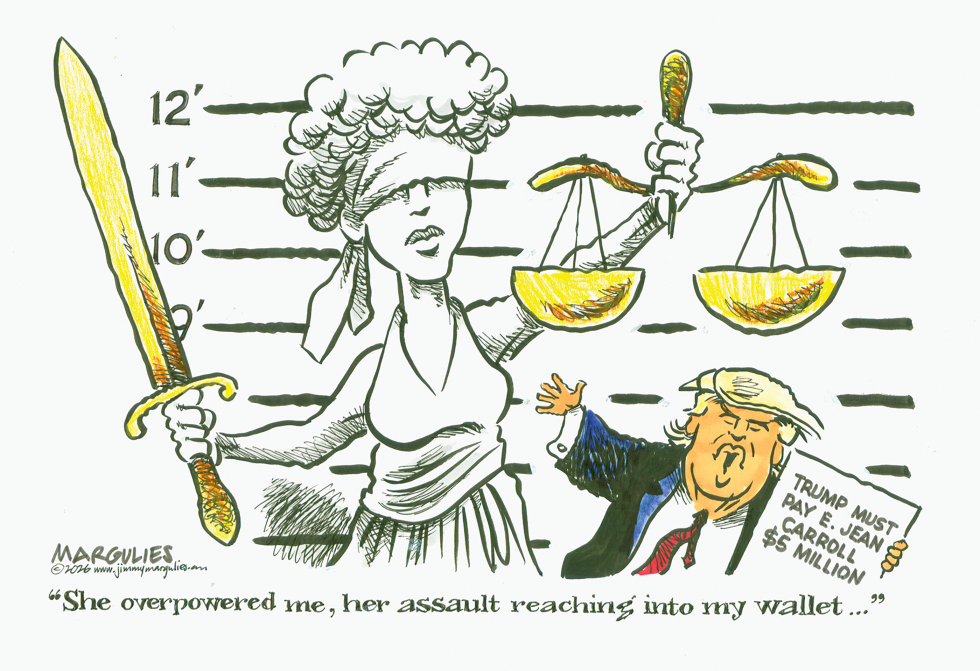
The image shows Lady Justice positioned on a height chart towering over Donald Trump who holds a sign stating he must pay E. Jean Carroll five million dollars. A quote appears at the bottom referencing the case outcome.
Nease, a Canadian cartoonist, examines the hidden costs of the peace agreements being brokered by Trump across multiple conflict zones. The cartoon suggests that peace achieved through coercion and abandonment of allies carries enormous human costs. The accounting metaphor frames diplomacy as a transactional exercise with losers.
A political figure faces intense scrutiny over alleged misconduct tied to influence and favors. The episode highlights how officials navigate accountability when deals surface in public view. Such moments test institutional checks and public trust in leadership. The piece frames the controversy as a costly reckoning that cannot be avoided or deferred.
John Darkow's cartoon captures the sting of high gas prices amid inflation and war, showing a yellow vehicle at a station with unleaded fuel marked at 3.95 9/10 per gallon, pay in advance. Speech bubbles reveal a conversation where one asks about not going anywhere for spring break, and the reply puns on being 'Spring Broke' due to gas costs. The image underscores travel disruptions, with tags like gas prices, inflation, spring break, travel, war, and economic satire emphasizing how rising fuel expenses halt vacation plans. This straightforward drawing uses dry humor to point out everyday economic frustrations without overcomplicating the scene.