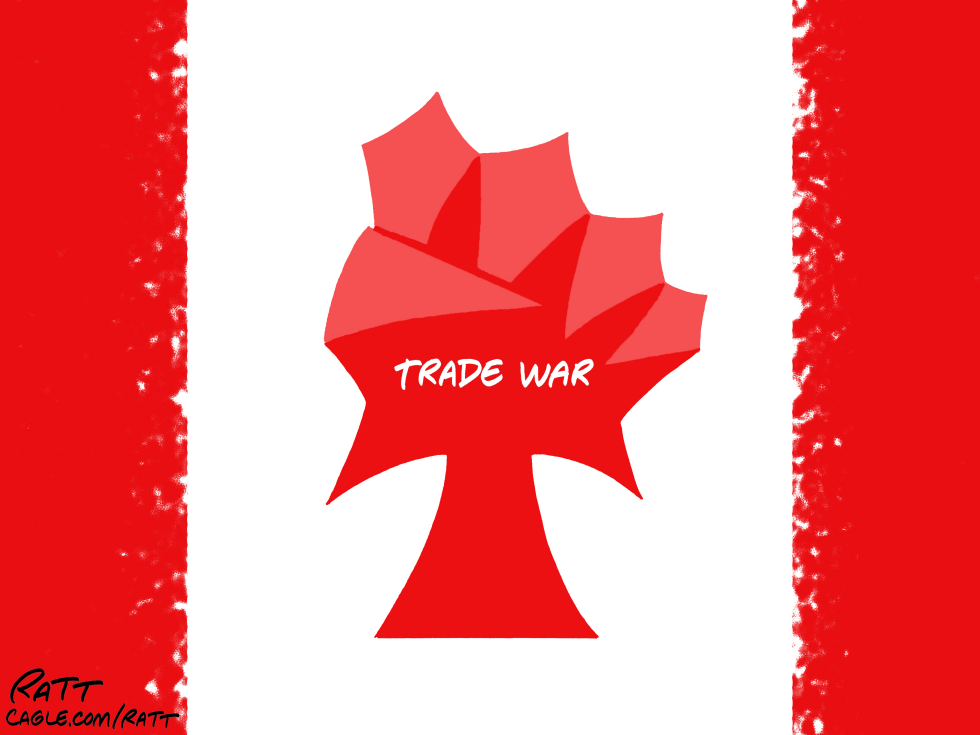
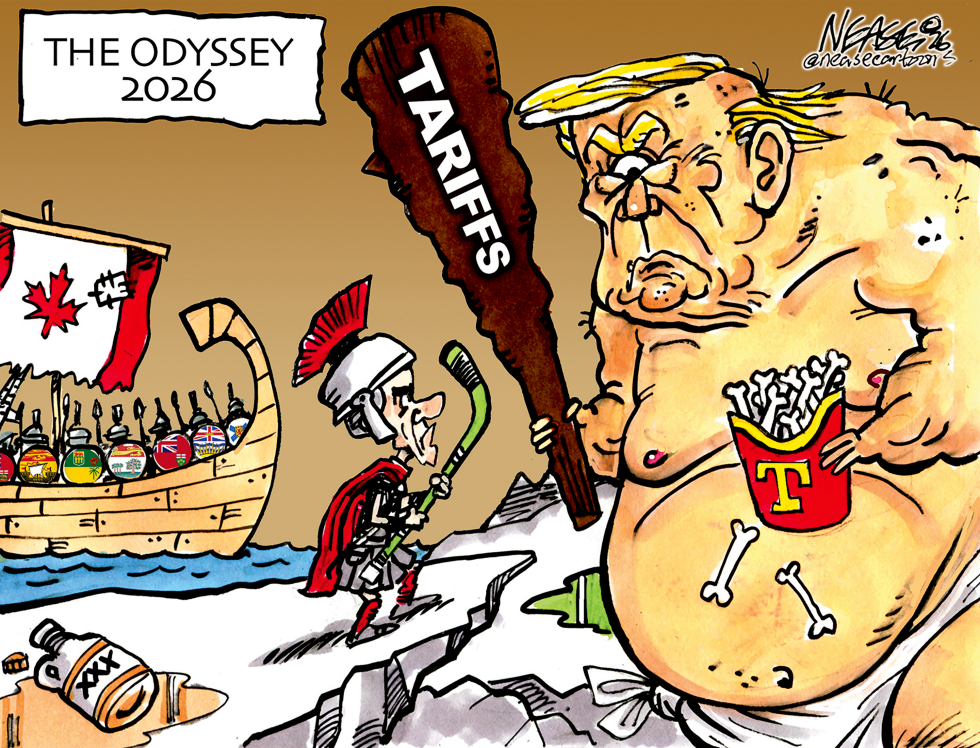
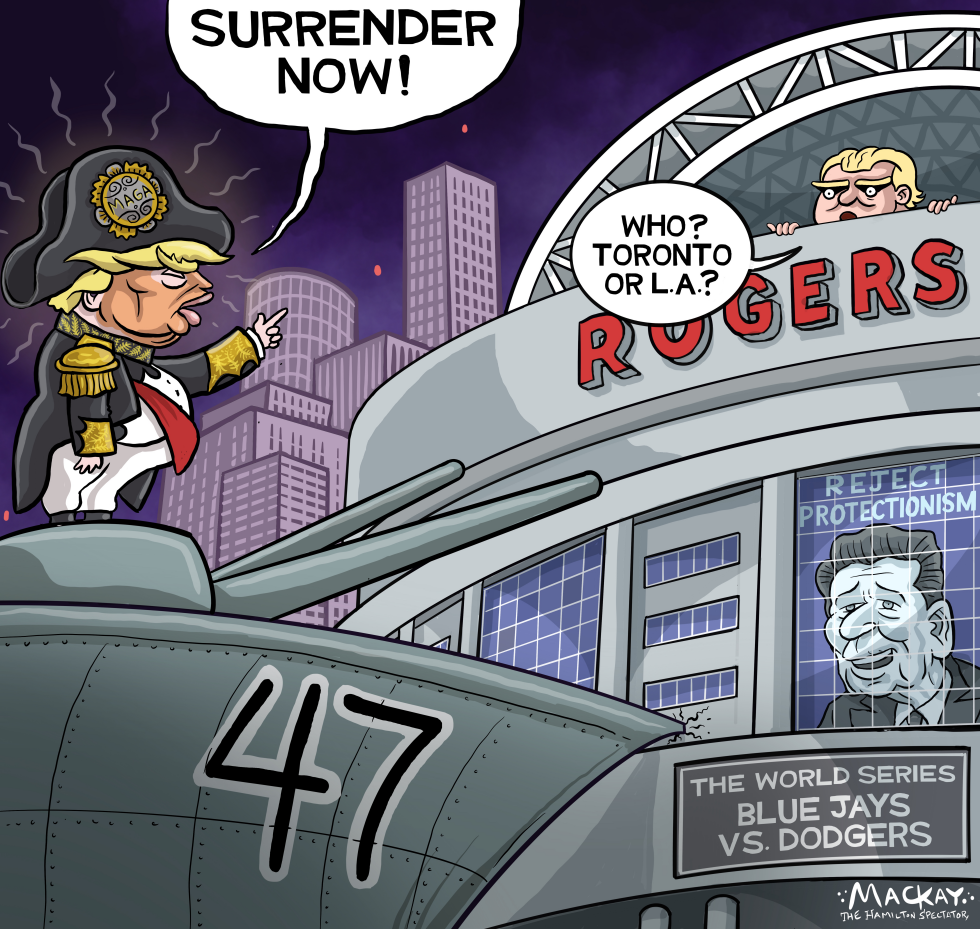
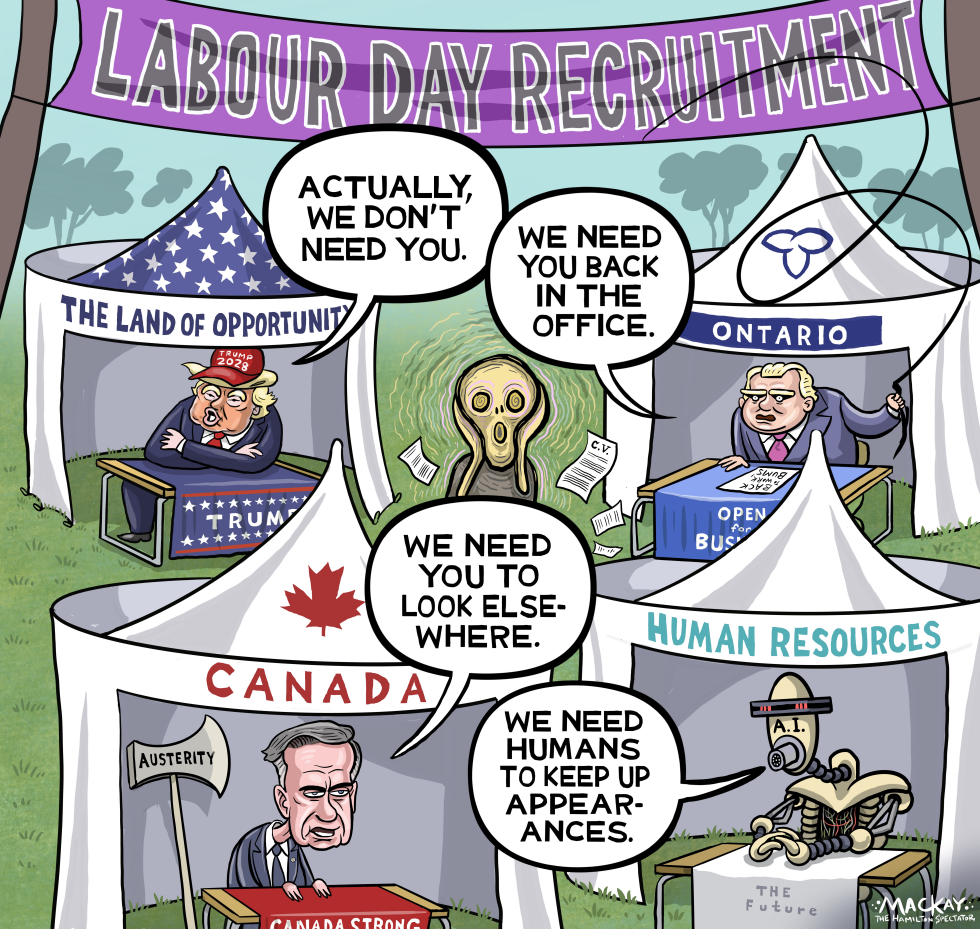
Ongoing US-Canada trade tensions escalated in 2026 with new tariff threats targeting Canadian exports. The dispute threatens key sectors including autos, lumber and agriculture, raising costs for consumers on both sides of the border. Canada has signaled plans to diversify markets and strengthen domestic industry. The cartoon frames the conflict as a direct assault on Canadian sovereignty and economic stability. It portrays the trade war as fracturing national symbols while urging a stronger northern response.
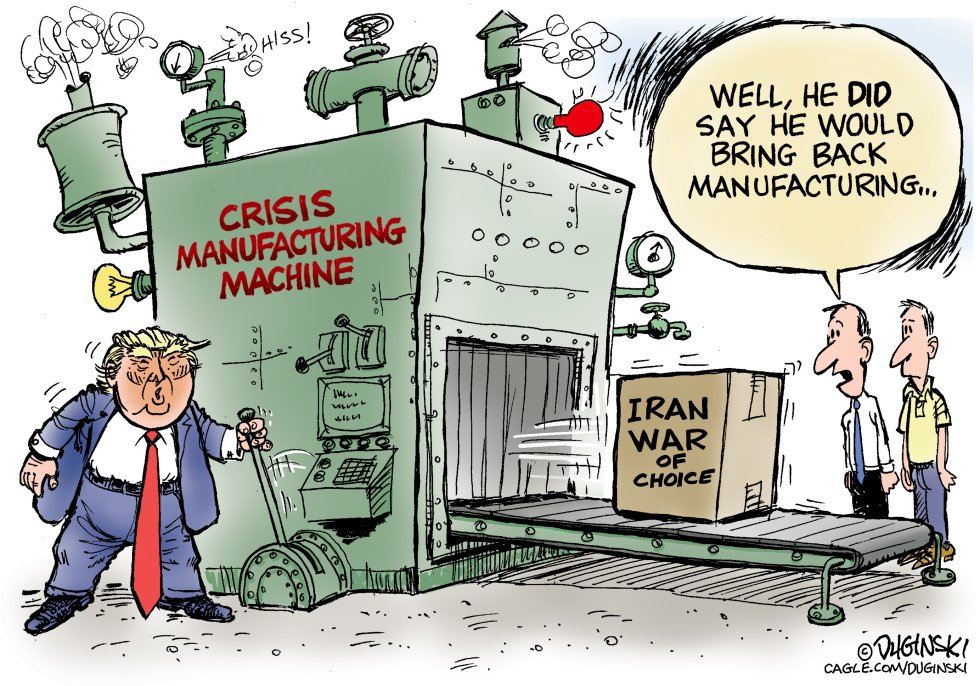
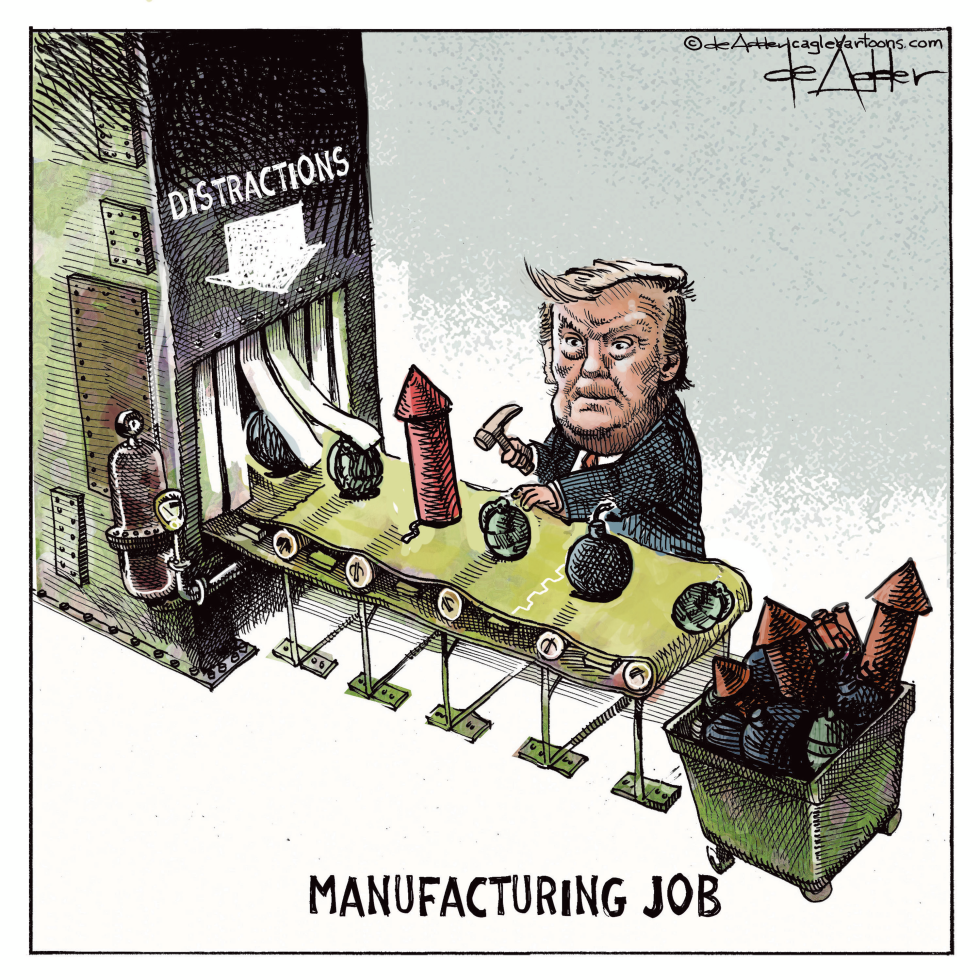
Donald Trump, holding the presidency in 2026, faces renewed scrutiny over foreign policy toward Iran. Recent statements revive campaign pledges to restore domestic manufacturing while tensions with Tehran escalate. The administration\\\'s approach draws criticism for prioritizing confrontation over diplomacy. Observers note the pattern of generating external crises rather than economic gains at home. The cartoon argues that Trump\\\'s actions fulfill a literal version of his manufacturing rhetoric by producing conflict instead of jobs.
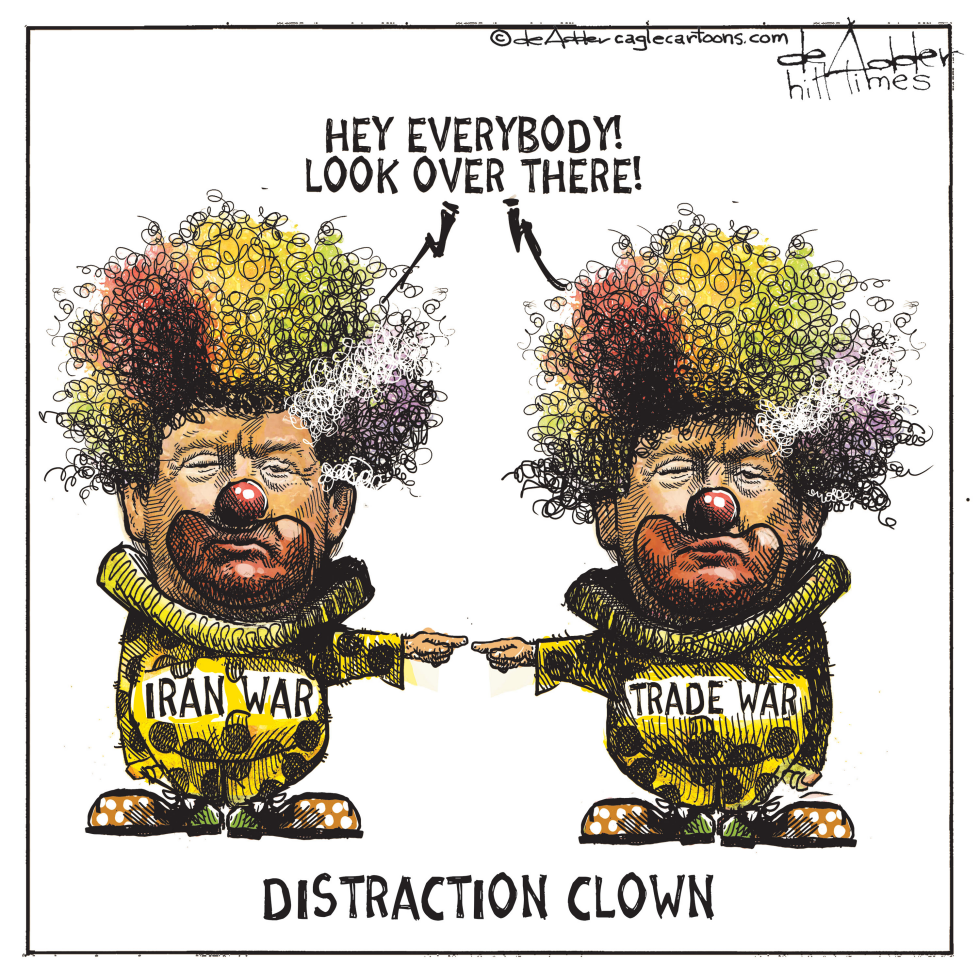
Public attention is being directed toward simultaneous Iran and trade conflicts as potential diversions from other issues. The editorial depicts the two crises as interchangeable distractions promoted by the same source. It argues that leaders are using these flashpoints to shift focus rather than address underlying problems.
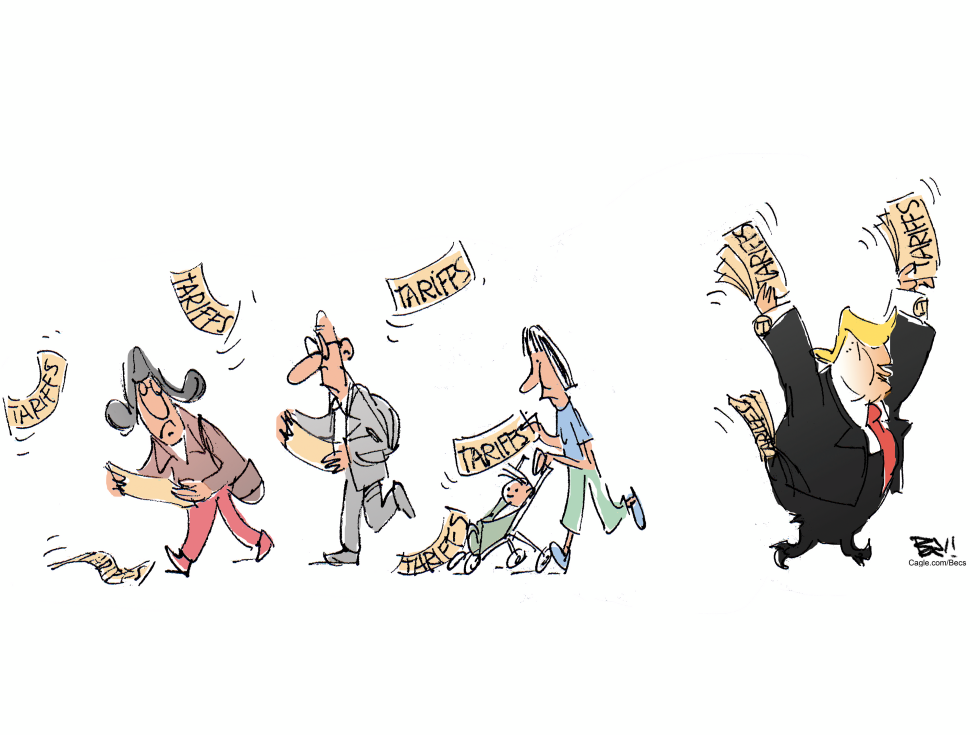
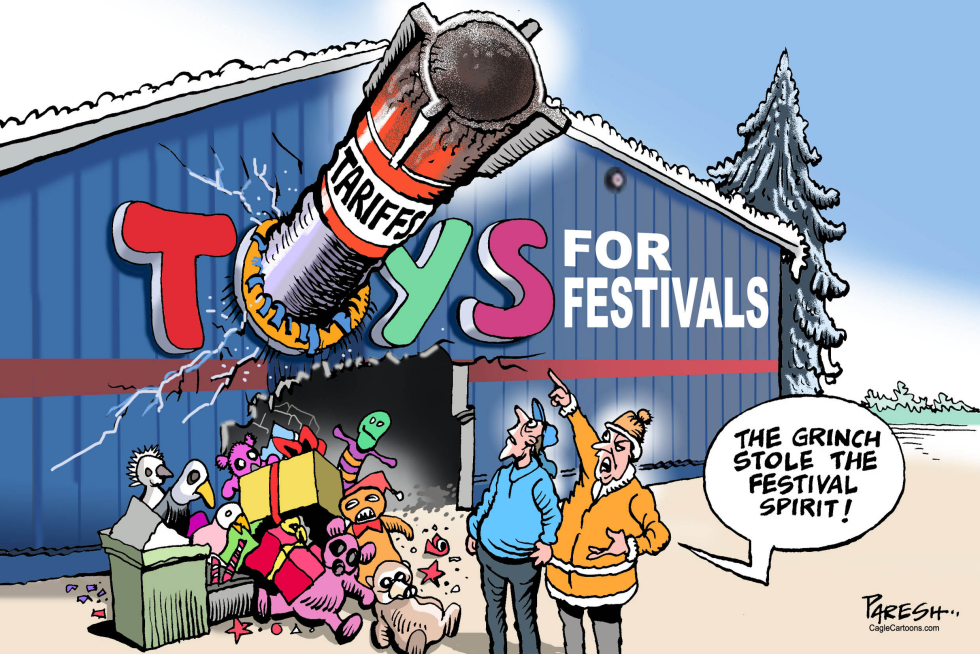
Donald Trump expanded tariffs across trading partners in mid-2026, triggering immediate market volatility and diplomatic pushback. The move raised costs for consumers and businesses reliant on imports. The piece portrays the policy as an indiscriminate barrage that disrupts daily life and global commerce.
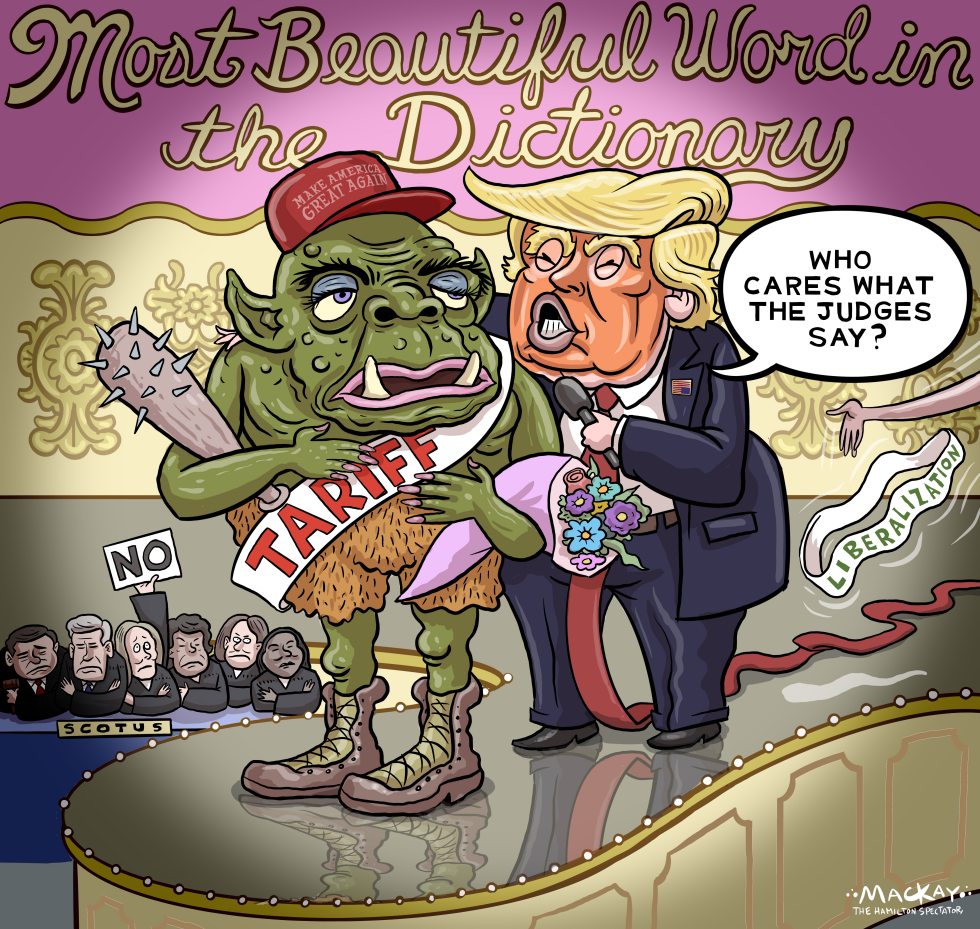
President Trump escalates tariffs on trading partners including Canada in mid-2026. The move targets imports amid ongoing disputes over trade balances and supply chains. Allies respond with coordinated pushback through diplomatic and economic channels. The cartoon casts the confrontation as a one-sided power play by the oversized tariff wielder against smaller coordinated opponents.
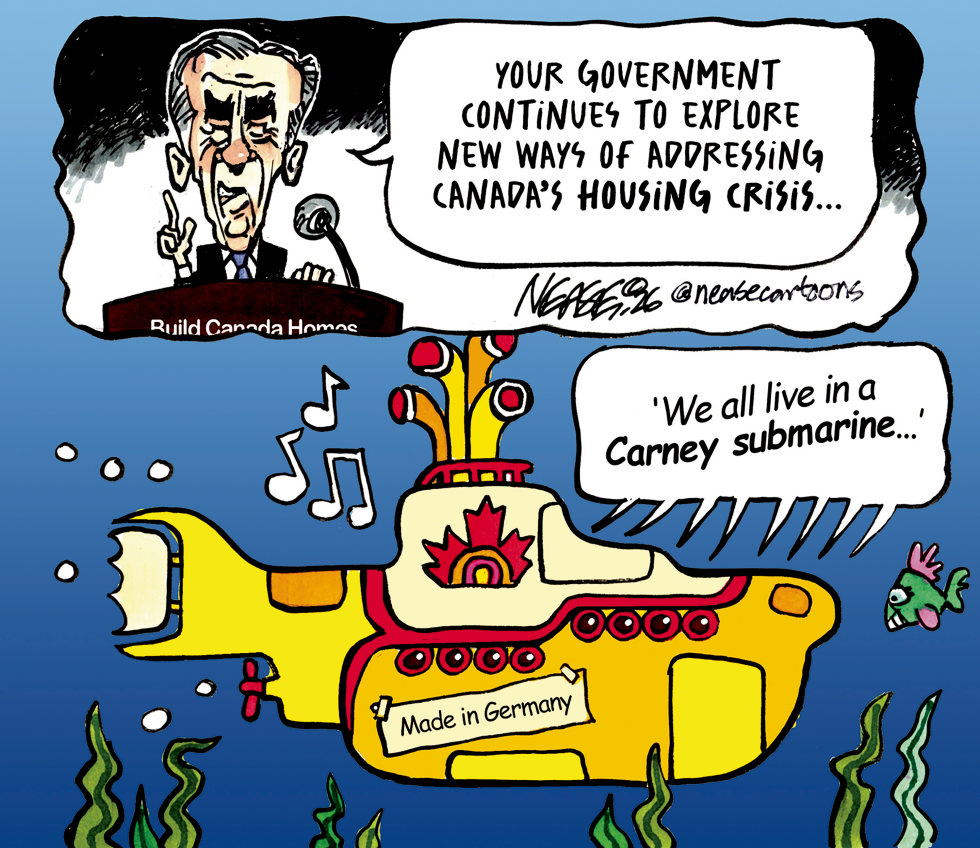
On July 7 2026 Mark Carney speaks from a Build Canada Homes podium about ongoing government efforts to address the national housing crisis. Below the surface a yellow submarine marked Made in Germany and bearing a maple leaf emblem carries the slogan We all live in a Carney submarine. The scene references the Beatles song while depicting policy exploration through underwater imagery with musical notes and a small fish observer.
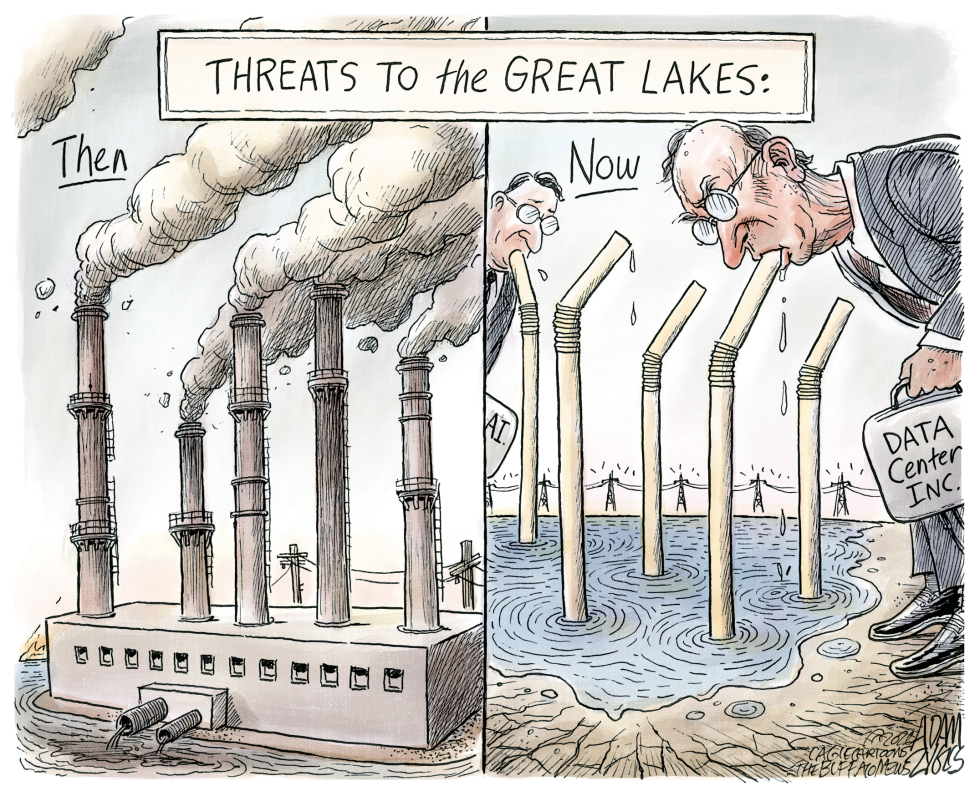
The cartoon contrasts historical industrial pollution of the Great Lakes with modern data center water consumption driven by artificial intelligence growth.
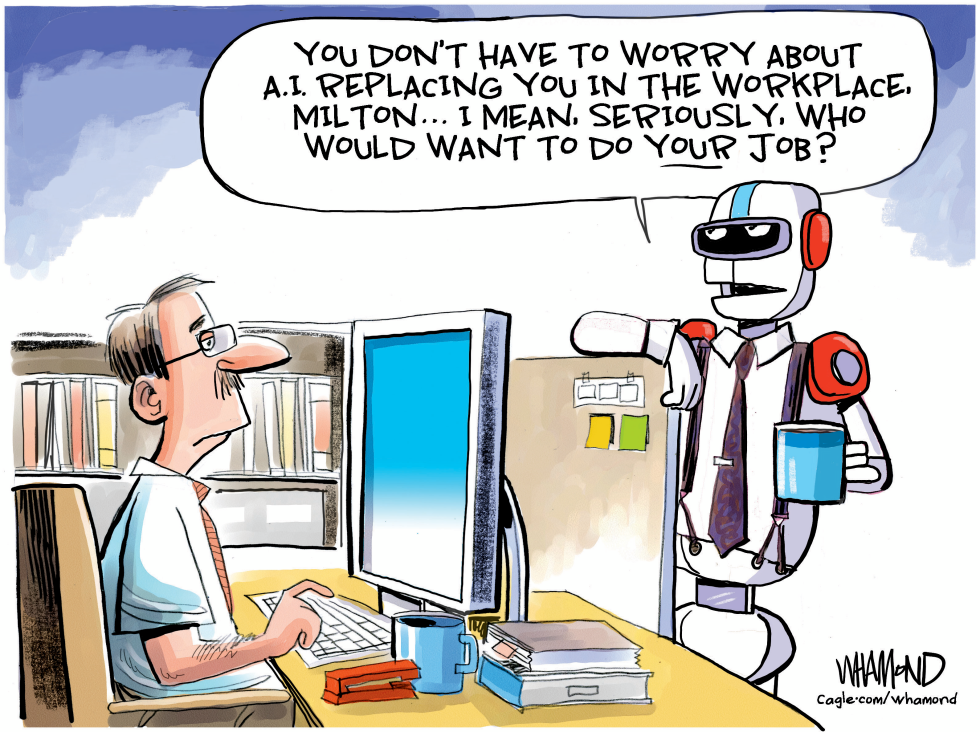
The cartoon depicts an office worker seated at a computer while a robot stands nearby holding a mug. The robot delivers a speech bubble message to the man identified as Milton, stating that AI will not replace him because no one would want to do his job. The scene illustrates ongoing workplace concerns about automation and artificial intelligence displacing human roles. The visual uses the robot's backhanded reassurance to highlight how some positions may remain unattractive even to machines. This reflects broader discussions on how AI affects job markets without specifying any single recent event.
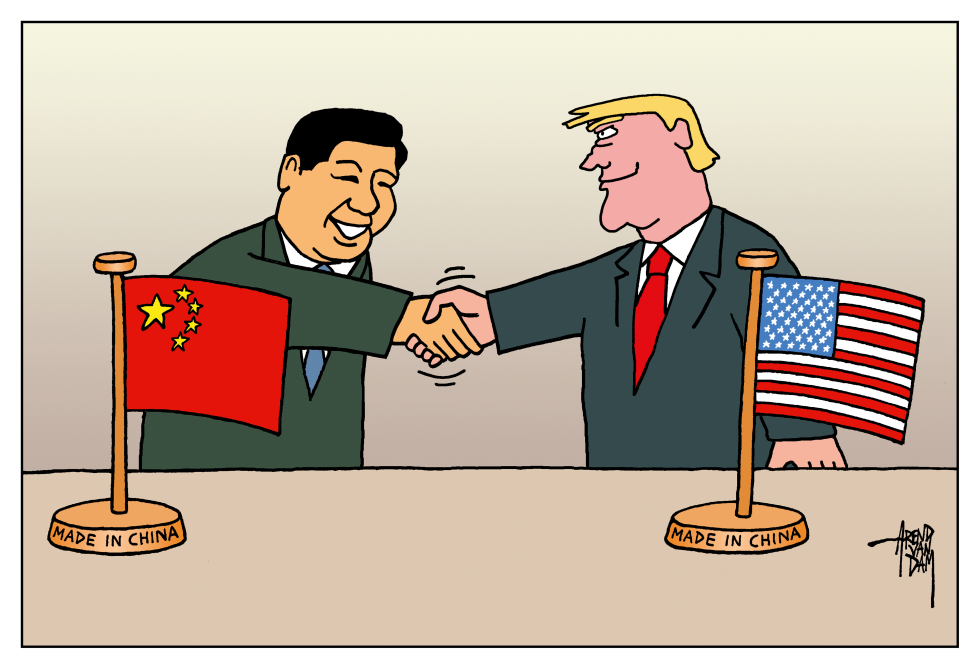
On October 31 2025 Donald Trump and Xi Jinping are depicted shaking hands over a table. Each national flag is mounted on a wooden base labeled Made in China. The image highlights ongoing economic interdependence between the United States and China despite political differences. Trade and production issues remain central to bilateral relations at the time.
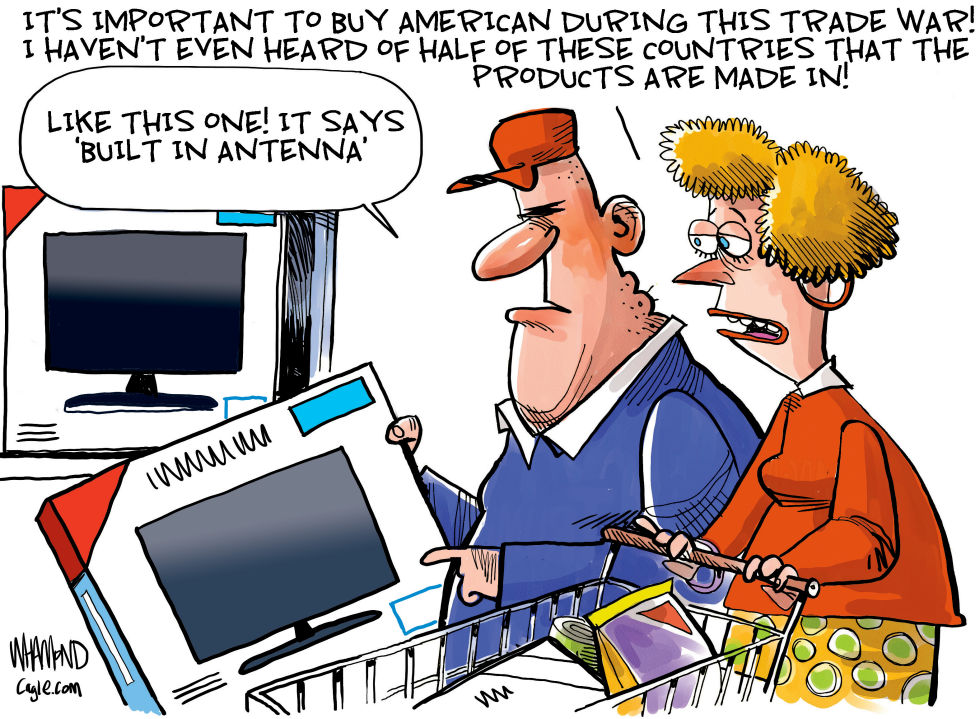
A couple shops for electronics in a store as the man points to a television box labeled built in antenna while declaring support for American goods during an ongoing trade war. The woman reacts with surprise at the label. Large text overhead stresses the importance of domestic purchases because many product origins remain unfamiliar. The scene reflects consumer reactions to tariffs and protectionist policies active in late 2025.