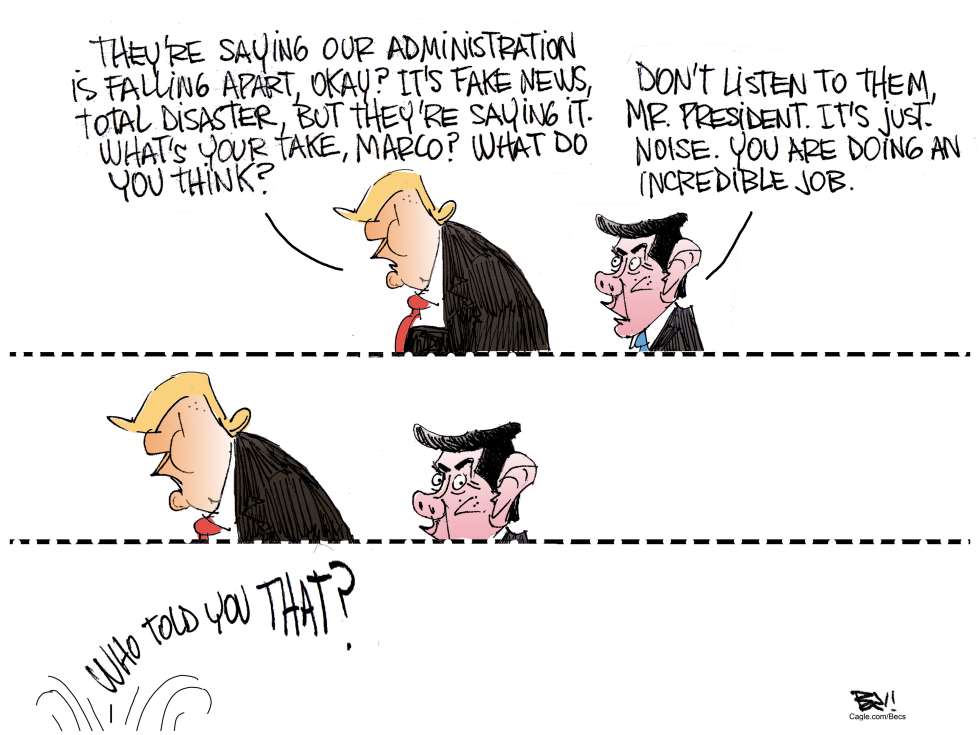
President Trump asked Senator Marco Rubio for his assessment of reports that the administration is in disarray, labeling them fake news. Rubio dismissed the reports as noise and praised Trump's performance. Trump responded by questioning who had told Rubio that assessment. The exchange highlights tensions over loyalty and information flow inside the administration. The cartoon portrays Rubio's positive reply as triggering suspicion rather than reassurance.
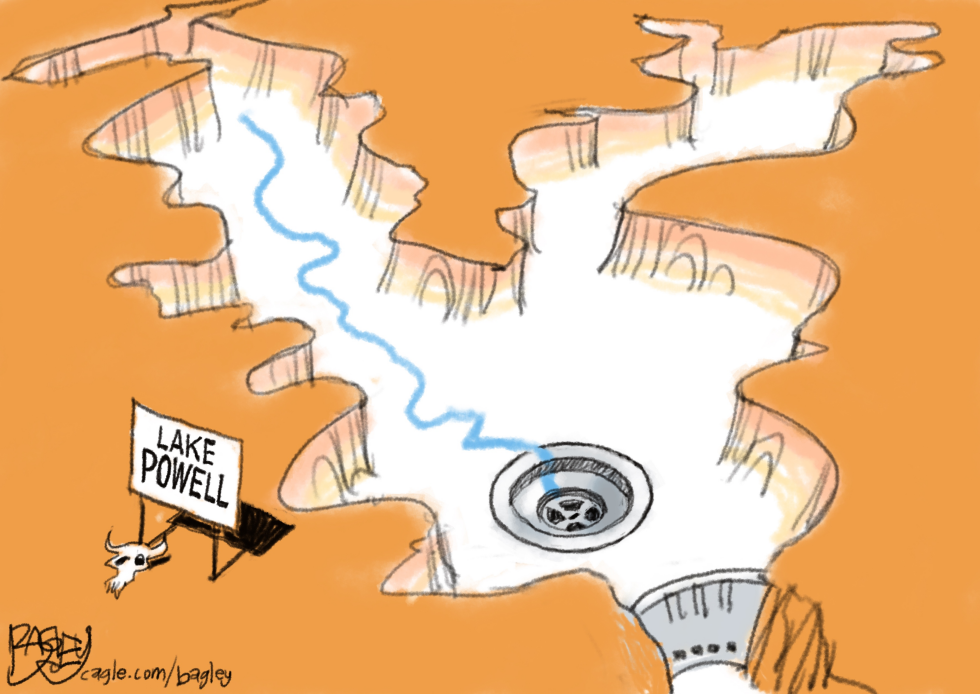
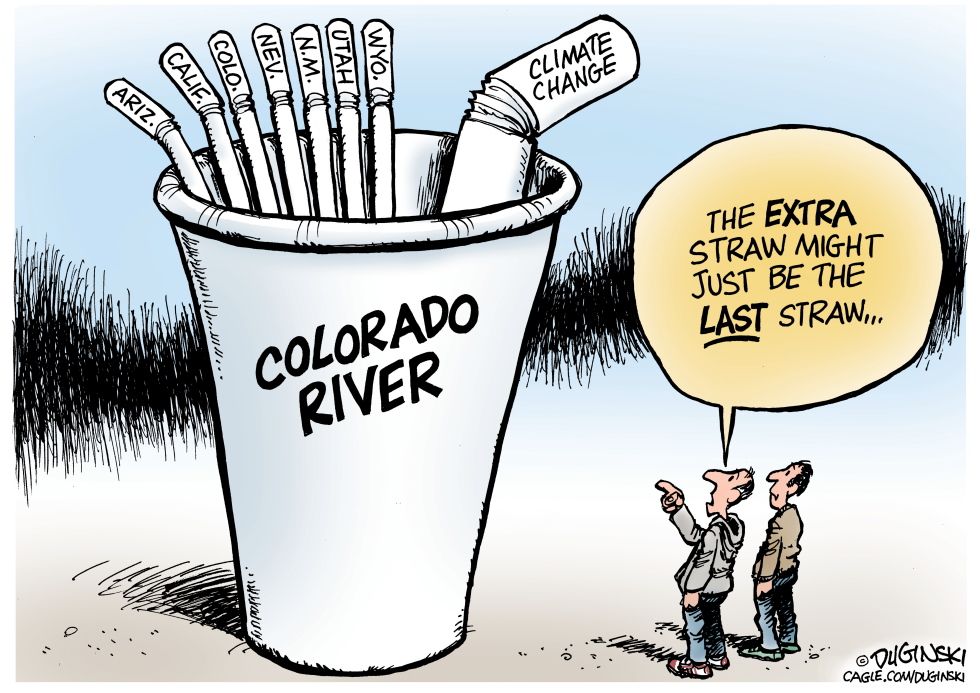
Ongoing drought has pushed Lake Powell to critically low levels along the Colorado River, threatening water supplies for millions across the western United States. The reservoir's continued decline raises urgent questions about allocation agreements among seven states and Mexico. The editorial highlights the severity of the water loss and calls for immediate policy action to address overuse and climate-driven shortages.
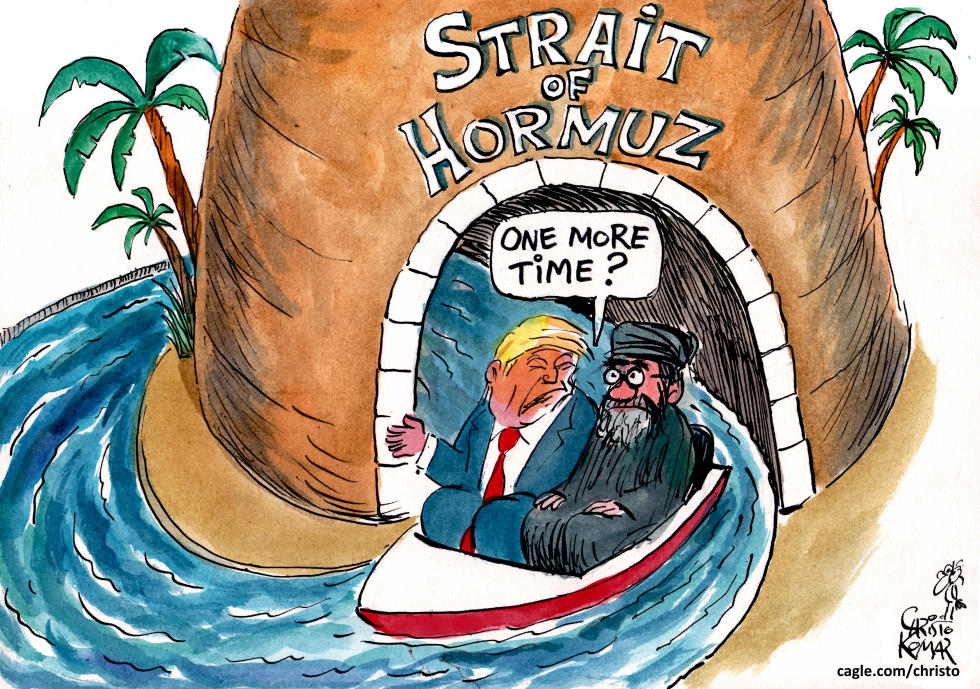
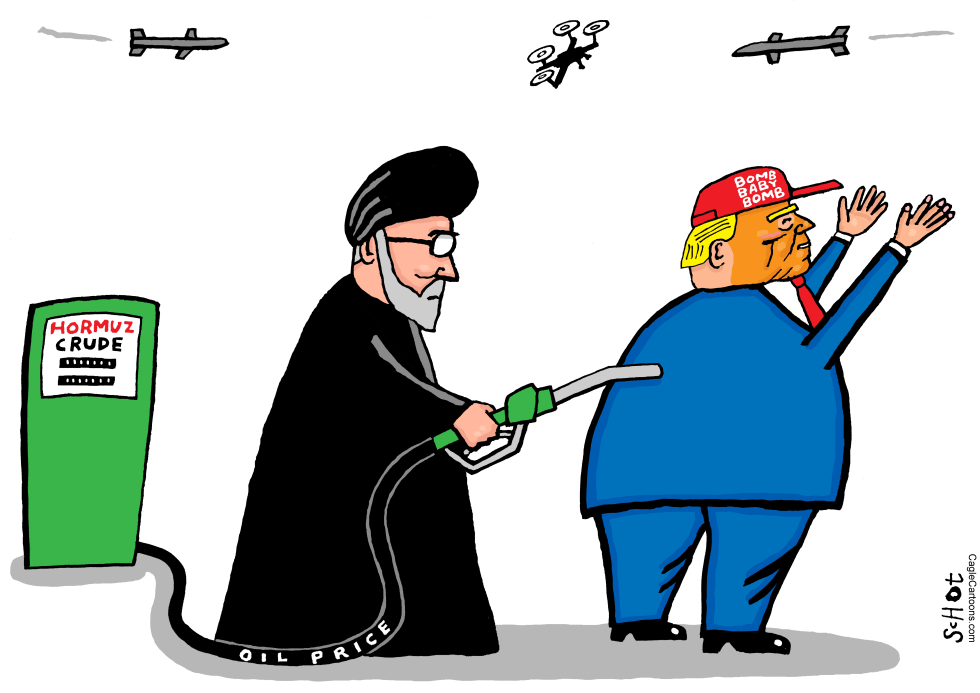
On August 5 2026 renewed friction over shipping lanes in the Strait of Hormuz draws attention as former President Donald Trump appears alongside Iran's Supreme Leader in a symbolic return to the chokepoint. The episode underscores ongoing US-Iran friction over energy exports and naval presence. The piece portrays the pair repeating a risky transit that highlights persistent strategic vulnerabilities in the Persian Gulf.
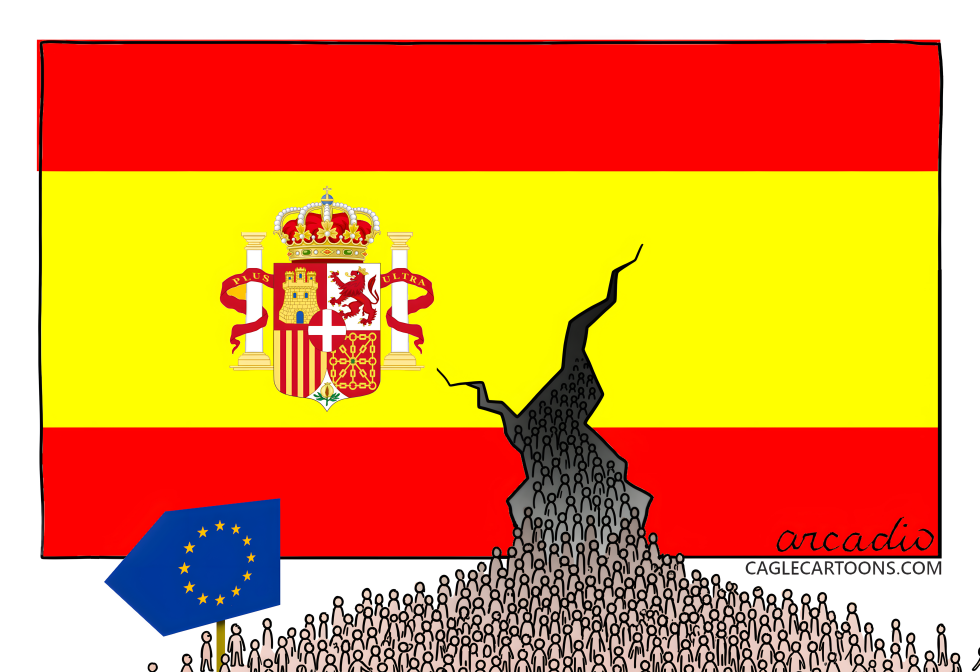
Migration flows continue to test Spain's southern border with North Africa, drawing renewed attention to EU external frontier management. Large numbers of arrivals have prompted Spanish authorities to reinforce controls while Brussels debates shared responsibility among member states. The situation highlights ongoing tensions between humanitarian obligations and national security priorities. The editorial argues that unchecked inflows risk undermining Spain's sovereignty and the stability of the Schengen area.
A robed Iranian figure operates a Hormuz crude gas pump with the hose labeled oil price inserted into the back of a blue suited Donald Trump wearing a red hat marked bomb baby bomb. Trump stands with both hands raised while military planes and a drone appear in the sky overhead.
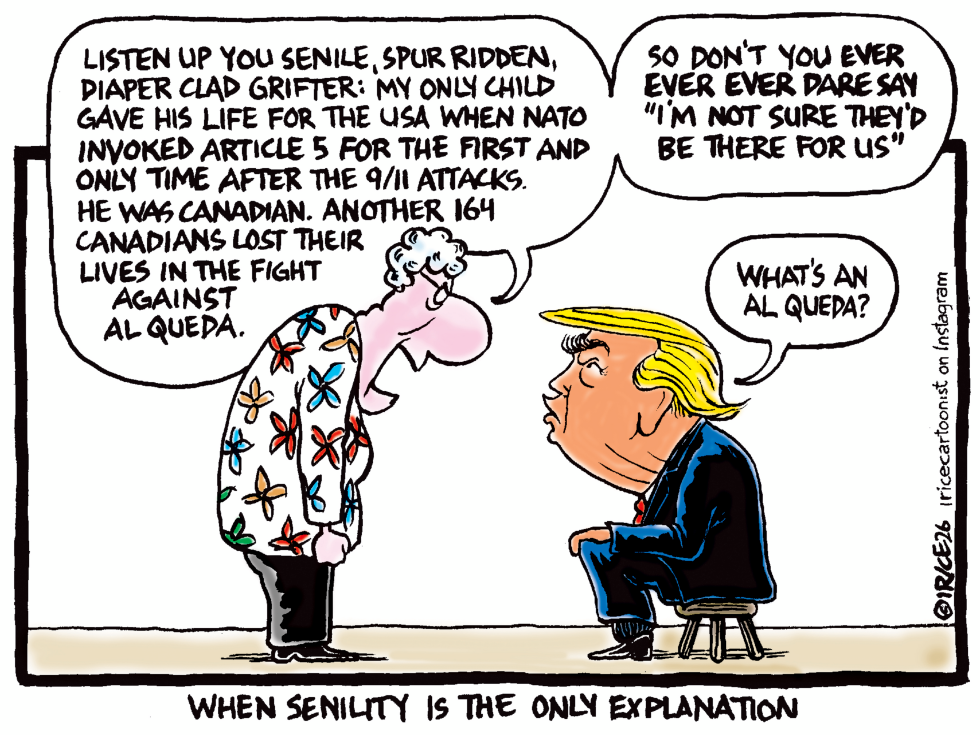
A political cartoon dated July 12, 2026, shows Donald Trump seated on a stool responding to a lecture about Al Qaeda and NATO's Article 5 invocation after 9/11. The standing figure, wearing a floral shirt, recounts the death of a Canadian child and 164 other Canadians in the fight. Trump replies by asking what an Al Qaeda is. The bottom caption reads when senility is the only explanation. The image highlights a direct confrontation over historical facts tied to the 9/11 attacks and alliance commitments.
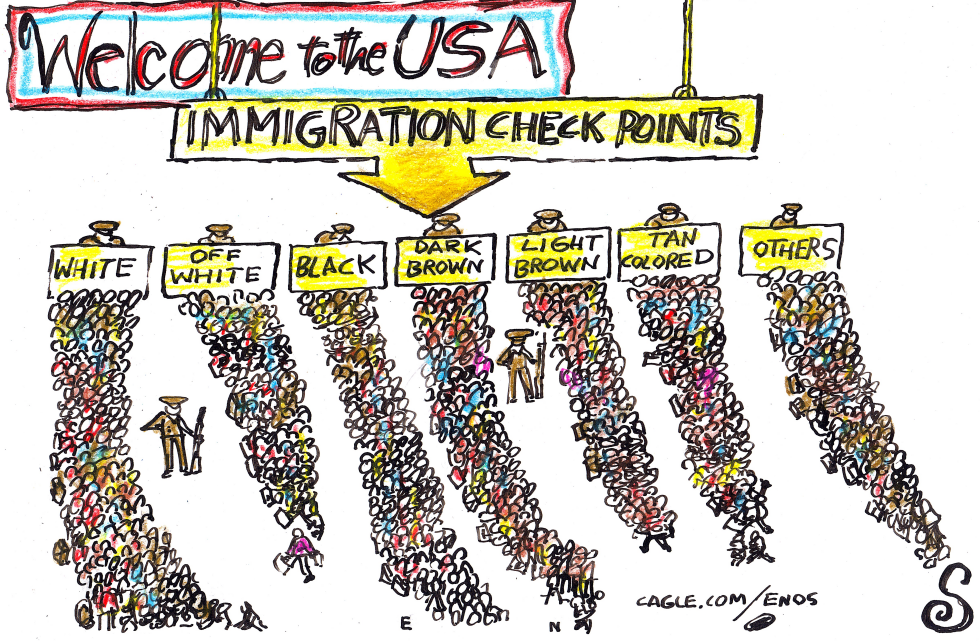
A cartoon depicts seven distinct lines of people at US immigration checkpoints, each labeled by skin color from white through off-white, black, dark brown, light brown, tan colored and others. Guards stand watch while a prominent welcome banner and immigration sign direct arrivals into the segregated queues. The image highlights the visual separation of entrants based on appearance.
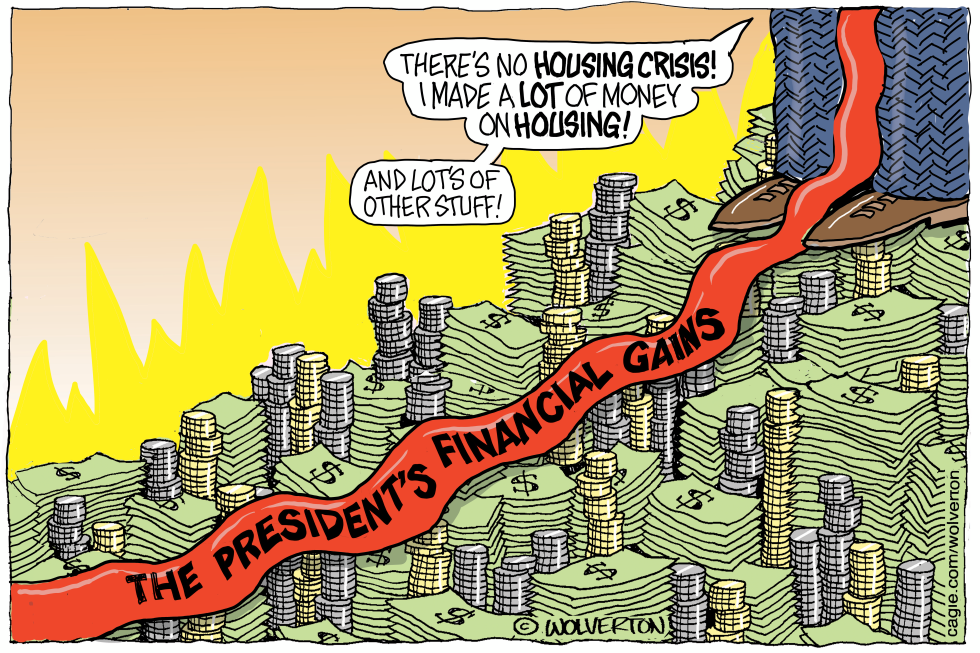
A political figure faces intense scrutiny over alleged misconduct tied to influence and favors. The episode highlights how officials navigate accountability when deals surface in public view. Such moments test institutional checks and public trust in leadership. The piece frames the controversy as a costly reckoning that cannot be avoided or deferred.
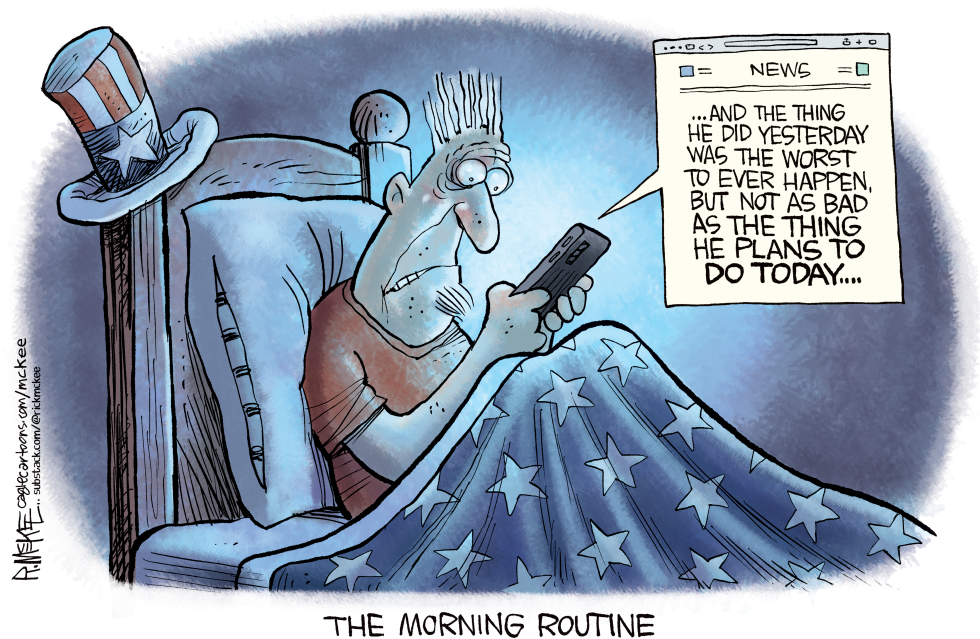
A man in bed examines a phone displaying a news alert about recent and upcoming events. The scene includes an Uncle Sam style hat and a blanket patterned with stars. The bottom text labels the scene as a morning routine. Publication occurred on May 20 2026.
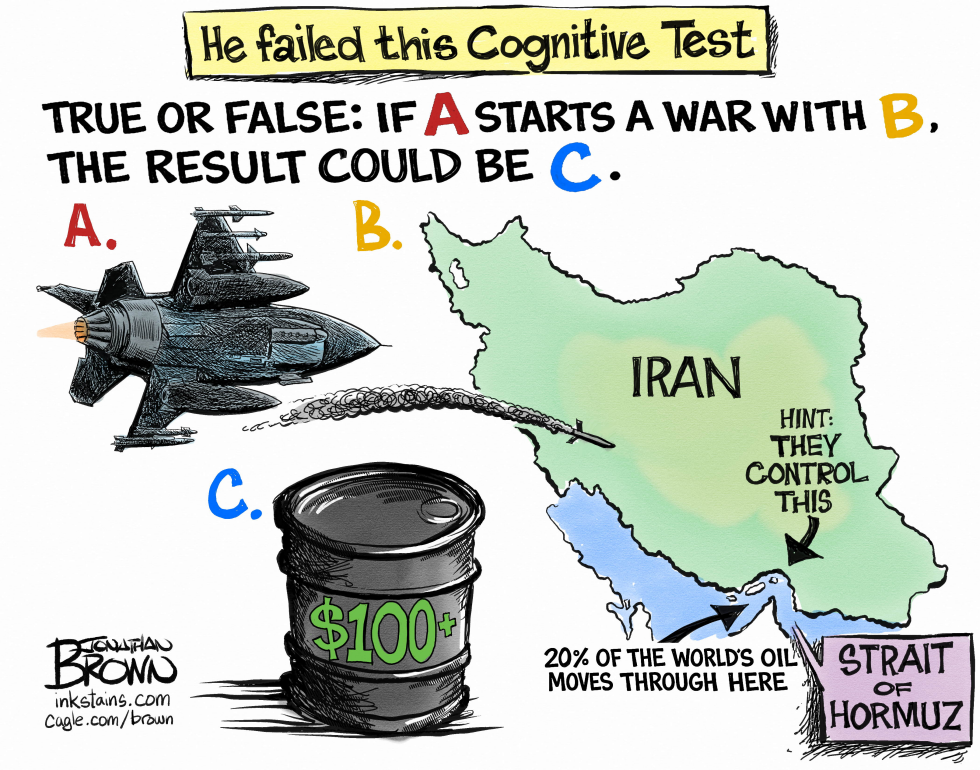
Jonathan Brown's cartoon presents a stark true-or-false cognitive test: if A (a fighter jet) starts a war with B (Iran), the result could be C (an oil barrel marked $100+). The map of Iran includes a hint pointing to the Strait of Hormuz, noting that 20% of the world's oil moves through there, underscoring control over this chokepoint. Tags such as cognitive test, war in Iran, oil prices, Strait of Hormuz, gas prices, and cost of war frame the satire. The artwork warns of economic fallout from conflict, with the jet trailing toward Iran and the oil barrel symbolizing surging costs. This piece captures geopolitical tensions in a simple, visual riddle.
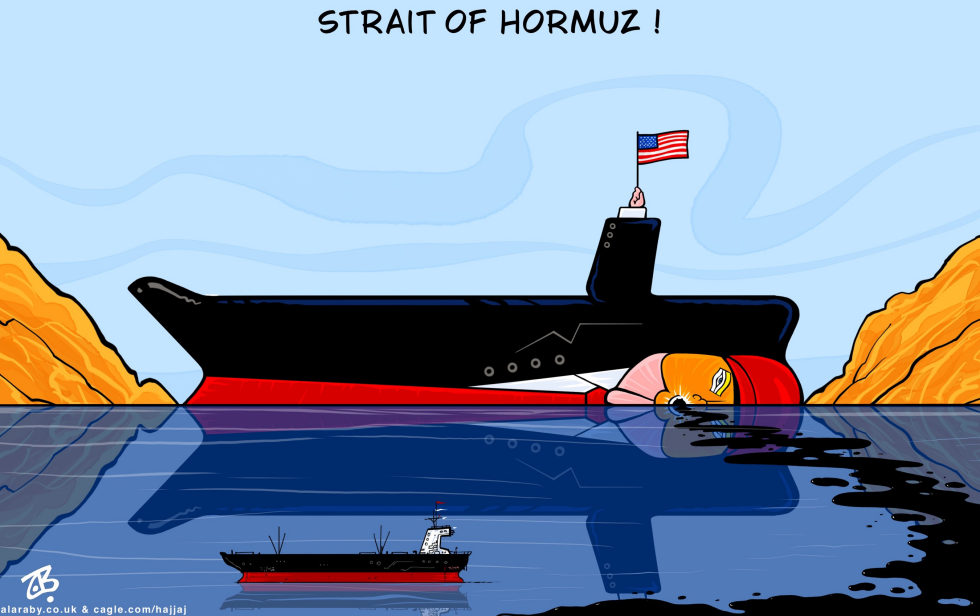
Emad Hajjaj's cartoon depicts a large black submarine with a red hull, stuck between orange landmasses in the Strait of Hormuz, its bow featuring an orange face with yellow hair and a red tie, clearly caricaturing Donald Trump. An American flag flies atop the vessel, while black oil spills into the blue water, reflecting the ship. Below, a smaller black tanker with a white figure onboard sails through the oily sea, tagged with Persian, Gulf, Sea, Tanker, Oil, War. The image satirizes US involvement in Middle East conflicts, particularly Iran war scenarios, without overreaching into hidden meanings. The composition is straightforward, with clear lines and bold colors emphasizing the blockage.
Arend van Dam's cartoon shows a gray battleship marked USA, complete with guns and missiles, driven by a figure in a suit at the wheel, as it goes over a waterfall between rocky cliffs under a blue sky. The image captures the essence of strategy failure in the Strait of Hormuz, tying into themes of Iran, ayatollahs, war, battleship mishaps, Middle East conflicts, oil, gas, energy, and economy. Such visuals often poke at misguided military moves, where the ship's plunge represents a dramatic downfall in strategic planning. The dry humor lies in the absurdity of a warship treating a strait like a river rapid, underscoring potential economic fallout from regional tensions. Cartoons like this thrive on clear, exaggerated metaphors that resonate with readers familiar with global news.
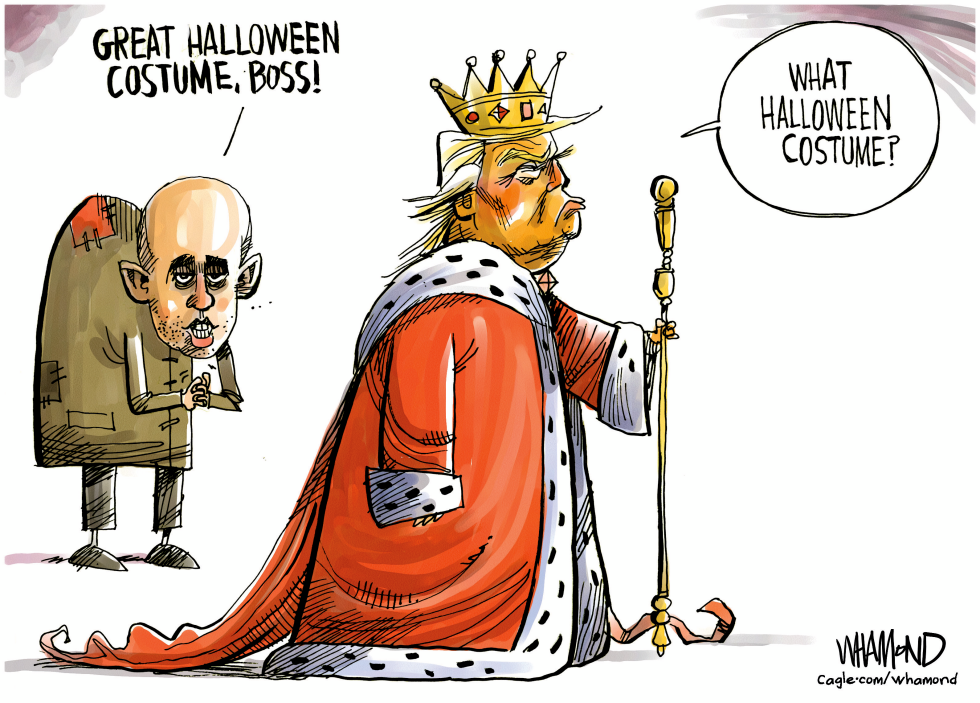
Dave Whamond's cartoon titled 'The Man who would be king' captures a caricatured Donald Trump donned in regal themes, complete with crown and red robe, wielding a scepter. A subservient, bald figure with pointy ears bows and praises the 'Great Halloween Costume, Boss!' while Trump retorts 'What Halloween Costume?' The image tags highlight themes of No Kings, Trump wants kinglike powers, and concerns over constitution and democracy. It satirizes ideas of president transitioning government into a monarchy, with elements of shutdown, taking control, and totalitarian state. The humor lies in Trump playing dress up yet denying it's a costume, symbolizing real aspirations for kinglike authority.