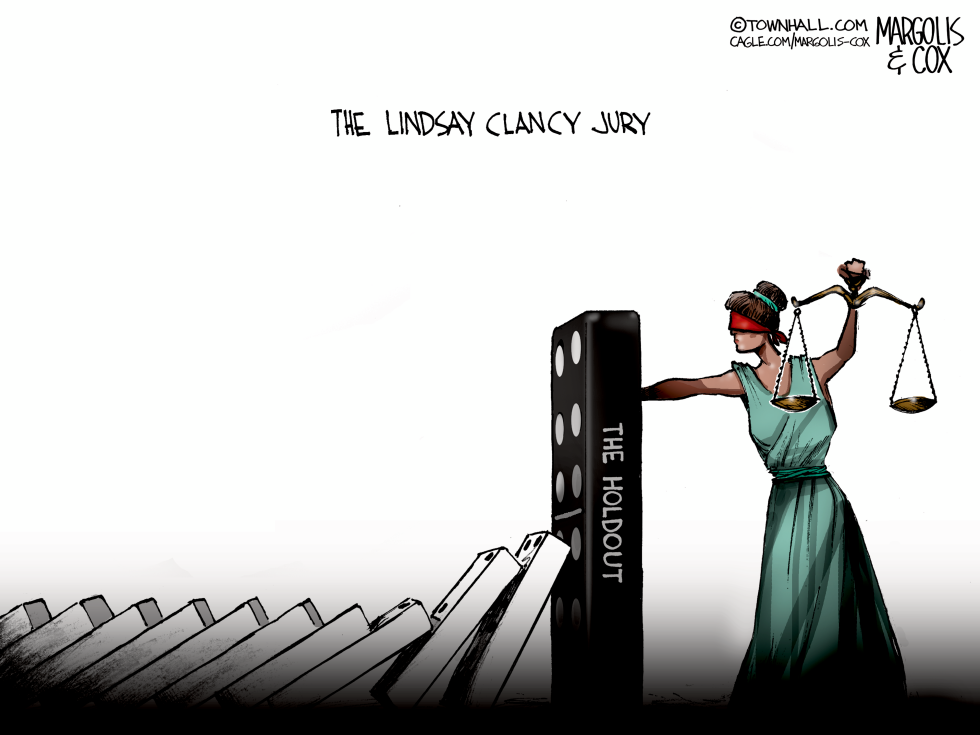
The Lindsay Clancy jury reached a critical impasse when one holdout juror refused to join the majority, threatening to derail deliberations in the closely watched case. The deadlock highlights how a single dissenting voice can halt proceedings and force mistrial risks or further negotiations. The cartoon frames this as a precarious domino chain where the holdout threatens broader collapse. It critiques the fragility of jury consensus in high-stakes criminal trials and questions whether the system adequately manages such standoffs.
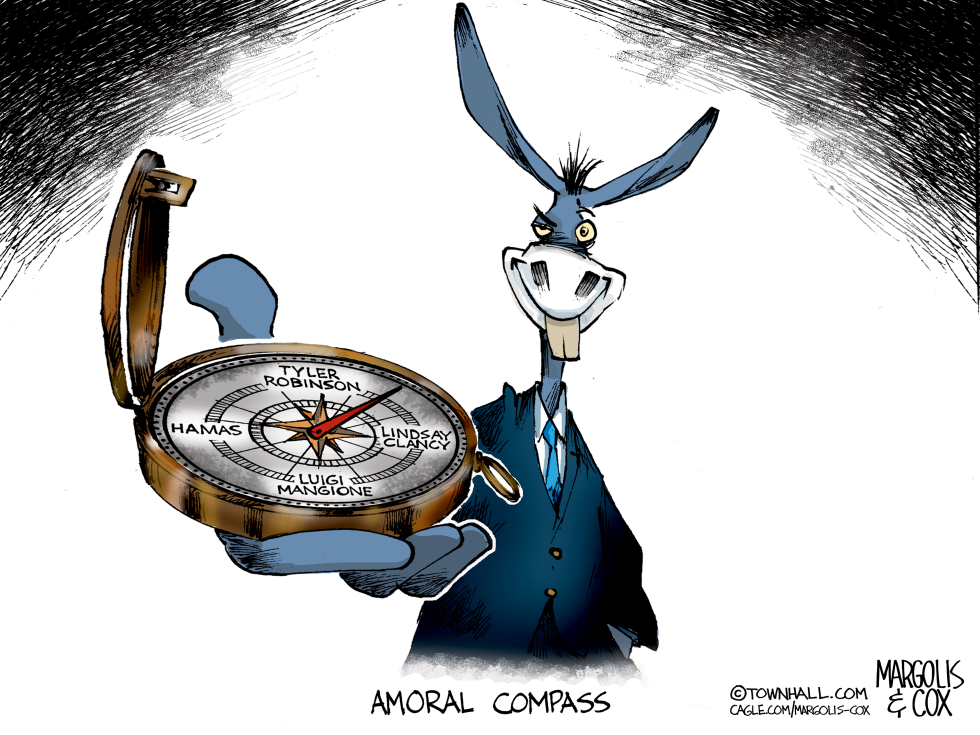
On September 11, 2026, a political cartoon by Margolis & Cox depicts the Democratic Party's moral framework as broken by associating it with figures such as Luigi Mangione, Lindsay Clancy, Tyler Robinson, and Hamas. The piece argues that progressive tolerance for these cases reveals a deeper ethical failure. It matters because public trust in political morality shapes elections and policy debates. The cartoon takes the position that the left has abandoned consistent principles in favor of selective outrage.
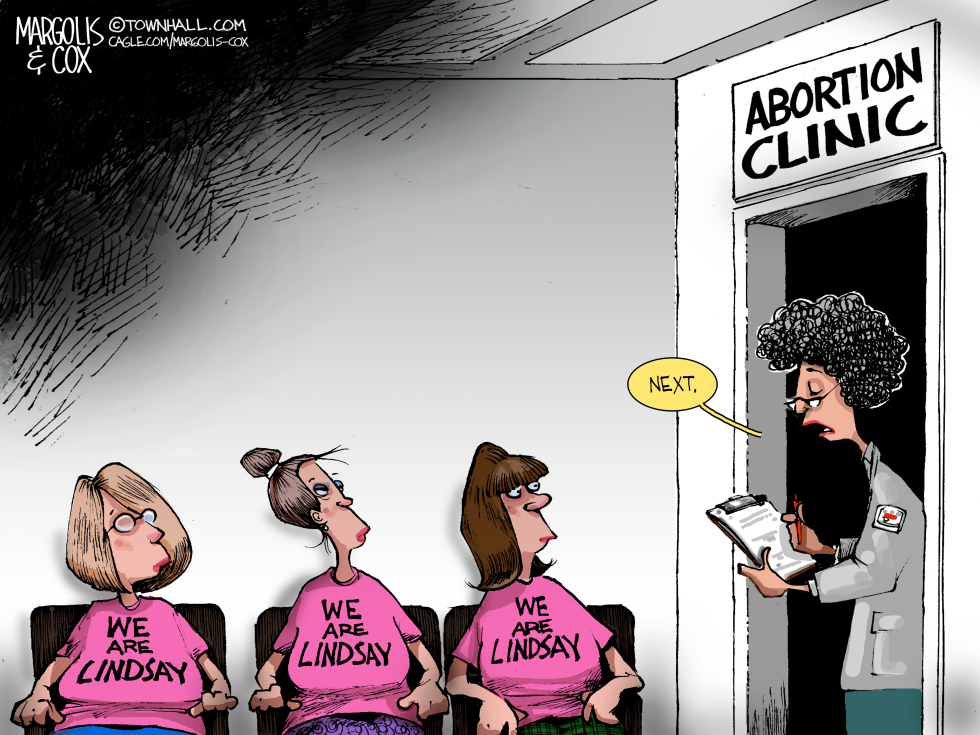
The Lindsay Clancy case has prompted renewed attention to reproductive healthcare access and clinic policies. Multiple women identifying with the case have appeared at facilities, highlighting ongoing debates over abortion rights and patient privacy. The cartoon critiques the use of personal tragedy to advance clinic protests and identity-based activism.