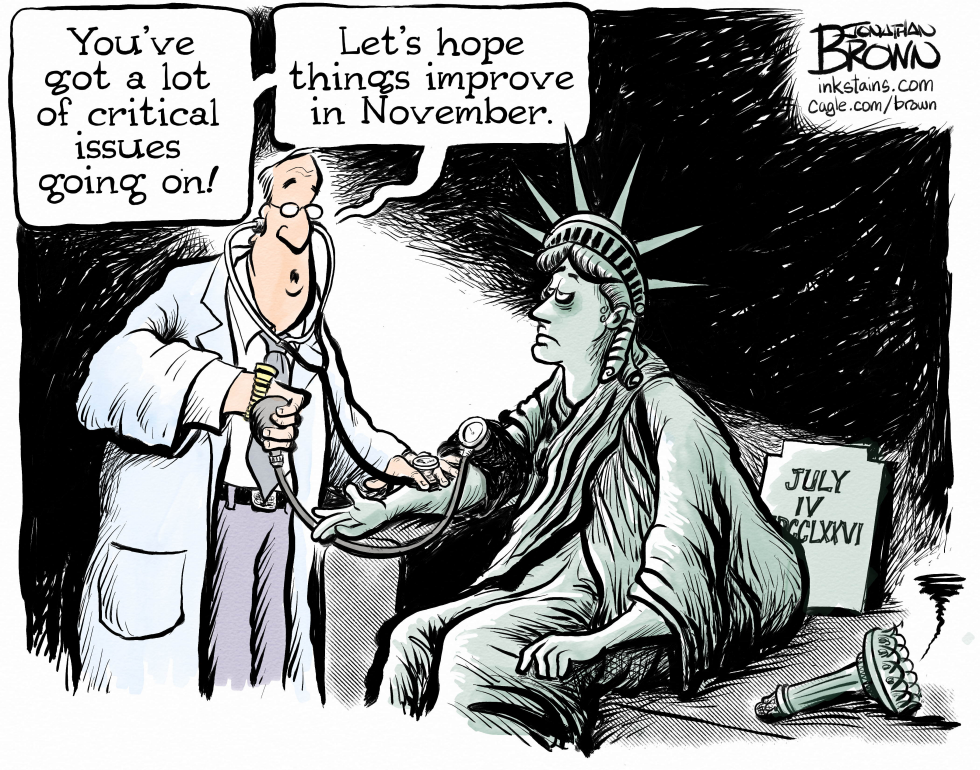
The cartoon depicts a doctor examining the Statue of Liberty's blood pressure and noting numerous critical issues. The Statue responds with hope that things will improve in November. A sign references July 4, 1776, and a broken torch rests on the ground. Published on September 15, 2026, the image uses the iconic figure to comment on the state of the nation ahead of upcoming elections. The visual metaphor highlights concerns about American institutions and public sentiment.
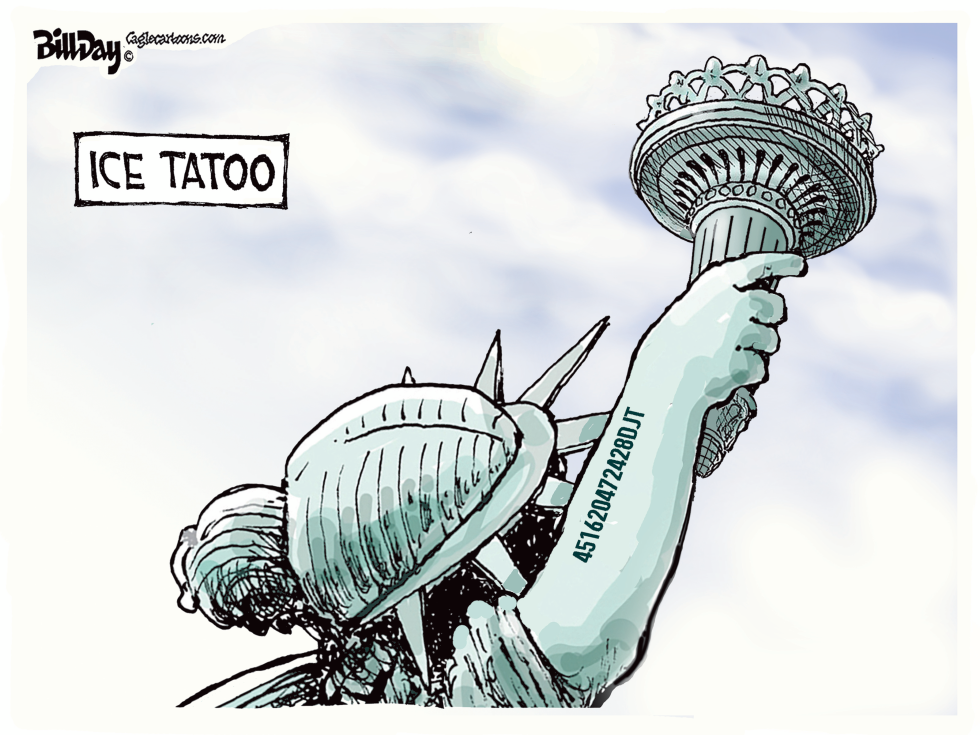
ICE enforcement actions continue to expand in 2026 with new detention and removal priorities. The Statue of Liberty appears marked with a numeric tattoo resembling prisoner identification. The image responds to ongoing border and interior enforcement operations. Critics argue the approach treats immigrants as criminals by default. The piece highlights how such policies clash with traditional symbols of welcome and liberty.
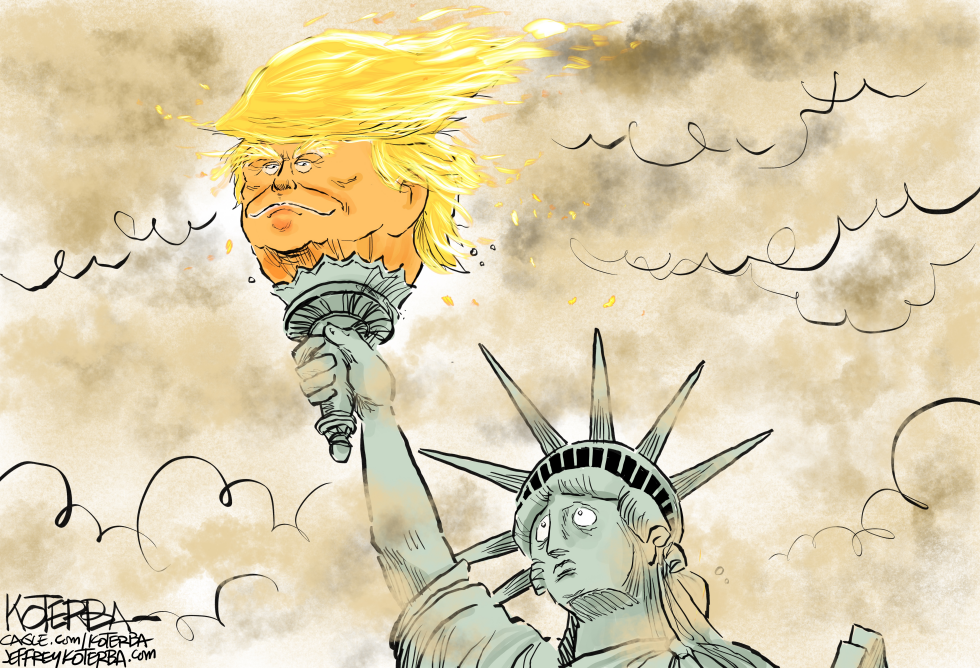
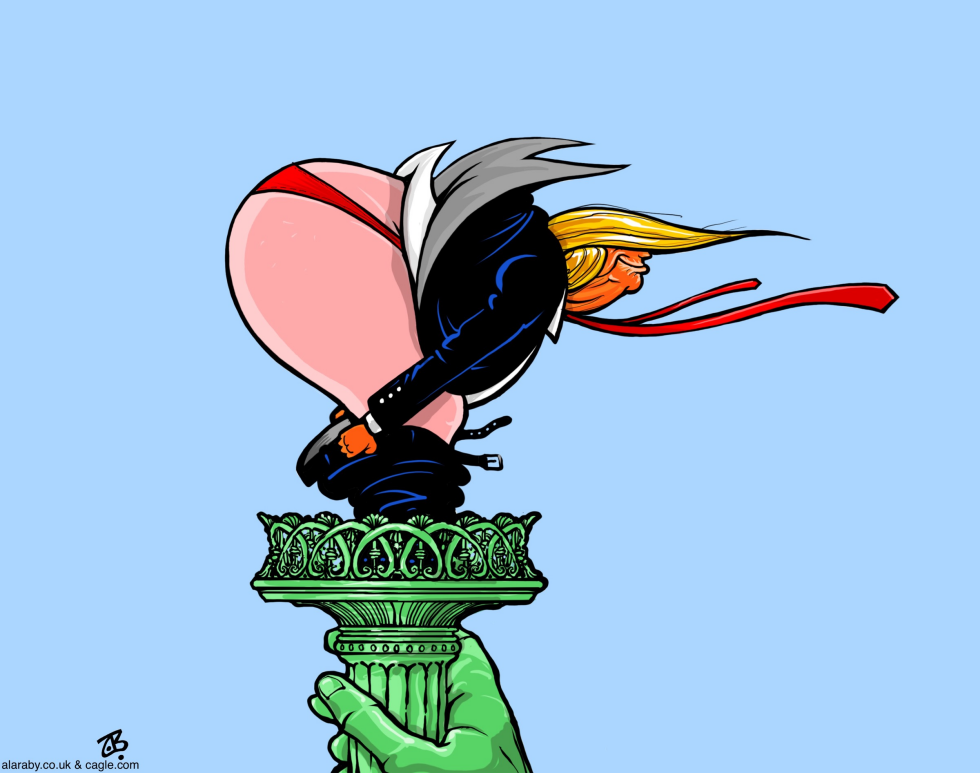
Donald Trump remains a dominant force in American politics in 2026. His continued prominence raises questions about the impact on national institutions and symbols. The editorial takes the position that this influence distorts core American ideals represented by the Statue of Liberty.
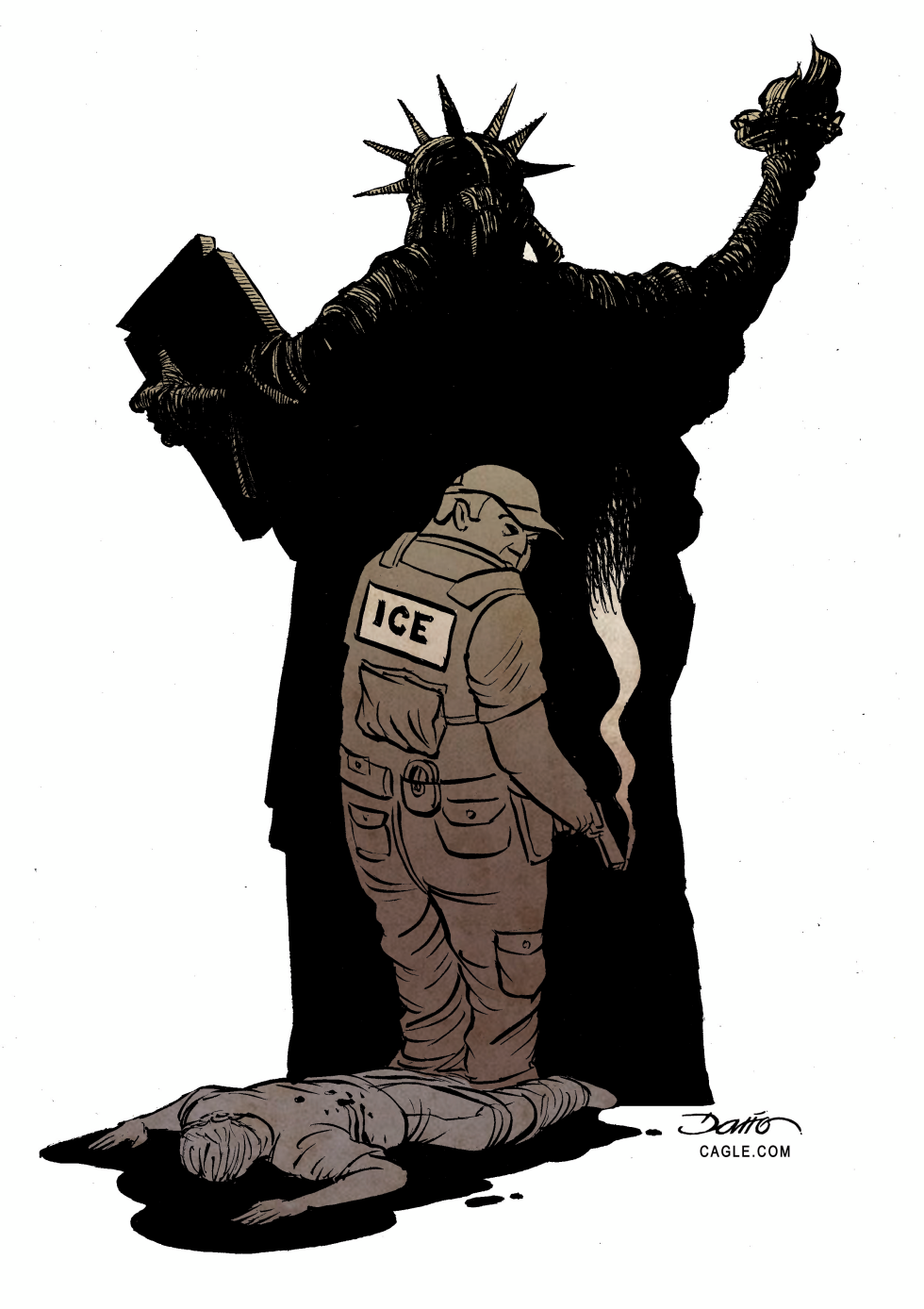
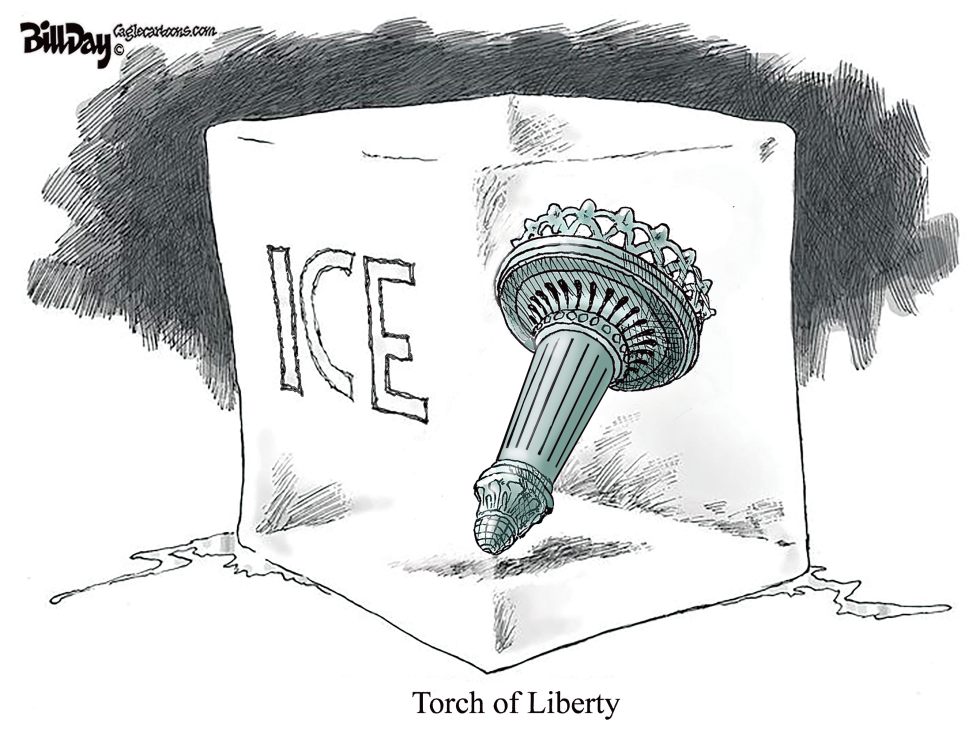
ICE continues targeted enforcement operations at the border and interior sites amid ongoing debates over detention practices and use of force. The agency reports increased arrests tied to recent policy directives on removals. Critics argue the approach undermines America's historic welcome to newcomers. The cartoon frames the tension between security duties and foundational ideals of freedom.
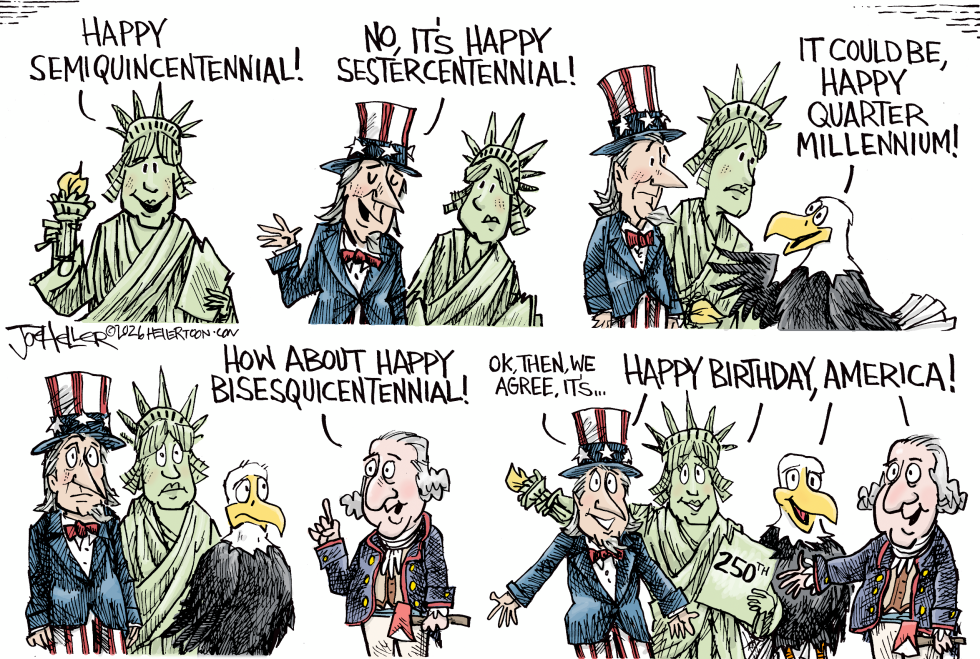
On June 29, 2026, Joe Heller's cartoon depicts Uncle Sam, the Statue of Liberty, Benjamin Franklin, and a bald eagle debating elaborate names for America's 250th anniversary. Proposals range from semiquincentennial and sestercentennial to quarter millennium and bisesquicentennial. The group ultimately agrees on the straightforward greeting Happy Birthday, America, accompanied by a 250th banner. The exchange highlights the challenge of selecting a fitting term for the milestone tied to the 1776 founding.
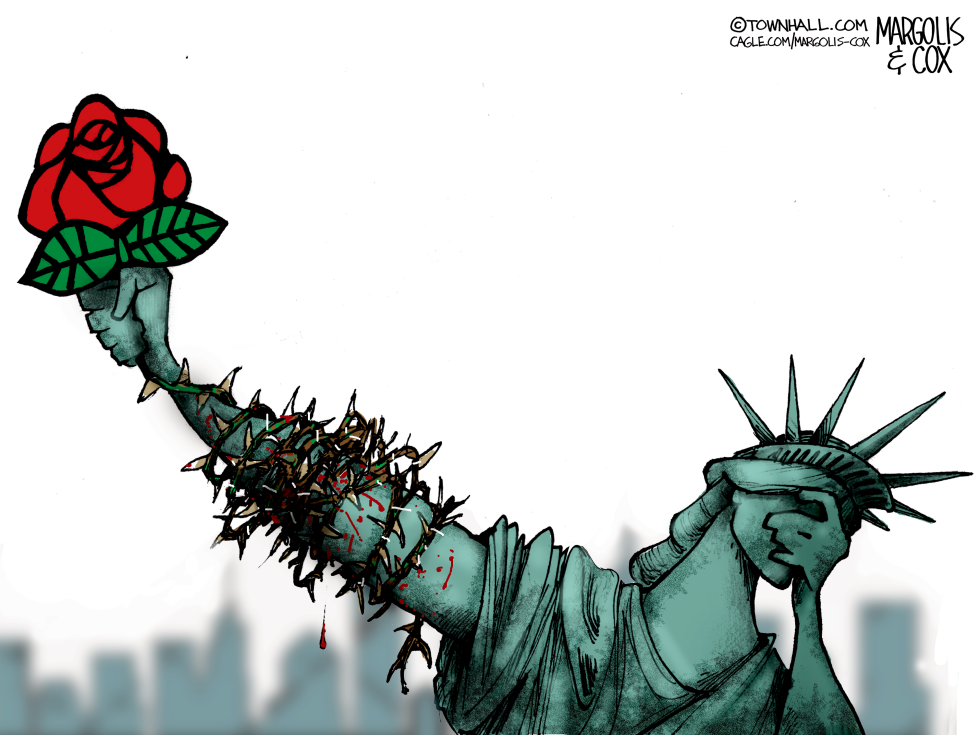
The image shows the Statue of Liberty with her raised arm entangled in barbed wire that draws blood, holding a large red rose in place of the traditional torch. Her other hand covers her face as the New York skyline fades behind her. The work responds to ongoing debates over socialist symbolism in American public imagery on the June 2026 date. The visual replaces the torch with the rose, a traditional emblem of socialism, while the barbed wire suggests entrapment or harm. Artist credit appears in the upper right corner.
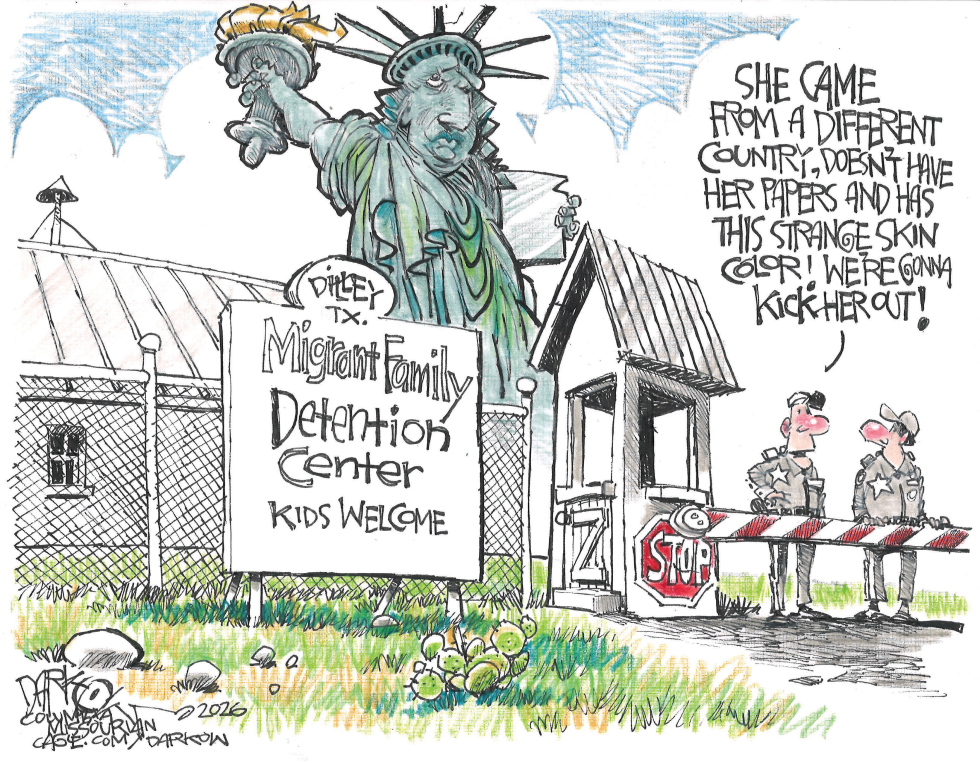
The drawing shows the Statue of Liberty positioned beside a Dilley Texas migrant family detention center sign. Guards at a striped barrier discuss turning her away due to country of origin, missing papers and skin color.
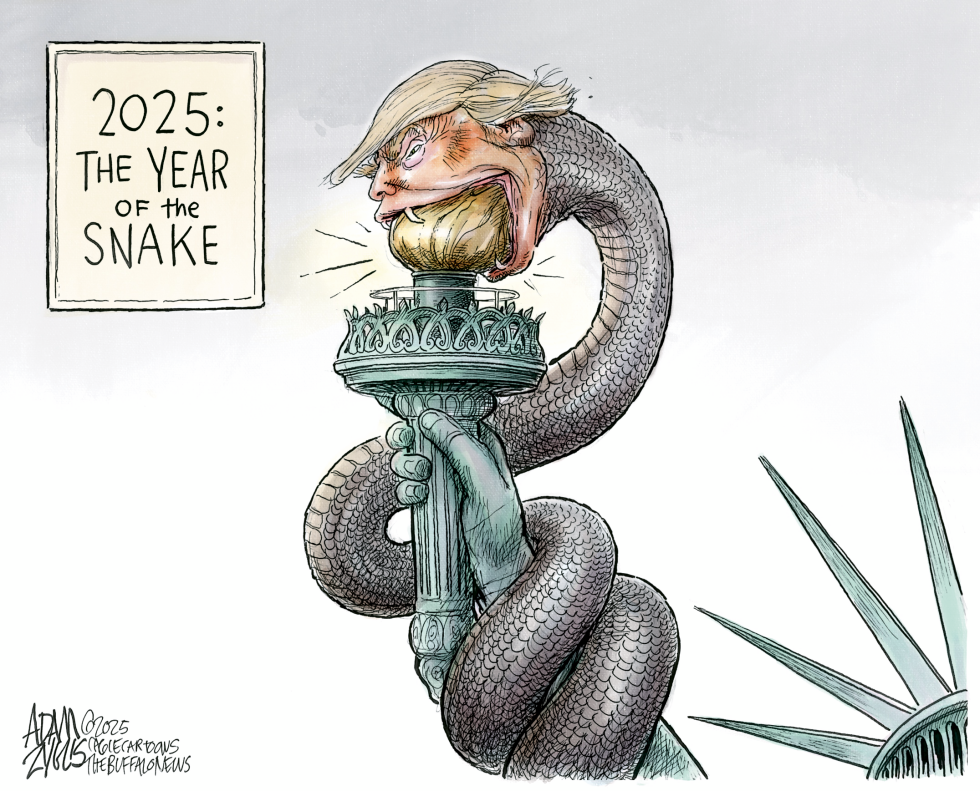
The cartoon depicts Donald Trump with a snake body coiled around the Statue of Liberty's raised arm while his head bites the torch. A sign labels 2025 as the year of the snake. The image responds to ongoing debates over executive actions and institutional norms in the early months of the second Trump administration. The visual metaphor centers on the tension between presidential power and foundational symbols of American governance.
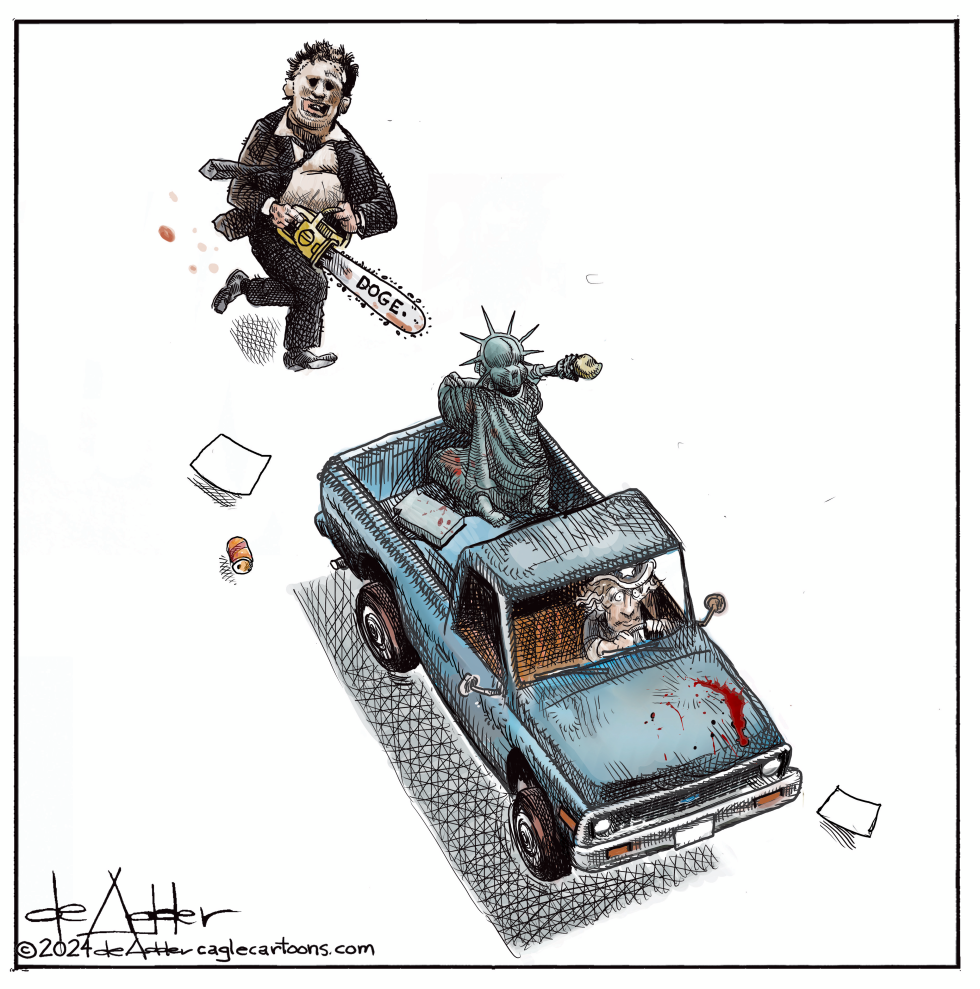
The cartoon depicts Elon Musk sprinting with a chainsaw marked DOGE toward a pickup truck carrying the Statue of Liberty. Blood spatters appear on the vehicle and ground. An older driver steers the truck. Scattered papers and a can lie nearby. The image responds to the launch of the Department of Government Efficiency initiative in early 2025 by portraying aggressive staffing reductions as violent pursuit.
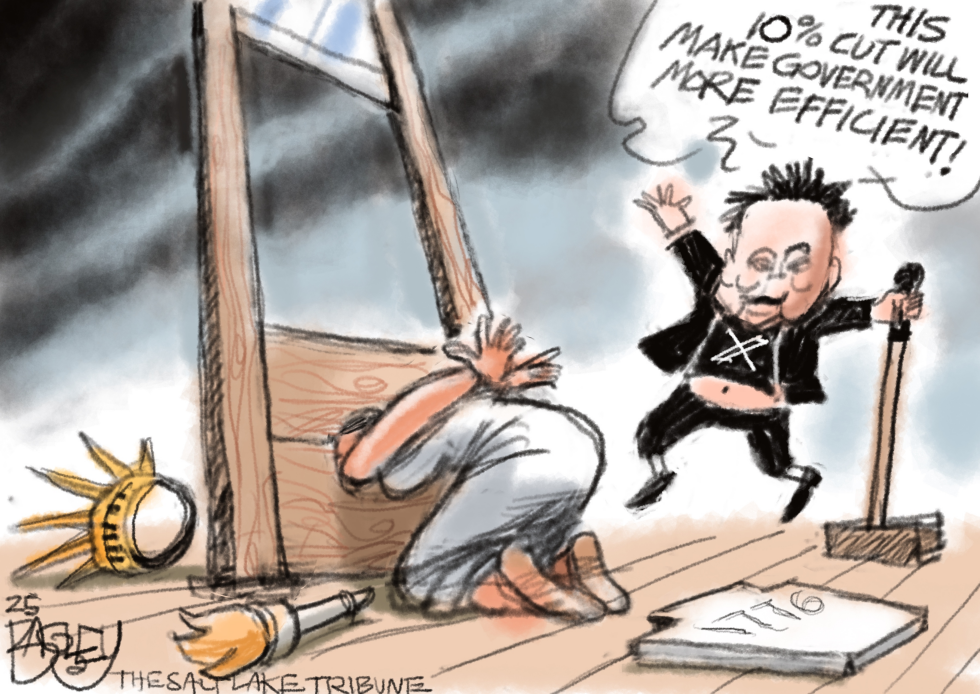
Pat Bagley's February 2025 cartoon shows Elon Musk celebrating a 10 percent government cut that he claims will boost efficiency. The scene places Musk beside a guillotine with a kneeling figure and the Statue of Liberty's torch and crown on the ground. A book labeled VIT6 lies nearby. The image responds to Musk's real-world role leading the Department of Government Efficiency under the Trump administration, where proposed agency reductions sparked immediate debate over federal workforce impacts and spending priorities.