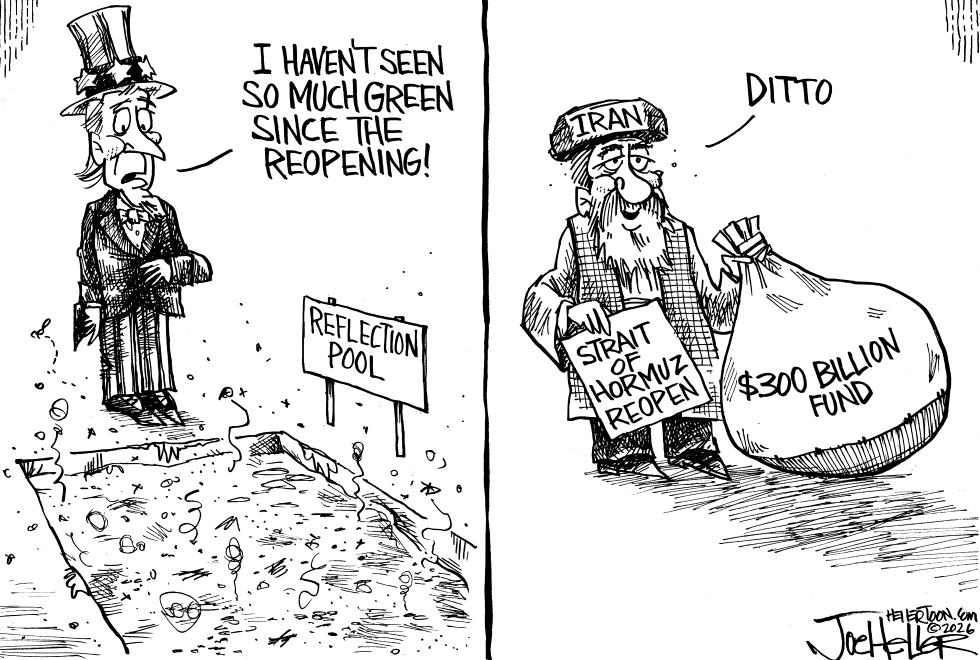
On June 19 2026 Joe Heller depicts Uncle Sam at a green-tinted reflection pool remarking on the color since reopening. In the facing panel a figure labeled Iran echoes the line while displaying a Strait of Hormuz reopen sign and a 300 billion dollar fund bag. The split composition ties the US visual gag to Iran's recent move on the vital waterway and associated financial package.
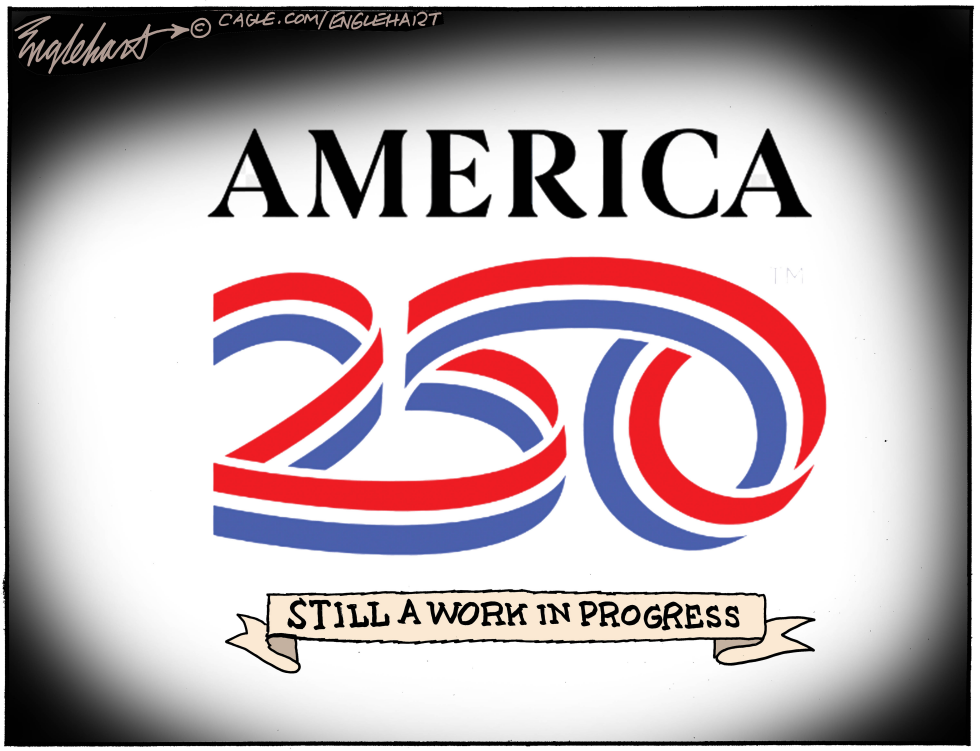
Bob Englehart's June 2026 cartoon marks America's 250th anniversary with a large stylized 250 in patriotic colors under the word AMERICA. A banner across the bottom reads STILL A WORK IN PROGRESS. The image ties directly to the upcoming semiquincentennial on July 4 2026 and offers a simple visual statement about the nation's continuing evolution.
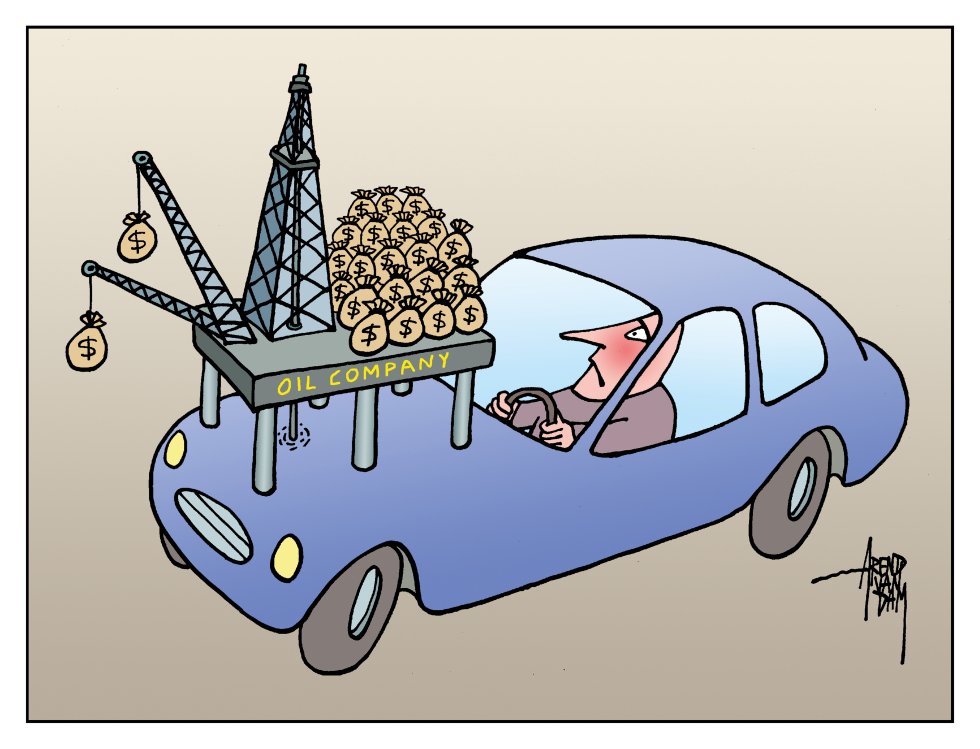
In this pointed political cartoon, an oil company platform sits atop a blue car, loaded with piles of dollar-sign money bags, while cranes dangle more profits. The frustrated motorist grips the wheel, face red with anger, illustrating how excessive profits from oil companies crush consumers at the pump. Tags like excessive profits, motorists, fuel, petrol, and refuel capture the essence, with Iran and Strait of Hormuz hinting at geopolitical tensions driving prices. This visual satire underscores the disparity between corporate windfalls and everyday drivers' pain, a timeless theme in energy politics.
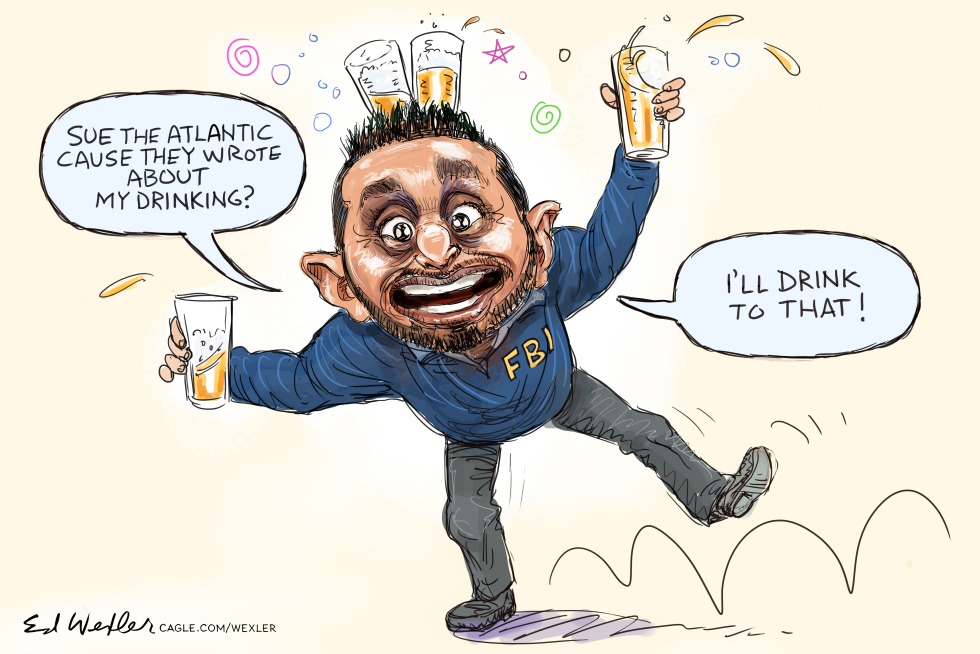
Ed Wexler's cartoon captures a man clearly modeled after a public figure, dressed in an FBI sweatshirt, balancing beers on his head and in his hands, with tags like kash, patel, the atlantic, drinking, alcohol, beer, obvious intoxication, and absences. The figure, showing signs of inebriation with wide eyes and a goofy grin, holds a glass in each hand while more pints teeter atop his spiky hair, foam spilling everywhere. Speech bubbles reveal his slurred plan to sue the Atlantic for writing about his drinking, followed by the punchline 'I'll drink to that!' Bubbles and stars float around, emphasizing the dizzy, drunken state. The signature at the bottom credits the artist and site, grounding the satire in visible elements of alcohol-fueled absurdity.
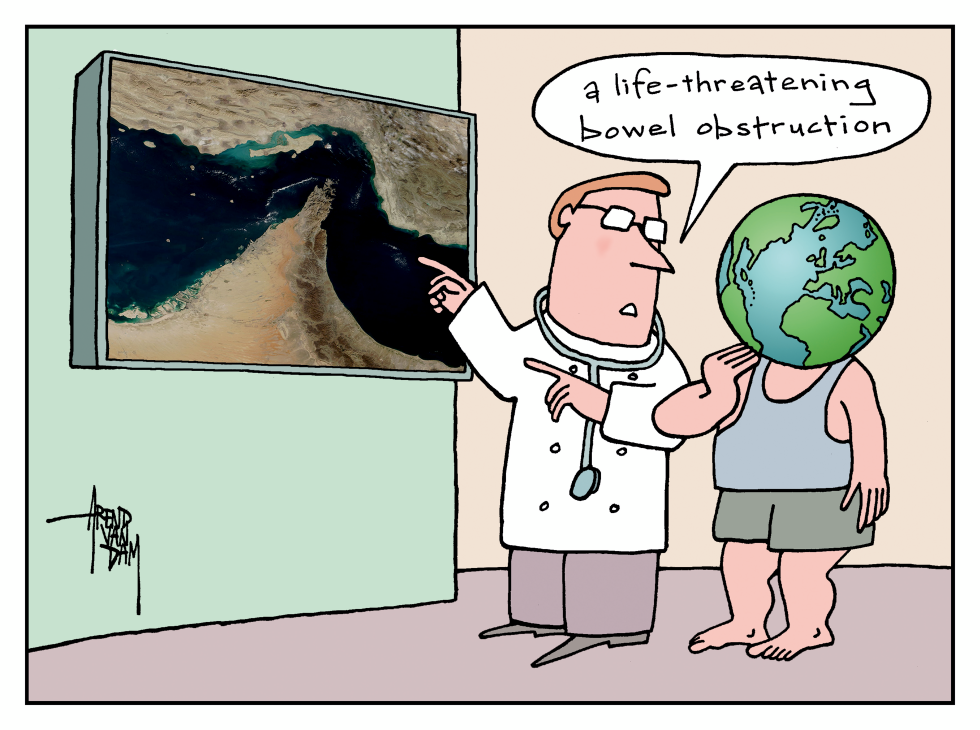
Arend van Dam\'s cartoon depicts a doctor diagnosing a child-like figure with a globe for a head, pointing to a screen showing the Strait of Hormuz as a life-threatening bowel obstruction. This visual metaphor ties into tags such as economy, world, oil, gas, obstruction, and war, illustrating how blockages in key trade routes threaten global stability. The barefoot patient in casual attire underscores vulnerability, while the doctor\'s serious demeanor adds dry humor to the geopolitical satire. Negotiations with ayatollahs and regime sanctions loom in the background, making the image a pointed commentary on how such conflicts create economic chokepoints. The overall composition blends medical analogy with international affairs for sharable impact.
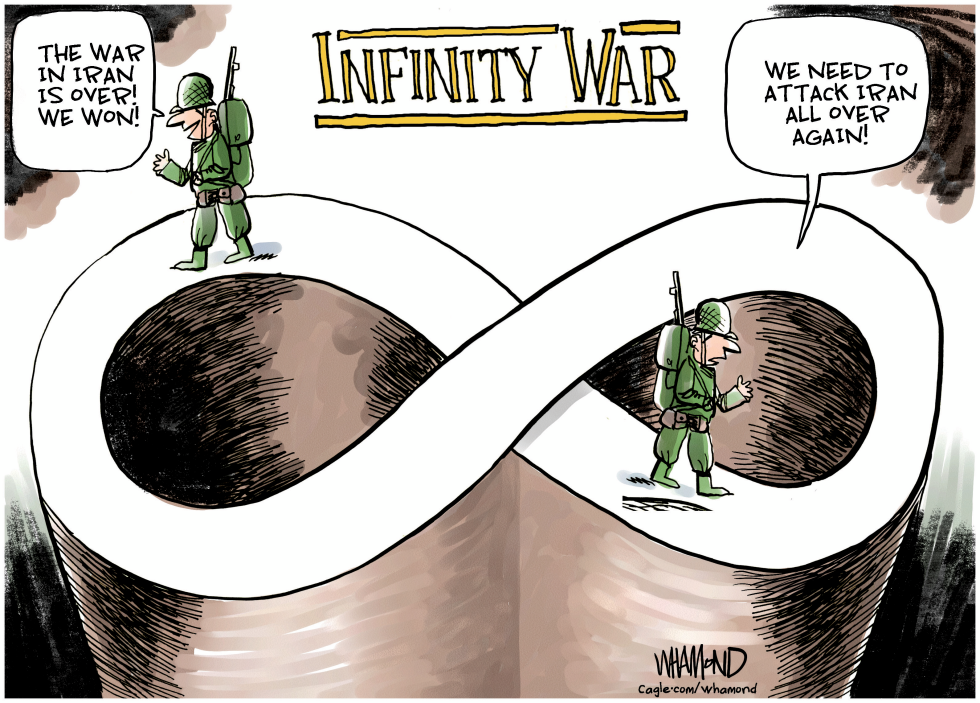
Dave Whamond's cartoon features two soldiers positioned on a large infinity symbol, one announcing victory in the Iran war while the other insists on attacking again, highlighting the perpetual nature of conflict. The title 'Infinity War' parodies endless warfare, with the loop representing cycles of victory and renewed aggression. Tags like iran war cartoon, infinity symbol war, endless conflict satire, military parody, perpetual war illustration, and satirical soldiers emphasize the dry humor in depicting how wars in regions like Iran seem to restart indefinitely, a common theme in political cartoons that resonates with ongoing global tensions.
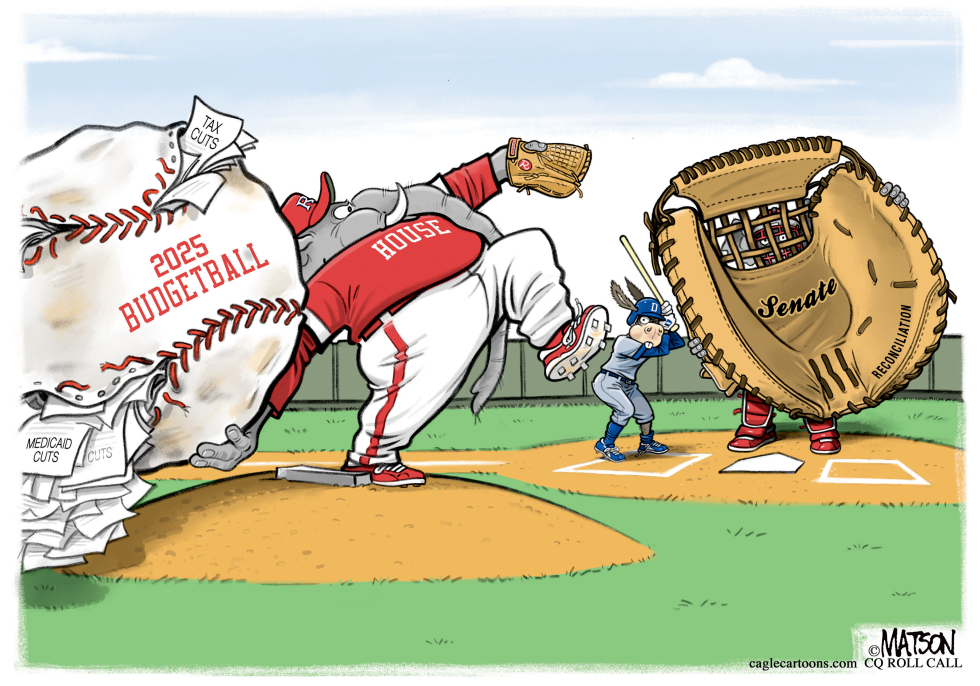
The cartoon depicts the Republican-controlled House pitching a large 2025 budget bill containing tax cuts and Medicaid reductions toward the Senate, portrayed as a giant catcher's mitt labeled reconciliation. A diminutive Democratic batter waits at home plate. The image illustrates the legislative process for passing fiscal legislation through budget reconciliation procedures that bypass the Senate filibuster. As of June 2025, congressional Republicans hold majorities in both chambers and are advancing spending and tax measures that include reductions to entitlement programs.
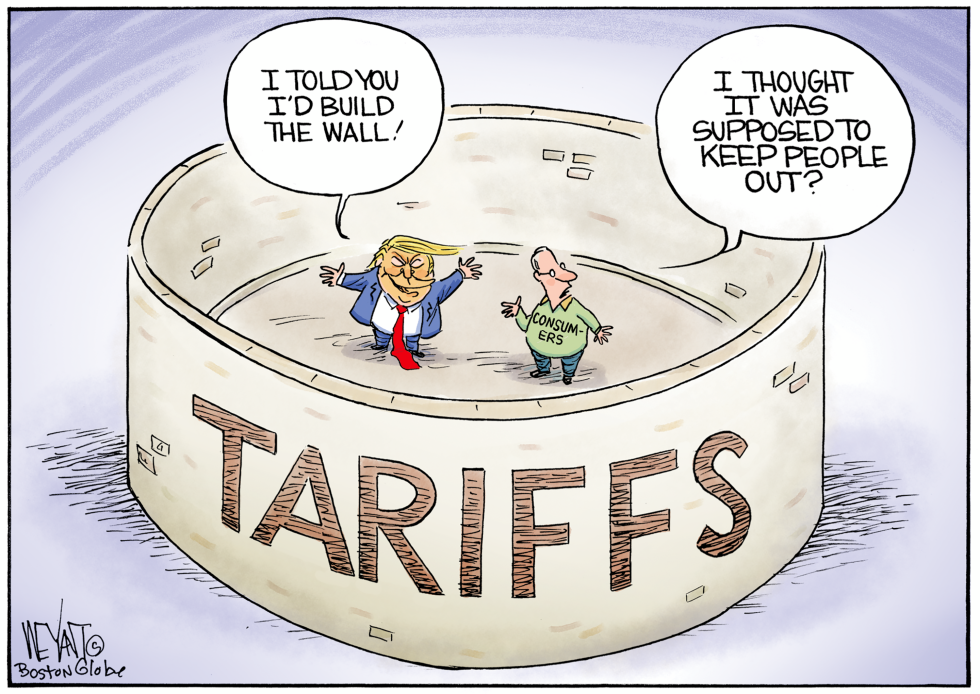
The cartoon shows Trump inside a circular wall labeled 'TARIFFS,' declaring he built the wall, with a figure marked 'CONSUMERS' puzzled that it's supposed to keep people out. Tags like trump, tariffs, threats, Mexico, Canada, China, trade, wall, prisoner, consumers underscore the irony. The image critiques how tariffs meant to protect against foreign threats from Mexico, Canada, and China end up trapping domestic consumers like prisoners. This visual metaphor draws on Trump's famous wall promise, flipping it to show trade policies harming those inside. The dry humor lies in the reversal, where the wall imprisons rather than excludes, commenting on economic fallout.
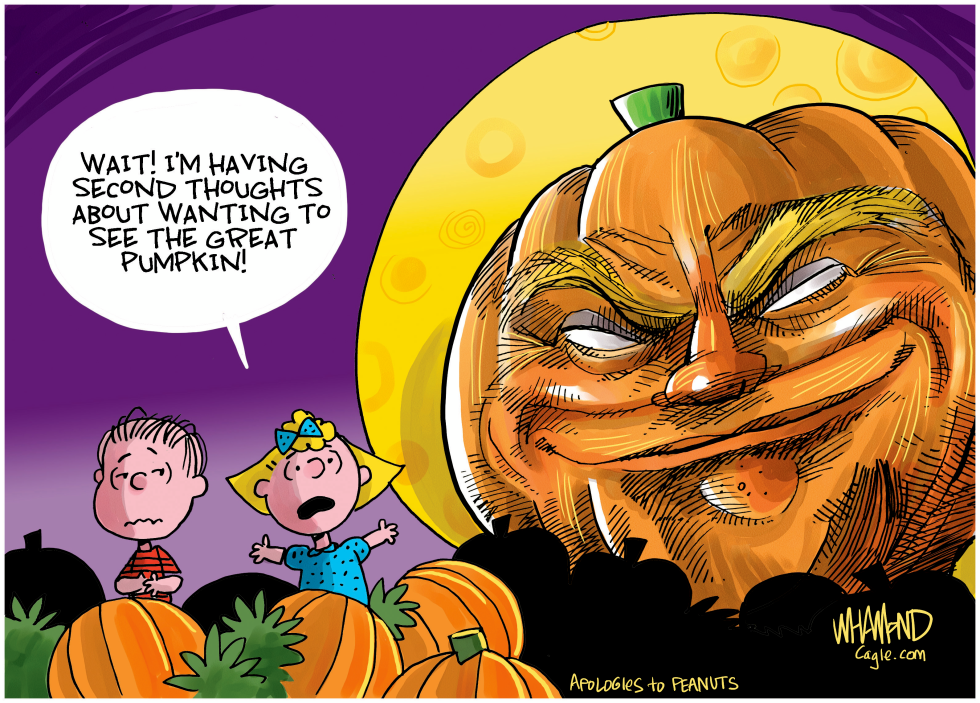
On October 27 2024, cartoonist Dave Whamond reimagines the Peanuts Great Pumpkin scene with Donald Trump as the looming orange figure. Sally expresses sudden hesitation while Linus watches from the patch. The image captures voter unease days before the November election between Trump and Kamala Harris. Polls showed the race tight with concerns over democracy and rights in play.