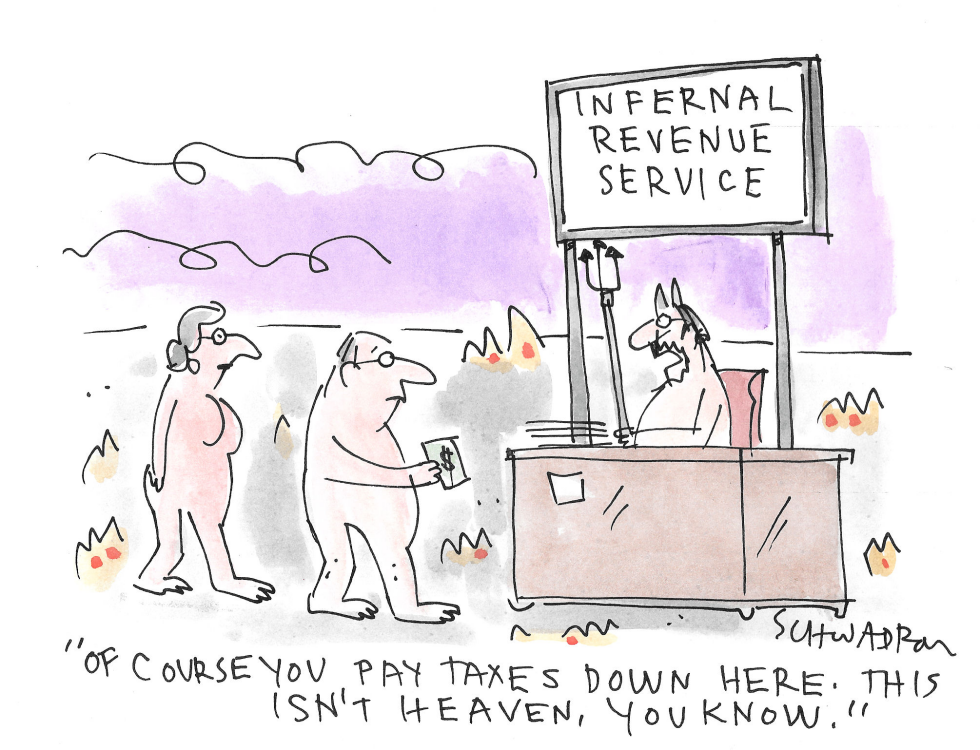
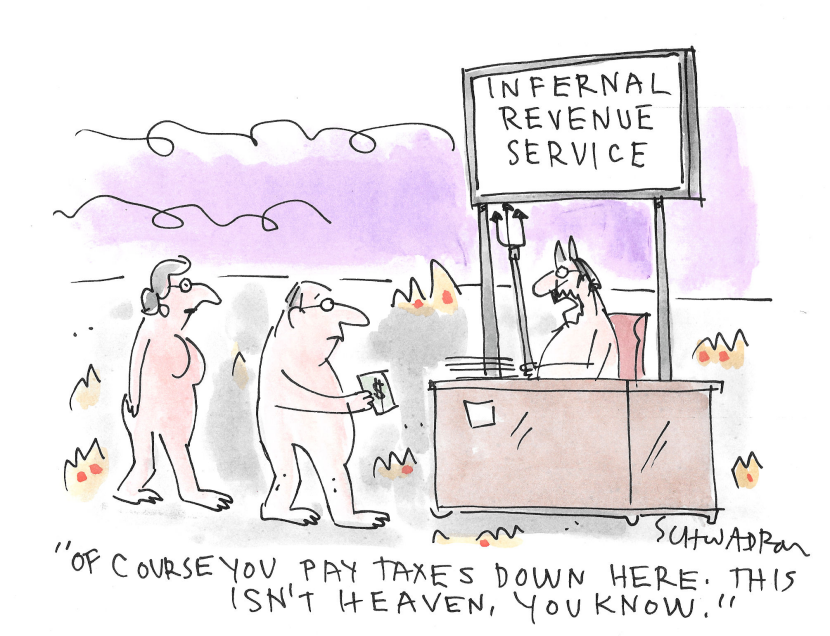
The long-standing adage that only death and taxes are certain receives fresh treatment in a cartoon depicting an IRS outpost operating in hell. No specific policy change or ruling prompted the piece, which instead plays on the enduring public frustration with tax collection as an inescapable force. The editorial stance pokes at bureaucratic persistence, suggesting the tax man follows citizens beyond the grave with the same relentless efficiency seen in life.
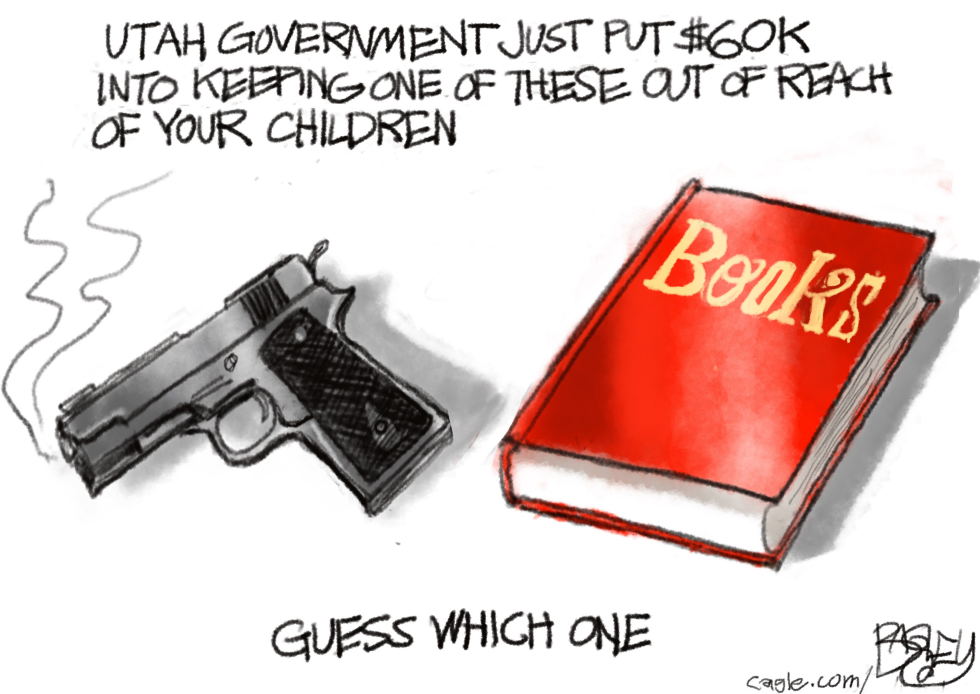
Utah officials directed $60,000 toward measures keeping certain books from children. Firearms remain readily available in the state. The decision highlights priorities in public safety and education policy. The piece criticizes the allocation as misplaced emphasis on censorship instead of addressing gun risks.
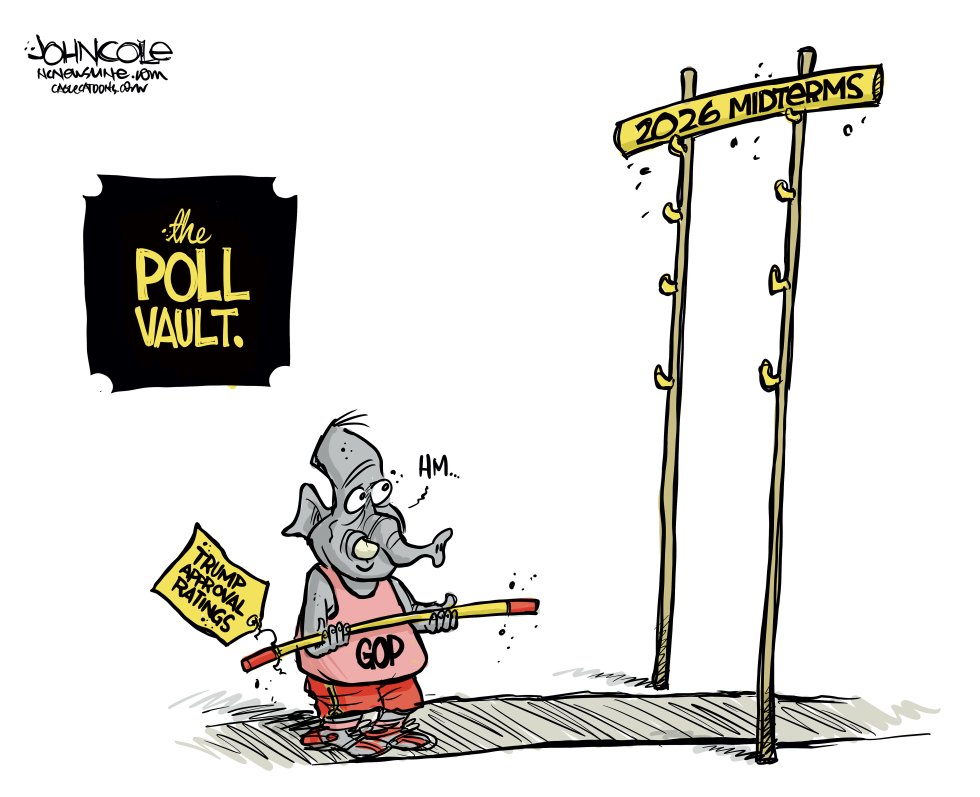
Republicans face the 2026 midterm elections with Donald Trump as a central figure whose approval ratings remain a key variable. Party strategists must decide how heavily to tie their candidates to the former president amid ongoing voter sentiment. The piece portrays the GOP as an athlete preparing to clear the midterm bar but questioning whether the available pole will suffice.
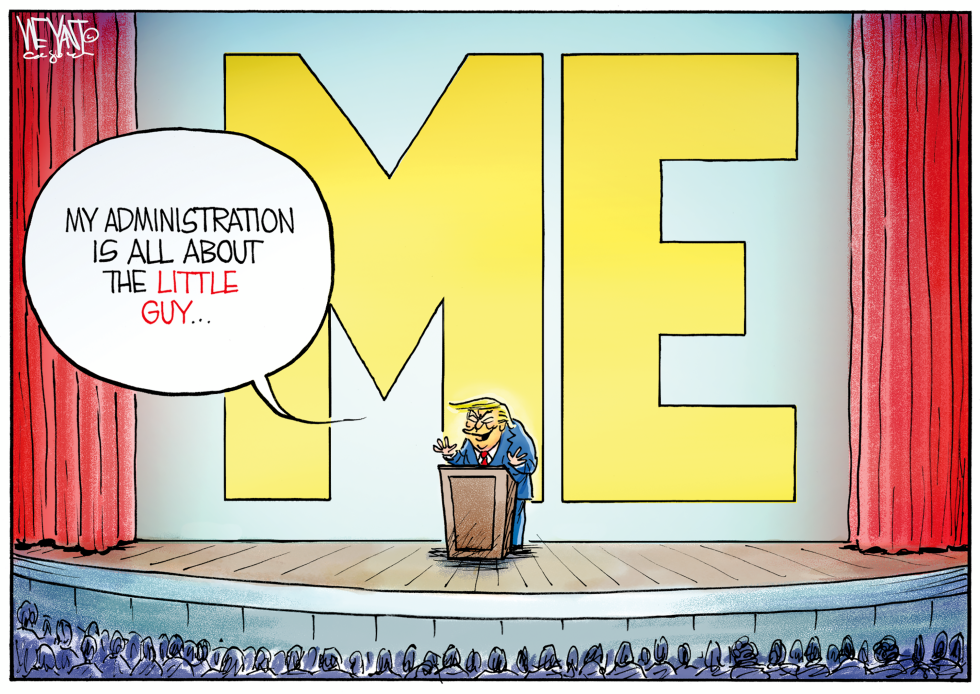
Donald Trump has repeatedly positioned his administration as champion of ordinary Americans during public addresses. The claim comes amid ongoing debates over policy priorities and personal branding in the White House. The piece portrays the rhetoric as centered on the speaker rather than the public.
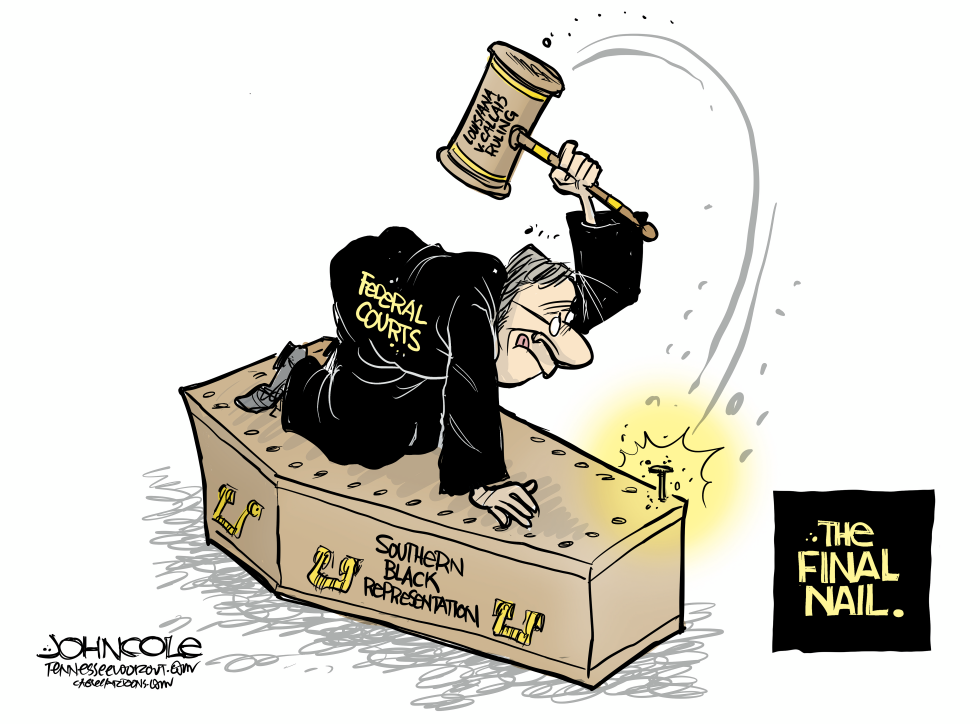
A federal court ruling on Louisiana redistricting has reduced black congressional representation across southern states. The decision follows ongoing litigation over district maps and voting access. It matters because it alters the number of majority-minority seats available in Congress. The piece argues the ruling delivers a decisive setback to those representation gains.
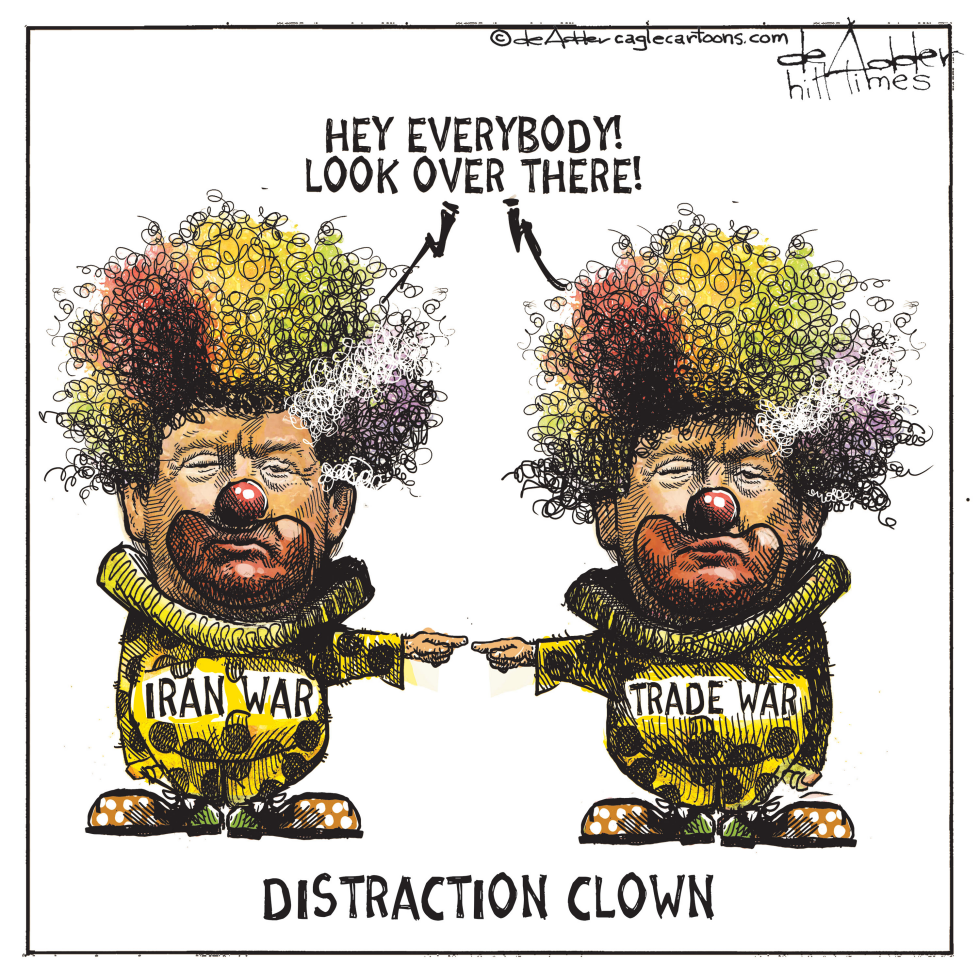
Public attention is being directed toward simultaneous Iran and trade conflicts as potential diversions from other issues. The editorial depicts the two crises as interchangeable distractions promoted by the same source. It argues that leaders are using these flashpoints to shift focus rather than address underlying problems.
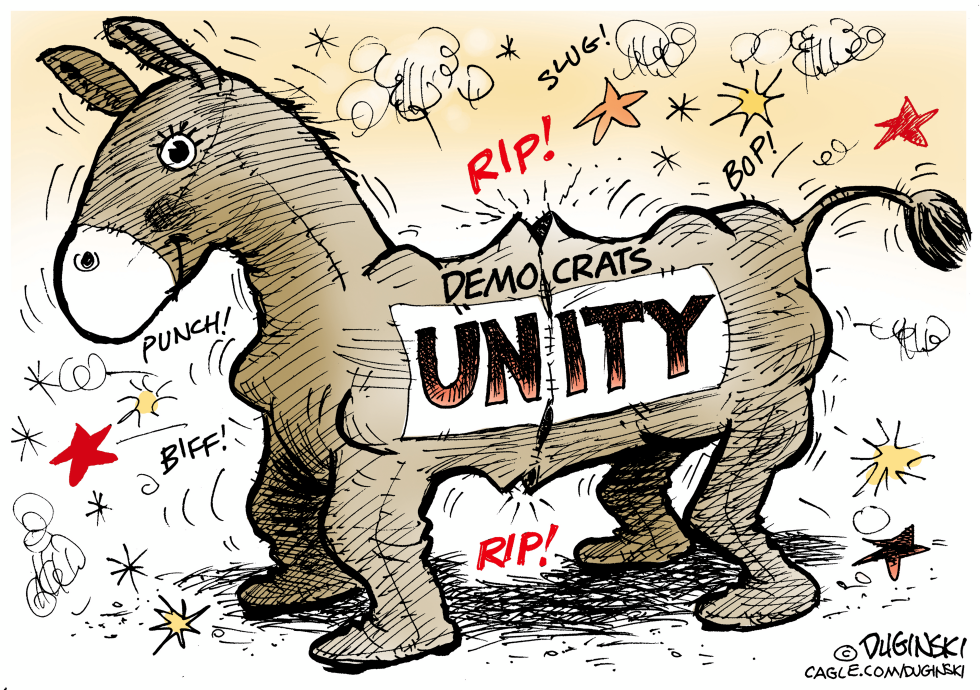
Democrats continue to display public divisions over strategy and messaging in the run-up to midterm and presidential contests. Party leaders struggle to project cohesion on issues ranging from economic policy to social priorities. The resulting perception of disarray weakens their ability to counter Republican narratives and mobilize voters. The cartoon highlights how these internal conflicts undermine the party's core message of unity.
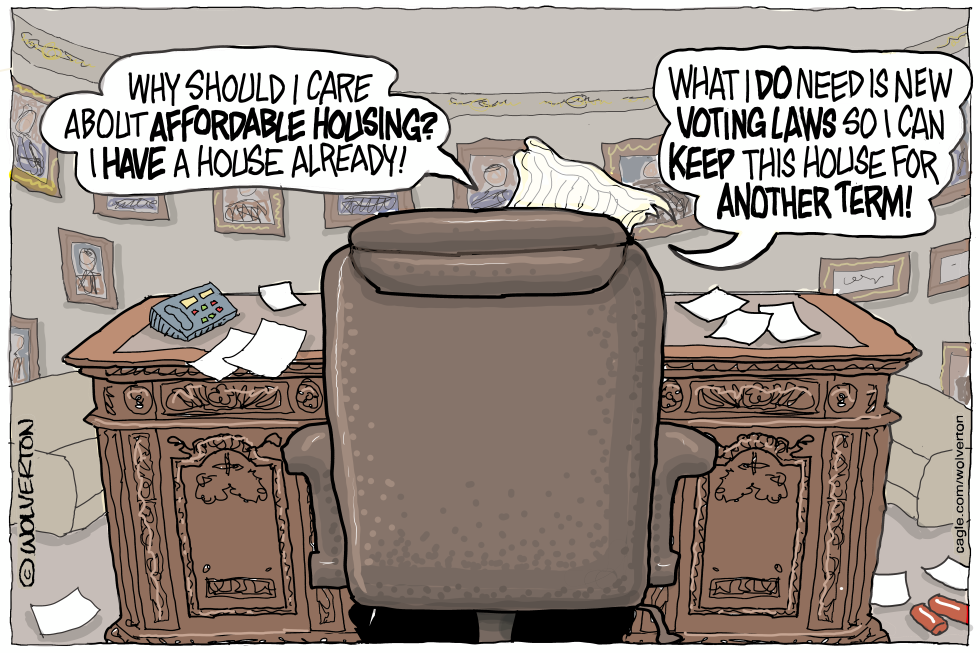
The cartoon depicts a politician viewed from behind at a large desk, declaring indifference to affordable housing because of personal ownership while demanding new voting laws to secure another term. The scene is set in a wood-paneled office with framed portraits and scattered papers. This visual responds to ongoing debates about election integrity measures and housing affordability challenges. The argument highlights how some incumbents may favor self-preservation through legislation over constituent needs like housing access. Broader context includes repeated legislative efforts to adjust voting rules in various states amid concerns over electoral outcomes.
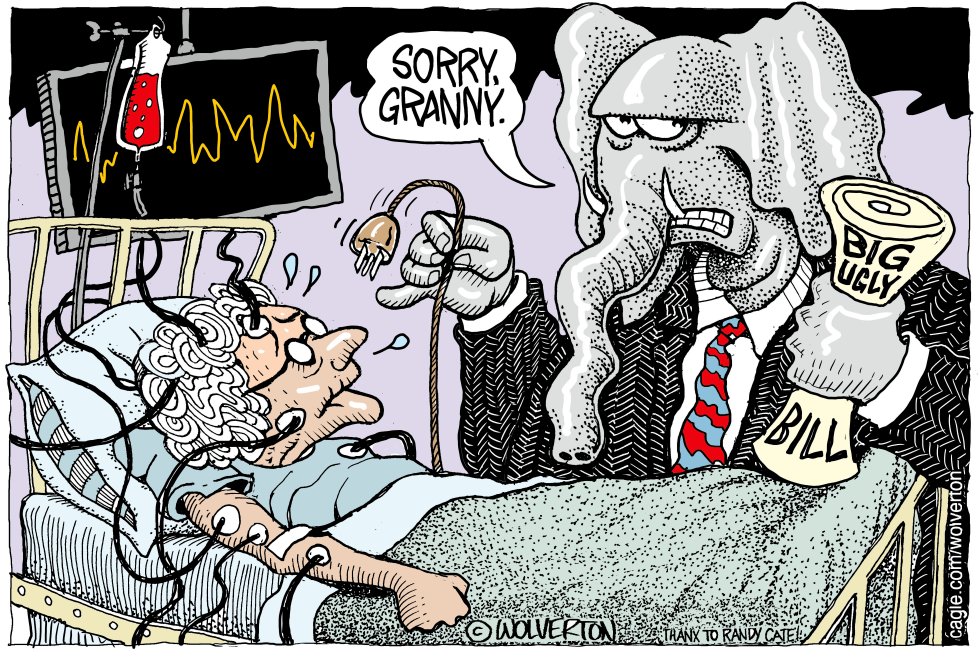
The cartoon depicts a Republican elephant disconnecting an elderly woman from hospital life support while holding a roll labeled Big Ugly Bill. The scene responds to ongoing 2025 debates over Republican-backed legislation affecting Medicaid funding and healthcare access for seniors. The elephant offers an apology as the monitor shows erratic readings.