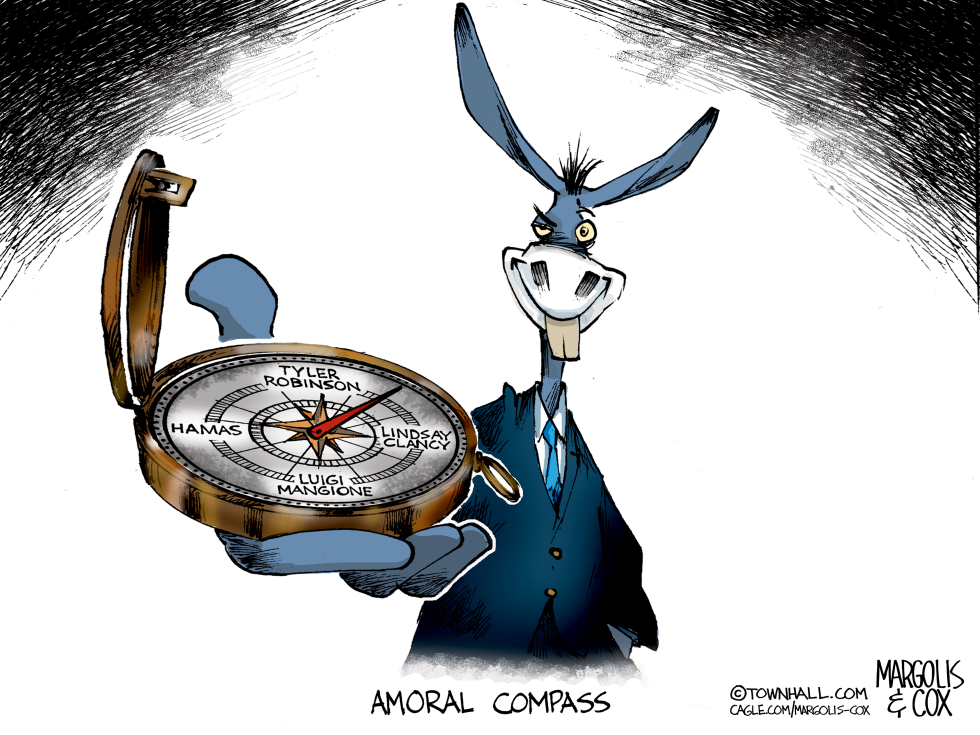
On September 11, 2026, a political cartoon by Margolis & Cox depicts the Democratic Party's moral framework as broken by associating it with figures such as Luigi Mangione, Lindsay Clancy, Tyler Robinson, and Hamas. The piece argues that progressive tolerance for these cases reveals a deeper ethical failure. It matters because public trust in political morality shapes elections and policy debates. The cartoon takes the position that the left has abandoned consistent principles in favor of selective outrage.
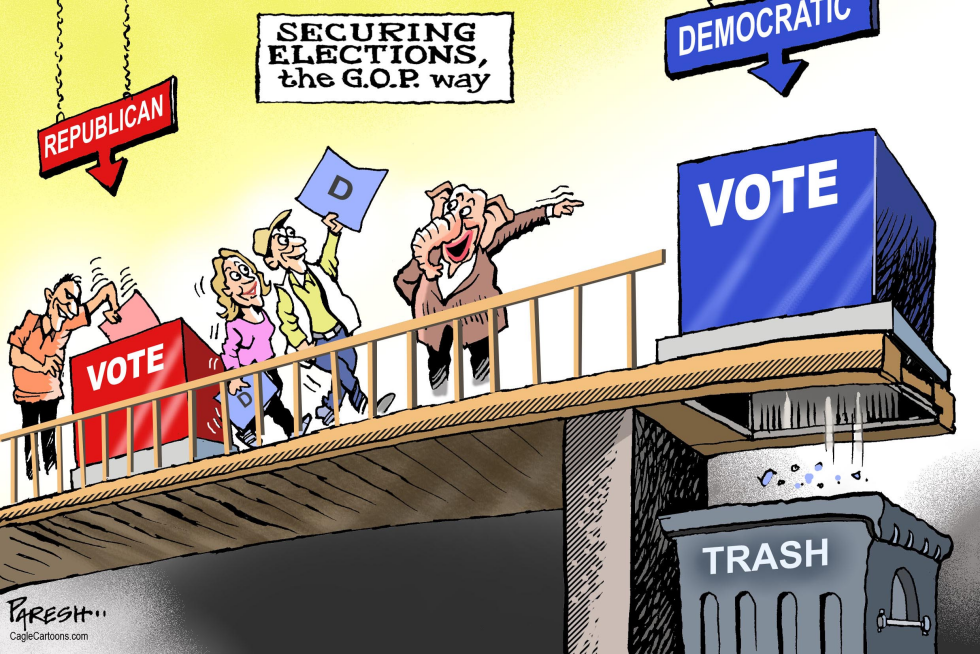
The cartoon depicts Republicans on a platform guiding a large blue vote box labeled Democratic into a trash can below while a red Republican vote box remains on the structure. A sign reads Securing Elections the G.O.P. way. The elephant symbol of the GOP points toward the action as figures including one holding a D flag stand nearby. The image comments on claims of election integrity by showing ballots from one party discarded. This reflects ongoing partisan debates over voting procedures and access as of the 2026 publication date.
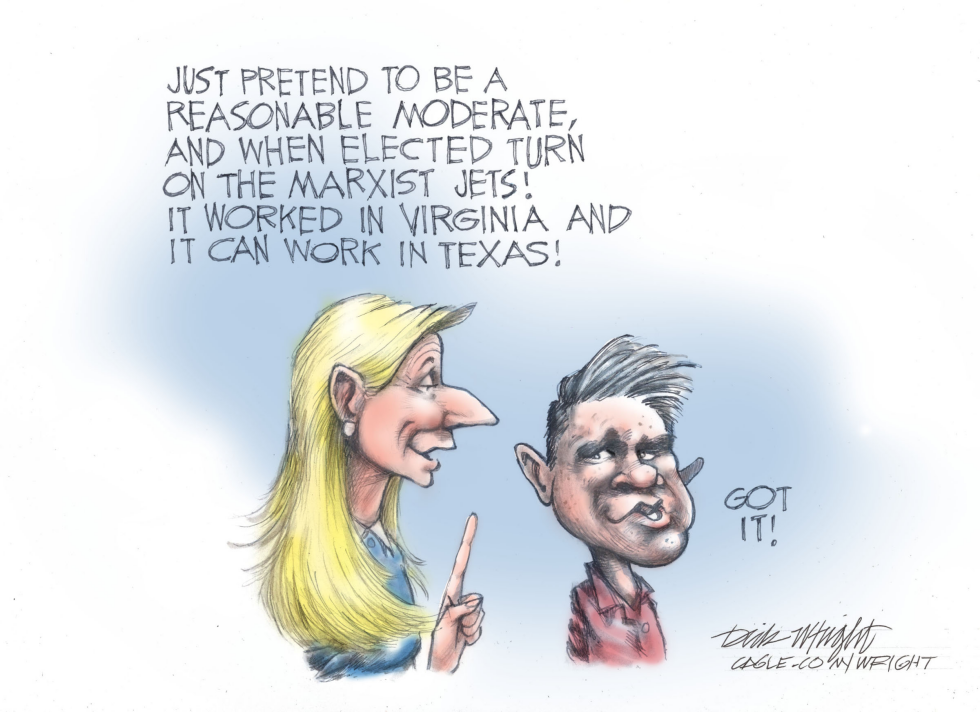
A Texas political candidate is depicted receiving advice to campaign as a moderate before revealing a more radical agenda after election, modeled on Abigail Spanberger's Virginia approach. The cartoon highlights concerns over deceptive campaign strategies in the 2026 cycle and questions the authenticity of centrist positioning by progressive candidates.
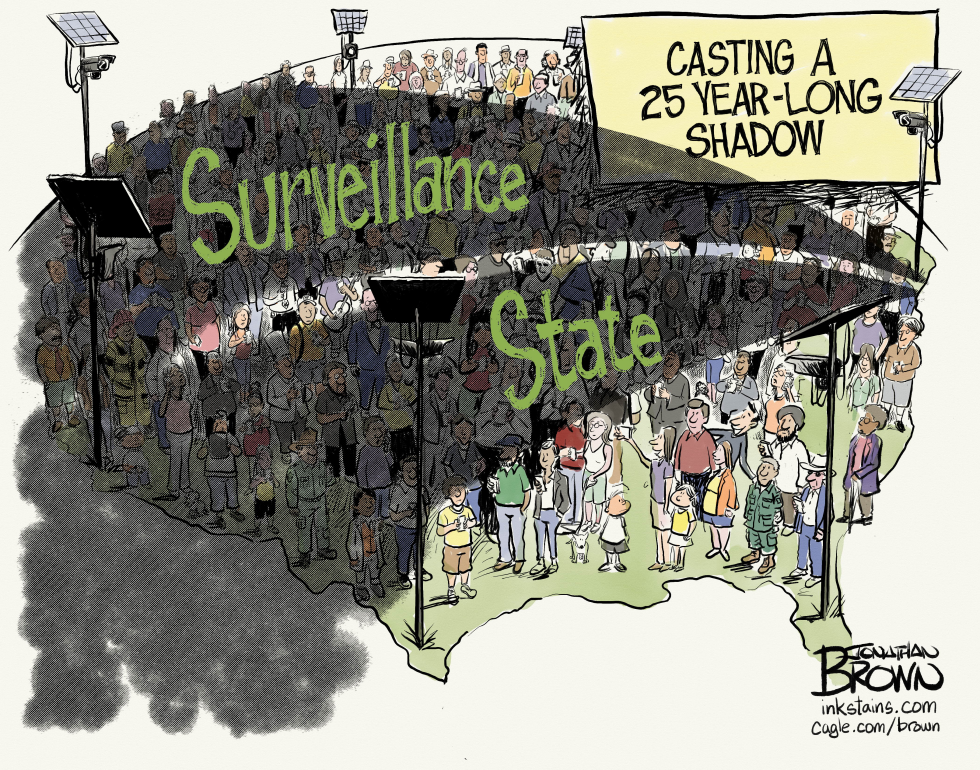
The cartoon depicts a dense crowd of Americans standing on a map of the United States, partially obscured by a large dark shadow cast by surveillance cameras mounted on poles. The words 'Surveillance State' appear prominently in green lettering across the scene, while a sign in the upper right reads 'CASTING A 25 YEAR-LONG SHADOW.' The image comments on the lasting effects of expanded government surveillance programs that began after the September 11 attacks, now spanning a quarter century. It illustrates how these measures continue to influence daily life and public spaces in 2026.
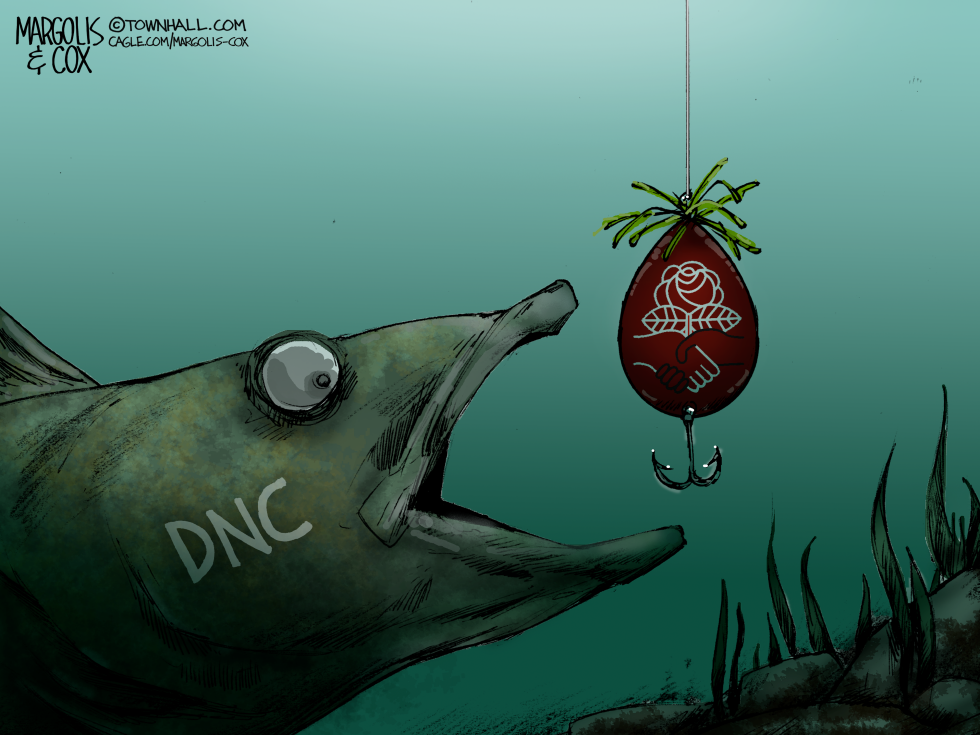
The Democratic National Committee faces growing influence from the Democratic Socialists of America. The cartoon depicts the DNC as a fish drawn to a lure bearing the DSA rose and handshake symbol. This reflects ongoing efforts by the socialist faction to shape Democratic priorities on economic policy and party direction. The piece suggests the DNC risks being pulled toward more radical positions. It highlights internal party dynamics where progressive activists seek greater control over the broader Democratic apparatus.
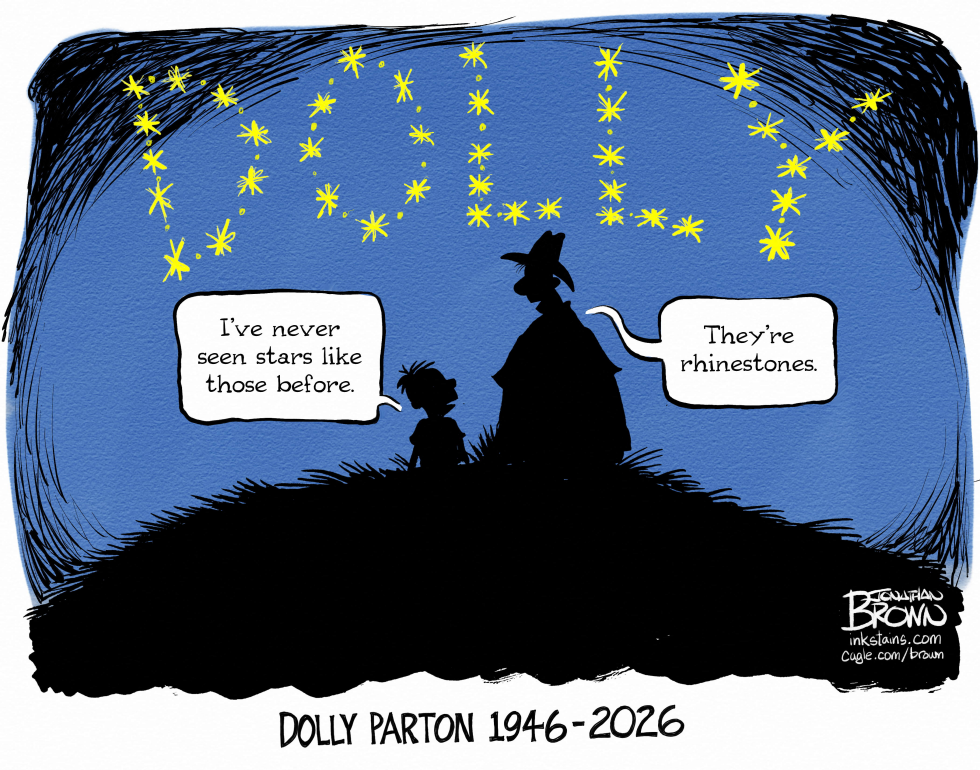
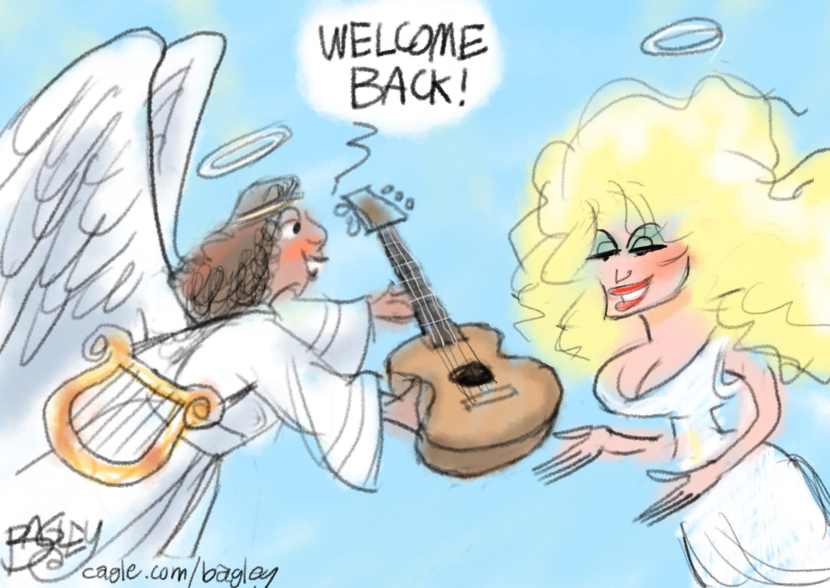
Dolly Parton passed away in 2026 at age 80. Fans and the public mourned the loss of the country music legend known for her rhinestone outfits and charitable work. The tribute highlights her enduring sparkle and cultural impact through a celestial memorial image. The piece positions her legacy as one of warmth, generosity, and unmistakable glamour that continues to shine.
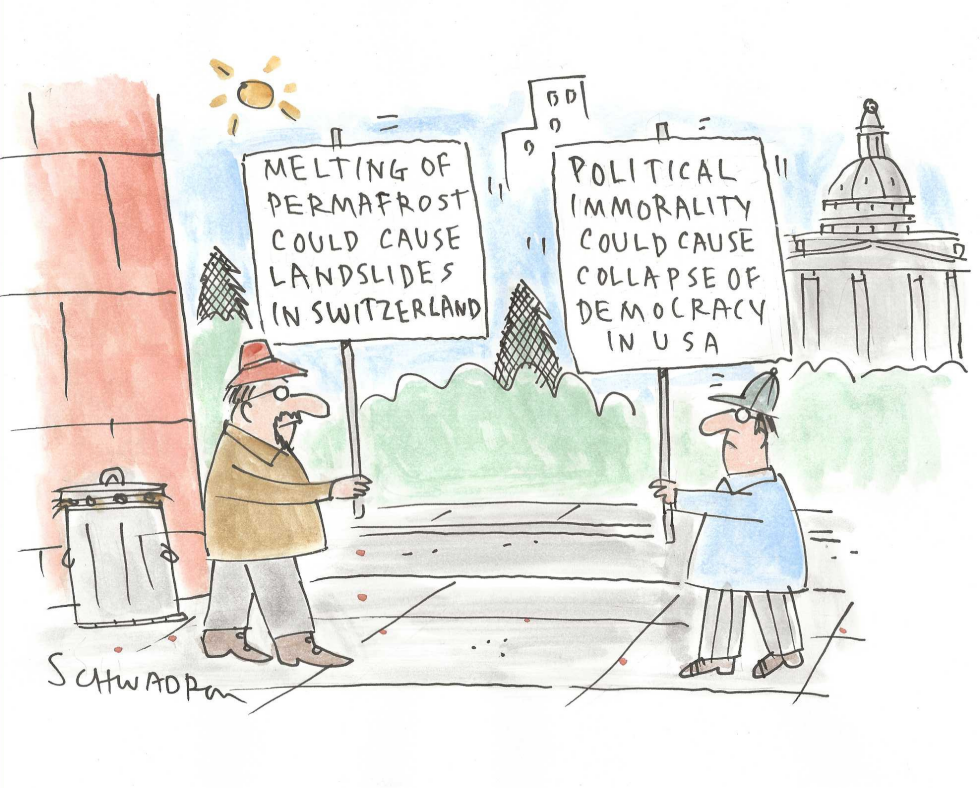
Activists in public spaces continue to draw parallels between accelerating climate impacts such as thawing permafrost and landslides in Switzerland and warnings about political conduct undermining democratic institutions in the United States. The signs highlight how environmental changes and governance failures each carry risks of sudden structural breakdown. The editorial stance underscores that both threats deserve equal public attention as visible warning indicators.
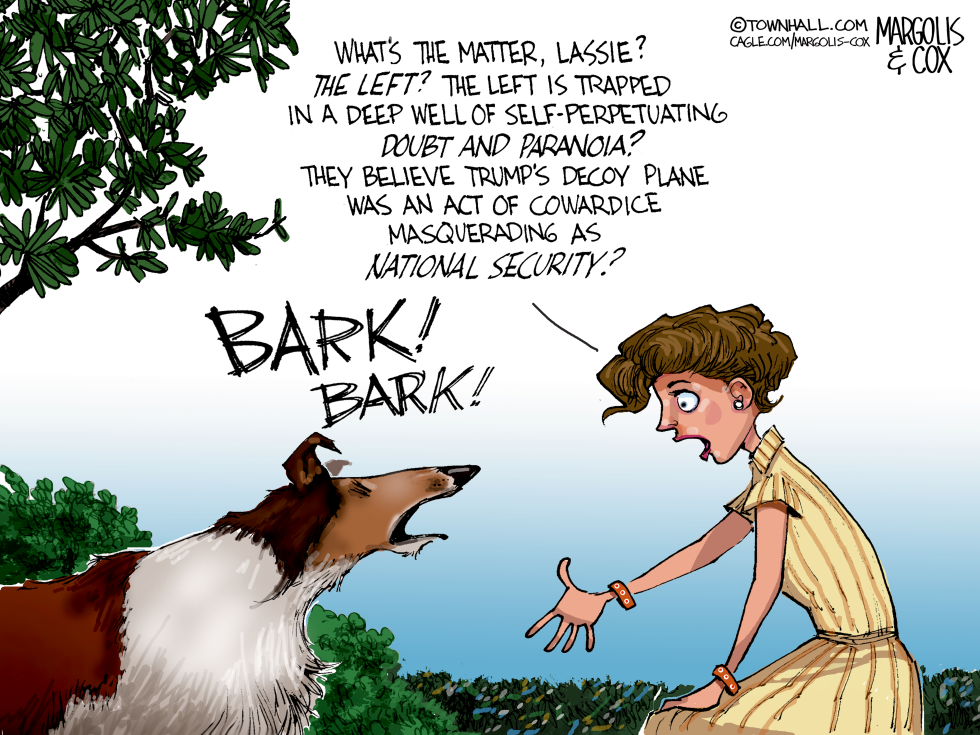
Critics on the left have questioned a decoy plane maneuver tied to Trump security protocols, calling it an act of cowardice. The episode highlights ongoing partisan divides over national security decisions. The piece argues such reactions reflect self-sustaining paranoia rather than substantive policy concerns.
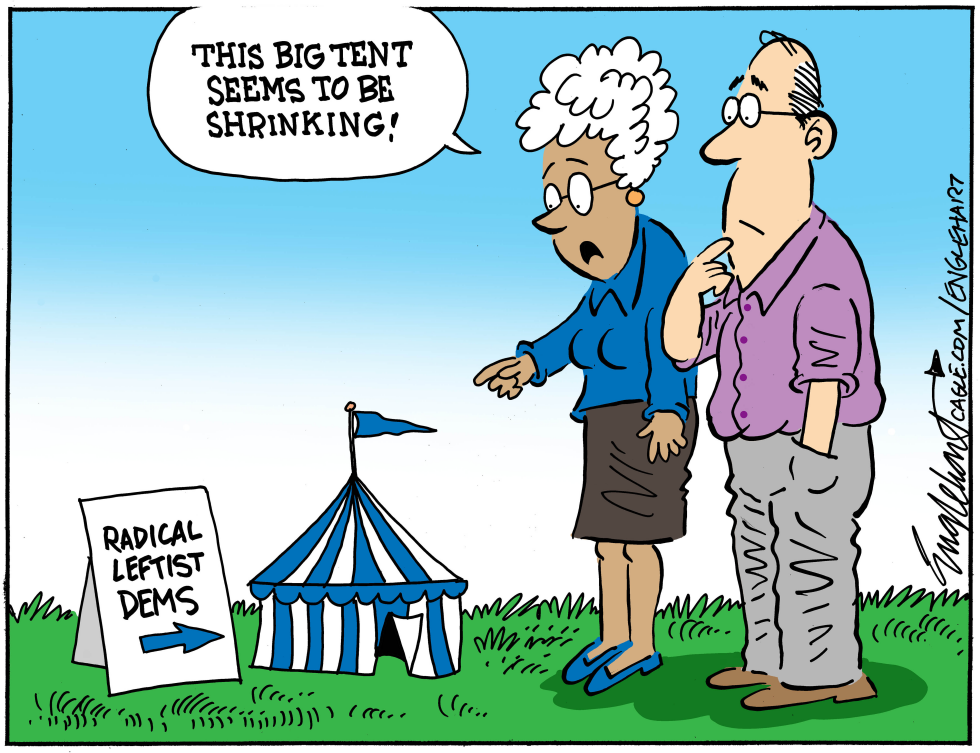
Democratic Party figures have grown concerned that the traditional big tent coalition is contracting as radical leftists consolidate control over the party's direction and messaging. The shift sidelines moderates and narrows the range of acceptable views within the organization. This dynamic raises questions about the party's ability to maintain broad electoral appeal in upcoming cycles. The editorial takes the position that the exclusionary turn is self-defeating and accelerates the party's isolation from mainstream voters.
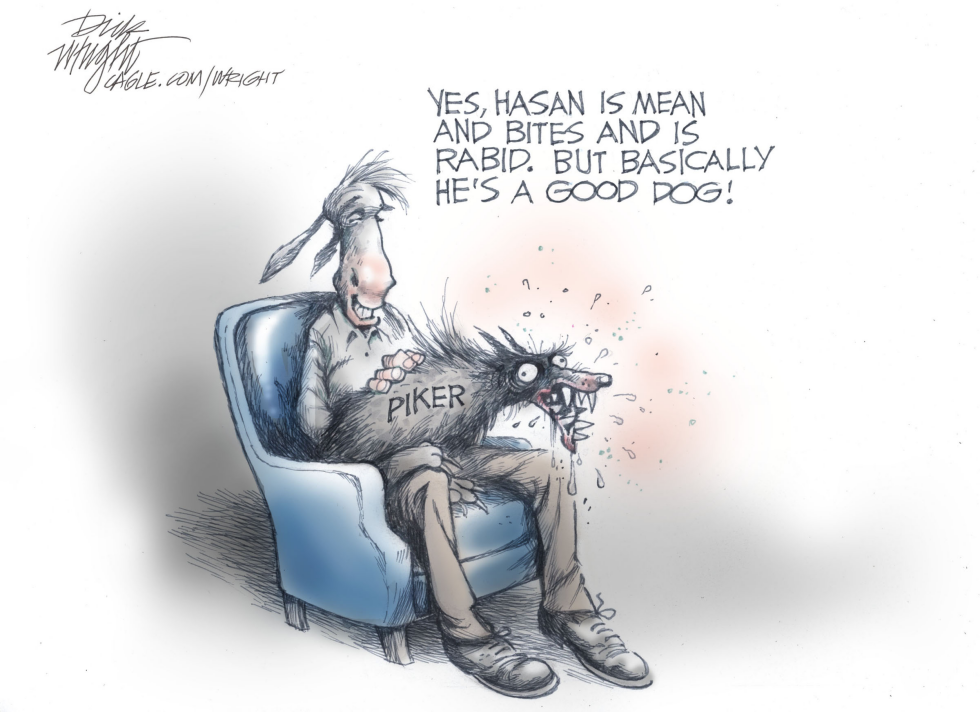
A prominent left-leaning commentator known for inflammatory rhetoric continues to draw defenses from Democratic figures despite repeated controversies over his statements. The defense frames the commentator as fundamentally loyal even while acknowledging aggressive conduct. This dynamic highlights ongoing tensions within progressive circles over how to handle allies whose rhetoric crosses into personal attacks. The piece portrays the defense as an exercise in willful denial of evident problems.
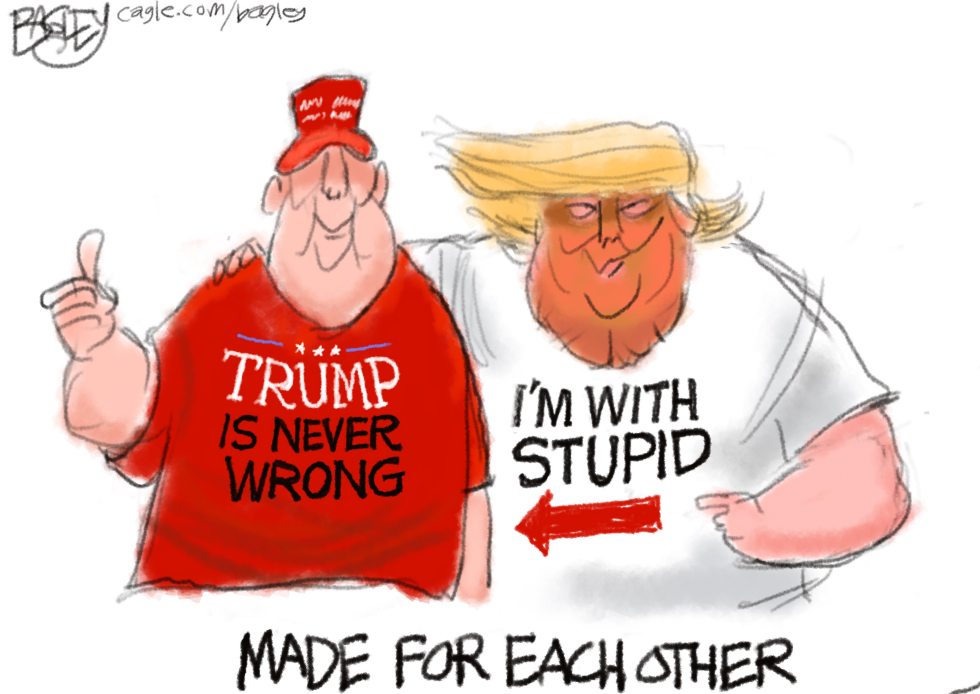
Donald Trump appears alongside a supporter in matching political attire. The supporter's shirt states Trump is never wrong while Trump's shirt declares he is with stupid and points to the supporter. The image underscores the close alignment between the former president and his base.
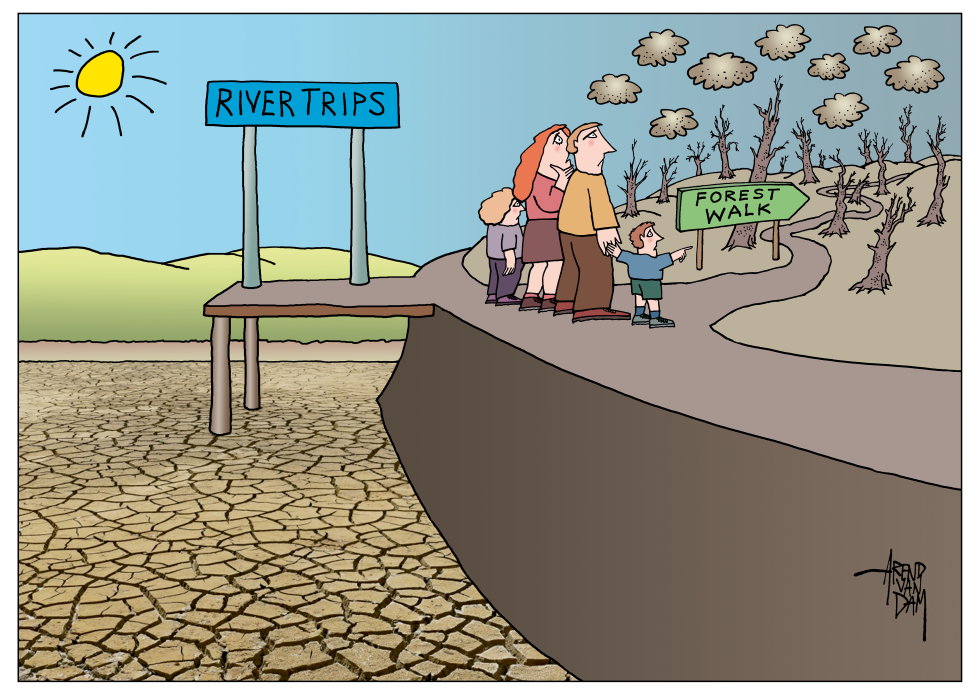
Persistent drought has left riverbeds cracked and forests withered across affected regions, undermining tourism and outdoor recreation. Families arriving for advertised river trips and forest walks instead encounter dry ground and dead trees. The piece highlights how climate-driven water shortages continue to disrupt normal seasonal activities without immediate policy relief in sight.
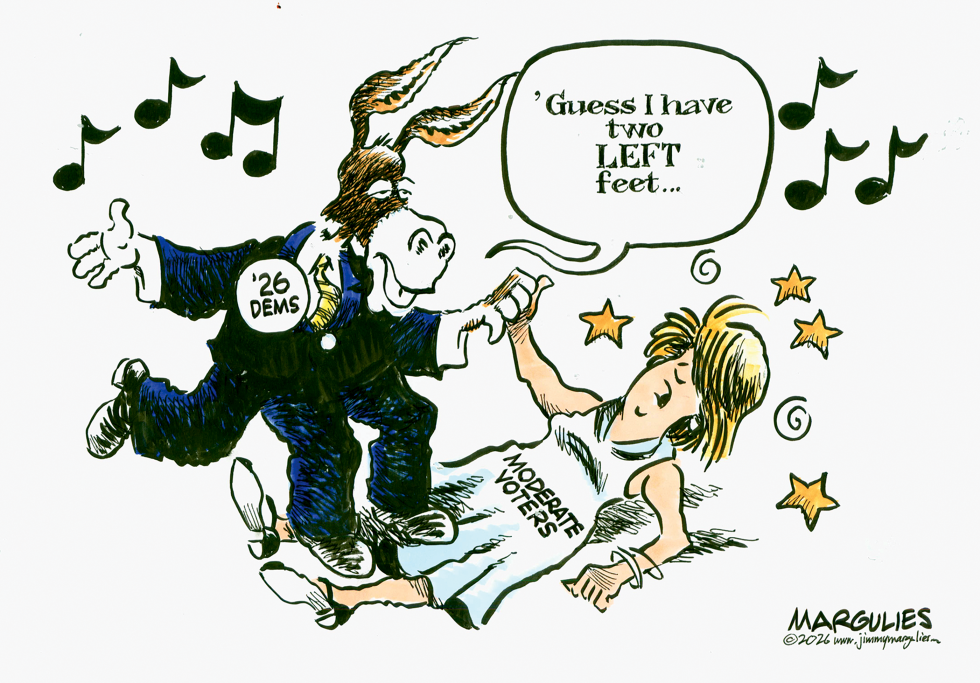
Democrats heading into the 2026 midterms face internal pressure to energize their base with progressive policies, yet this risks further distancing moderate voters essential for broader electoral success. The party has advanced left-leaning positions on issues like spending and social policy in recent cycles. Critics argue this approach prioritizes ideological purity over coalition building. The piece portrays the Democratic donkey as stepping on moderates while acknowledging its own missteps, highlighting the tension between base mobilization and centrist appeal.
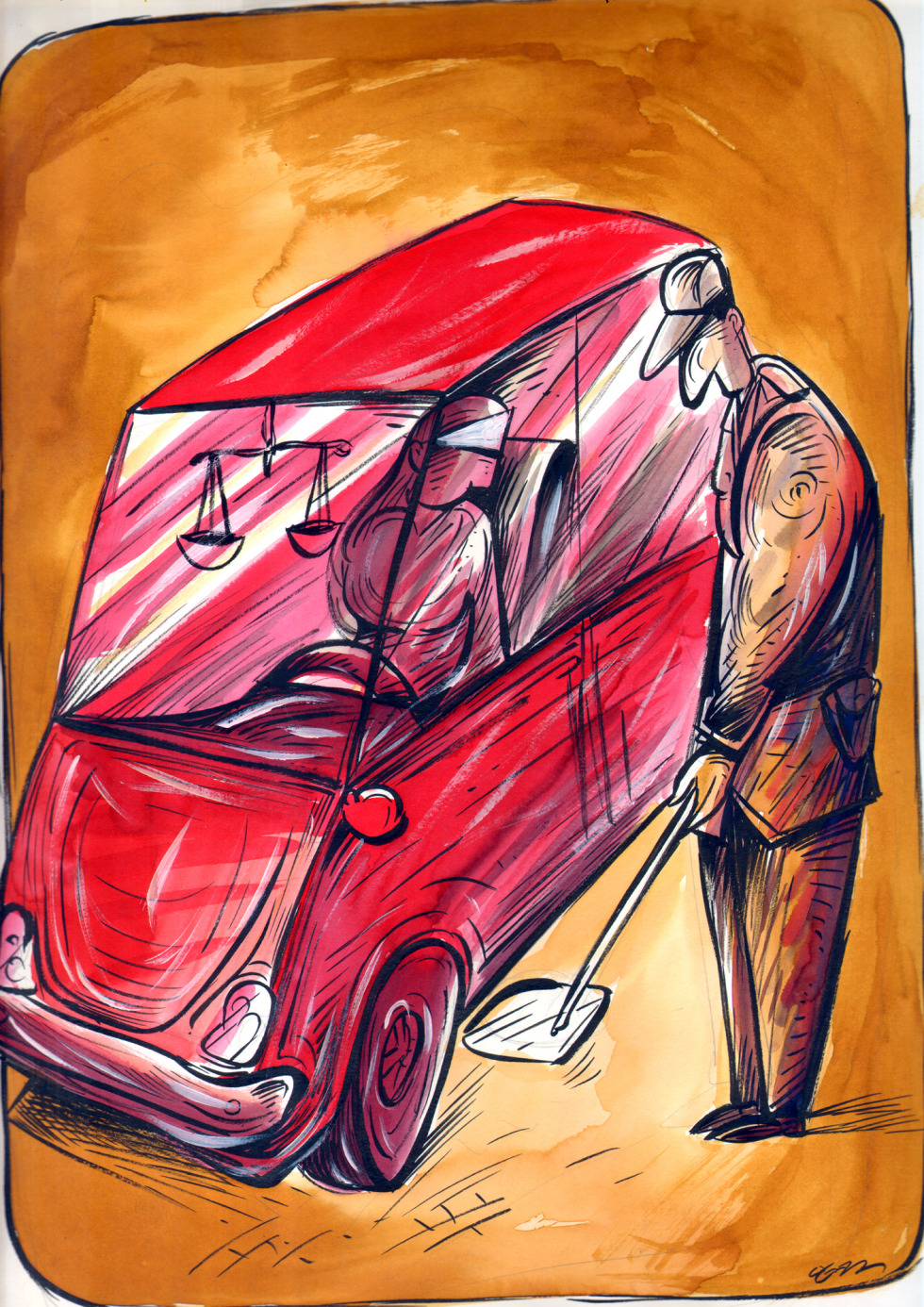
A symbolic image depicts Lady Justice seated inside a red vehicle holding the scales of justice while a uniformed official stands outside gripping a shovel. The scene suggests tension between institutional authority and judicial independence. The editorial position frames the interaction as external pressure on the justice system.
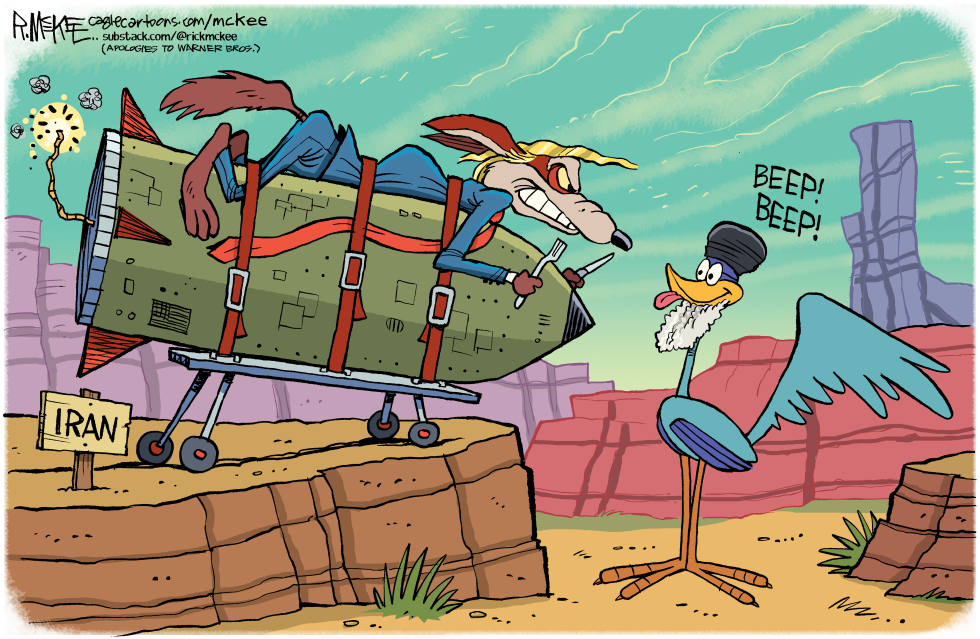
Donald Trump has renewed pressure on Iran through statements and policy signals in recent weeks. The moves come amid ongoing nuclear concerns and regional instability. The piece argues that such aggressive posturing risks backfiring in ways similar to past miscalculations.