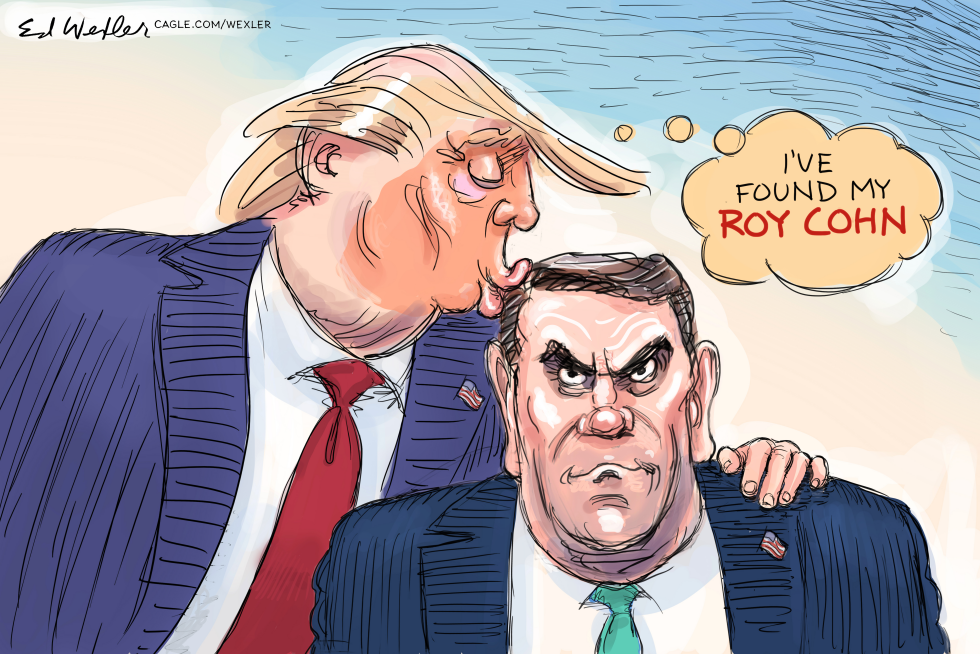
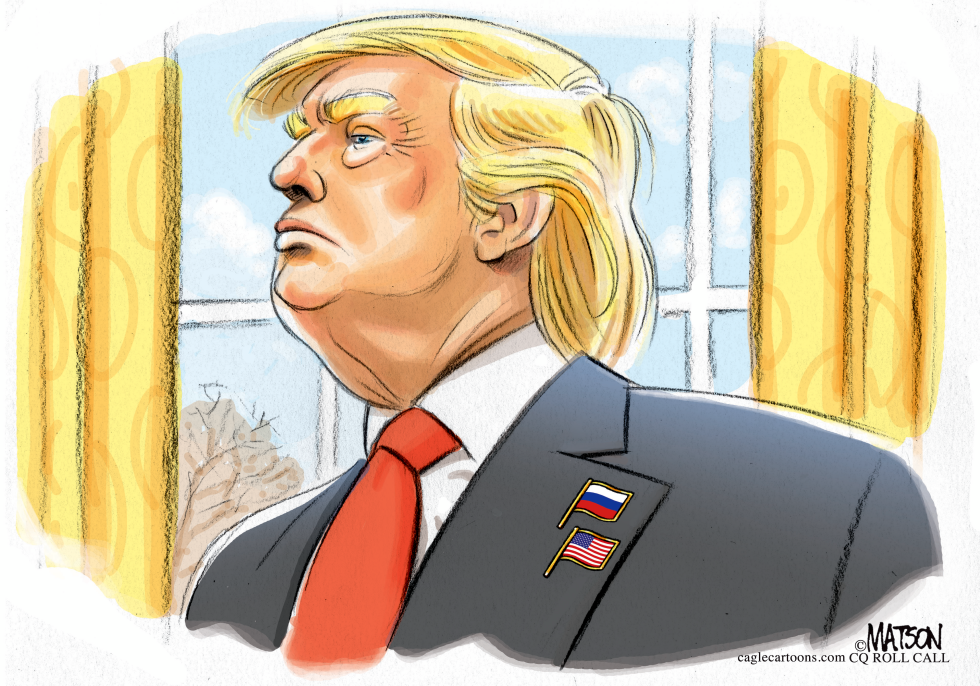
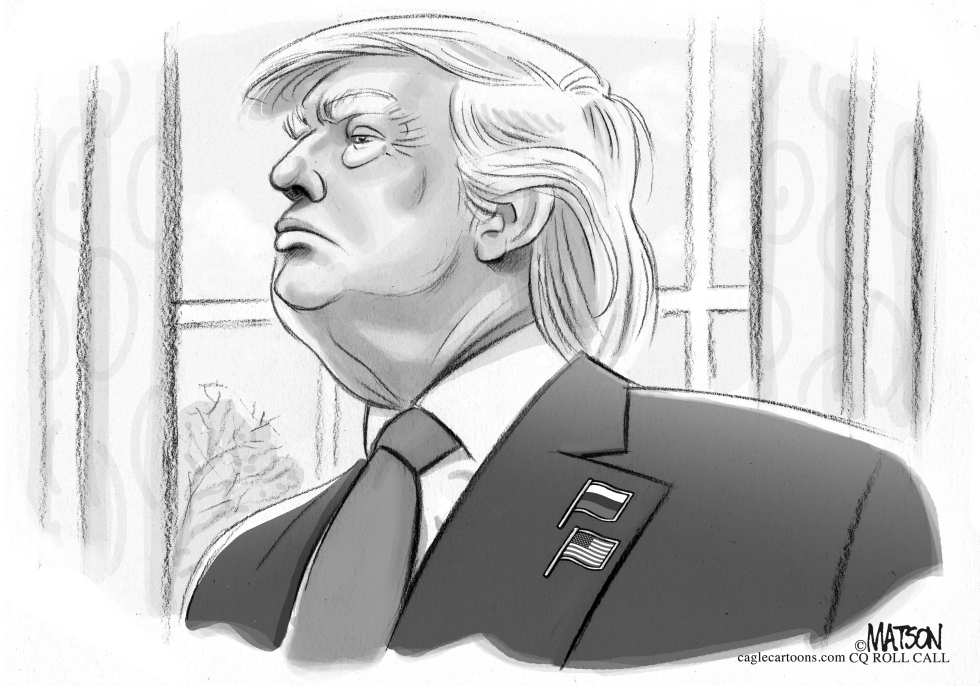
Donald Trump has publicly signaled interest in securing a new legal or political advisor modeled on his late attorney Roy Cohn. The reference revives memories of Cohn's aggressive tactics during Trump's early career. The development matters because it underscores Trump's preference for confrontational representation amid legal and political pressures. The piece portrays this choice as a deliberate return to combative strategy rather than measured counsel.
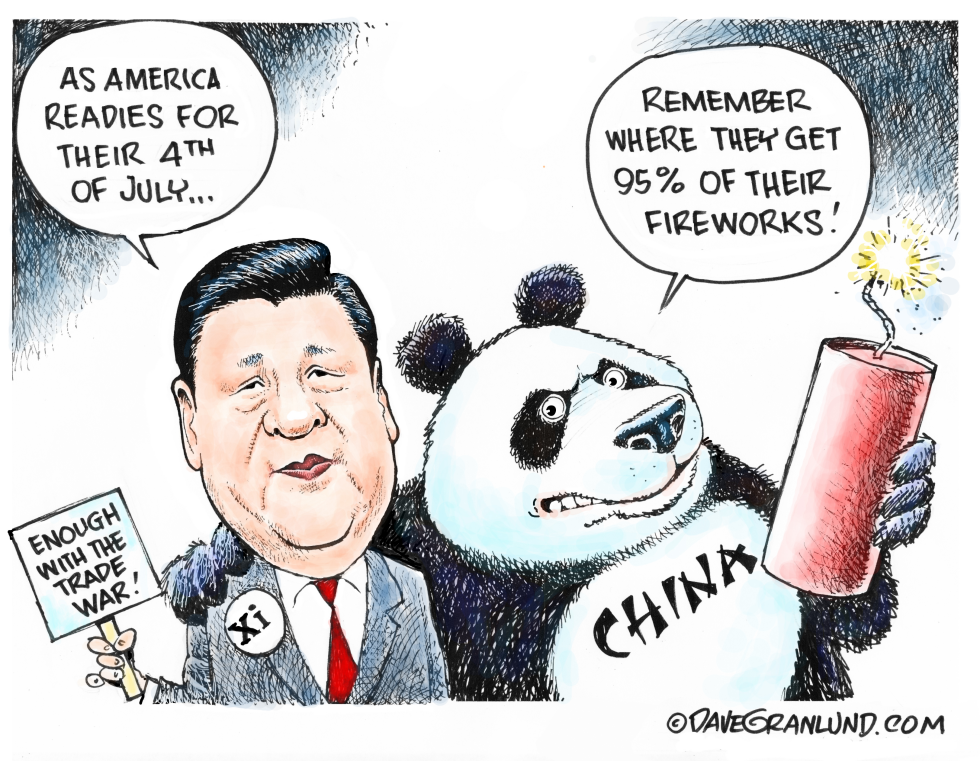
On June 19, 2026, a cartoon by Dave Granlund depicts Chinese leader Xi Jinping alongside a panda representing China. Xi holds a protest sign against the trade war while the panda reminds viewers that China supplies most American fireworks. The image addresses rising costs for July 4th celebrations tied to tariffs and supply issues with the largest provider.
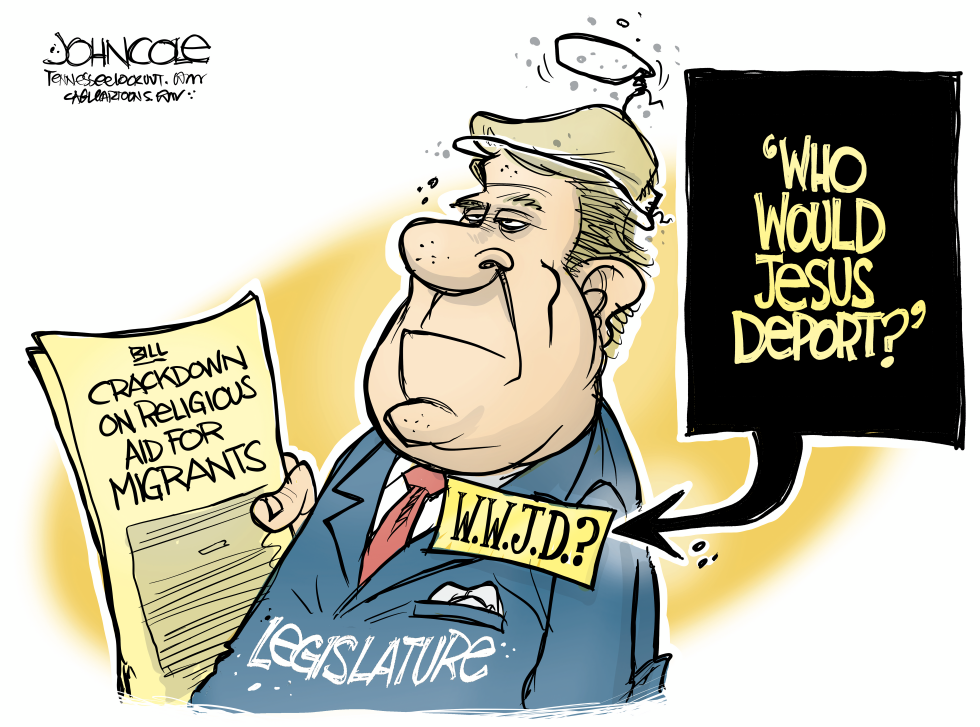
On July 8 2025 Tennessee lawmakers advanced a bill cracking down on religious organizations providing aid to migrants. The measure comes as federal deportation efforts intensify under renewed ICE priorities. The cartoon depicts a legislature figure clutching the proposed restrictions while wearing a WWJD badge and pondering aloud who Jesus would deport. Sweat and a slipping halo underscore the tension between policy and faith-based sanctuary traditions. The visual ties directly to ongoing debates in statehouses over the role of churches in immigration enforcement.
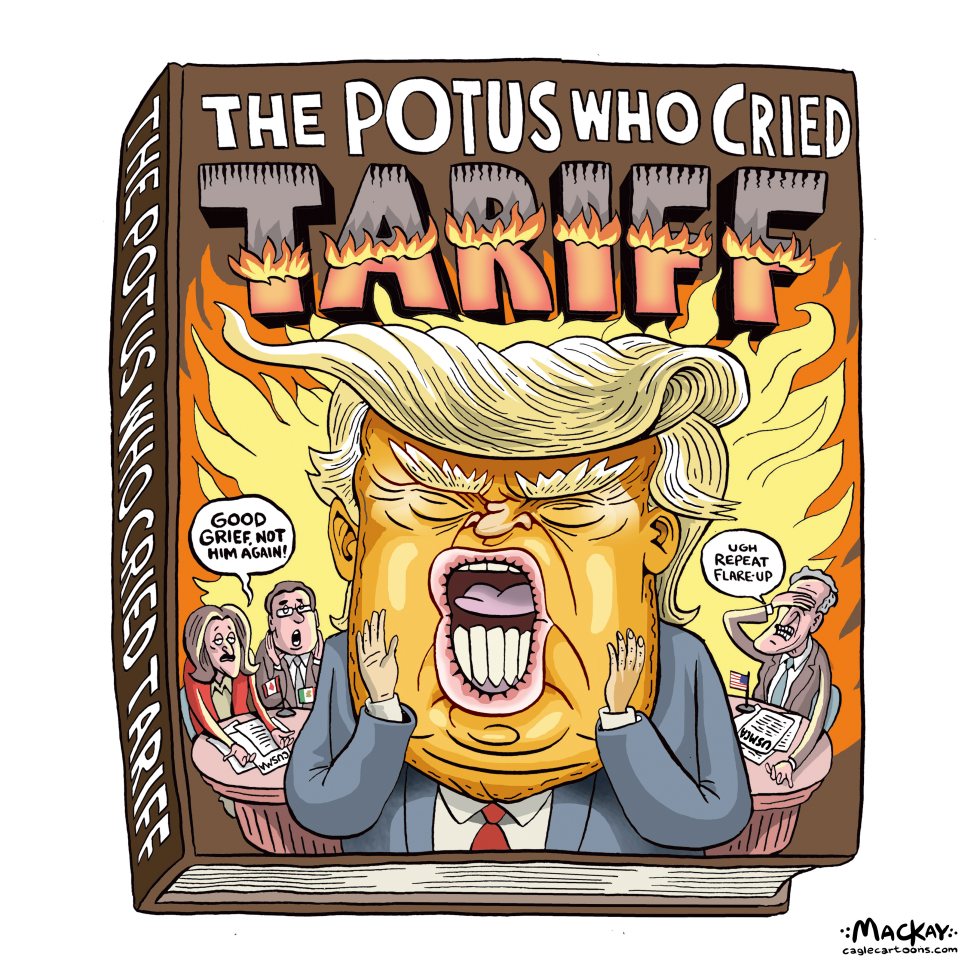
Graeme MacKay's cartoon reimagines Aesop's fable as 'The POTUS Who Cried TARIFF,' with Donald Trump's exaggerated face shouting on a fiery book cover. Representatives from USA, Mexico, and Canada sit at a table, showing exasperation with speech bubbles like 'Good Grief not him again!' and 'Ugh Repeat flare-up?' The tags USA, Mexico, Canada, trade, diplomacy, tariff, Donald Trump, USMCA, NAFTA, The Boy Who Cried Wolf, Aesop, and fable underscore the satire on repeat threats becoming ineffective. This visual pokes at how constant warnings lose impact in international relations.