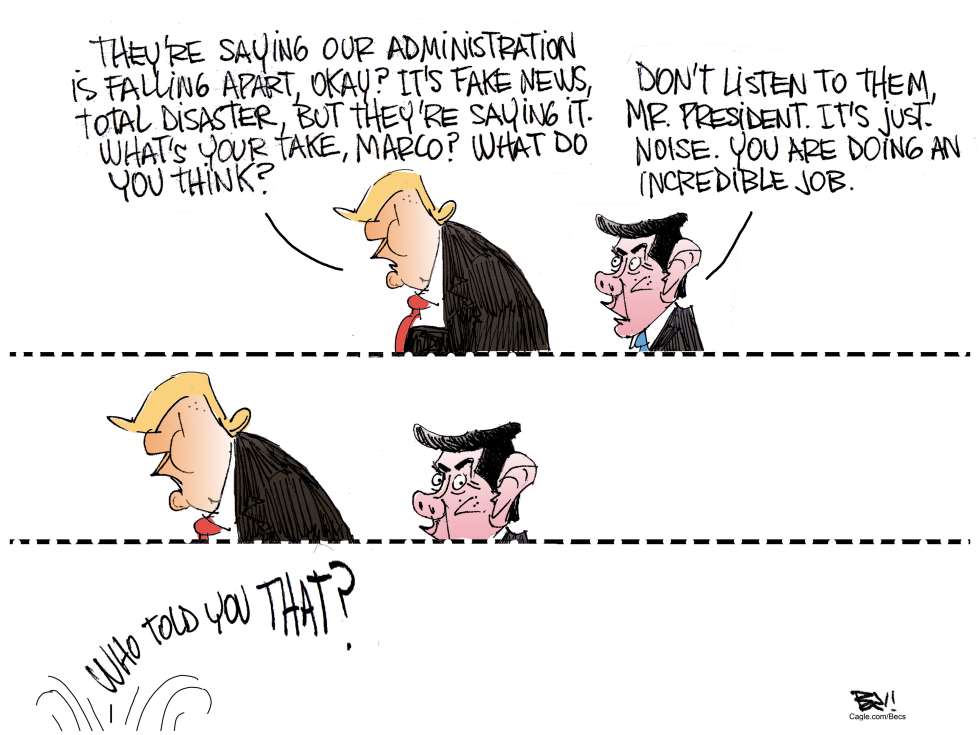
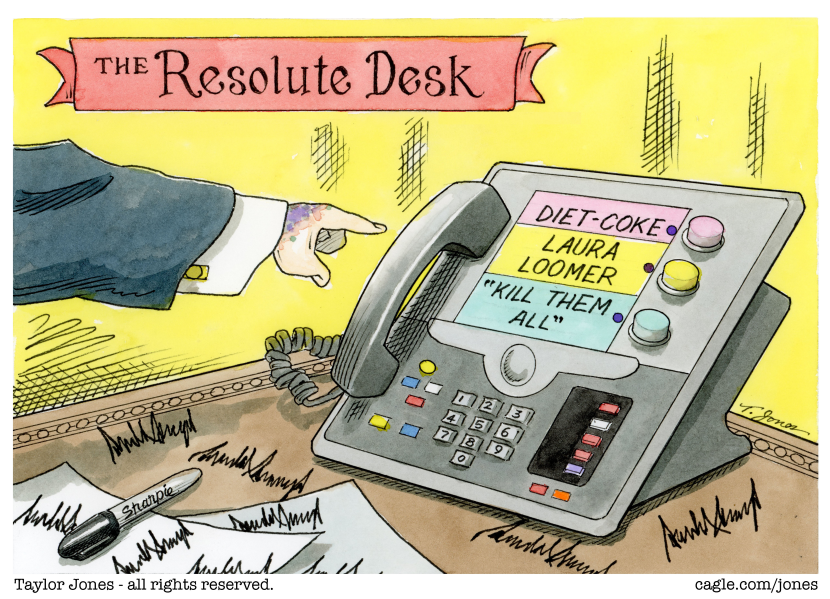
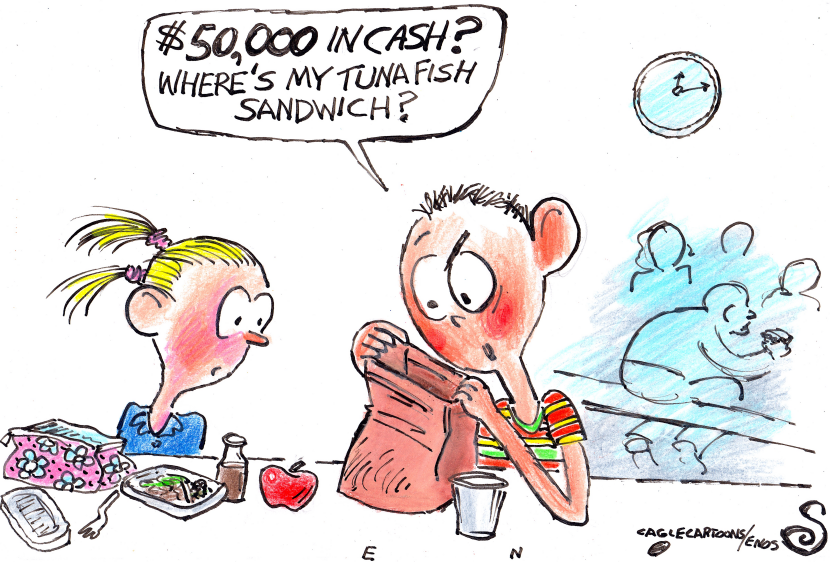
President Trump asked Senator Marco Rubio for his assessment of reports that the administration is in disarray, labeling them fake news. Rubio dismissed the reports as noise and praised Trump's performance. Trump responded by questioning who had told Rubio that assessment. The exchange highlights tensions over loyalty and information flow inside the administration. The cartoon portrays Rubio's positive reply as triggering suspicion rather than reassurance.
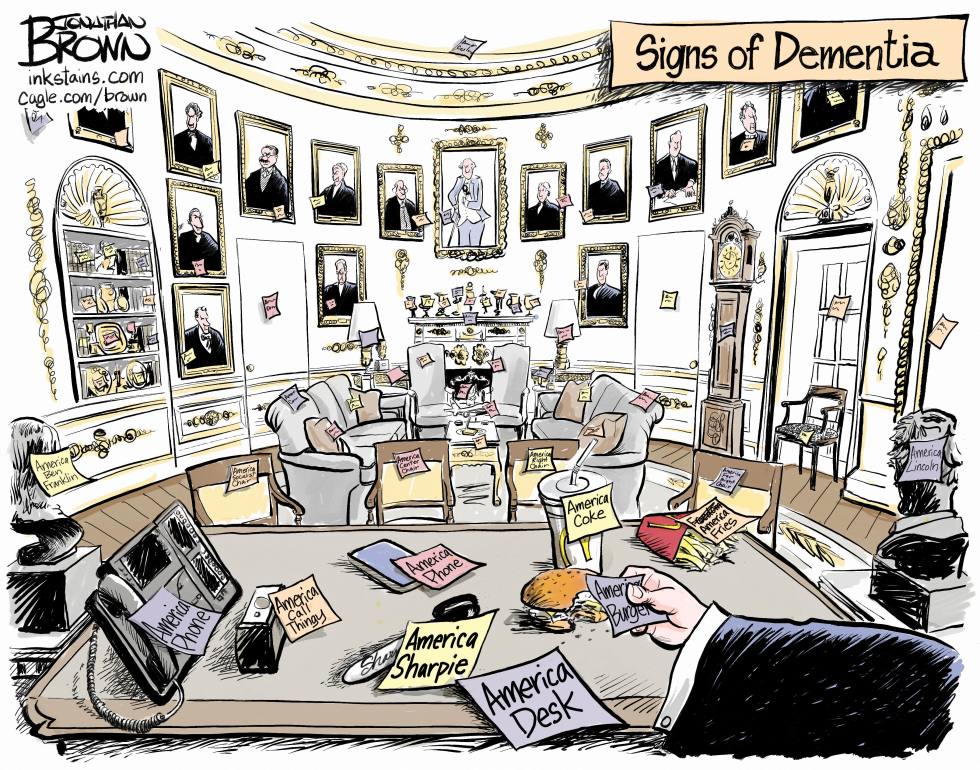
A new editorial cartoon depicts the Oval Office overrun with sticky notes labeling everyday items as America. The scene highlights signs of dementia through repeated branding on phones, desks, food and furniture. Published on September 9, 2026, the work comments on ongoing concerns about cognitive fitness in the presidency. The visual uses the familiar setting of the White House to underscore confusion and memory issues. Observers note the cartoon captures public debate over leadership capacity without naming specific individuals.
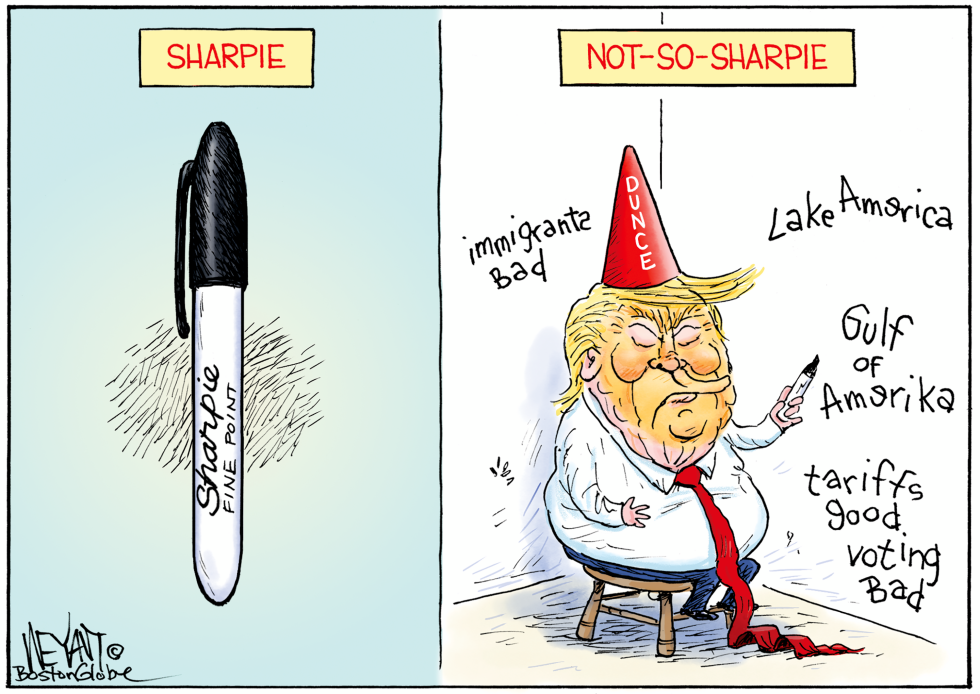
Donald Trump has continued to issue statements on tariffs, immigration enforcement and voting procedures that contain repeated factual inaccuracies. These comments have drawn renewed attention to his approach to governance. The cartoon portrays him as uninformed on these topics through the dunce cap and misspelled labels.
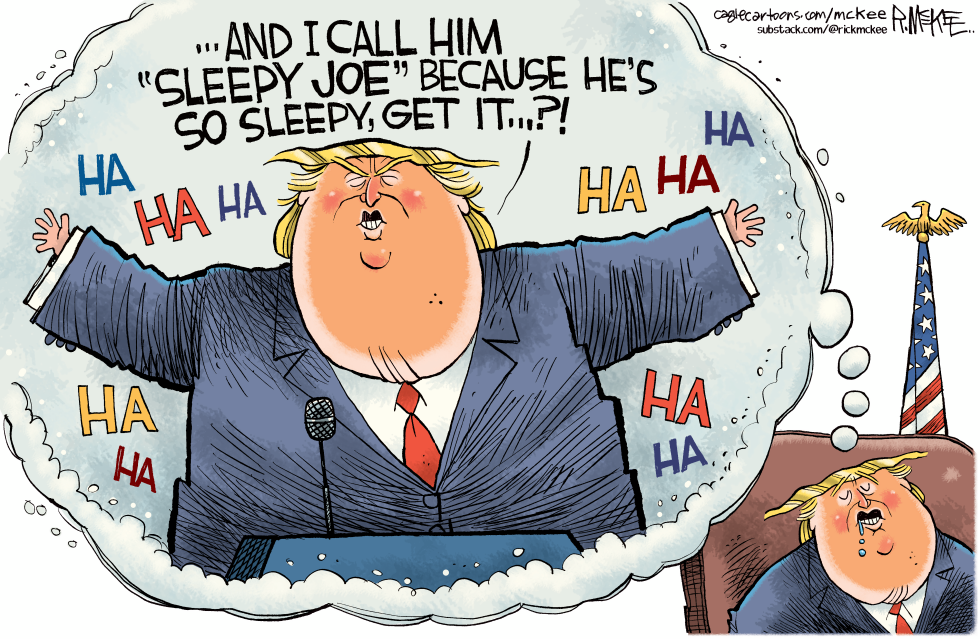
Donald Trump repeatedly labeled Joe Biden 'Sleepy Joe' during the 2024 campaign and beyond. The nickname stuck as a critique of Biden's energy and age. The cartoon responds by showing Trump himself unable to stay awake at the podium, underscoring perceived hypocrisy in the attack.
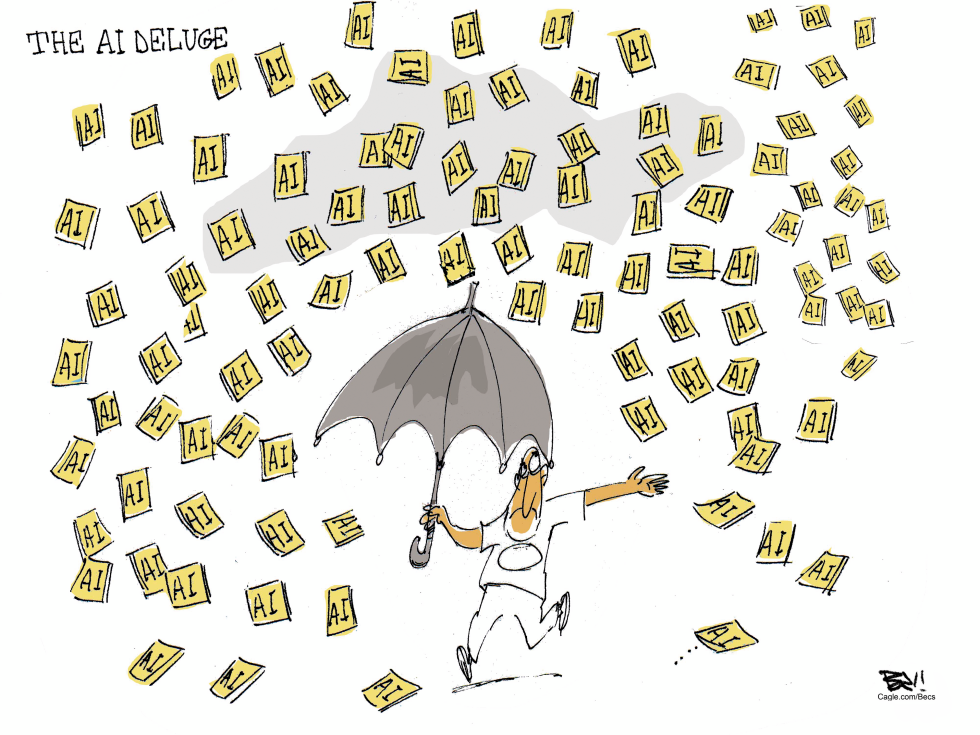
Artificial intelligence has saturated public conversation and workplace planning at an unusual pace. The piece responds to the sheer volume of announcements, tools and claims arriving at once. It suggests shelter rather than comprehension has become the realistic response.
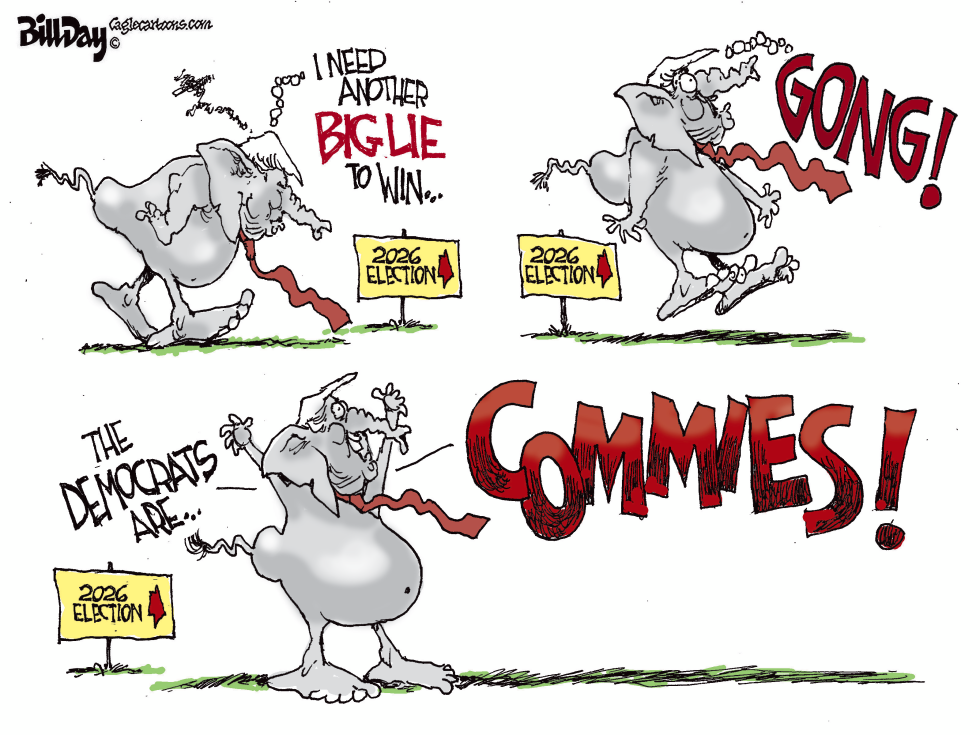
Republicans continue to rely on the big lie narrative to motivate voters ahead of the 2026 elections. The approach draws internal pushback and highlights deepening partisan rhetoric. The piece criticizes the tactic as tired and counterproductive.
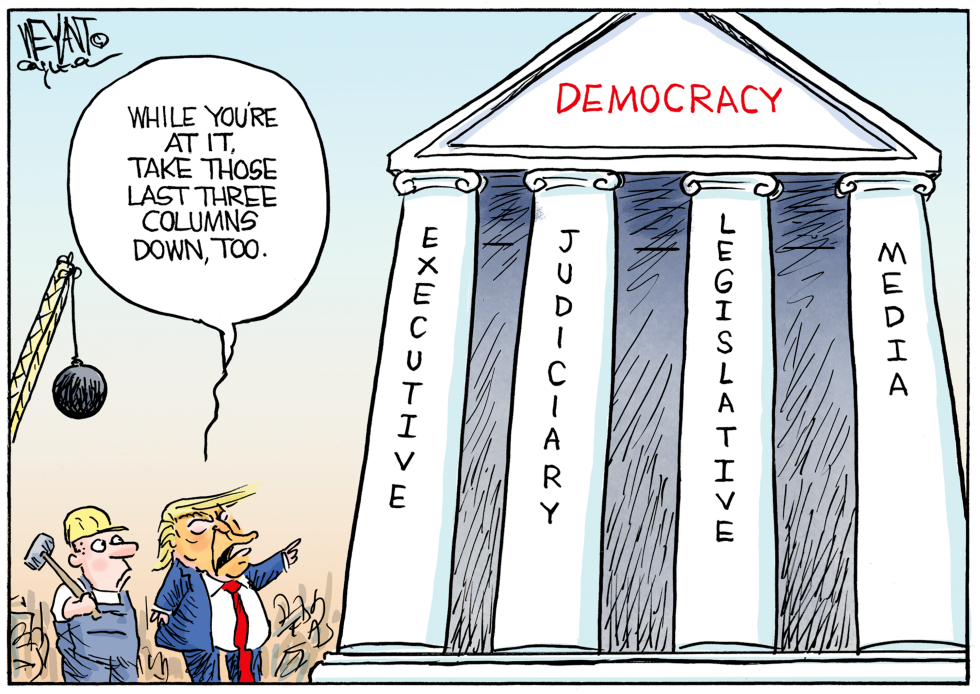
On July 12 2026 the cartoon depicts Donald Trump instructing a construction worker to demolish the judiciary legislative and media pillars of a structure labeled democracy. The executive pillar already stands removed. A wrecking ball crane looms on the left while Trump gestures emphatically from the foreground rubble. The image responds to ongoing debates over institutional checks and executive actions during the second Trump term.
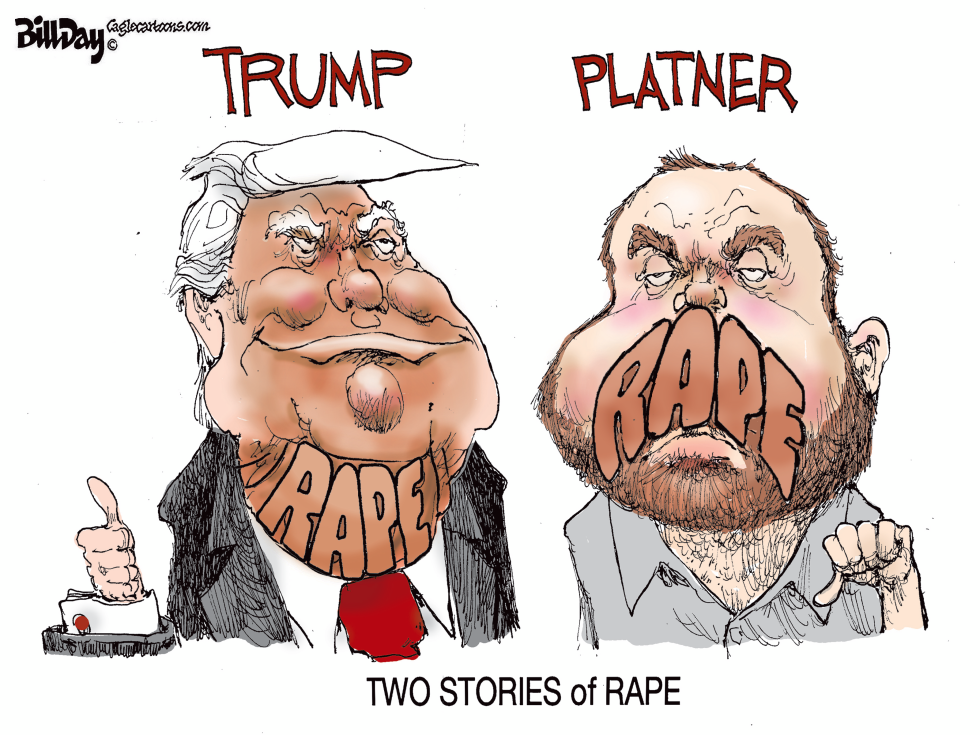
The image presents side by side depictions of Donald Trump and an individual named Platner. Each has the word rape overlaid on the lower face area. Trump extends a thumbs up gesture near papers while Platner extends a thumbs down gesture. Large red text at the bottom reads two stories of rape. The date of July 2026 places this in a period of ongoing public discussion around accusations involving prominent figures.
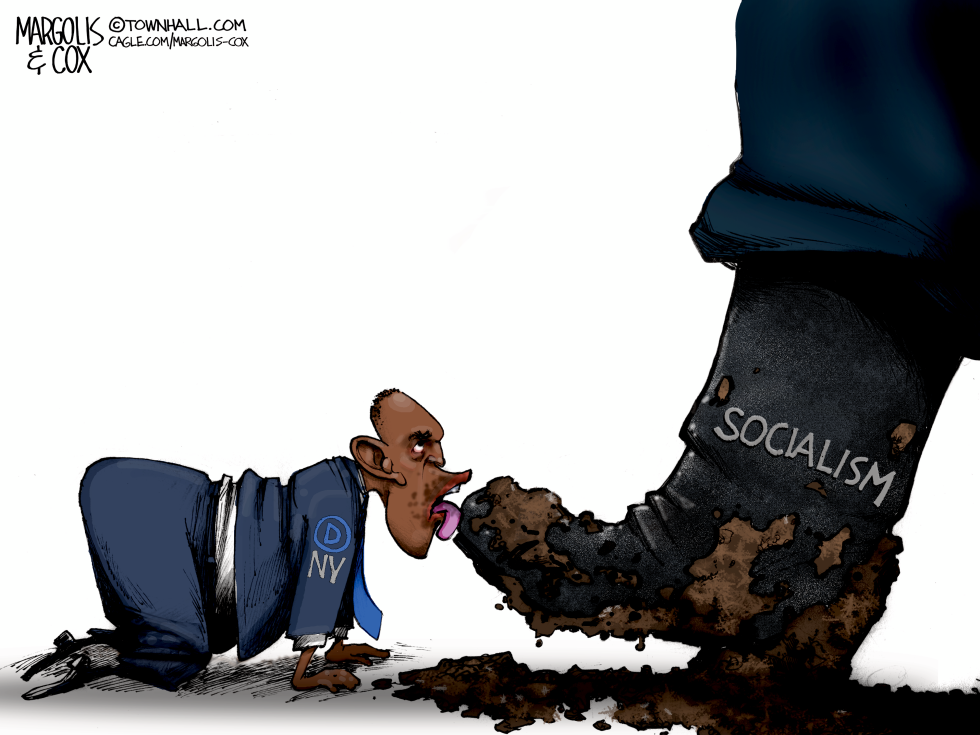
A political cartoon dated July 1, 2026, shows a diminutive figure wearing a jacket marked D and NY on hands and knees licking a massive boot labeled SOCIALISM. The boot is coated in thick mud that drips onto the ground. The artist Margolis & Cox places the scene against a plain white background with the figure looking upward. The image directly illustrates the title NY Democrat Licks Socialism Boot. No other text or figures appear.
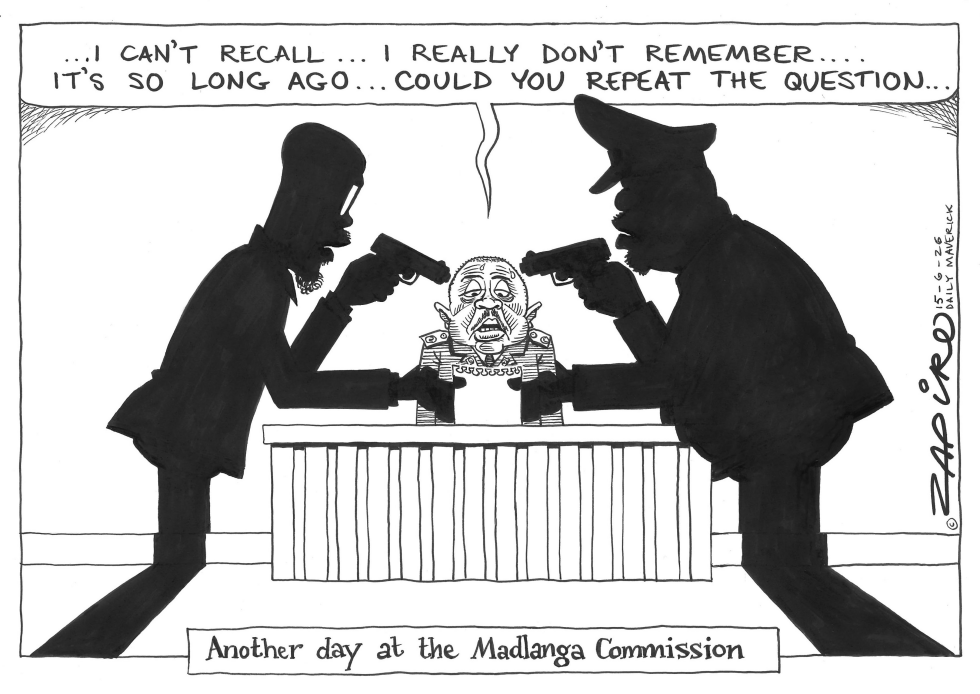
A witness at the Madlanga Commission testifies that events from long ago prevent accurate recall and requests the question be repeated. Two standing uniformed figures point handguns directly at the seated man from either side of the table. The image captures the tension of the ongoing inquiry session dated around mid-June 2026.
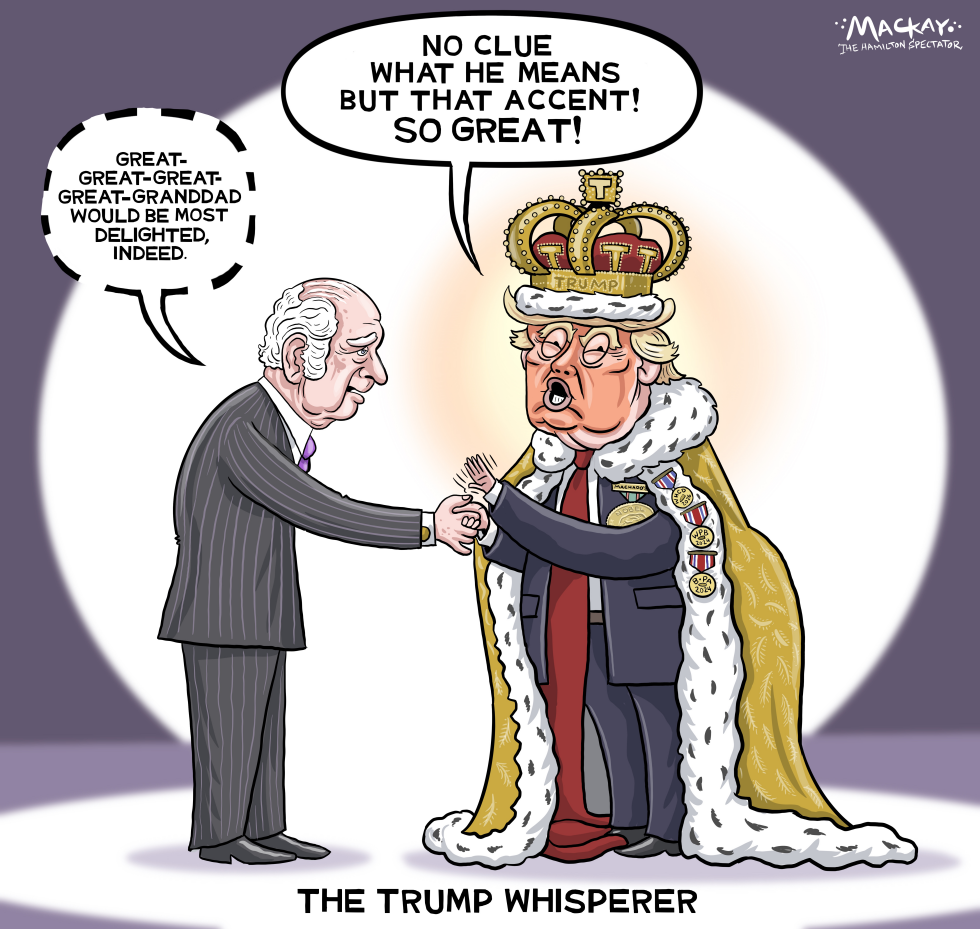
Graeme MacKay's cartoon depicts King Charles III leaning in to whisper a message from King George III to a regally dressed President Trump, who misinterprets it due to the accent. Tagged with USA, Canada, UK, the image explores monarchy, diplomacy, and alliance themes. Trump's crown labeled with his name adds symbolism of self-aggrandizement, while the 'Trump Whisperer' caption underscores the tension in this leadership encounter. Historical nods to tradition and stability contrast with modern visit dynamics, blending respect and satire in a visually striking composition.
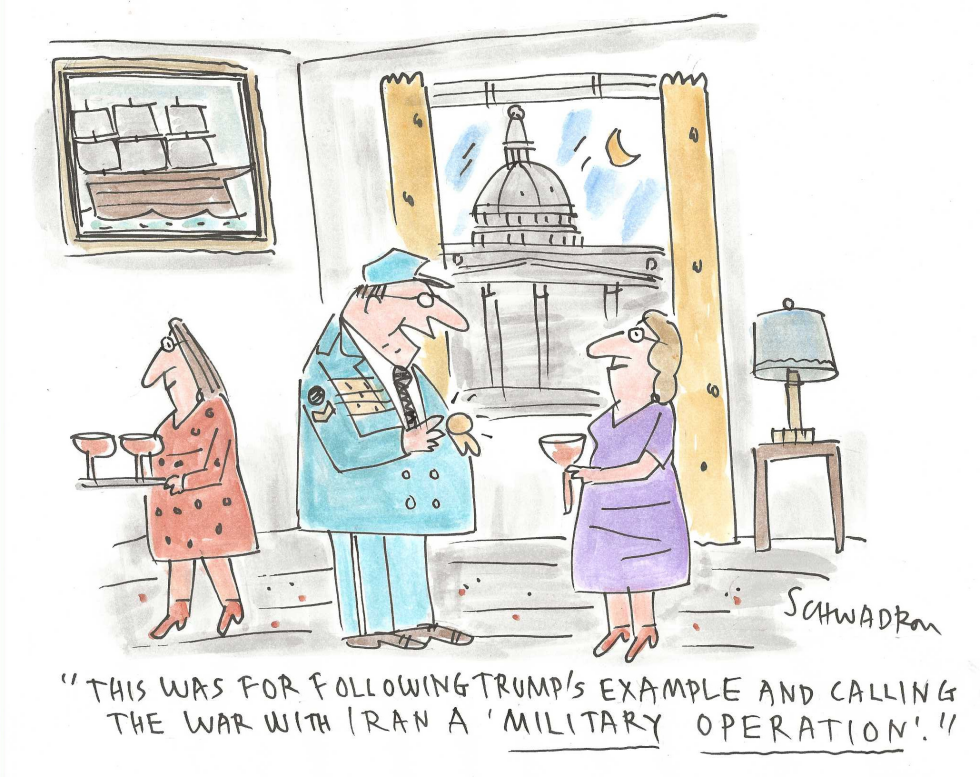
Harley Schwadron's cartoon depicts a cocktail party scene where a military officer toasts with two women, celebrating the decision to follow Trump's example by calling the war with Iran a 'military operation.' The room features a framed ship painting, a window view of the Capitol dome under a crescent moon, and a lamp on a table. Tags such as war, Iran, military, Trump, shipping, and oil underscore the satirical jab at semantic dodges in foreign policy. The dry humor highlights how leaders reframe conflicts to soften public perception, with the officer's uniform and medals emphasizing official endorsement. This piece captures the absurdity in political language, set against a backdrop of potential economic fallout like inflation and gas prices, though peace negotiations remain distant.
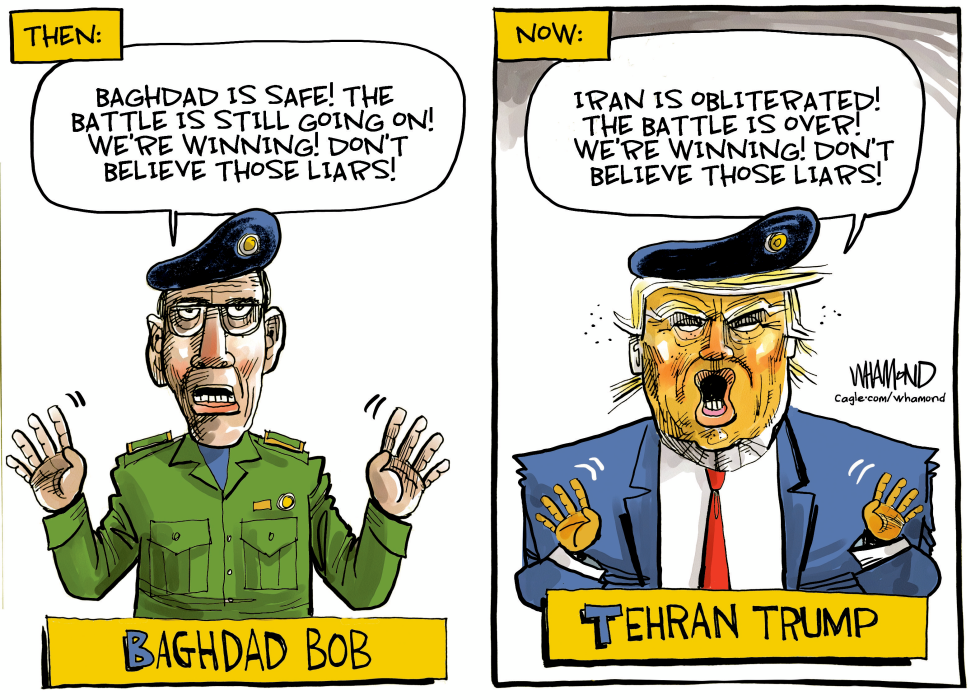
Dave Whamond's political cartoon splits into 'Then' and 'Now' panels, showing Baghdad Bob in military garb proclaiming Baghdad's safety and ongoing victory, dismissing liars. On the right, a Trump-like figure dubbed Tehran Trump, wearing a beret and suit, declares Iran obliterated and battle over, again urging disbelief in liars. The satire underscores parallels in propaganda and denialism, with tags like political satire, Trump caricature, Iraq War reference, Iran conflict, misinformation leaders, and historical parallel. This visual commentary critiques how figures twist realities in wartime narratives, blending dry humor with sharp observation on political exaggeration.
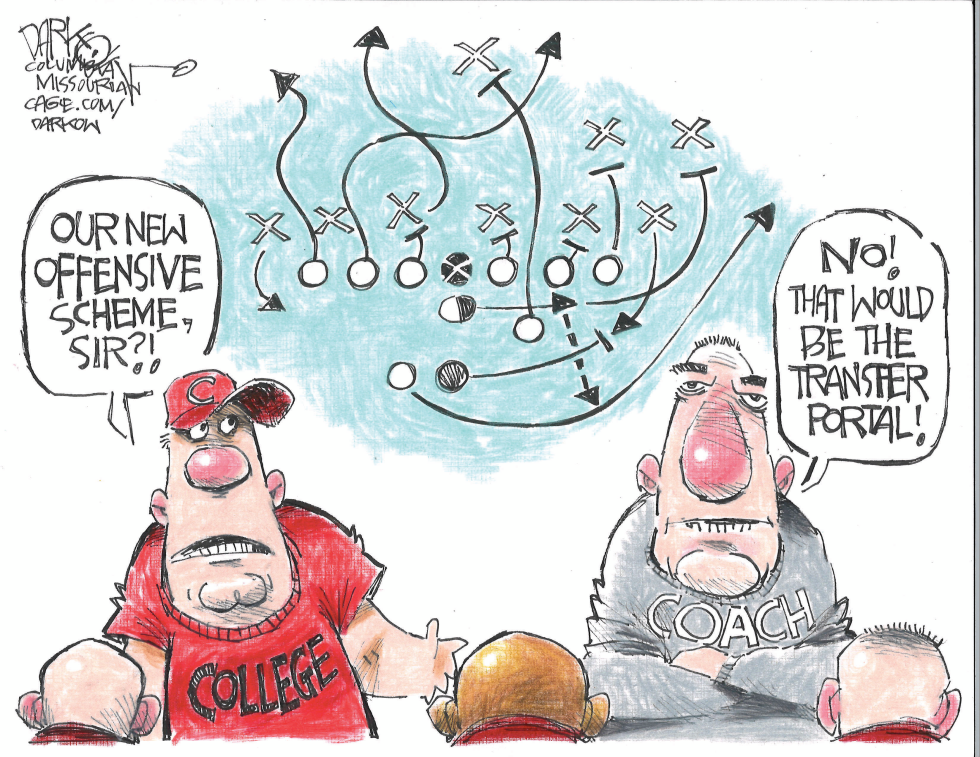
A college coach in a red shirt proposes a new offensive scheme to his colleague. The gray-shirted coach rejects the idea outright, insisting the diagram represents the transfer portal instead. The exchange highlights ongoing tensions in college athletics over player movement and its impact on team strategies.