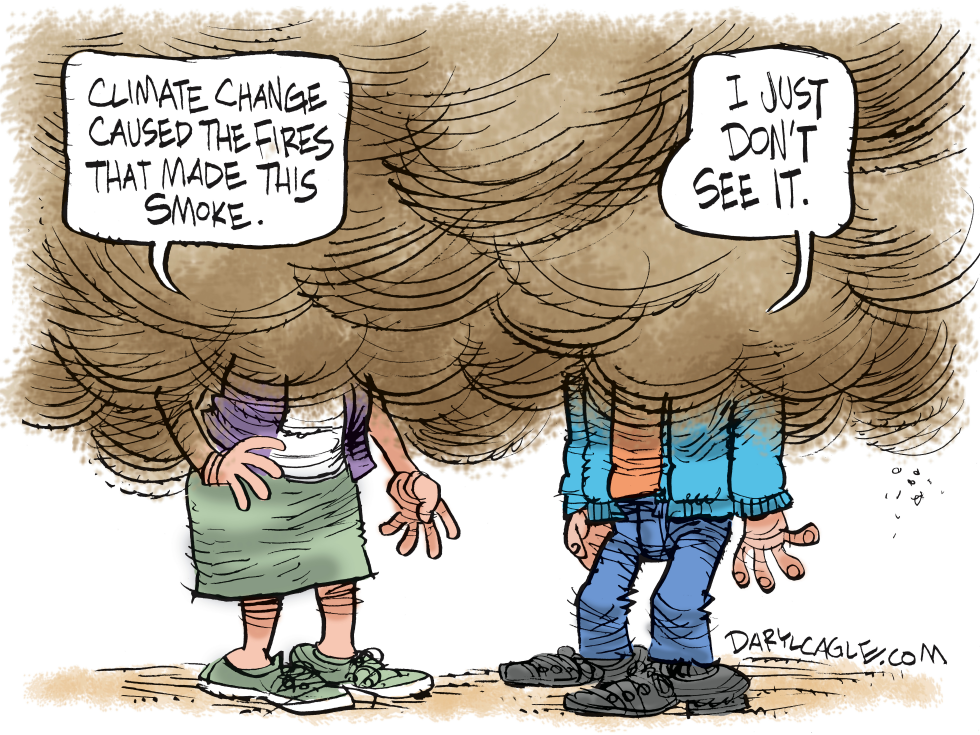
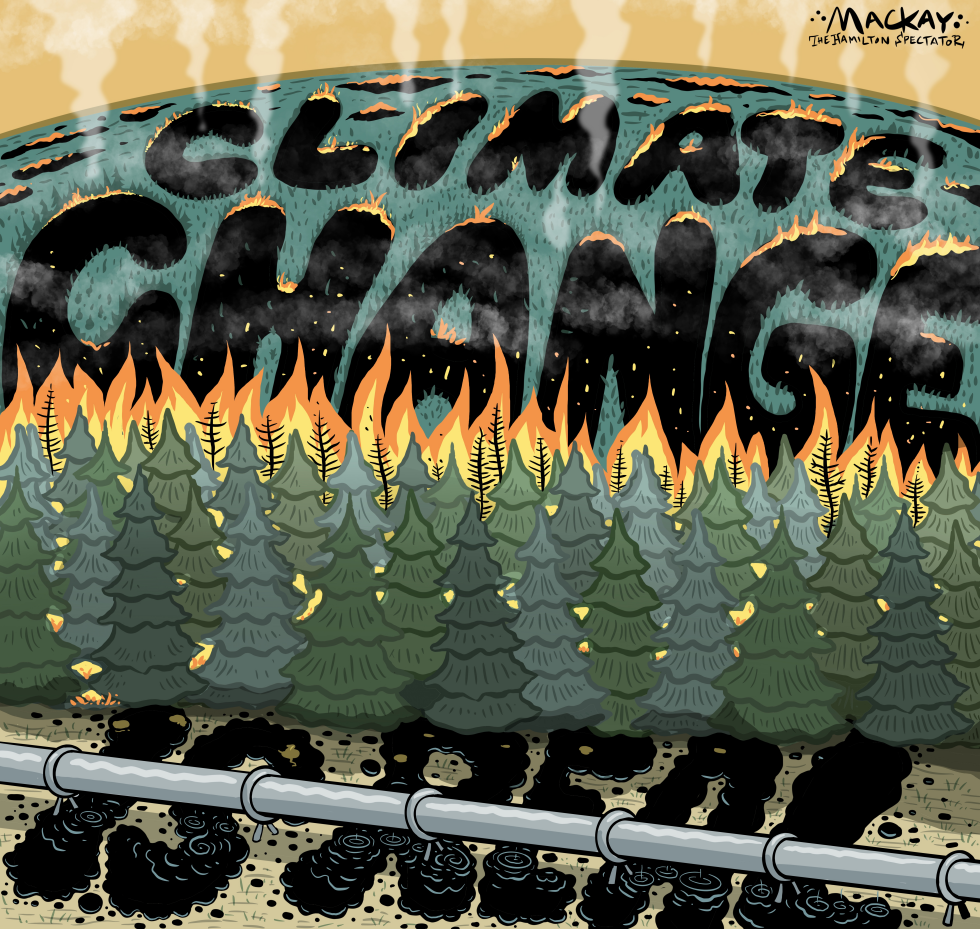
Canadian wildfires have produced widespread smoke affecting air quality across regions. The debate centers on whether climate change drives the fires or if other factors dominate. Public discourse shows persistent skepticism despite visible evidence. The piece highlights how some reject the link between rising temperatures and increased fire activity. It critiques the refusal to acknowledge observable environmental changes tied to climate patterns.
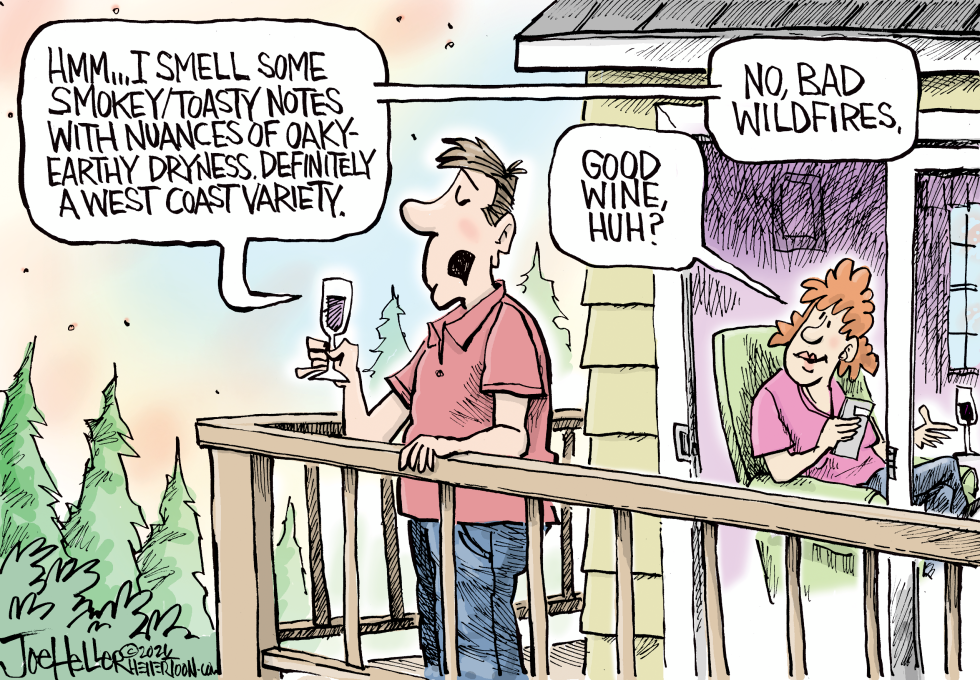
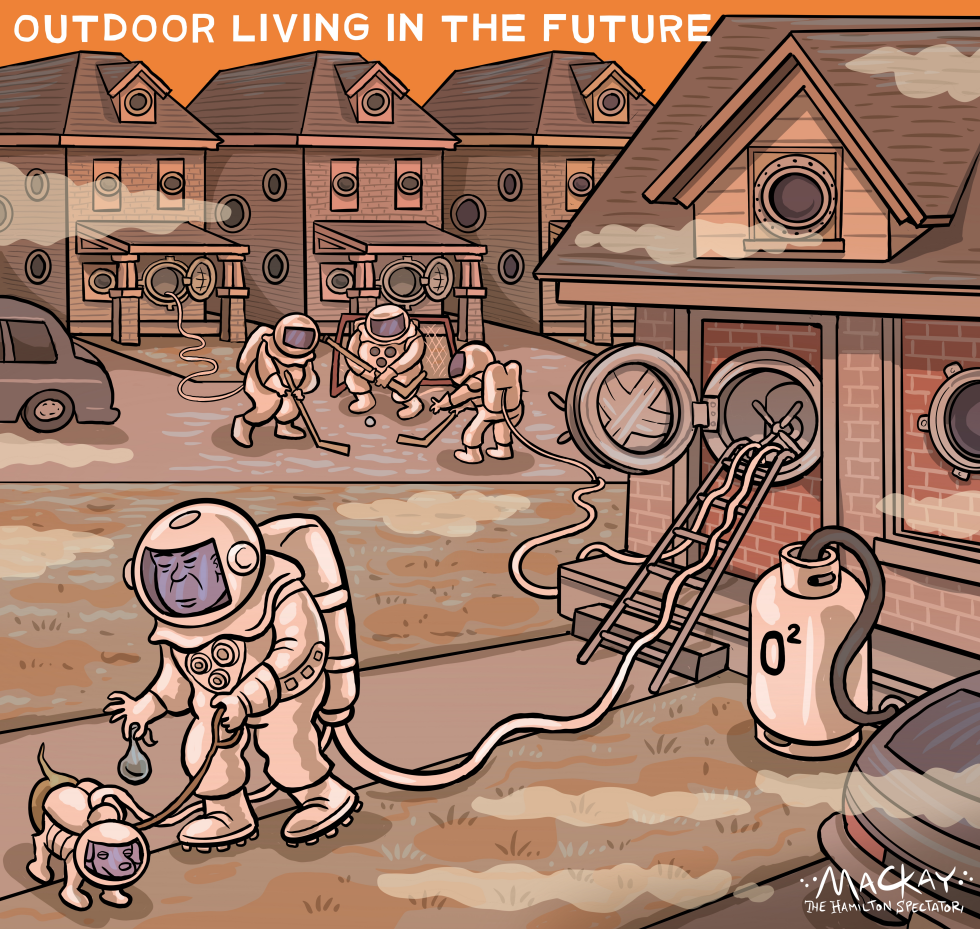
Wildfires burning across western regions have filled the air with thick smoke, prompting residents to stay indoors or adapt outdoor routines. The smoke's intensity has become noticeable even in casual settings like evening gatherings. This piece responds by showing a couple misidentifying the smoke as desirable wine characteristics, underscoring how routine activities now intersect with fire season realities and the need for greater awareness of environmental conditions.
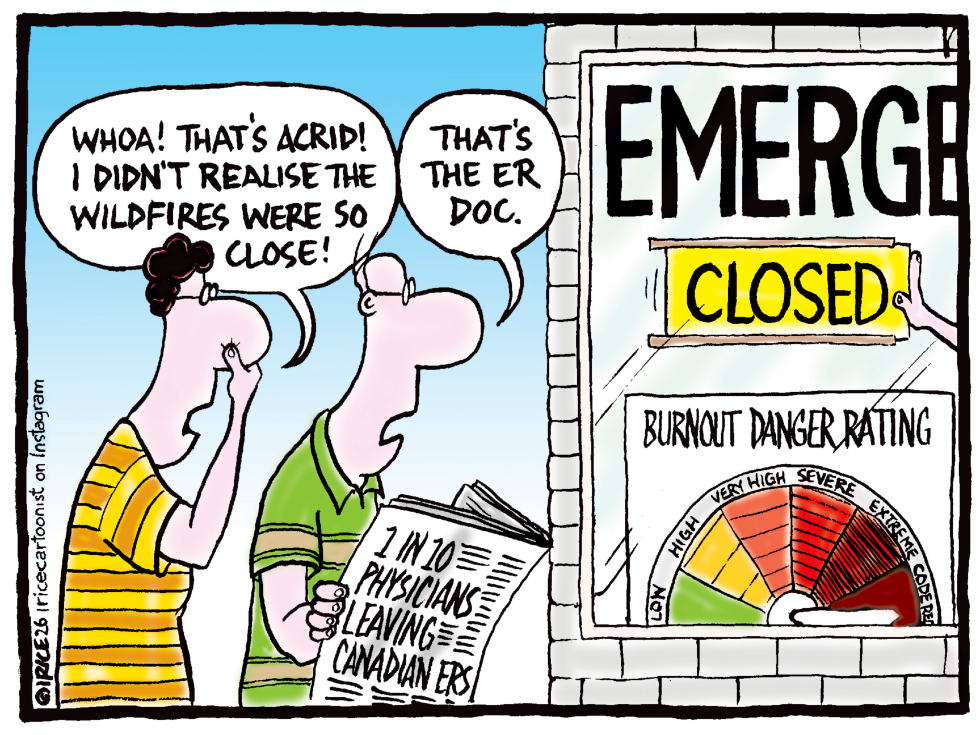
Canadian emergency rooms face mounting closures as one in ten physicians depart amid rising burnout, compounded by wildfire smoke exposure. The staffing crisis leaves communities without timely care during peak summer health threats. The editorial highlights how environmental pressures accelerate an already fragile healthcare system, urging immediate policy intervention to retain medical staff.
Global leaders continue to dismiss repeated scientific warnings about accelerating climate impacts even as extreme weather events intensify worldwide. The ongoing failure to curb emissions and adopt binding reductions leaves future generations exposed to rising temperatures, sea levels, and resource conflicts. The editorial argues that such willful disregard of clear danger signs amounts to reckless endangerment of the planet itself.
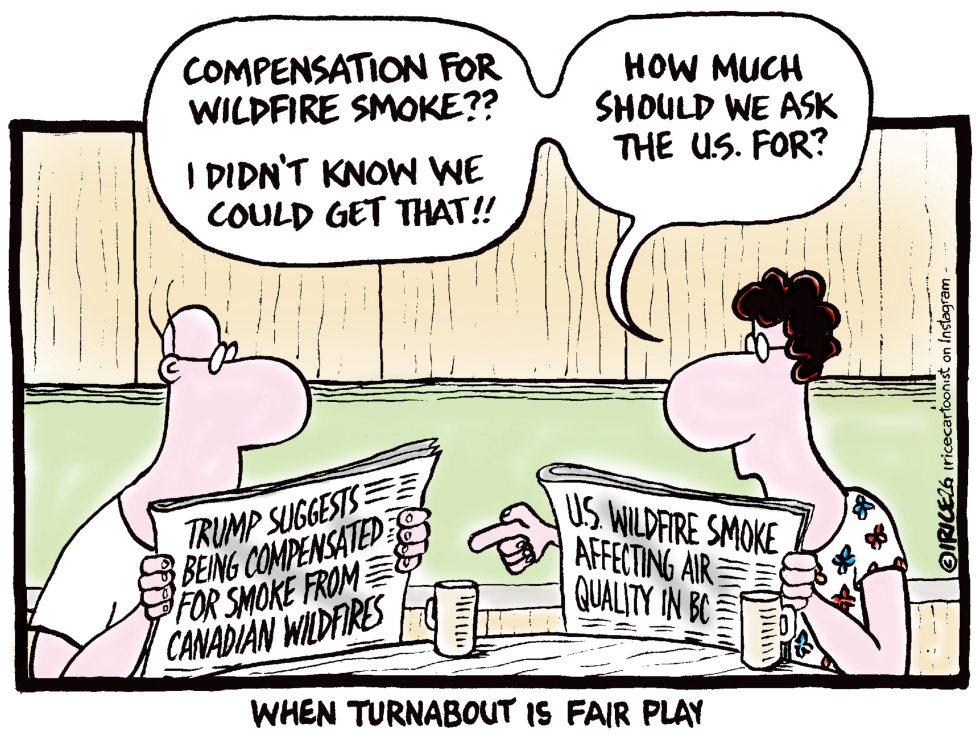
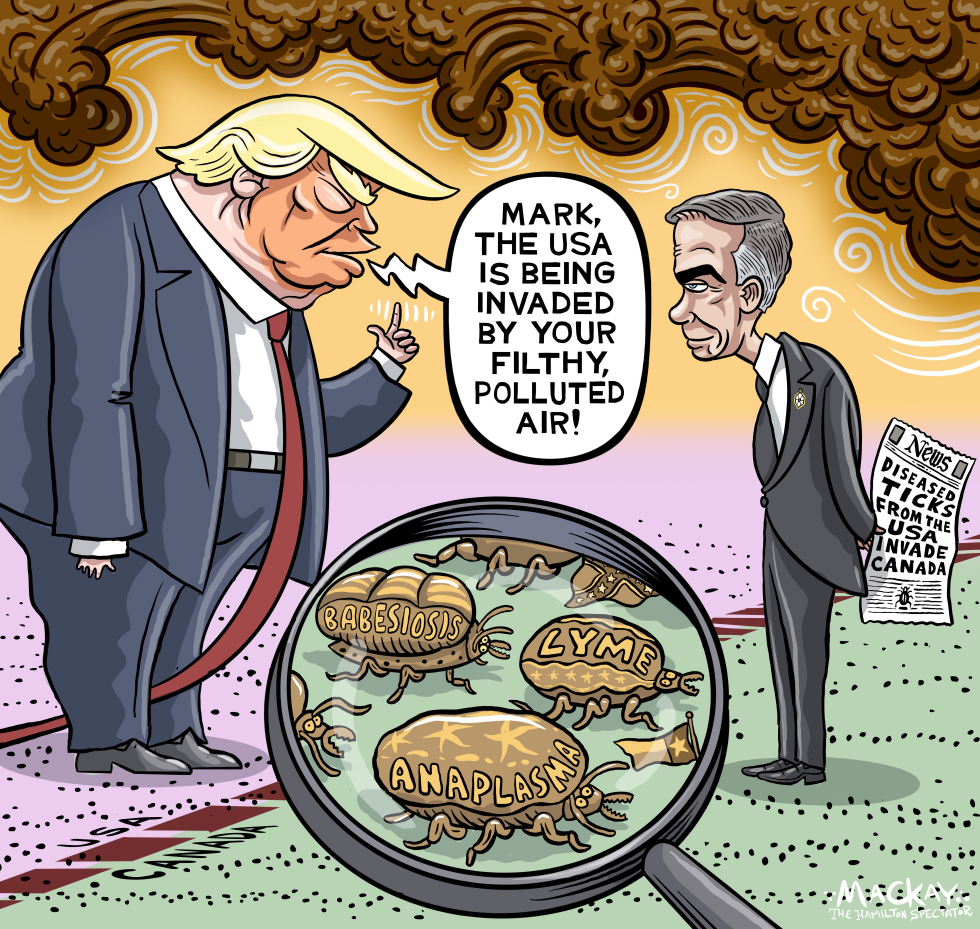
Donald Trump suggested the U.S. should receive compensation for smoke from Canadian wildfires. The cartoon responds by showing Canadians considering a reciprocal claim for smoke from U.S. wildfires affecting British Columbia air quality. It underscores the political dynamic of mutual environmental grievances between the two nations.
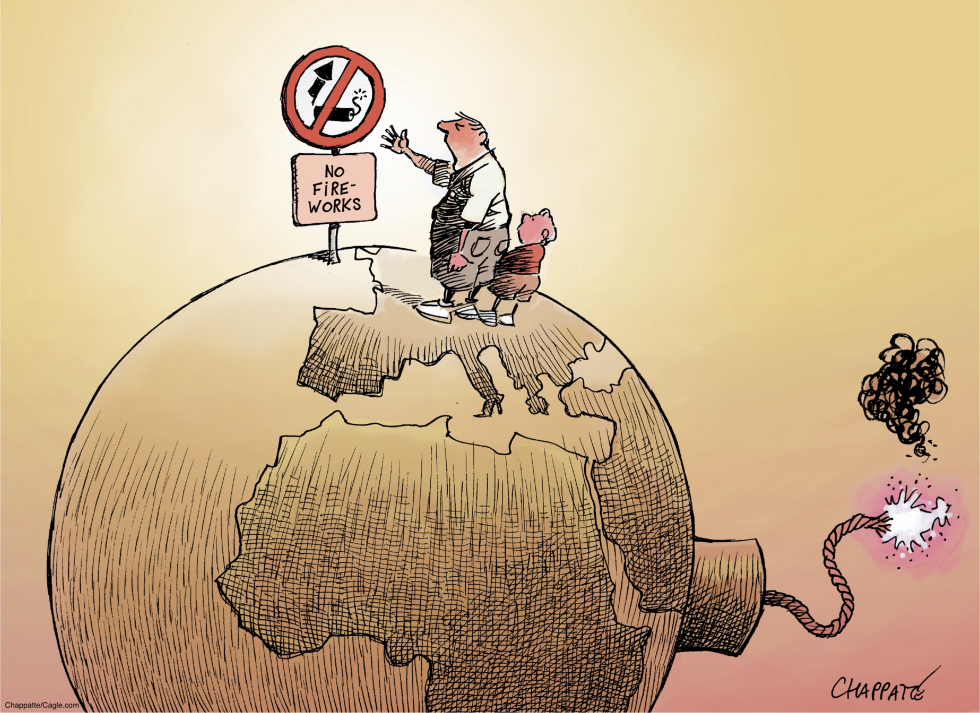
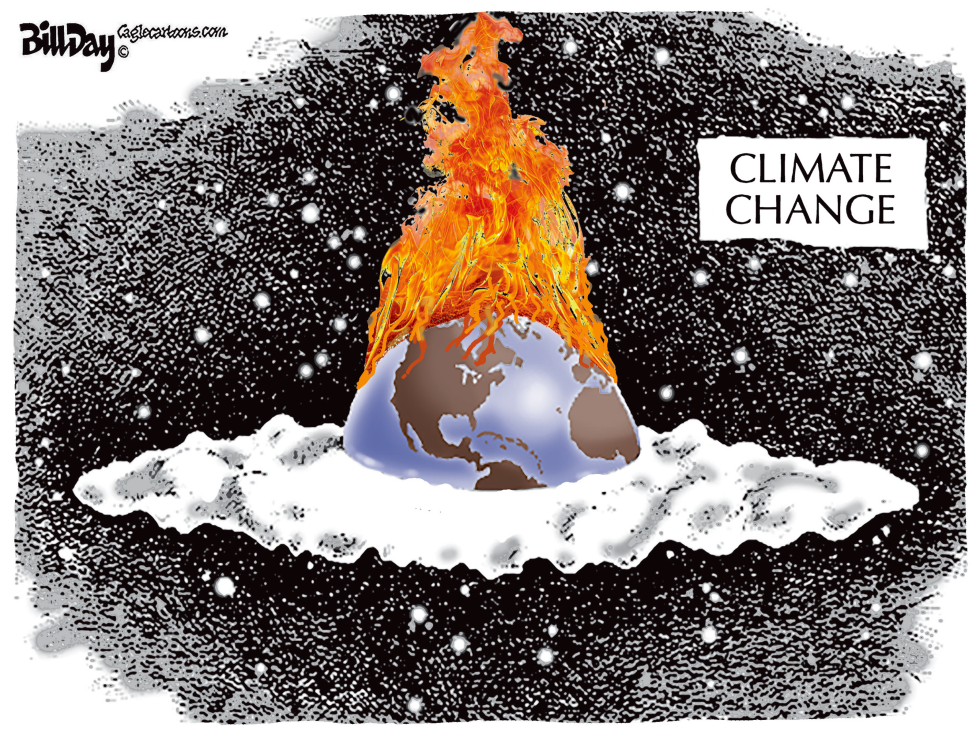
Ongoing global temperature records continue to climb in mid-2026 amid extreme weather events worldwide. Scientists and governments track accelerating impacts from greenhouse gas emissions. The cartoon underscores the direct link between human-driven climate change and planetary distress, presenting the crisis as an immediate and visible threat rather than a distant concern.
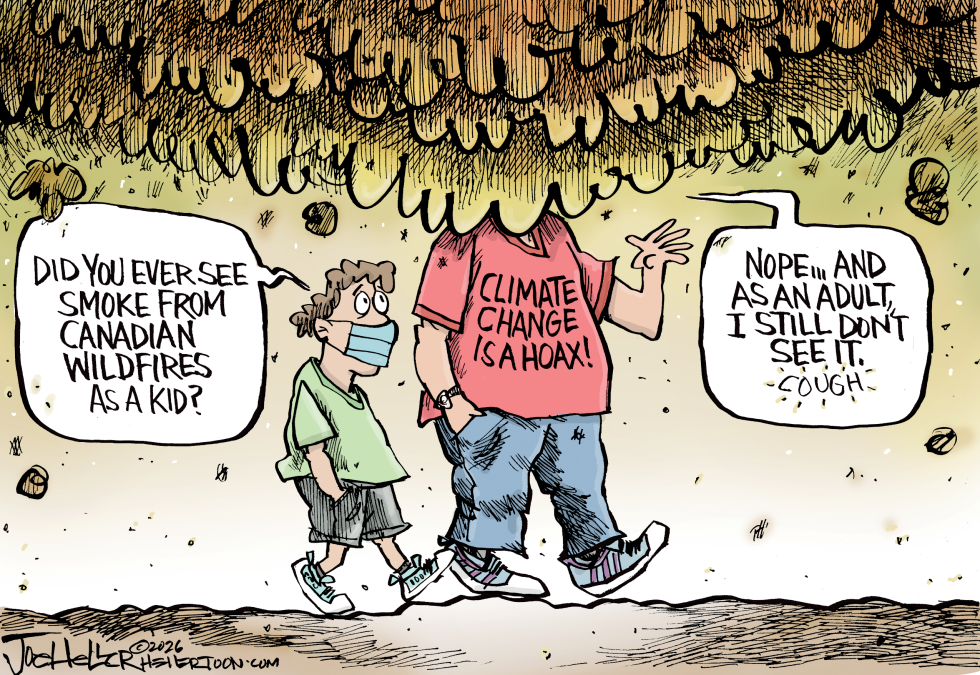
Canadian wildfire smoke blanketed parts of the northern U.S. in mid-July 2026, prompting renewed public discussion of climate impacts. An adult figure dismisses the connection outright while visibly affected by the air quality. The piece highlights the disconnect between personal experience and continued denial of the underlying cause.
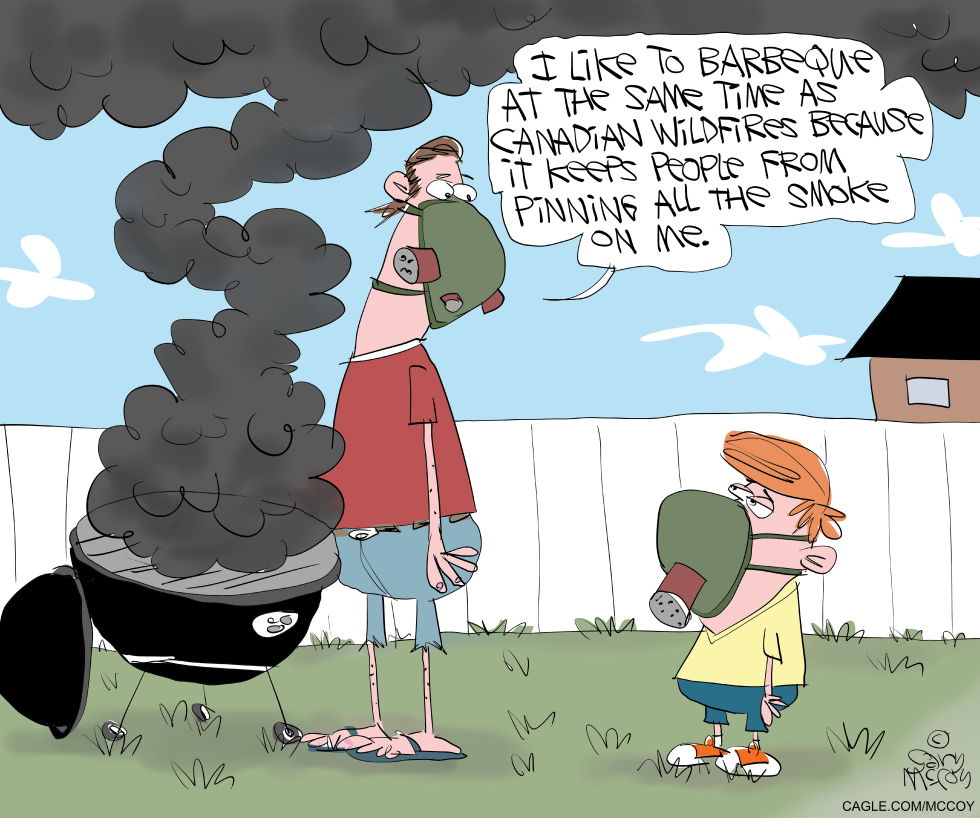
Canadian wildfires in mid-2026 sent thick smoke plumes across the northern United States, prompting air-quality alerts and health warnings in multiple states. Residents already dealing with regional haze faced additional backyard smoke from summer grilling. The cartoon depicts two figures wearing gas masks beside an active barbecue, with the adult figure claiming the wildfires conveniently deflect attention from personal smoke contributions. The piece highlights how individuals exploit larger environmental events to minimize accountability for smaller-scale pollution during the same period.
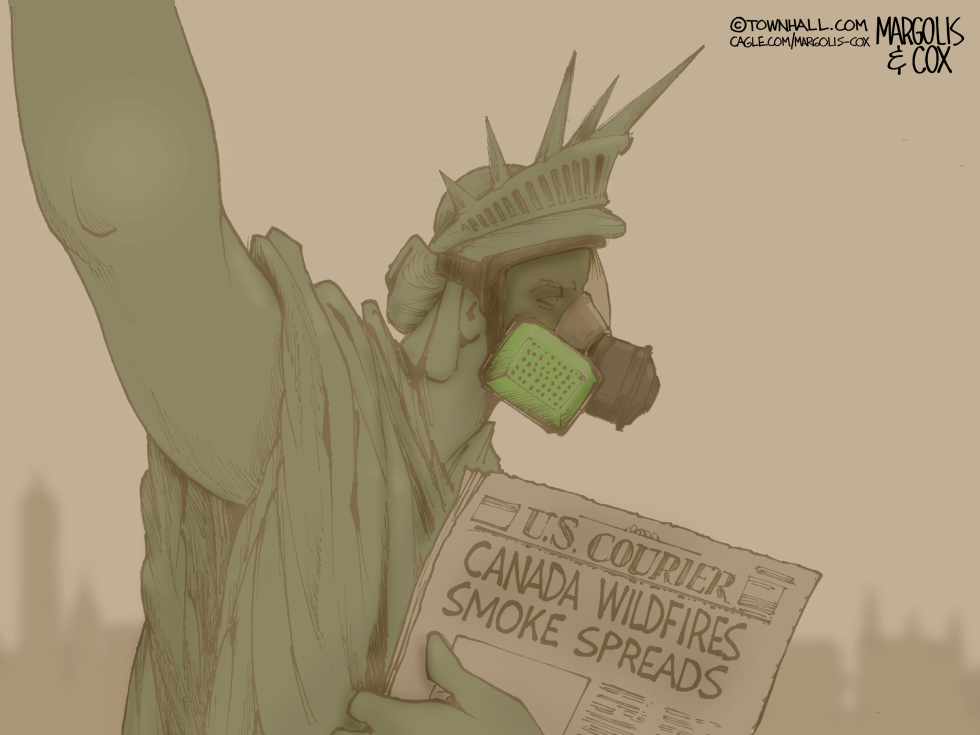
Canadian wildfires in mid-July 2026 sent dense smoke plumes southward, degrading air quality across the northern United States and prompting health alerts in multiple states. The recurring seasonal event underscores how climate-driven fire seasons now affect populations far from the burn zones. The cartoon depicts the Statue of Liberty wearing a gas mask while clutching a newspaper headlined on the spreading smoke, signaling that even national symbols of openness now require protection from environmental fallout.
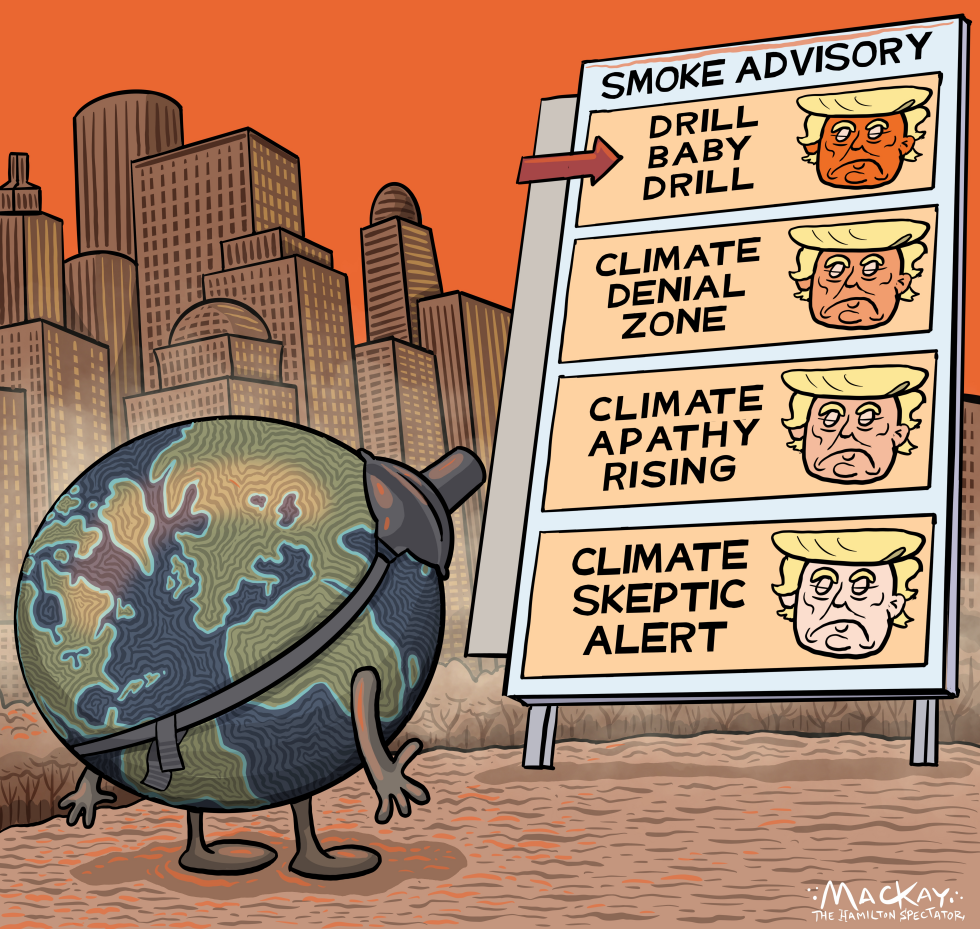
A political cartoon depicts a personified Earth wearing a gas mask standing before a large smoke advisory sign. The sign lists escalating climate warnings including drill baby drill, climate denial zone, climate apathy rising and climate skeptic alert. Each level features the face of Donald Trump. An orange sky and city skyline form the backdrop, suggesting wildfire smoke. The image responds to ongoing debates over fossil fuel policies and climate skepticism associated with Trump. It highlights connections between energy extraction slogans and environmental conditions as of mid-2026.
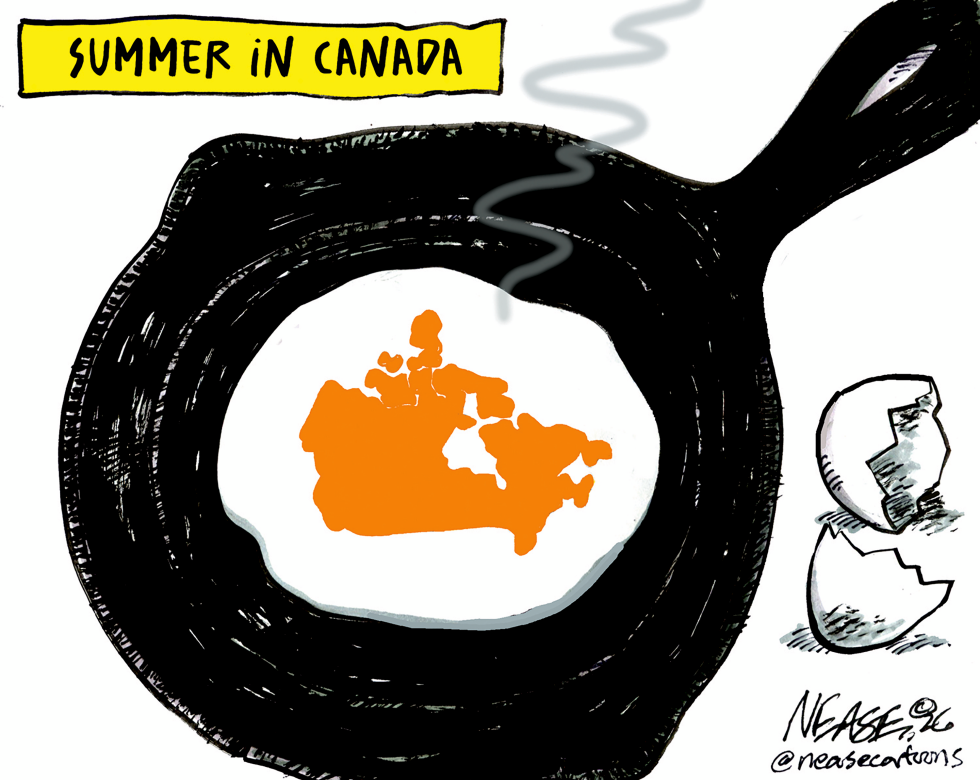
Canada has faced repeated extreme heat and wildfire seasons in recent years. The piece responds to summers that now bring health advisories and air quality warnings rather than mild weather. It renders the country as an egg frying in a skillet.