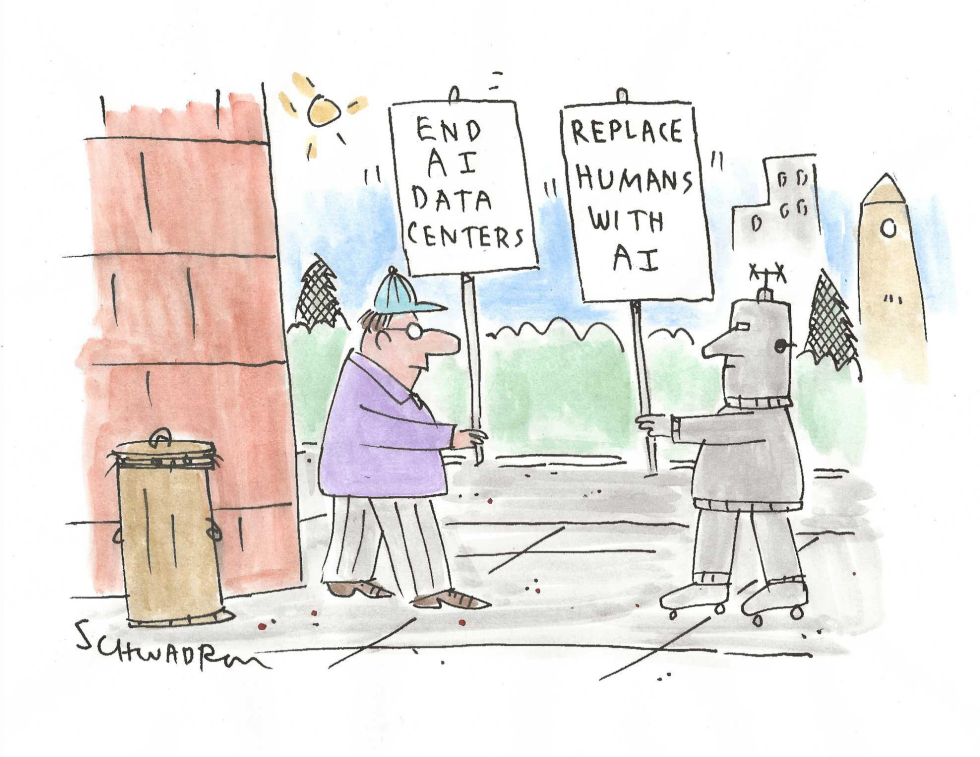
Public demonstrations against AI data centers and for replacing human workers with artificial intelligence underscore growing societal friction over the technology's rapid expansion. Data centers powering AI systems face criticism for energy demands and environmental costs, while automation threatens widespread job losses across sectors. The cartoon illustrates these contradictory positions through direct confrontation between a human protester and a robotic counterpart. This reflects ongoing debates where environmental concerns clash with arguments for efficiency gains from AI. The piece takes a neutral stance, simply presenting the absurdity of simultaneous opposition to and advocacy for AI dominance without resolving the tension.
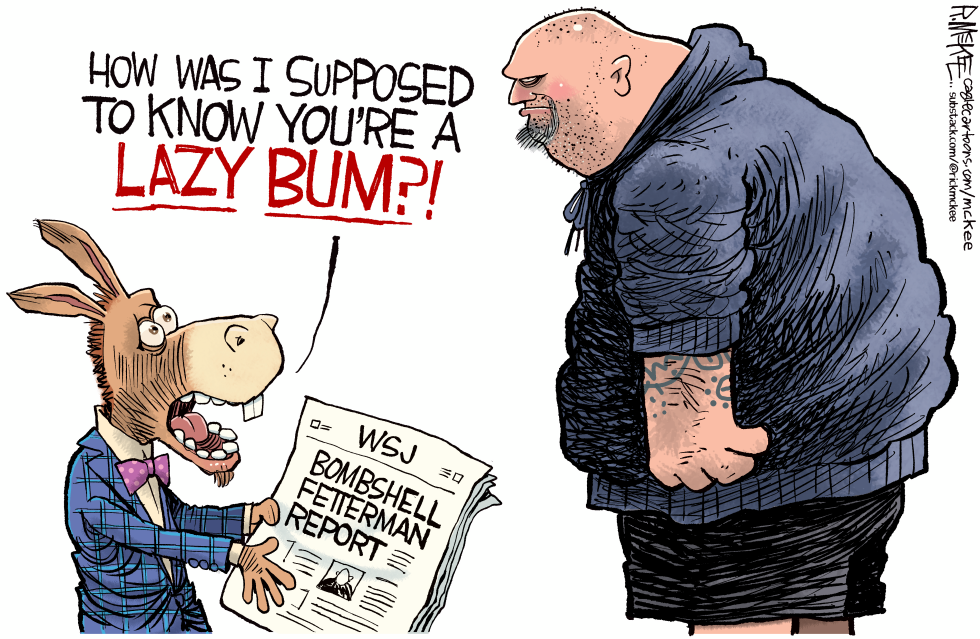
A Wall Street Journal report labeled Sen. John Fetterman a lazy bum, prompting a sharp response from the Pennsylvania Democrat. The piece highlights ongoing questions about his Senate attendance and engagement. Fetterman dismissed the characterization as unfair. Democrats portrayed the coverage as an attack on one of their members. The cartoon captures the party's defensive posture toward the criticism.
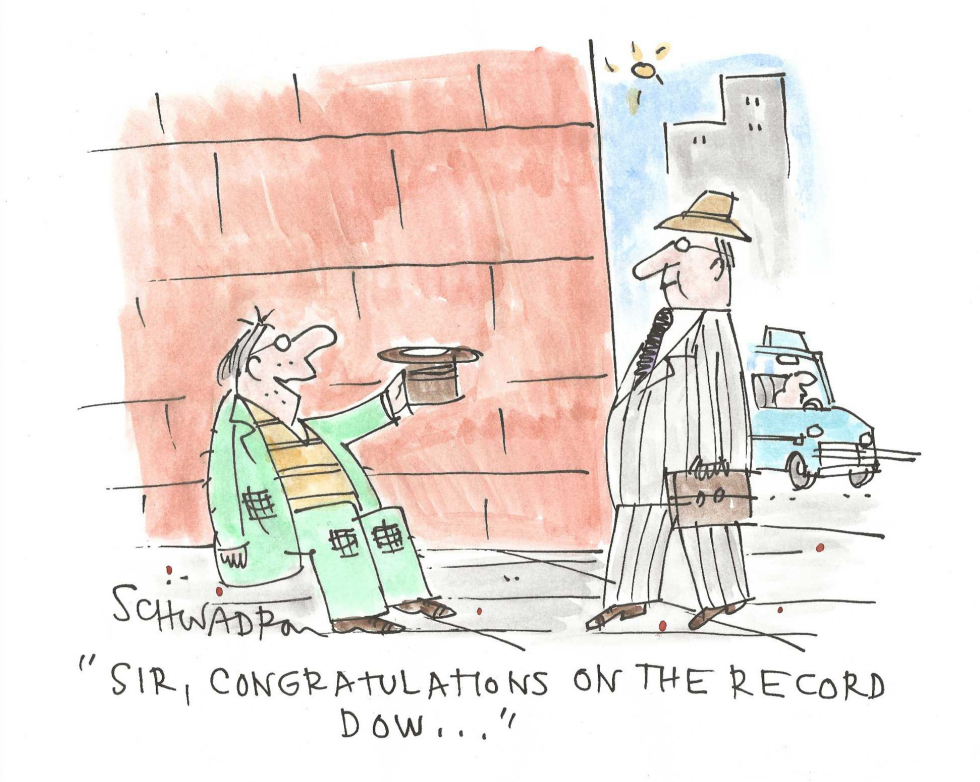
The Dow Jones Industrial Average reached a new record high in late August 2026, reflecting strong corporate earnings and investor confidence. Business leaders celebrated the milestone while many Americans continued to face stagnant wages and rising living costs. The cartoon depicts a beggar offering congratulations to a passing executive, underscoring the disconnect between Wall Street performance and everyday economic reality. This visual argument critiques how market success often benefits a narrow segment of society while leaving others behind.
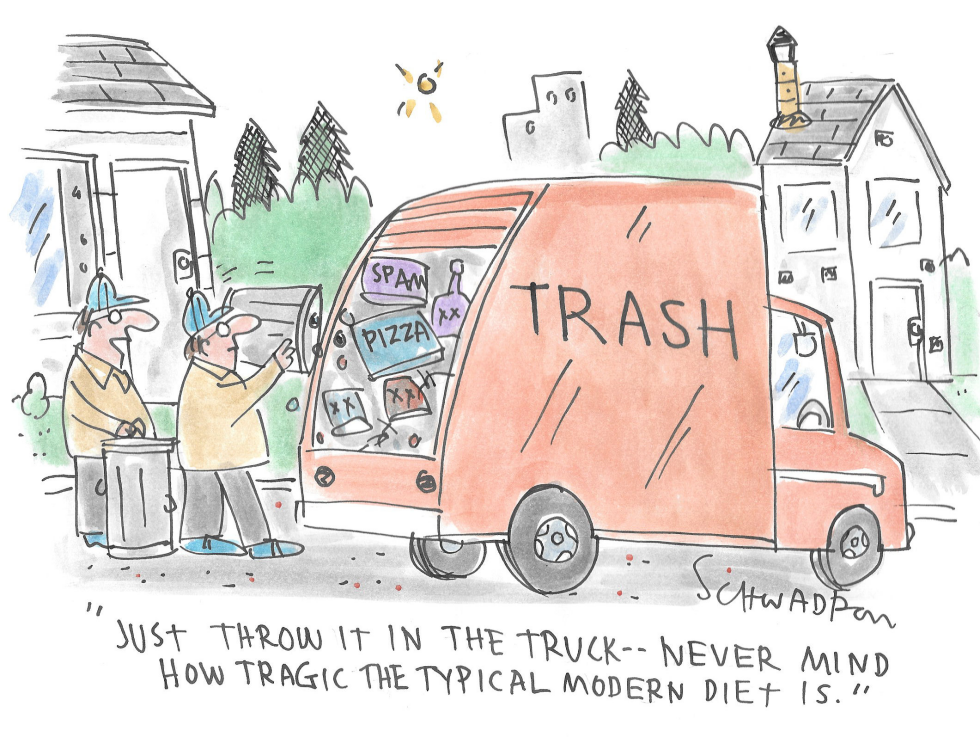
Public discussion continues over the health impacts of widespread junk food consumption and other modern lifestyle habits. The piece takes the position that these elements of daily life are so poor they belong in the garbage.
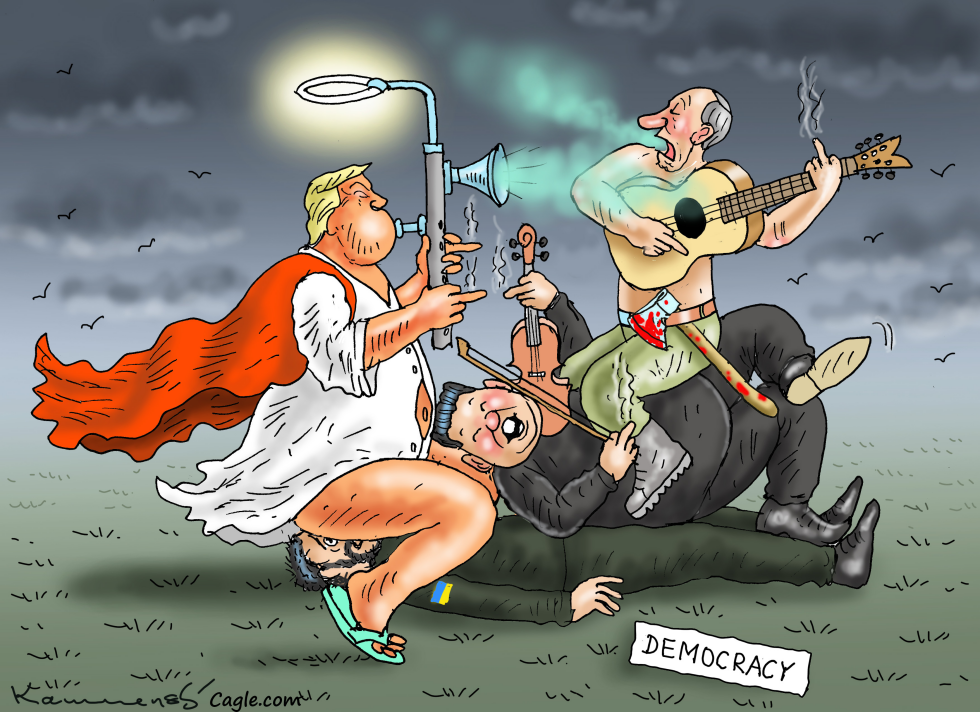
On August 21, 2026, the ongoing Ukraine conflict continued with no resolution in sight as U.S., Russian and Ukrainian leaders remained locked in diplomatic friction. The cartoon responds by depicting the three men as musicians whose finger-pointing and instruments create discord rather than harmony, underscoring the editorial view that personal posturing has overtaken substantive progress toward peace.
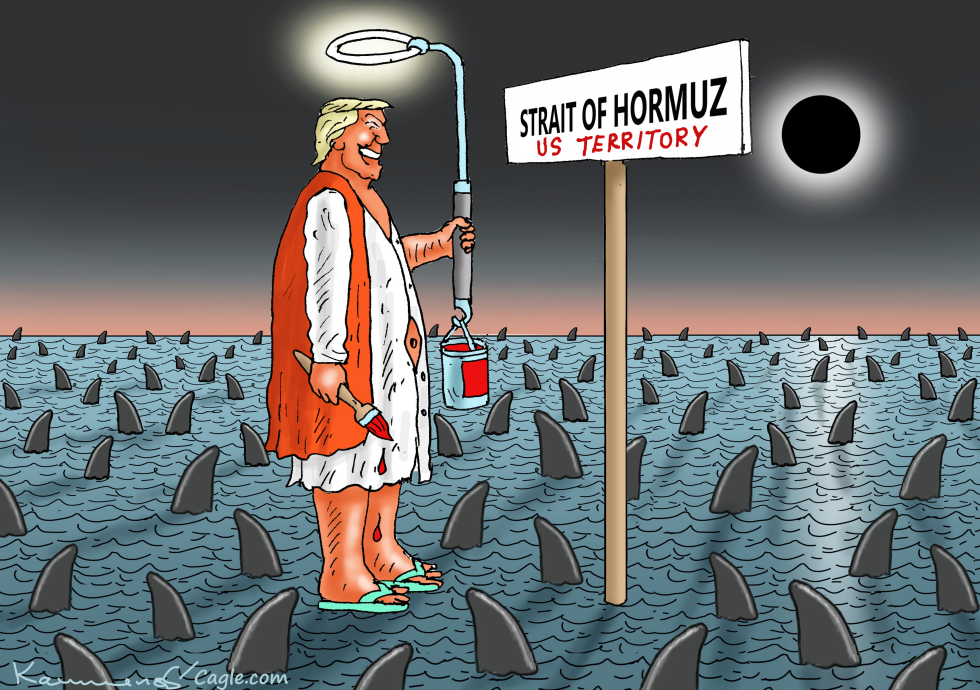
Donald Trump has asserted US sovereignty over the Strait of Hormuz, a critical waterway for global oil shipments. The move comes amid ongoing friction with Iran and other regional actors over navigation rights and energy security. Such a claim challenges established international maritime law and risks escalating tensions with multiple nations that rely on the passage. The editorial takes the position that the assertion is reckless and ignores the practical dangers and diplomatic fallout involved.
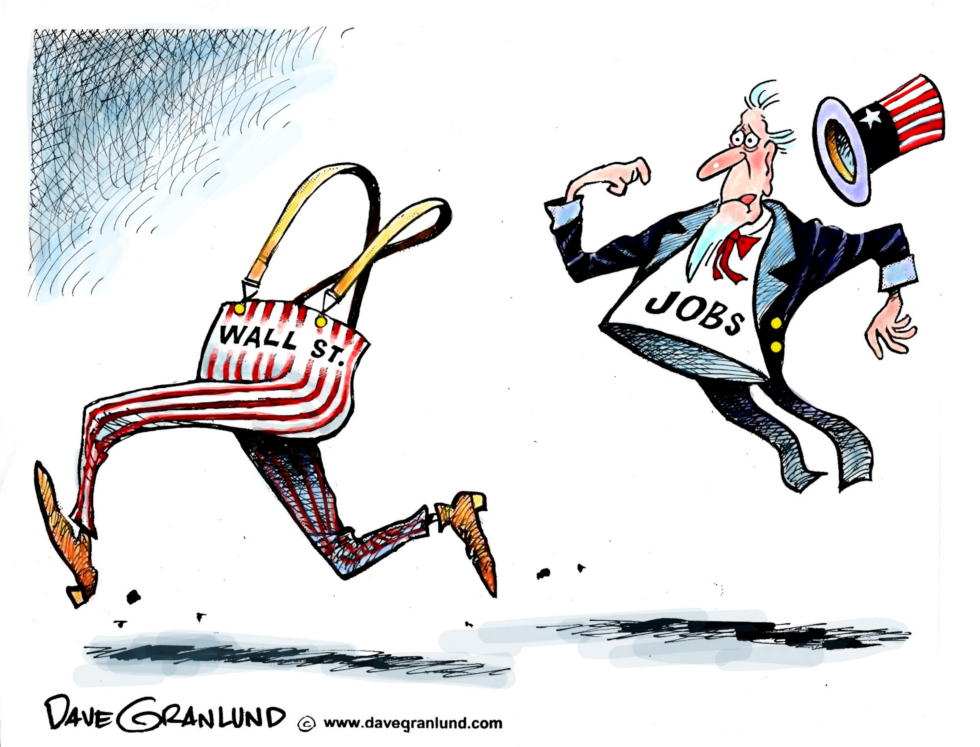
Wall Street and employment figures remain at odds in ongoing market dynamics. The separation underscores persistent challenges in aligning financial markets with job creation efforts amid broader economic pressures.
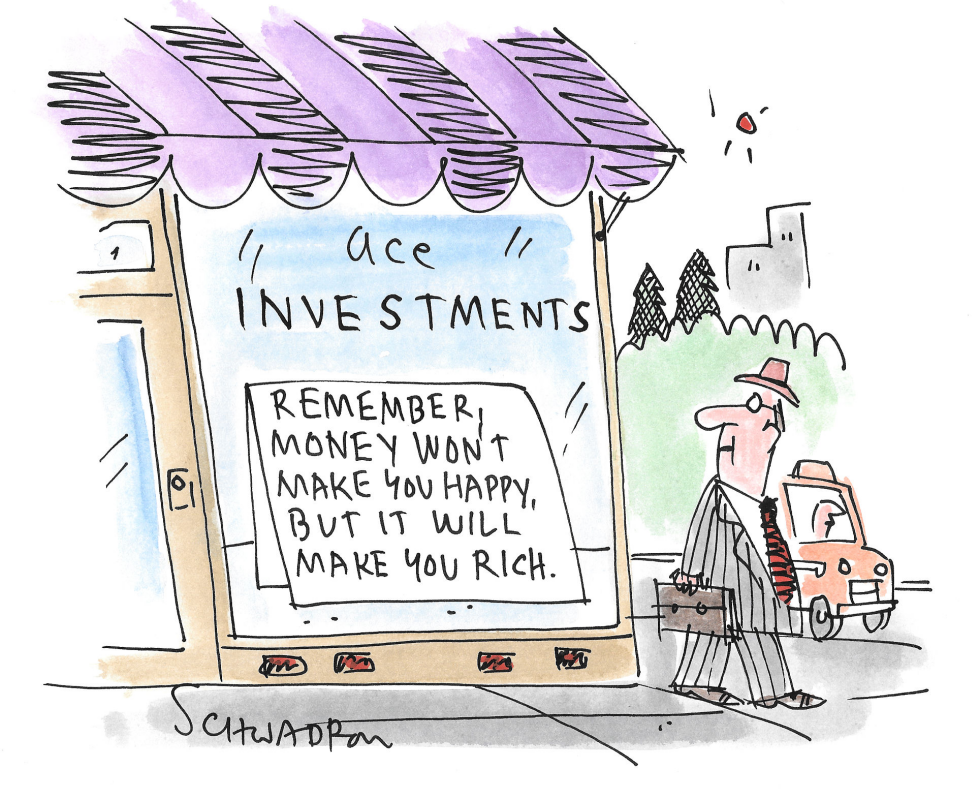
An investment firm billboard states that money will not create happiness but will create wealth. The message appears on a city street where a businessman passes by. The piece presents the ongoing dynamic of financial messaging that prioritizes riches above emotional benefits.
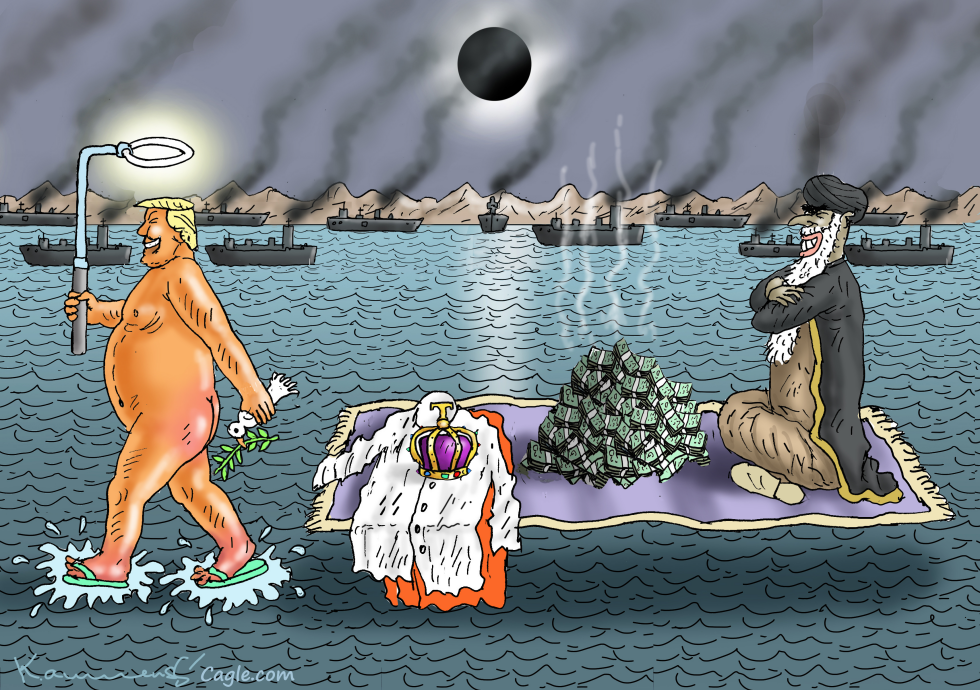
Donald Trump has floated a direct peace gesture toward Iran at a moment of heightened naval presence in the region. The move arrives against a backdrop of longstanding tensions over nuclear ambitions, sanctions, and proxy conflicts. Observers note the offer coincides with visible military assets and financial incentives. The editorial position frames the gesture as an attempt to reset relations through symbolic and material means rather than sustained diplomacy.
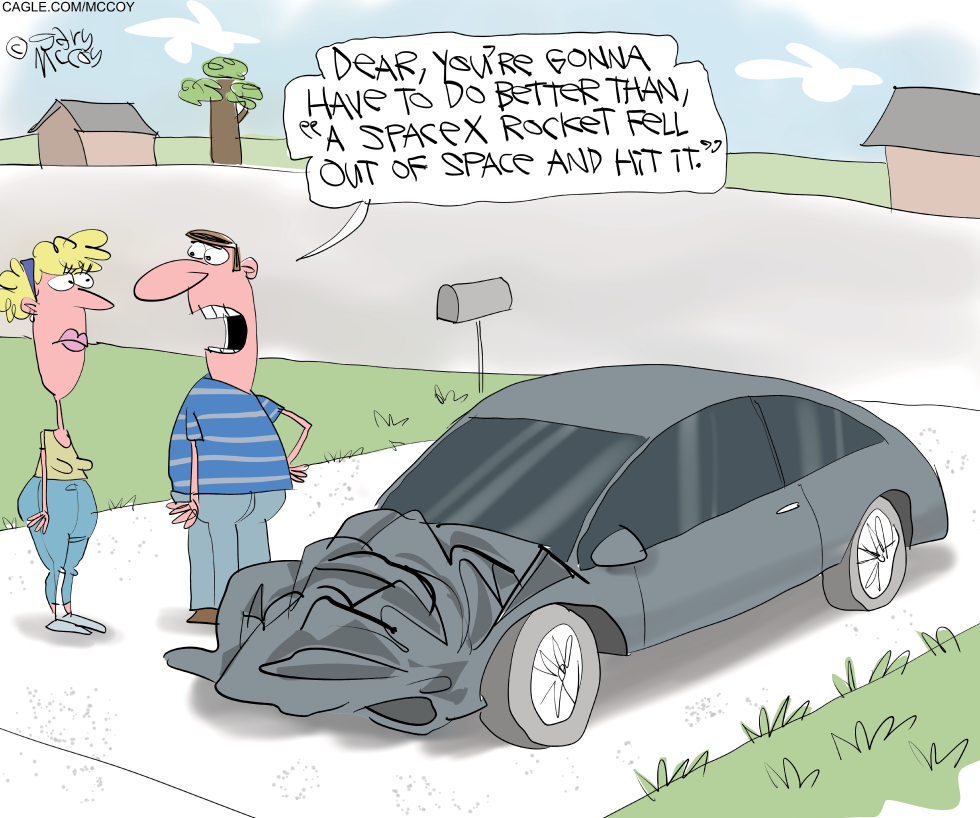
A man offers an implausible explanation for damage to a vehicle on a suburban street. The claim references a SpaceX rocket falling from space. The exchange highlights skepticism toward far-fetched excuses in everyday disputes. The piece takes the position that such a story fails to hold up under scrutiny.
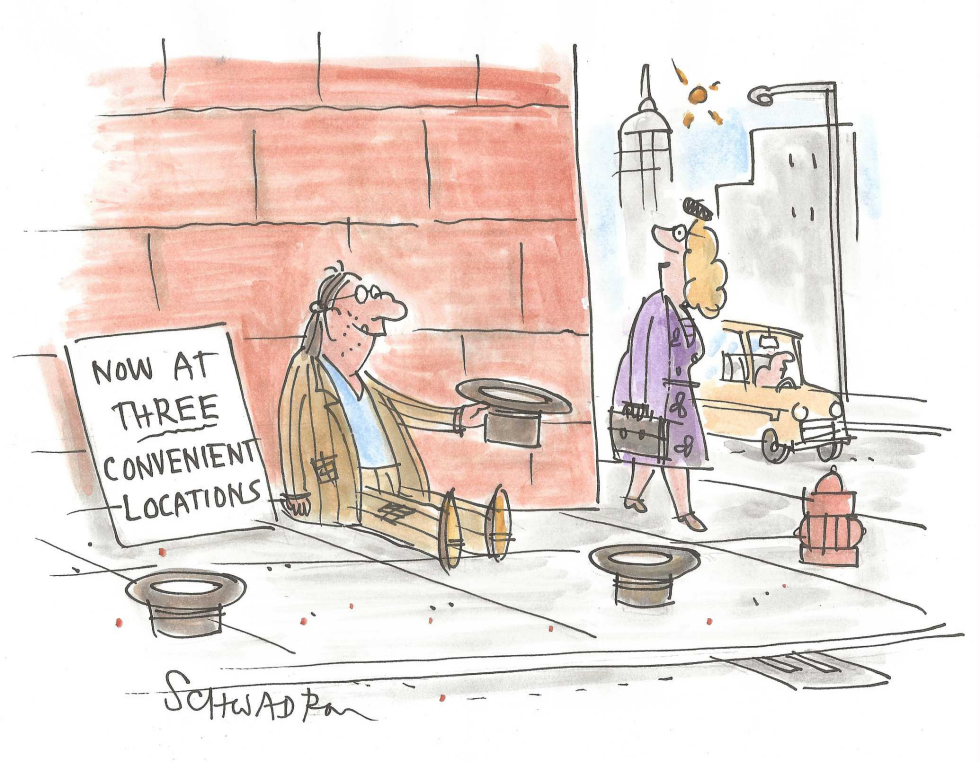
A panhandler in an urban setting displays a sign announcing three convenient locations, mimicking retail chain expansion. The image highlights the persistence of street begging amid city life. The piece uses the visual metaphor to comment on how panhandlers adapt their methods in response to ongoing urban challenges with homelessness and public solicitation.
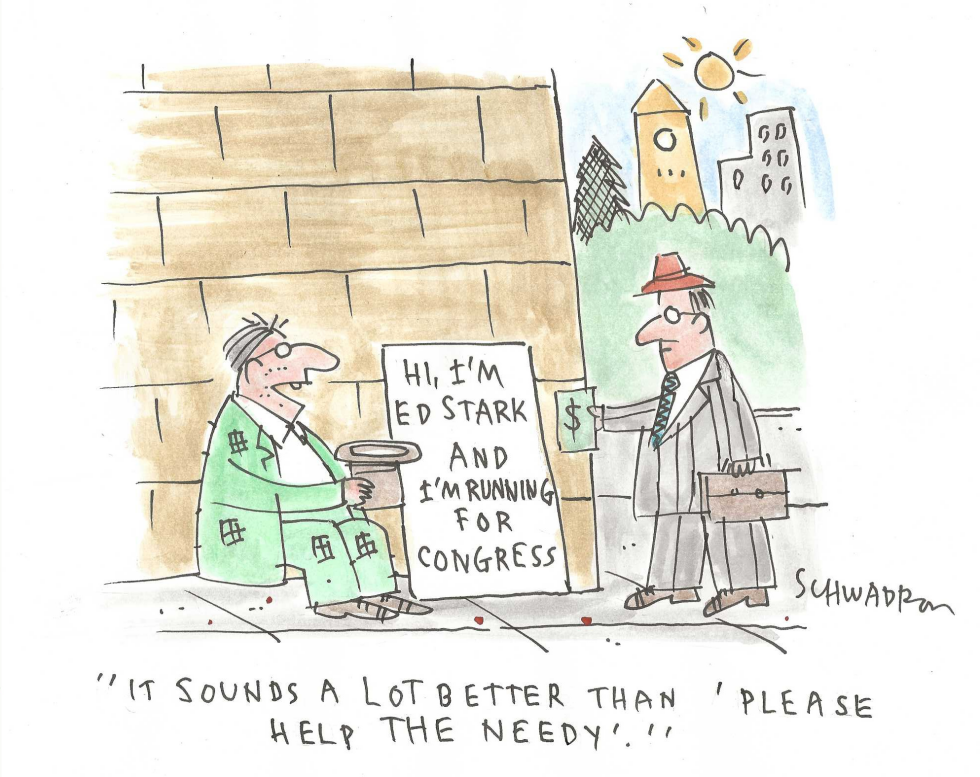
Ed Stark, identified on his campaign sign as a congressional candidate, sits on a sidewalk displaying his bid for office. A suited donor extends cash toward him. The scene highlights the routine nature of campaign fundraising. The piece frames the candidate's appeal as a more respectable version of street solicitation. It underscores how candidates routinely seek contributions to sustain their races.
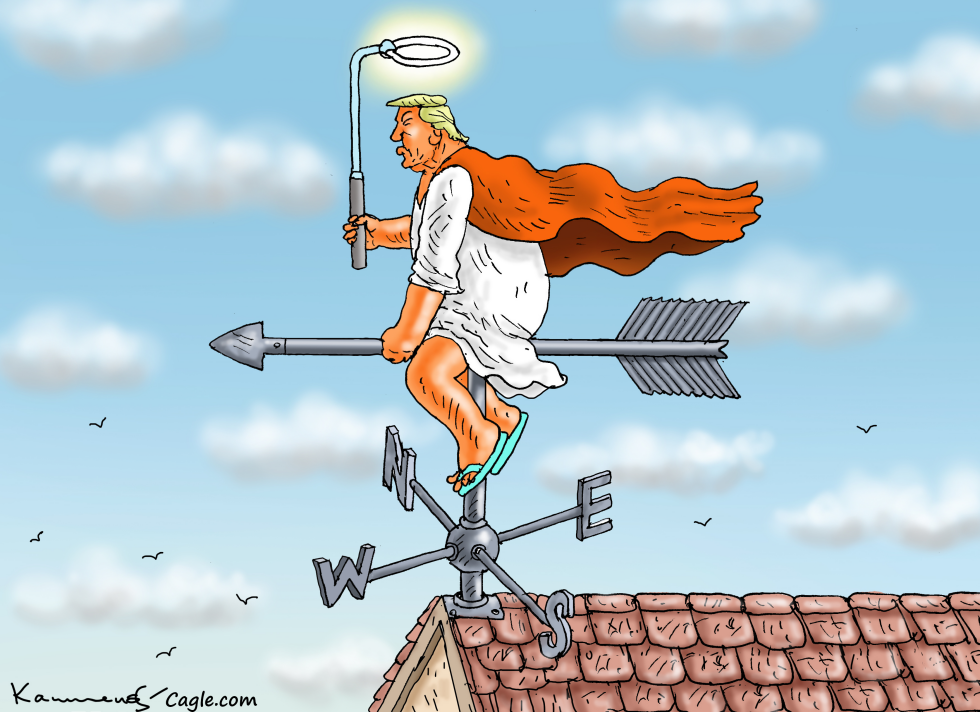
Donald Trump appears in public commentary as a changeable political presence. The depiction places the former president on a rooftop weather vane, suggesting ongoing shifts in position or influence. No single recent policy action or vote anchors the image. The visual argument frames Trump as responsive to prevailing directions rather than fixed in stance. This reflects broader debates over consistency in leadership and public perception of adaptability.
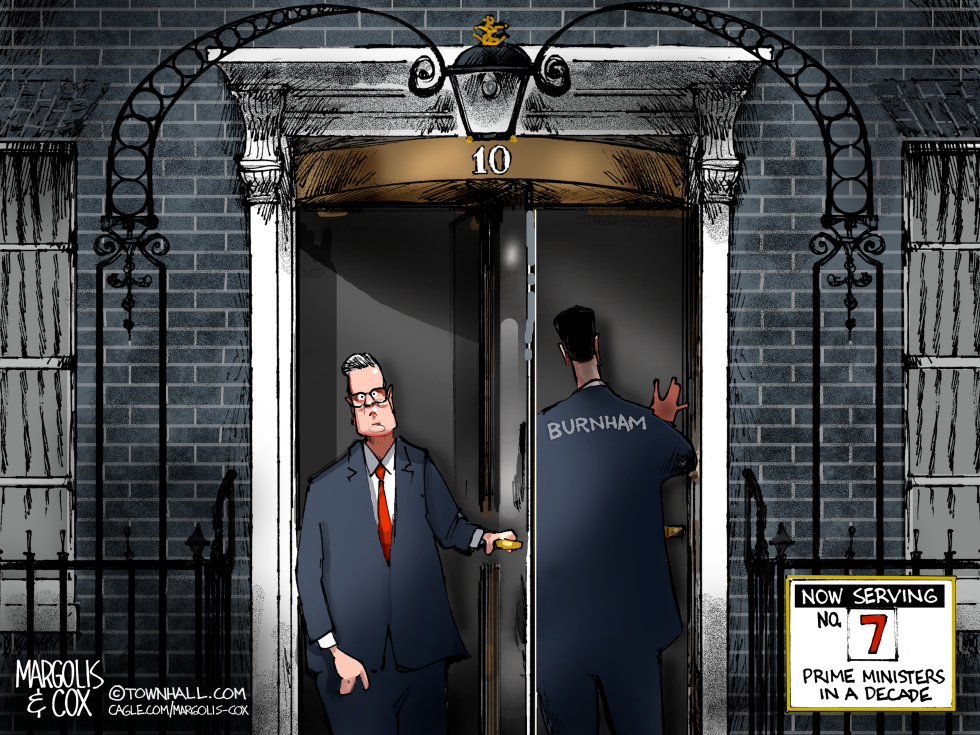
Keir Starmer exits the revolving door at 10 Downing Street while Andy Burnham enters from the opposite side. Starmer wears a dark suit with a red tie and glasses. Burnham has his name printed on the back of his jacket. A sign in the corner reads now serving number seven prime ministers in a decade. The image shows rapid leadership turnover at the United Kingdom government headquarters. It responds to ongoing political instability marked by multiple changes in the prime minister position over the past ten years, with the latest transition from Starmer to Burnham continuing the pattern of short tenures in the role.
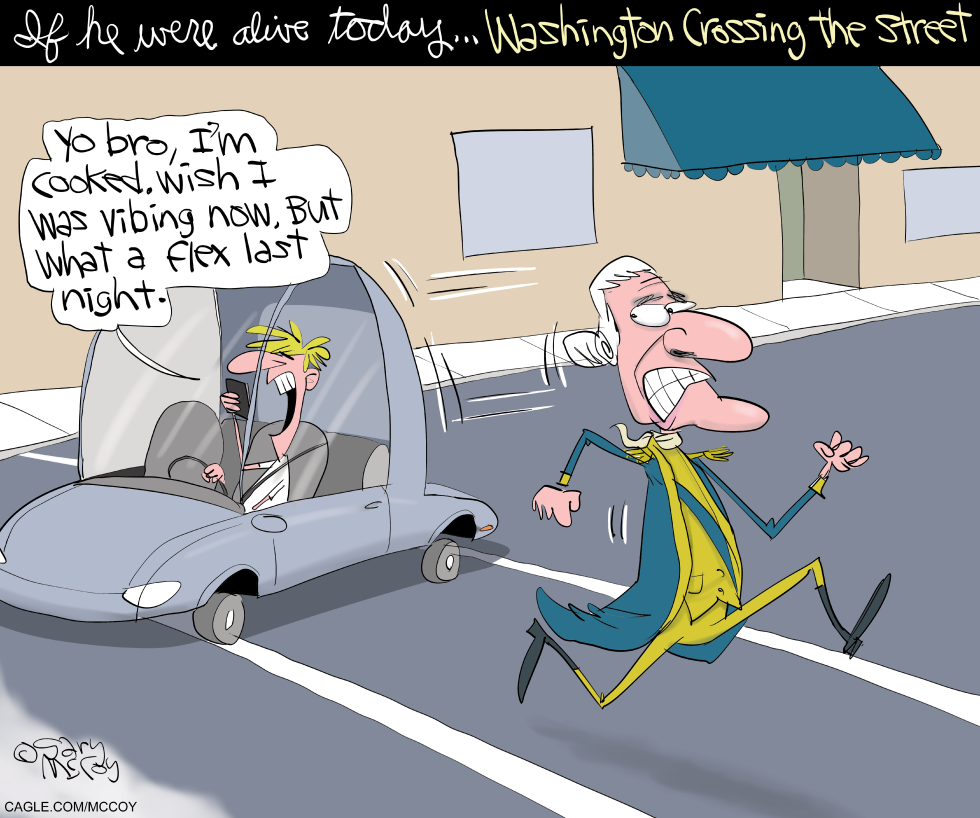
Distracted driving remains a leading cause of traffic accidents nationwide. A driver focused on his phone rather than the road creates immediate danger for pedestrians. The issue persists despite laws and awareness campaigns. The piece highlights how such behavior threatens even iconic figures in everyday settings. It argues that phone use behind the wheel demands stronger enforcement and cultural change.