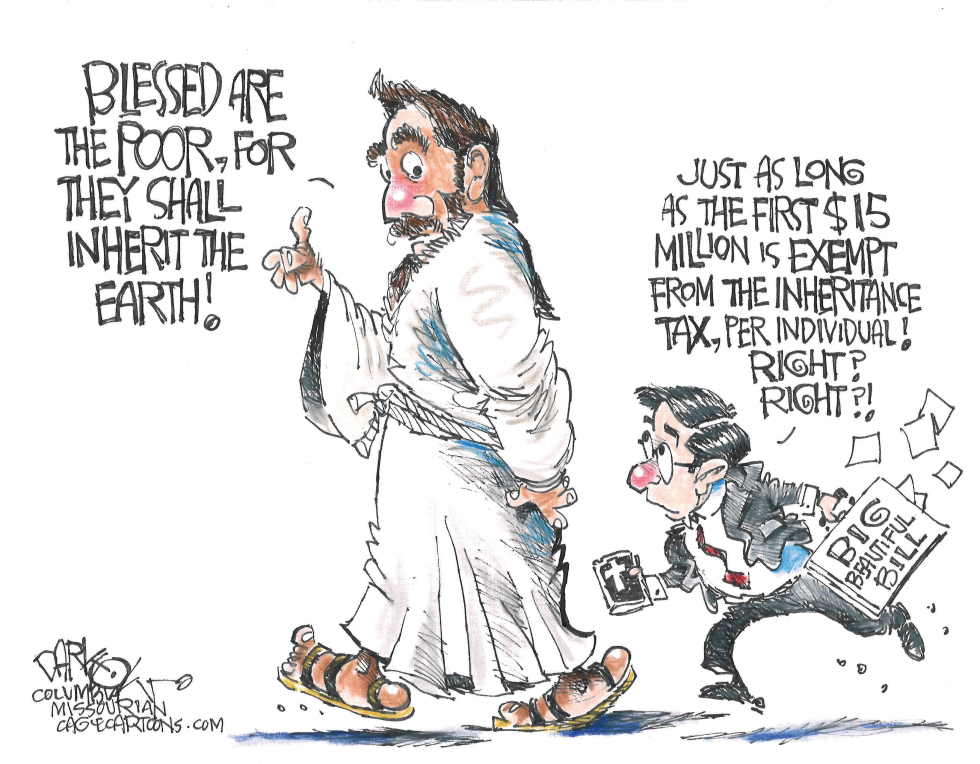
John Darkow's cartoon features a Jesus-like figure proclaiming, 'Blessed are the poor, for they shall inherit the earth,' only to be chased by a suited man holding a 'Big Beautiful Bill' and demanding the first $15 million be exempt from inheritance tax. The image twists biblical teachings to critique tax policies favoring the wealthy, with the misspelled 'Inhert' adding a layer of irony. Tags like political cartoon inheritance tax exemption and estate tax policy humor capture the essence. The dry humor targets economic inequality, showing the businessman clutching a small book, perhaps a Bible, while papers fly. This setup parodies how religious ideals clash with modern fiscal privileges, making it a sharp commentary on wealth distribution.
The cartoon depicts the Republican elephant crouched over a large firework canister labeled Big Beautiful Bill. The figure holds a lit match to the fuse while a speech bubble states This is gonna hurt. Spent matches lie on the ground nearby. The image responds to congressional action on a major budget and tax measure that includes provisions affecting Medicaid and the federal deficit. The visual uses the traditional GOP symbol to illustrate internal party caution about the legislation ahead of a Fourth of July timing.
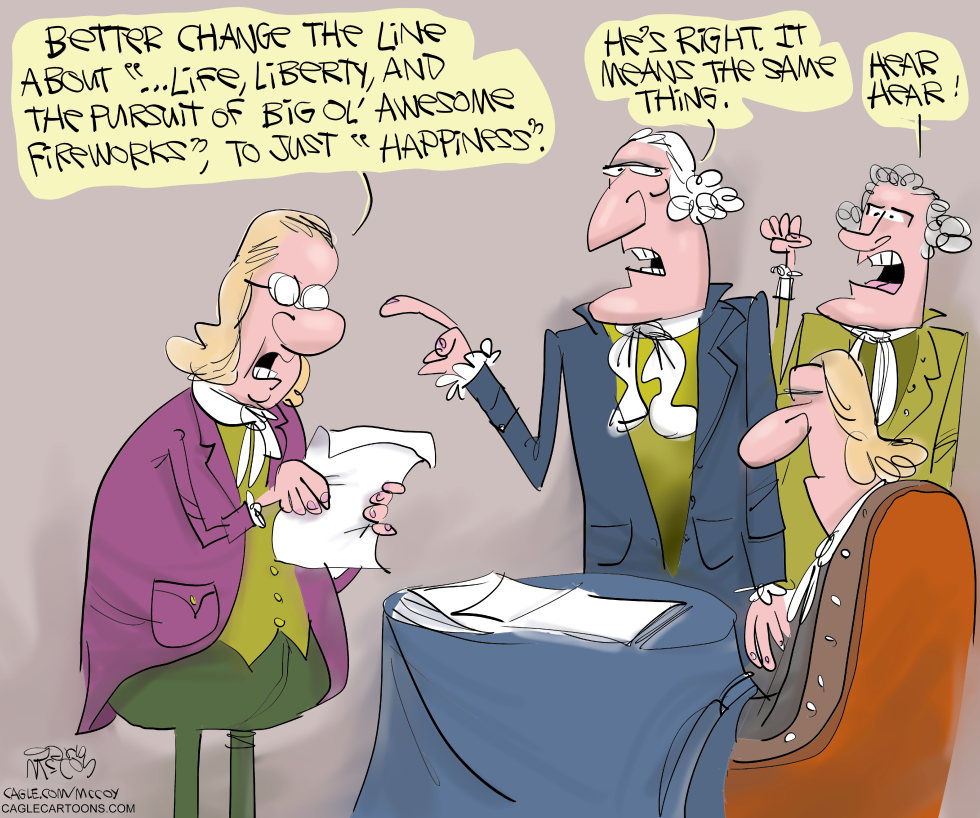
On June 29 2025 Gary McCoy depicts Benjamin Franklin, Thomas Jefferson and George Washington gathered around a table. Franklin holds the Declaration and proposes altering the pursuit of happiness line to reference big ol awesome fireworks. Jefferson and Washington agree the change means the same thing and cheer the idea. The scene plays on July Fourth themes near the holiday.
The cartoon depicts a GOP elephant holding a box of matches and a lit match near a large firework rocket labeled Big Beautiful Bill. The rocket lists tax cuts for the rich and Medicaid cuts for the poor. The elephant states there is no way this will blow up in its face. The image uses Fourth of July imagery to comment on Republican budget legislation combining tax reductions and spending cuts. The visual suggests potential political backlash from the policy mix.
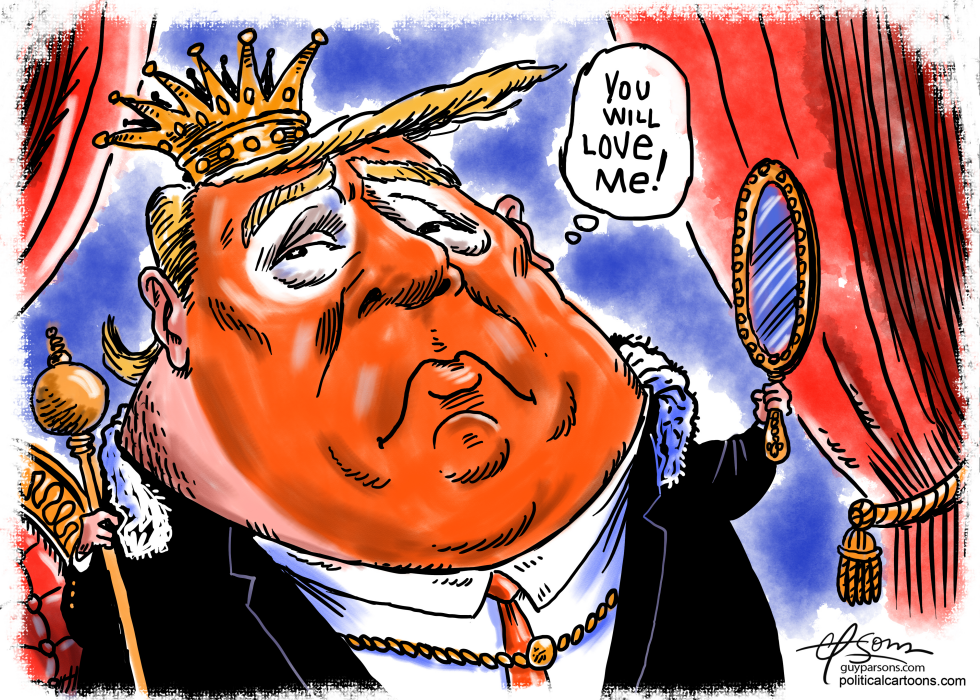
Guy Parsons draws a bloated, orange-faced figure resembling Donald Trump, decked out in a golden crown and royal robe, clutching a scepter in one hand and a hand mirror in the other. The speech bubble proclaims 'You will LOVE ME!' against a backdrop of red curtains, tying into tags like USA, America, Army, 250th anniversary, Trump birthday, and no kings. This setup pokes at delusions of monarchy in a nation founded on rejecting kings, with the mirror emphasizing self-adoration. The cartoon's timing, around Trump's birthday and the upcoming 250th anniversary of American independence, underscores the irony of a leader aspiring to unchecked power. Parsons' style keeps it bold and colorful, making the satire pop without subtlety.
A tall figure shaped like legislation stands in a city street with arms extended outward. Below it a group of people look upward with wide eyes and open mouths while some raise hands. The figure holds a sign reading I'm Just a Bill. Text at the top names the scene Trump's Big Beautiful Bill. The composition places the legislation form above the group in an urban setting with buildings on both sides.
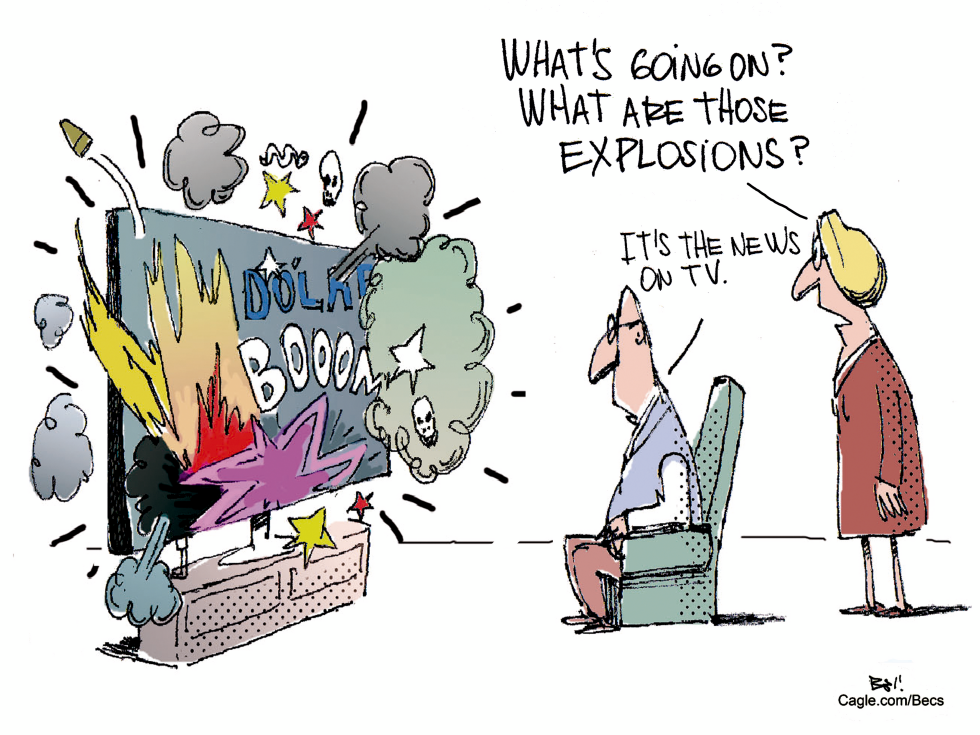
A television screen erupts in flames and smoke labeled dollar boom while a seated man informs a standing woman that the blasts represent the news. The scene highlights sensational coverage of financial and conflict stories dominating broadcasts. The cartoon from May 2025 captures public reaction to nonstop dramatic reporting.
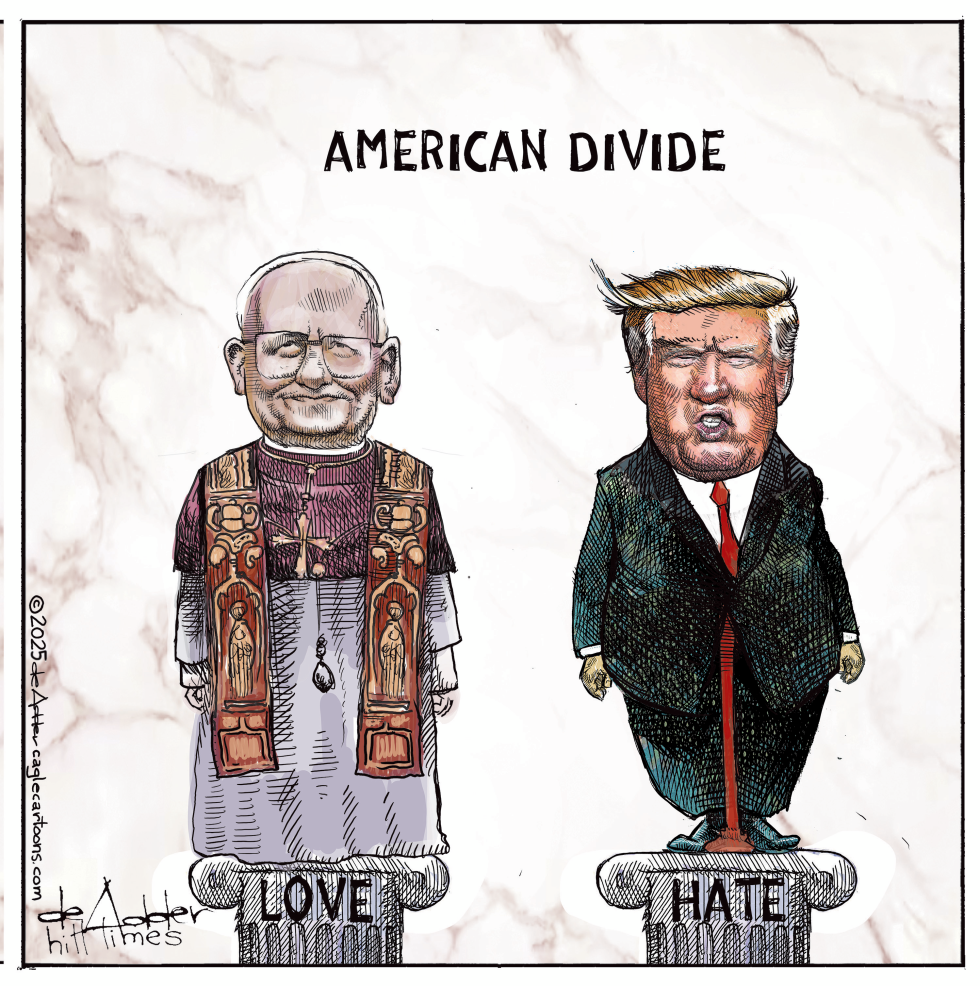
Michael de Adder's cartoon titled 'American Divide' shows a bald, bespectacled pope in ornate robes on a pedestal marked 'LOVE,' facing a caricature of Donald Trump in a suit on a pedestal marked 'HATE.' The marble background adds a classical touch to this commentary on polarization. Tags such as Trump, Pope, Leo XIV, Hate, Love, Vatican, Washington, USA capture the essence of contrasting figures representing opposing values in American society. The image highlights the divide between messages of compassion and animosity, with Trump, Pope, Hate, Love, USA emphasizing the cultural and political rift.
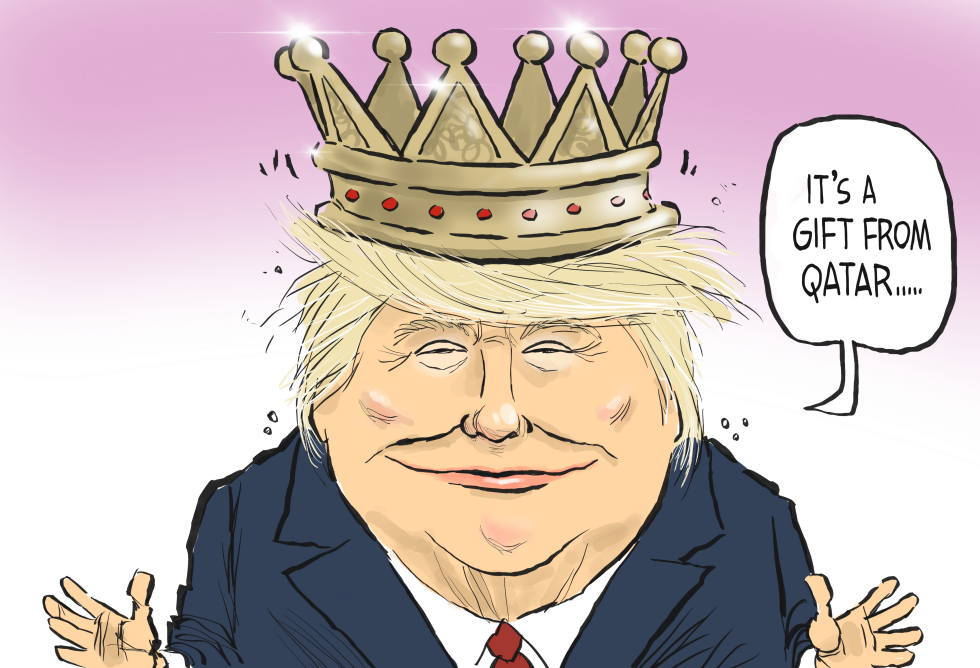
Jeff Koterba's cartoon captures Trump in a suit, topped with a golden crown that sparkles against a pink background, his hands outstretched as he speaks in a bubble: 'It's a gift from Qatar...!!' The tags like Qatar, Trump, crown, king, gift, ethics point to satire on political perks. Cartoons like this thrive on exaggeration, here turning Trump into a kingly figure accepting foreign gifts without a blink. It's straightforward humor, poking at ethics without overcomplicating the visuals. Readers see the crown as a clear symbol of assumed royalty, tied to tags on free gifts and potential scandals. Such pieces remind us how cartoons cut through the noise with simple, sharp imagery.
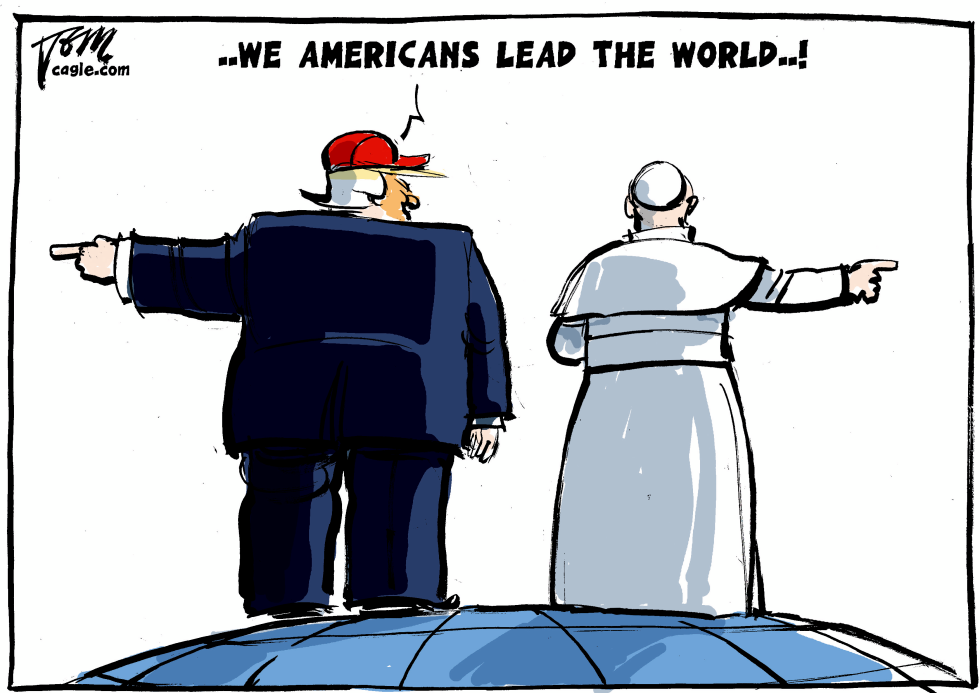
Tom Janssen's cartoon captures a Trump caricature, complete with red cap, standing beside a Pope figure on a blue globe, both pointing ahead. The speech bubble reads '...WE AMERICANS LEAD THE WORLD..!' This satirical image pokes at American exceptionalism, global leadership, and perhaps the blending of political and religious authority. With dry humor, it illustrates how figures like Trump assert dominance, while the Pope's presence adds a layer of irony to claims of leading the world. The composition is simple, emphasizing the oversized characters atop the planet, symbolizing oversight or control.
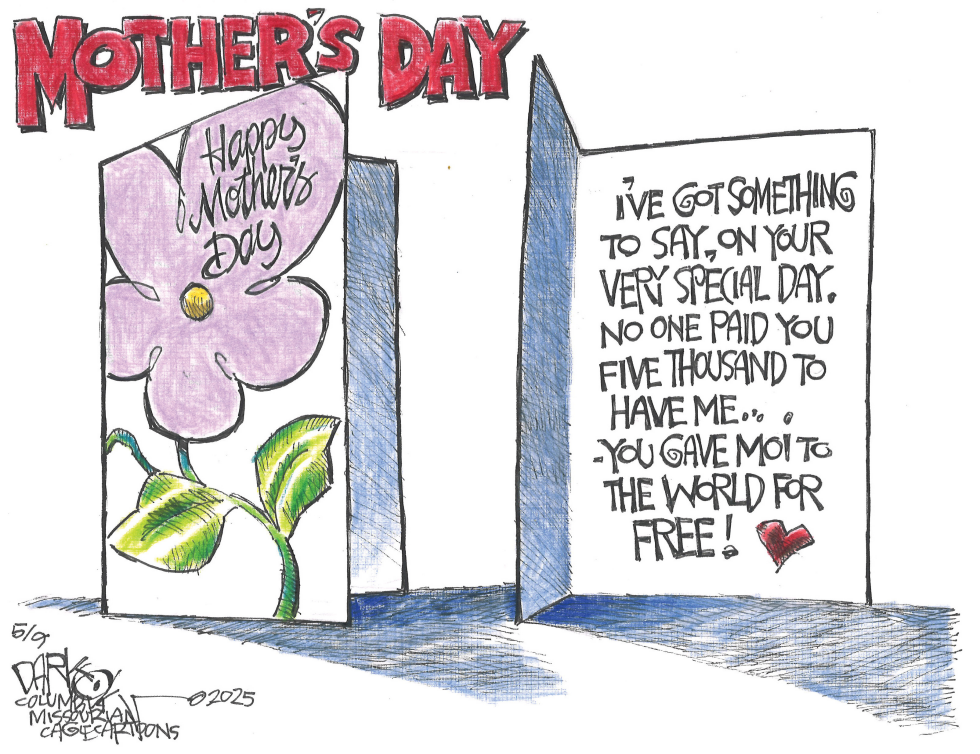
John Darkow's cartoon depicts an open Mother's Day card with a purple flower on the left and a message on the right. The text humorously contrasts modern pronatalism incentives, like a five thousand stipend for boosting birth rates, against traditional unpaid motherhood. The baby declares no one paid mom to have it, emphasizing her free gift to the world. Tags like family planning and mom underscore the satire on declining birth rates and population policies. This piece pokes dry fun at efforts to encourage more babies through financial rewards, reminding readers of motherhood's priceless nature in a straightforward, insider style.