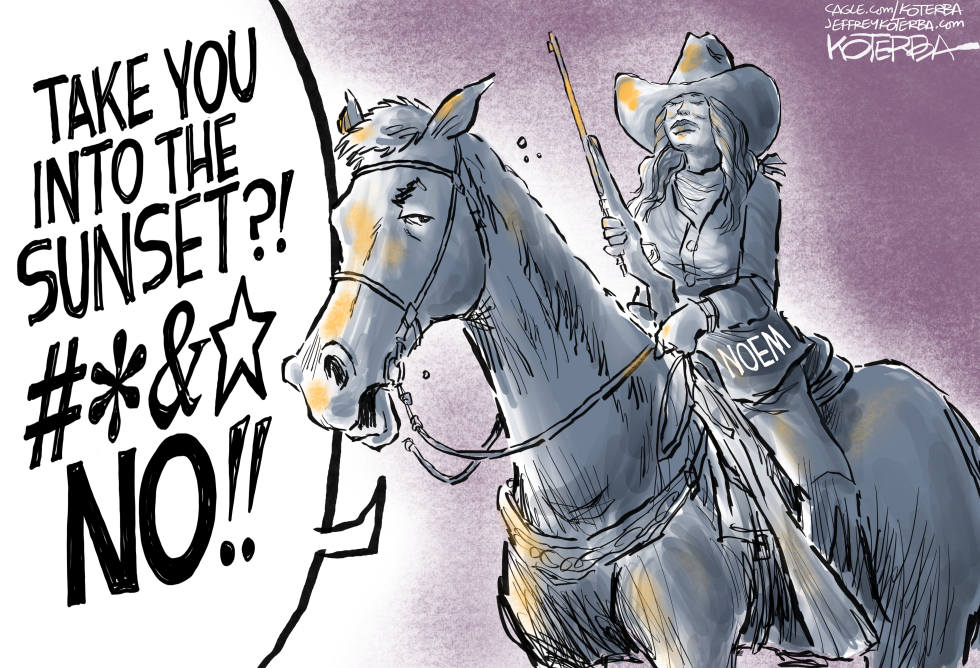
This Jeff Koterba political cartoon skewers Kristi Noem, the South Dakota governor embroiled in GOP scandal over her infamous dog-killing anecdote. Depicted as a cowgirl on a horse labeled 'NOEM,' the steed profanely refuses to 'take you into the sunset,' symbolizing the abrupt halt to her rising star in conservative politics, particularly her dashed hopes as a Trump VP pick. The humorous rejection underscores the backlash from animal cruelty revelations, blending satire with sharp commentary on Republican controversy and election humor. Viral potential lies in its irreverent take on political downfall, making it a shareable gem in American politics discourse.
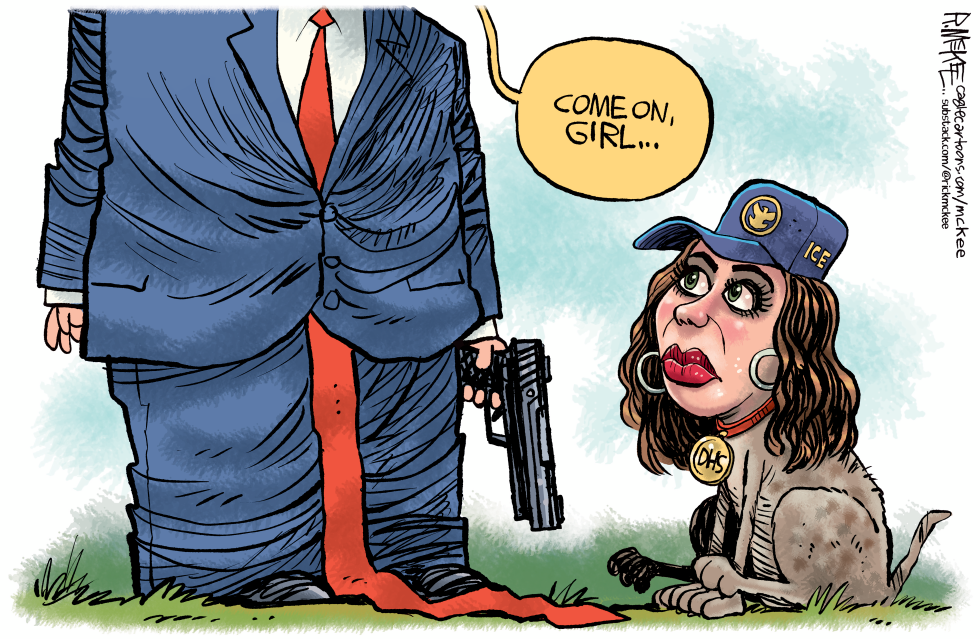
This political cartoon features Donald Trump coaxing a dog-like figure with Alexandria Ocasio-Cortez's face, donned in an ICE cap and DHS tag, gripping a gun on a leash— a sharp satire on immigration enforcement and border control. The image lampoons the Trump administration's hardline stance on deportation and US politics, using caricature to underscore the dehumanizing aspects of border patrol. With elements of political humor, it critiques how figures like AOC are portrayed in opposition, blending viral meme potential with editorial cartoon flair. The scene evokes questions about power dynamics in immigration policy, making it a timely piece for discussions on satire and governance.
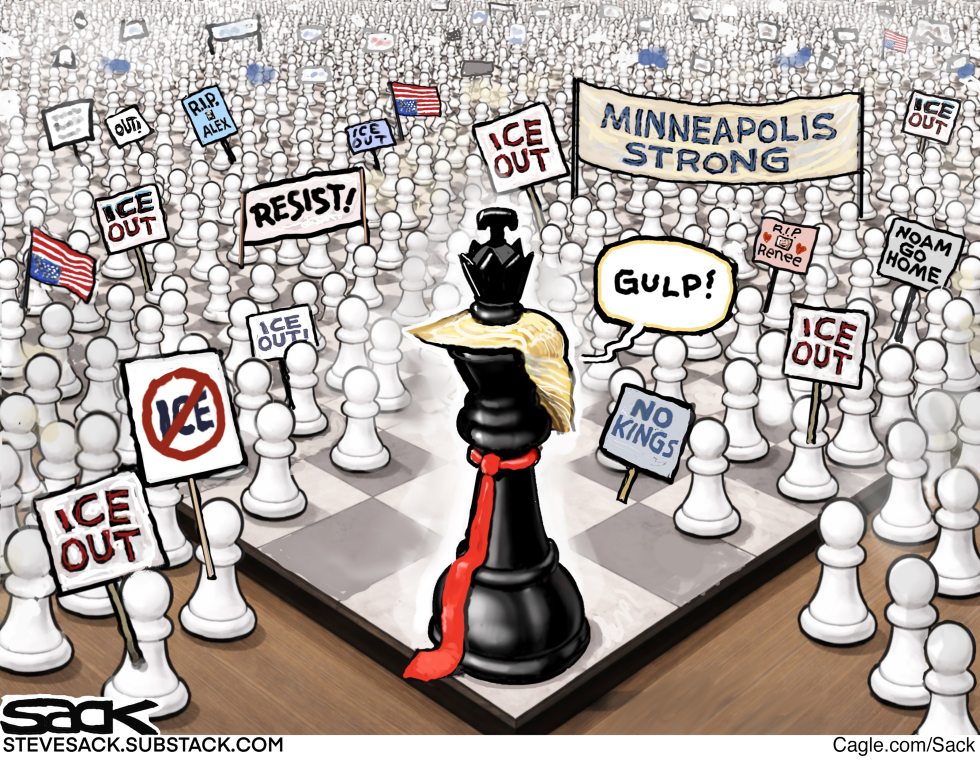
In this political cartoon, a vast army of white chess pawns, each holding protest signs like ICE out and resist, encircles a solitary black king resembling Trump, complete with blonde hair and red tie, uttering a nervous gulp. The scene unfolds on a chessboard, symbolizing confrontation, with banners proclaiming Minneapolis strong and no kings amid American flags and memorial RIP signs for Alex and Renee. Tags such as Minneapolis ICE protests, Trump king chess, ICE out pawns, anti-ICE rally, chess protest imagery, and gulp ICE king highlight the visual satire of resistance against immigration enforcement. The composition captures a moment of overwhelming protest, emphasizing themes of uprising and defiance in a straightforward, unambiguous depiction.
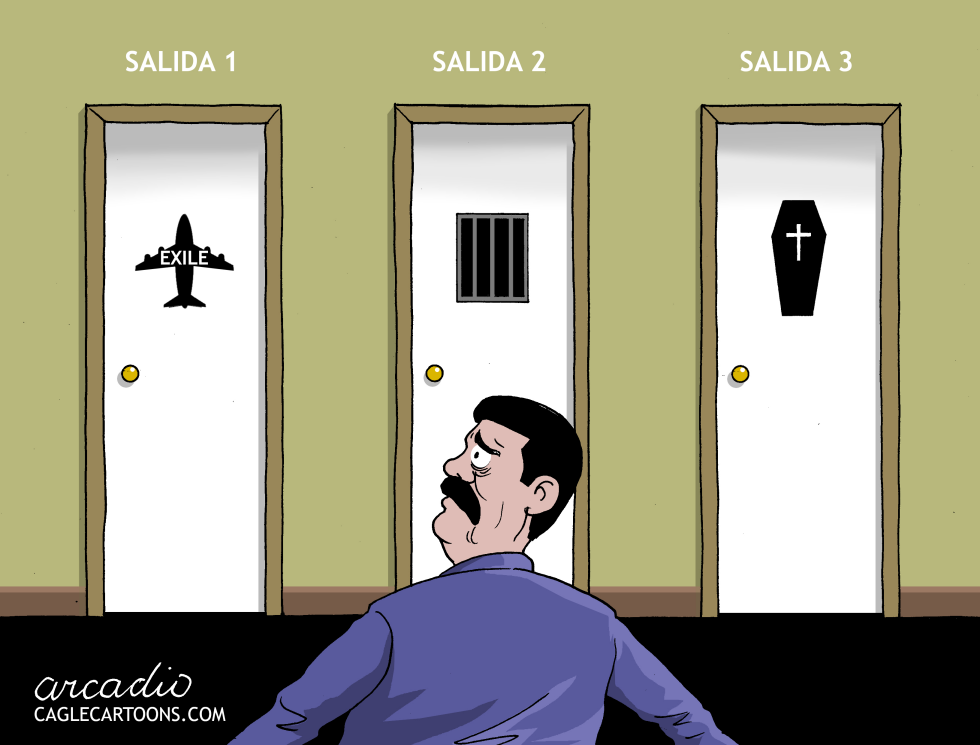
Arcadio Esquivel's cartoon presents three SALIDA doors with symbols of exile plane, prison bars, and coffin, faced by a mustached man. It captures dire choices in clean lines, fitting tags like Maduro, Venezuela, dictator. Dry humor underscores power's limits, primed for syndication.
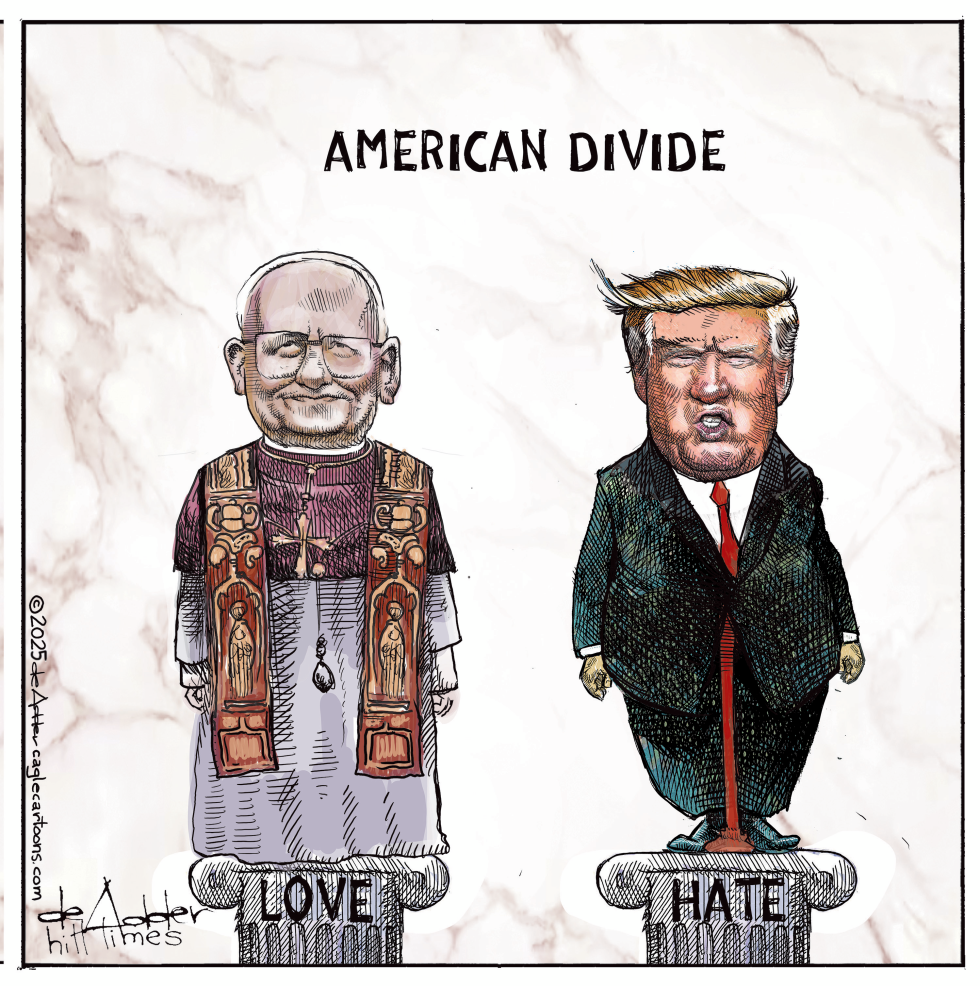
Michael de Adder's cartoon titled 'American Divide' shows a bald, bespectacled pope in ornate robes on a pedestal marked 'LOVE,' facing a caricature of Donald Trump in a suit on a pedestal marked 'HATE.' The marble background adds a classical touch to this commentary on polarization. Tags such as Trump, Pope, Leo XIV, Hate, Love, Vatican, Washington, USA capture the essence of contrasting figures representing opposing values in American society. The image highlights the divide between messages of compassion and animosity, with Trump, Pope, Hate, Love, USA emphasizing the cultural and political rift.
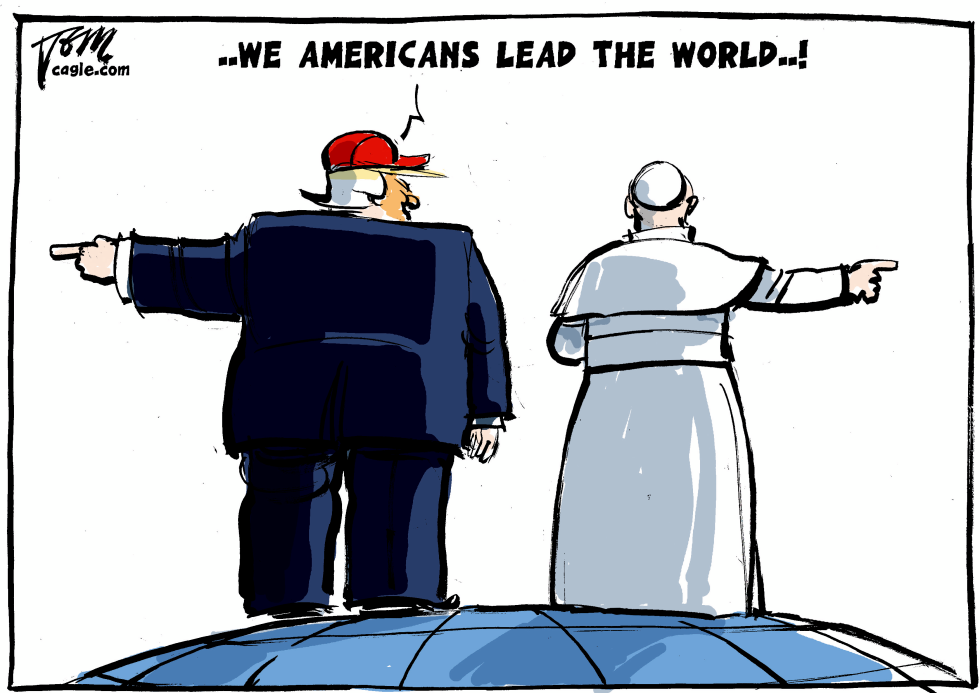
Tom Janssen's cartoon captures a Trump caricature, complete with red cap, standing beside a Pope figure on a blue globe, both pointing ahead. The speech bubble reads '...WE AMERICANS LEAD THE WORLD..!' This satirical image pokes at American exceptionalism, global leadership, and perhaps the blending of political and religious authority. With dry humor, it illustrates how figures like Trump assert dominance, while the Pope's presence adds a layer of irony to claims of leading the world. The composition is simple, emphasizing the oversized characters atop the planet, symbolizing oversight or control.
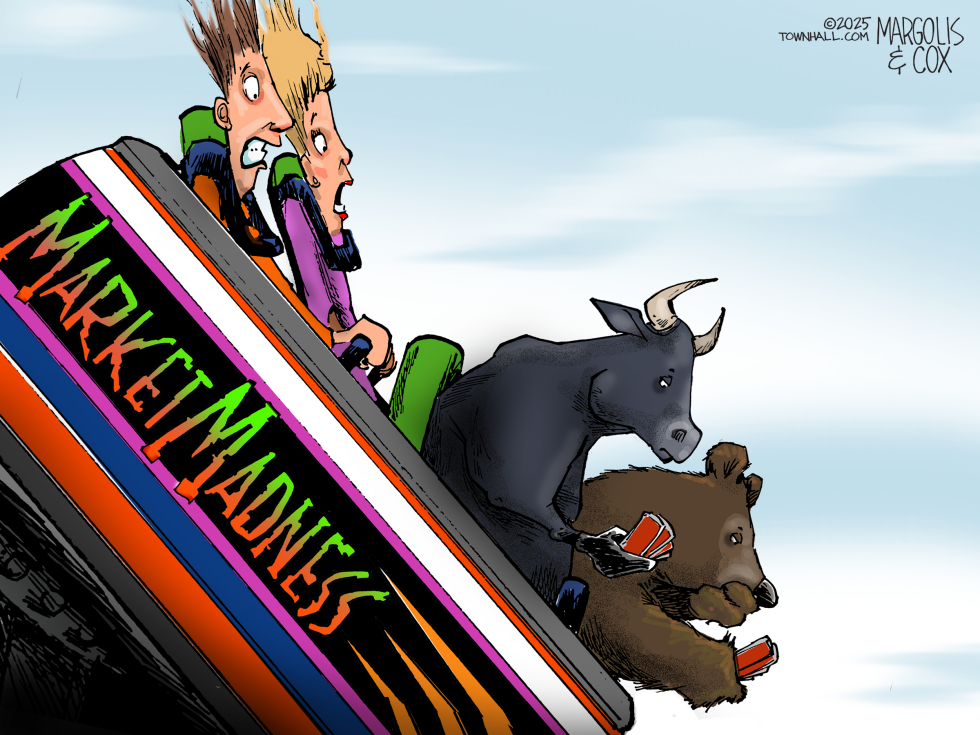
The cartoon shows a rollercoaster car marked 'Market Madness' diving steeply, carrying two human figures with wild hair and open mouths, a black bull with horns looking concerned, and a brown bear clutching red tickets. This setup captures stock market volatility, with the bull and bear as classic symbols of rising and falling markets. Tags such as tariff, economy, Dow Jones, rollercoaster, and turbulence underscore the wild ride of financial ups and downs. The image keeps it simple, focusing on the immediate thrill and fear without deeper layers. Artistic style is bold and cartoonish, emphasizing the chaos in a clear, unambiguous way. No hidden meanings jump out; it's all about that market madness feel.
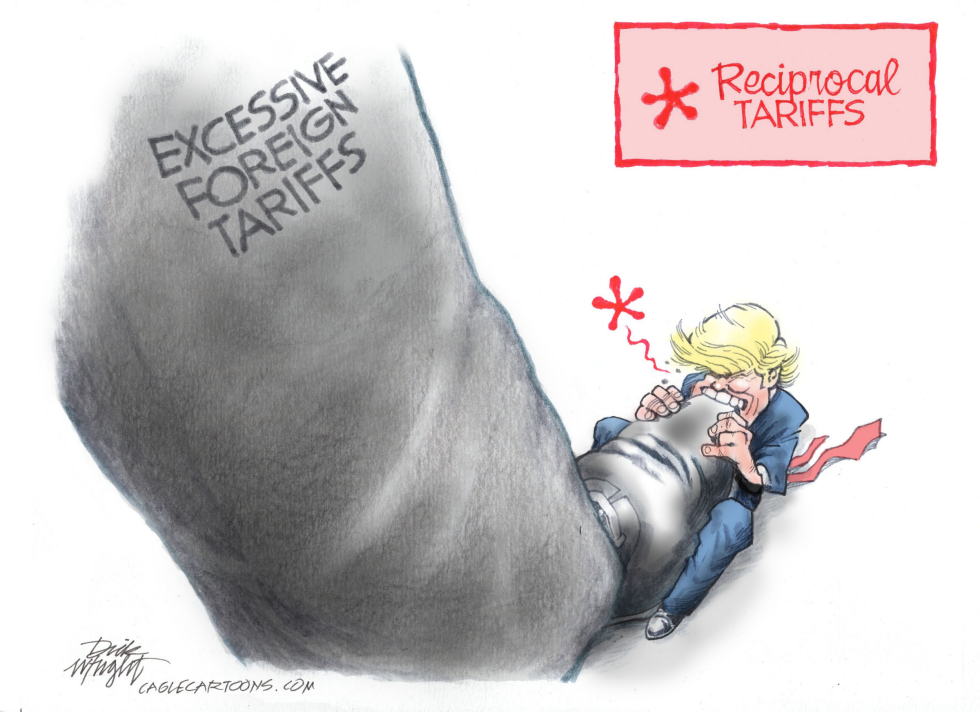
Dick Wright's cartoon captures the irony of reciprocal tariffs with a massive foot marked 'excessive foreign tariffs' descending on a caricatured Trump, who grimaces while clutching a metallic object. The red label 'Reciprocal TARIFFS' floats nearby, emphasizing the backlash from unfair trade policies. Trade deficits loom large as the foot represents international retaliation, potentially sparking a stock market downturn. In a tariff driven economy, the image satirizes how such measures invite excessive foreign tariffs, risking recession. The composition underscores the self-defeating nature of aggressive trade stances, with Trump's strained expression highlighting the pressure on domestic markets. This piece fits into ongoing debates on global trade imbalances.
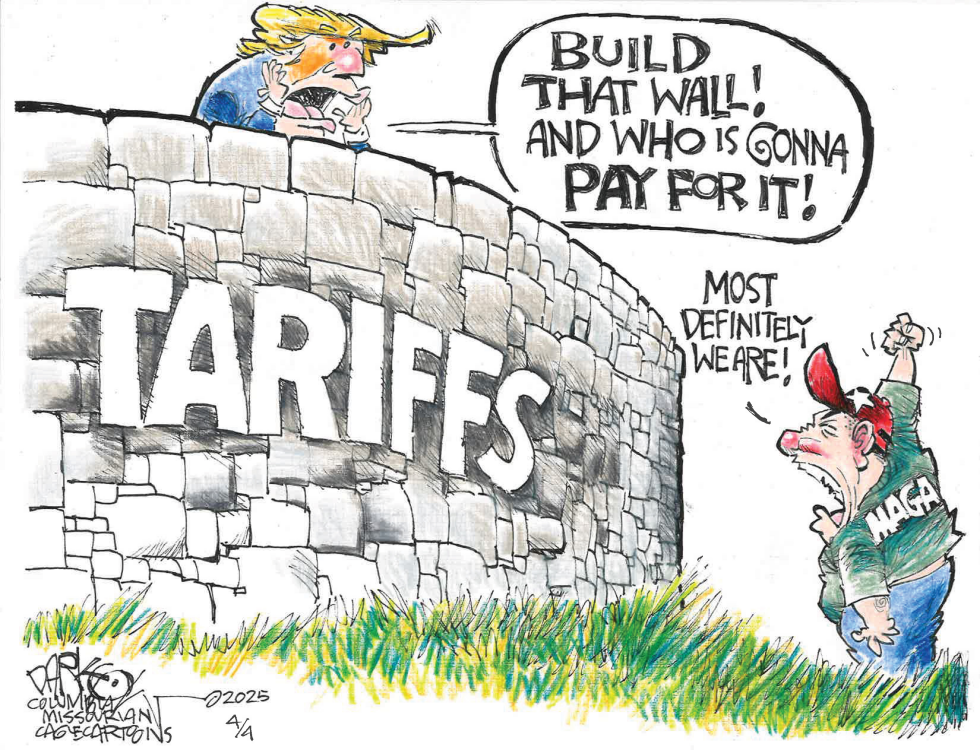
The cartoon shows a blond-haired man atop a stone wall marked 'TARIFFS,' shouting 'Build that wall! And who is gonna pay for it!' A red-hatted figure in a 'MAGA' shirt below responds 'Most definitely we are!' This setup draws a parallel to familiar chants, underscoring tariffs as a burden on consumers. Tags like Trump, tariffs, build the wall, MAGA, inflation, economy, trade war, backfire, and recession frame the scene. The dry humor lies in the obvious irony, where supporters unwittingly acknowledge the cost. Composition keeps it simple, with grassy base and bold lettering for impact. Such cartoons thrive on timely policy jabs, making this one sharable amid ongoing trade debates.
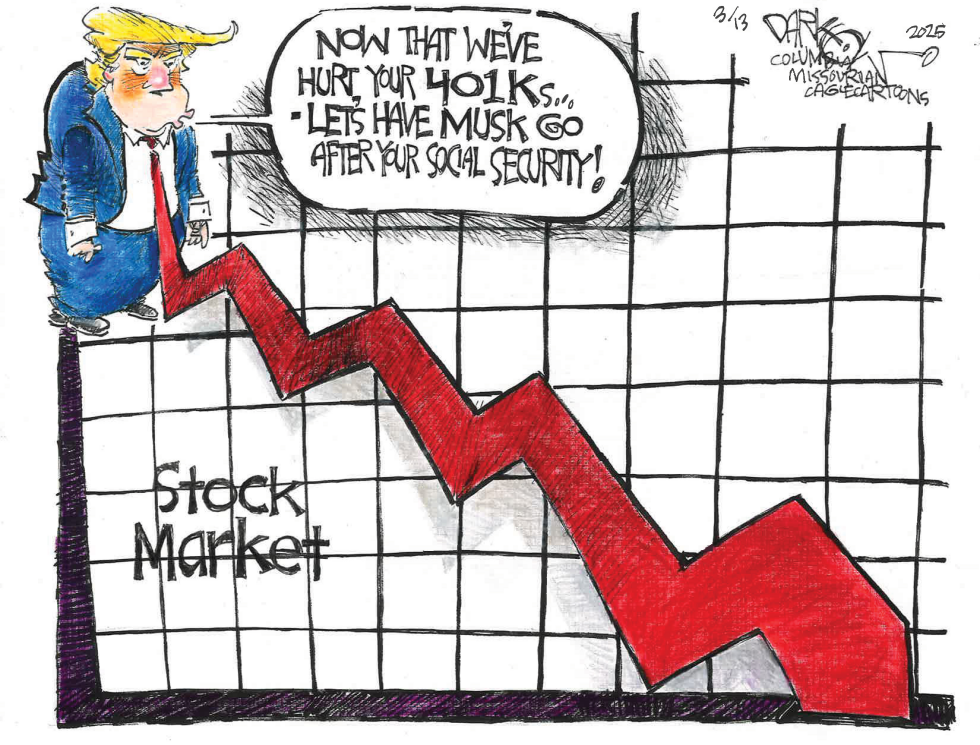
The cartoon shows a caricature of Trump perched on a sharply declining red line labeled 'Stock Market,' with a speech bubble declaring, 'Now that we've hurt your 401Ks - Lets have Musk go after your Social Security!' This visual satire ties into ongoing debates about trade war, tariffs on Mexico, Canada, EU, and China, and their impact on retirement accounts like nest eggs and 401Ks. Inflation worries loom large in the imagery, as the downward graph symbolizes economic fallout. Musk's mention hints at controversial figures meddling in social security, blending humor with critique of policy directions.
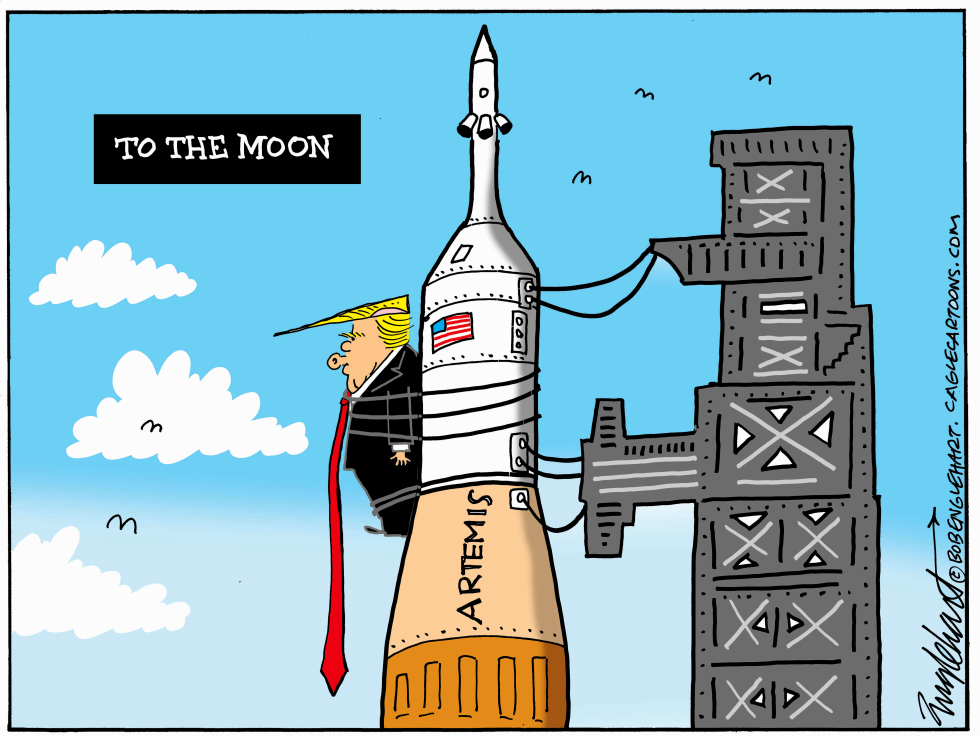
Bob Englehart\'s cartoon shows a large rocket labeled \'ARTEMIS\' with an American flag, standing on a launch pad under a blue sky with clouds and birds. A caricature of Donald Trump, in suit and red tie, is tied to the rocket\'s side, with the bold text \'TO THE MOON\' overhead. The image captures a moment of satirical absurdity, blending NASA\'s moonshot program with political commentary. Englehart\'s style is straightforward, using clean lines and minimal details to highlight the humor in sending a controversial figure skyward. Tags like Artemis rocket, Trump caricature, space satire, launch pad, American flag, and political cartoon emphasize the visual punch.
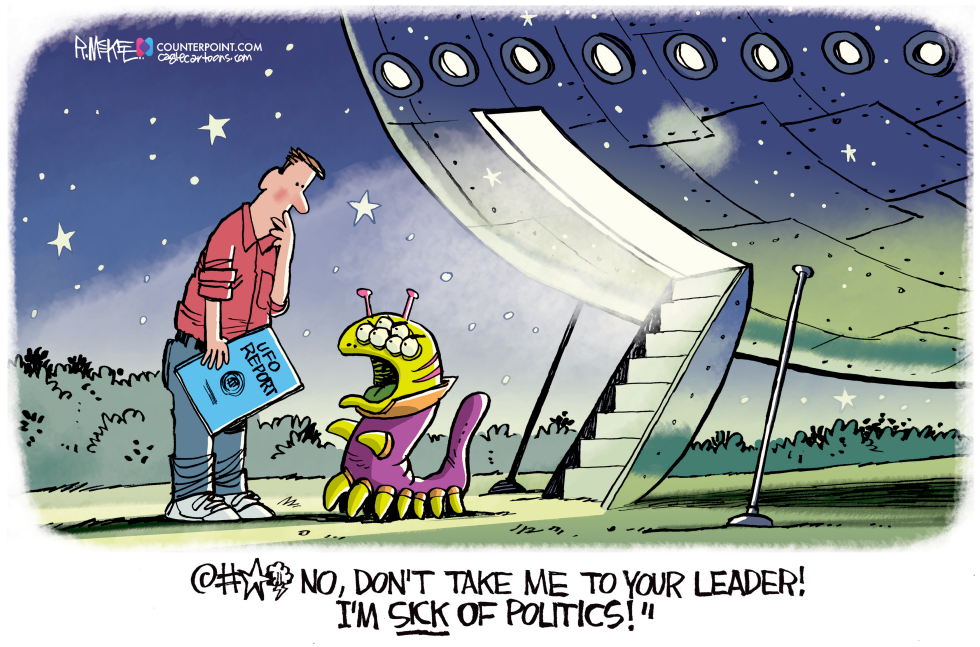
Rick McKee's cartoon captures a classic sci-fi trope with a timely twist, showing a man with a UFO report confronting a small, antennae-sporting alien emerging from a spaceship under a starry night sky. The alien, with a yellow head and purple body, shouts in refusal, declaring it's sick of politics and won't be taken to any leader. This piece satirizes the 2021 government UFO report buzz, poking fun at how even extraterrestrials might be weary of Earth's political circus. The humor lands dryly, emphasizing universal exhaustion with leadership drama amid real-world discussions on unidentified aerial phenomena. Composition is clean, with the spaceship's ramp and the man's thoughtful pose adding to the absurdity.
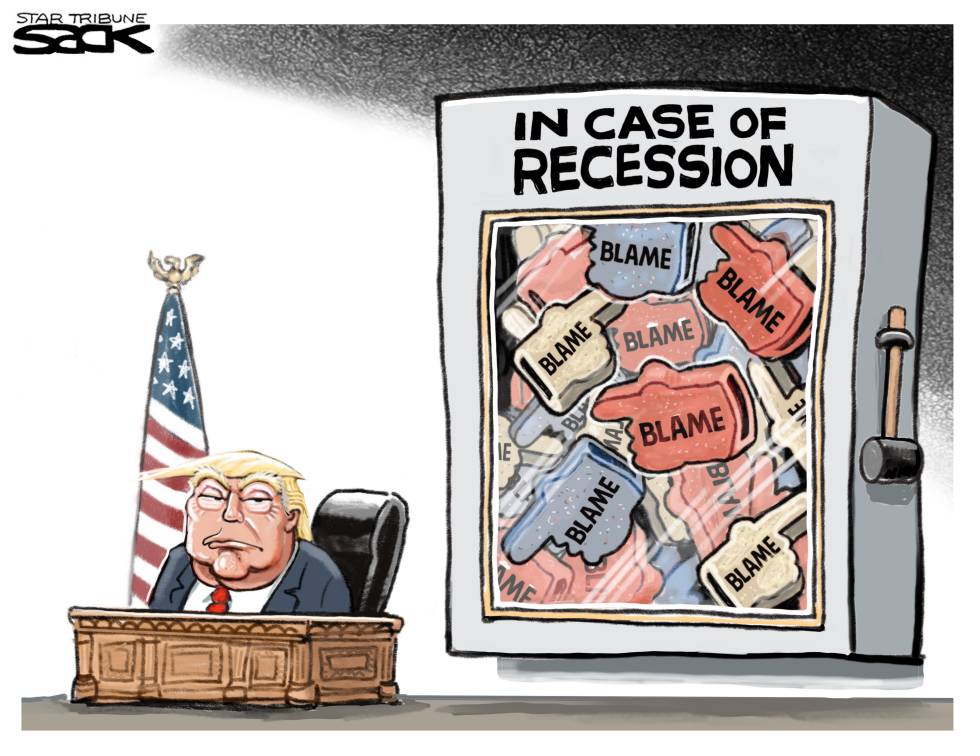
Steve Sack's 2019 cartoon captures Trump seated at a desk, an American flag nearby, staring at a emergency-style glass case marked 'IN CASE OF RECESSION.' Inside, numerous pointing fingers labeled 'BLAME' pile up, ready to be broken out with a hammer. The image tags Trump, recession, blame, tariff, trade war, China, and economy, poking fun at blame-shifting tactics during economic uncertainty. Cartoonists often use such direct visuals to critique leadership styles, where the obvious setup of blame dispensers underscores a readiness to deflect responsibility rather than address root causes like tariffs or trade disputes. This piece fits into broader discussions on presidential accountability amid fluctuating markets.