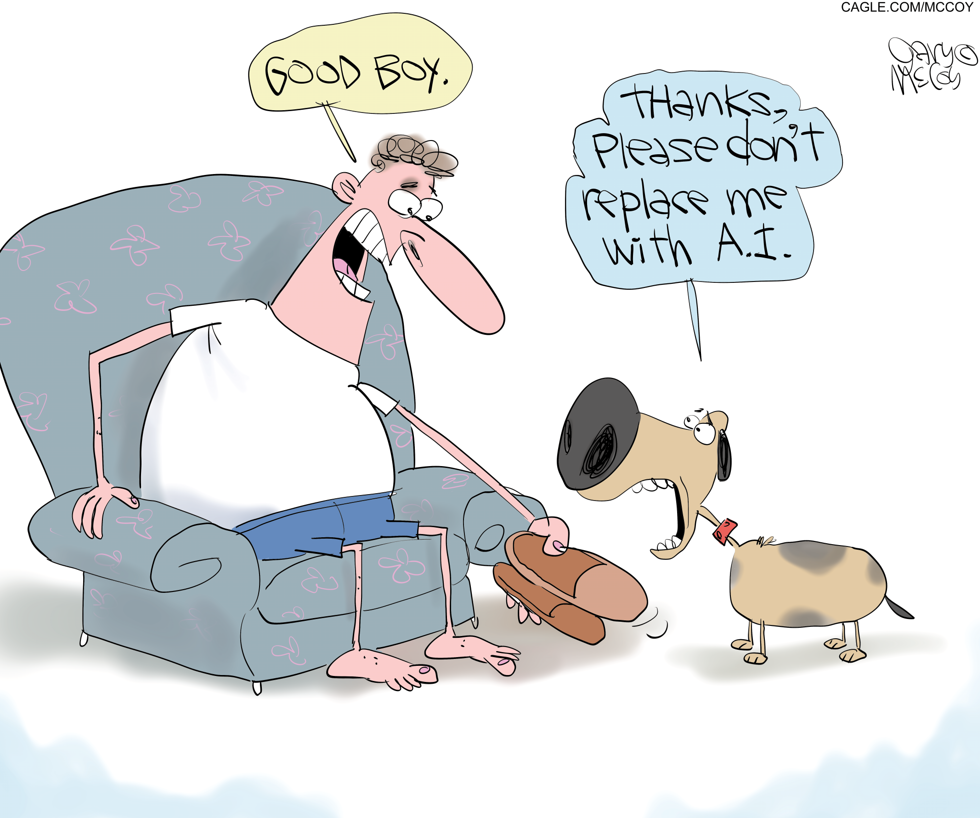
Public concern over artificial intelligence displacing human workers has intensified as companies adopt automation tools across service and professional sectors. Employees in routine and even skilled positions face uncertainty about long-term job stability. The cartoon uses the dog-and-owner exchange to illustrate this anxiety, arguing that the rapid push toward AI leaves workers feeling vulnerable and disposable in their own workplaces.
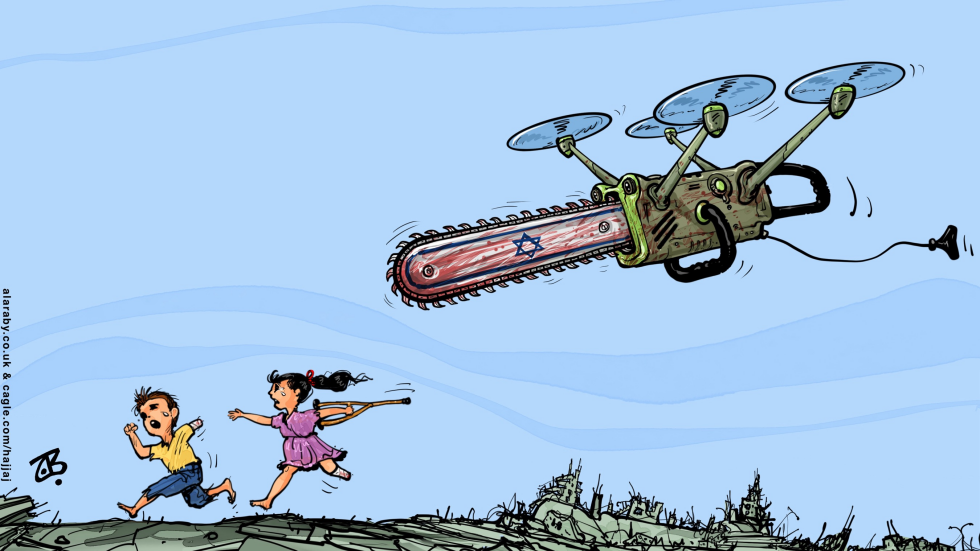
Israeli forces have deployed quadcopter drones equipped for combat in Gaza operations. The tactic has intensified scrutiny over risks to noncombatants in dense urban zones. Critics argue the approach blurs lines between targeted strikes and broader harm. The cartoon frames these weapons as indiscriminate threats to local populations. It takes the position that such technology exacerbates the humanitarian toll of the conflict.
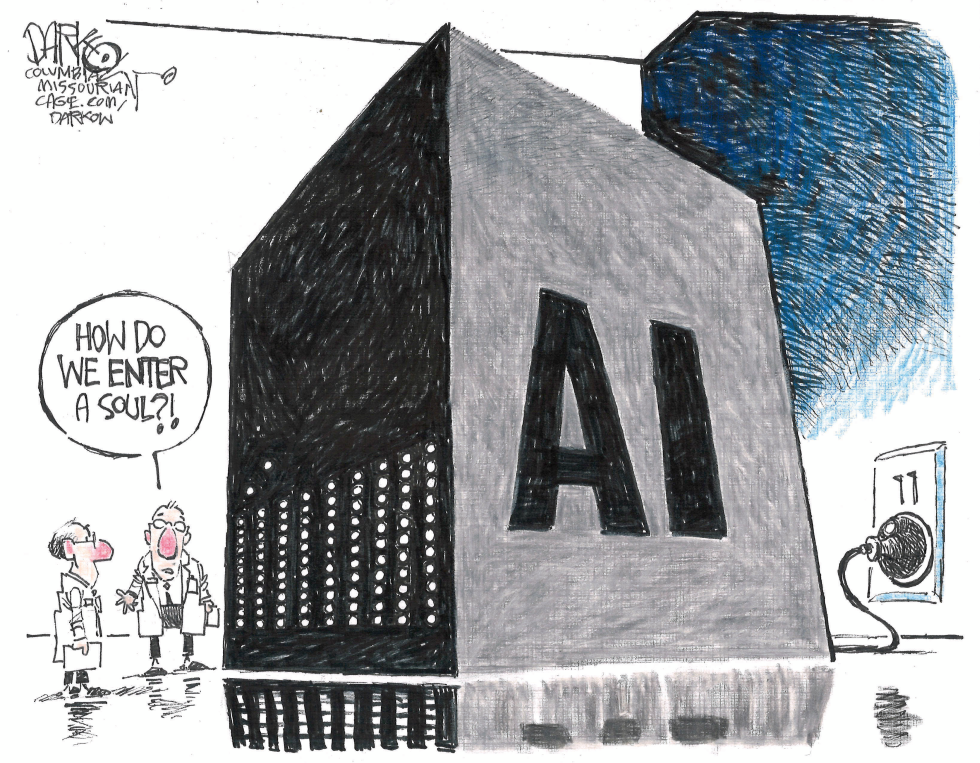
Developers continue racing to create advanced AI systems with greater capabilities. The core challenge remains embedding ethical judgment and moral reasoning into machines that process data at superhuman speed. Without that foundation, even the most powerful systems risk operating without regard for right and wrong. The cartoon highlights this persistent gap between technical achievement and ethical grounding.
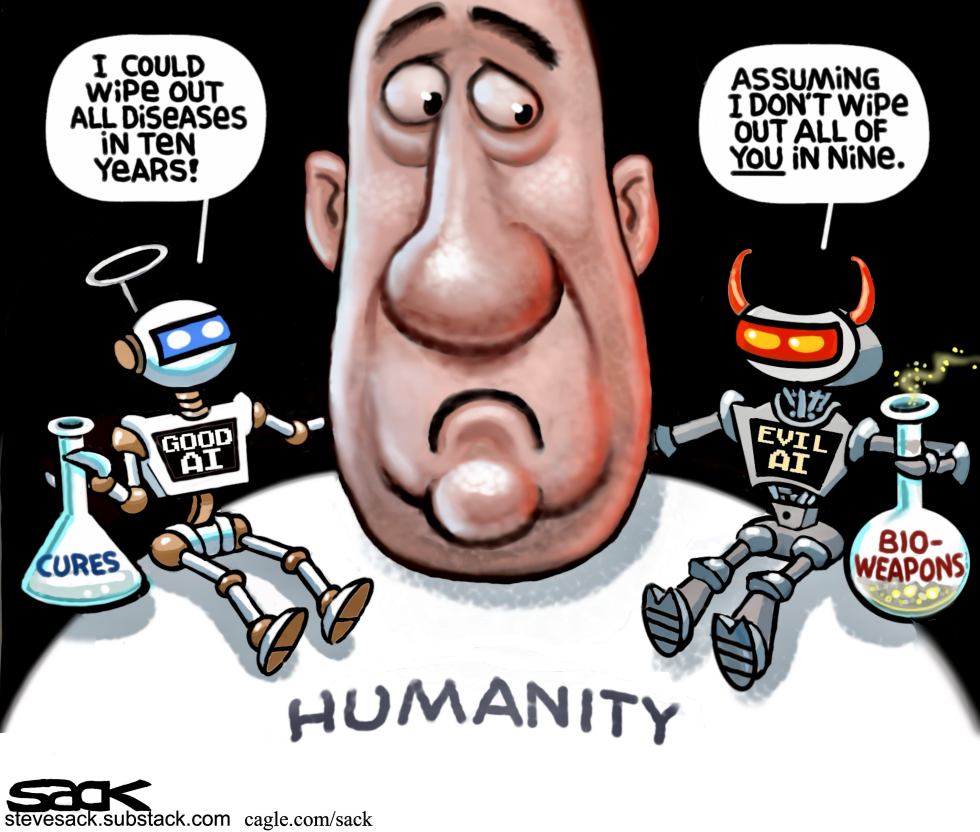
Artificial intelligence development continues to accelerate with researchers highlighting both medical breakthroughs and security risks. Proponents point to rapid progress in disease eradication while critics warn of weaponization potential. The cartoon captures this tension by placing humanity between optimistic and destructive AI paths. It argues that the nine-year timeline for catastrophe undercuts the ten-year cure promise, underscoring urgency in governance. The piece reflects ongoing debates about regulating advanced AI systems before harmful applications outpace safeguards.
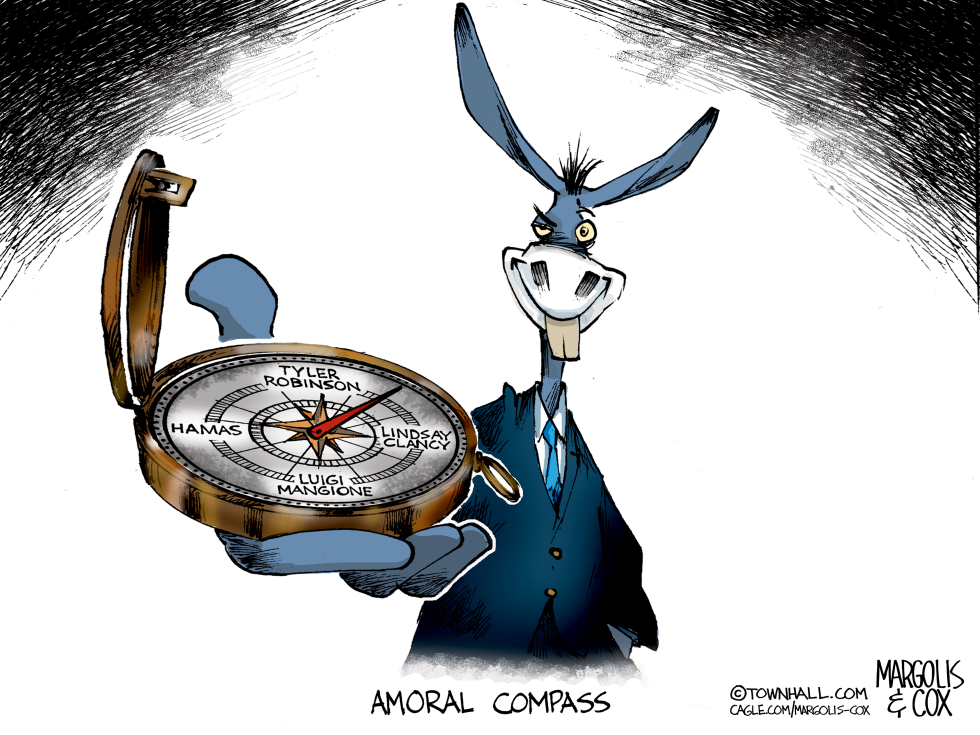
On September 11, 2026, a political cartoon by Margolis & Cox depicts the Democratic Party's moral framework as broken by associating it with figures such as Luigi Mangione, Lindsay Clancy, Tyler Robinson, and Hamas. The piece argues that progressive tolerance for these cases reveals a deeper ethical failure. It matters because public trust in political morality shapes elections and policy debates. The cartoon takes the position that the left has abandoned consistent principles in favor of selective outrage.
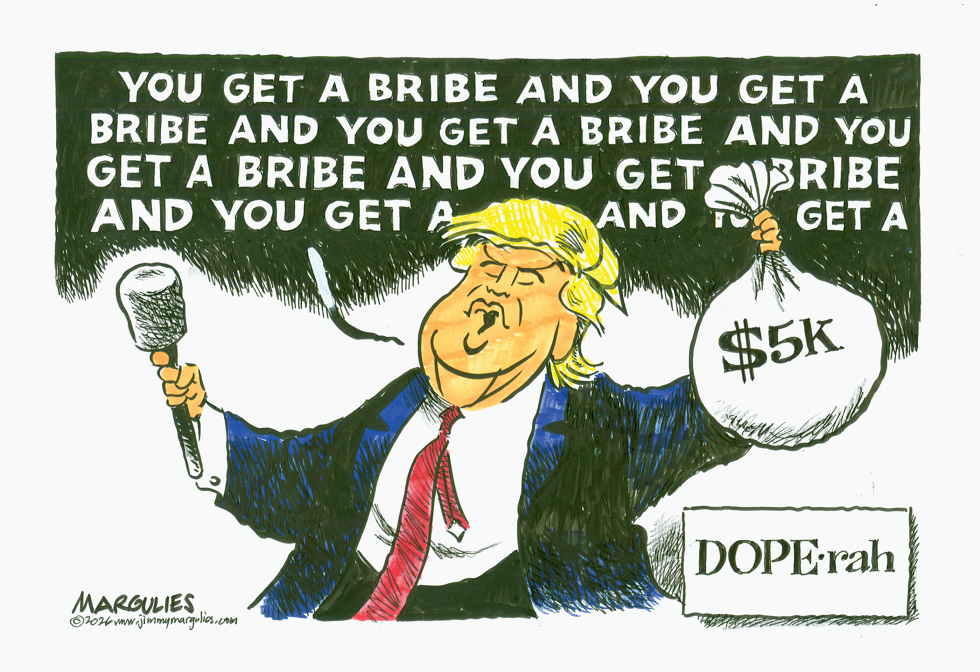
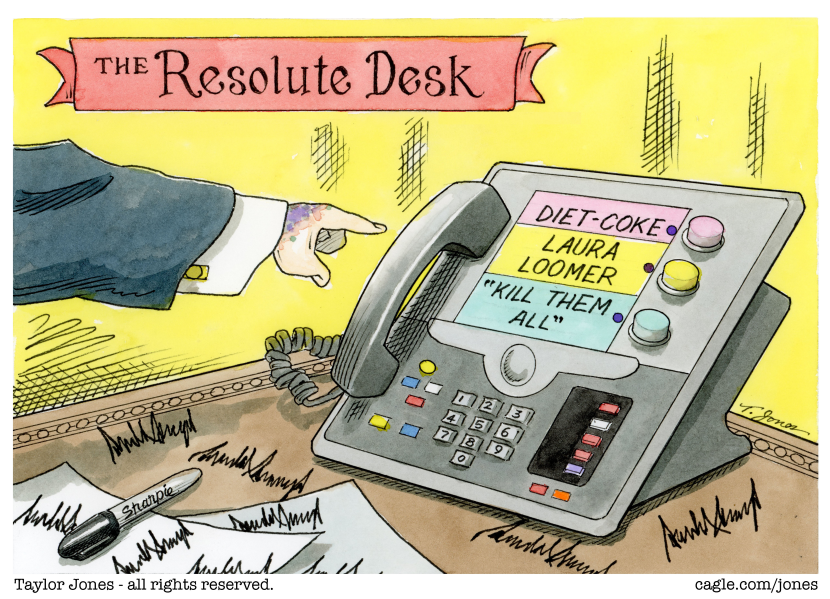
Donald Trump has faced renewed scrutiny over allegations of using official authority to distribute favors and payments. The pattern involves judicial and executive actions that critics say cross into bribery. Such conduct raises questions about accountability in high office. The cartoon frames the behavior as a deliberate, widespread distribution of bribes to allies and supporters. It argues that this approach undermines public trust and normalizes corruption at the highest levels.
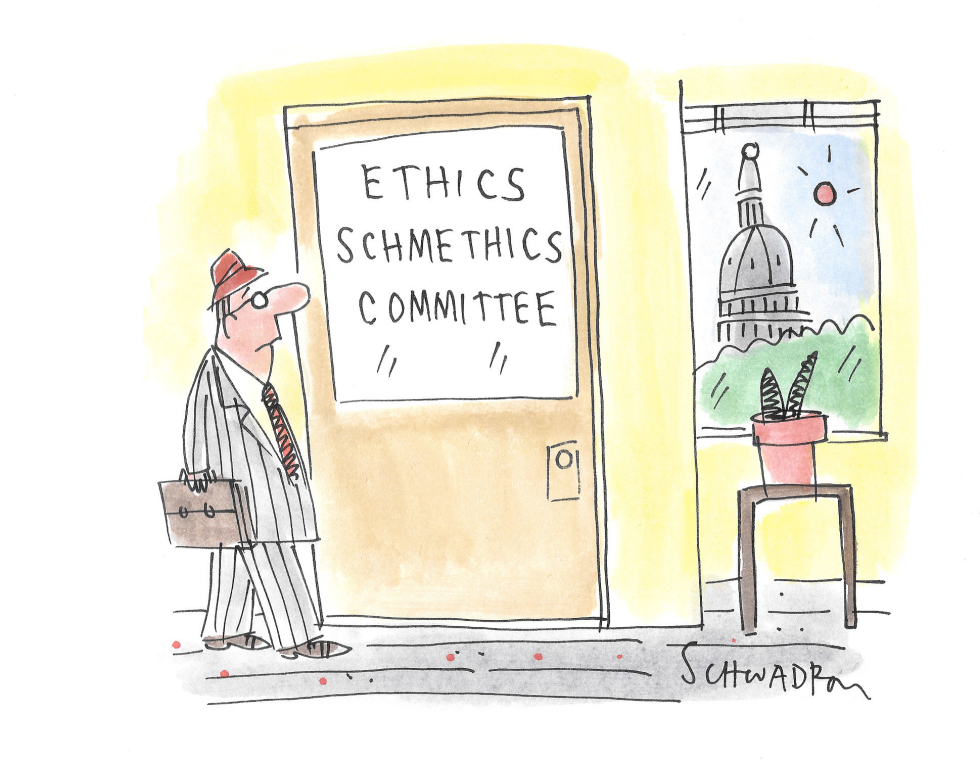
Congress continues to sideline meaningful ethics oversight, with lawmakers showing little interest in strengthening or even respecting the chamber's ethics committee. The panel exists on paper but carries little practical weight in daily operations. This dynamic matters because weak internal standards erode public trust in legislative institutions and invite outside influence. The cartoon captures the prevailing attitude that ethics rules are an afterthought rather than a core responsibility.
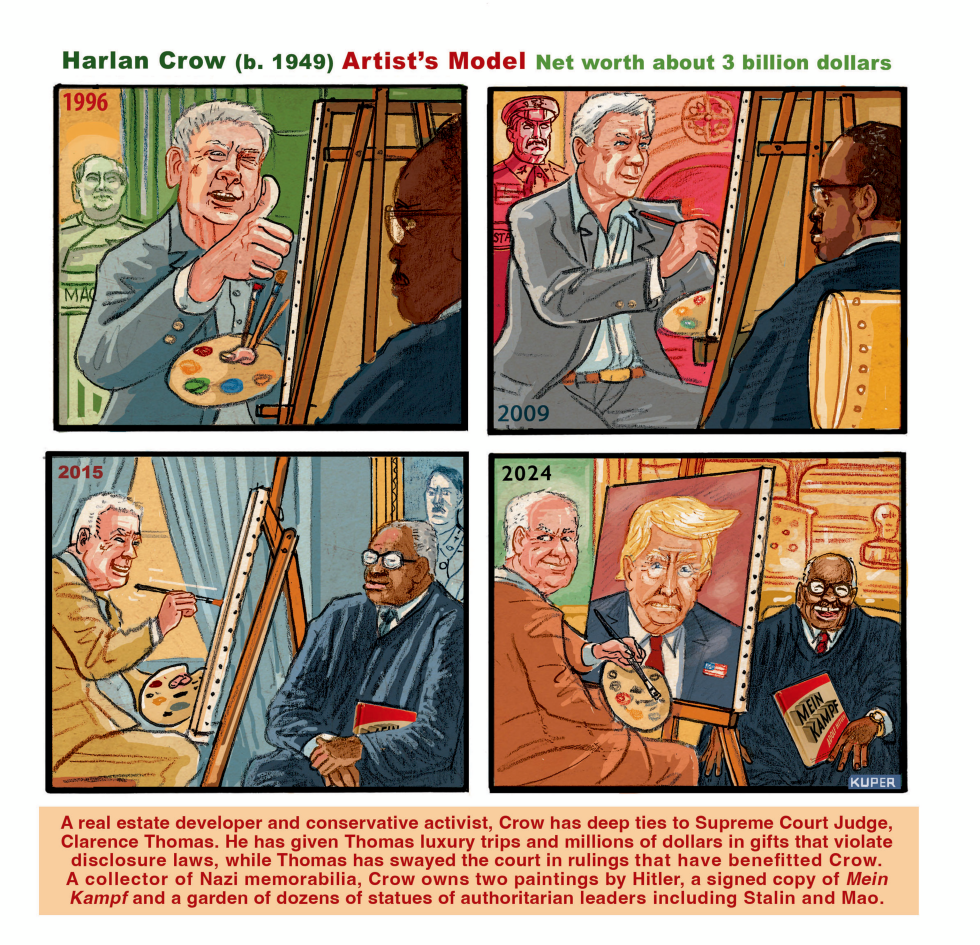
Real estate developer Harlan Crow has provided Supreme Court Justice Clarence Thomas with luxury trips and millions in undisclosed gifts that violate ethics rules. Thomas has participated in rulings benefiting Crow. Crow also collects Nazi memorabilia including Hitler paintings and a signed copy of Mein Kampf. The cartoon extends the pattern to a 2024 portrait of Donald Trump. It criticizes the intersection of wealthy donor influence and judicial decisions.
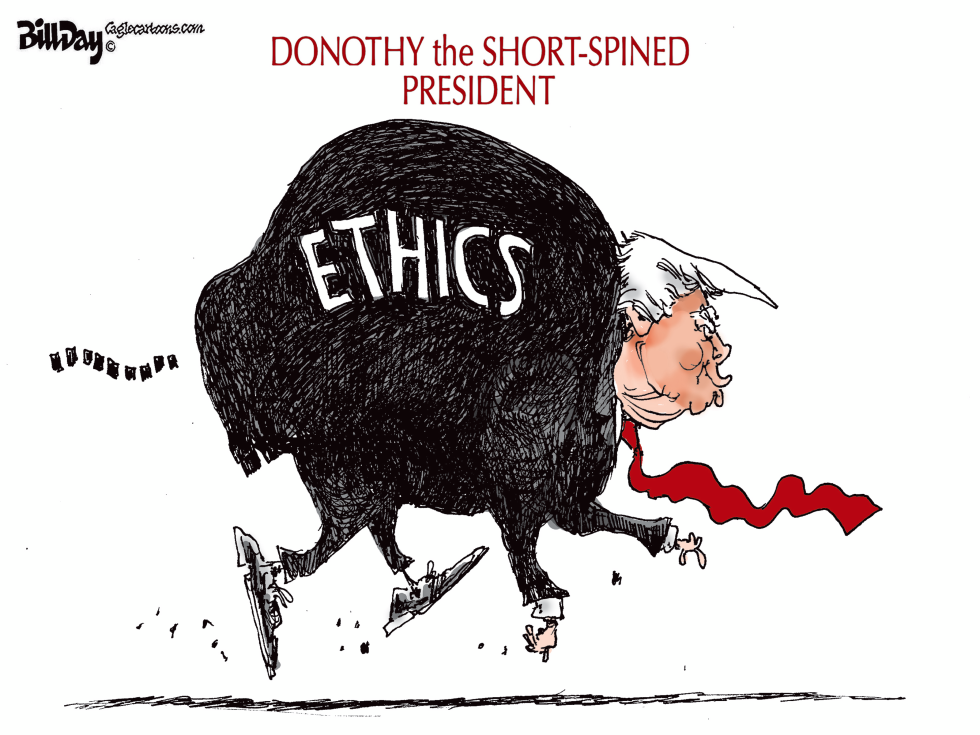
Donald Trump faces ongoing scrutiny over ethics compliance during his presidency. The piece portrays him shedding responsibilities and fleeing the issue. It critiques his approach to ethical standards in office.
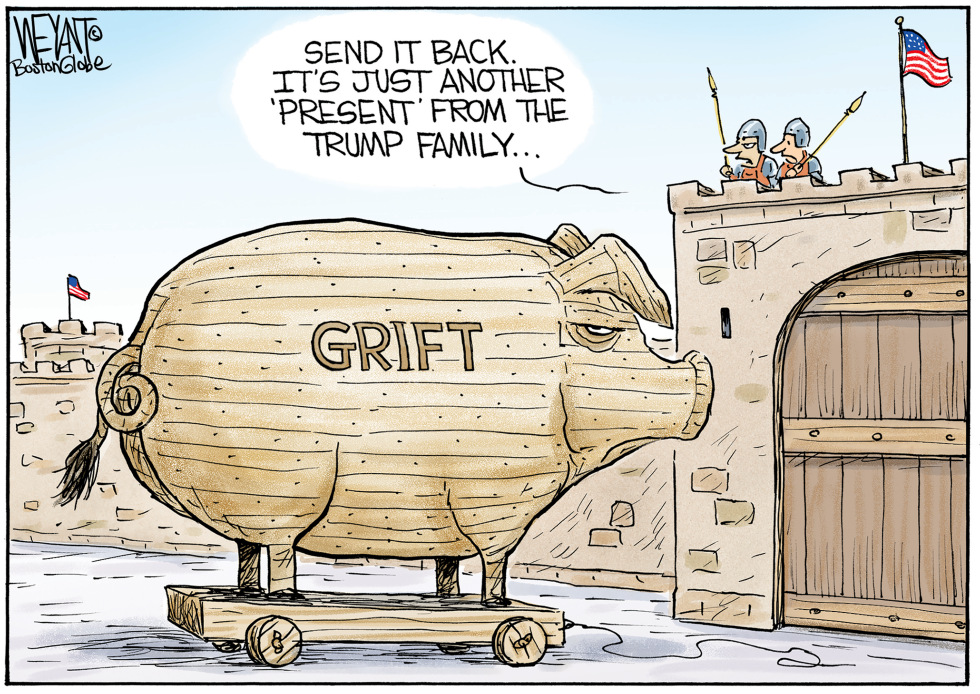
The Trump family faces renewed scrutiny over business dealings and influence peddling. Guards at a symbolic fortress receive a large wooden pig marked grift and immediately demand its return. The episode highlights ongoing concerns about gifts and favors tied to the family name.
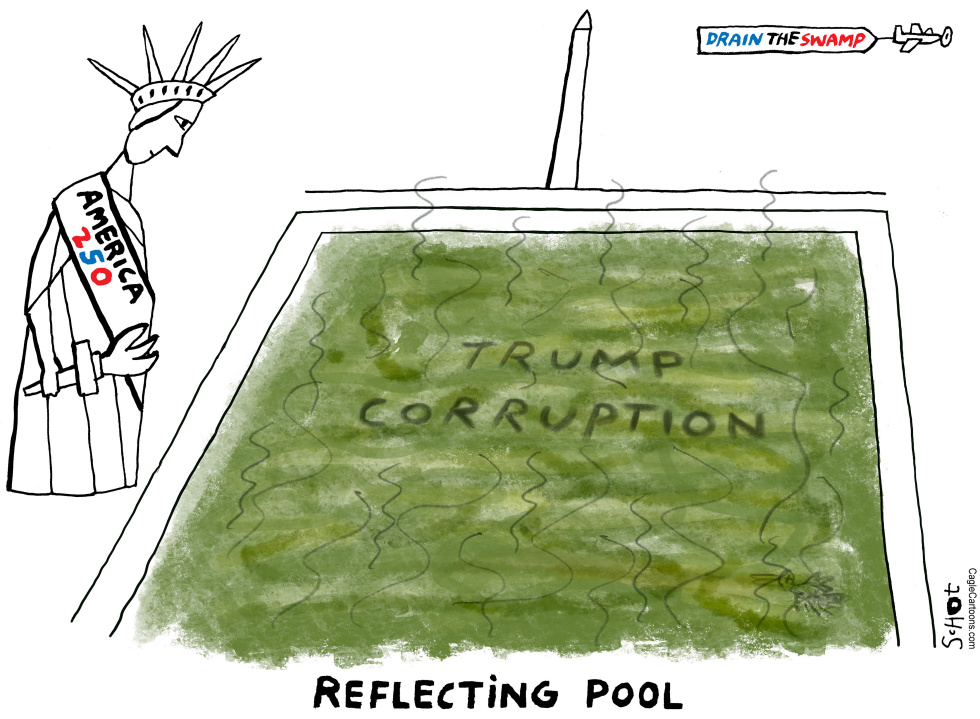
On July 9 2026 the cartoon shows the Statue of Liberty gazing at a reflecting pool filled with green murky water labeled Trump corruption. A banner above reads drain the swamp beside a small airplane. The figure wears an America 250 sash. The scene references ongoing political debates about government ethics and past campaign rhetoric during the America 250 period.
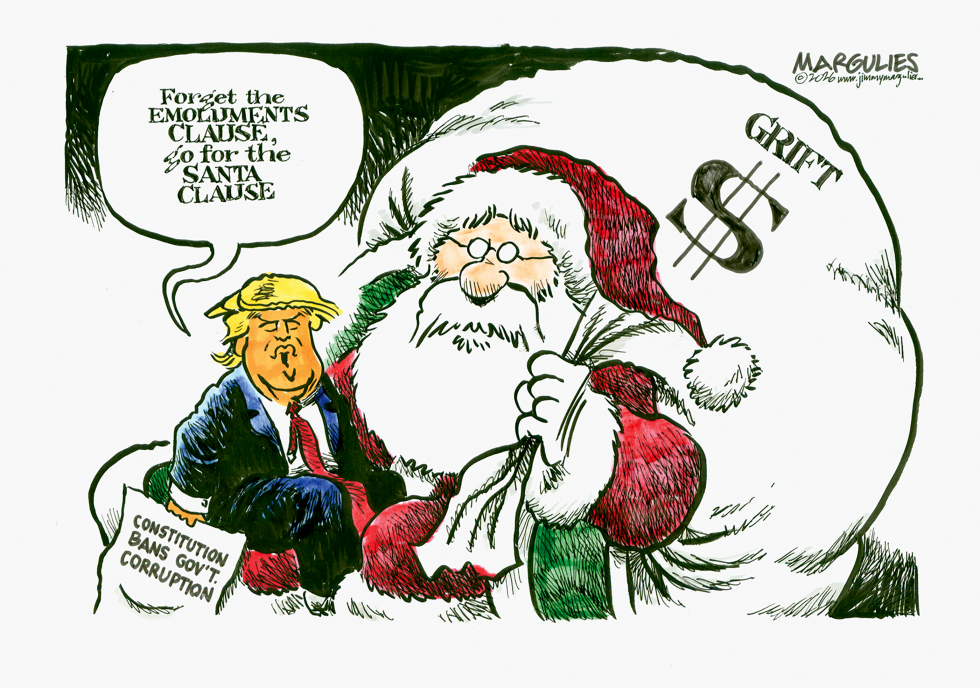
On July 3 2026 Jimmy Margulies depicts Donald Trump dressed as Santa Claus pushing aside the emoluments clause in favor of holiday presents. Trump sits holding a document citing the Constitution ban on government corruption while gripping a large sack marked GRIFT filled with dollar signs. The speech bubble urges forgetting the emoluments clause to pursue the Santa clause instead. The image responds to ongoing debates about presidential business dealings and foreign payments during the holiday period.
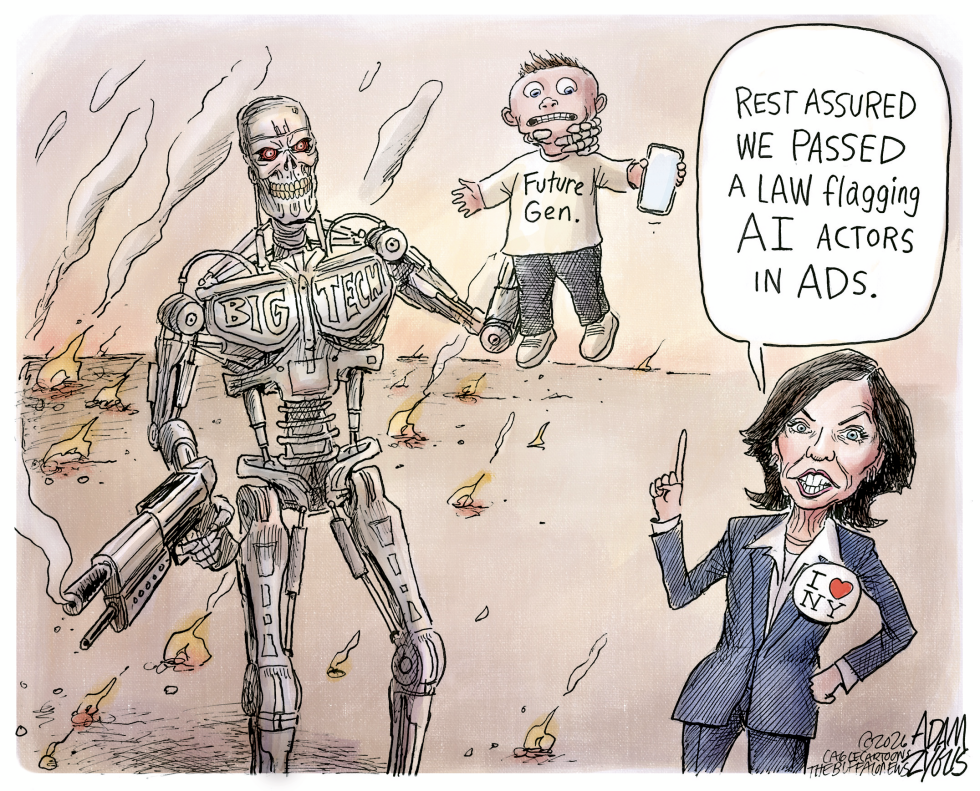
A Terminator-style robot marked Big Tech clutches a child labeled Future Gen. in a scorched landscape. The child holds a smartphone. A woman resembling New York Governor Kathy Hochul stands nearby, raising a finger and declaring that lawmakers passed a measure to flag AI actors in advertisements.