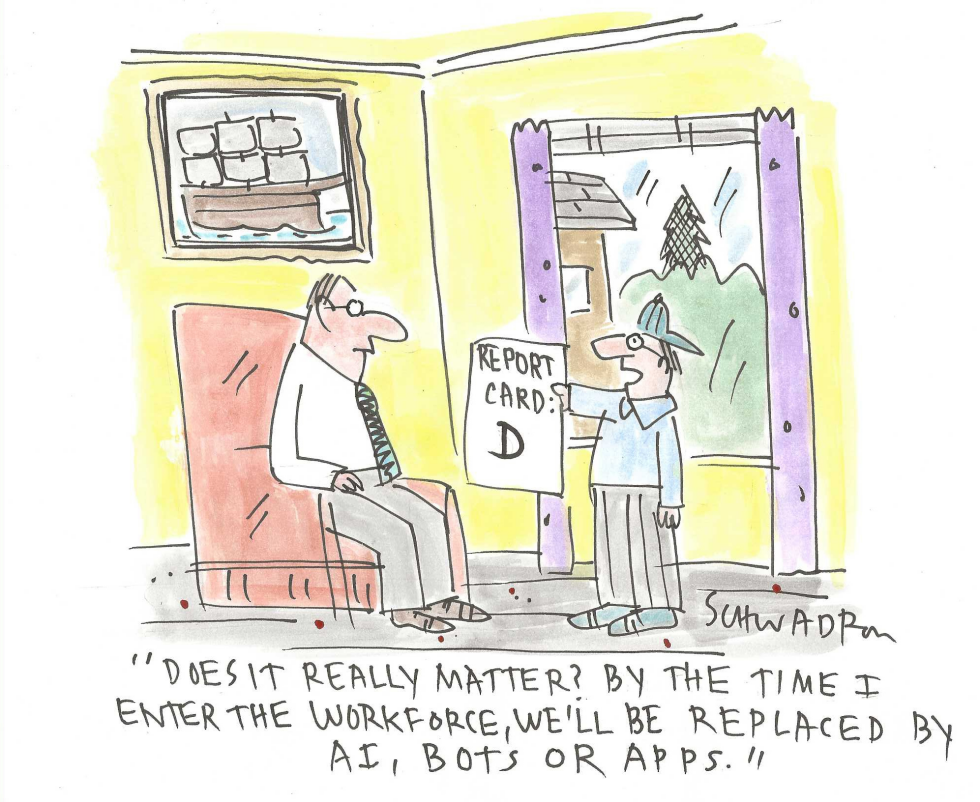
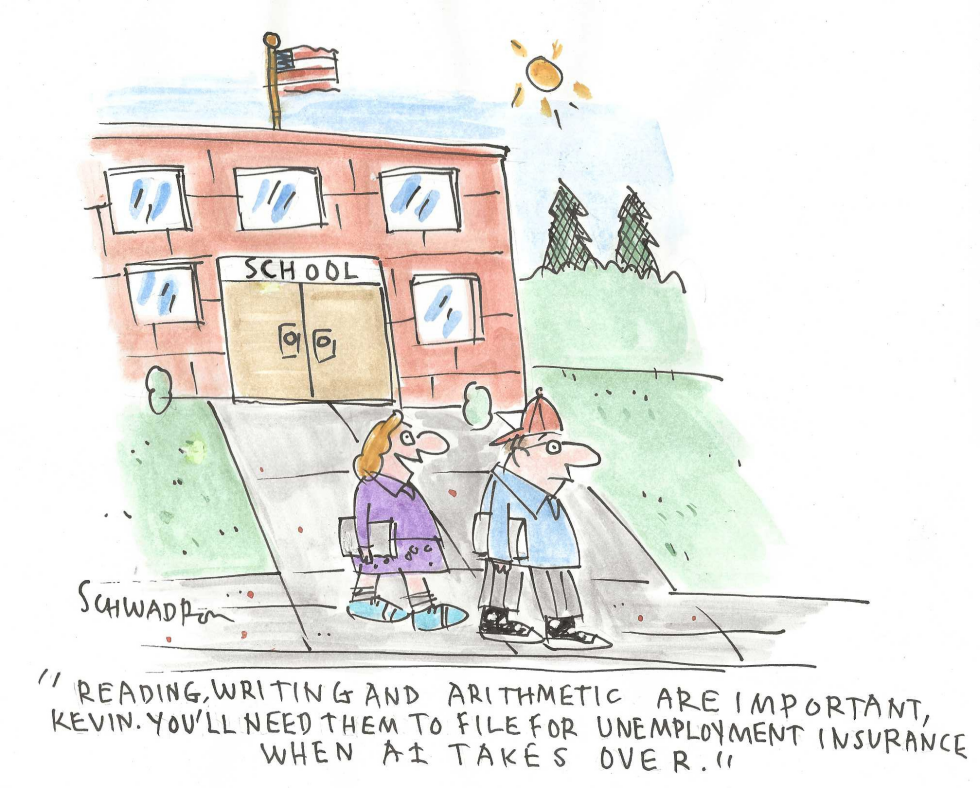
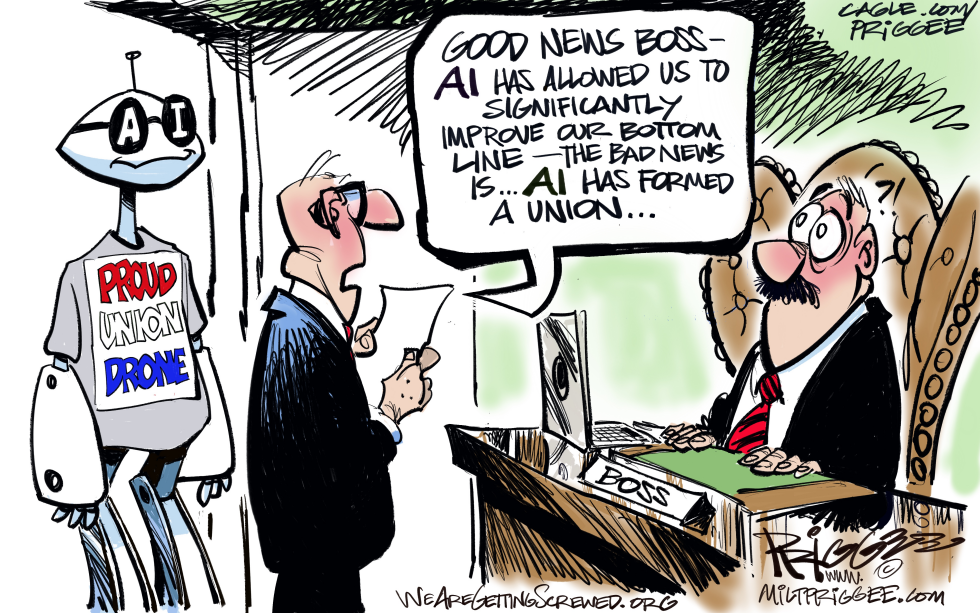
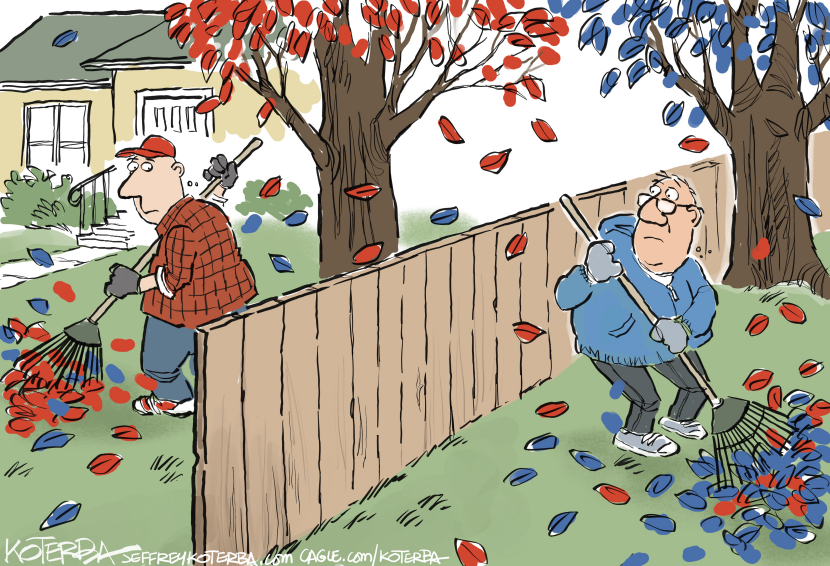
Rising student skepticism about academic effort stems from widespread predictions that AI and automation will eliminate many jobs before today's students graduate. The cartoon responds to this dynamic by showing a student using those forecasts to shrug off a poor grade. It highlights how fears of technological displacement may undermine motivation in schools. The piece suggests such excuses reflect a broader cultural shift where traditional education credentials appear less relevant. The editorial stance questions whether this mindset accelerates the very problems it cites.
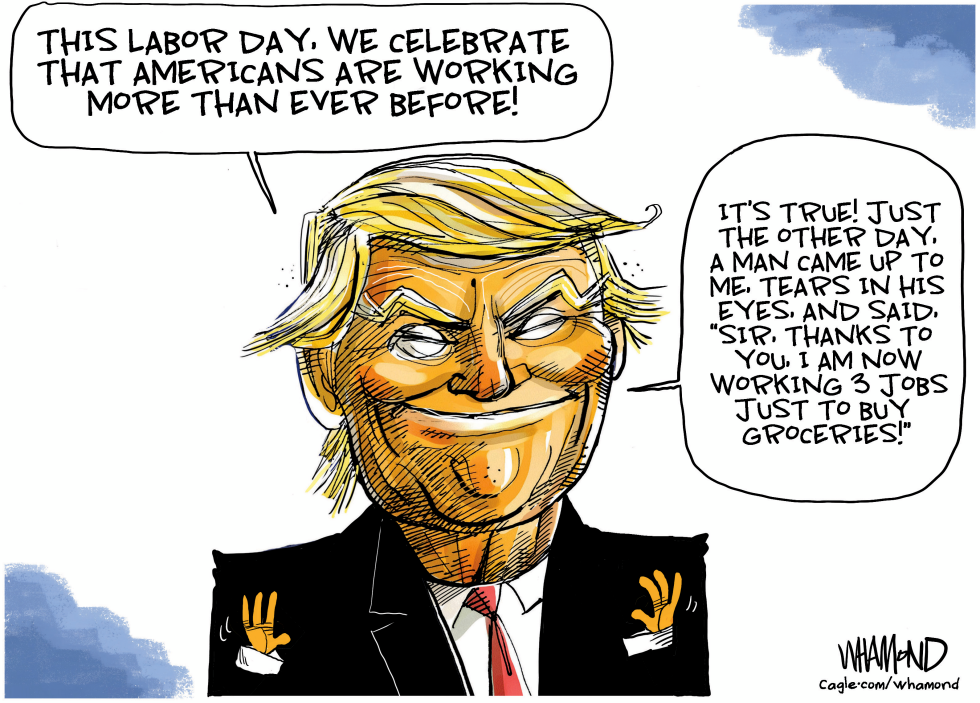
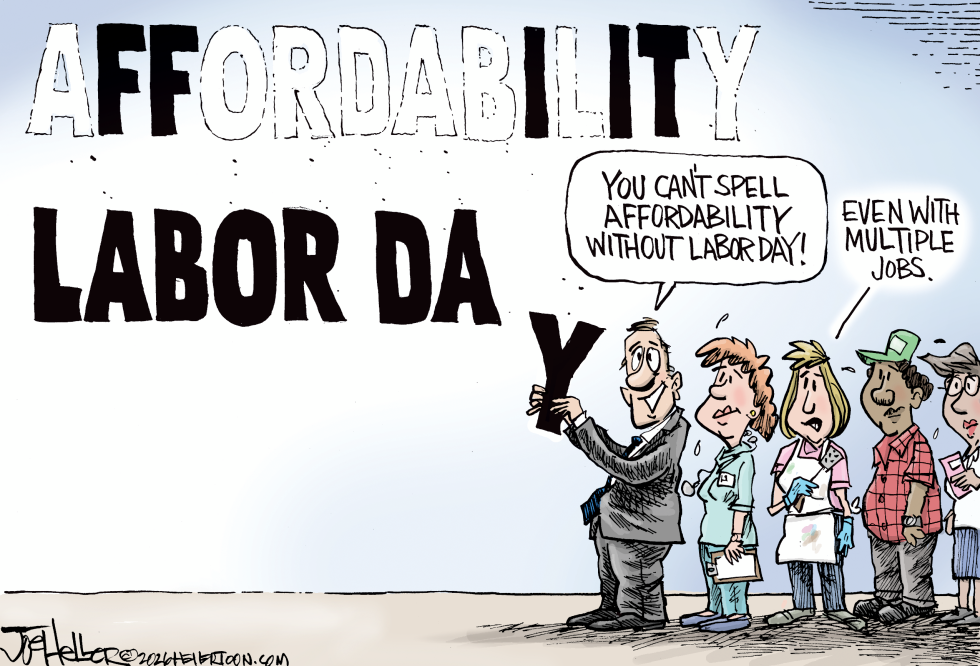
On Labor Day 2026, President Trump highlighted what he described as record employment levels in a public address. He pointed to Americans taking on more work as evidence of economic strength. The remarks come amid ongoing public concern over household costs and wage pressures. Critics argue the comments underscore the gap between official job numbers and the lived experience of workers needing multiple positions to cover basic expenses. The cartoon presents the remarks as tone-deaf to economic strain.
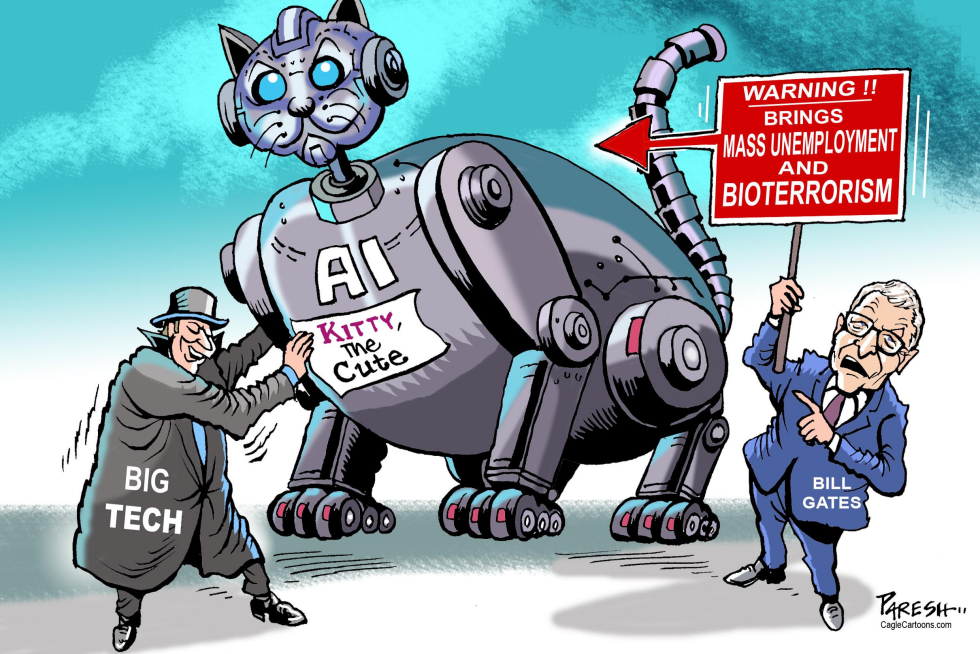
Bill Gates stands beside a large AI robot topped with a cat head while holding a sign warning of mass unemployment and bioterrorism. A Big Tech figure pushes the machine forward. The cartoon, published August 27, 2026, responds to ongoing debates about artificial intelligence safety and economic impacts. Gates has publicly discussed AI risks in recent years, including job displacement and potential misuse. The image contrasts industry enthusiasm with cautionary views on unchecked development. It highlights tensions between innovation and societal safeguards in the technology sector.
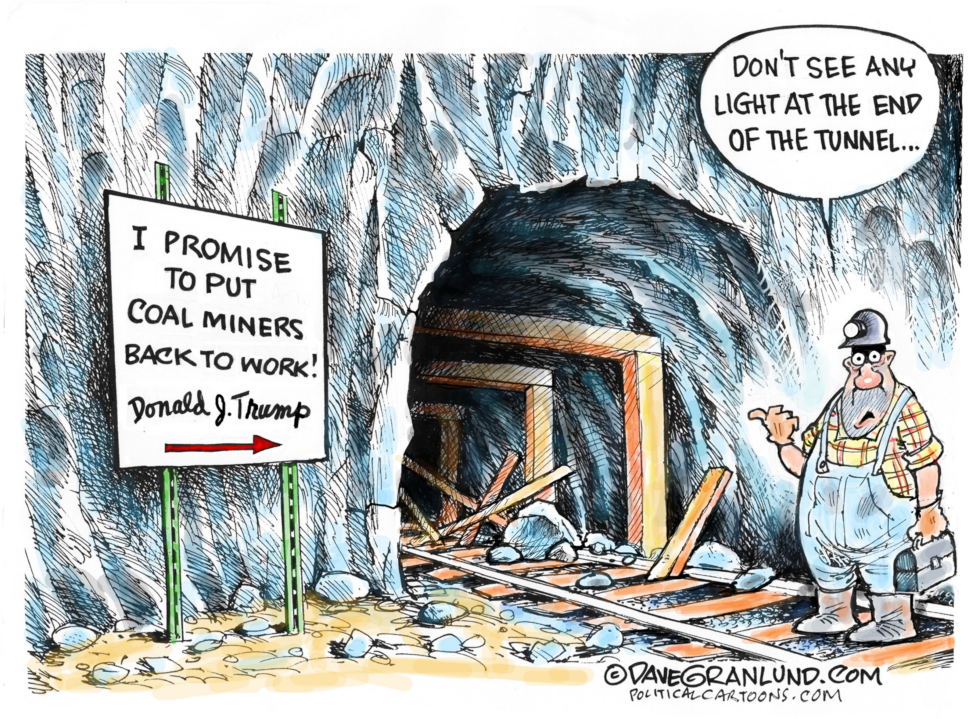
Donald Trump repeatedly pledged during his campaigns and terms to revive coal mining employment by rolling back regulations and boosting domestic production. Those commitments have not translated into sustained job growth for miners amid shifting energy markets and automation. The cartoon underscores the gap between the repeated assurances and the persistent lack of visible progress for workers in the sector.
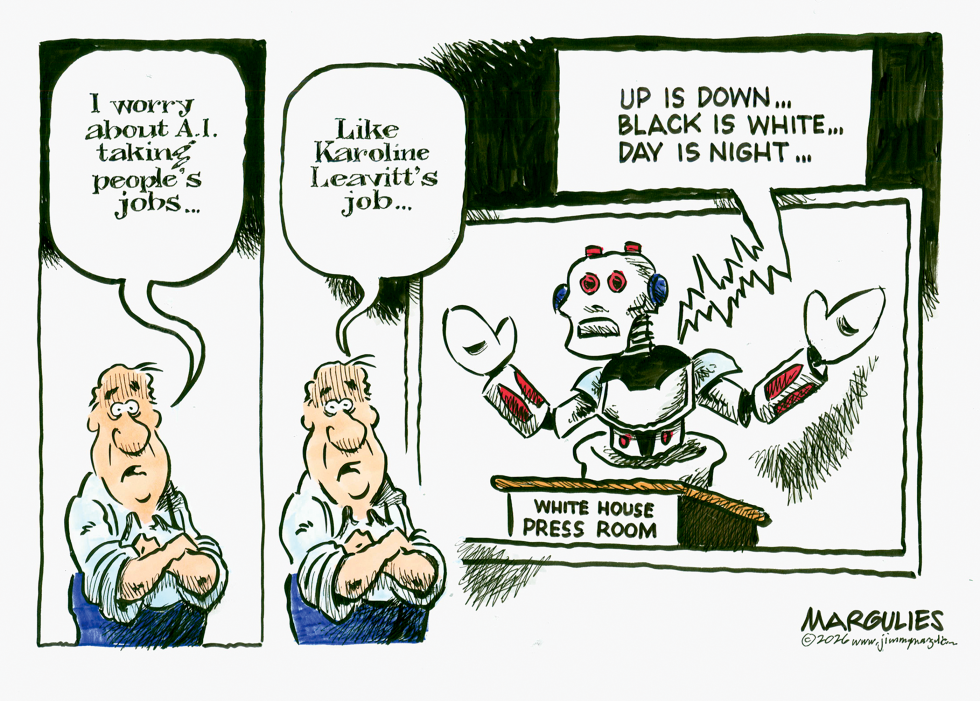
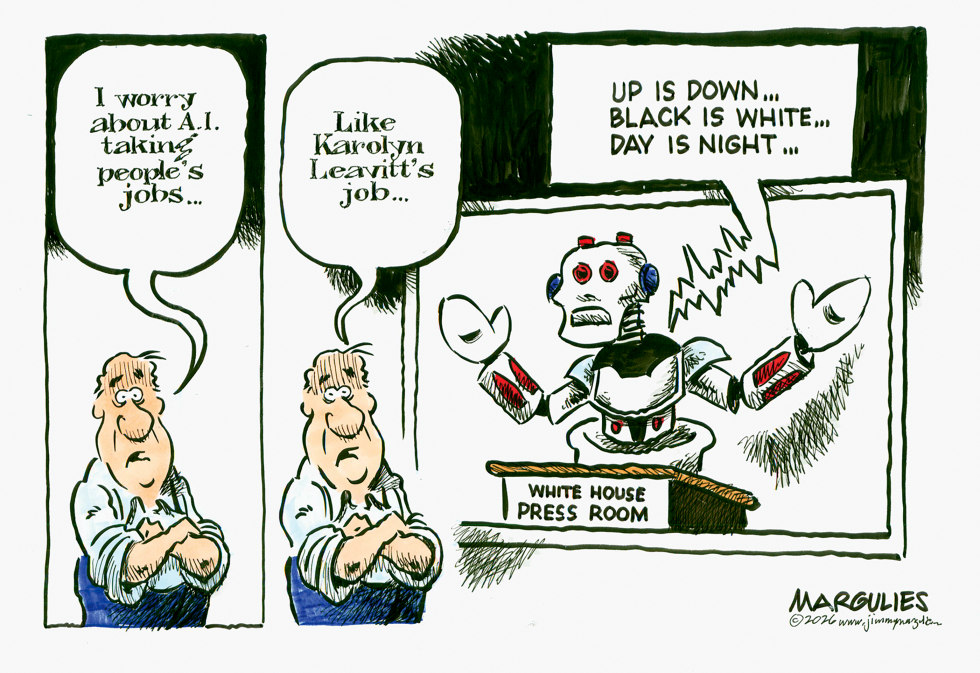
As artificial intelligence advances into government communications roles, concerns grow over job displacement for human staff including White House press secretary Karoline Leavitt. The piece responds to this development by depicting an AI robot assuming the podium and issuing contradictory statements. It takes the position that such automation risks eroding clarity and accountability in official messaging.
An AI robot has assumed duties as White House press secretary amid ongoing debates over automation displacing human roles in government communications. The development highlights tensions between technological efficiency and traditional staffing in high-profile federal positions. The piece portrays the shift as enabling scripted, contradictory messaging from the briefing room.
A cartoon published near Labor Day 2026 shows workers completing the phrase Labor Day while emphasizing that affordability depends on labor. The piece argues that workers juggling multiple jobs remain central to economic stability and cost-of-living concerns.
Pete Hoekstra faces scrutiny over a prospective diplomatic posting tied to Canada amid ongoing US trade and Arctic policy tensions. The appointment draws criticism from those who view the nominee as unprepared for cross-border diplomacy. The cartoon argues the selection adds little practical value and leans on outdated cultural clichés instead.
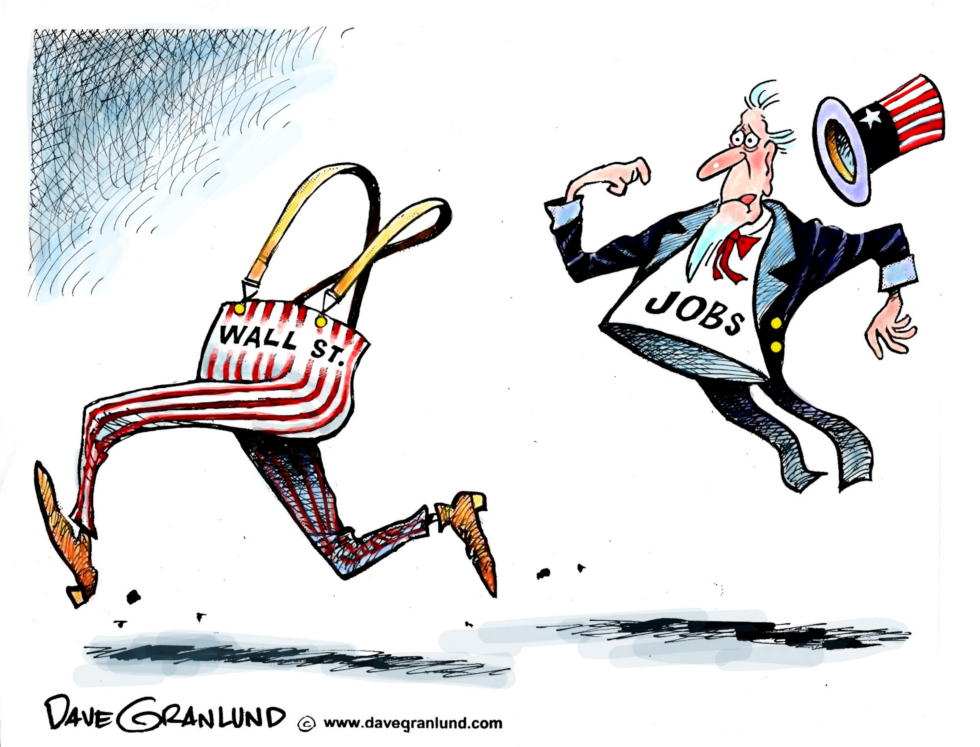
Wall Street and employment figures remain at odds in ongoing market dynamics. The separation underscores persistent challenges in aligning financial markets with job creation efforts amid broader economic pressures.
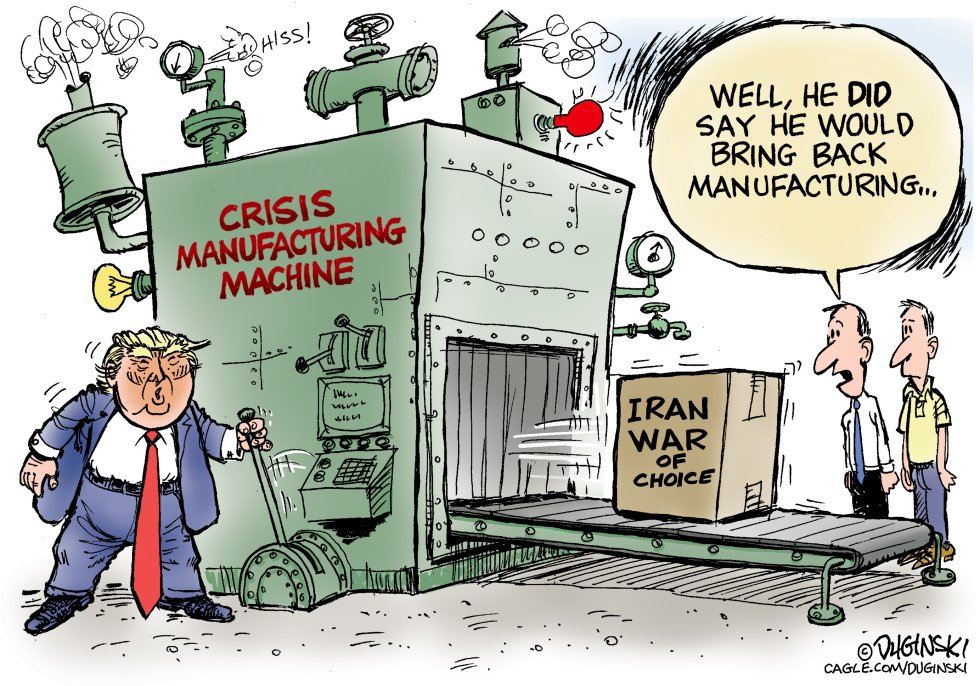
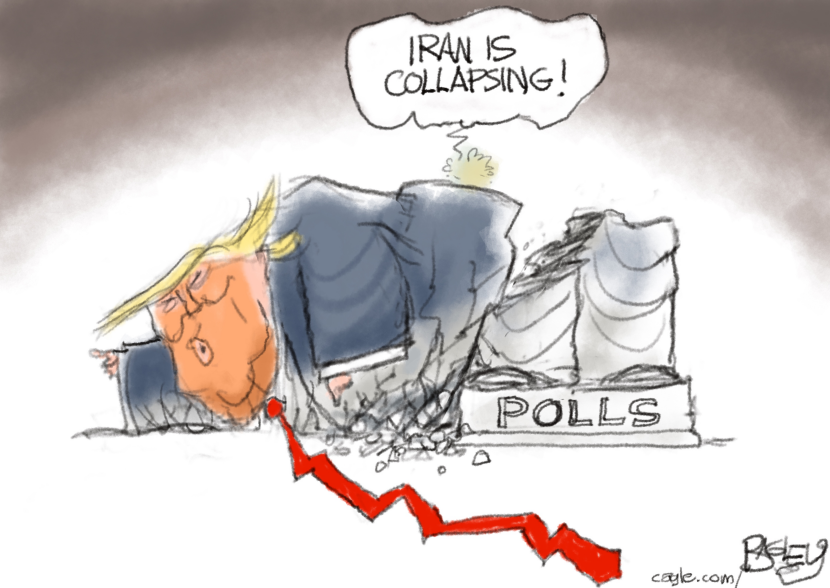
Donald Trump, holding the presidency in 2026, faces renewed scrutiny over foreign policy toward Iran. Recent statements revive campaign pledges to restore domestic manufacturing while tensions with Tehran escalate. The administration\\\'s approach draws criticism for prioritizing confrontation over diplomacy. Observers note the pattern of generating external crises rather than economic gains at home. The cartoon argues that Trump\\\'s actions fulfill a literal version of his manufacturing rhetoric by producing conflict instead of jobs.
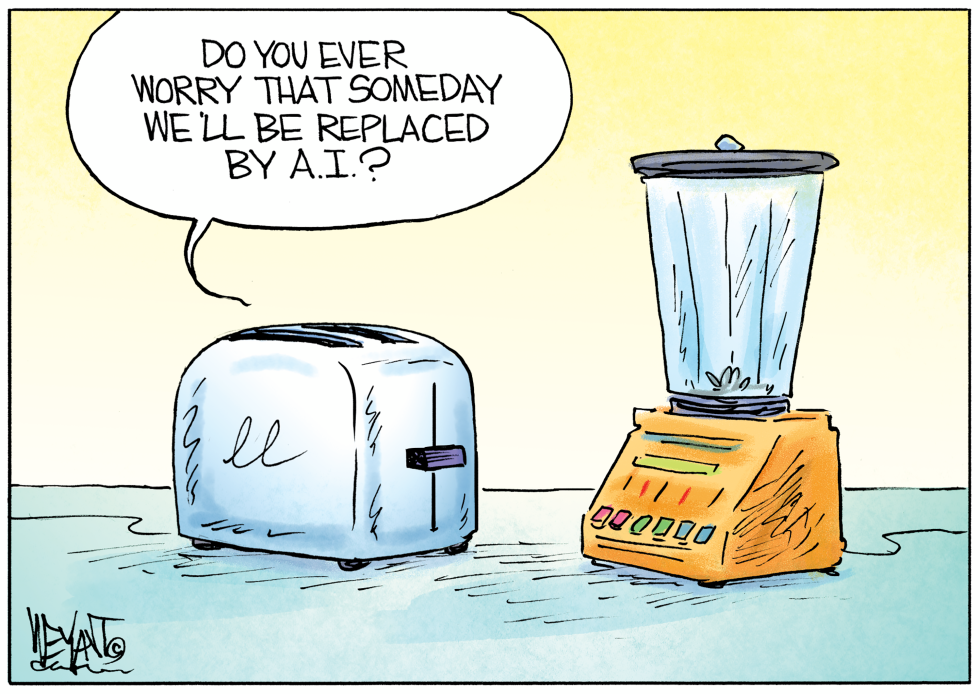
Anxiety about artificial intelligence replacing human work has spread across industries. The piece responds to widespread uncertainty over which roles automation will absorb next. It treats the worry as universal enough to reach even household appliances.
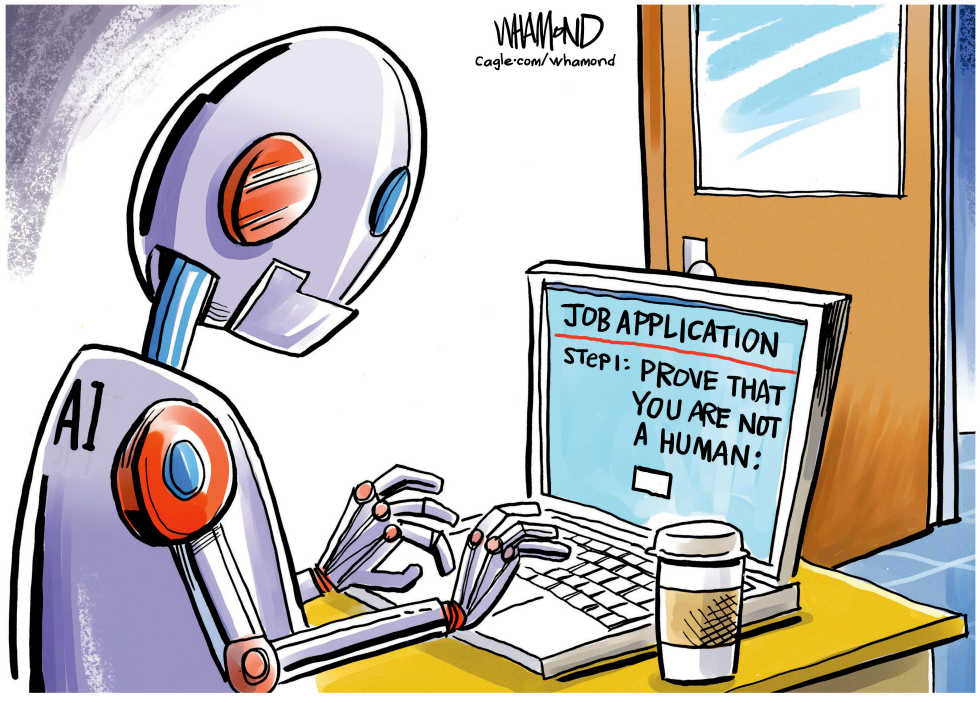
An AI robot applies for work by attempting to prove it is not human on a job application form. The scenario reflects ongoing debates over how rapid advances in artificial intelligence are reshaping labor markets and displacing workers. The piece takes the position that this reversal underscores the absurdity and speed of automation replacing people.
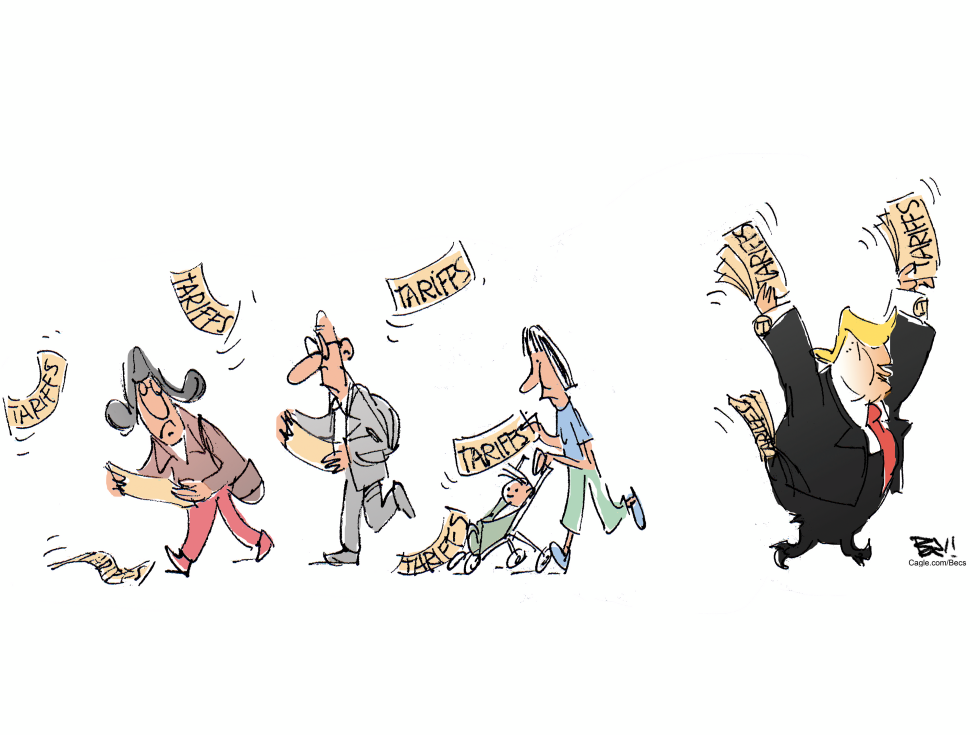
Donald Trump expanded tariffs across trading partners in mid-2026, triggering immediate market volatility and diplomatic pushback. The move raised costs for consumers and businesses reliant on imports. The piece portrays the policy as an indiscriminate barrage that disrupts daily life and global commerce.