The four-panel cartoon depicts a graduation speaker in academic robes addressing graduates. Visible text shows the speaker first shouting globalize the intifada then shifting to statements about free inquiry and campus safety. A silhouetted figure at a podium comments on public support and core values. The final panel returns to the speaker requesting more intifada.
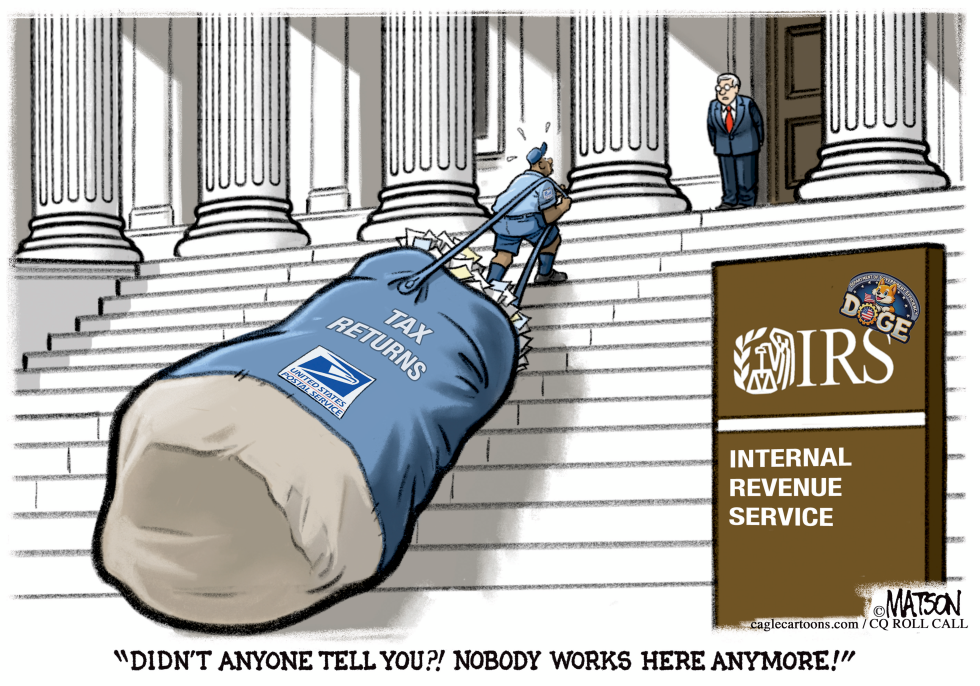
R.J. Matson's IRS staff reductions cartoon shows a postal worker hauling a huge blue bag marked 'TAX RETURNS' and 'United States Postal Service' up grand steps to a columned building signed 'DOGE IRS Internal Revenue Service.' An older man in a suit at the top yells, 'Didn't anyone tell you? Nobody works here anymore!' Papers spill from the bag as the worker climbs. This dry humor piece captures government understaffing with a sharp, insider poke at federal bureaucracy, blending tax season frustration with visual satire on empty offices. The Doge meme twist on the IRS logo adds a layer of modern absurdity to the scene.
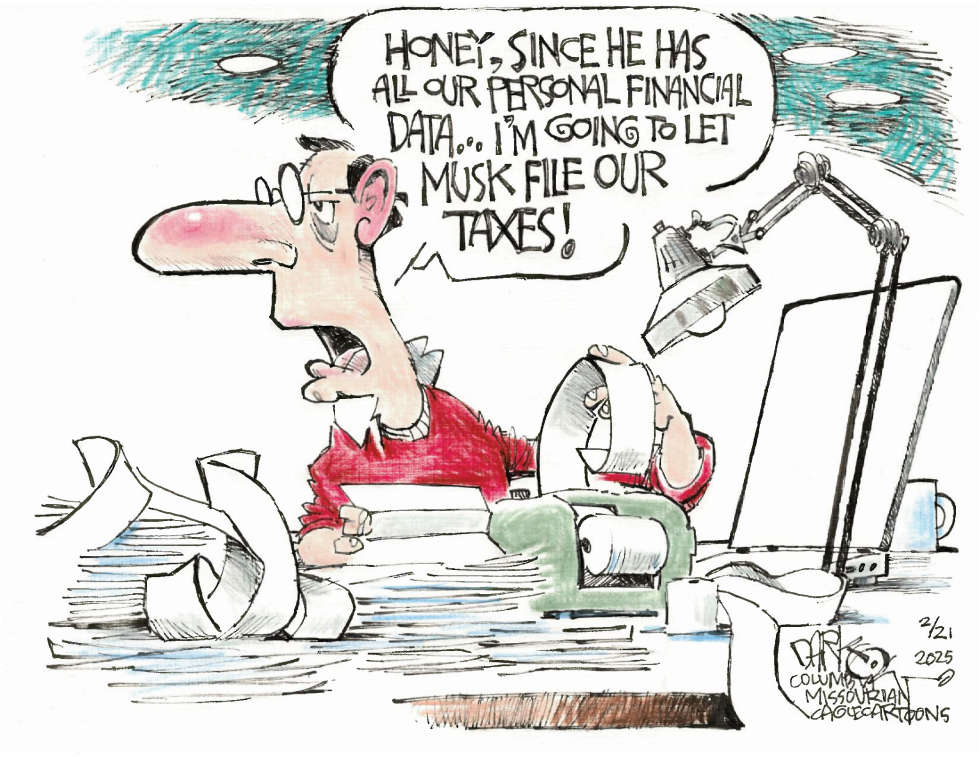
This political cartoon depicts a bespectacled man in a red shirt, mouth agape, holding a paper strip amid desk clutter including a lamp, computer screen, and scattered documents. He exclaims in a speech bubble: 'Honey, Since He Has All Our Personal Financial Data... I'm Going To Let Musk File Our Taxes!' The scene captures satirical essence on themes like Elon Musk influence, personal financial data privacy, tax filing absurdity, billionaire data access, humorous political commentary, and tech mogul satire. Signed by artist Daryl Cagle in 2023, the illustration uses bold lines and colors to emphasize the man's exasperated expression and chaotic workspace, poking fun at modern data dilemmas without depicting Musk himself.
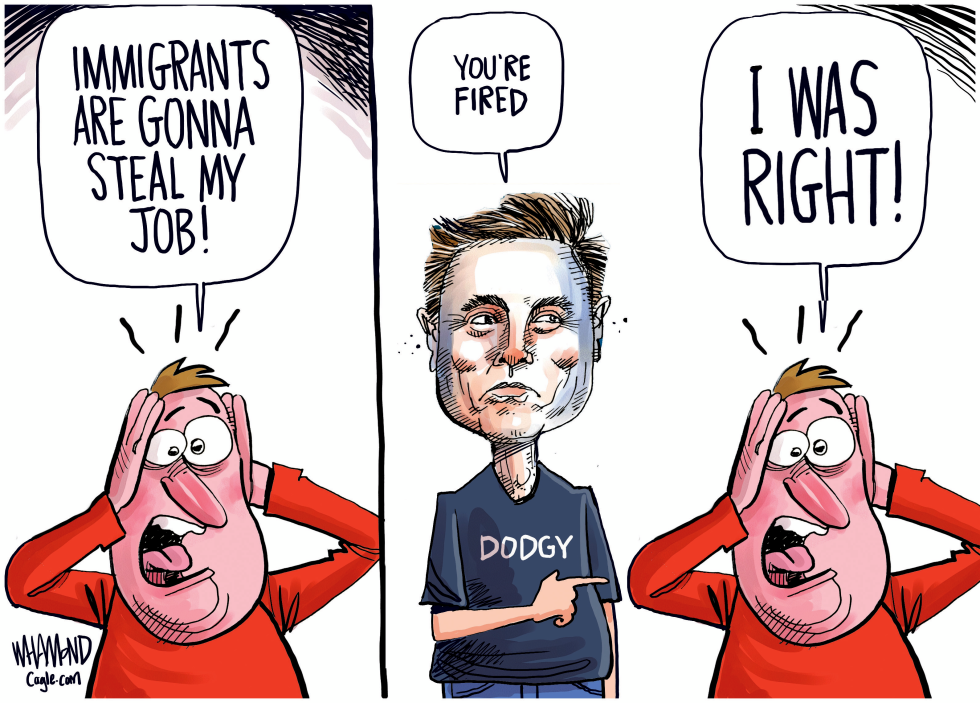
A three-panel cartoon shows a panicked man fearing immigrant job theft on the left, a split-face Elon Musk figure labeled DODGY pointing and declaring YOU'RE FIRED in the center, and the same man claiming I WAS RIGHT on the right. The image responds to the February 2025 launch of DOGE efficiency efforts targeting federal agencies including USAID, CDC and others. It uses visual contrast to underscore shifting sources of employment disruption for government workers.