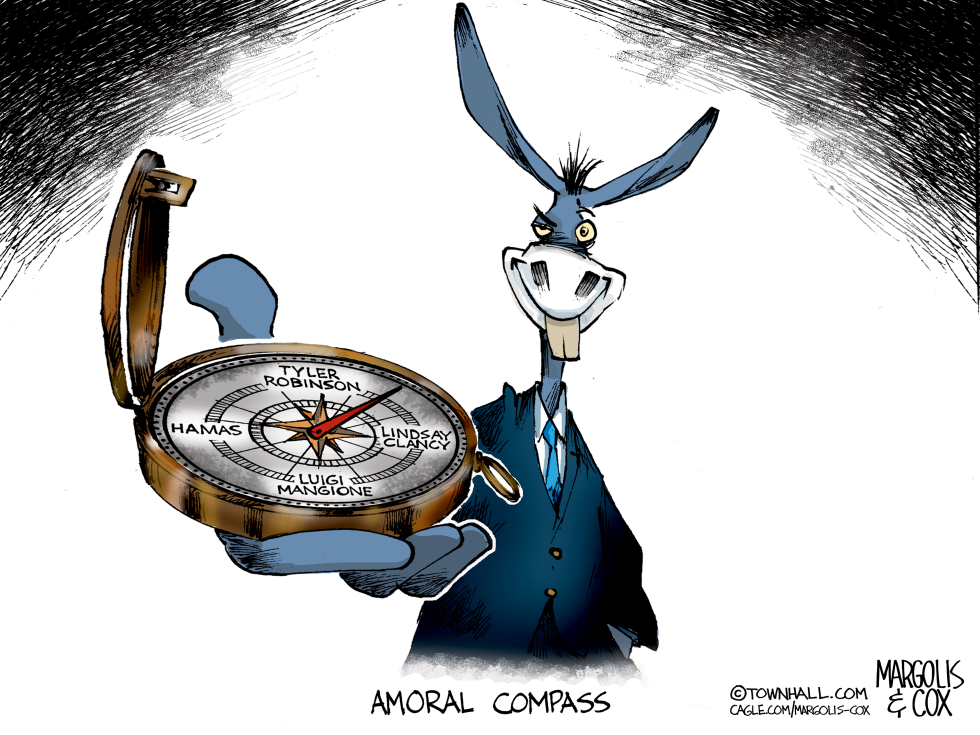
On September 11, 2026, a political cartoon by Margolis & Cox depicts the Democratic Party's moral framework as broken by associating it with figures such as Luigi Mangione, Lindsay Clancy, Tyler Robinson, and Hamas. The piece argues that progressive tolerance for these cases reveals a deeper ethical failure. It matters because public trust in political morality shapes elections and policy debates. The cartoon takes the position that the left has abandoned consistent principles in favor of selective outrage.
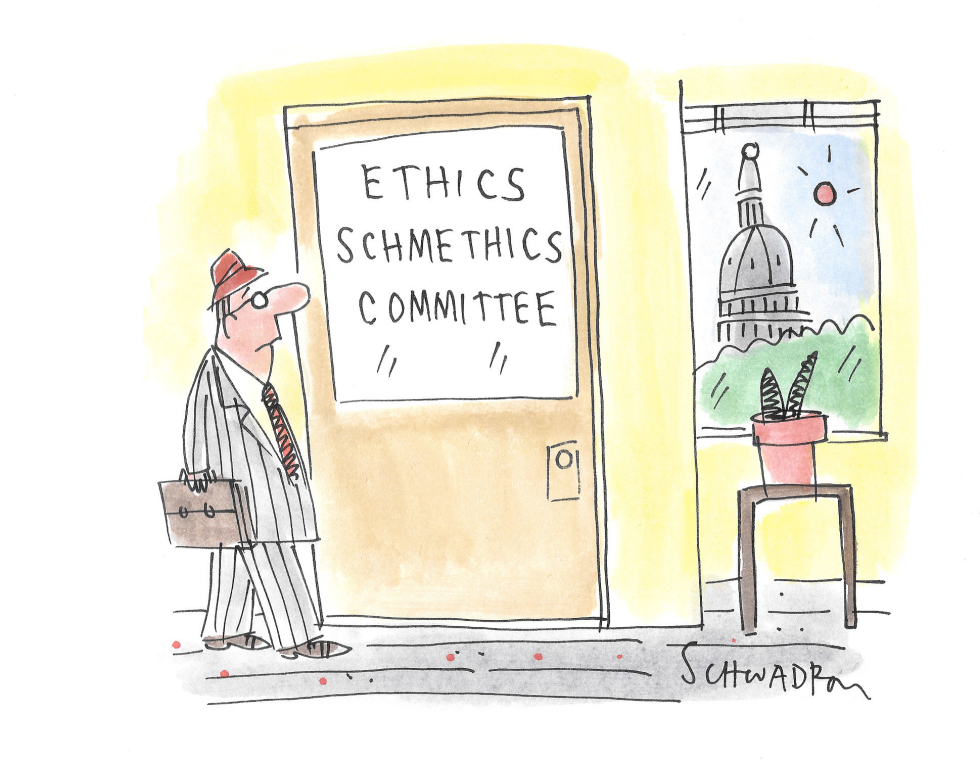
Congress continues to sideline meaningful ethics oversight, with lawmakers showing little interest in strengthening or even respecting the chamber's ethics committee. The panel exists on paper but carries little practical weight in daily operations. This dynamic matters because weak internal standards erode public trust in legislative institutions and invite outside influence. The cartoon captures the prevailing attitude that ethics rules are an afterthought rather than a core responsibility.
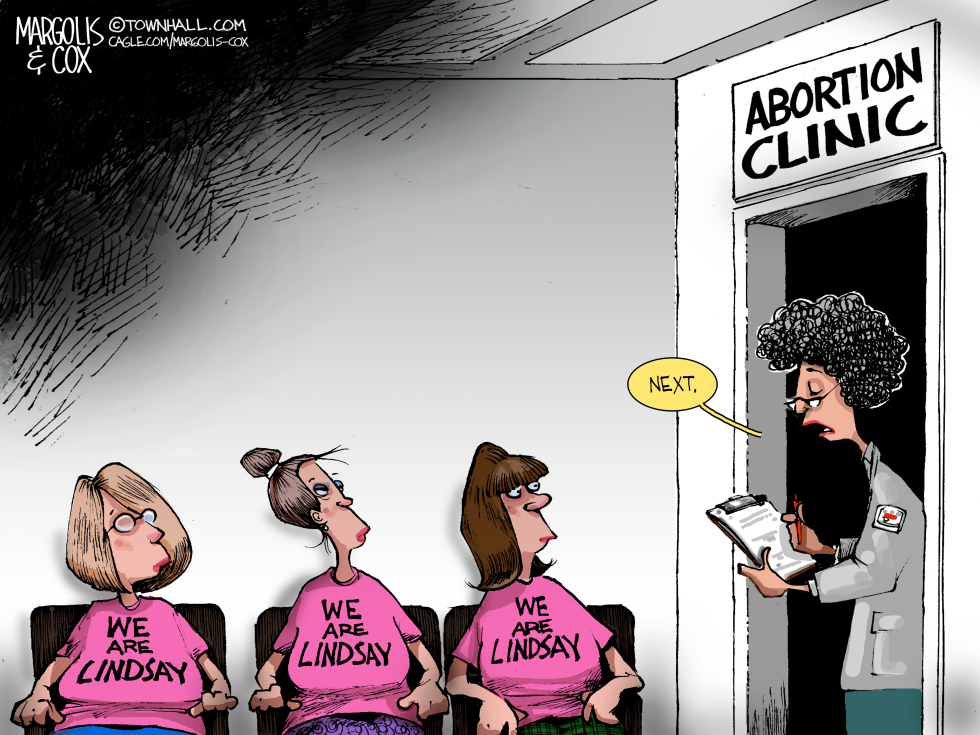
The Lindsay Clancy case has prompted renewed attention to reproductive healthcare access and clinic policies. Multiple women identifying with the case have appeared at facilities, highlighting ongoing debates over abortion rights and patient privacy. The cartoon critiques the use of personal tragedy to advance clinic protests and identity-based activism.
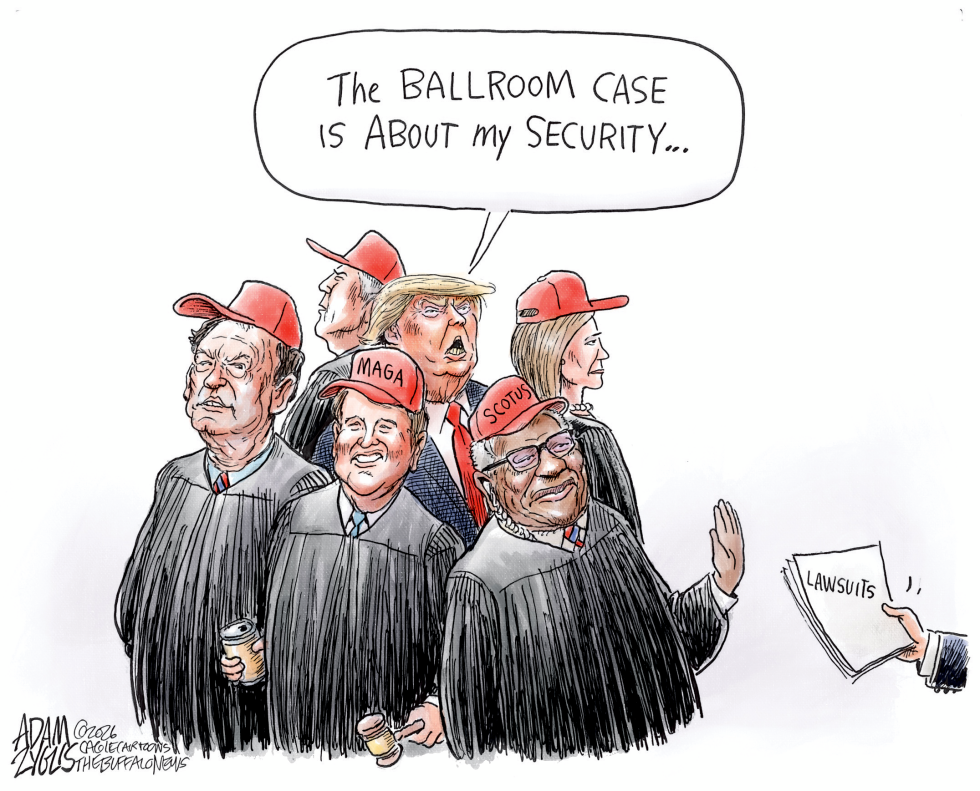
A political cartoon published September 2, 2026, shows Supreme Court justices in judicial robes and red MAGA caps gathered around Donald Trump. One justice declares in a speech bubble that the ballroom case is about my security. A hand extends papers labeled lawsuits from the side. The image comments on recent litigation involving Trump and claims of judicial security concerns tied to the case.
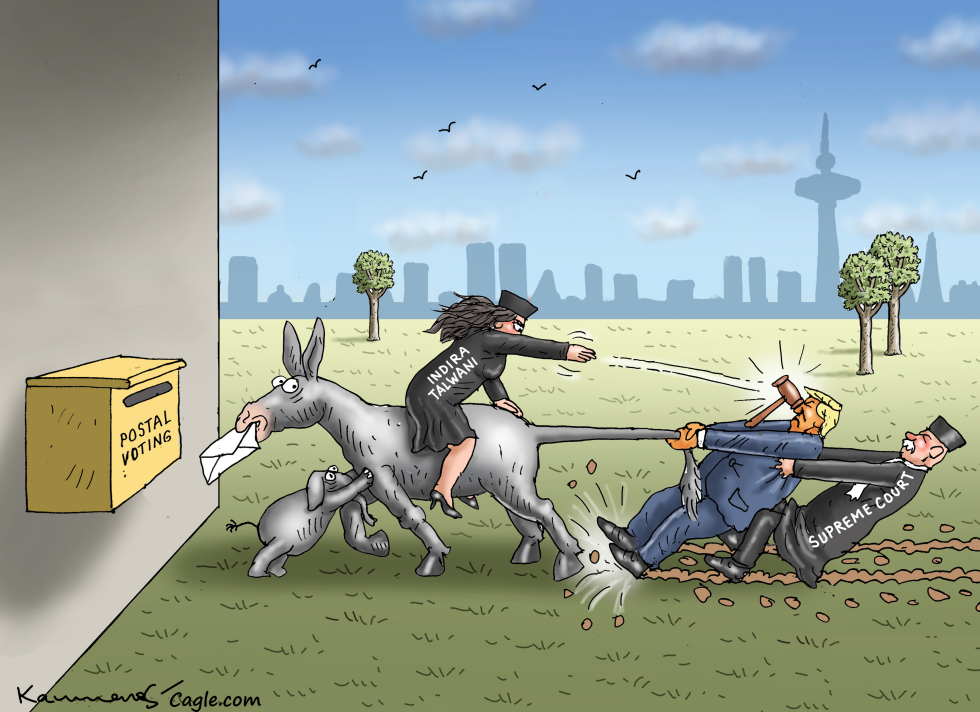
A political cartoon shows federal Judge Indira Talwani riding a Democratic donkey labeled with postal voting while dragging two Supreme Court justices across a field near the Space Needle. The image responds to ongoing disputes over postal voting rules and federal court involvement in election procedures. Talwani, a U.S. District Judge, has issued rulings affecting voting access in recent cases. The cartoon uses the donkey as a party symbol and a yellow ballot box to illustrate the conflict between lower court decisions and the Supreme Court. The visual argument centers on judicial power in election law matters active in 2026.
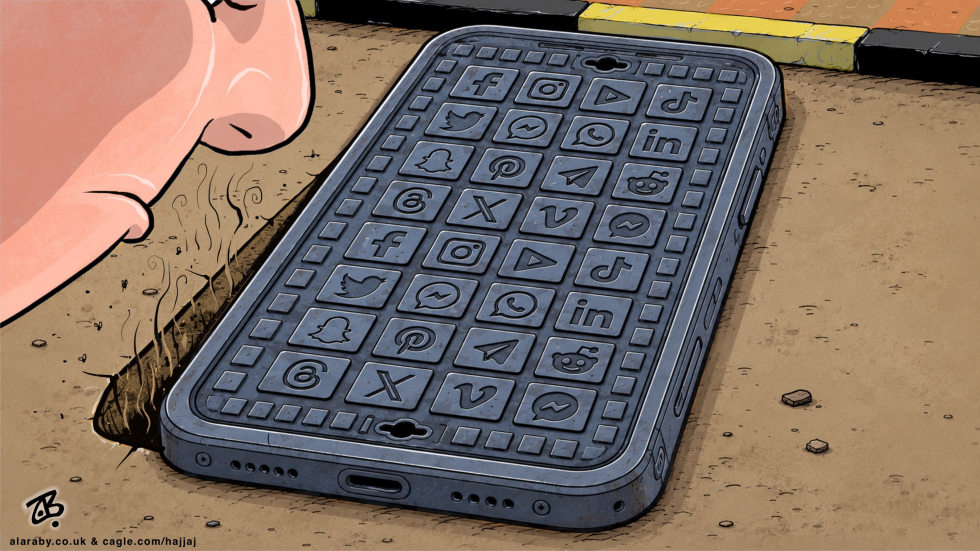
Social media platforms continue to dominate daily life through smartphones, prompting calls for users to disconnect from constant notifications and scrolling. The image depicts a hand actively burying such a device in dirt, underscoring the desire to escape digital overload. The editorial position favors deliberate disconnection from these apps as a necessary step toward healthier routines.
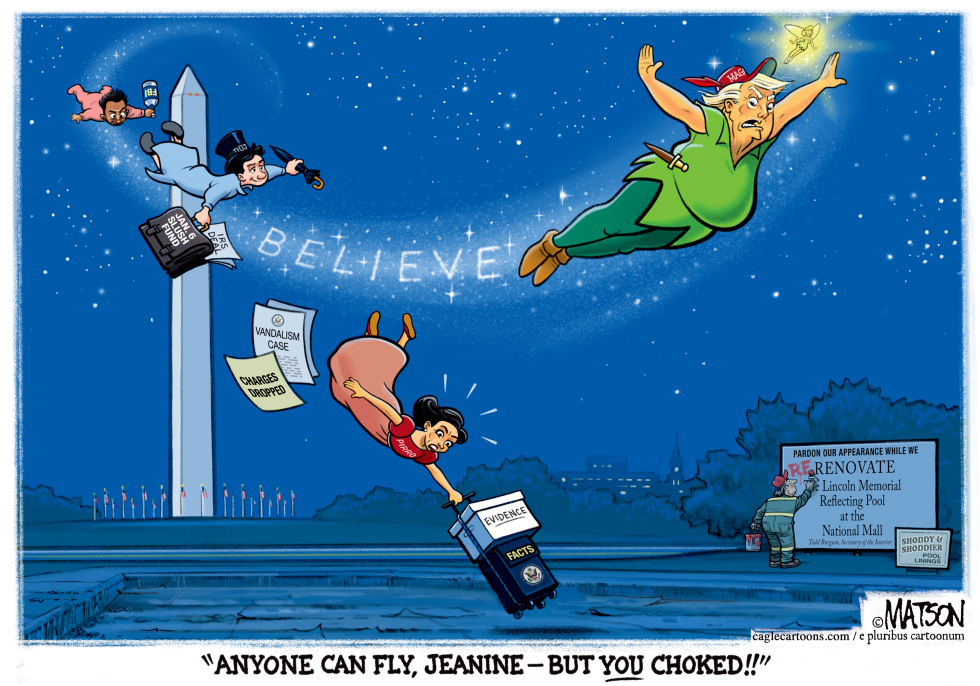
Donald Trump appears in a leadership role with legal cases being dismissed around him in early August 2026. Jeanine Pirro is shown losing grip on an evidence container labeled facts. The scene highlights ongoing questions about accountability and dropped charges in high-profile matters involving the administration.
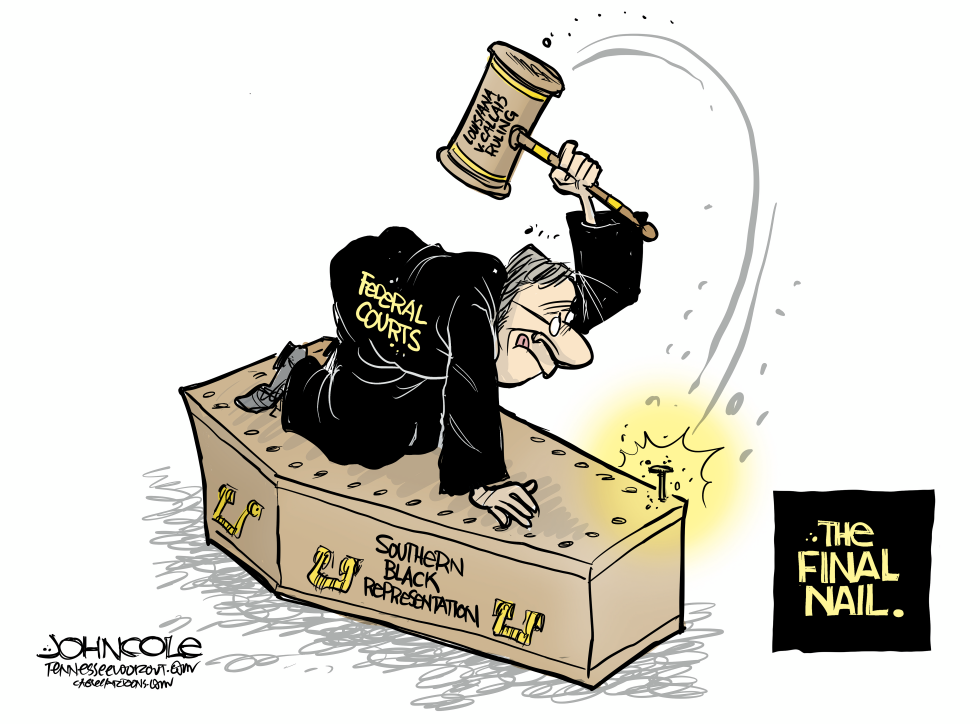
A federal court ruling on Louisiana redistricting has reduced black congressional representation across southern states. The decision follows ongoing litigation over district maps and voting access. It matters because it alters the number of majority-minority seats available in Congress. The piece argues the ruling delivers a decisive setback to those representation gains.
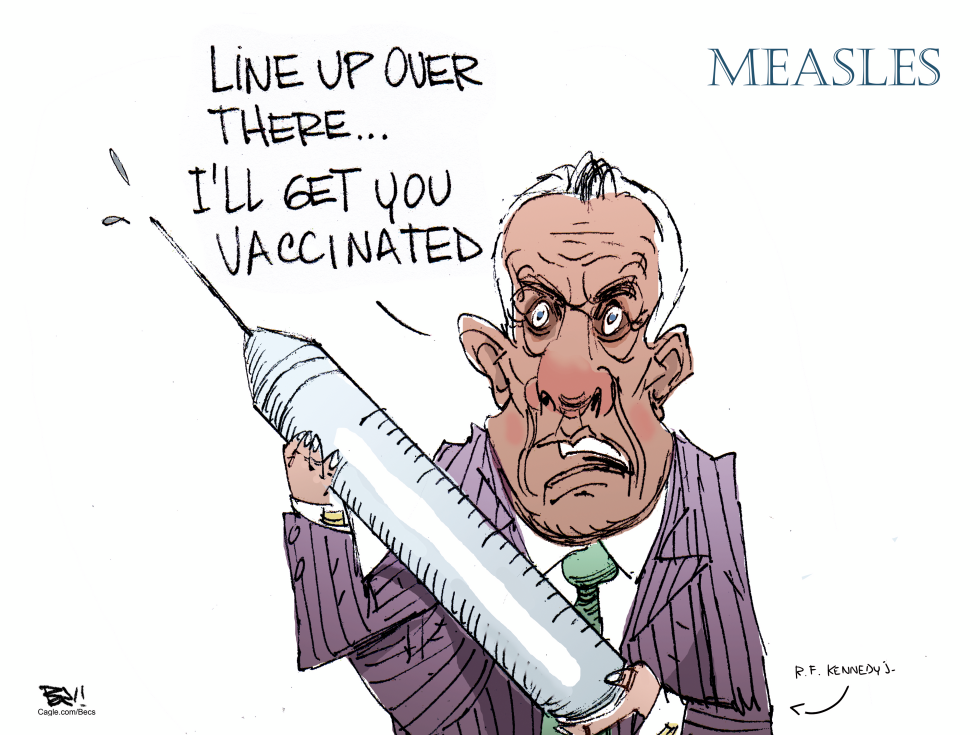
Robert F. Kennedy Jr., serving as a top health official in 2026, faces scrutiny over a sudden push for measles vaccinations. The move comes as cases rise and public skepticism lingers from prior stances. The editorial argues the policy reversal exposes inconsistent leadership on immunization.
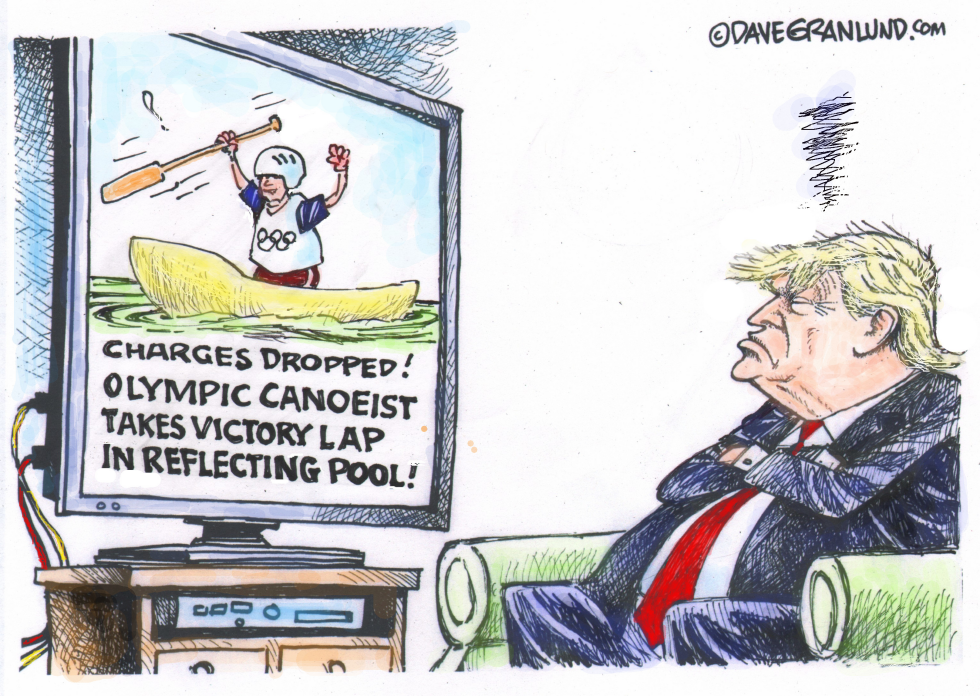
An Olympic canoeist had charges dropped and marked the outcome with a victory lap in a reflecting pool. The development drew attention from political observers including Donald Trump. The piece frames the episode as a notable moment in ongoing legal and public narratives around high-profile figures.
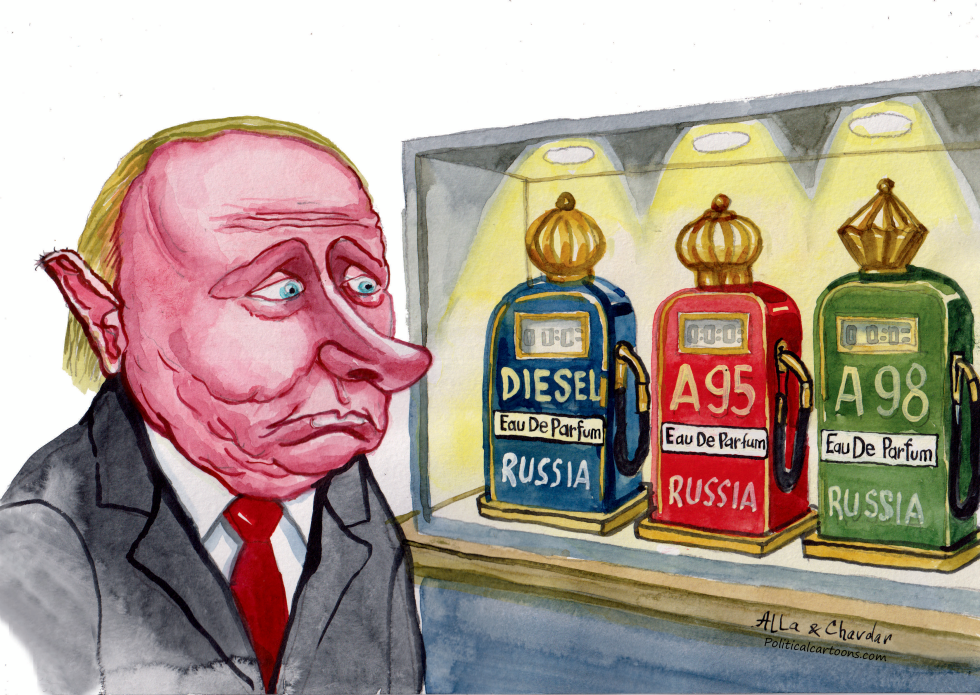
Russian President Vladimir Putin faces continued economic strain from the Ukraine war as fuel prices remain elevated. Sanctions and production shifts have driven up costs for diesel and gasoline grades. The cartoon frames these fuels as luxury perfumes to underscore the burden on Russian consumers and the regime's priorities.
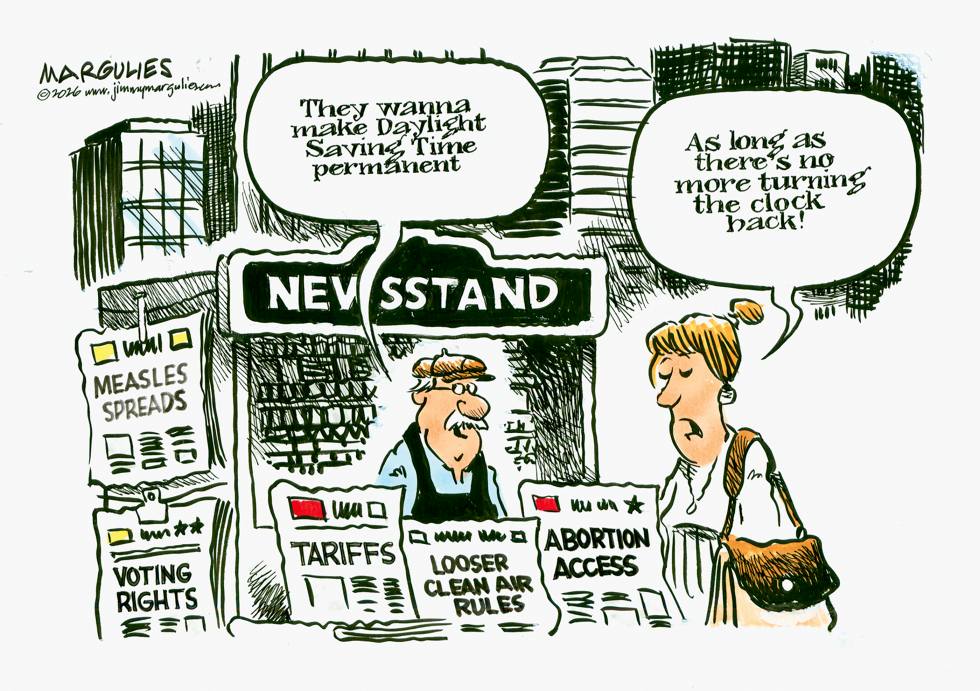
Proposals to make daylight saving time permanent coincide with debates over tariffs, abortion access, voting rights and environmental rules. The cartoon frames these as part of a broader pattern of policy shifts that some view as steps backward.
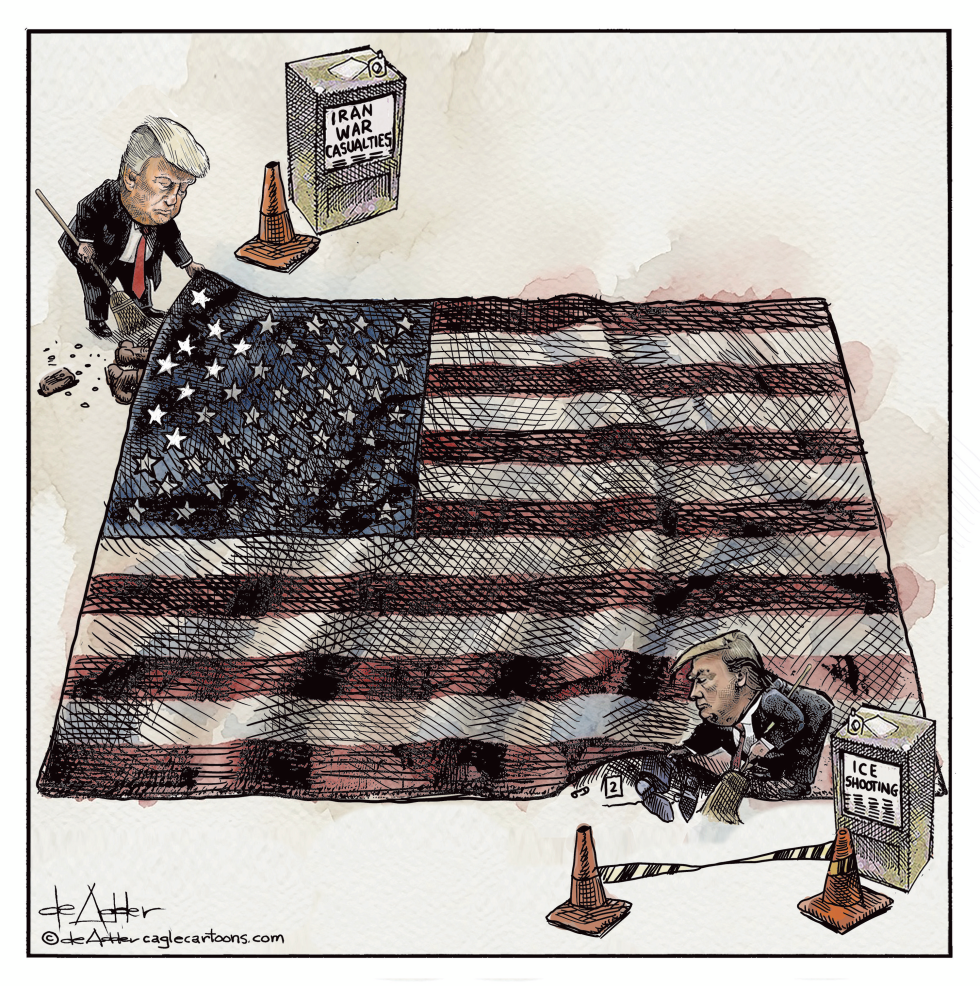
Donald Trump faces scrutiny over reported casualties from potential Iran conflict and an ICE-related shooting incident in mid-2026. The administration's handling of these events draws criticism for downplaying accountability. The piece argues that attempts to minimize these issues undermine public trust in governance.
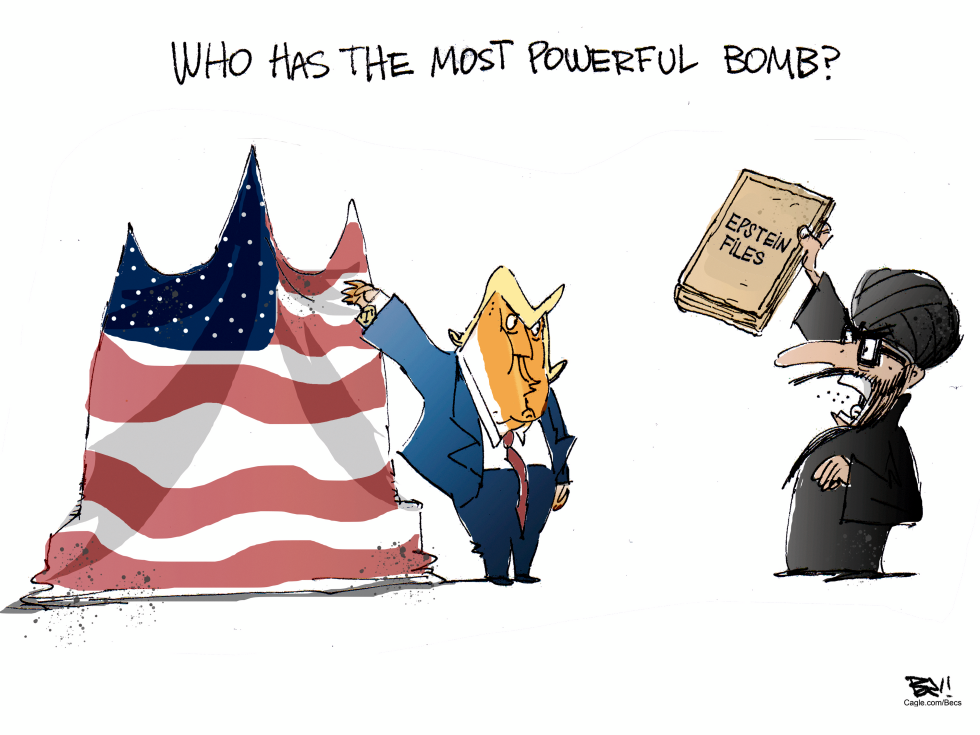
Leverage between the United States and Iran has long centered on nuclear capability and diplomacy. The piece sets that against domestic political pressure from document releases and investigations. It suggests the most damaging weapon in play may not be a military one.
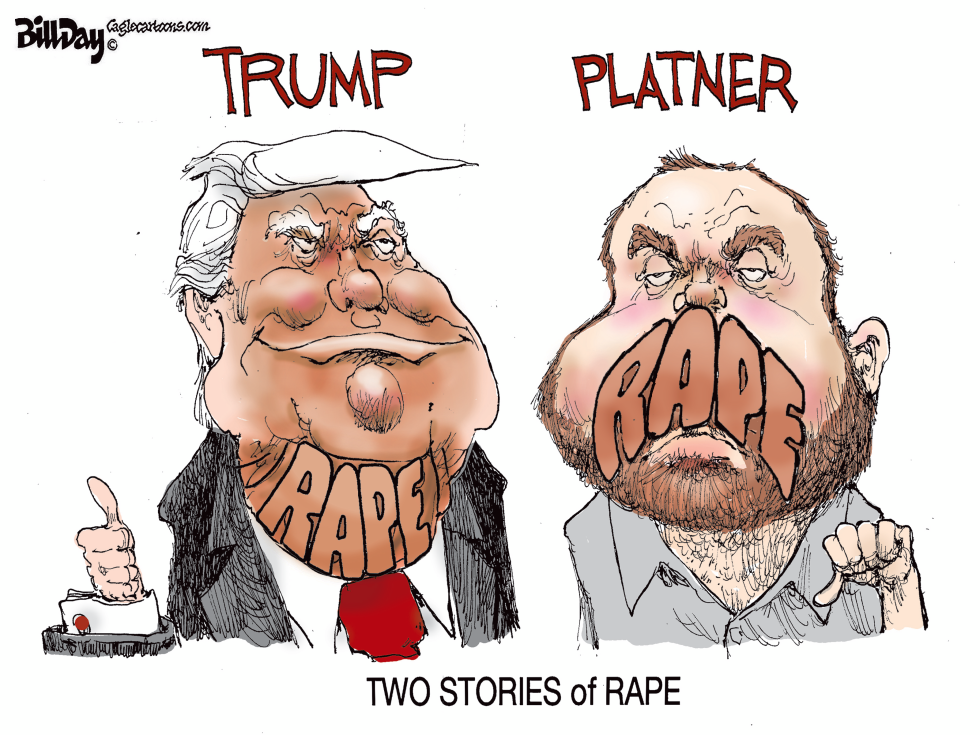
The image presents side by side depictions of Donald Trump and an individual named Platner. Each has the word rape overlaid on the lower face area. Trump extends a thumbs up gesture near papers while Platner extends a thumbs down gesture. Large red text at the bottom reads two stories of rape. The date of July 2026 places this in a period of ongoing public discussion around accusations involving prominent figures.