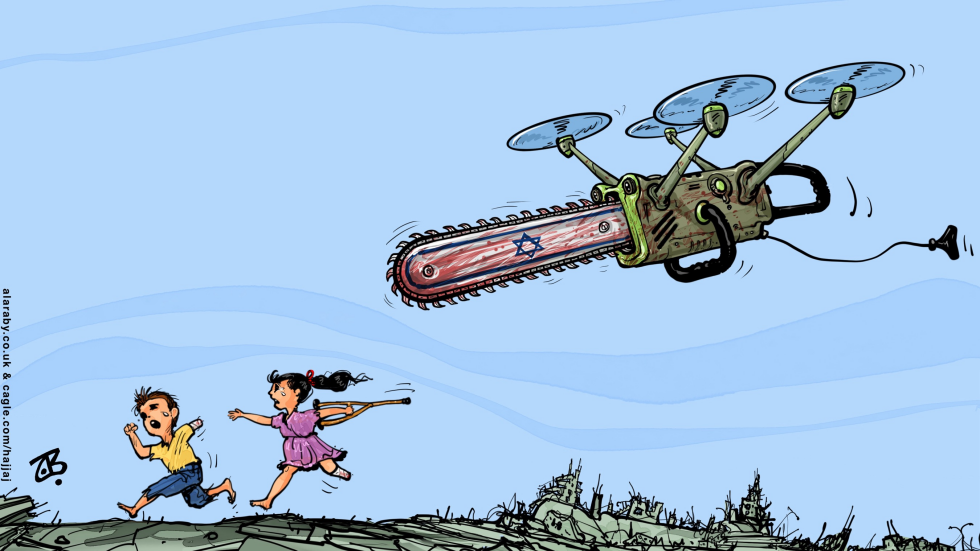
Israeli forces have deployed quadcopter drones equipped for combat in Gaza operations. The tactic has intensified scrutiny over risks to noncombatants in dense urban zones. Critics argue the approach blurs lines between targeted strikes and broader harm. The cartoon frames these weapons as indiscriminate threats to local populations. It takes the position that such technology exacerbates the humanitarian toll of the conflict.
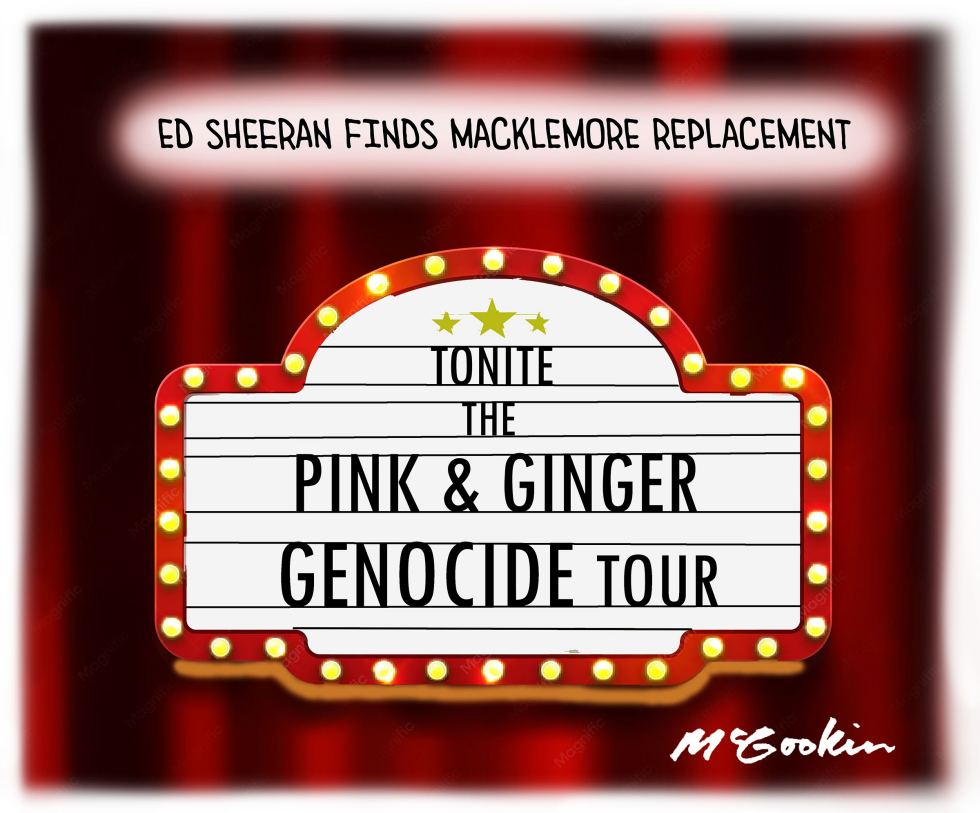
Ed Sheeran has removed Macklemore from his tour lineup. The cartoon frames the replacement as the Pink & Ginger Genocide Tour. The piece criticizes the decision as prioritizing commercial interests over artists who speak out on Gaza.
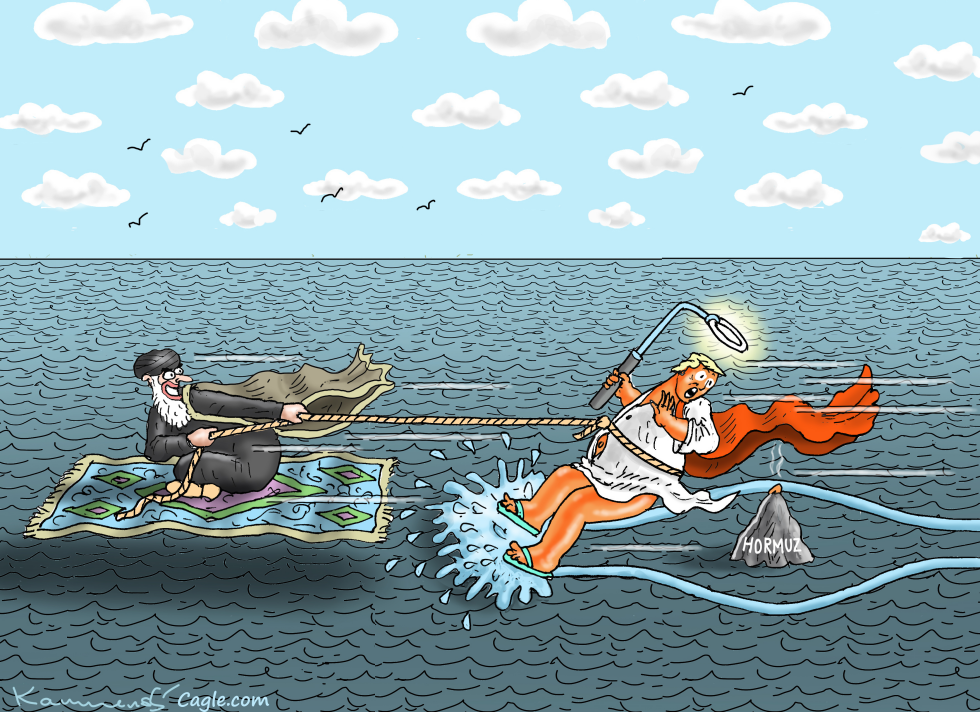
Tensions in the Strait of Hormuz have escalated with threats to shipping lanes critical for global oil supplies. Israeli and U.S. leaders face mounting losses from disruptions. The cartoon argues that involvement risks dragging both into deeper conflict without clear gains.
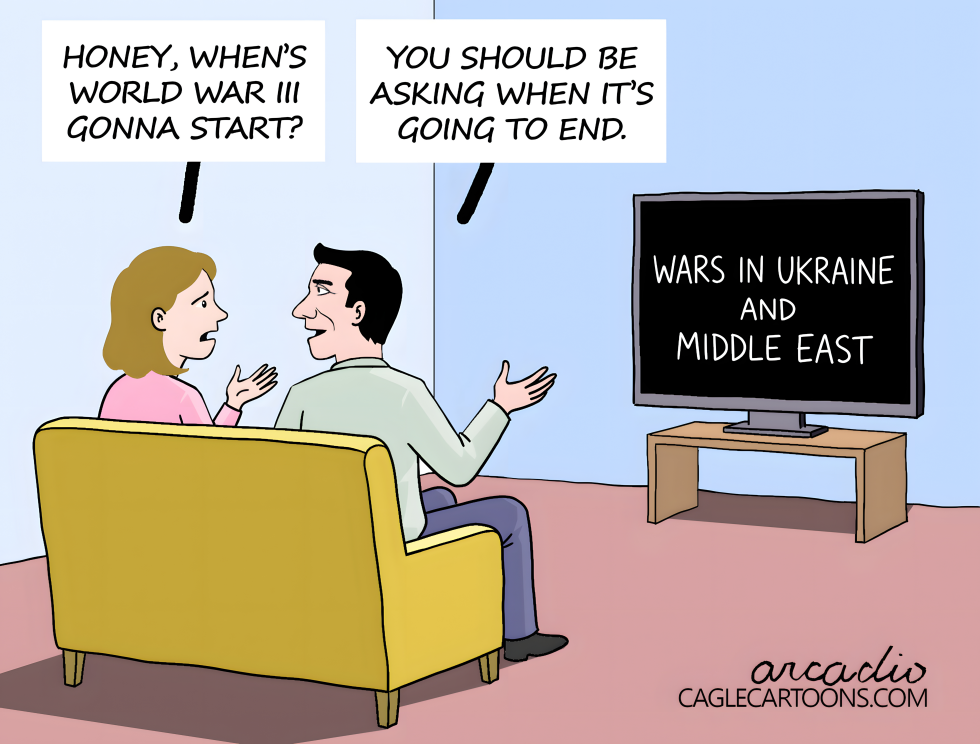
Persistent fighting in Ukraine and the Middle East continues to dominate global attention in September 2026, with no clear end in sight for either theater. The conflicts involve Russia against Ukraine and multiple fronts in the Middle East, raising concerns about wider involvement. Viewers and analysts alike question whether these regional wars risk drawing in additional powers and spiraling into a larger confrontation. The cartoon captures everyday public anxiety over the duration and potential expansion of these wars rather than their origins.
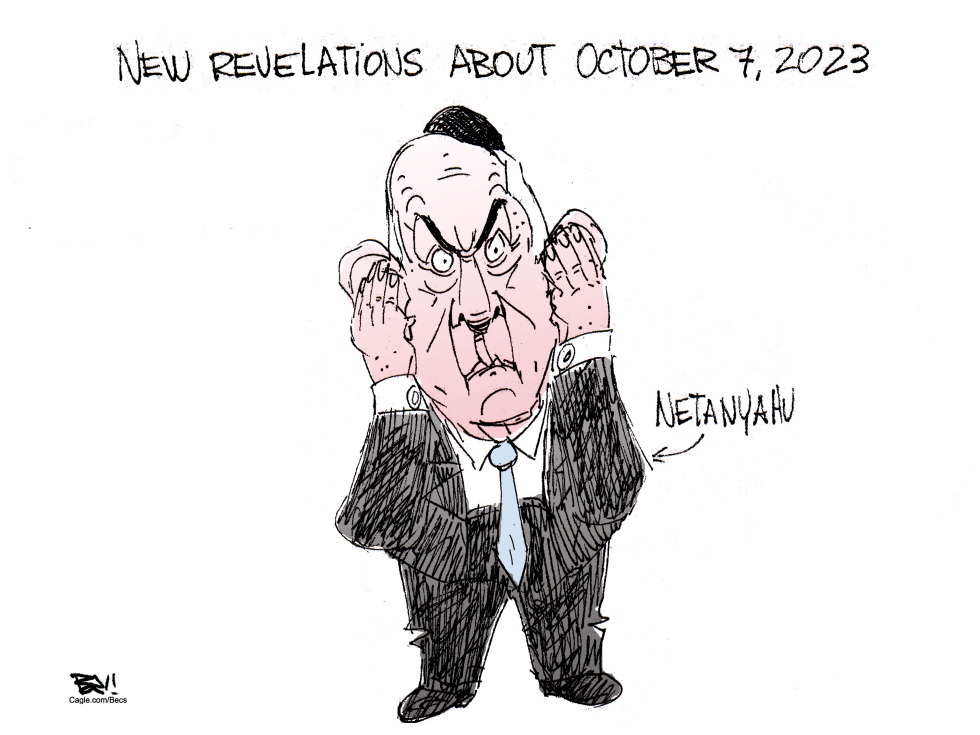
New details have surfaced regarding intelligence and preparedness failures ahead of the October 7, 2023 Hamas attacks. Israeli Prime Minister Benjamin Netanyahu has drawn criticism for appearing to dismiss these updates rather than address them directly. The ongoing debate centers on political responsibility for the deadliest attack in Israel's history and the government's handling of subsequent inquiries. Netanyahu's approach risks deepening public distrust in leadership during a period of heightened regional tension. The cartoon portrays this stance as deliberate avoidance of uncomfortable facts.
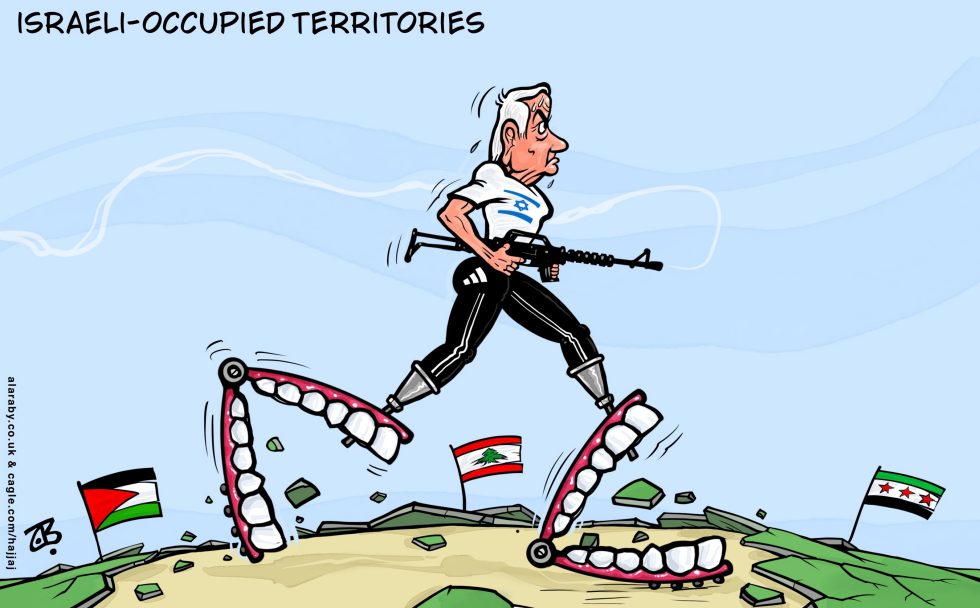
Israeli Prime Minister Benjamin Netanyahu has maintained policies of territorial control and military operations in areas bordering Israel including Gaza the West Bank southern Lebanon and parts of Syria. These actions have drawn international scrutiny over sovereignty violations and regional stability. The cartoon frames the policy as aggressive expansion that damages neighboring states.
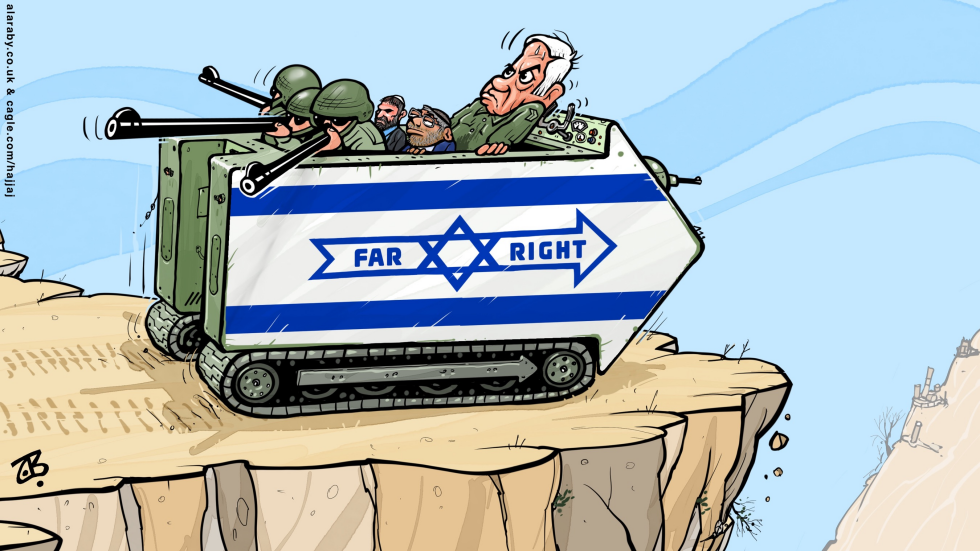
Israeli Prime Minister Benjamin Netanyahu leads a far-right coalition whose policies face mounting domestic and international criticism. The government has pursued aggressive military actions and settlement expansion while navigating coalition partners with extreme views. This direction risks further isolation and internal division. The cartoon argues that Netanyahu's embrace of the far right is propelling the country toward self-inflicted political and strategic damage.
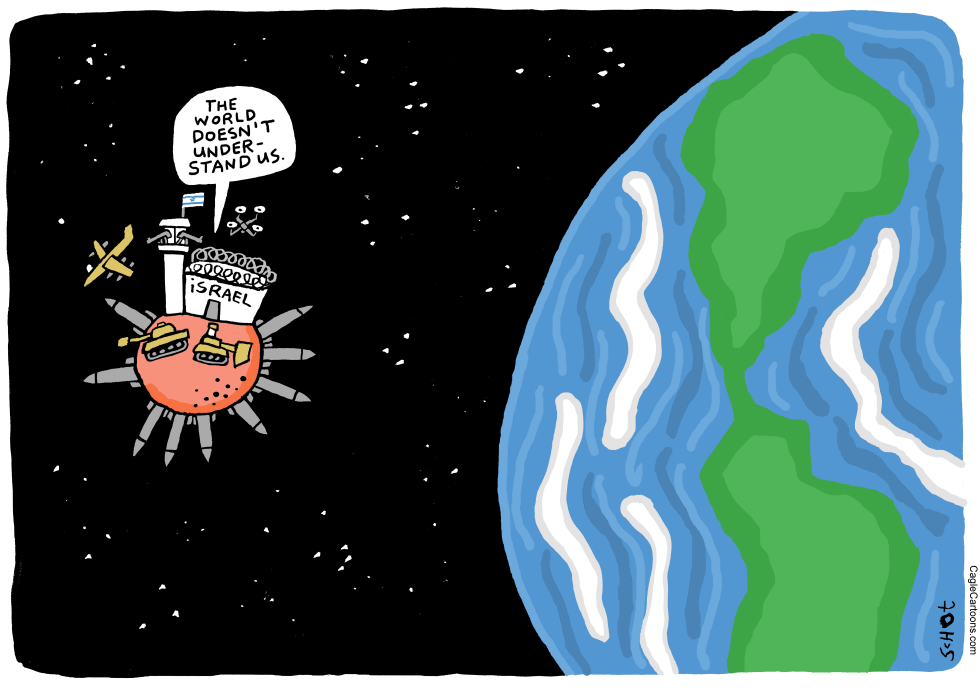
Israel's international standing faces ongoing strain from conflicts in Gaza and tensions with neighbors as of mid-2026. Allies express frustration over military operations and settlement policies while domestic leaders defend actions as necessary for security. The piece presents Israel as a self-contained entity asserting that external observers fail to grasp its circumstances amid growing diplomatic distance.
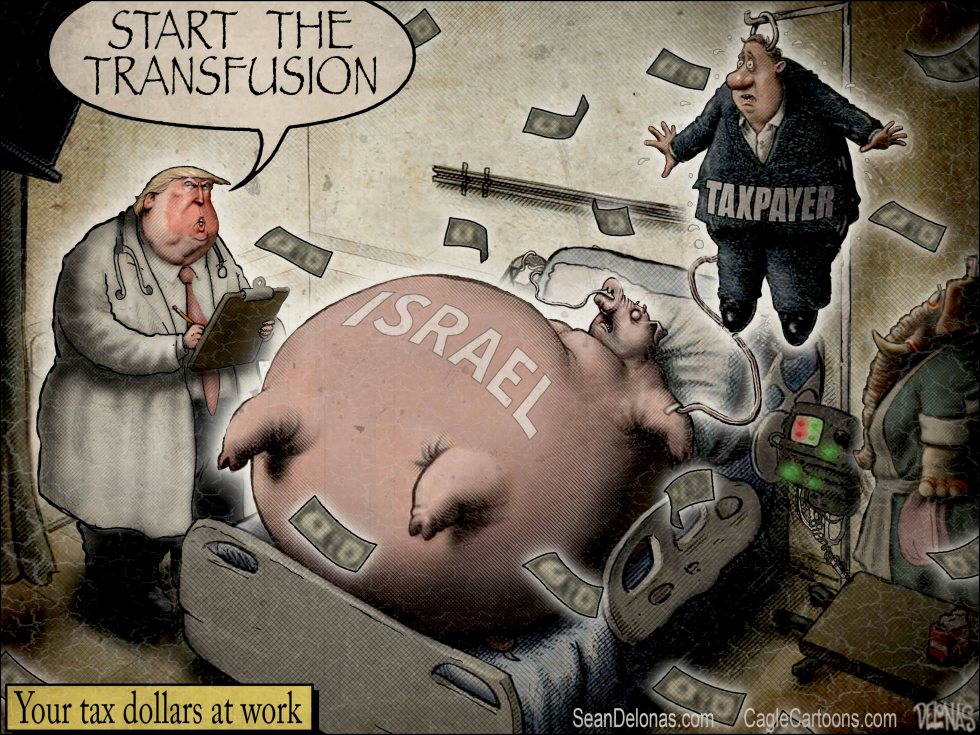
The Trump administration has directed additional US taxpayer resources toward Israel amid ongoing regional tensions. The move continues long-standing American support for the ally but draws fresh scrutiny over scale and priorities. Critics argue the assistance burdens domestic budgets without sufficient oversight. The piece portrays the transfer as an unsustainable extraction from American contributors to sustain a dependent recipient.
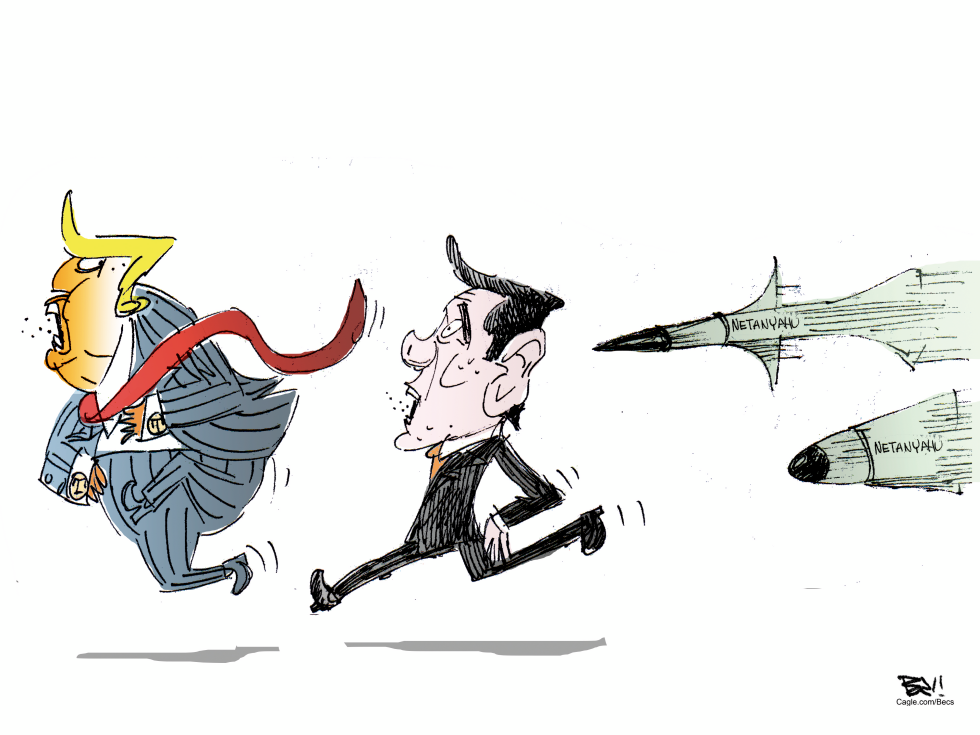
Donald Trump and Benjamin Netanyahu appear under pursuit in a scene tied to ongoing tensions in U.S.-Israel relations and regional security decisions. The image responds to the pattern of policy choices by both leaders that have drawn domestic and international criticism. It frames those choices as returning to affect the two men directly.
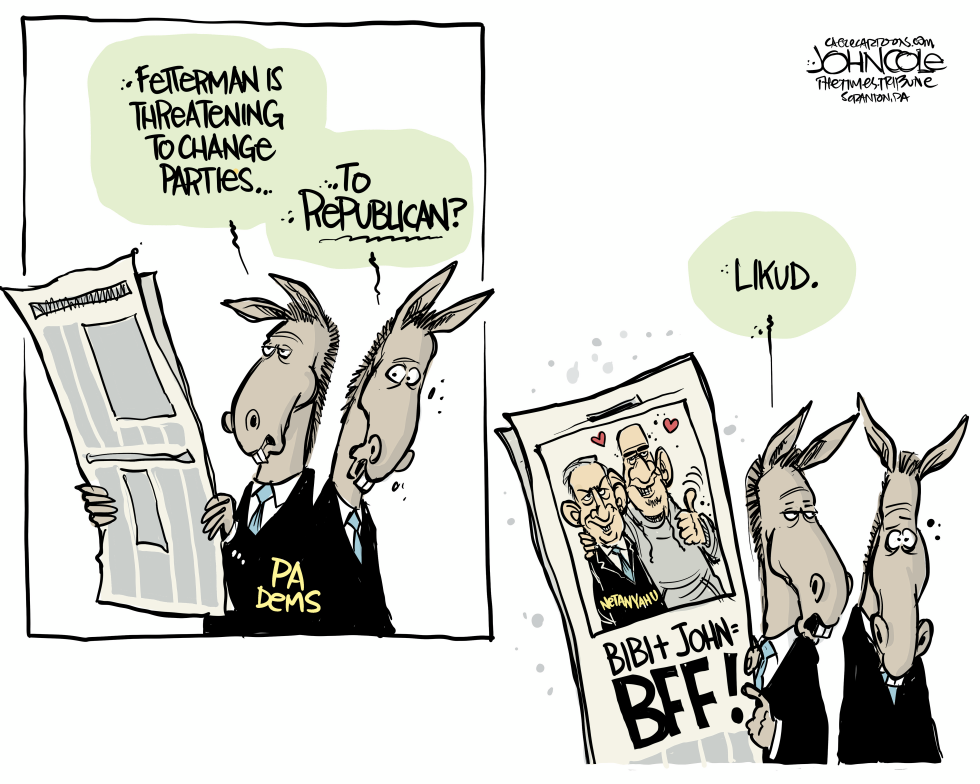
Senator John Fetterman has signaled a possible party switch that has Pennsylvania Democrats scrambling. Speculation centered on a Republican move until the senator's close ties to Israeli Prime Minister Benjamin Netanyahu and the Likud party surfaced instead. The development highlights ongoing tensions within the Democratic coalition over foreign policy alignments and personal political trajectories.
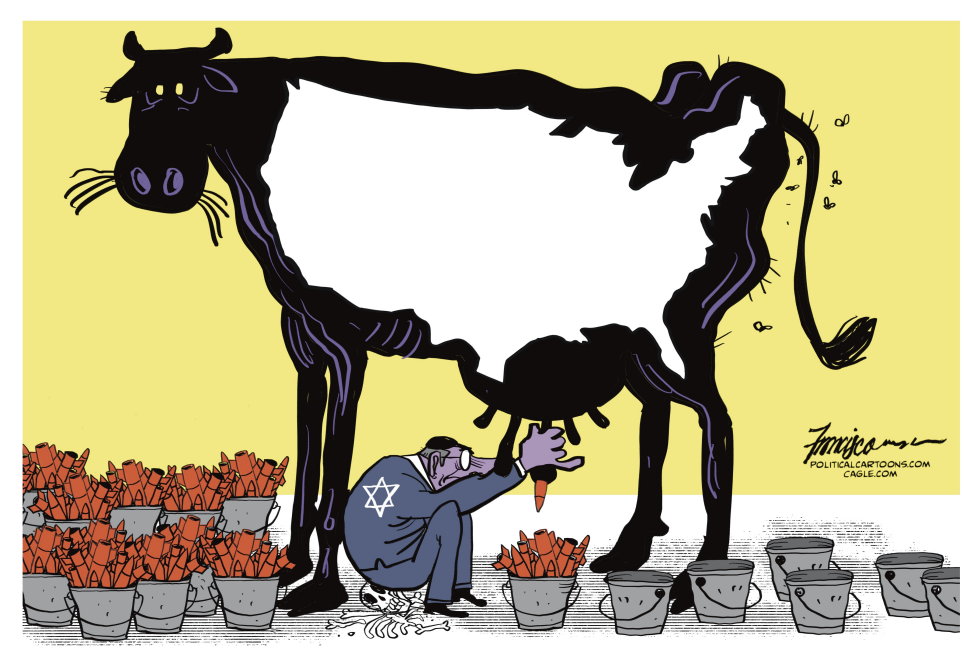
A political cartoon depicts an emaciated cow bearing the Star of David being approached by a suited figure also marked with the symbol, who offers a carrot instead of drawing milk into numerous empty buckets. The image responds to ongoing debates over Israel's economic and diplomatic position amid regional pressures and internal challenges. The editorial position frames the situation as one of depletion without adequate support or results, highlighting futility in current approaches.
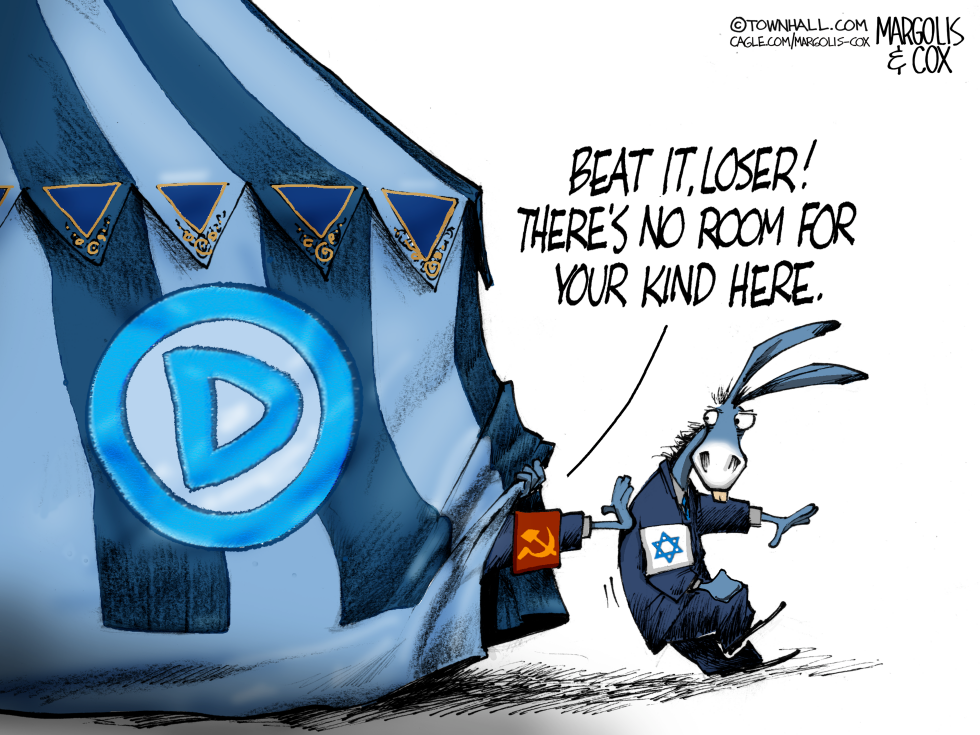
The Democratic Party's big tent faces internal pressure over its stance on Israel and ideological extremes as the traditional donkey mascot is shown being expelled. The cartoon highlights tensions between inclusivity claims and rejection of certain viewpoints. It argues the party is narrowing its base by excluding elements tied to both pro-Israel positions and communism.
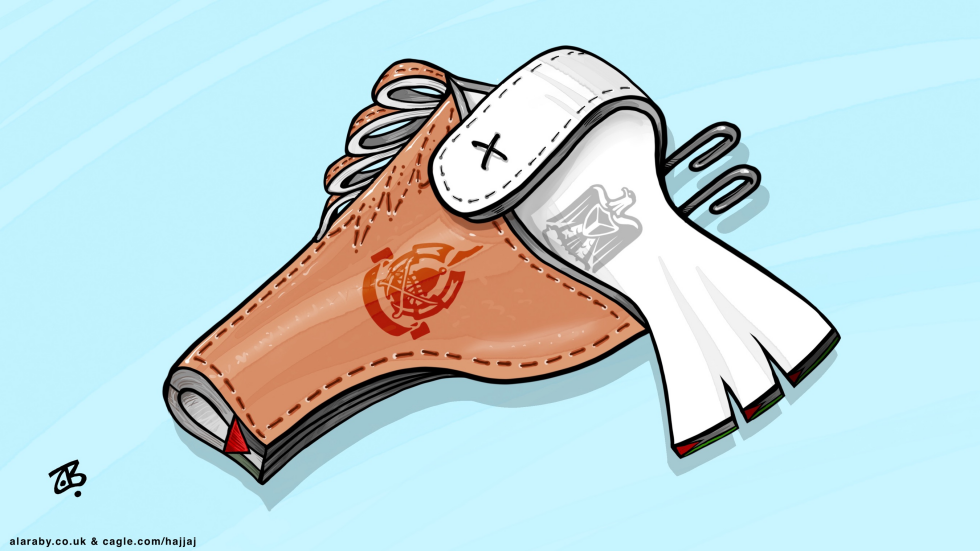
A holster containing a white gloved hand with a cross has surfaced in regional commentary. The image responds to persistent Israel-related security dynamics in the Middle East, where armed posture and symbolic gestures continue to shape public discourse. The piece frames the holster as a container for controlled yet visible force.
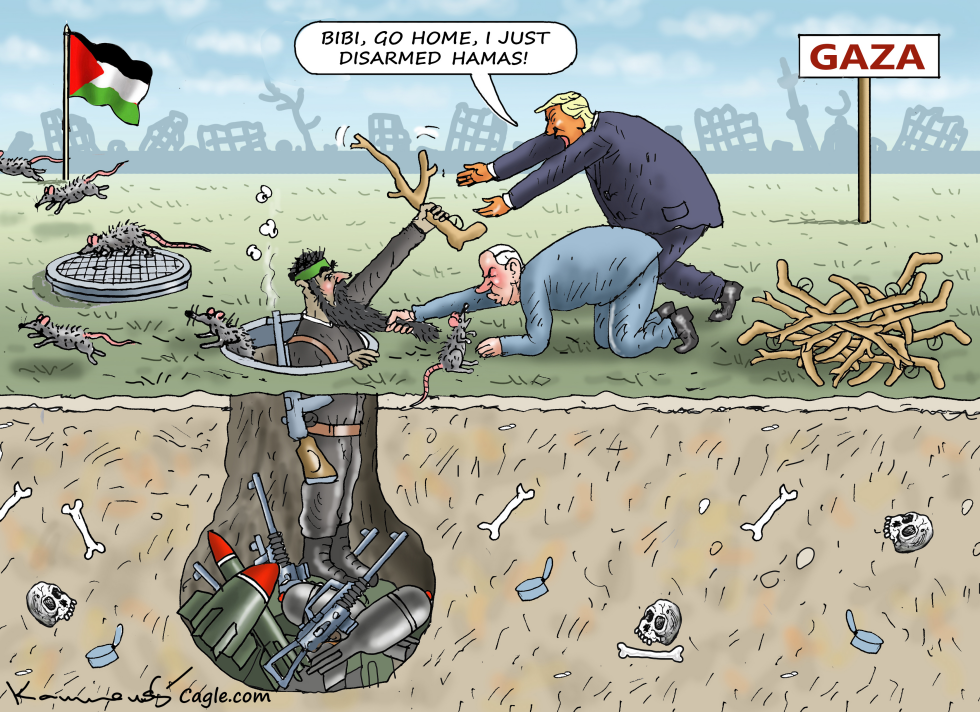
Donald Trump publicly urged Benjamin Netanyahu to leave Gaza, asserting that Hamas had been disarmed, while Joe Biden assisted in efforts to clear remaining tunnel networks. The statement came amid ongoing operations against Hamas infrastructure in the territory. The piece portrays the U.S. leaders as directing the Israeli prime minister's withdrawal from the conflict zone.