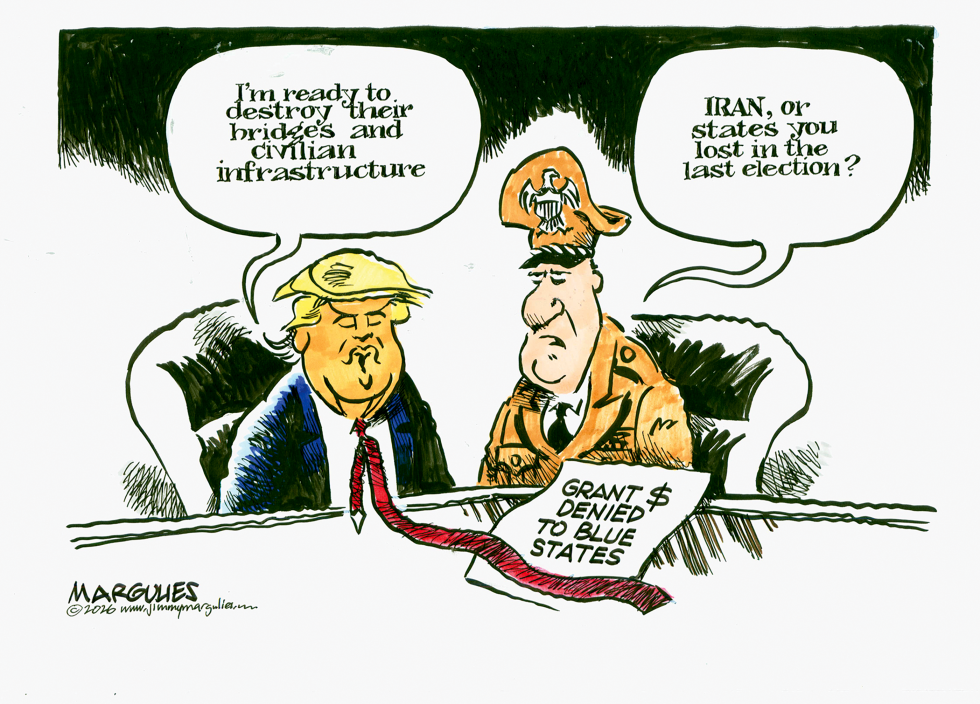
On July 28 2026 President Trump faces criticism for denying federal grants to states that voted against him in the prior election. The move raises questions about using infrastructure funding as political leverage. The cartoon portrays this as interchangeable with threats against Iran.
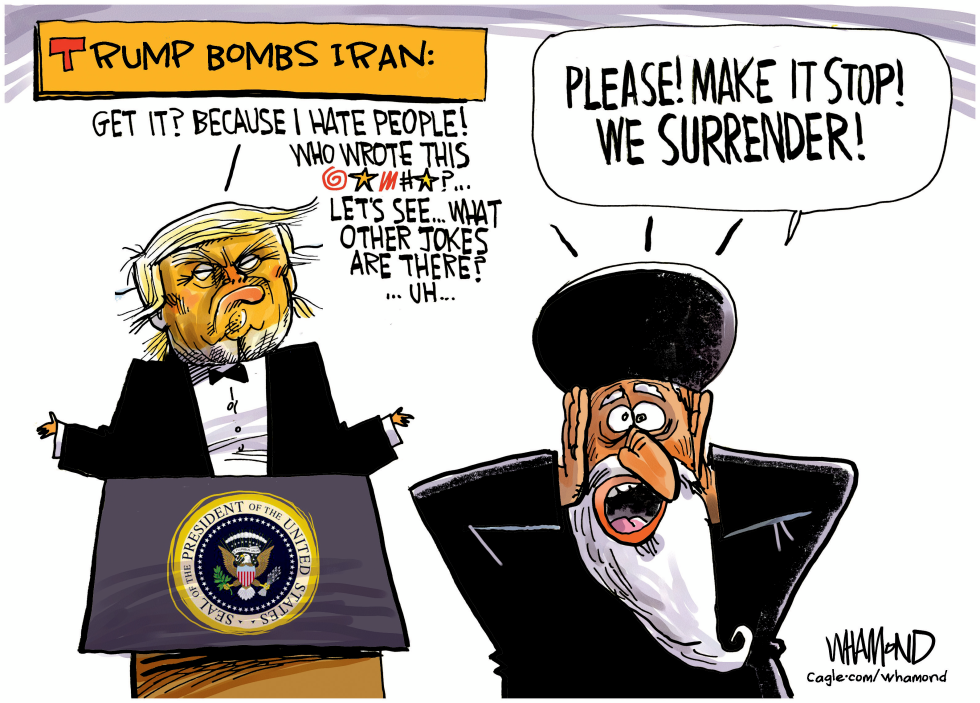
President Trump ordered strikes on Iran in late July 2026, prompting an immediate public plea for surrender from Iranian leadership. The action escalates tensions in the Middle East and raises questions about U.S. military objectives. The editorial takes the position that the strikes reflect personal animus rather than strategic necessity and mocks the president's framing of the operation.
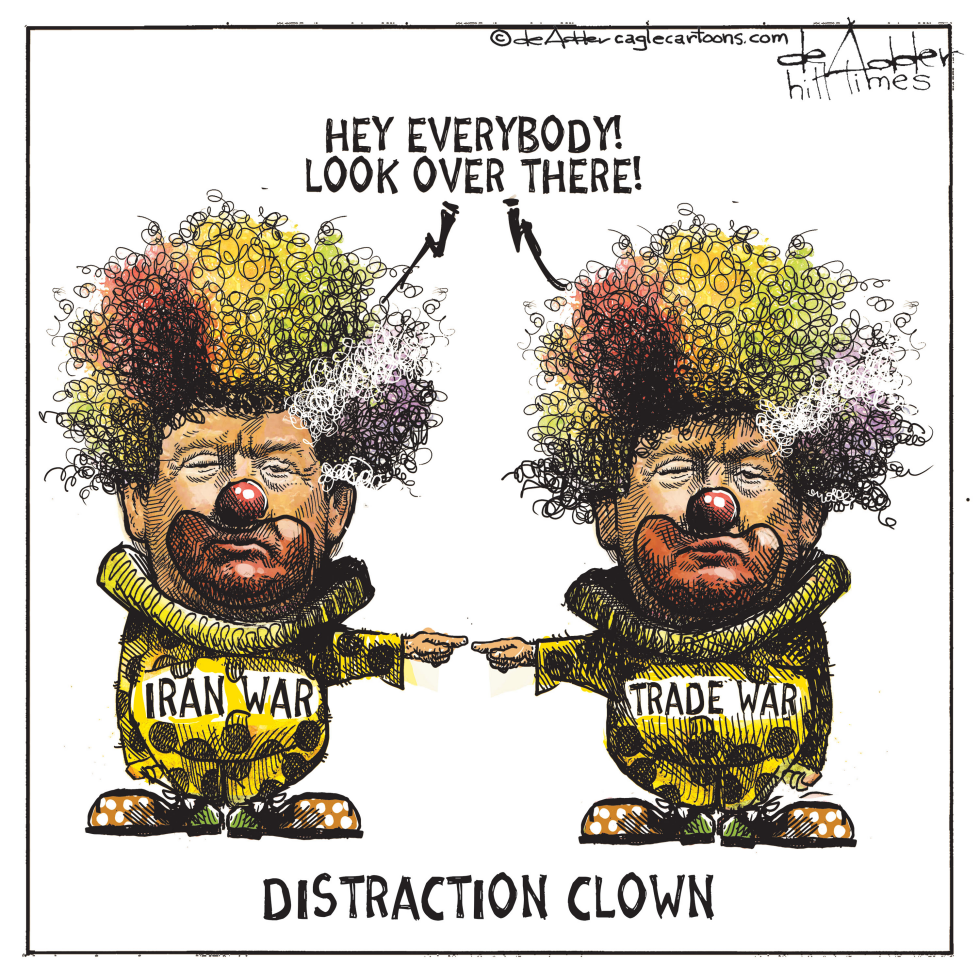
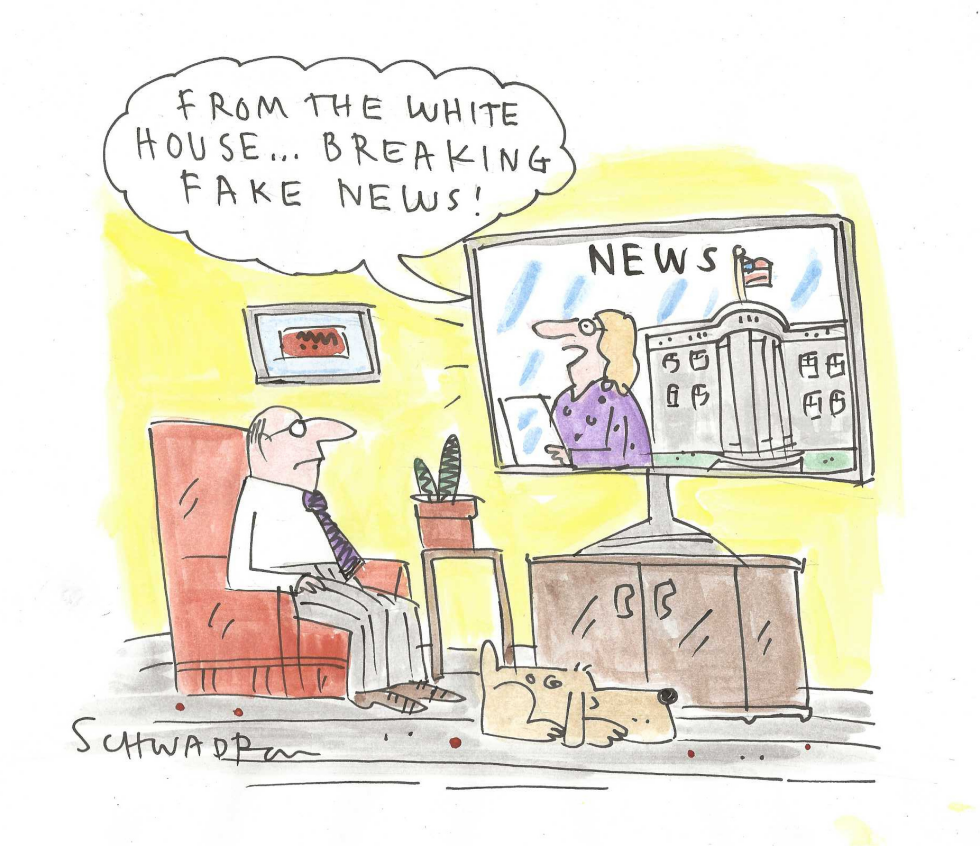
Public attention is being directed toward simultaneous Iran and trade conflicts as potential diversions from other issues. The editorial depicts the two crises as interchangeable distractions promoted by the same source. It argues that leaders are using these flashpoints to shift focus rather than address underlying problems.
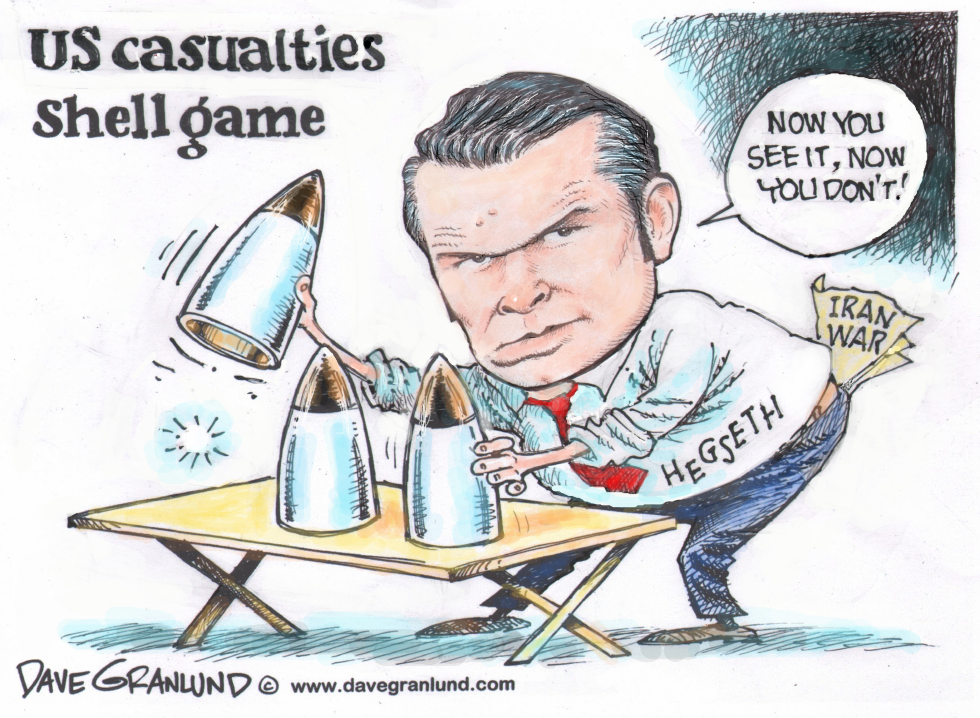
The cartoon shows Defense Secretary Pete Hegseth performing a shell game with three large missile casings on a folding table. One casing is lifted to reveal nothing underneath while a speech bubble declares the classic misdirection line. A paper labeled Iran War protrudes from his pocket. The title references US casualties. Published amid reports of American losses in Middle East strikes, the image suggests official efforts to downplay or conceal the human cost of the conflict through selective presentation of information.
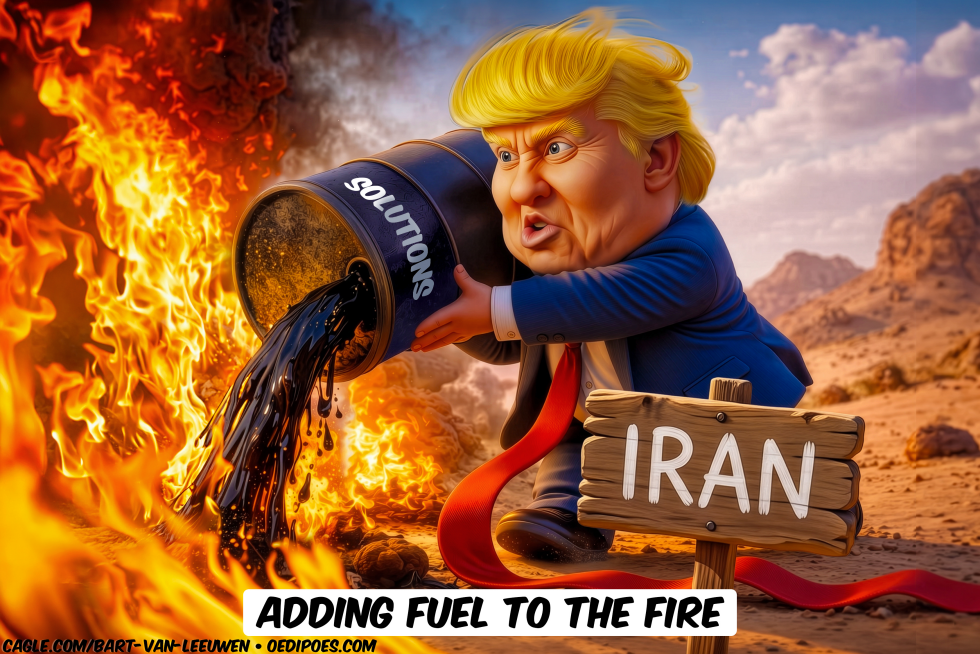
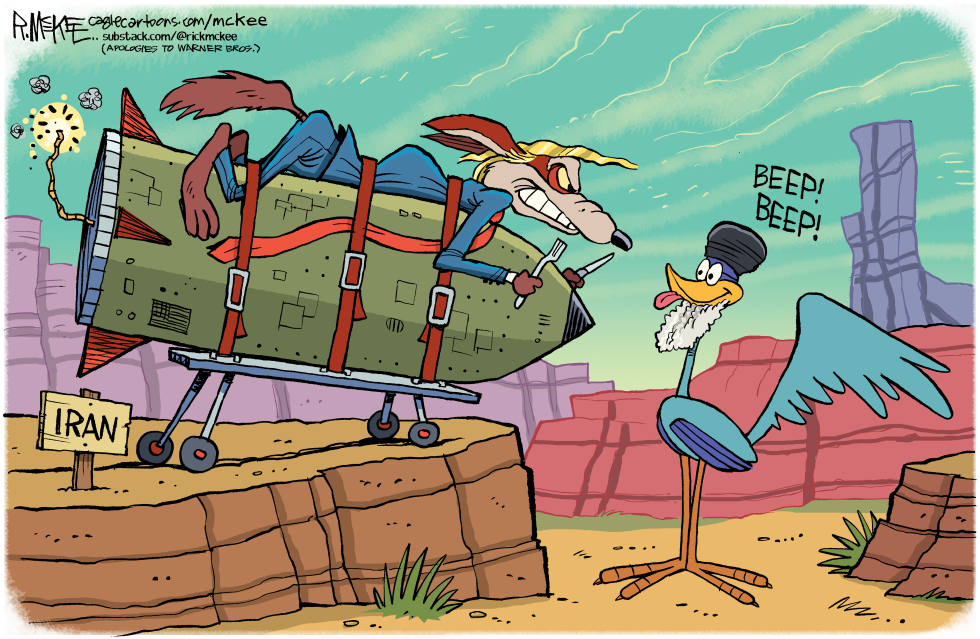
Donald Trump has renewed pressure on Iran through statements and policy signals in recent weeks. The moves come amid ongoing nuclear concerns and regional instability. The piece argues that such aggressive posturing risks backfiring in ways similar to past miscalculations.
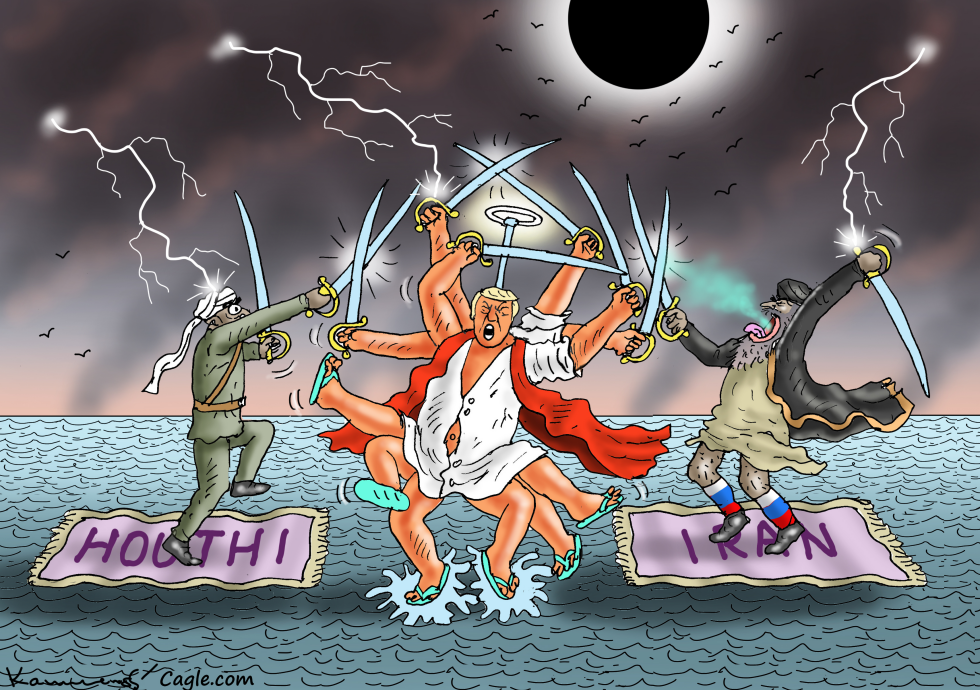
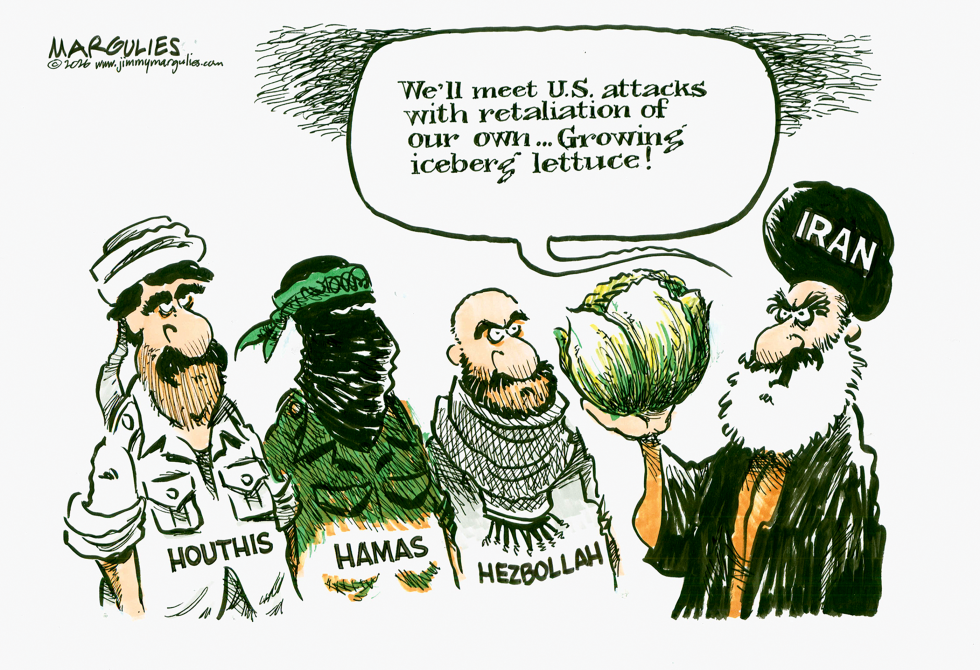
Iran-backed groups including the Houthis, Hamas and Hezbollah face continued U.S. military pressure in the Middle East. Their leadership responds by announcing plans to grow iceberg lettuce as retaliation. The development underscores the limited conventional options available to these proxies while highlighting broader tensions between Iran and the United States. The piece presents the announcement as an admission of weakness rather than a credible threat.
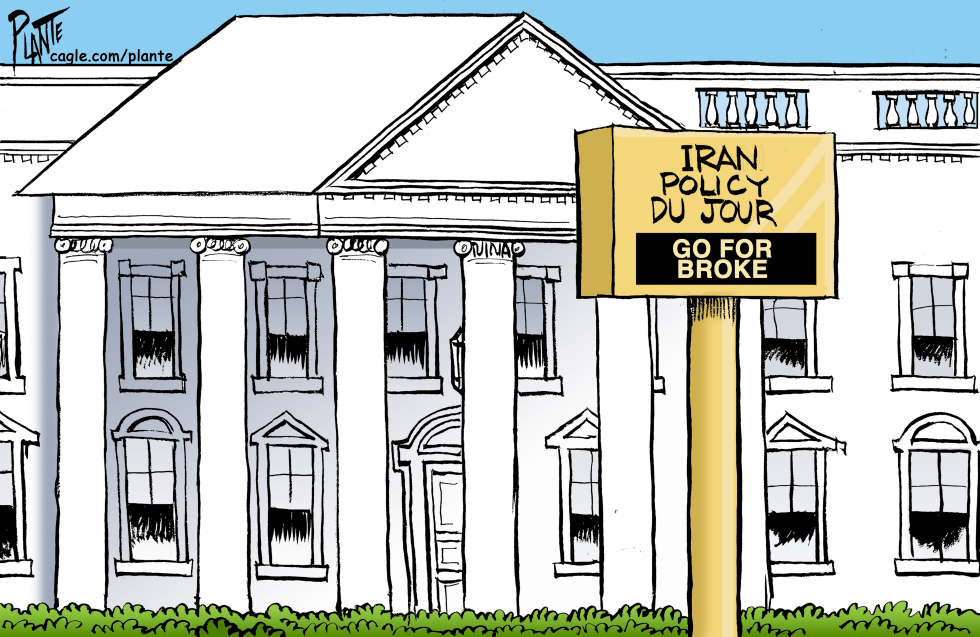
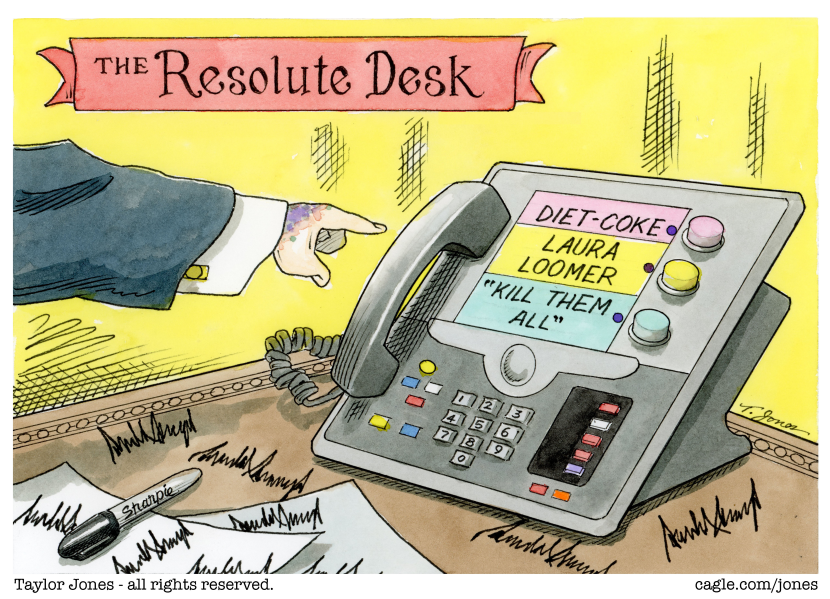
The White House has signaled a more aggressive posture toward Iran through public messaging that emphasizes risk-taking. The move comes amid persistent tensions over nuclear issues and regional influence. The editorial takes the position that such an approach lacks consistency and invites unnecessary escalation.
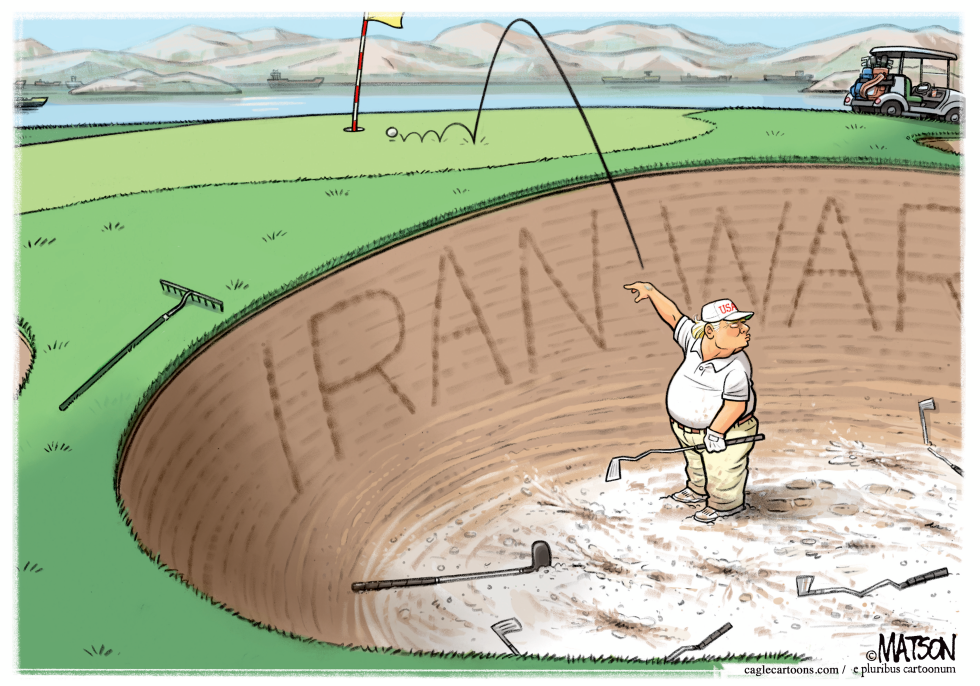
Tensions in the Strait of Hormuz have escalated with increased naval traffic and warnings of potential conflict involving Iran. President Trump, depicted golfing in a sand trap labeled Iran War, faces questions about his administration's handling of the crisis. The situation matters because any disruption to oil shipping lanes could spike global energy prices and draw the United States deeper into regional hostilities. The piece portrays the president as treating a serious foreign policy challenge like a casual round of golf, suggesting misplaced priorities during a period of heightened risk.
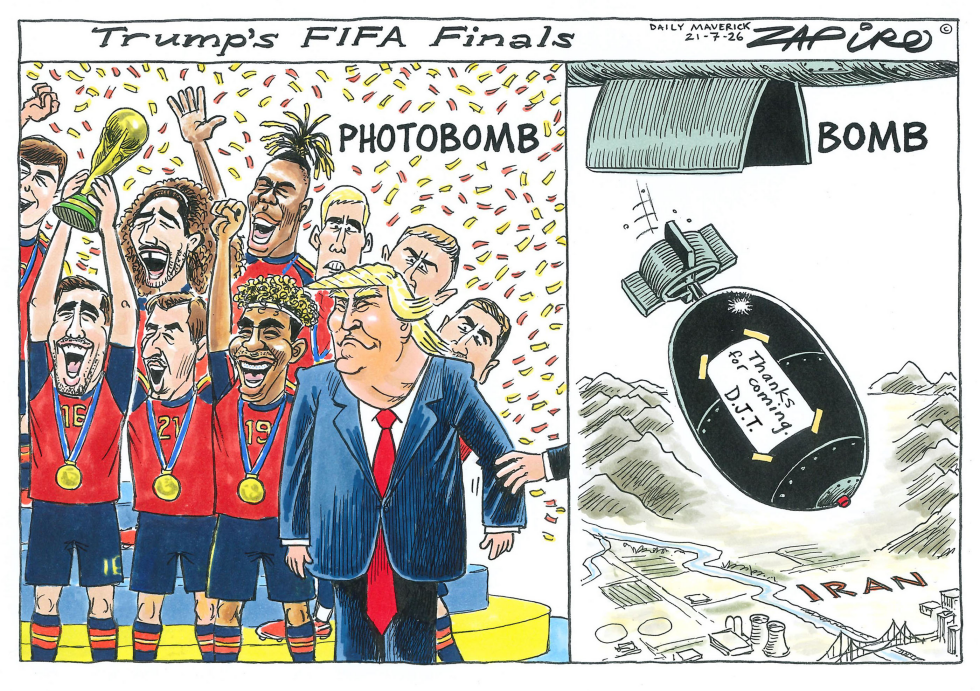
Donald Trump appears in a split-panel scene juxtaposing a soccer victory celebration against a missile strike on Iran. The image responds to ongoing tensions between the United States and Iran during the summer of 2026, where military posturing and personal political theater intersect. The editorial position frames the juxtaposition as evidence of reckless self-promotion overriding substantive foreign policy decisions.