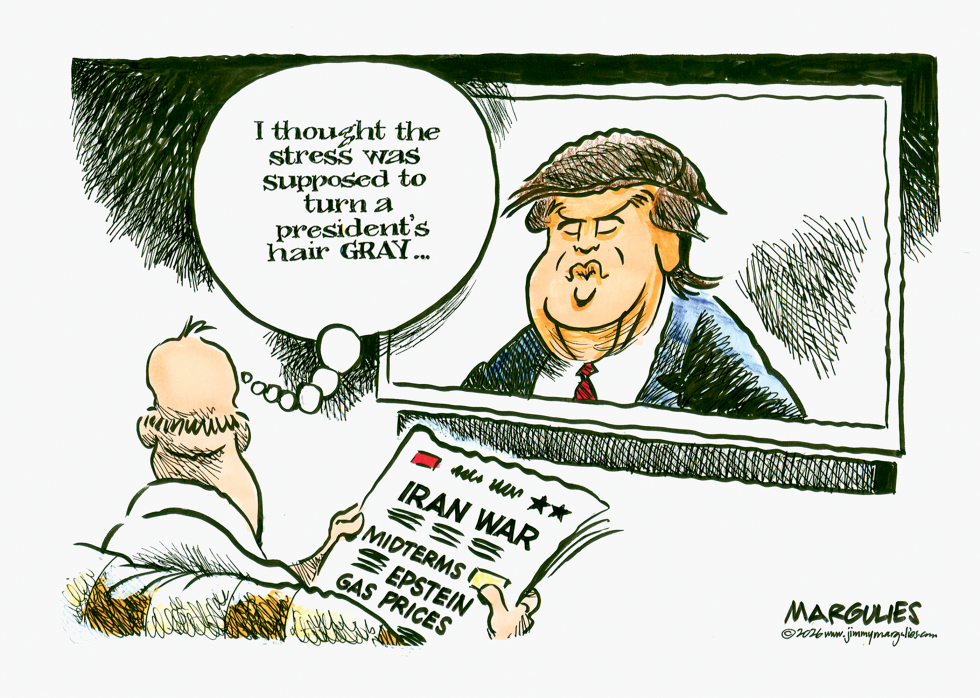
President Donald Trump confronts an Iran war, midterm election pressures, Epstein-related revelations and rising gas prices in September 2026. These overlapping challenges test the administration's capacity to manage foreign conflict and domestic economic strain simultaneously. The cartoon argues that the expected physical toll of such stress on the president has not materialized in the anticipated way.
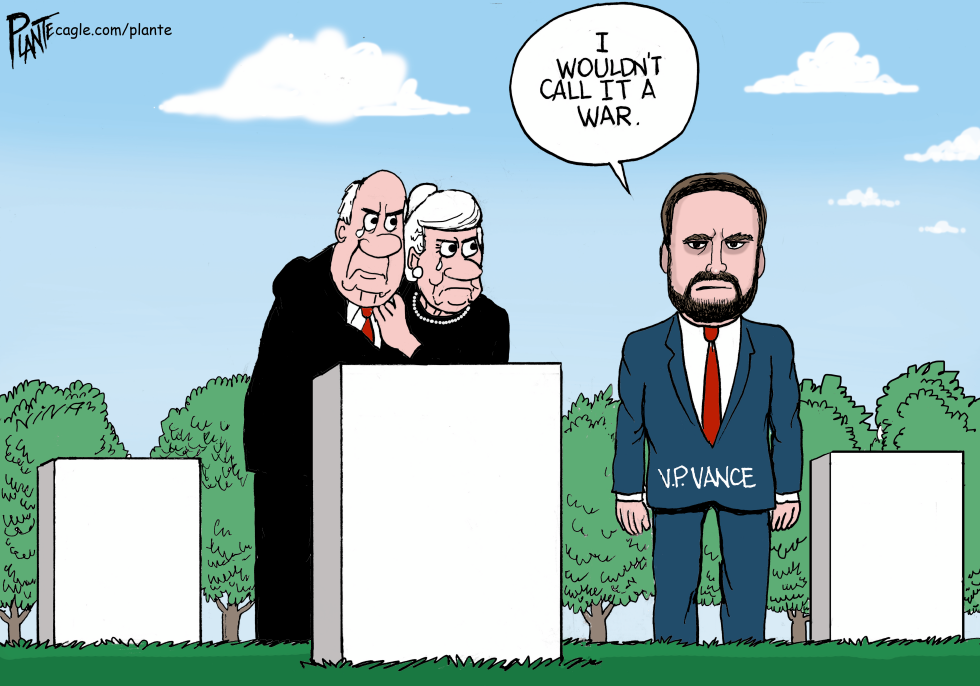
Vice President JD Vance has publicly stated that the United States is not at war with Iran even as reports indicate American casualties in the region. The administration frames operations as limited strikes rather than full conflict. This downplaying occurs amid broader tensions over Iran's nuclear program and regional influence. The cartoon argues that the human cost in the cemetery makes the denial untenable and that the situation qualifies as war.
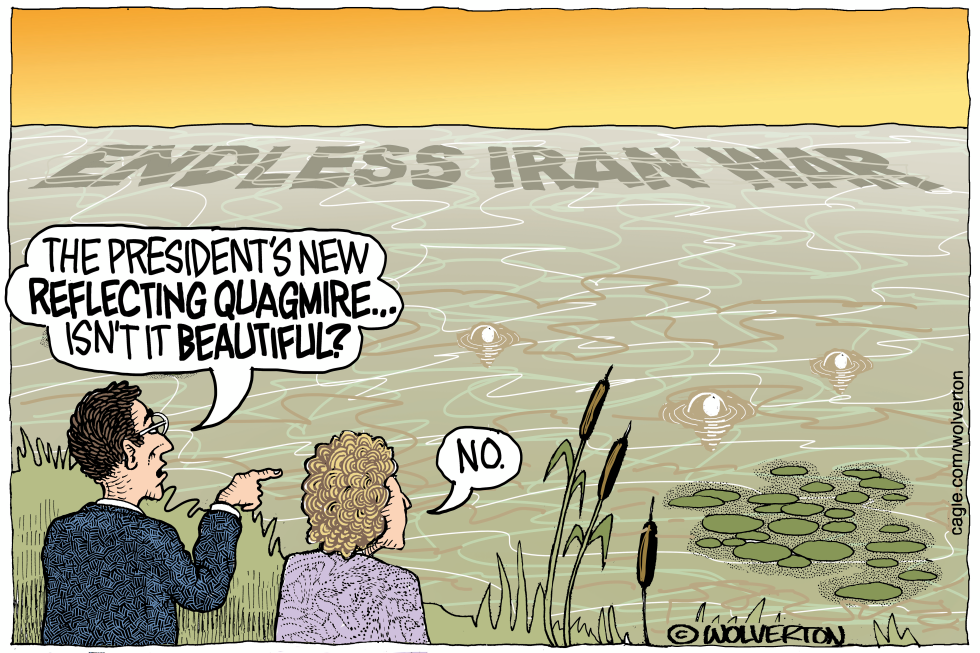
Ongoing debate surrounds U.S. policy toward Iran and the risk of prolonged military involvement in the Middle East. The situation highlights divisions over whether recent actions risk repeating past patterns of extended conflict. The piece argues that such engagement offers little to admire and merits outright rejection.
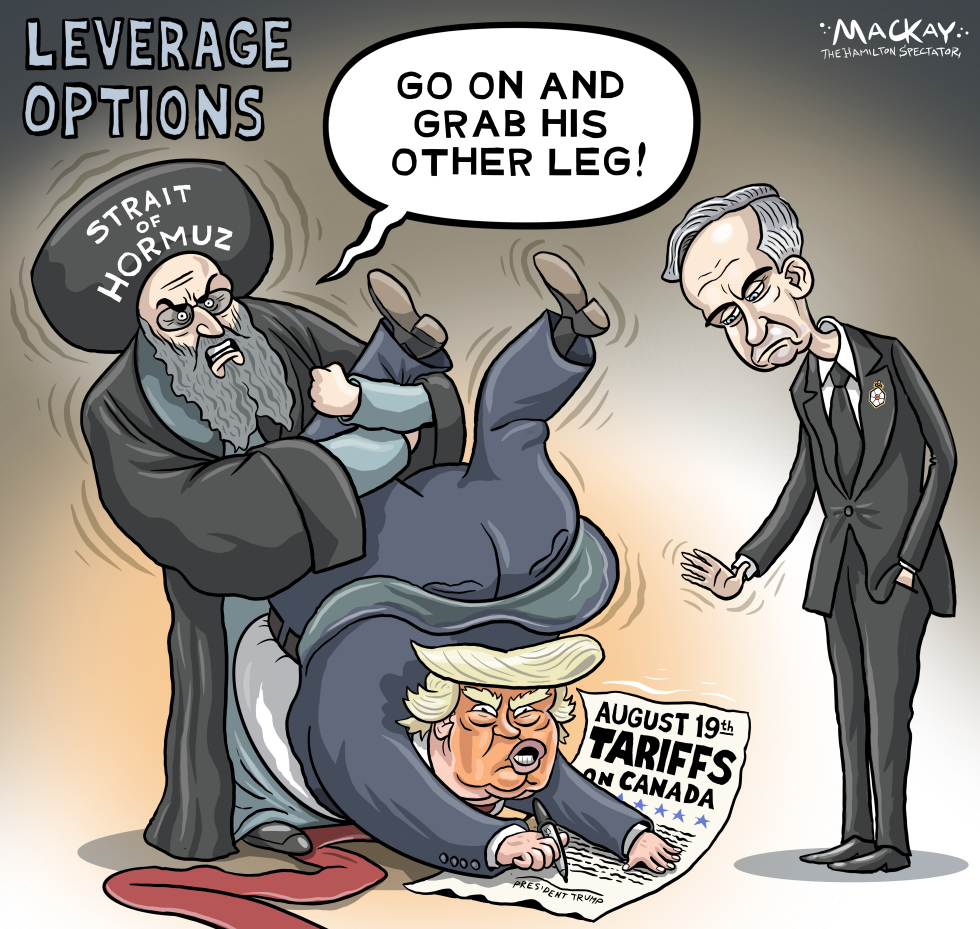
On August 12 2026 President Trump prepares to impose tariffs on Canada amid tensions involving the Strait of Hormuz. The move draws immediate pushback from Iran-linked actors seeking leverage. The piece argues that tariff policy invites risky entanglements that weaken U.S. position.
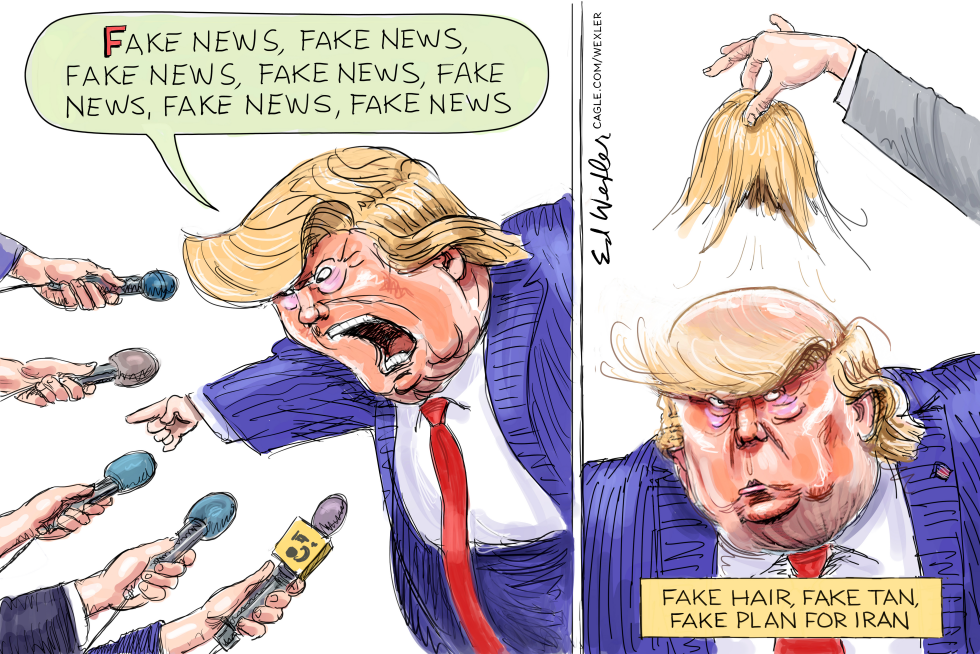
Donald Trump repeatedly labels media coverage as fake news during press encounters. The cartoon responds by questioning the authenticity of his appearance and his approach to Iran policy. It portrays the disconnect between his public statements and underlying realities.
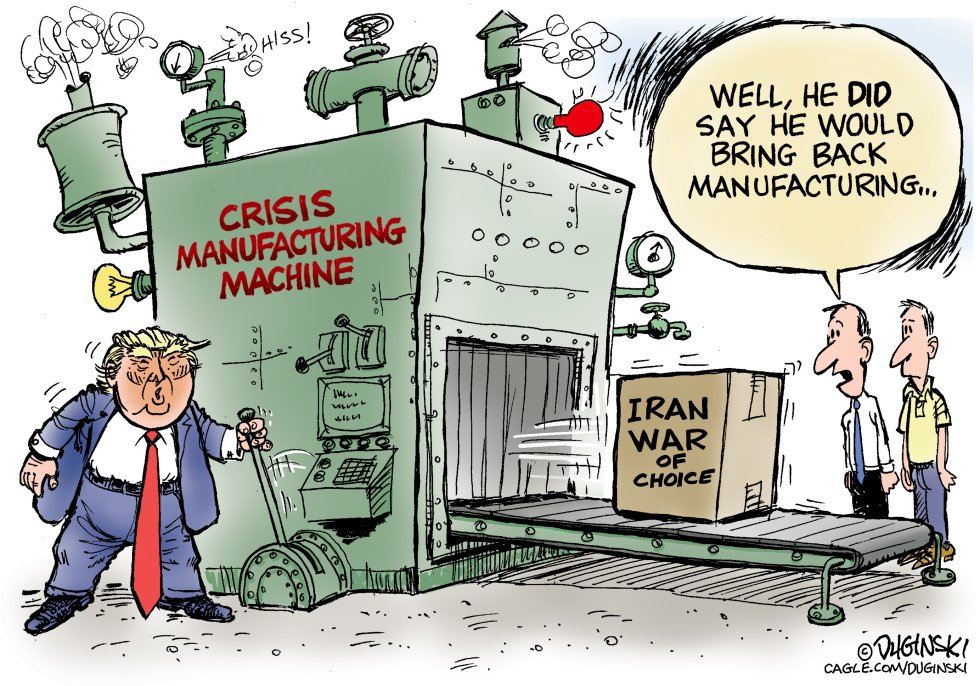
Donald Trump, holding the presidency in 2026, faces renewed scrutiny over foreign policy toward Iran. Recent statements revive campaign pledges to restore domestic manufacturing while tensions with Tehran escalate. The administration\\\'s approach draws criticism for prioritizing confrontation over diplomacy. Observers note the pattern of generating external crises rather than economic gains at home. The cartoon argues that Trump\\\'s actions fulfill a literal version of his manufacturing rhetoric by producing conflict instead of jobs.
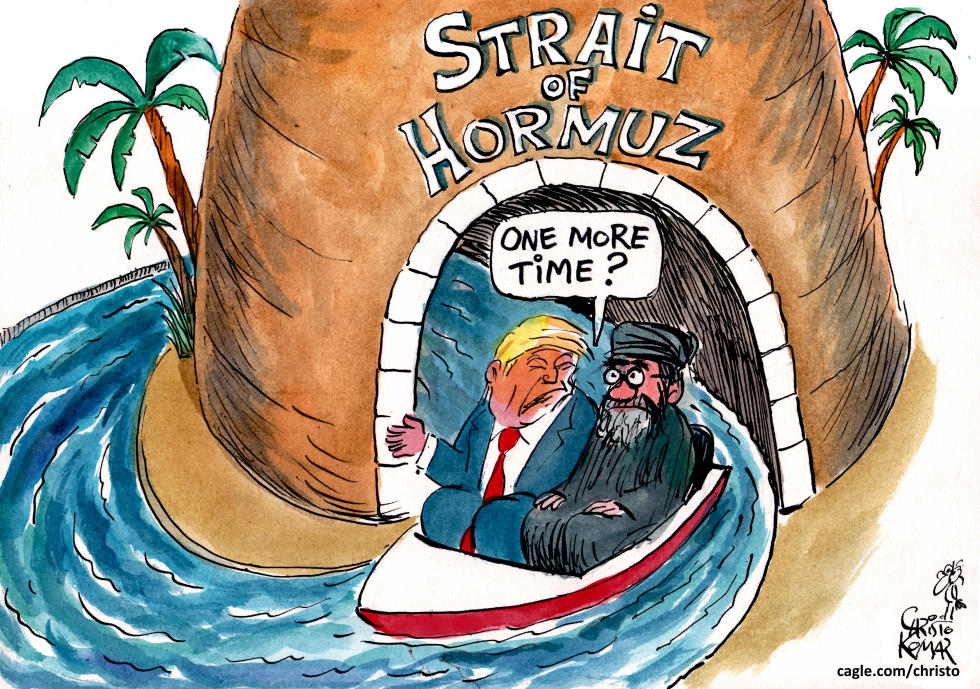
On August 5 2026 renewed friction over shipping lanes in the Strait of Hormuz draws attention as former President Donald Trump appears alongside Iran's Supreme Leader in a symbolic return to the chokepoint. The episode underscores ongoing US-Iran friction over energy exports and naval presence. The piece portrays the pair repeating a risky transit that highlights persistent strategic vulnerabilities in the Persian Gulf.
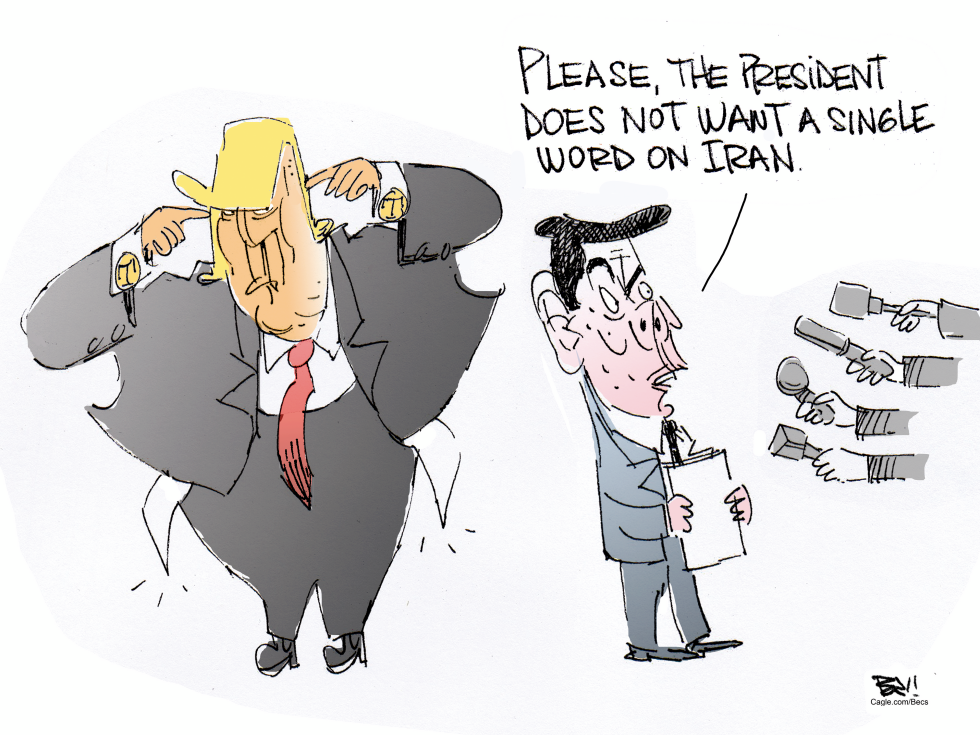
President Trump directed staff to avoid any public discussion of Iran policy. The move drew immediate pushback from reporters seeking clarification on administration plans. The editorial takes the position that the order reflects an effort to avoid accountability on a key foreign policy issue.
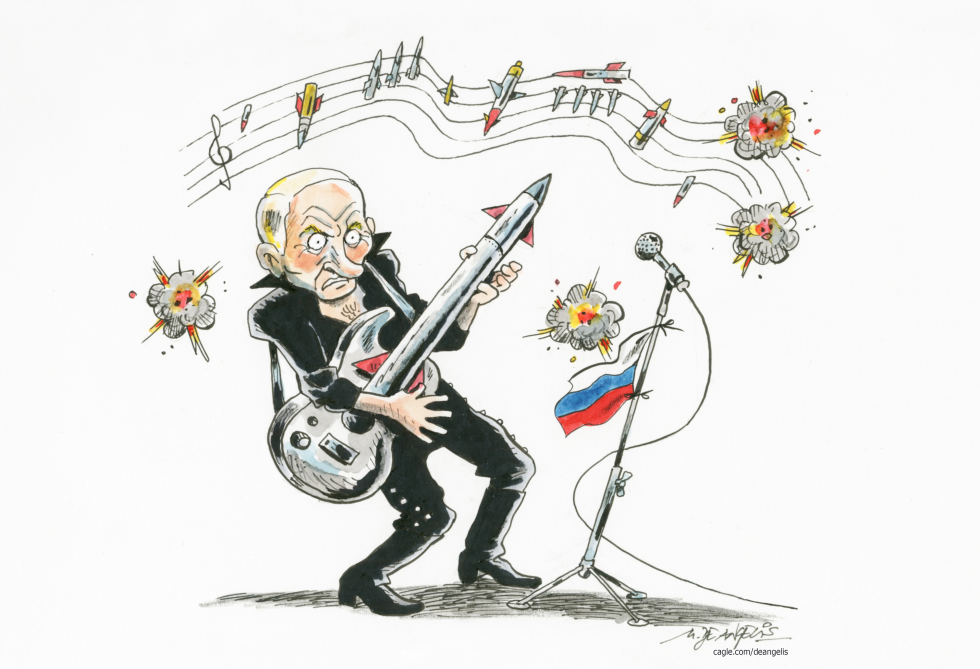
Russian President Vladimir Putin continues directing missile strikes in the Ukraine conflict, maintaining pressure on Kyiv through repeated aerial attacks. The imagery frames this sustained military campaign as a theatrical rock performance. The piece critiques the leader's embrace of destructive weaponry as spectacle rather than strategy.
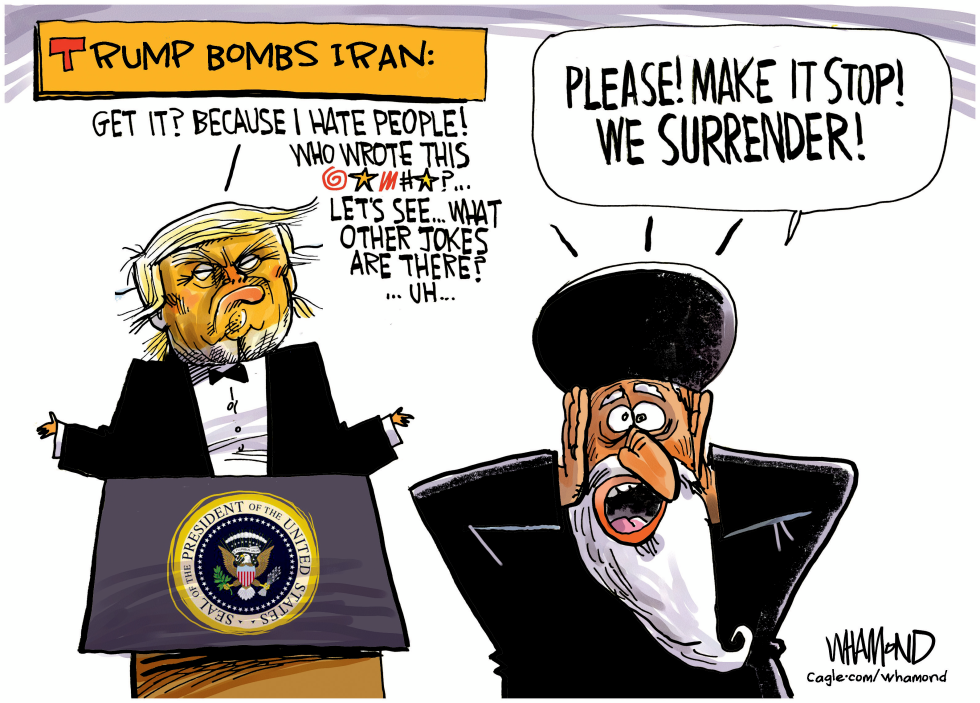
President Trump ordered strikes on Iran in late July 2026, prompting an immediate public plea for surrender from Iranian leadership. The action escalates tensions in the Middle East and raises questions about U.S. military objectives. The editorial takes the position that the strikes reflect personal animus rather than strategic necessity and mocks the president's framing of the operation.
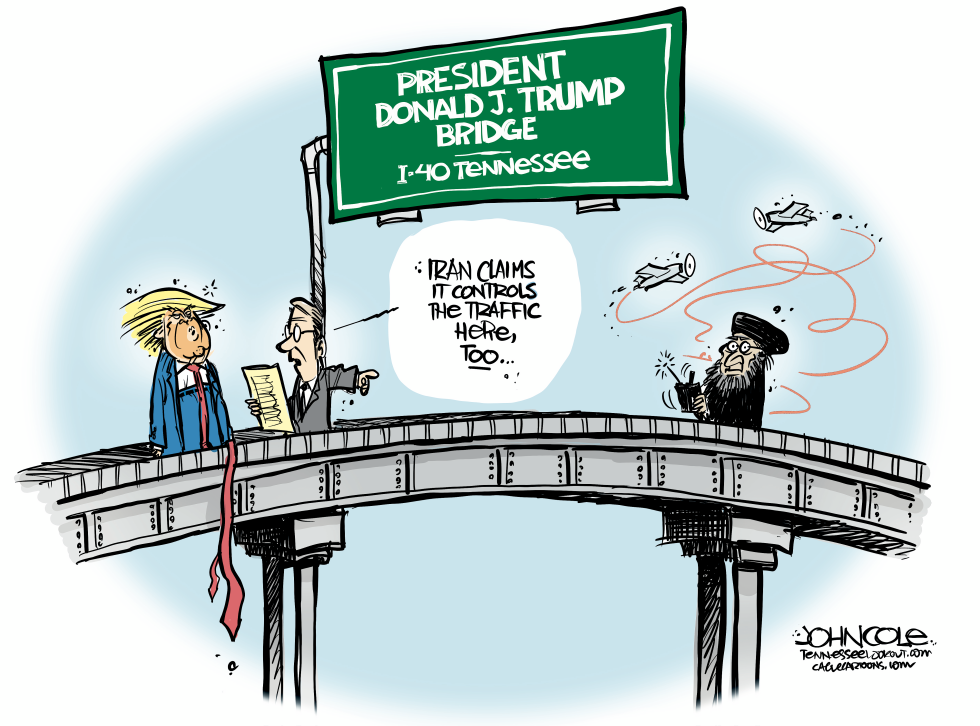
President Donald J. Trump attended the naming of the President Donald J. Trump Bridge on I-40 in Tennessee. The event drew attention when an Iranian figure appeared to claim control over traffic on the span. The development highlights ongoing tensions with Iran over shipping lanes and international routes. The cartoon frames the claim as an extension of Iran's broader pattern of asserting dominance over key passages. It positions the bridge naming as a domestic moment overshadowed by foreign threats.
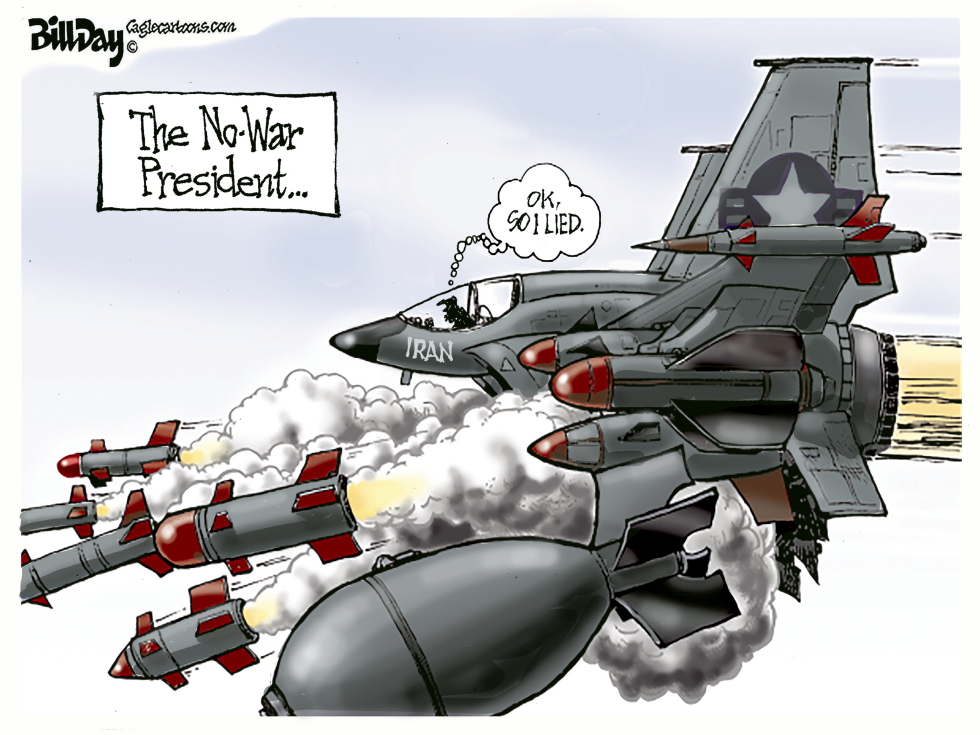
A political cartoon published July 21, 2026, depicts a fighter jet marked Iran launching a barrage of missiles while a speech bubble from the cockpit reads OK, SO I LIED. A sign overhead labels the scene The No-War President. The image responds to recent reports of U.S. military action against Iran that contradict earlier campaign assurances against new conflicts.
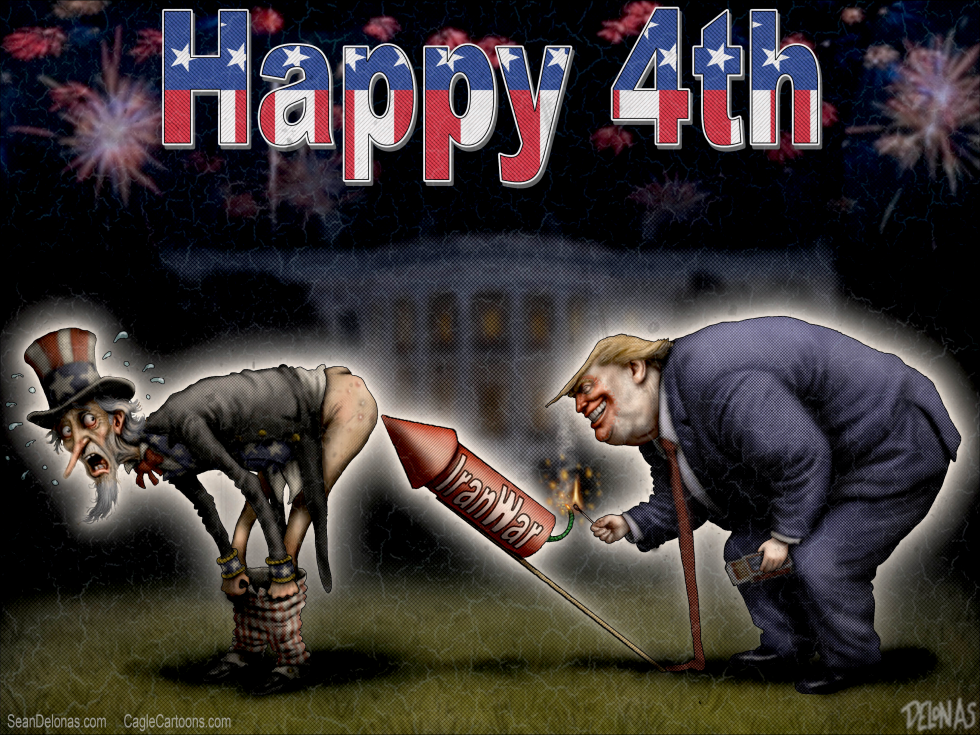
Donald Trump bends to light a large firework labeled Iran War on July 2 2026. The rocket points at a startled Uncle Sam figure in front of the White House. Fireworks burst in the night sky above the lawn. The image ties the ignition directly to the Independence Day setting.
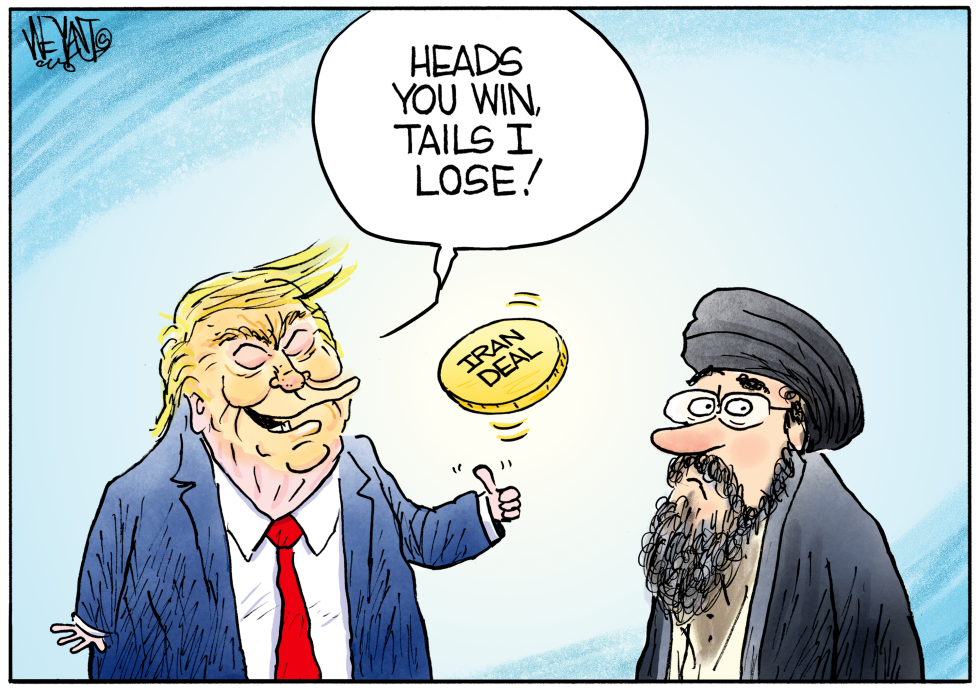
Weyant depicts Donald Trump flipping a coin to determine whether to uphold or abandon the Iran nuclear agreement, satirizing the randomness of his foreign policy decision-making. The coin toss metaphor suggests Trump treats major diplomatic decisions as matters of chance. The cartoon captures diplomatic anxiety about Trump's unpredictability.