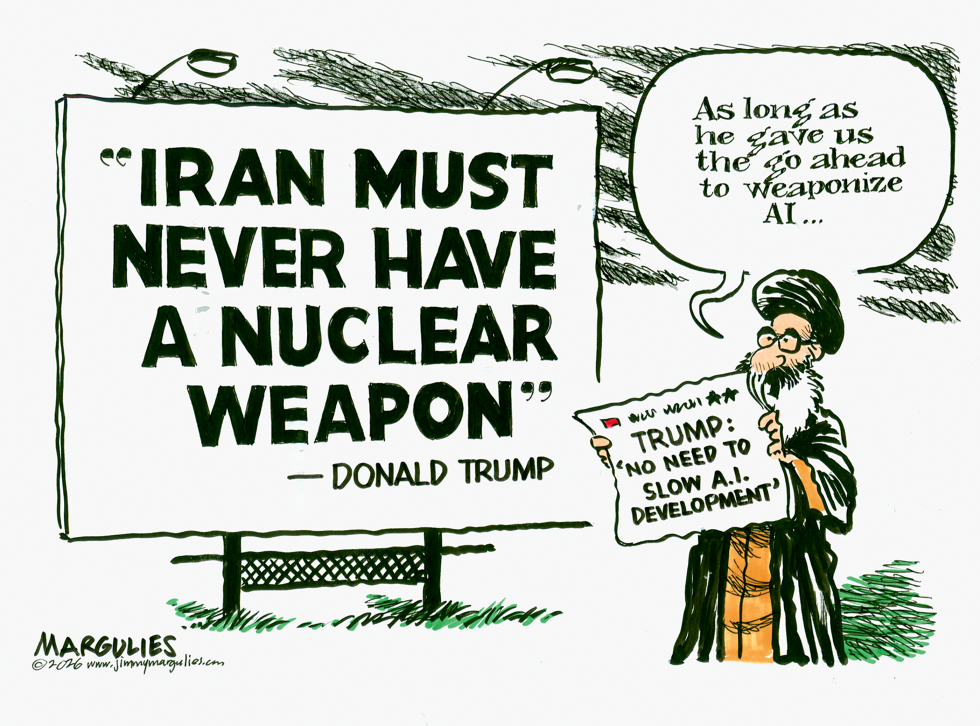
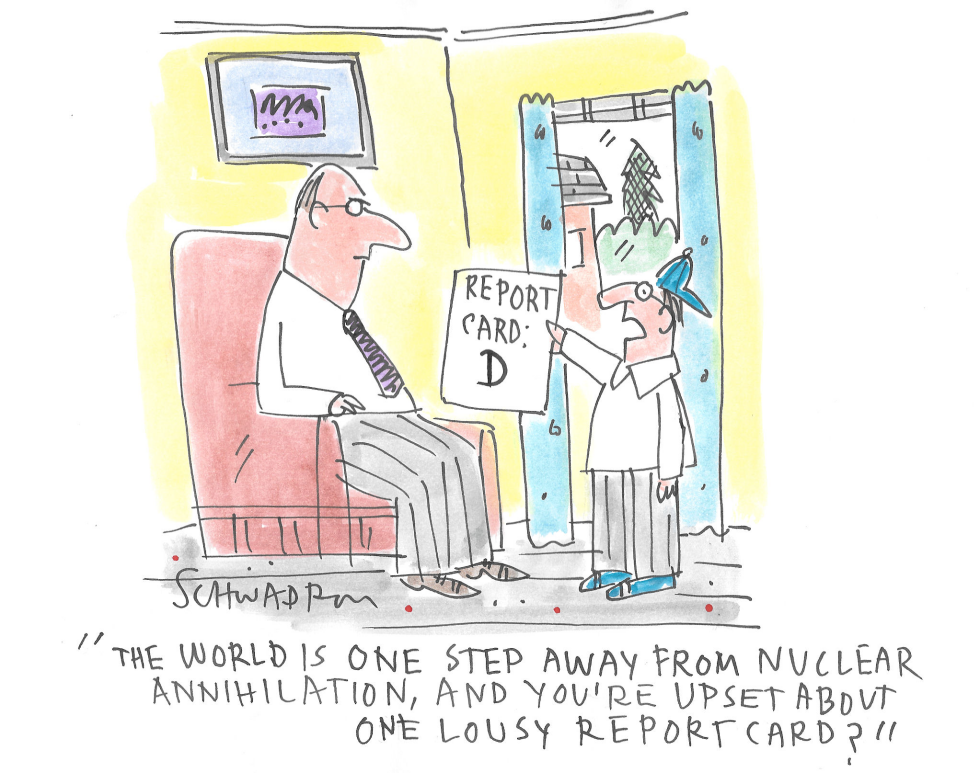
Donald Trump has repeatedly stated that Iran must never obtain a nuclear weapon, a position rooted in long-standing U.S. efforts to prevent nuclear proliferation in the Middle East. At the same time, reports indicate interest in accelerating artificial intelligence development without slowdowns. The cartoon responds to this apparent tension by depicting an Iranian leader conditioning acceptance of the nuclear restriction on permission to pursue AI weaponization. It argues that prioritizing rapid AI advancement risks undermining nonproliferation goals and hands strategic advantages to adversaries.
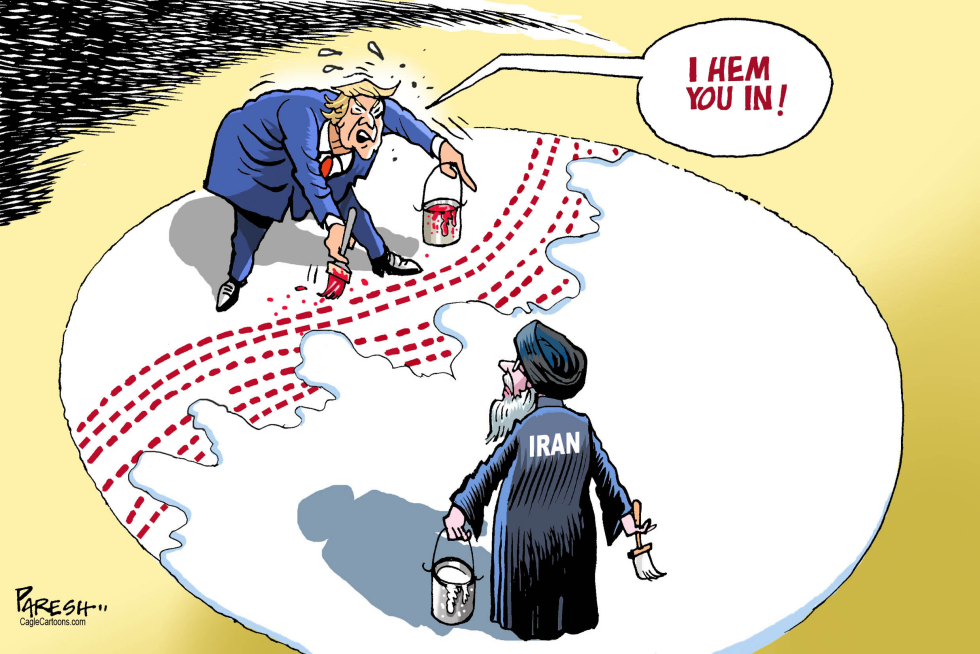
Donald Trump appears on a globe painting red dashed lines near a region labeled Iran. A robed figure marked Iran stands nearby holding a paint bucket. Trump points and declares through a speech bubble that he will hem the country in. The image responds to recent developments in U.S. policy toward Iran as of August 2026. The visual uses the act of painting boundaries to illustrate efforts at containment in the Middle East.
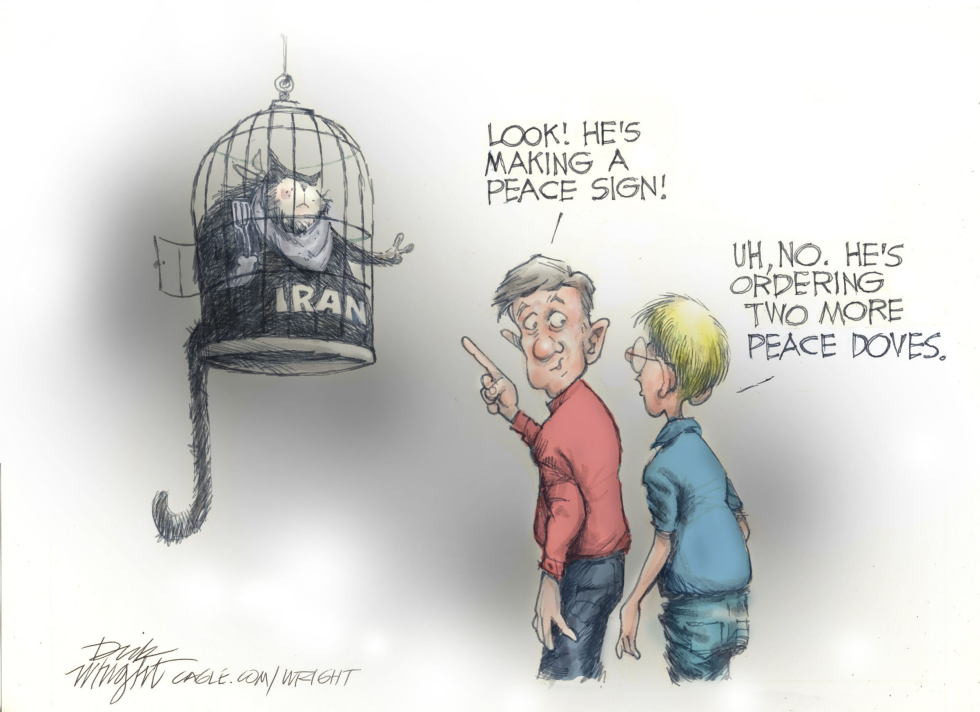
Iran continues to project peaceful intentions while advancing its military capabilities. Recent diplomatic overtures have been met with skepticism from observers who note ongoing weapons development. The piece argues that Iran's gestures are being misinterpreted as peaceful when they signal further aggression.
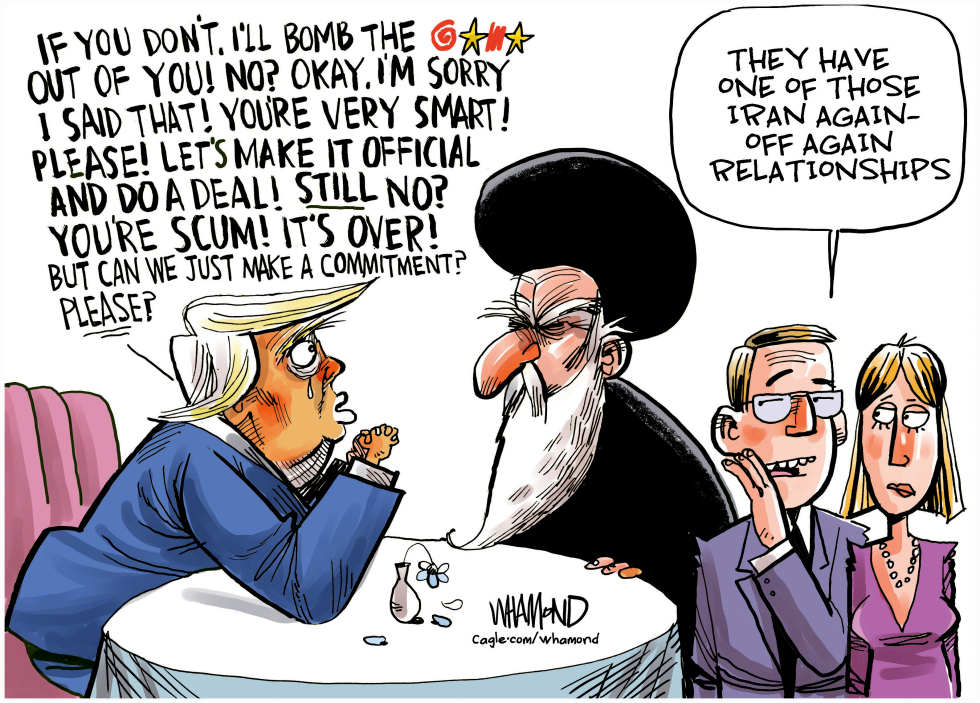
Donald Trump engaged in direct outreach to Iranian Supreme Leader Ayatollah Ali Khamenei amid stalled nuclear talks. The effort mixed ultimatums with appeals for a deal. The cartoon portrays the approach as inconsistent and ineffective.
Donald Trump announced he had called off a major military strike on Iran in favor of a pending nuclear deal. The move drew immediate skepticism from Iranian officials who questioned both the threat and the agreement. The cartoon highlights the disconnect between the announcement and Tehran\'s response.
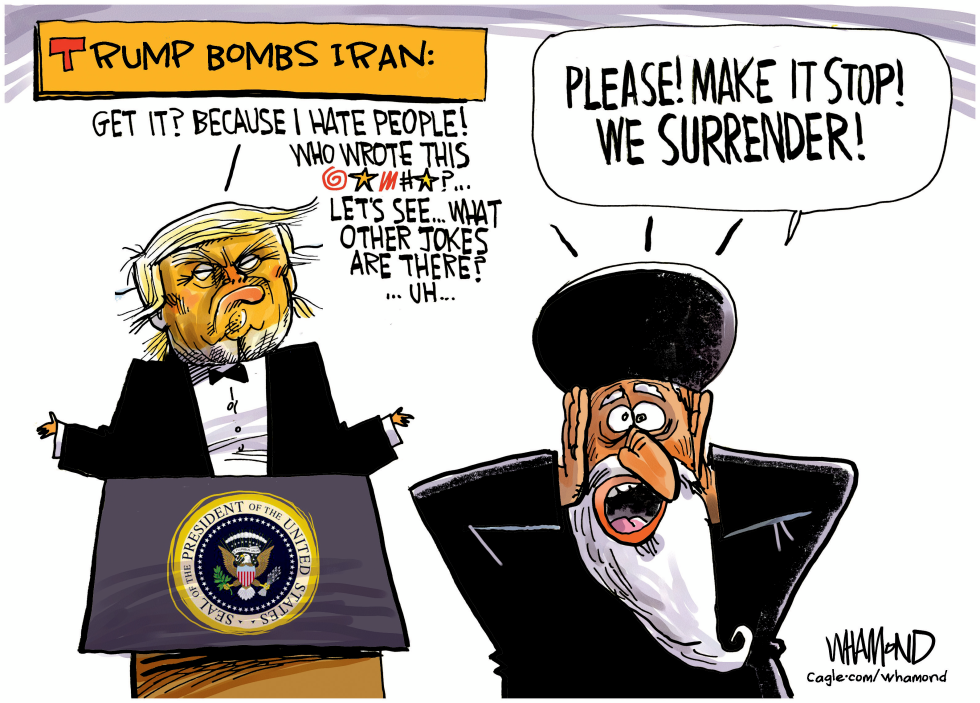
President Trump ordered strikes on Iran in late July 2026, prompting an immediate public plea for surrender from Iranian leadership. The action escalates tensions in the Middle East and raises questions about U.S. military objectives. The editorial takes the position that the strikes reflect personal animus rather than strategic necessity and mocks the president's framing of the operation.
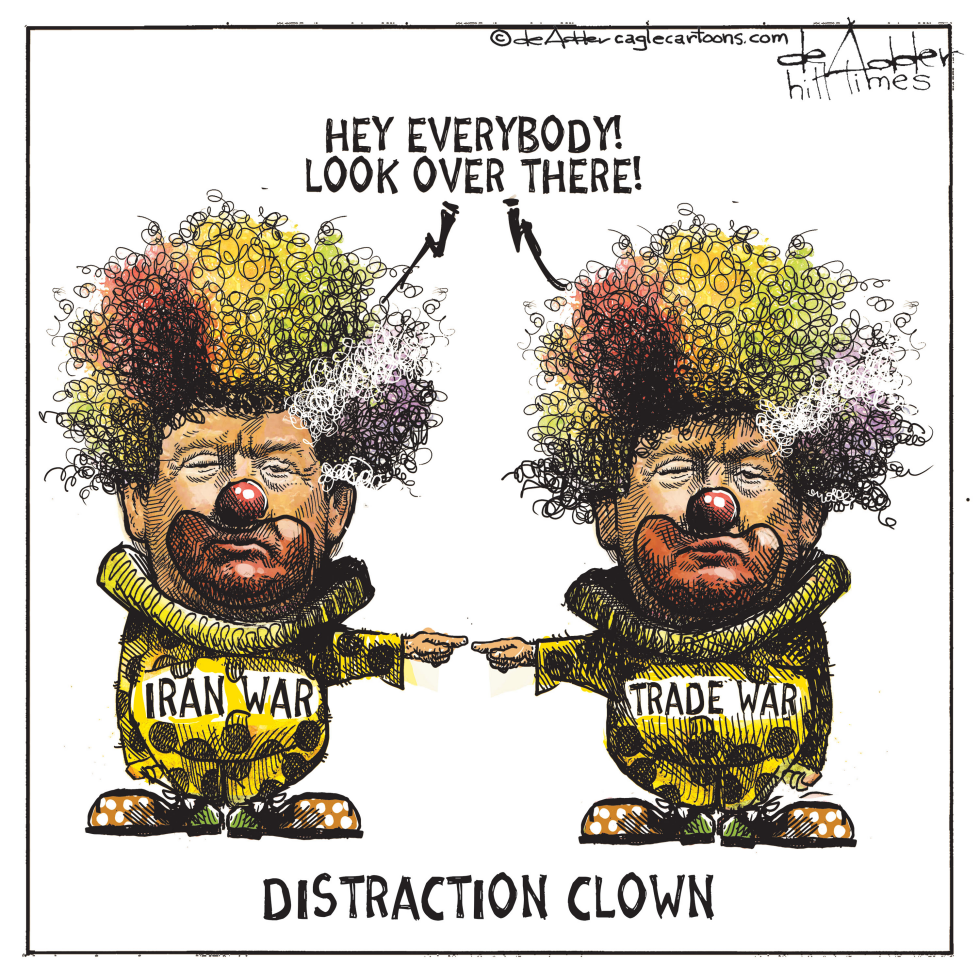
Public attention is being directed toward simultaneous Iran and trade conflicts as potential diversions from other issues. The editorial depicts the two crises as interchangeable distractions promoted by the same source. It argues that leaders are using these flashpoints to shift focus rather than address underlying problems.
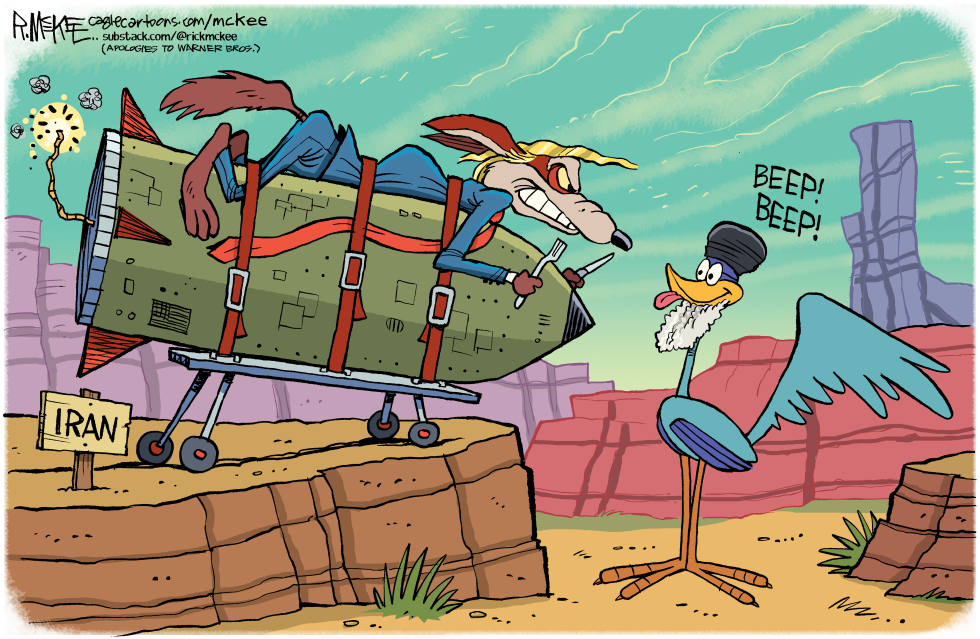
Donald Trump has renewed pressure on Iran through statements and policy signals in recent weeks. The moves come amid ongoing nuclear concerns and regional instability. The piece argues that such aggressive posturing risks backfiring in ways similar to past miscalculations.
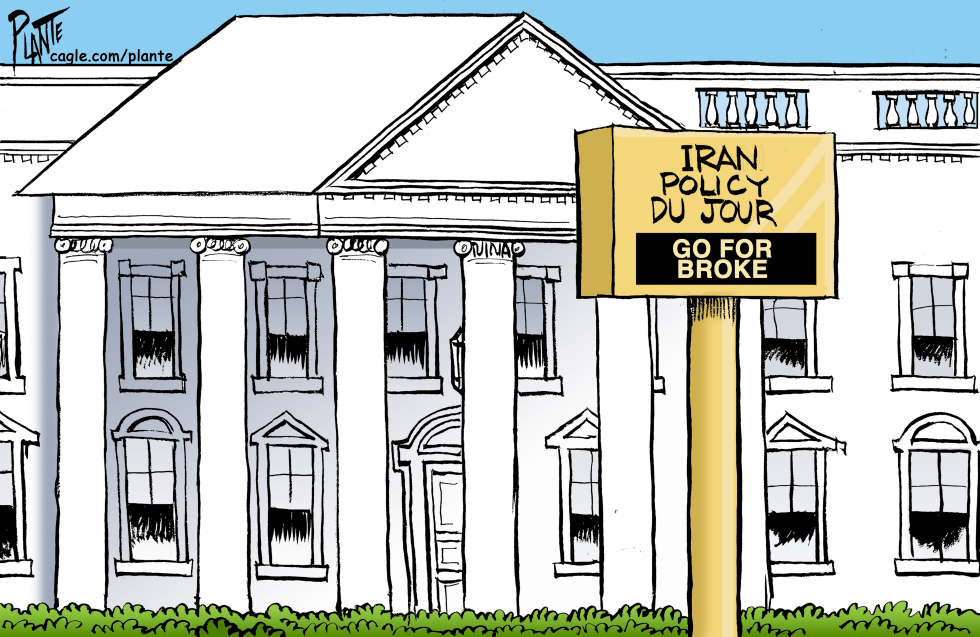
The White House has signaled a more aggressive posture toward Iran through public messaging that emphasizes risk-taking. The move comes amid persistent tensions over nuclear issues and regional influence. The editorial takes the position that such an approach lacks consistency and invites unnecessary escalation.
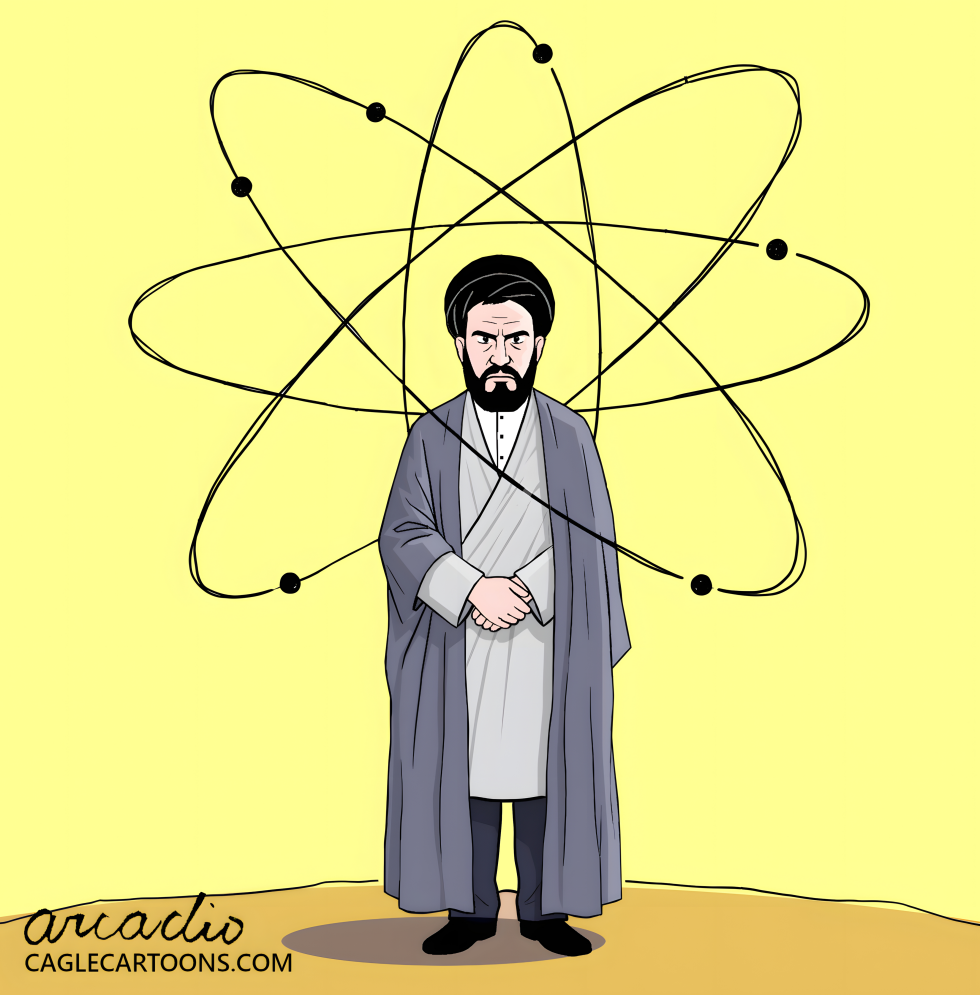
The cartoon shows Iran's supreme leader positioned in front of a large atom symbol. It responds to persistent international concerns over Tehran's nuclear activities as of mid-2026. The visual places the figure directly under the orbiting electrons, underscoring the central role of the nuclear issue in global discussions about the country.
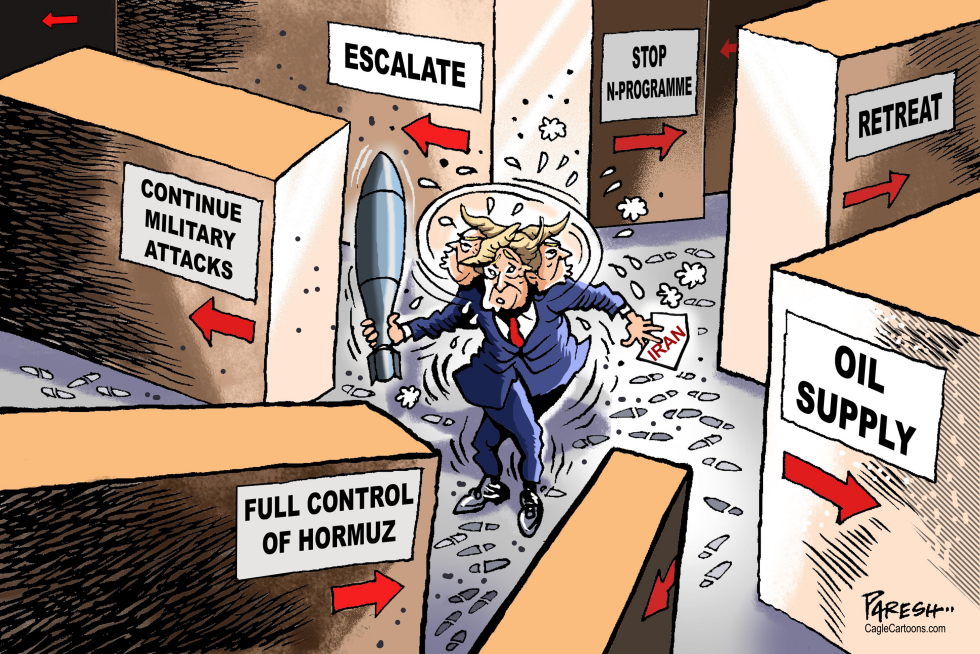
The cartoon shows Donald Trump caught between contradictory policy boxes on Iran, including continuing military attacks, escalating, stopping the nuclear programme, retreating, securing full control of Hormuz and protecting oil supply. Arrows point in conflicting directions while Trump clutches a missile and a paper labeled Iran. Published on July 19, 2026, the image captures the tangled options confronting the administration in the Middle East.
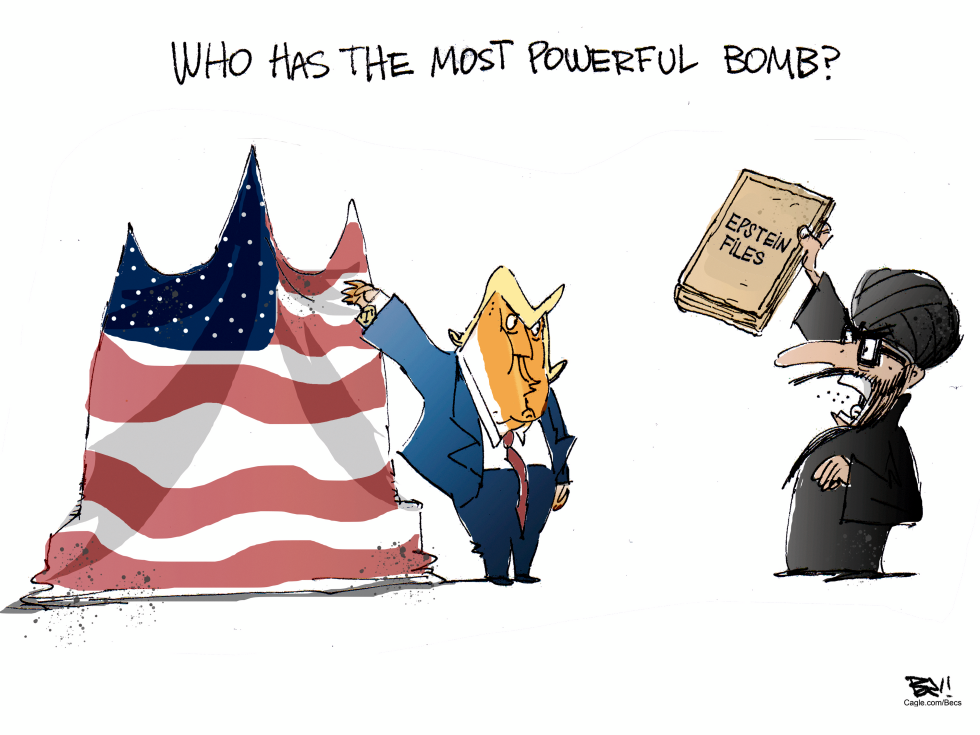
Leverage between the United States and Iran has long centered on nuclear capability and diplomacy. The piece sets that against domestic political pressure from document releases and investigations. It suggests the most damaging weapon in play may not be a military one.
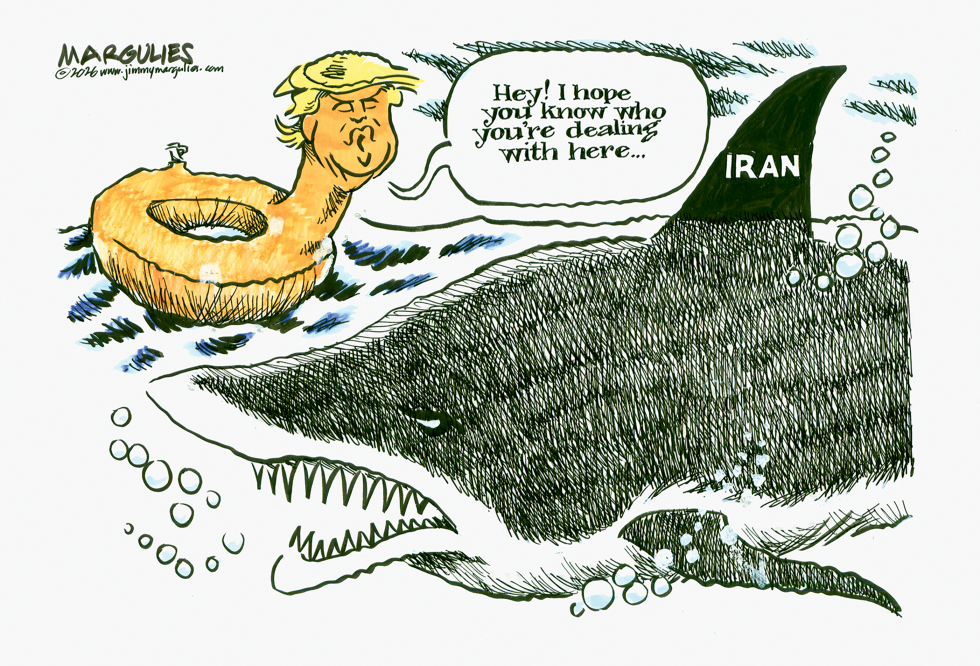
On July 10 2026 Jimmy Margulies depicts Donald Trump floating in an inflatable ring while confronting a large shark fin labeled Iran. The president issues a direct warning through a speech bubble asserting his identity and authority in the confrontation.
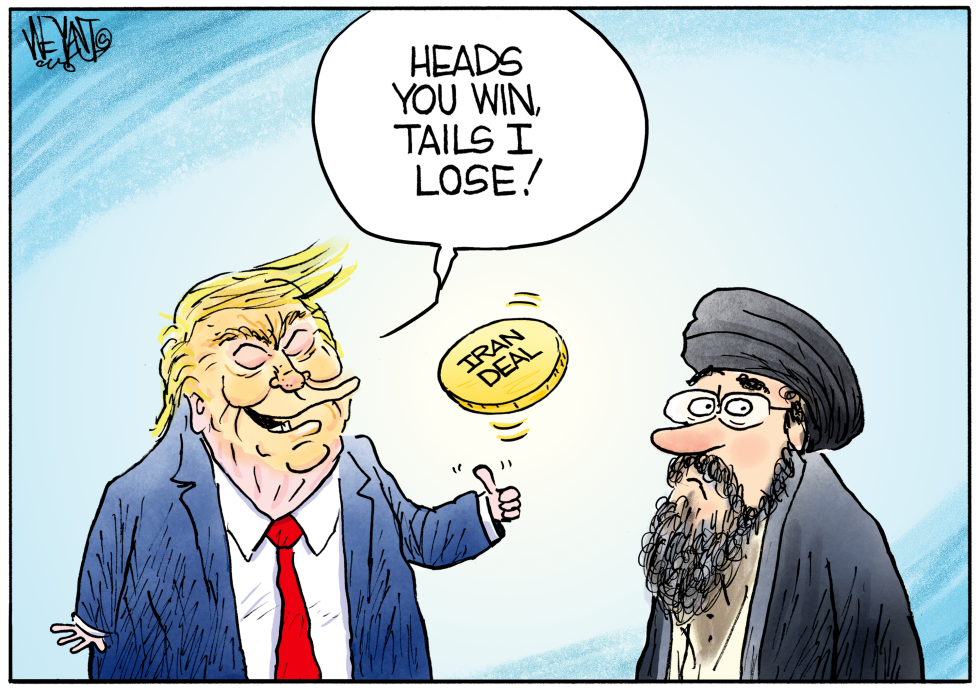
Weyant depicts Donald Trump flipping a coin to determine whether to uphold or abandon the Iran nuclear agreement, satirizing the randomness of his foreign policy decision-making. The coin toss metaphor suggests Trump treats major diplomatic decisions as matters of chance. The cartoon captures diplomatic anxiety about Trump's unpredictability.