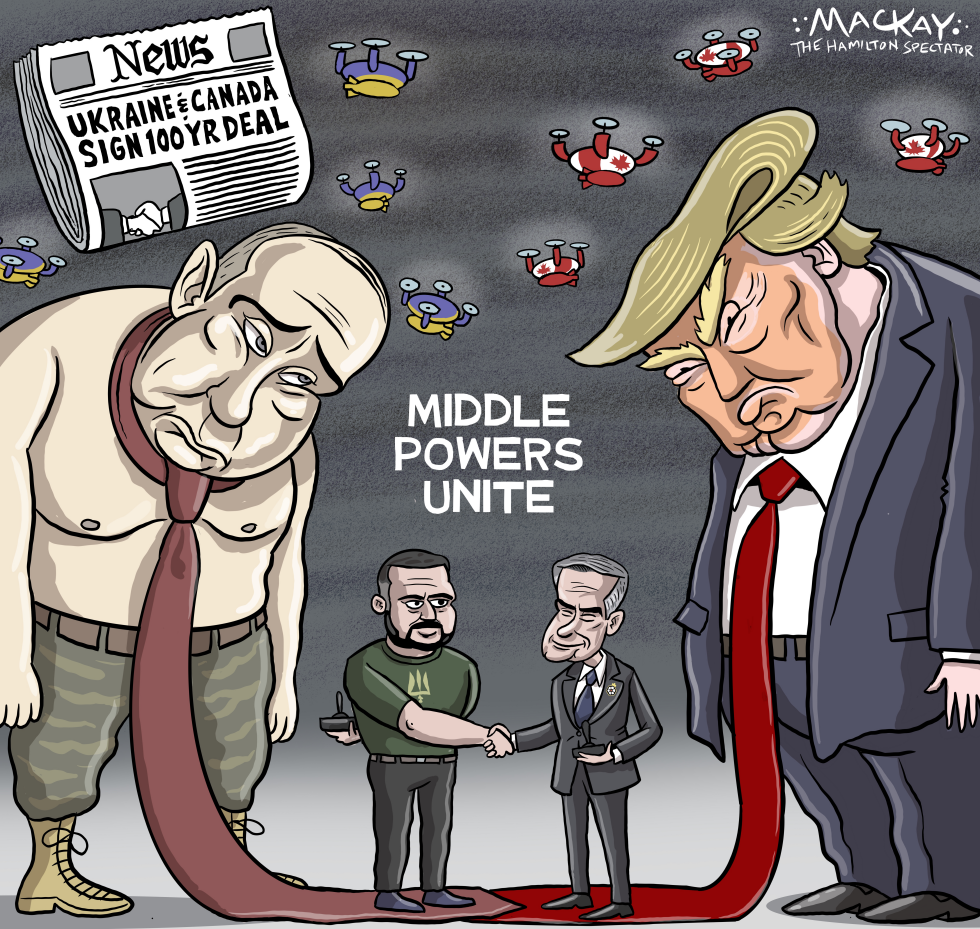
The political cartoon illustrates the signing of a 100-year agreement between Canada and Ukraine, with President Zelenskyy and a Canadian leader shaking hands on a red carpet. Large caricatures of Vladimir Putin and Donald Trump stand on either side, looking down at the smaller central figures. Canadian flag drones fill the background sky near a newspaper announcing the pact. The central text reads Middle Powers Unite. The image comments on how the bilateral deal elevates secondary nations in global affairs while established powers watch the development.
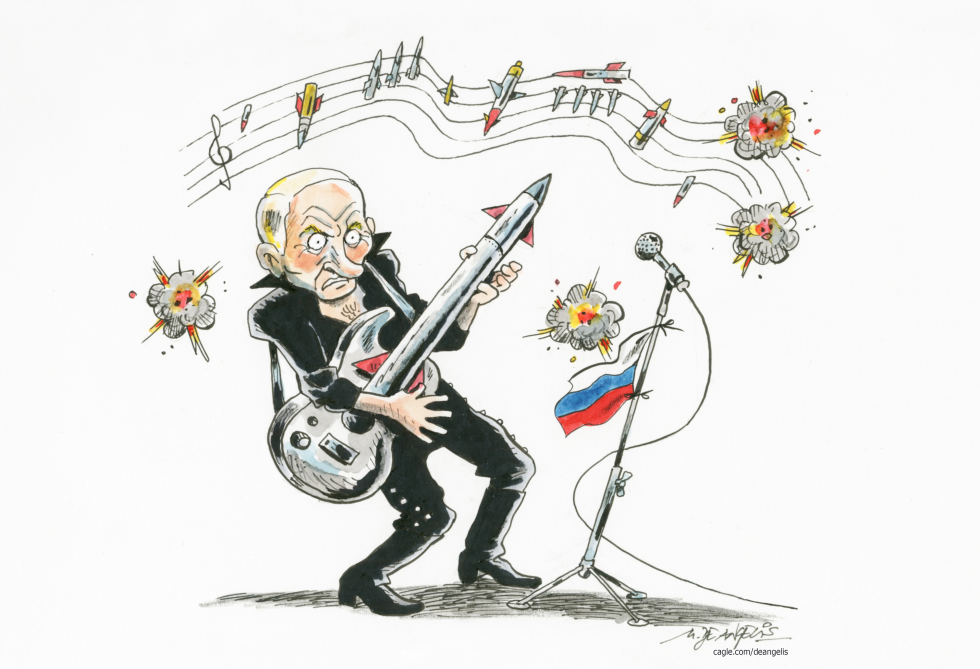
Russian President Vladimir Putin continues directing missile strikes in the Ukraine conflict, maintaining pressure on Kyiv through repeated aerial attacks. The imagery frames this sustained military campaign as a theatrical rock performance. The piece critiques the leader's embrace of destructive weaponry as spectacle rather than strategy.
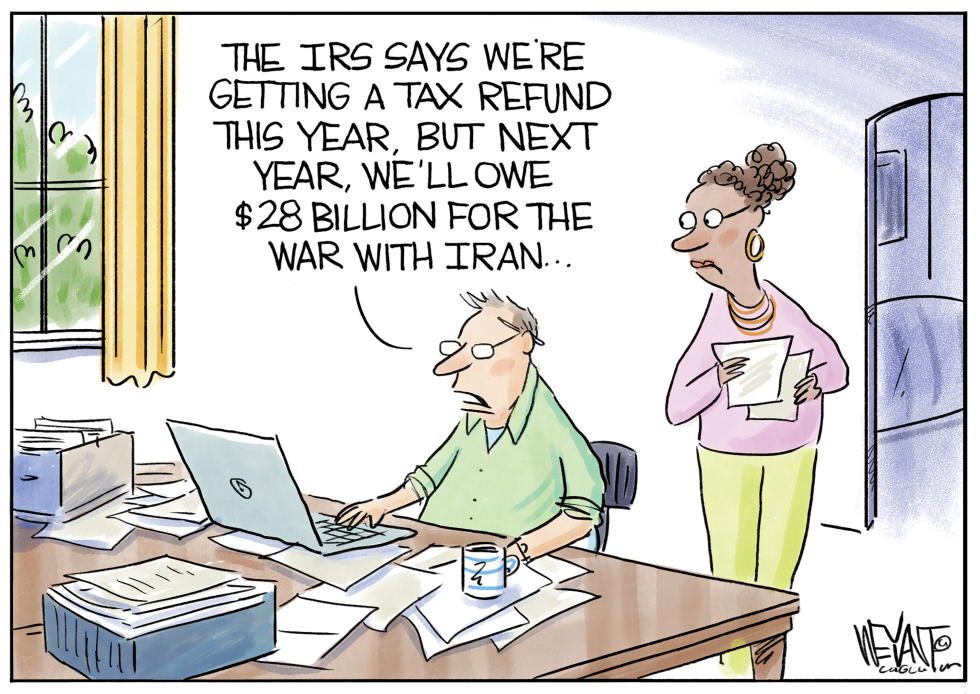
Dive into this biting political cartoon tax refund piece where a woman, holding papers, informs a laptop-working man about their IRS windfall this year, only to drop the bomb of owing $28 billion next for the war with Iran. The satirical cartoon Iran war vibe captures the absurdity of US taxes funding wars, with cluttered desks and exasperated expressions underscoring the humorous take on federal spending. It's a classic taxpayer burden Iran conflict jab, poking fun at government spending satire while illustrating the disconnect between personal finances and massive military expenses. Through cartoon about military expenses, it cleverly critiques fiscal policy in an office setting, making the war with Iran taxpayer joke both relatable and irreverently insightful for viewers pondering editorial cartoon fiscal policy.
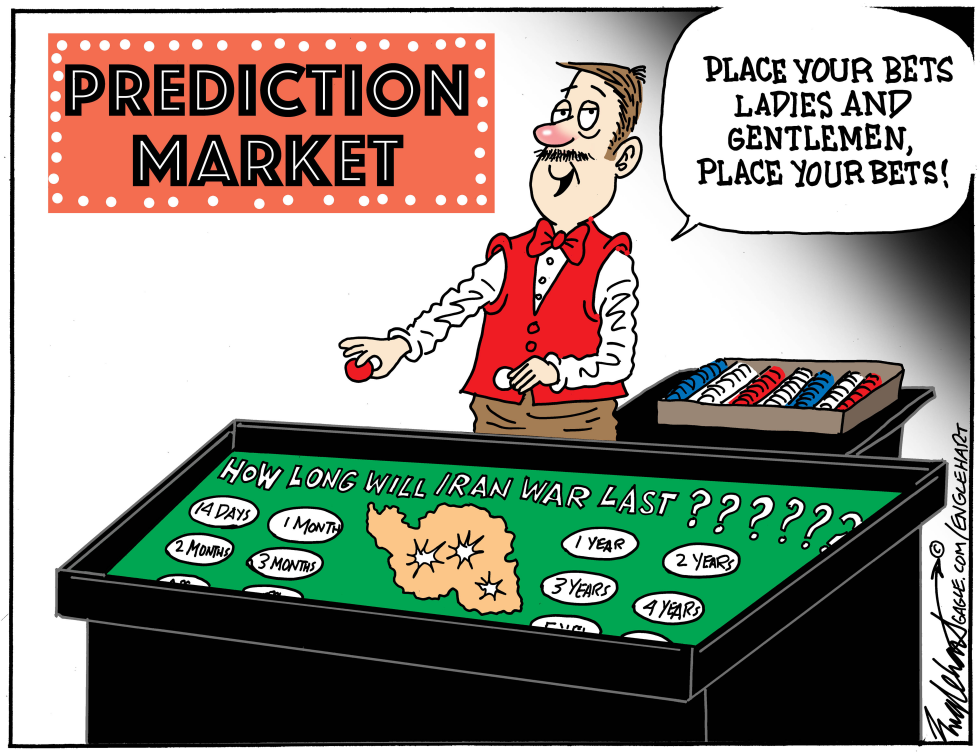
In a biting political cartoon, a smirking croupier oversees a prediction market table shaped like Iran, complete with explosion graphics, where punters can wager on war duration options ranging from 14 days to 5 years. This satirical take skewers the commodification of geopolitical betting, turning grave matters like Iran war into casino-style gambles. By blending elements of gambling on war with Middle East conflict, the artwork highlights the absurdity of prediction markets applied to real-world crises, offering humorous yet insightful commentary on how society speculates on political humor and potential catastrophes. The irreverent style underscores the folly of treating war length wager as just another market fluctuation.