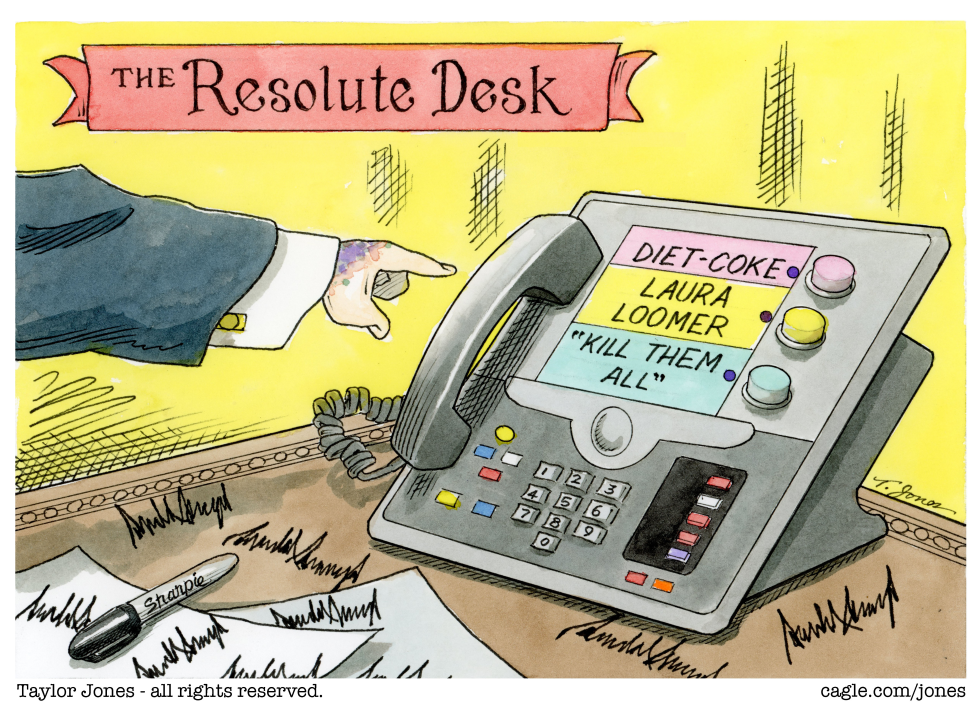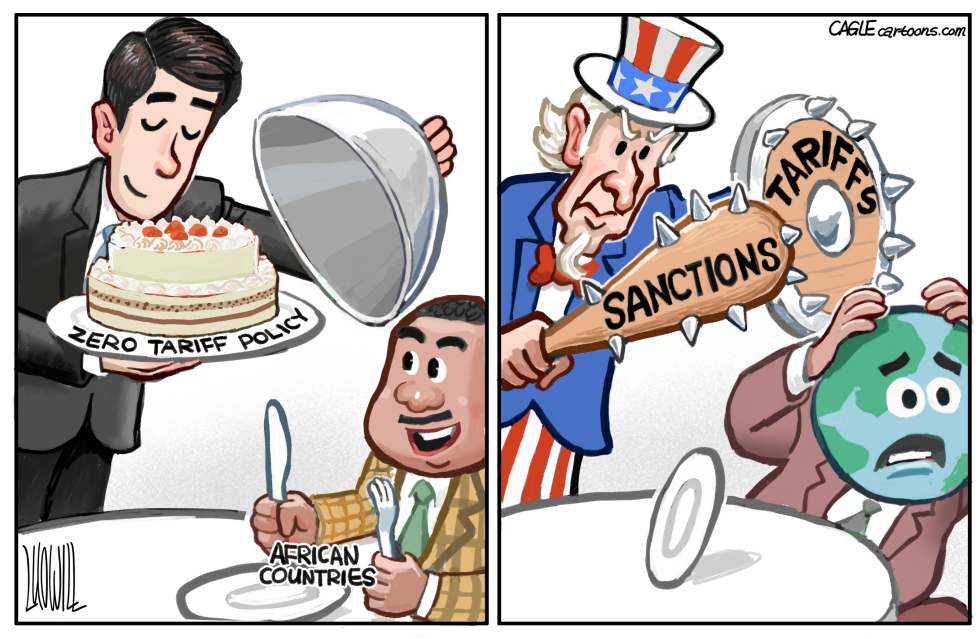
The United States has extended a zero-tariff policy offer to African nations amid ongoing global trade tensions. This move stands in contrast to simultaneous use of tariffs and sanctions against other trading partners. The policy highlights selective economic engagement by Washington. The editorial position criticizes the inconsistency between the overture to Africa and the punitive approach applied more broadly.
international sanctions
Aug
4
2026
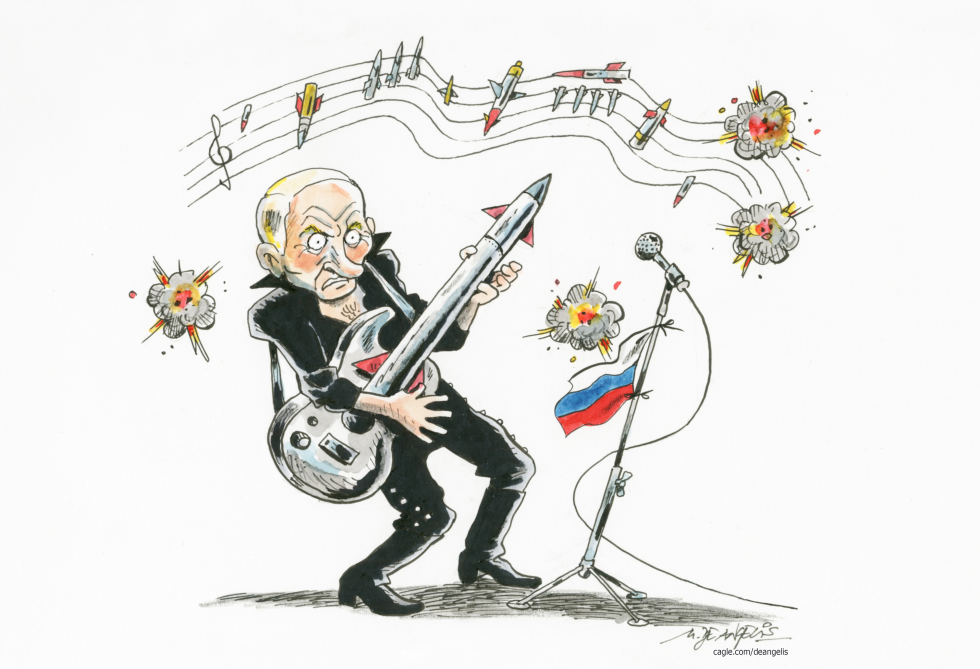
Russian President Vladimir Putin continues directing missile strikes in the Ukraine conflict, maintaining pressure on Kyiv through repeated aerial attacks. The imagery frames this sustained military campaign as a theatrical rock performance. The piece critiques the leader's embrace of destructive weaponry as spectacle rather than strategy.
Jul
27
2026
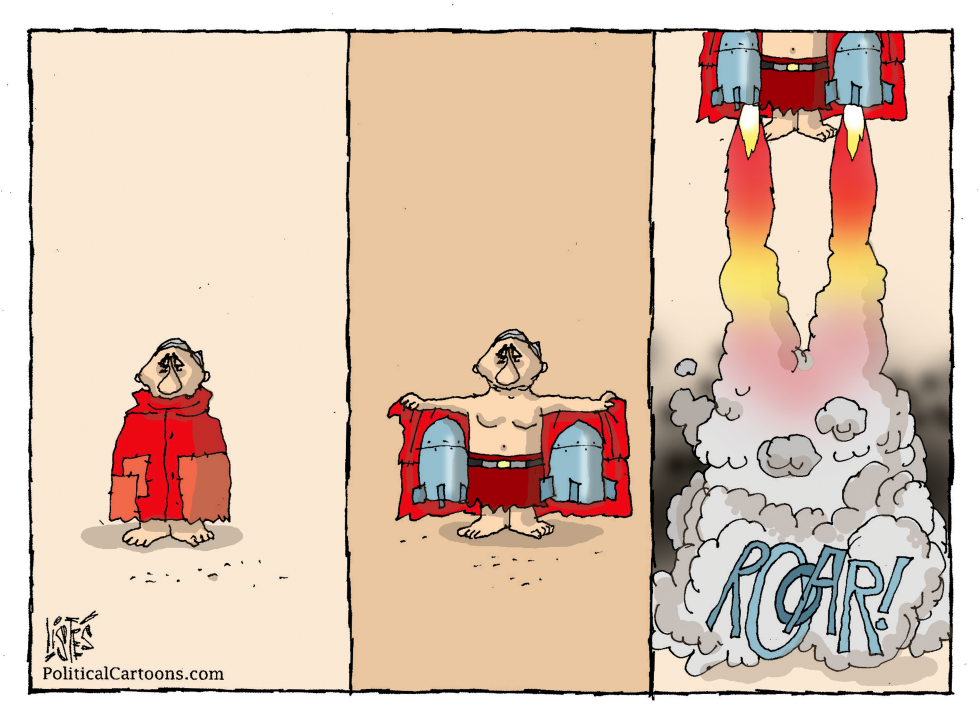
Vladimir Putin demonstrates a new personal rocket system as Russia continues military modernization efforts. The development underscores ongoing emphasis on advanced weaponry in national defense strategy. The piece portrays the move as an extension of Russia's assertive posture in global affairs.
Jul
23
2026
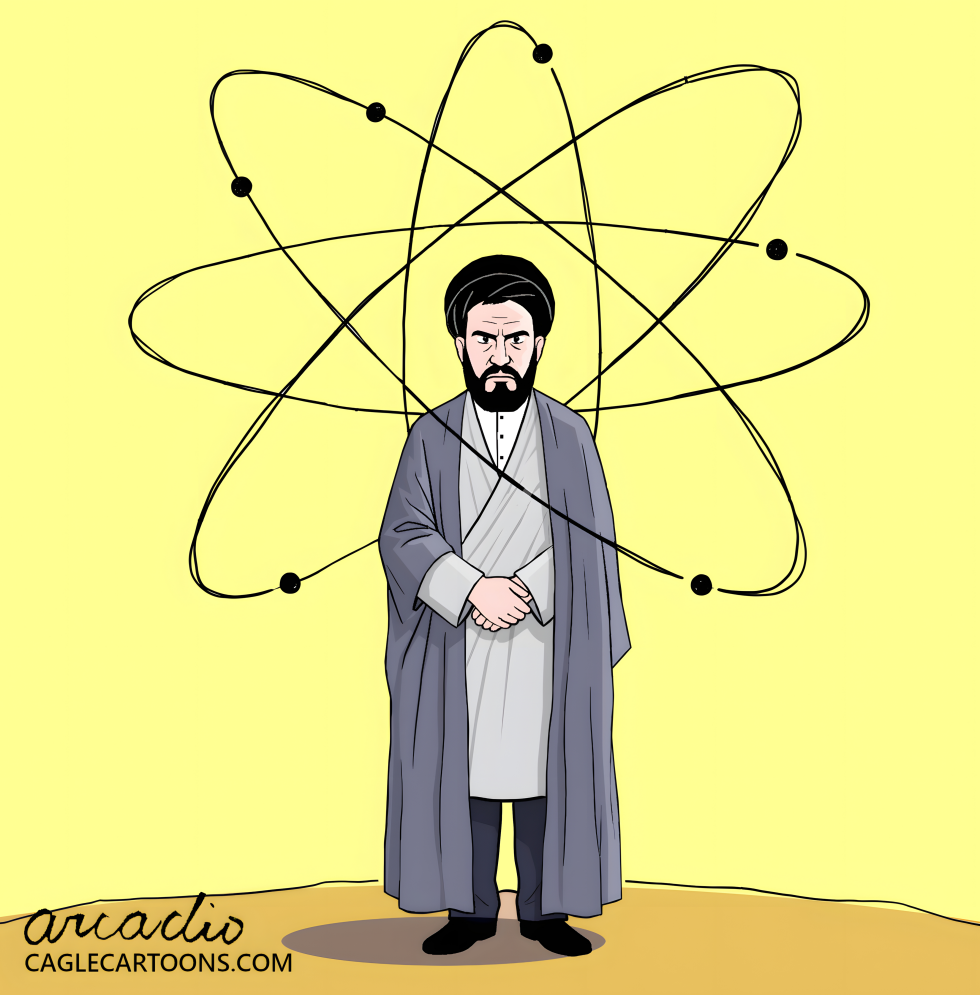
The cartoon shows Iran's supreme leader positioned in front of a large atom symbol. It responds to persistent international concerns over Tehran's nuclear activities as of mid-2026. The visual places the figure directly under the orbiting electrons, underscoring the central role of the nuclear issue in global discussions about the country.
Jul
11
2026
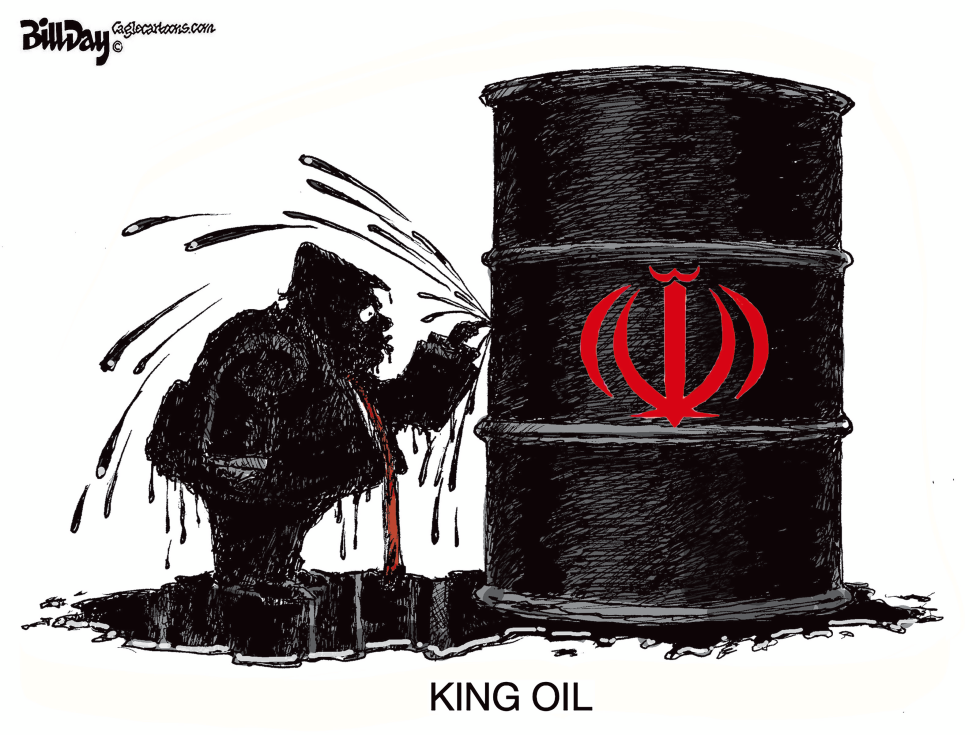
A dark figure spits oil at a barrel bearing the Iranian emblem on July 11 2026. The barrel rests in a puddle and carries the label KING OIL. The scene addresses ongoing energy and regional tensions involving Iran.
Jun
28
2026
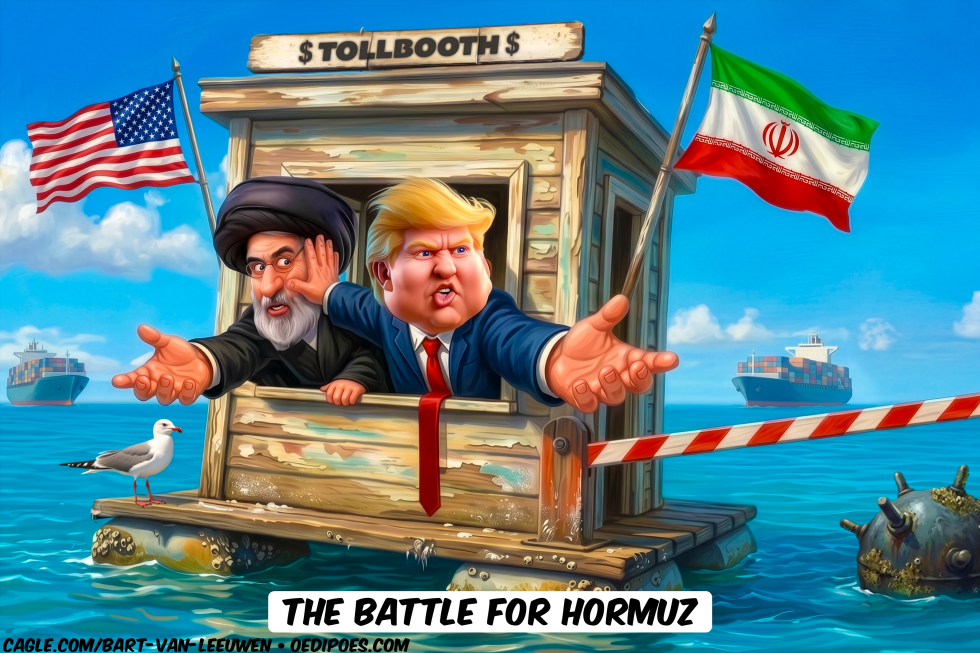
A new political cartoon shows President Trump and Iran's supreme leader sharing a tollbooth positioned across the Strait of Hormuz. Both figures extend their hands toward passing cargo ships while American and Iranian flags fly from the structure. The image comments on ongoing disputes over control of the vital oil shipping route.
Jun
17
2026
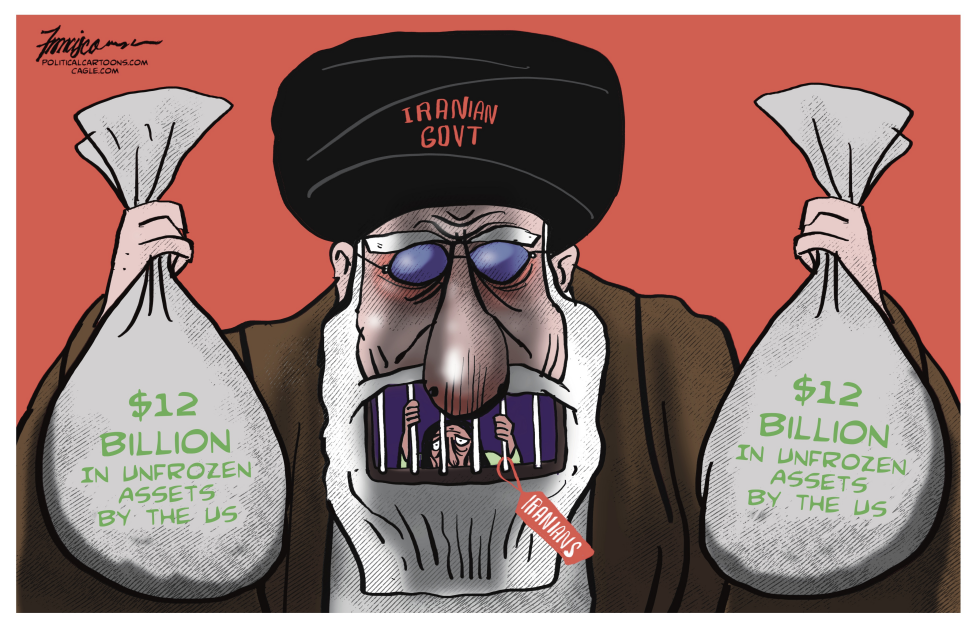
A political cartoon dated June 19, 2026, shows a figure representing the Iranian government holding two large sacks labeled $12 billion each in unfrozen US assets. The figure wears a black turban marked Iranian Govt. Small figures appear behind bars inside the mouth area, one tagged Iranians. The image responds to ongoing discussions about US policy on releasing Iranian government funds held abroad. It illustrates the contrast between the leadership receiving the money and the situation for ordinary citizens.
Jun
15
2026
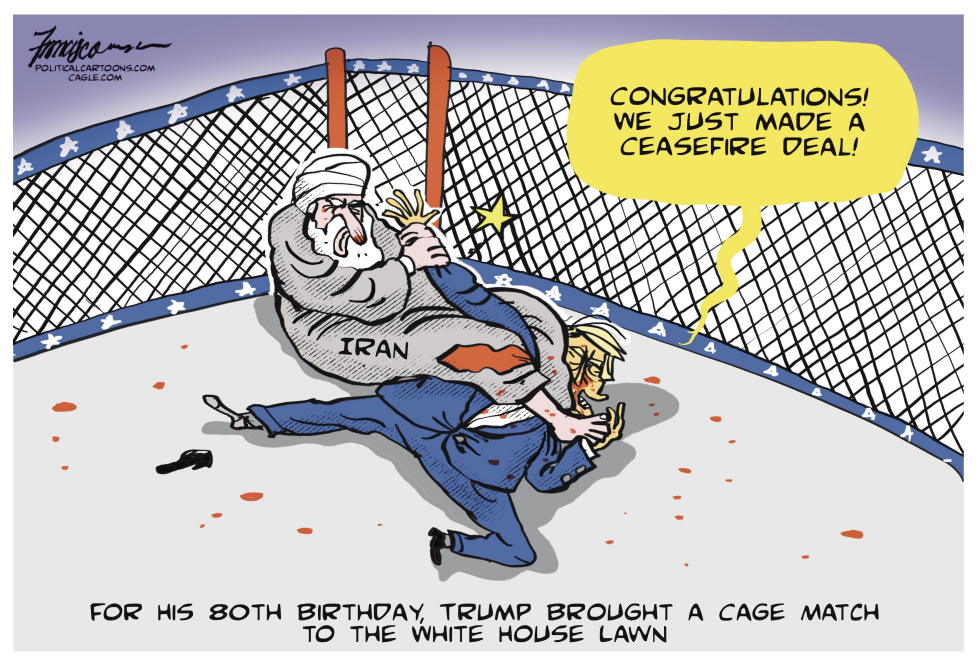
A cage match between the United States and Iran over a potential ceasefire deal has drawn attention amid ongoing Middle East tensions. The confrontation highlights the high stakes of direct engagement between the two nations. The piece portrays the encounter as a chaotic personal brawl rather than a measured diplomatic effort.
Apr
20
2026
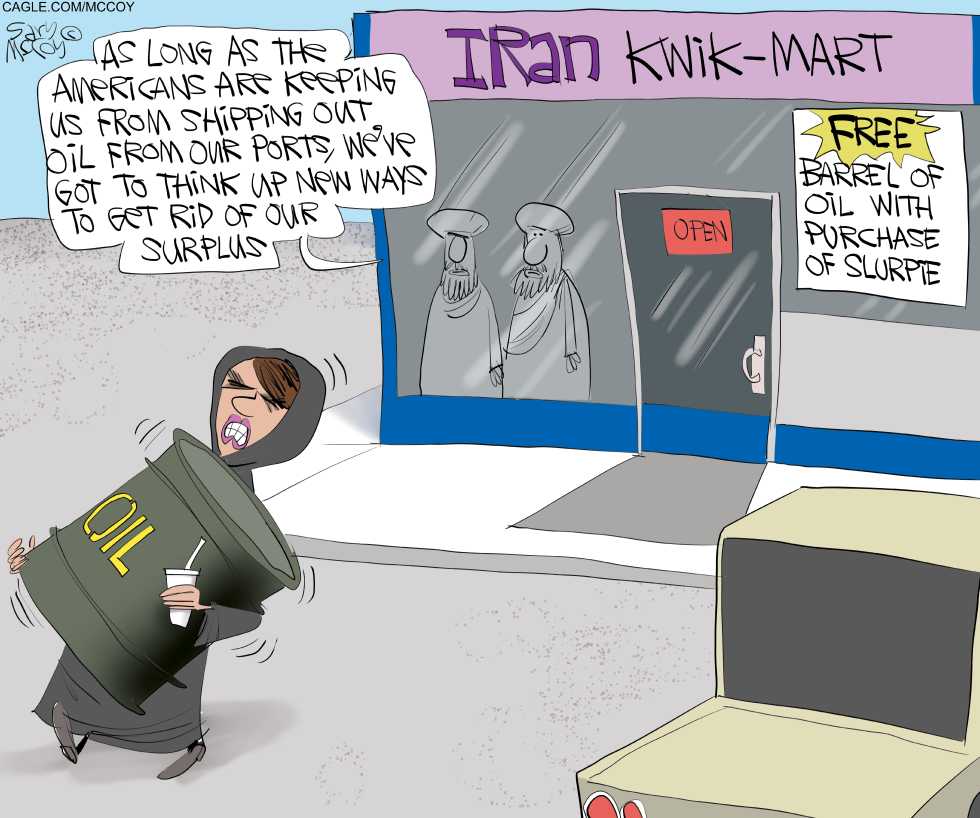
Gary McCoy's cartoon depicts two bearded Iranian clerics inside the Iran Kwik-Mart, promoting a free barrel of oil with Slurpee purchase to handle surplus crude. Outside, a hooded figure dumps an oil barrel into a car trunk, lamenting U.S. blockades on shipping ports. The image ties into Strait of Hormuz tensions, oil prices, Trump-era policies, Iran's Revolutionary Guard, and Middle East conflicts, highlighting ironic solutions to energy surplus amid international sanctions and naval standoffs. Commercial ships and tankers face barriers, forcing creative disposal methods in this dryly humorous take on global oil dynamics.
Doctor Diagnoses Globe-Headed Patient with Life-Threatening Bowel Obstruction in Strait of Hormuz Satire
Globe\'s Bowel Block in Hormuz
Apr
20
2026
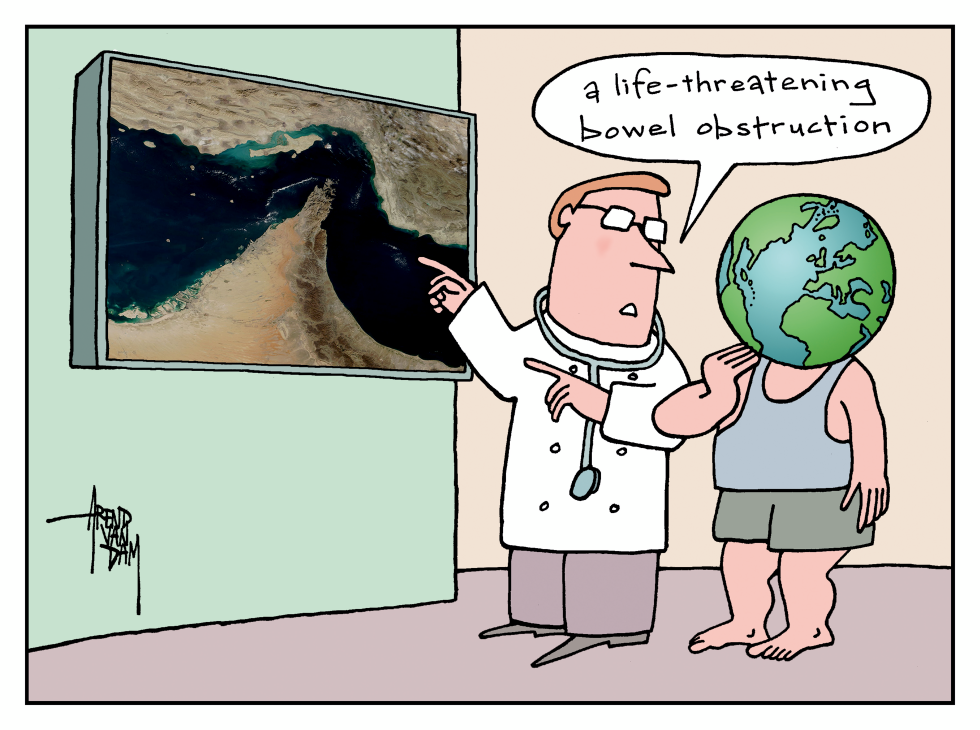
Arend van Dam\'s cartoon depicts a doctor diagnosing a child-like figure with a globe for a head, pointing to a screen showing the Strait of Hormuz as a life-threatening bowel obstruction. This visual metaphor ties into tags such as economy, world, oil, gas, obstruction, and war, illustrating how blockages in key trade routes threaten global stability. The barefoot patient in casual attire underscores vulnerability, while the doctor\'s serious demeanor adds dry humor to the geopolitical satire. Negotiations with ayatollahs and regime sanctions loom in the background, making the image a pointed commentary on how such conflicts create economic chokepoints. The overall composition blends medical analogy with international affairs for sharable impact.
Apr
18
2026
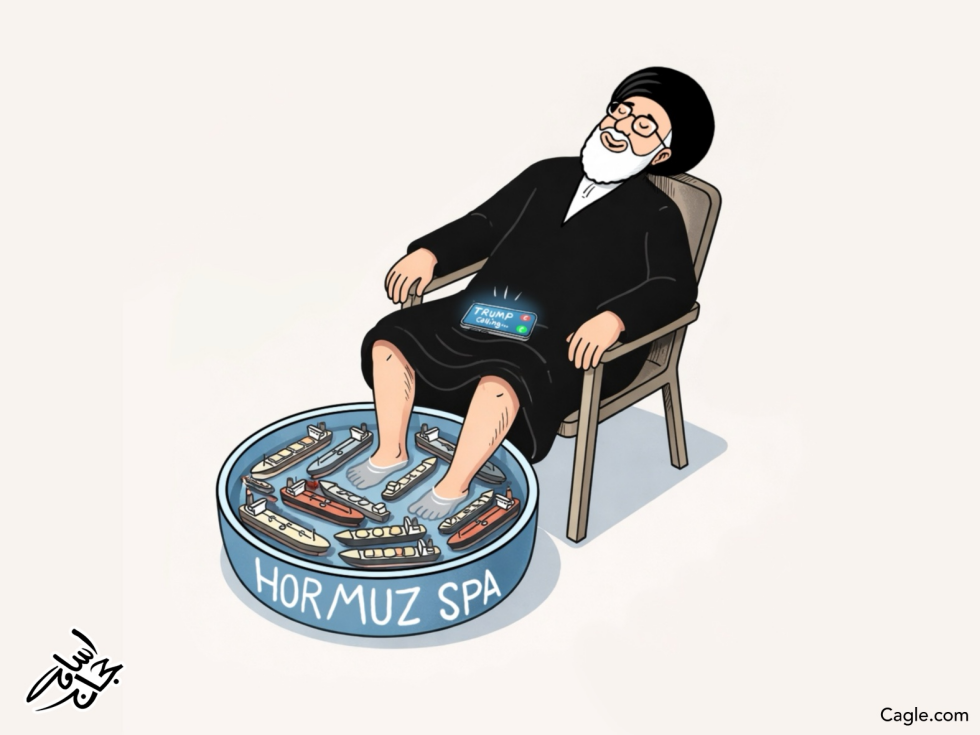
Osama Hajjaj draws an Iranian leader, resembling a cleric in black robes and turban, slouched in a chair with feet immersed in a blue basin labeled Hormuz Spa. Tiny ships float around his feet, evoking the Strait of Hormuz. A phone on his lap displays Trump with a green light, implying a call or alert. The scene captures dry satire on Iran-Trump relations, with the spa pun highlighting control over vital shipping lanes. Tags like Hormuz, Iran, Donald Trump, spa, and political cartoon underscore the humor in geopolitical friction.
Trump Mistakes Soaring Gas Prices for Poll Numbers in Iran War Satire
Trump's Poll Mix-Up with Gas Prices
Mar
4
2026
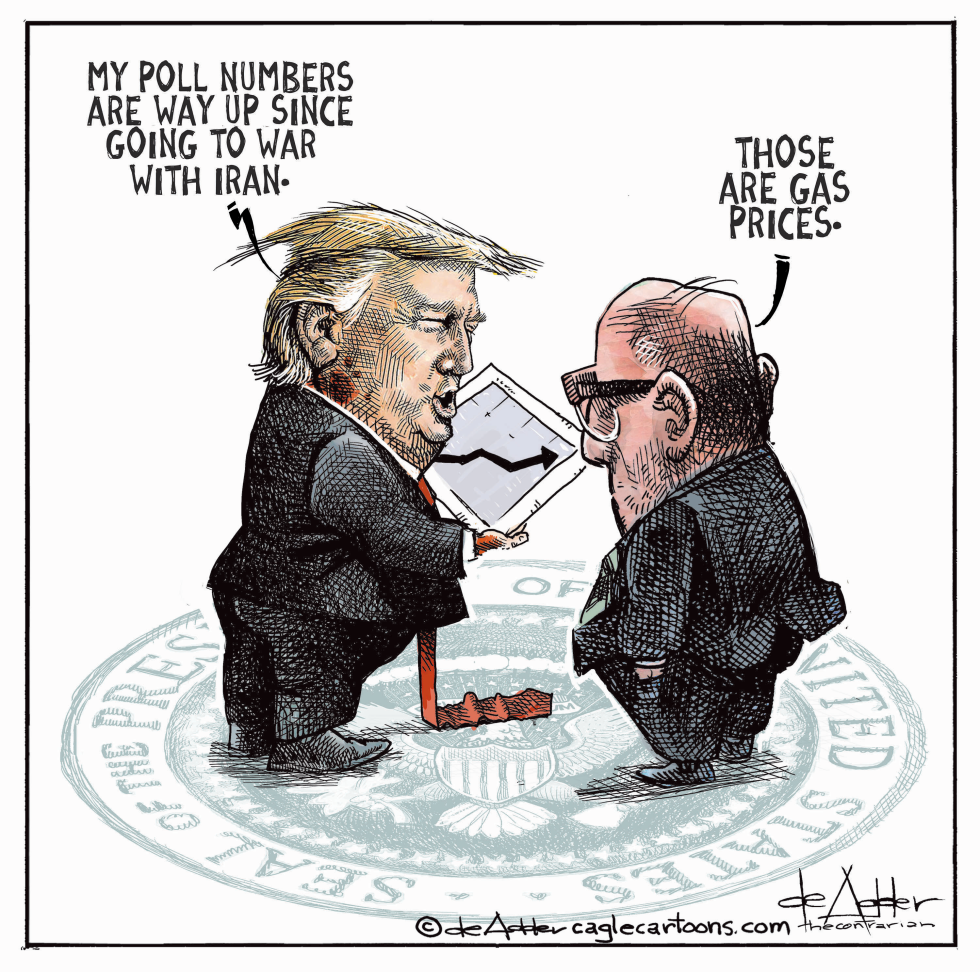
This sharp political cartoon by Michael de Adder captures Donald Trump triumphantly holding a chart of upward trends, claiming his poll numbers have skyrocketed since going to war with Iran. However, a bespectacled Dick Cheney corrects him, revealing those are actually gas prices soaring. The satire highlights the ironic consequences of Middle East conflict on the US economy, blending humor with commentary on presidential approval ratings tied to foreign policy blunders. Incorporating elements of US politics, oil prices, and war economy, the image stands on the presidential seal, emphasizing official folly. It's a witty jab at how leaders might misread economic fallout as personal gains, perfect for editorial discussions on satire and current events.
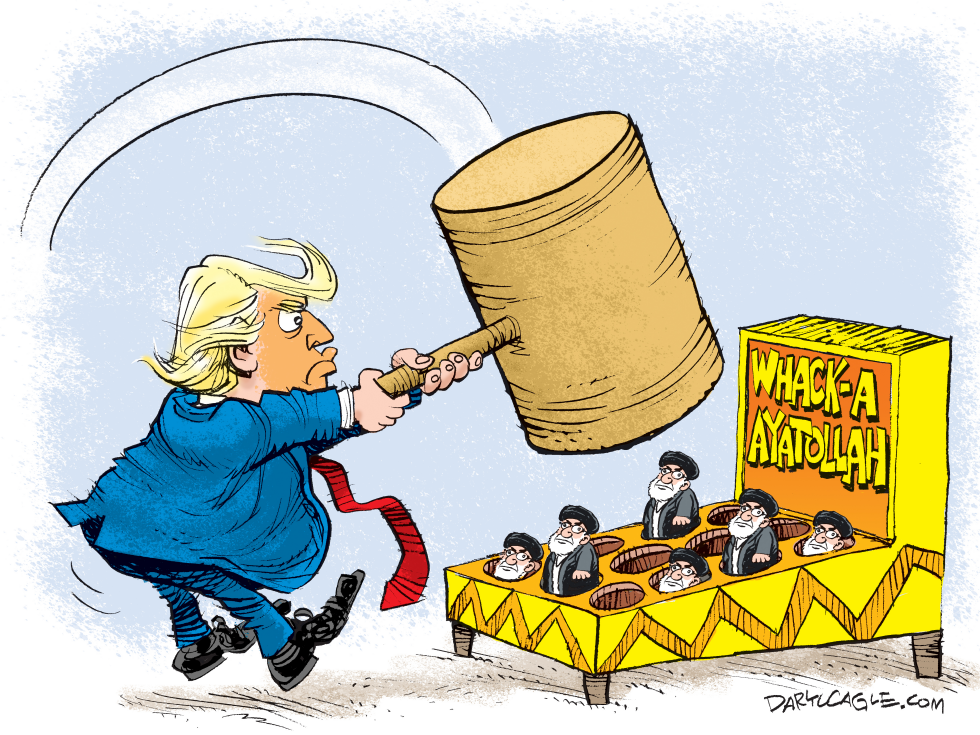
The cartoon shows Donald Trump in a blue suit swinging a massive wooden mallet at figures resembling Iranian Ayatollahs emerging from holes in a yellow arcade machine labeled Whack-A Ayatollah. The president appears mid-swing with motion lines indicating effort. The image comments on US policy toward Iran by framing the conflict as a repetitive carnival game where targets keep reappearing. Publication occurs during a period of heightened US-Iran tensions over nuclear issues and regional influence. The visual metaphor suggests difficulty in permanently resolving the challenge despite repeated attempts.

This biting political cartoon by Daryl Cagle depicts Donald Trump in his signature suit, his red tie extending into a coil of red tape that binds a furious, bearded figure representing Iran, complete with an 'iRan' hat. The image satirizes US-Iran relations, highlighting how bureaucracy and sanctions create entanglements in foreign policy. Trump's calm demeanor contrasts with Iran's angry struggle, underscoring the Trump administration's approach to Middle East diplomacy. Through clever visual metaphor, it comments on the nuclear deal fallout and ongoing tensions, making it a sharp piece of political humor that's both insightful and irreverent.