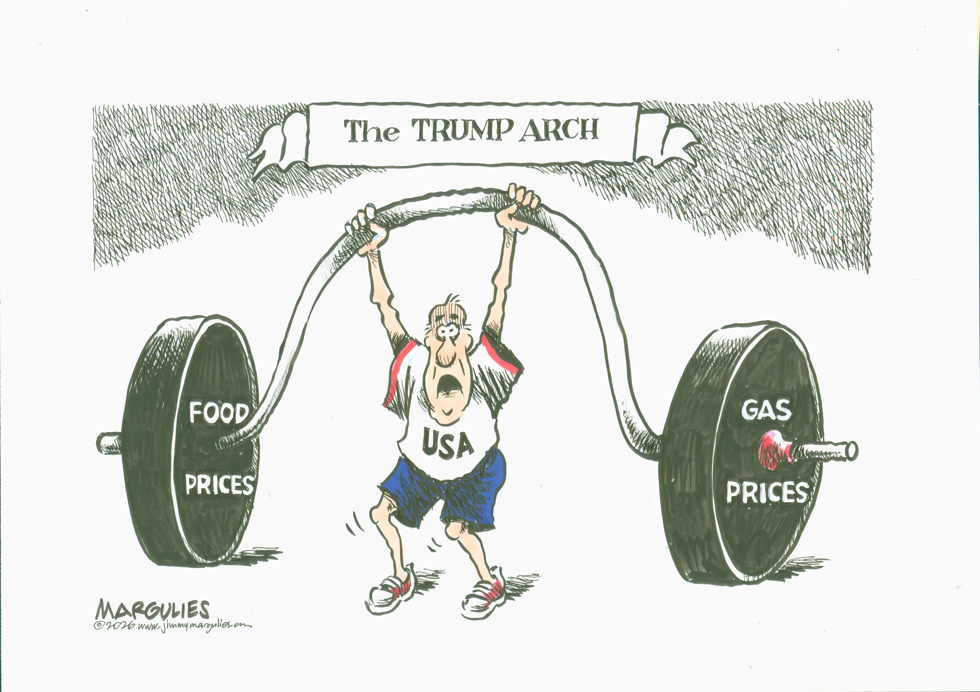
Food and gas prices remain elevated in 2026 under the Trump administration, adding to household costs across the country. The administration's economic approach has not delivered relief on key consumer expenses. Critics argue the policies prioritize other goals over inflation control. The cartoon depicts the USA as overburdened by these dual price burdens. It takes the position that Trump-era governance has left ordinary Americans carrying unsustainable economic weight.
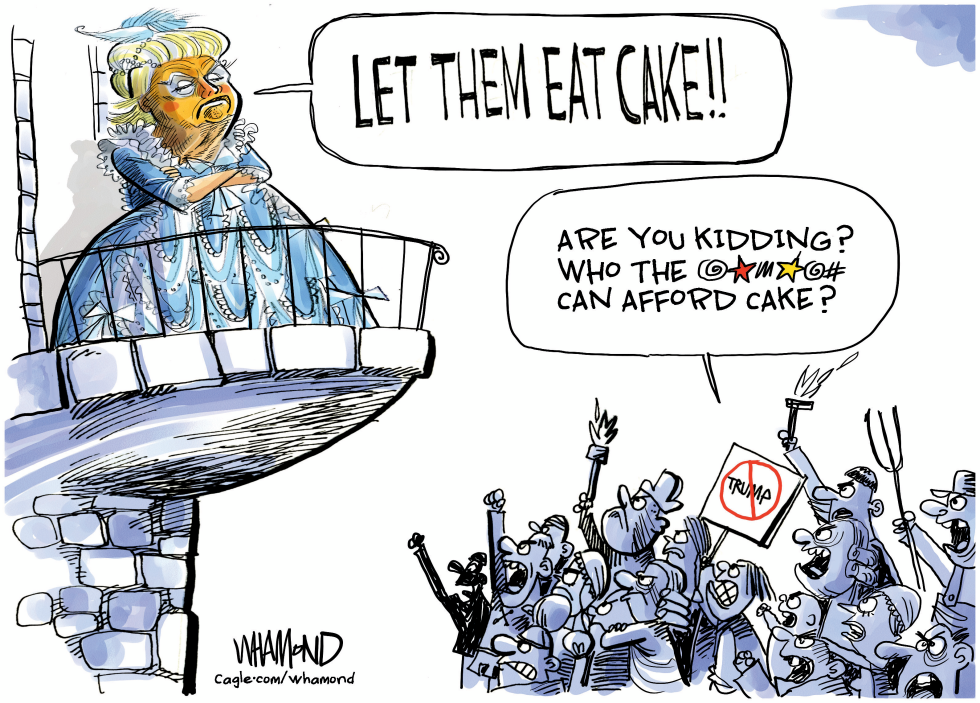
The cartoon by Dave Whamond depicts Donald Trump as Marie Antoinette on a balcony declaring 'LET THEM EAT CAKE!!' while a crowd below protests with signs and questions who can afford cake. Published on September 15, 2026, the image draws on the historical quote to comment on contemporary affordability concerns during Trump's term. The visual contrasts the elevated figure with an agitated crowd holding anti-Trump signs. It captures ongoing public discontent with rising costs. The piece uses the famous anecdote to underscore perceptions of detachment from everyday economic pressures.
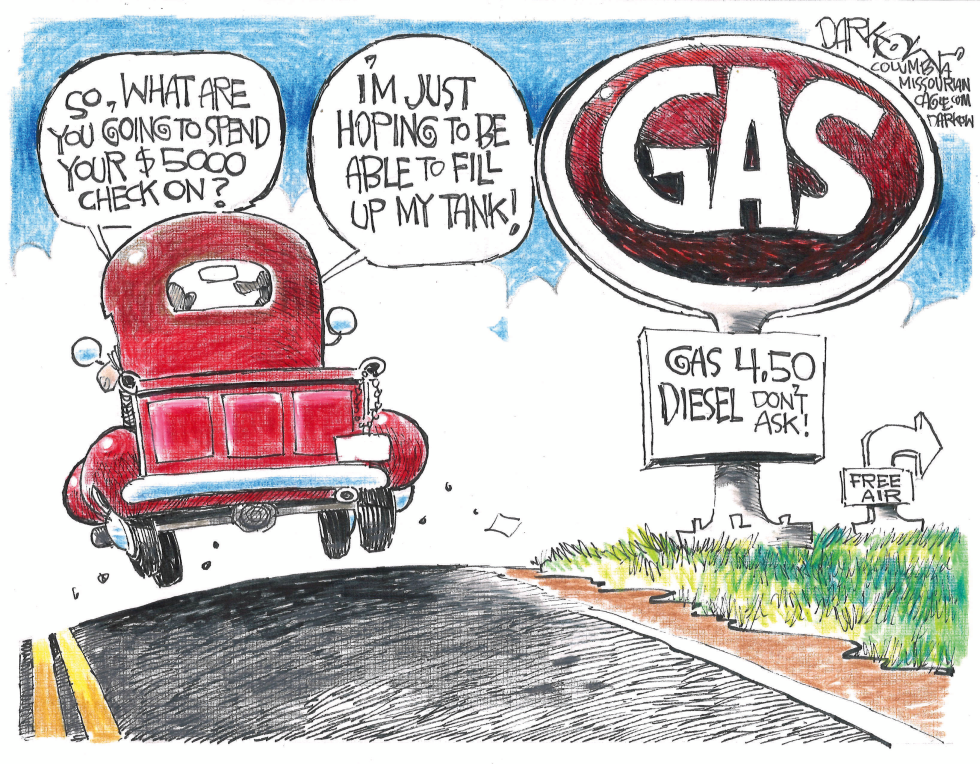
Proposed dividend checks of five thousand dollars are being discussed as economic relief measures. High gas prices at four dollars and fifty cents per gallon mean the payments would cover little more than a single fill up for many drivers. The situation underscores how energy costs continue to outpace targeted relief efforts. The cartoon argues that such checks provide minimal practical benefit when fuel expenses remain elevated. It highlights the disconnect between announced payments and real world household burdens from inflation in the energy sector.
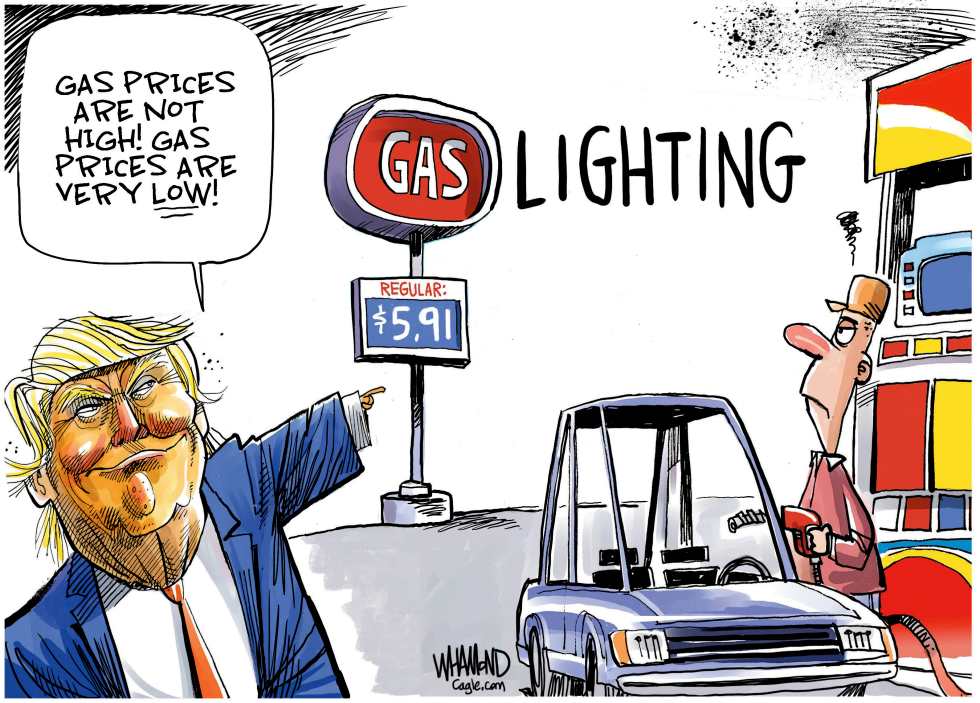
Donald Trump has repeatedly asserted that gas prices are very low even as national averages hover near record territory. The statement comes amid ongoing public frustration with energy costs that have remained elevated for months. The editorial takes the position that such denials amount to deliberate misdirection rather than engagement with economic data.
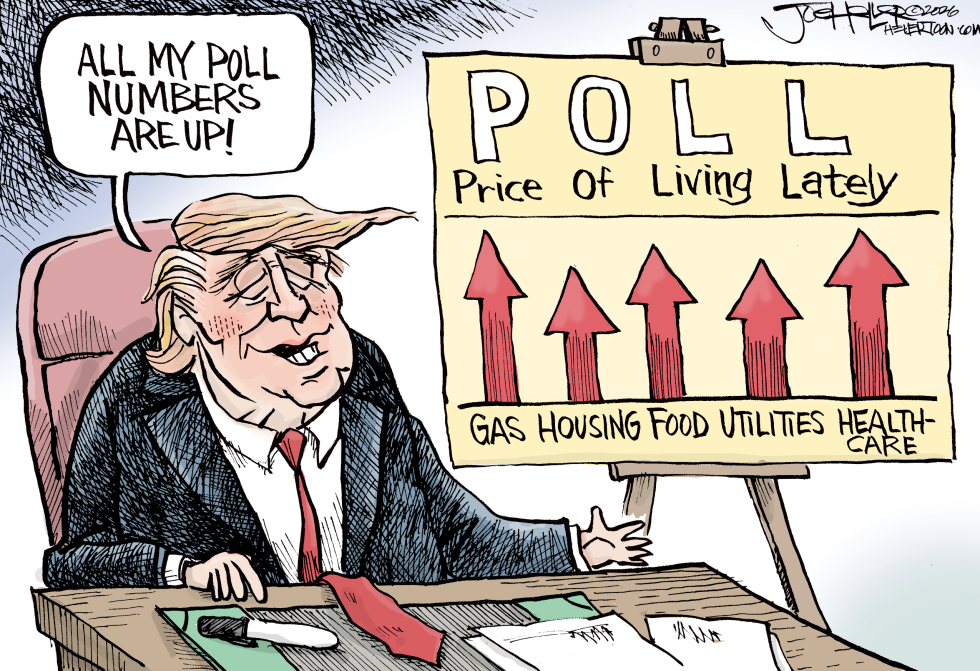
Donald Trump stated that his poll numbers were rising even as the price of living continued to climb across multiple categories. Gas, housing, food, utilities and healthcare costs all posted increases according to the visual data presented. The development matters because household expenses directly affect voter sentiment ahead of upcoming elections. Trump positioned the poll improvement as positive news despite the economic pressures shown. The piece takes the position that any reported poll gains are closely tracking the same upward pressure on everyday costs rather than reflecting broader approval.
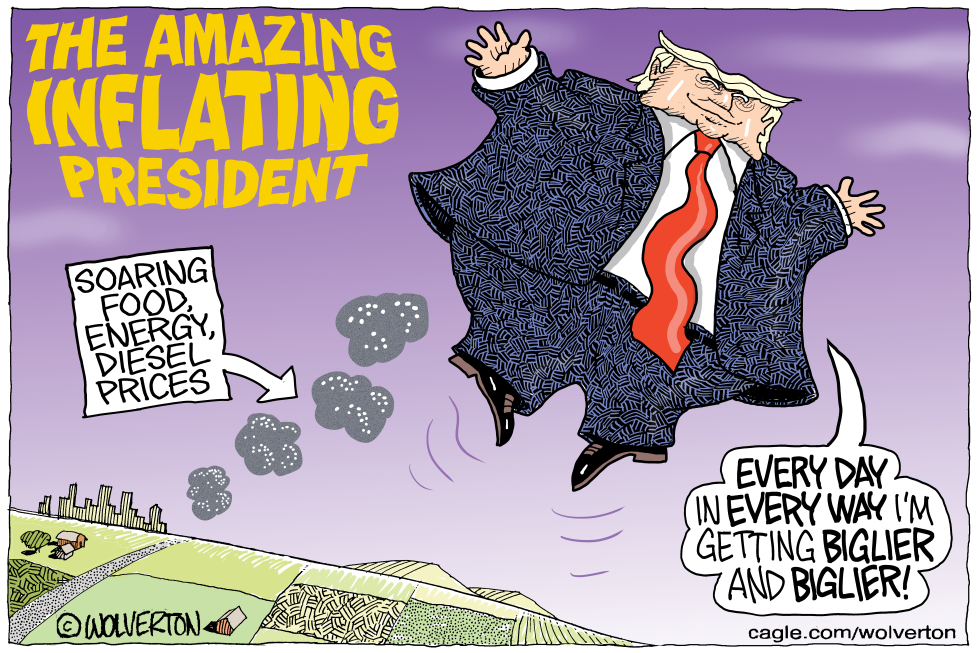
The cartoon depicts Donald Trump as an inflating balloon figure rising above a rural scene with a city skyline. A sign points to gray clouds labeled soaring food energy and diesel prices. Trump declares in a speech bubble that he is getting biglier every day. Published on September 4 2026 the work responds to ongoing concerns over inflation and household costs during the Trump presidency. The visual metaphor connects the president's public presence to the expansion of prices across key sectors.
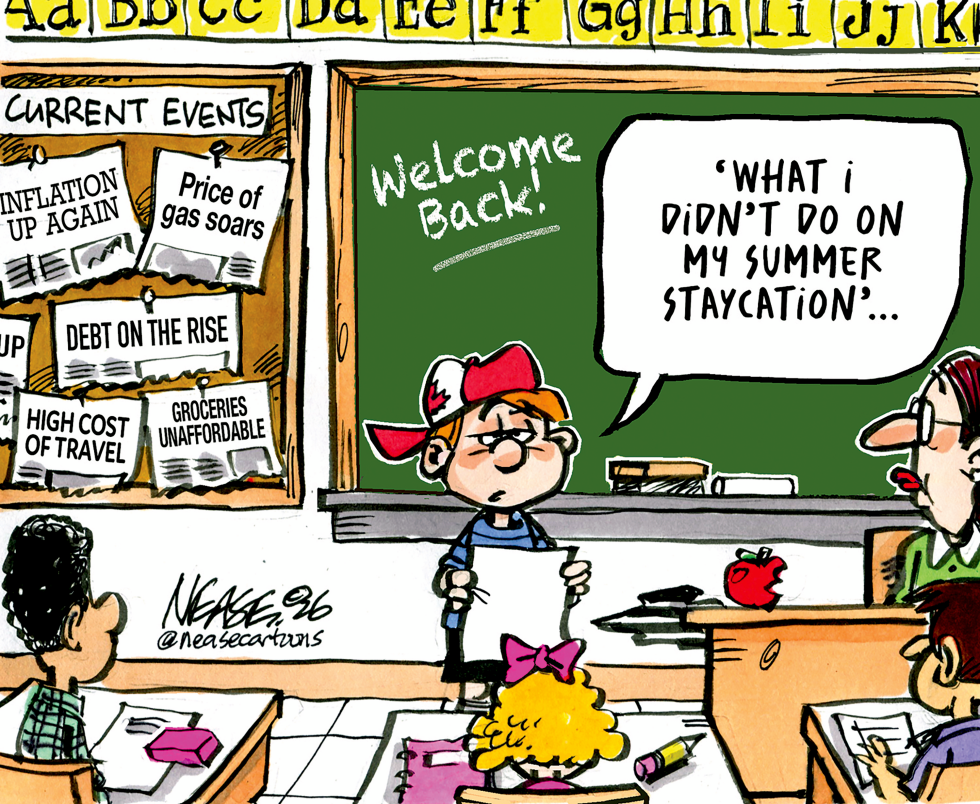
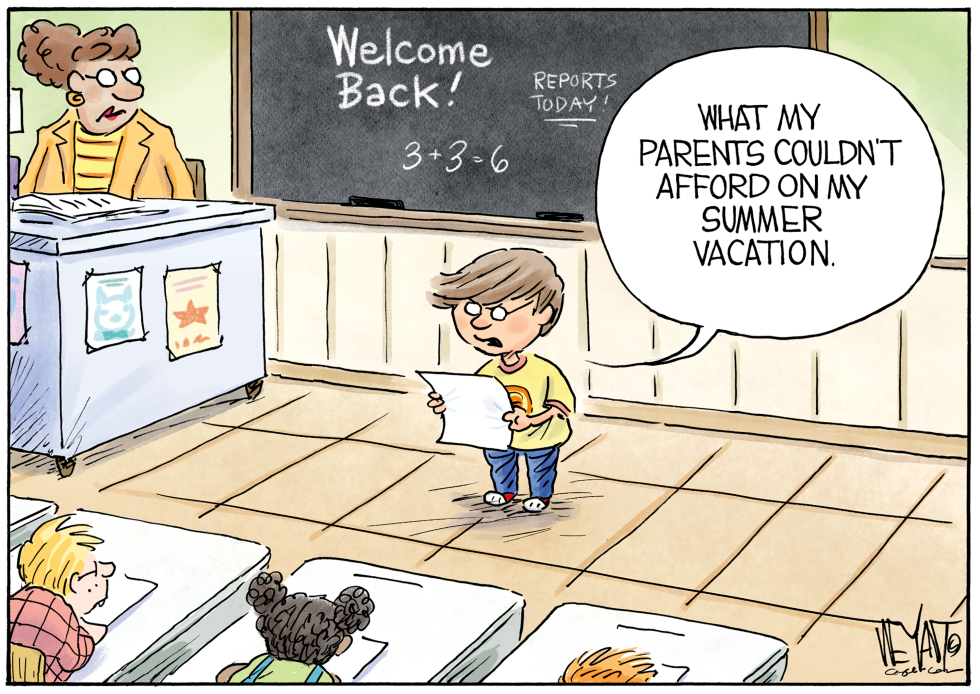
Rising inflation, gas prices, and household debt have made traditional summer vacations unaffordable for many families, leading to increased staycations as the new school year starts. The cartoon captures this cost-of-living squeeze through a classroom presentation on what students did not do over the break. It underscores how everyday expenses now dominate family decisions and limit leisure options.
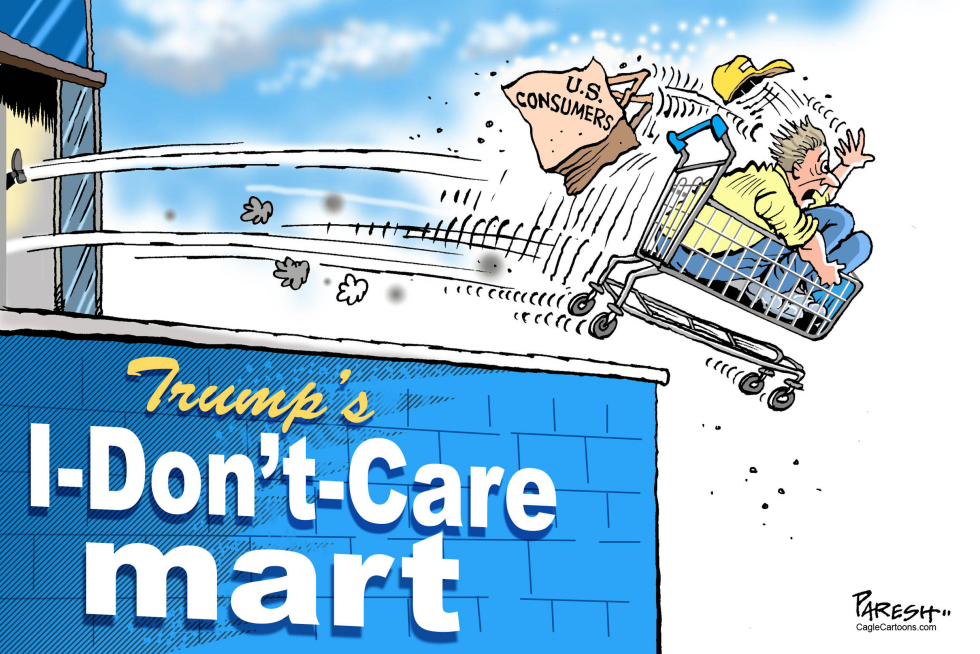
Trump administration policies on trade and spending have contributed to higher prices for everyday goods. American households face increased costs at stores as tariffs and other measures take effect. The cartoon argues these policies prioritize other goals over consumer welfare and leave families paying more.
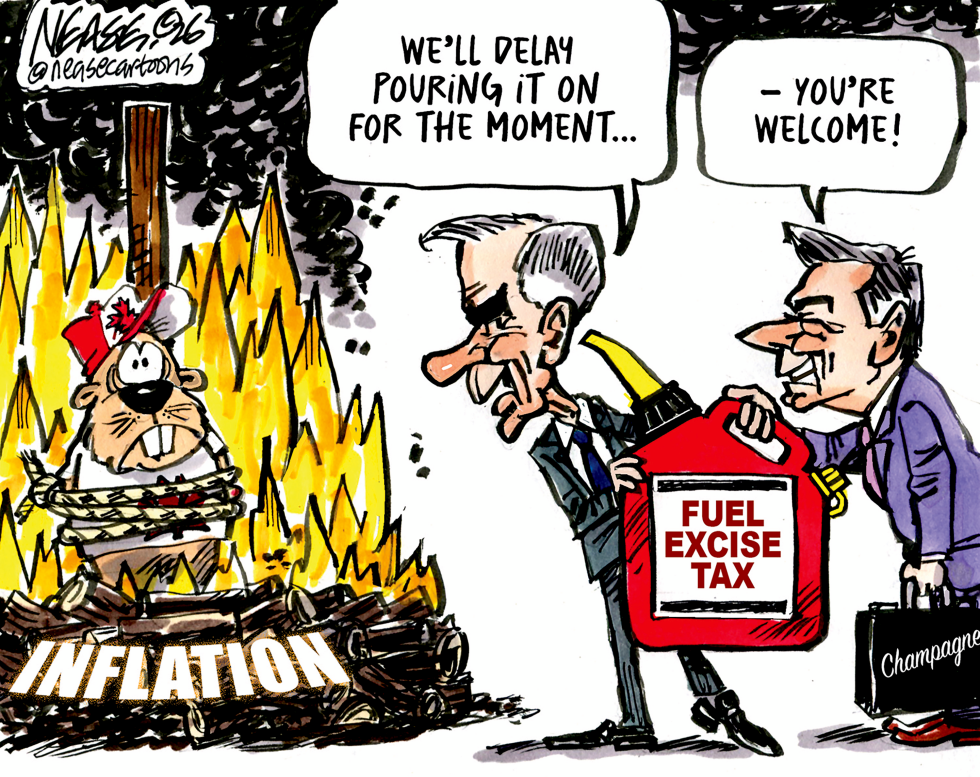
President Biden announced a delay in implementing a fuel excise tax increase amid ongoing inflation pressures. The move aims to ease costs at the pump for consumers. Critics argue the delay offers only temporary relief without addressing root causes. Supporters see it as a pragmatic step to stabilize prices. The editorial takes the position that such delays highlight inconsistent economic leadership.
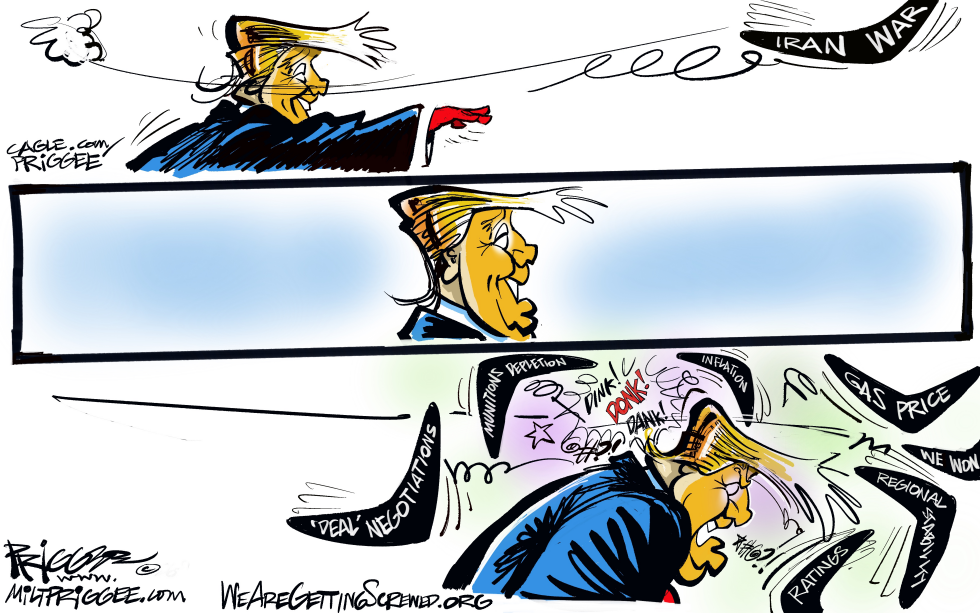
A political cartoon depicts Donald Trump launching an Iran war boomerang that returns to strike him with multiple crises. The image shows the former president hit by labels including inflation, gas prices, munitions depletion and falling ratings. The cartoon responds to ongoing tensions with Iran and the domestic fallout from military engagement. It illustrates how the conflict decision led to economic pressures and political damage as of the September 2026 publication date.
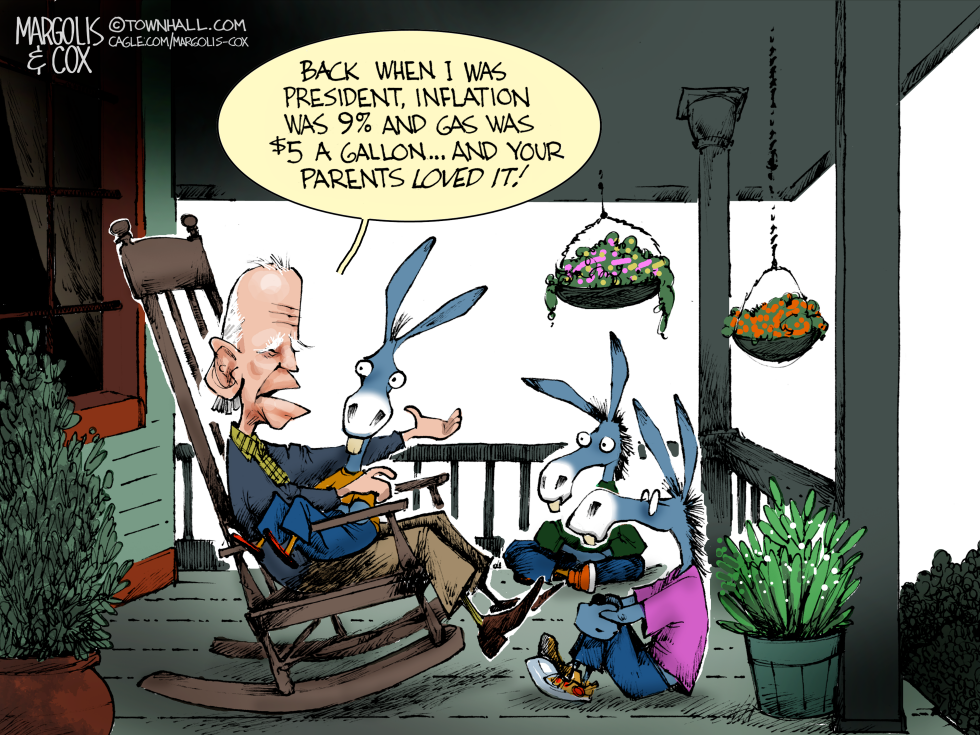
Former President Joe Biden addressed young Democrats on a porch, recalling the 9 percent inflation and $5-per-gallon gas prices from his term as something their parents loved. The remark comes amid ongoing Democratic efforts to move past the economic record of the Biden years. The cartoon presents the comment as tone-deaf revisionism that highlights the party's difficulty distancing itself from those results.
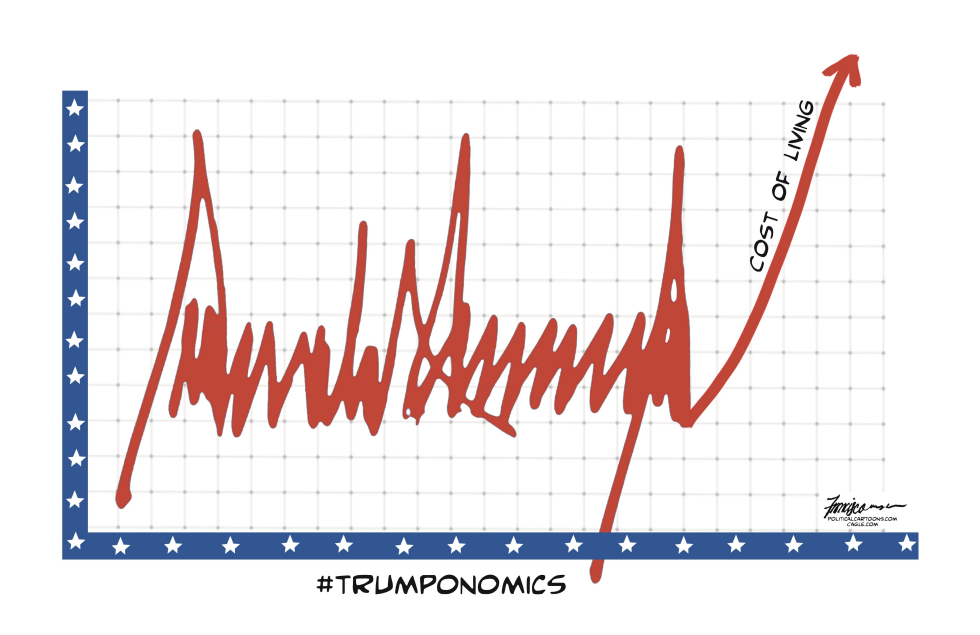
A new graph depicts the term Trumpnomics as a volatile red line that ends in a sharp upward spike labeled cost of living. The image responds to ongoing public concern over inflation and household expenses under the current administration. Critics argue that recent economic measures have failed to contain price growth. Supporters point to other factors such as global supply chains. The piece takes the position that Trumpnomics directly contributes to higher living costs.
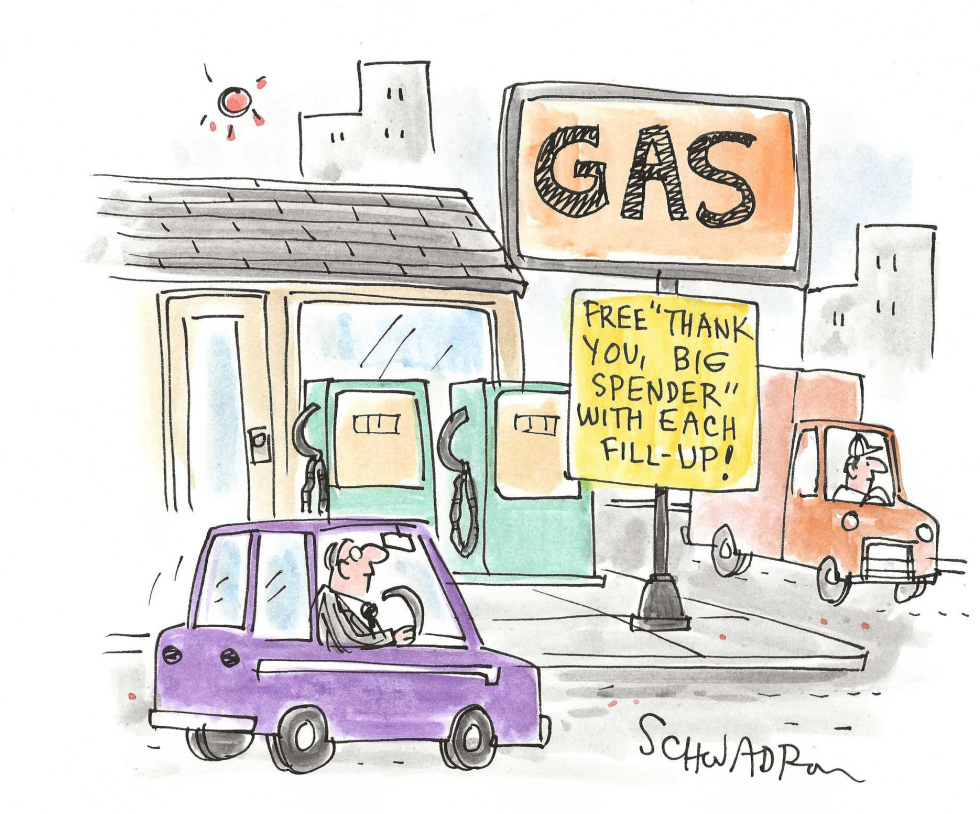
High gasoline prices continue to strain household budgets as drivers face elevated costs at the pump. The cartoon depicts a gas station using a sarcastic promotion that labels every fill-up customer a big spender. This reflects ongoing public frustration with energy costs and their impact on daily commuting and small business operations. The piece takes the position that such prices make routine purchases feel extravagant.
Rising living costs continue to squeeze household budgets as families navigate post-pandemic recovery and persistent price pressures on travel and leisure. A classroom scene captures one student's report on what his parents could not afford during summer break, underscoring how everyday families feel the pinch. The piece frames the issue as a direct consequence of ongoing economic conditions affecting ordinary households.
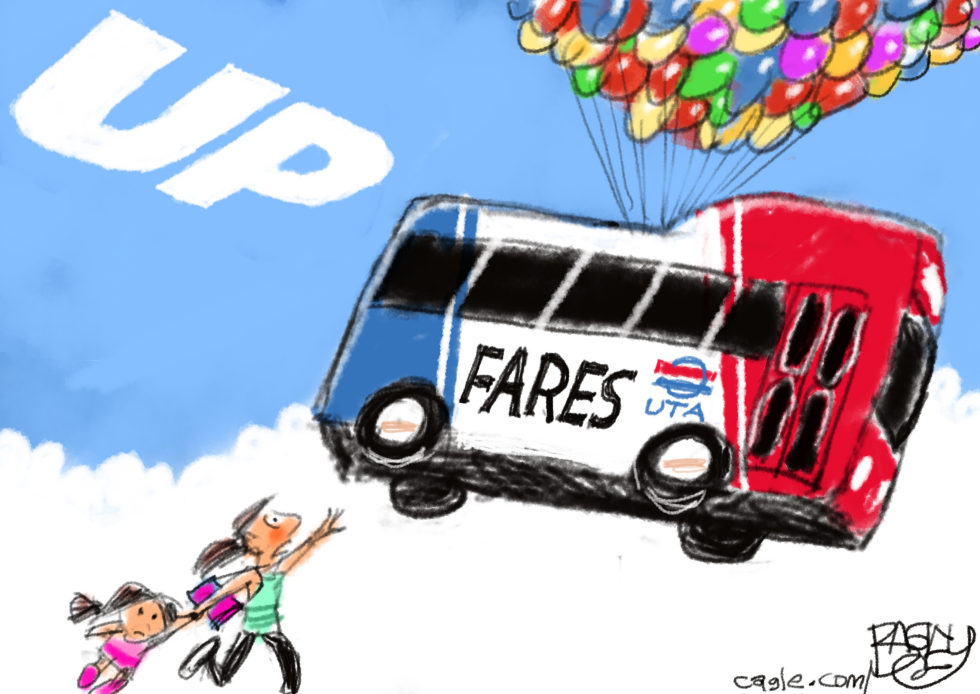
Utah Transit Authority faces pressure to increase bus fares amid broader cost pressures affecting public services. The development matters because higher fares can reduce ridership and strain lower-income households that rely on transit. The piece argues that these increases are being driven by external forces that riders are actively trying to resist.