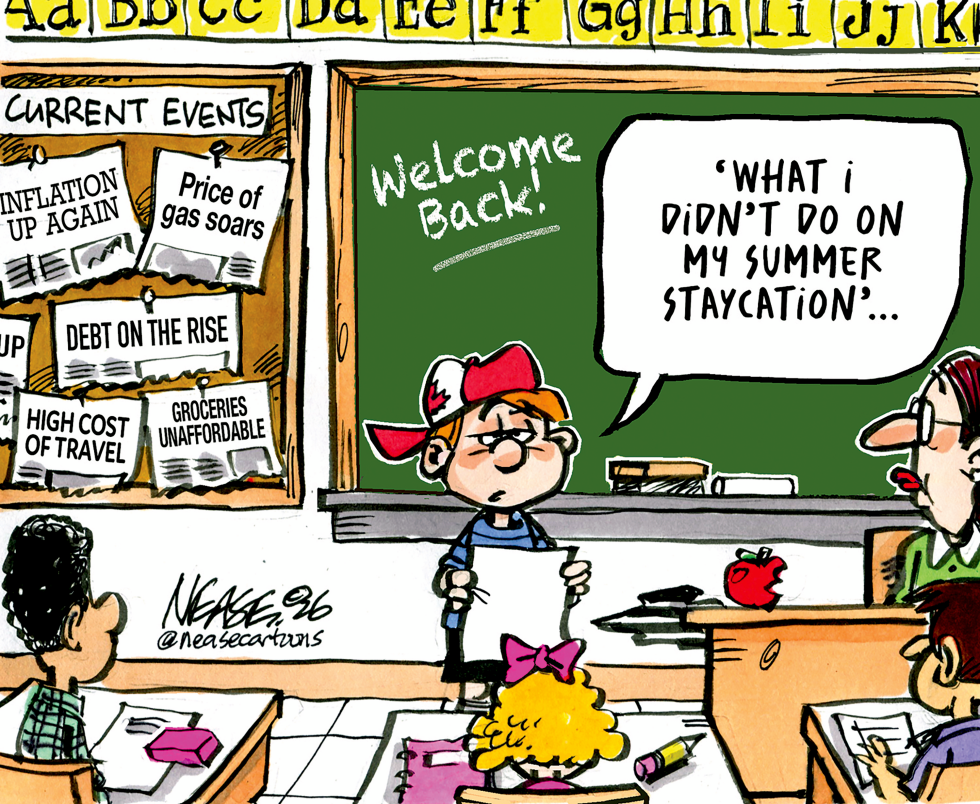
Rising inflation, gas prices, and household debt have made traditional summer vacations unaffordable for many families, leading to increased staycations as the new school year starts. The cartoon captures this cost-of-living squeeze through a classroom presentation on what students did not do over the break. It underscores how everyday expenses now dominate family decisions and limit leisure options.
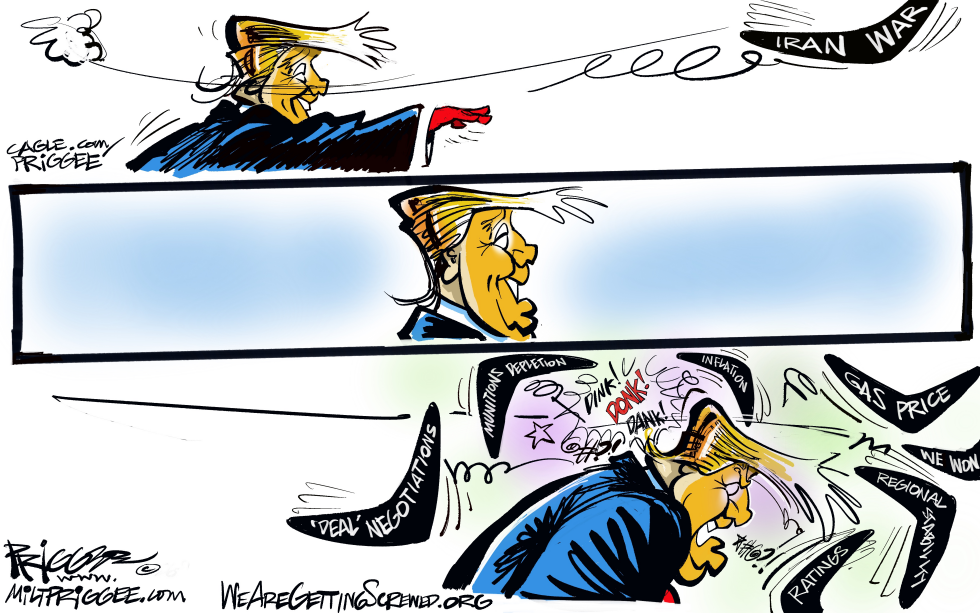
A political cartoon depicts Donald Trump launching an Iran war boomerang that returns to strike him with multiple crises. The image shows the former president hit by labels including inflation, gas prices, munitions depletion and falling ratings. The cartoon responds to ongoing tensions with Iran and the domestic fallout from military engagement. It illustrates how the conflict decision led to economic pressures and political damage as of the September 2026 publication date.
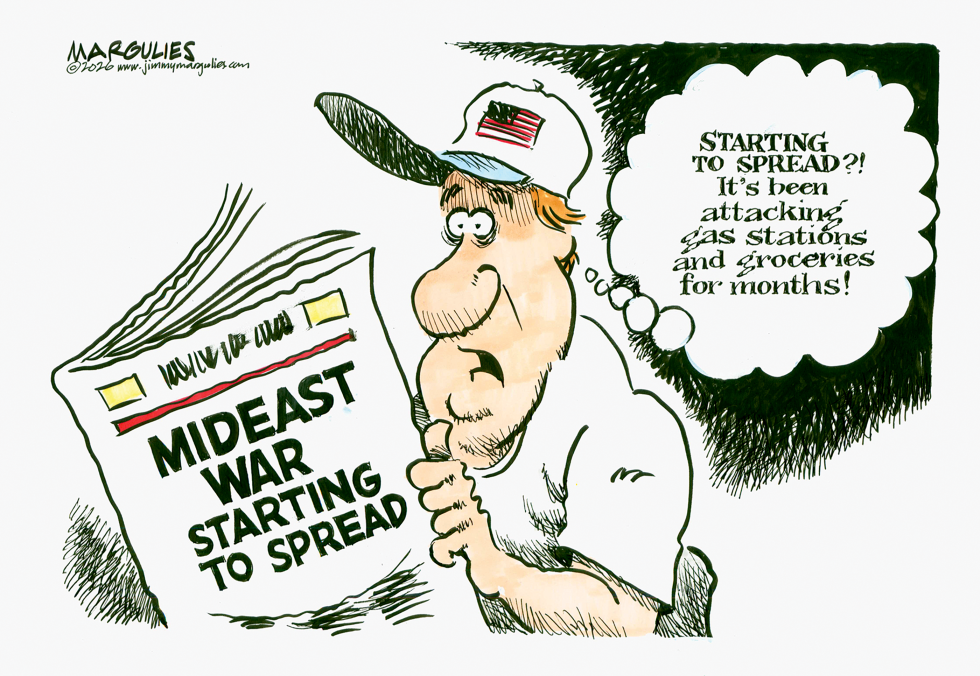
A newspaper headline declares the Mideast war starting to spread, prompting public reaction over its effects on daily costs. The piece highlights how energy and food prices have already risen due to ongoing regional conflict. It takes the position that the economic consequences for Americans have been evident long before any formal expansion of the fighting.
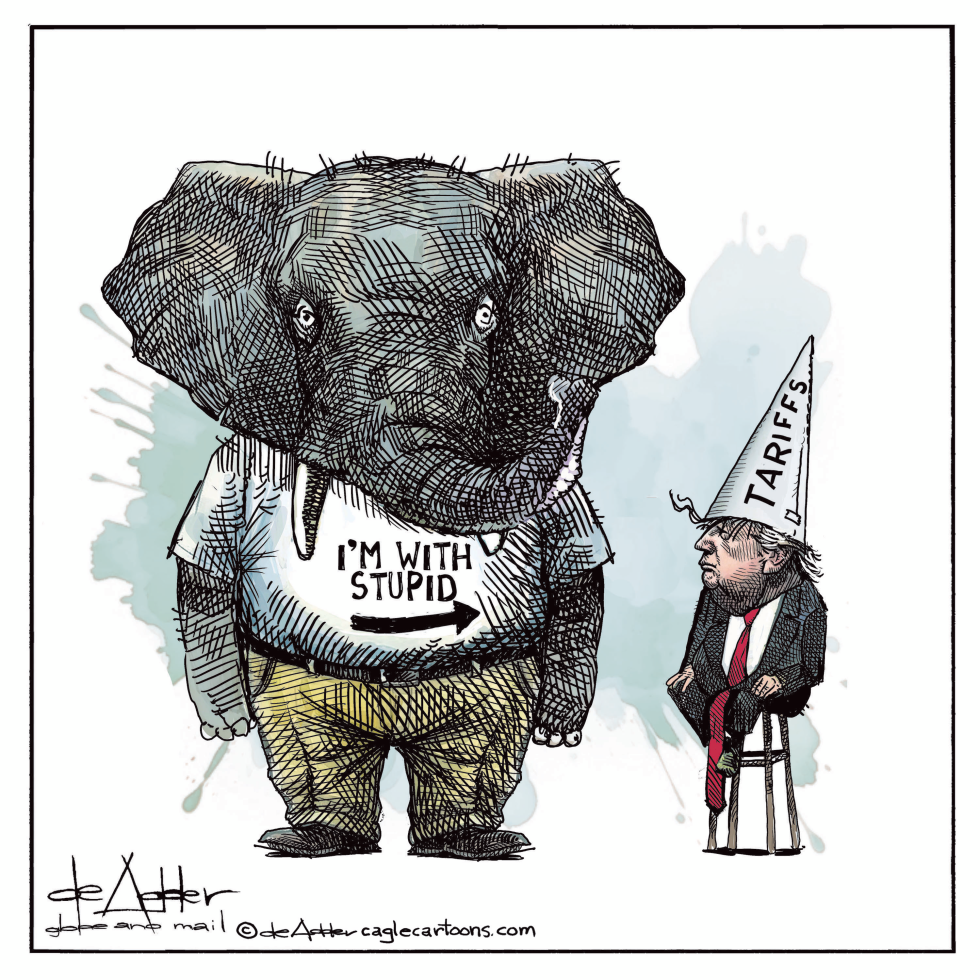
Donald Trump faces renewed scrutiny over his tariffs approach as the Republican Party grapples with the economic fallout. The policy has drawn internal party tension amid broader trade debates. The piece portrays the GOP as aligned with a flawed leader on the issue.
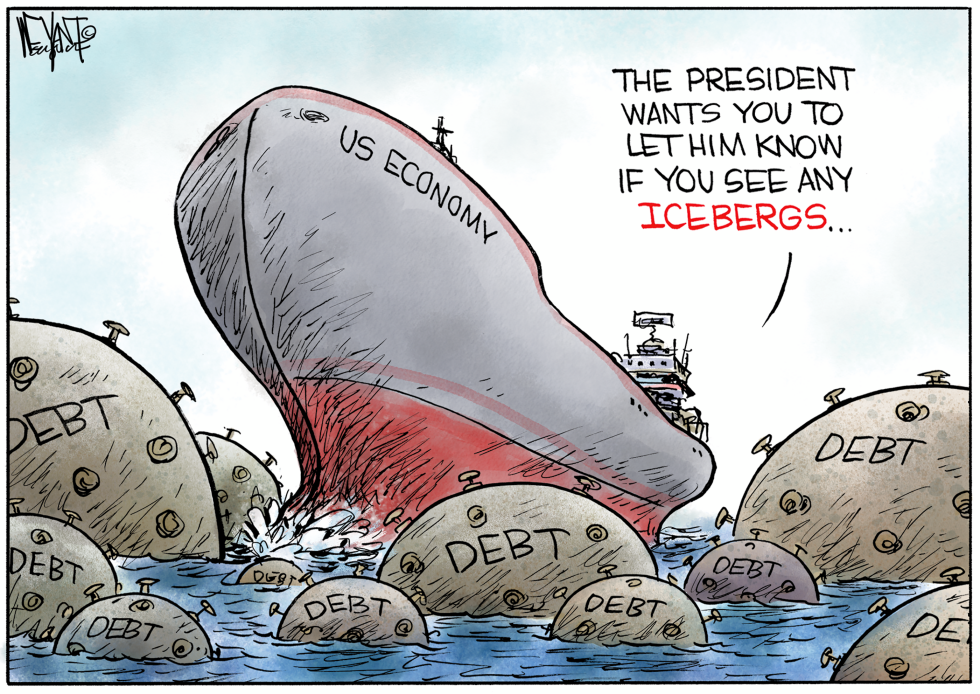
This political cartoon illustrates the US Economy as a massive ship labeled accordingly, dramatically sinking after colliding with numerous icebergs each marked 'DEBT.' A speech bubble from the ship warns to alert the president about icebergs, evoking the Titanic disaster in a clear metaphor for economic peril. Incorporating tags such as economy, debt, budget, inflation, prices, and costs, the image critiques fiscal irresponsibility. The artwork by Christopher Weyant uses simple lines and colors to emphasize the collision's impact, with water splashing and the ship's hull damaged. Such cartoons often highlight how mounting debt threatens stability, drawing parallels to historical maritime tragedies for satirical effect. The composition places the ship at an angle, surrounded by floating debt bergs, underscoring inevitable crisis if warnings go unheeded.
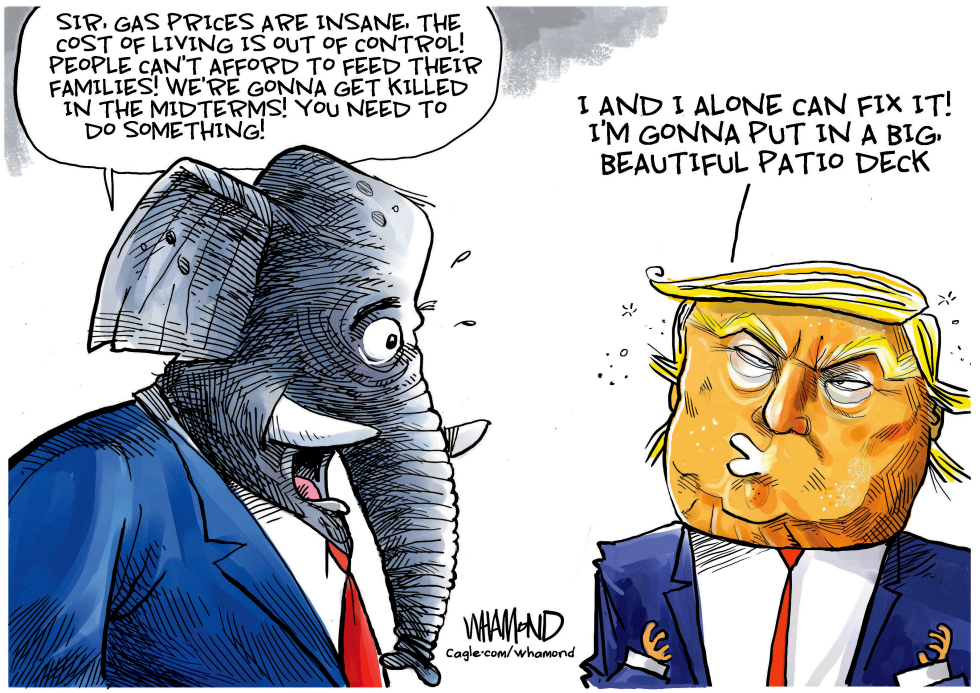
The image depicts an elephant character in a blue suit and red tie facing a caricature figure with yellow hair. The elephant's speech bubble lists concerns about gas prices, cost of living, and midterms. The other figure's speech bubble mentions fixing issues with a patio deck. The drawing includes the artist signature WHAMOND and Cagle.com/whamond credit line.
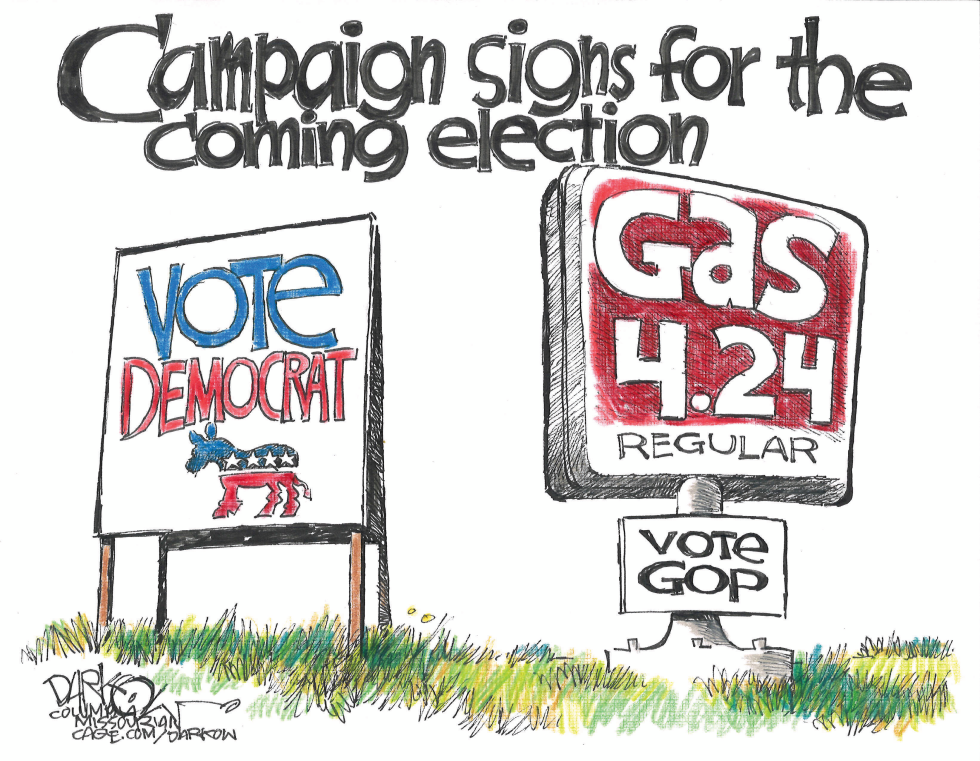
John Darkow's cartoon shows campaign signs for the coming election, with a straightforward Vote Democrat board featuring a blue donkey symbol, contrasted by a gas station-style sign advertising GAS 4.24 REGULAR and a small Vote GOP placard below. The image ties into 2026 midterms themes, highlighting gas prices, affordability, inflation, Strait of Hormuz tensions, cost of living pressures, and party strategies. The dry humor points to how economic issues like fuel costs become central in political advertising, with the GOP sign mimicking a bargain price to appeal to voters frustrated by rising expenses. This setup captures the insider view of how cartoons simplify complex voter concerns into visual punches.
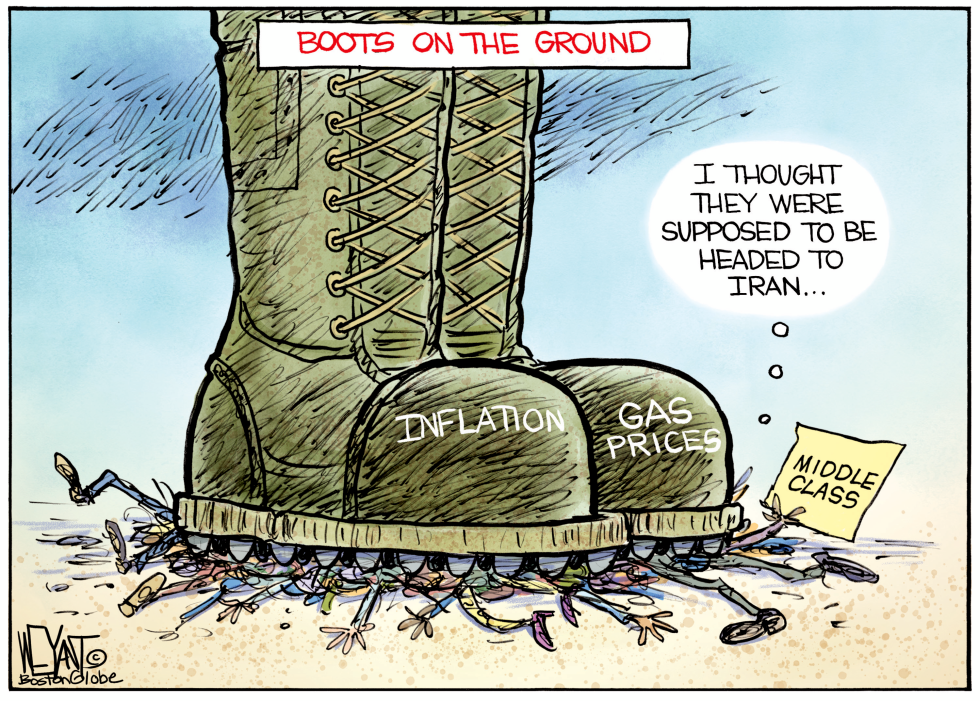
The cartoon shows a pair of massive military boots dominating the scene, one labeled 'Inflation' and the other 'Gas Prices,' as they crush small human figures on the ground, with a sign reading 'Middle Class' among them. A speech bubble from one of the crushed figures says, 'I thought they were supposed to be headed to Iran...' The title 'Boots on the Ground' sits at the top. This setup uses dry humor to highlight misplaced priorities in war, economy, inflation, gas prices, middle class, and Iran. The sandy ground and stormy sky add to the chaotic feel, tying into tags like Trump, negotiation, Strait of Hormuz, and domestic policy impacts.
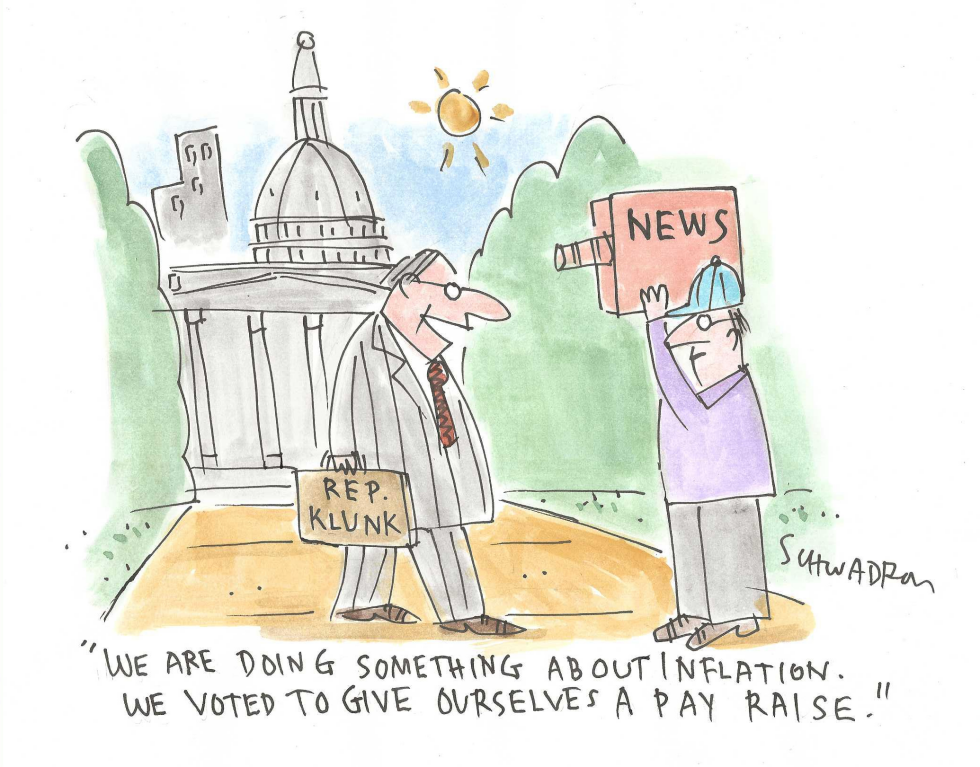
On September 9, 2025, a political cartoon depicts Representative Klunk leaving the Capitol building while a news reporter captures his statement that Congress addressed inflation by voting itself a pay raise. The scene shows the lawmaker in a suit and tie holding a briefcase, with the Capitol dome and trees in the background under a sunny sky. The cartoon highlights the disconnect between public economic concerns and legislative self-benefit.
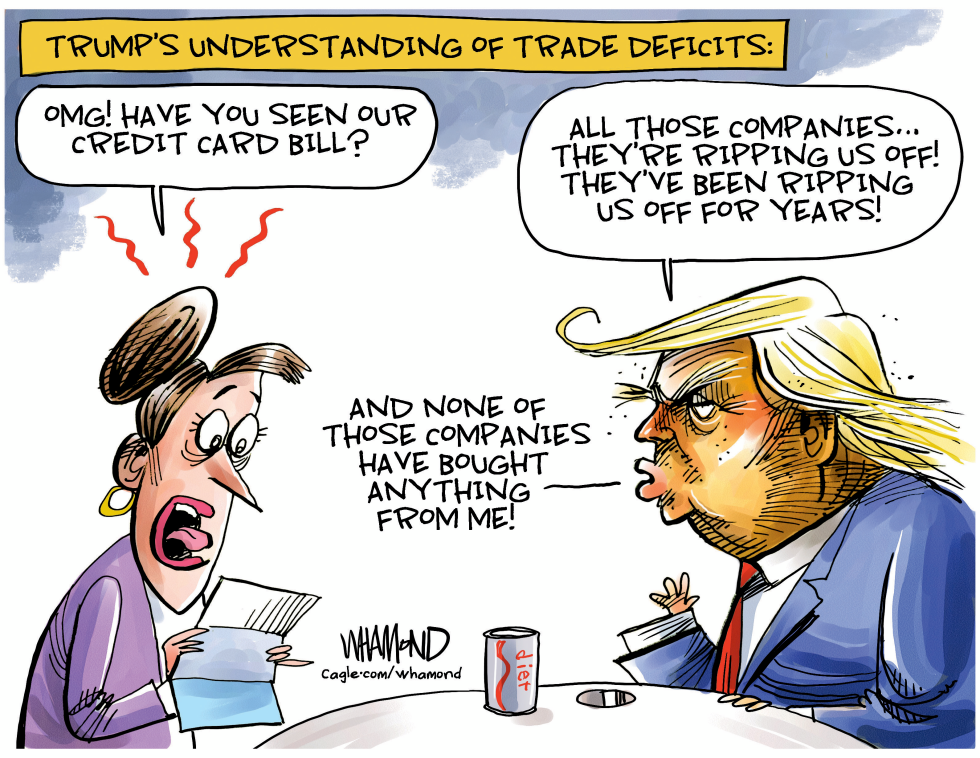
The August 2025 cartoon by Dave Whamond depicts Donald Trump misunderstanding trade deficits by comparing them to an unpaid credit card bill. Trump complains that companies have been ripping the US off for years and none have bought anything from him. The scene uses a domestic table setting to highlight the former president's focus on imports over balanced trade metrics like exports of goods and services.
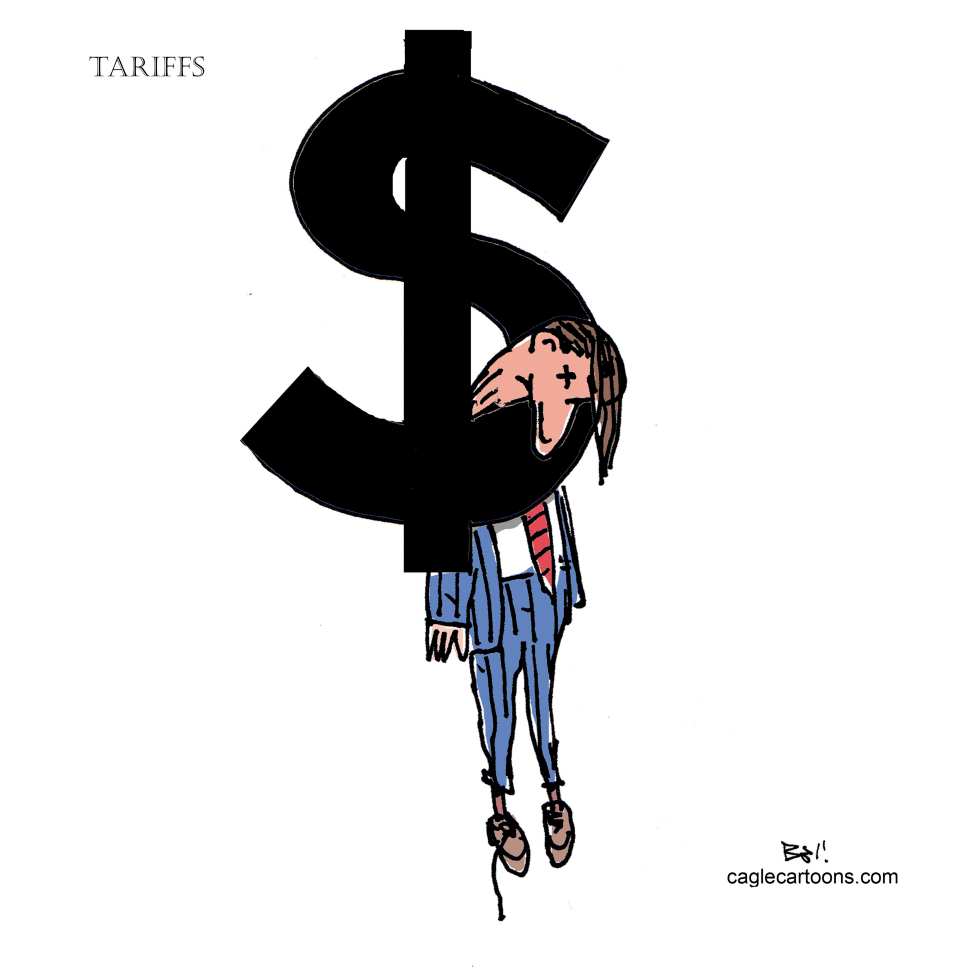
The image shows a suited figure with distinctive hair and tie suspended beneath a massive dollar sign. The word TARIFFS appears in the upper left. Publication occurred on April 18 2025 during renewed focus on import taxes and their economic ripple effects.
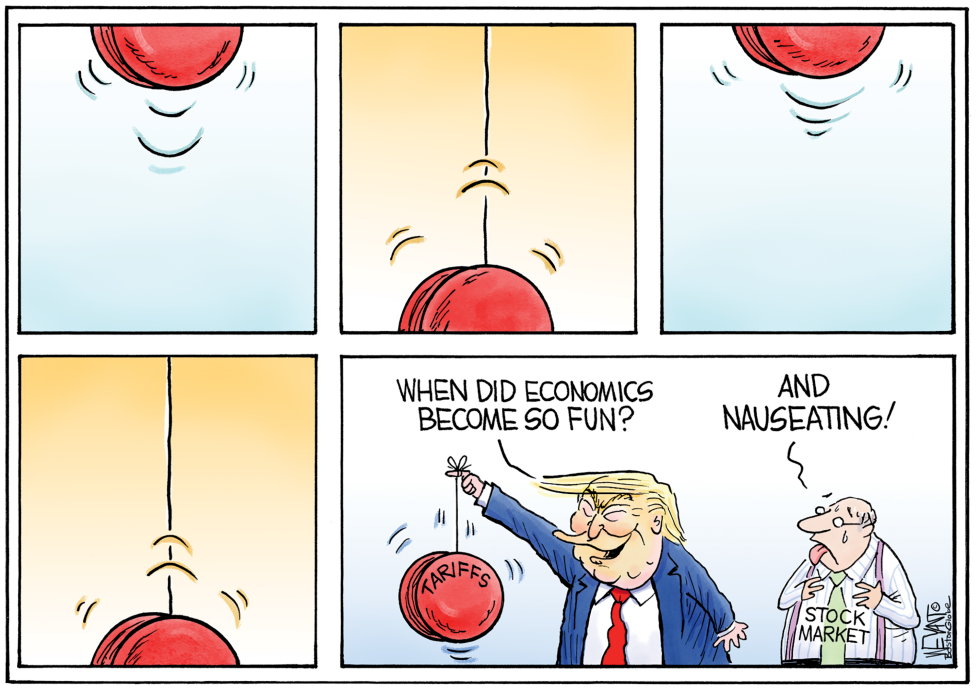
A five-panel comic shows a red yo-yo labeled tariffs in motion across frames. Donald Trump holds the string in the final panel while a man labeled stock market clutches his stomach in distress. Text reads when did economics become so fun and and nauseating.
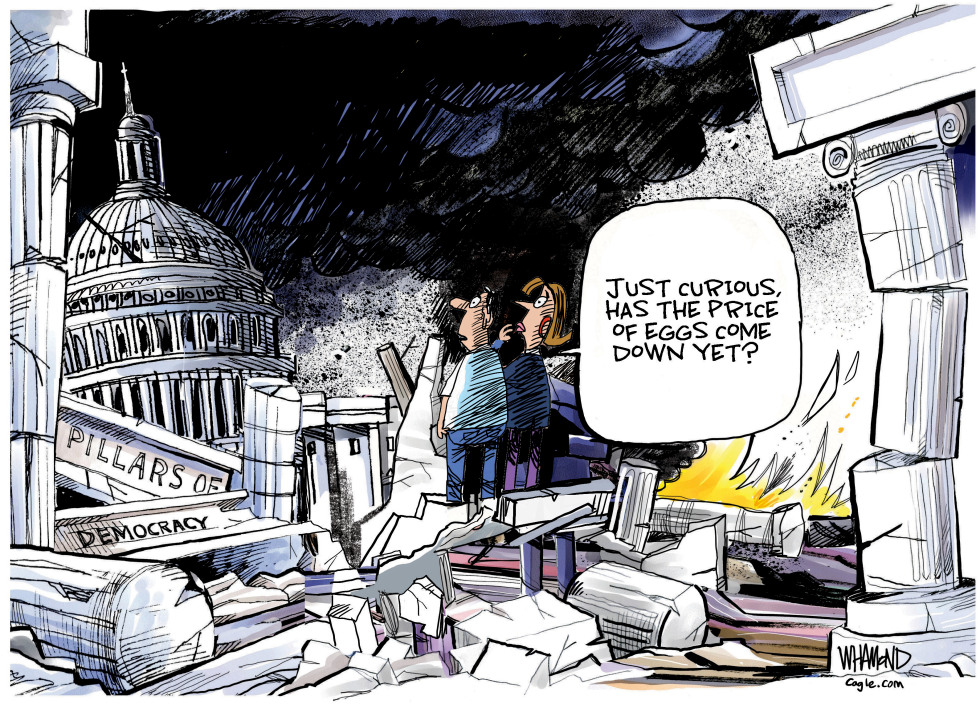
A political cartoon dated February 2, 2025, depicts the U.S. Capitol in ruins with broken pillars labeled 'PILLARS OF DEMOCRACY.' Two onlookers stand amid debris as one asks if egg prices have dropped. The image references ongoing debates over inflation, tariffs, and government changes following the 2024 election. Artist Dave Whamond uses destruction to highlight perceived costs of recent political decisions.
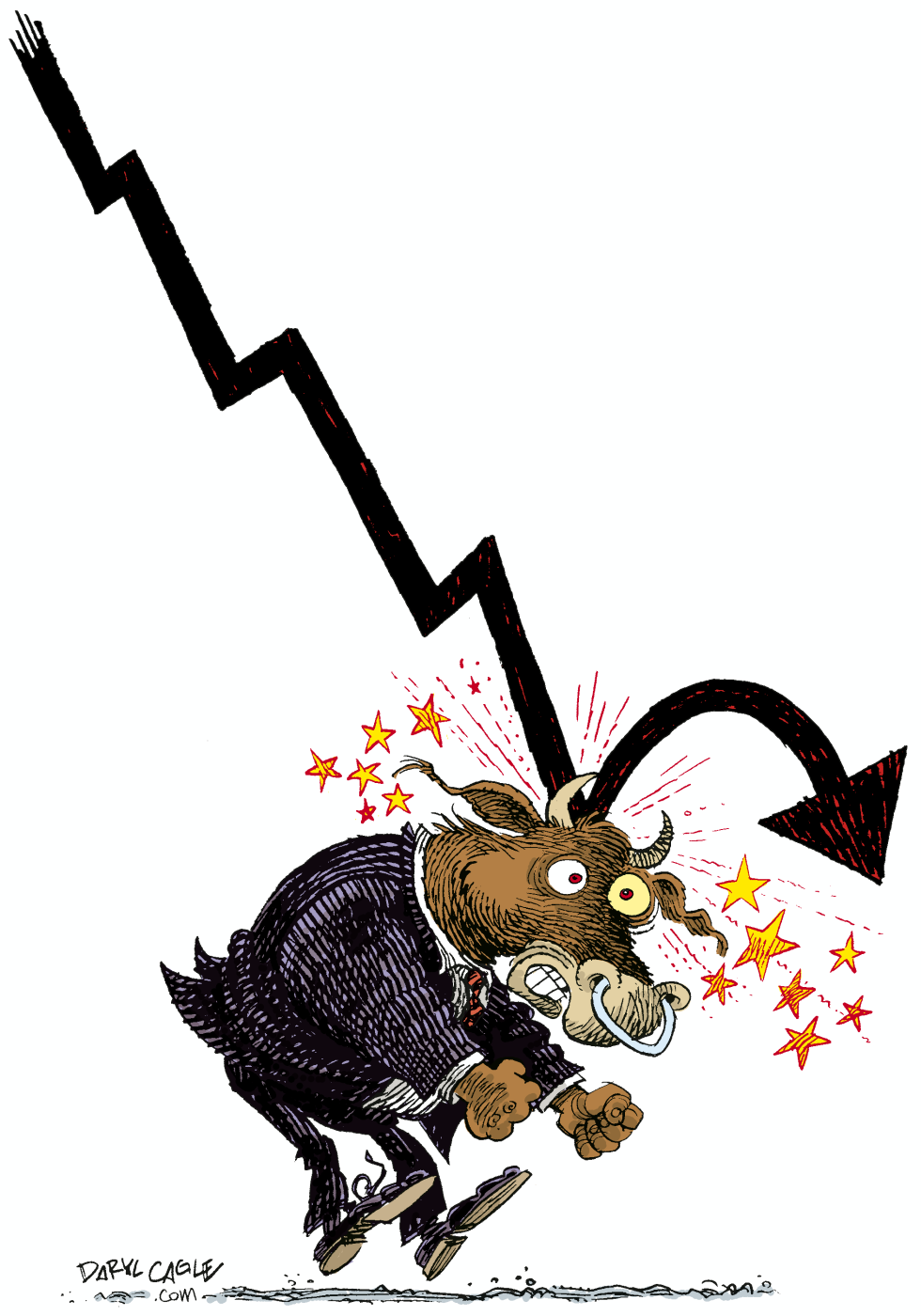
A suited bull representing Wall Street reels from a massive downward arrow on September 24 2022. The jagged line traces a steep decline in major indexes including the Dow and S&P 500. Red impact lines and scattered stars emphasize the sudden drop in stock prices and investor holdings.