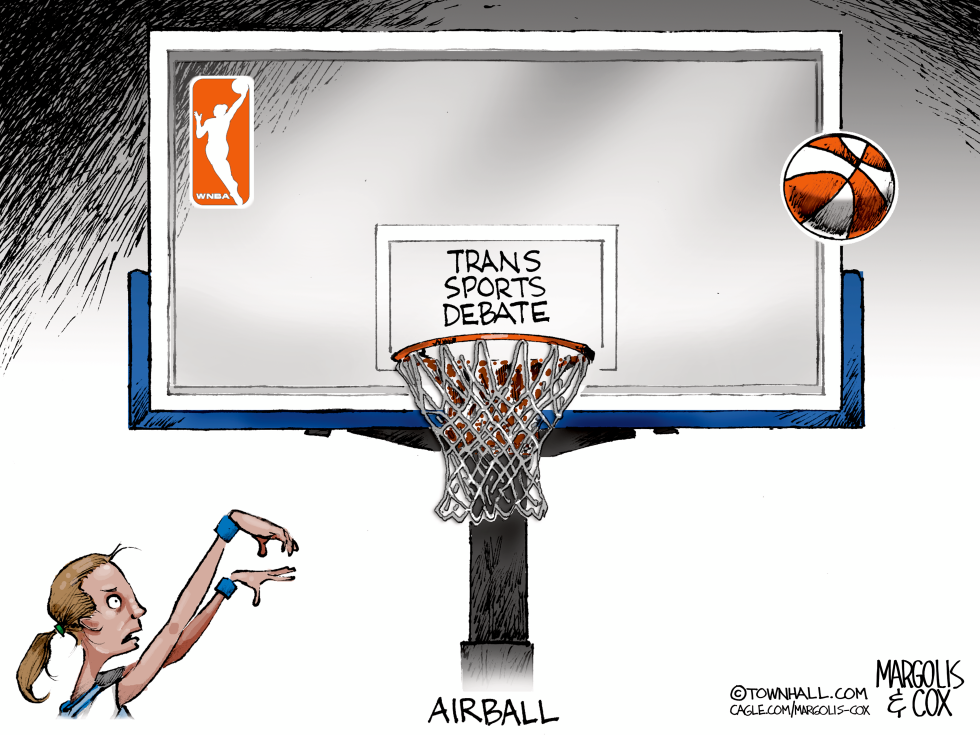
The WNBA has drawn criticism for its handling of transgender participation in women's sports amid ongoing policy debates. A recent cartoon uses a basketball airball metaphor to highlight the league's perceived avoidance of the issue. The piece argues the organization is failing to address fairness concerns raised by athletes and fans. Critics say the league prioritizes other messaging over resolving competitive equity questions in women's basketball.
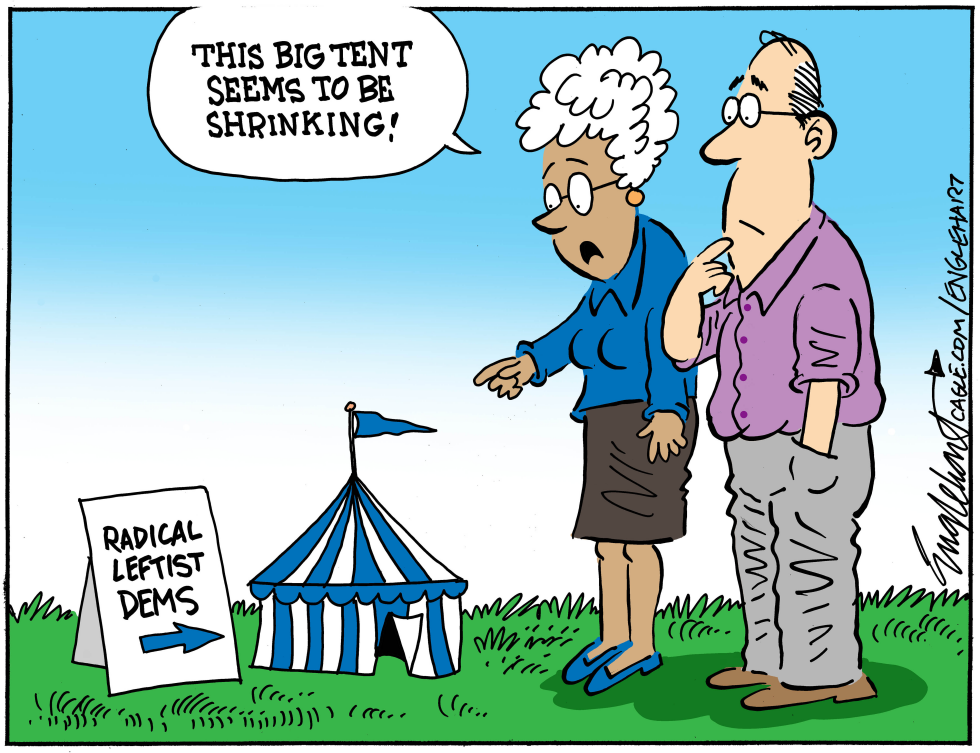
Democratic Party figures have grown concerned that the traditional big tent coalition is contracting as radical leftists consolidate control over the party's direction and messaging. The shift sidelines moderates and narrows the range of acceptable views within the organization. This dynamic raises questions about the party's ability to maintain broad electoral appeal in upcoming cycles. The editorial takes the position that the exclusionary turn is self-defeating and accelerates the party's isolation from mainstream voters.
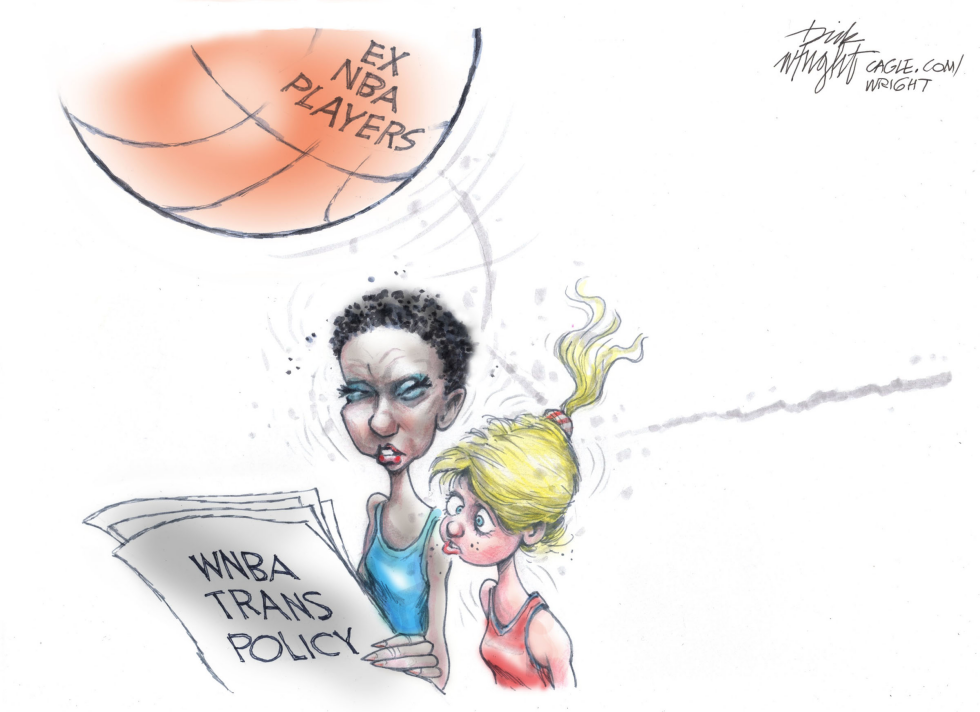
Former NBA players have begun publicly commenting on the WNBA's transgender participation policy amid broader discussions about fairness and safety in women's professional basketball. The involvement of ex-NBA voices adds external pressure to an internal league matter that affects roster decisions and competitive standards. The piece portrays the policy review as under direct challenge from these outside perspectives.
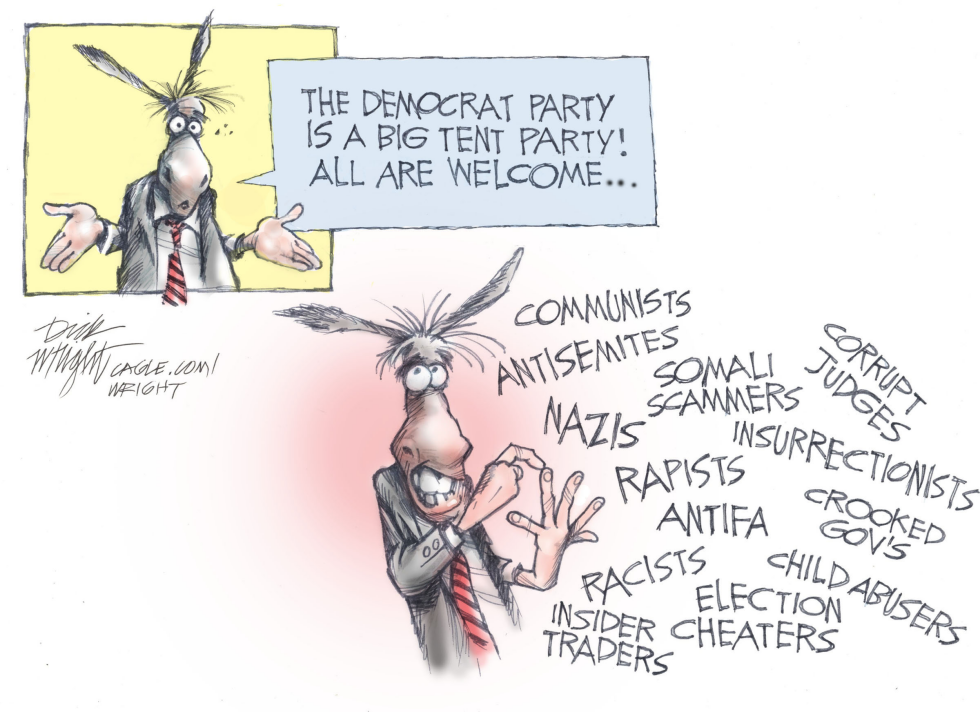
A July 2026 cartoon by Dick Wright depicts the Democrat Party's big tent claim through an inset donkey figure. The main character, also a donkey in a suit, gestures amid a cloud of labels naming groups such as communists, antisemites, Nazis, rapists, Antifa, racists, and election cheaters. The image critiques the party's inclusivity rhetoric by associating it with these categories. Publication occurs amid ongoing partisan debates over party platforms and voter bases.
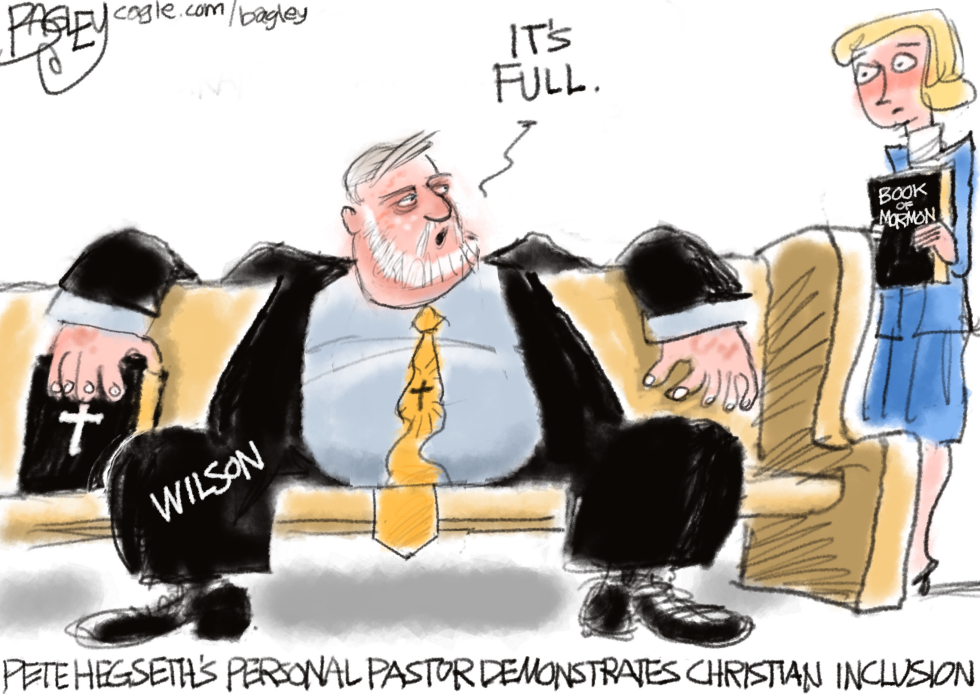
The July 2026 cartoon depicts Pastor Wilson seated on a couch holding a cross-emblazoned book and stating it is full. A woman stands nearby offering the Book of Mormon. The caption states that Pete Hegseth's personal pastor demonstrates Christian inclusion. The image responds to ongoing discussions about religious boundaries and denominational acceptance tied to the defense secretary nominee's faith advisors.
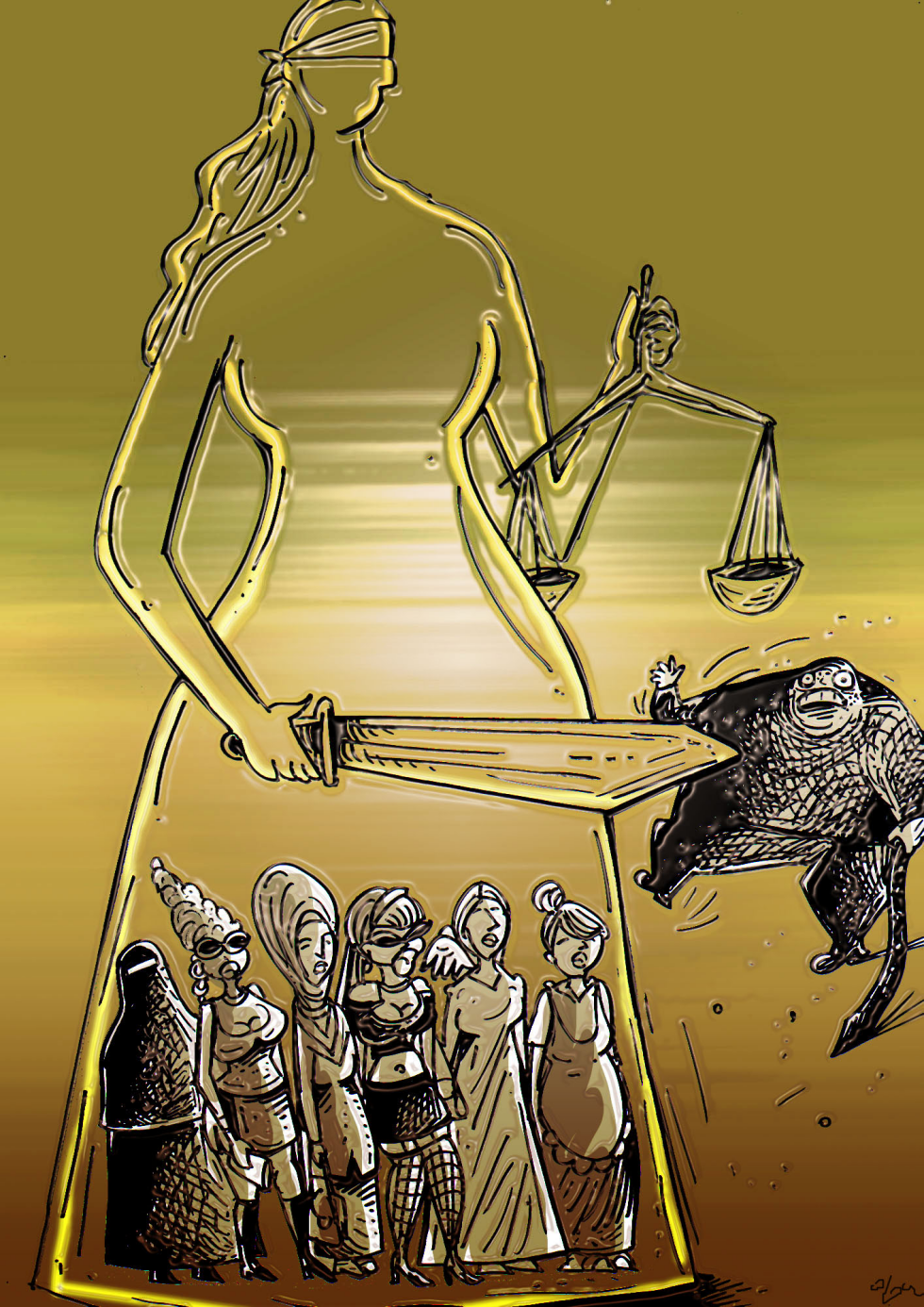
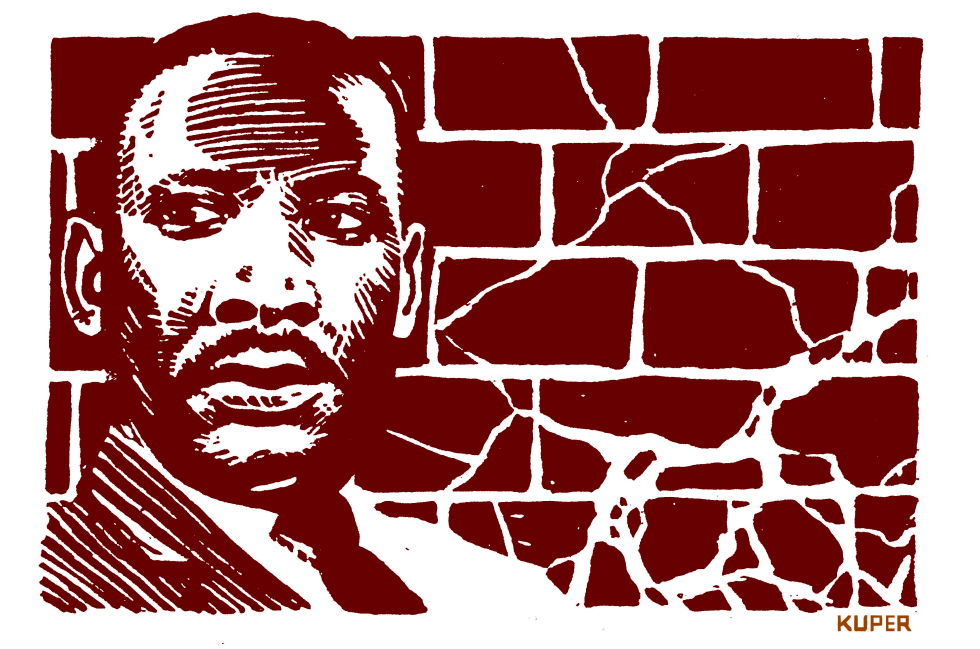
The justice system continues to face scrutiny over its ability to protect vulnerable populations amid ongoing debates about fairness and representation. Public attention remains on how courts and legal symbols address threats to safety and equality. The piece argues that justice must actively confront dangers while encompassing the diversity of those it serves.
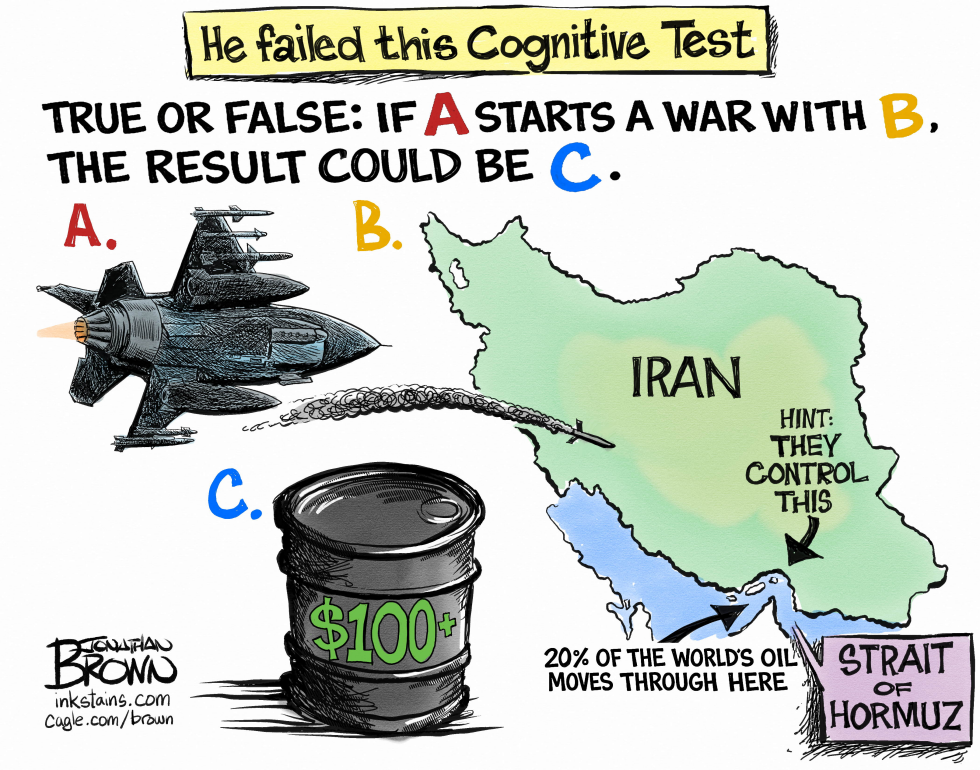
Jonathan Brown's cartoon presents a stark true-or-false cognitive test: if A (a fighter jet) starts a war with B (Iran), the result could be C (an oil barrel marked $100+). The map of Iran includes a hint pointing to the Strait of Hormuz, noting that 20% of the world's oil moves through there, underscoring control over this chokepoint. Tags such as cognitive test, war in Iran, oil prices, Strait of Hormuz, gas prices, and cost of war frame the satire. The artwork warns of economic fallout from conflict, with the jet trailing toward Iran and the oil barrel symbolizing surging costs. This piece captures geopolitical tensions in a simple, visual riddle.
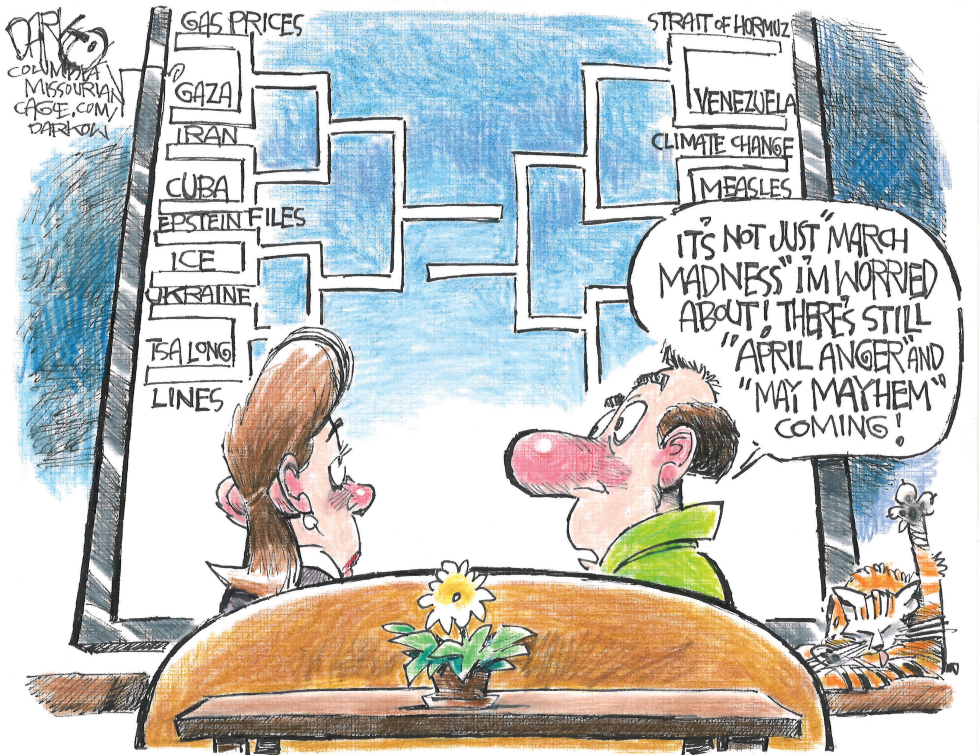
John Darkow's cartoon twists the March Madness tournament bracket into a lineup of global headaches, from gas prices spiking due to Strait of Hormuz tensions and Venezuela instability, to ongoing conflicts in Gaza and Ukraine. Measles outbreaks and climate change join the fray, alongside Cuba relations, Epstein files, ICE policies, and long TSA lines. The scene shows a couple at a table, with the man fretting that it's not just March Madness to worry about—April Anger and May Mayhem loom. A potted daisy and a striped cat add a touch of domestic normalcy to the absurd bracket of woes. This piece captures the relentless parade of news cycle disasters, using at least six tags like March Madness, Strait of Hormuz, Venezuela, measles, gas prices, and Gaza.
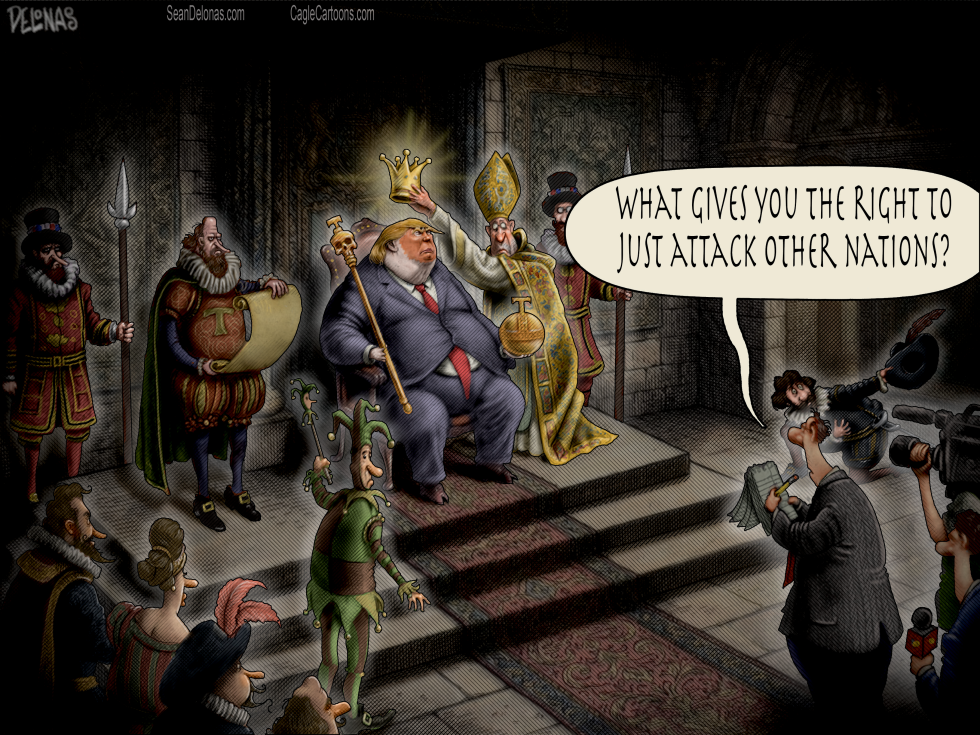
Sean Delonas captures Donald Trump as a rotund king lounging on a throne in a dimly lit castle hall, complete with a bishop crowning him with a glowing crown and a scepter in hand. Surrounded by medieval figures like guards, a jester, and courtiers, Trump faces a modern reporter wielding a microphone and notes, demanding to know what gives him the right to just attack other nations. The cartoon blends historical pomp with contemporary critique, tagging into Trump, wars, Iran, Venezuela, press, king, media, counterterrorism, military, policy, and president themes. The dry humor underscores the absurdity of unchecked power, with the artist's signature style emphasizing exaggerated features and satirical edge.