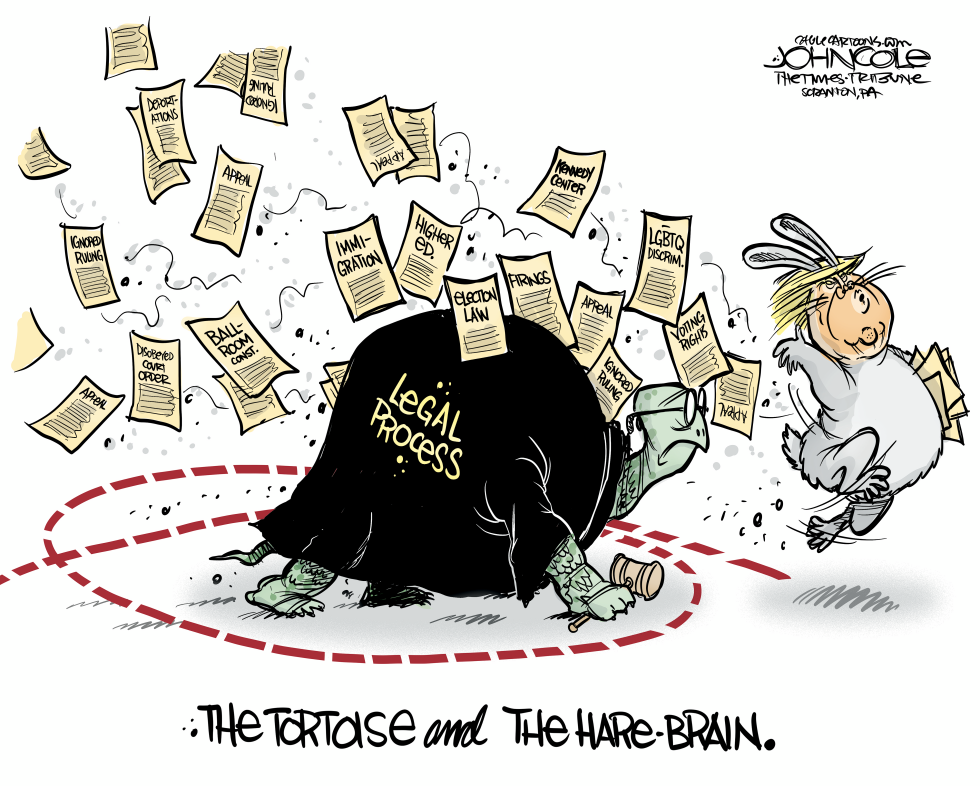
Multiple legal cases involving former President Trump continue through appeals on election law, voting rights, immigration rulings and related matters. The slow pace of the judicial system allows repeated filings and delays. The cartoon argues that this extended process effectively lets Trump run circles around accountability rather than face timely resolution on the merits.
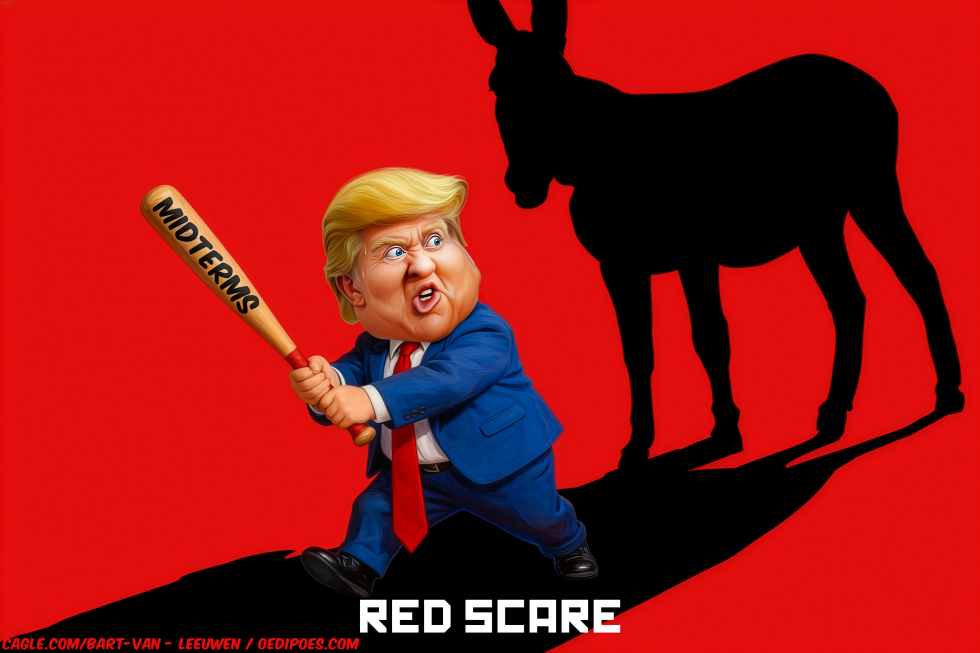
The cartoon shows Donald Trump in a blue suit swinging a baseball bat labeled MIDTERMS toward a black donkey silhouette on a red background. The phrase RED SCARE appears prominently at the bottom. Published on September 14, 2026, the image comments on Trump's approach to the upcoming midterm elections. It portrays the former president as aggressively pursuing Democratic opponents. The visual draws on historical Red Scare imagery to suggest fear-based political tactics. The composition places Trump in the foreground with the donkey shadow looming behind him.
Government agencies continue to expand regulatory frameworks across multiple sectors, adding layers of oversight that increase compliance costs for businesses and individuals. The trend reflects ongoing debates over the proper scope of administrative authority and its impact on economic activity. The piece argues that such expansion has crossed into excess, creating unnecessary obstacles rather than protecting the public.
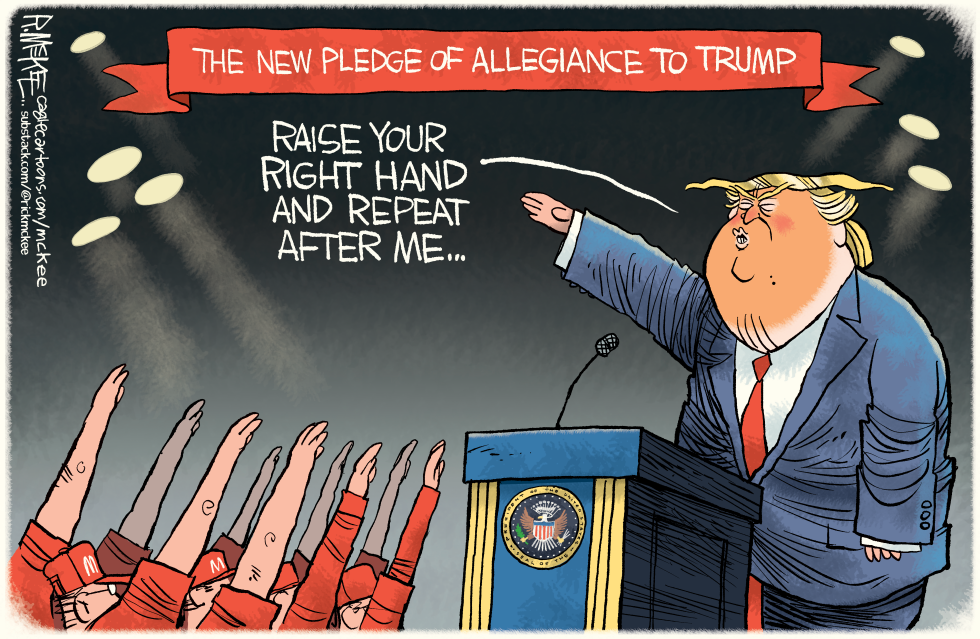
Donald Trump has instructed supporters to raise their right hands and repeat a pledge of allegiance to him personally rather than to the Constitution. The move comes amid ongoing efforts to consolidate power within the MAGA movement ahead of future elections. Critics see the ritual as an attempt to replace civic duty with personal fealty. The cartoon portrays the scene as a direct challenge to democratic norms and institutional loyalty.
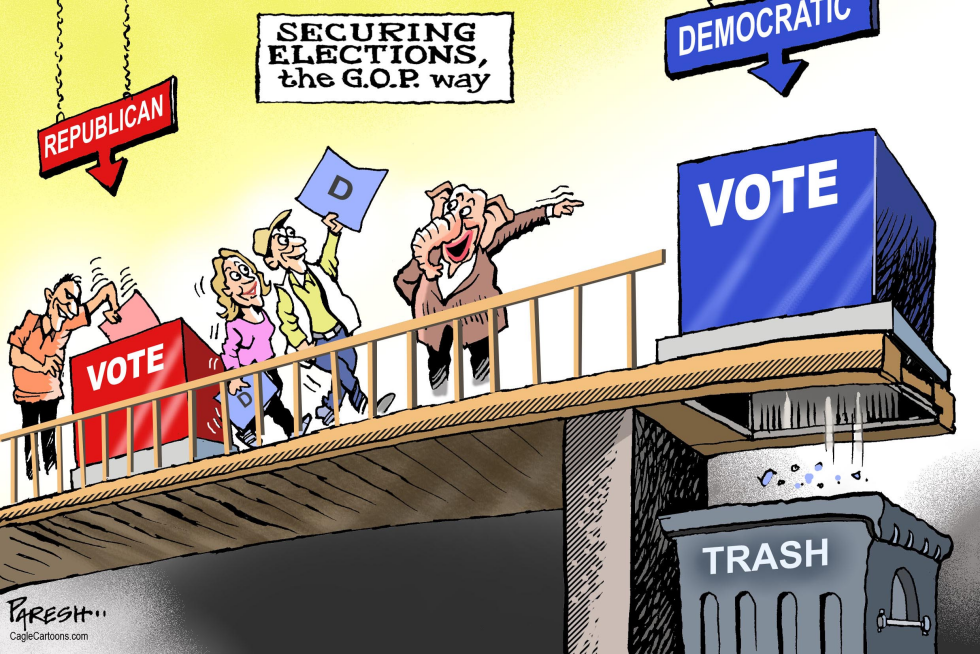
The cartoon depicts Republicans on a platform guiding a large blue vote box labeled Democratic into a trash can below while a red Republican vote box remains on the structure. A sign reads Securing Elections the G.O.P. way. The elephant symbol of the GOP points toward the action as figures including one holding a D flag stand nearby. The image comments on claims of election integrity by showing ballots from one party discarded. This reflects ongoing partisan debates over voting procedures and access as of the 2026 publication date.
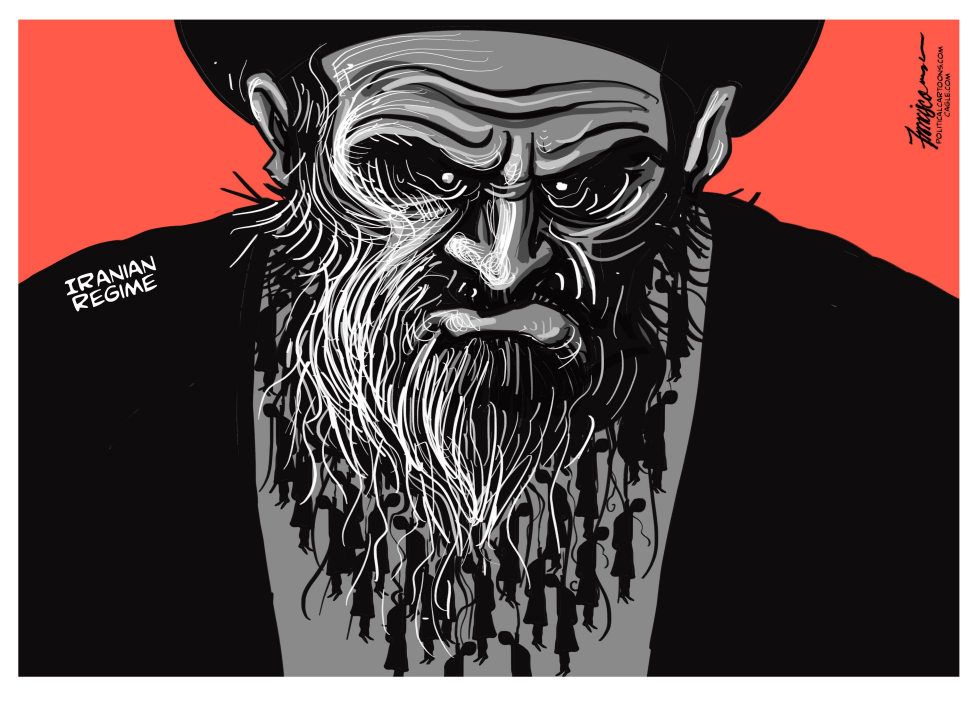
Iran continues to carry out executions at a high rate, targeting protesters, dissidents and minorities under the authority of Supreme Leader Ayatollah Ali Khamenei. The practice has drawn renewed criticism from human rights groups and Western governments concerned about due process and political repression. The cartoon frames the regime itself as the direct agent of these deaths, underscoring the leadership's personal responsibility for the ongoing campaign of hangings.
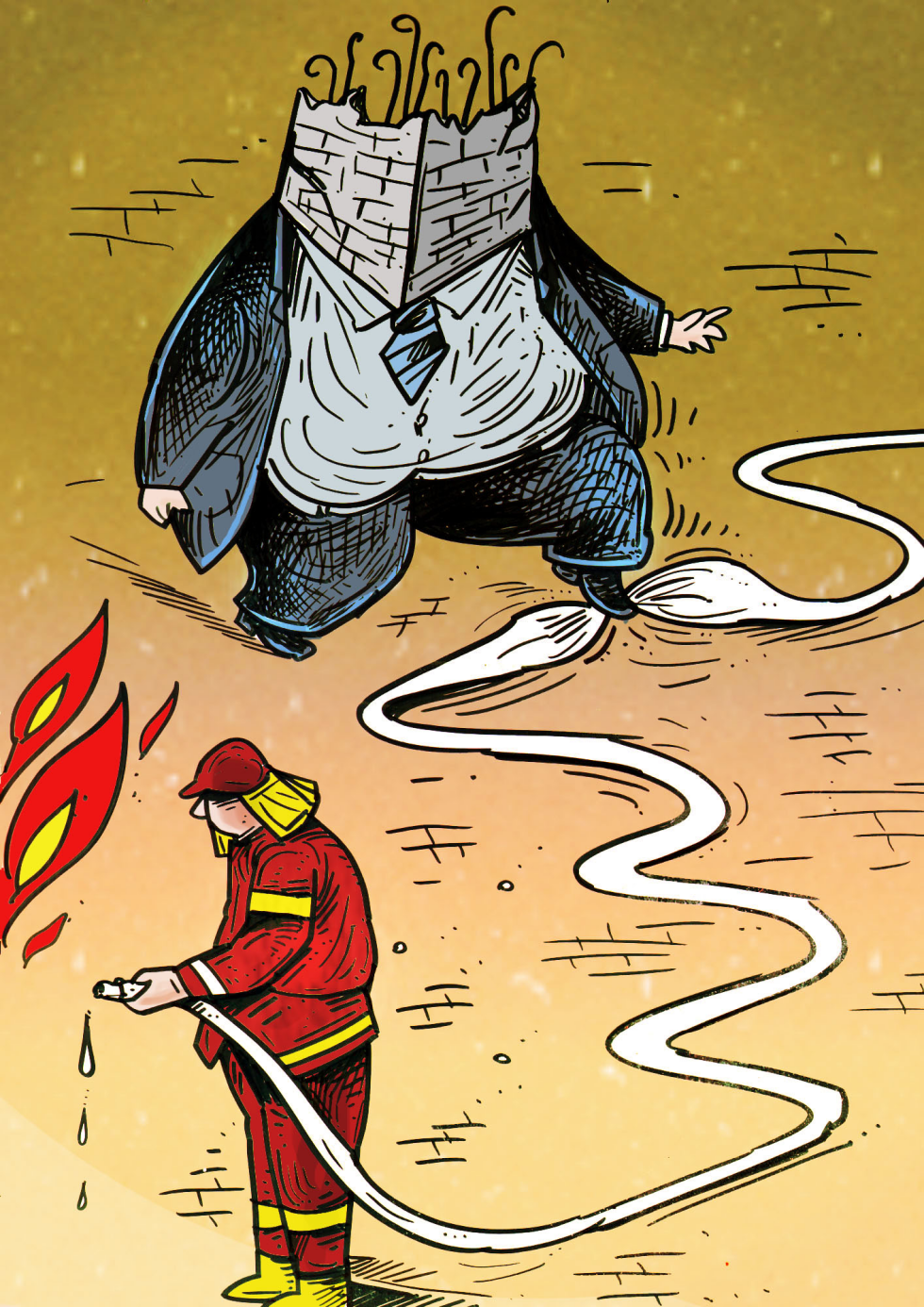
Government bureaucracy continues to slow emergency services through layers of procedure and obstruction. Officials embedded in routine create barriers that delay response times when speed matters most. The cartoon argues that such entrenched processes turn routine oversight into active hindrance during crises.
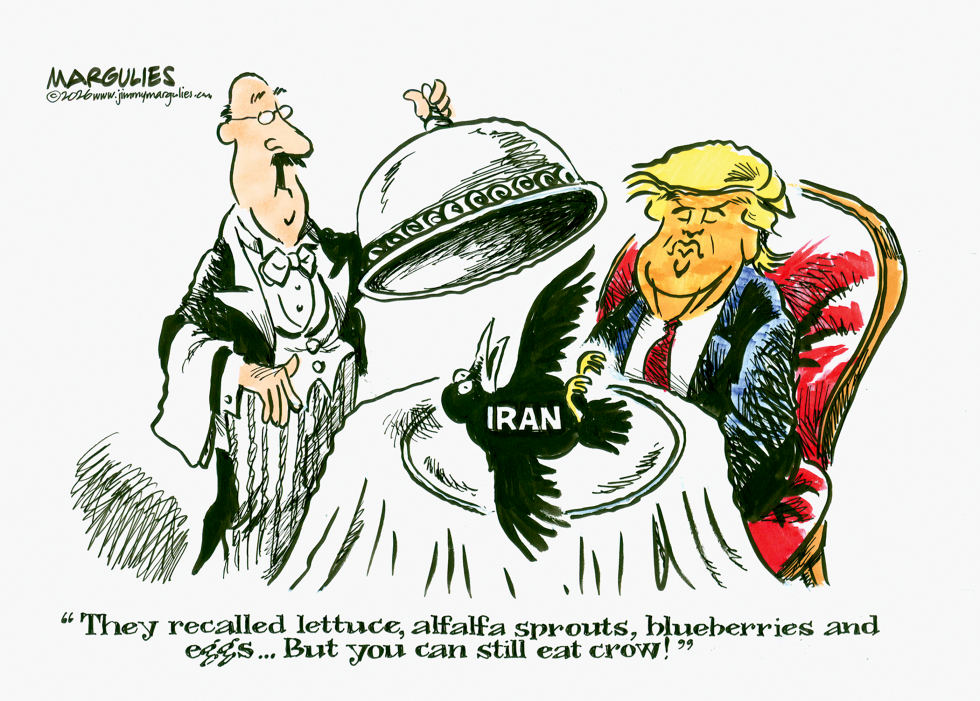
Donald Trump confronts a reversal on Iran policy in late August 2026. The development forces acknowledgment of earlier missteps on sanctions and negotiations. The episode highlights limits of unilateral pressure against Tehran. The cartoon presents the outcome as Trump being compelled to accept an unpalatable result.
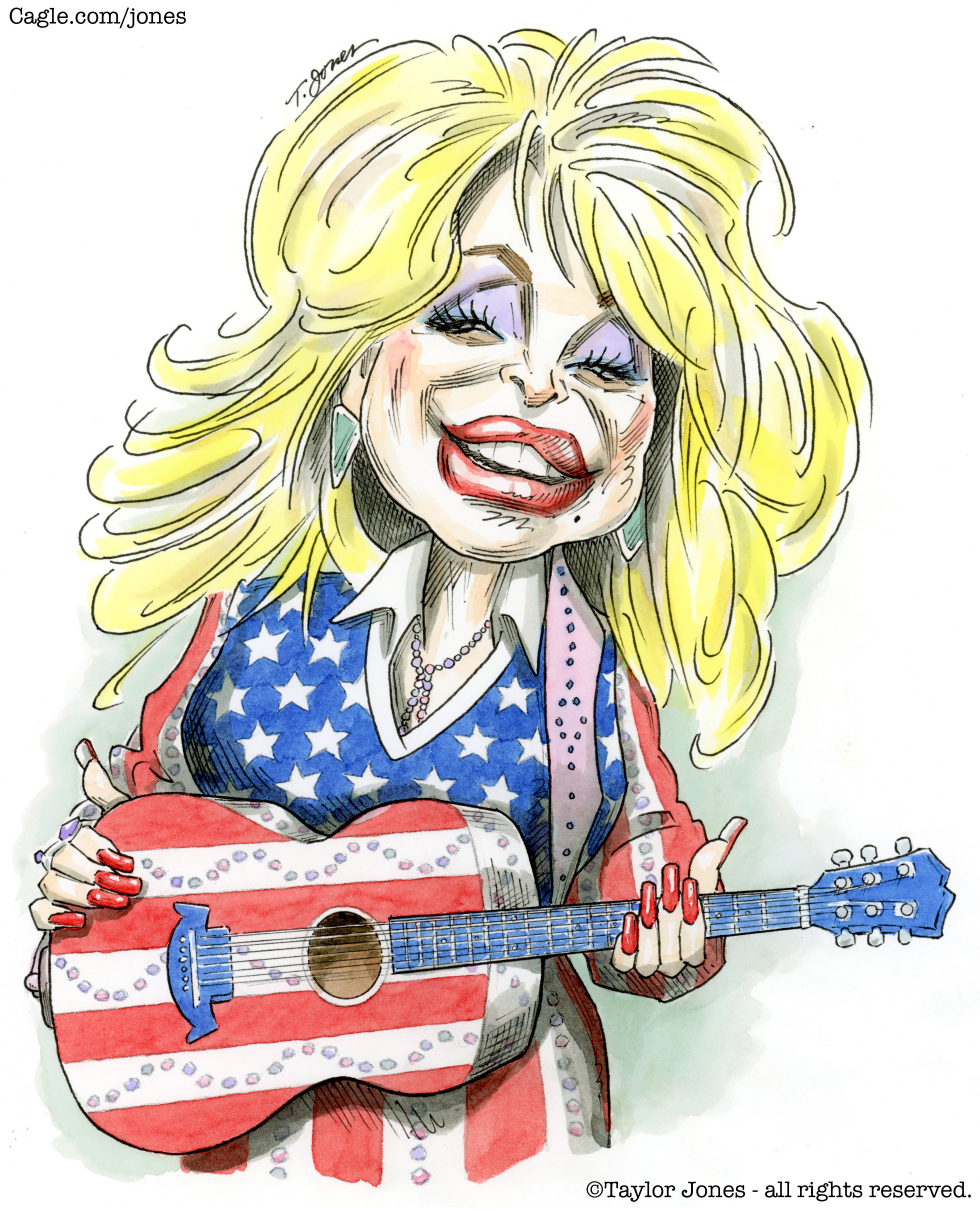
Dolly Parton appears in a vibrant portrait holding a guitar covered in American flag colors. The image captures her long standing role as a prominent figure in American entertainment without tying to any specific recent event.
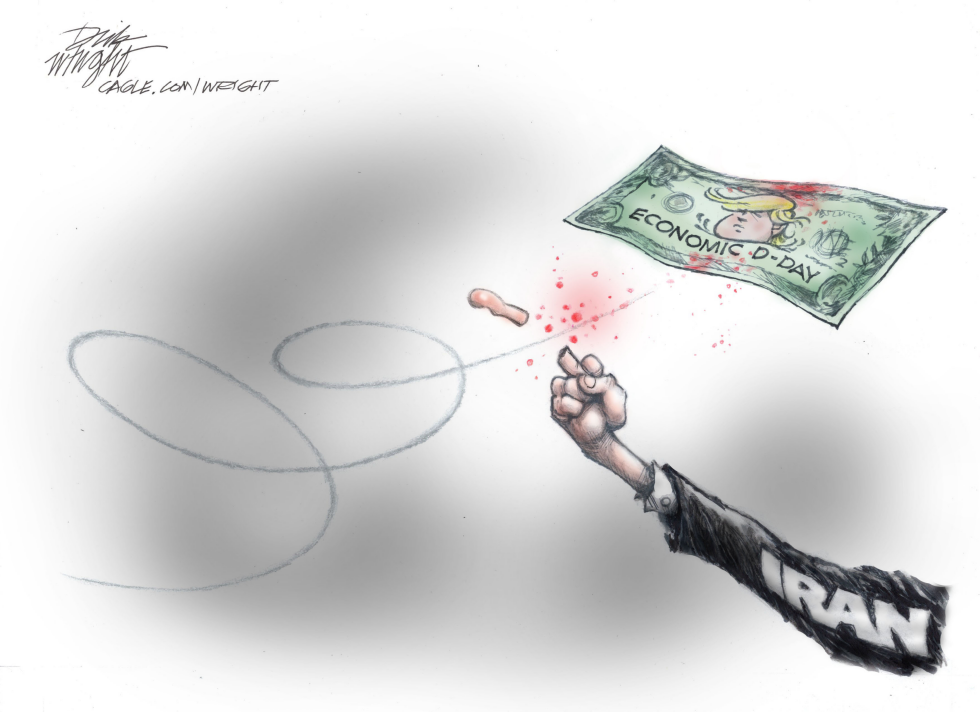
Iran has positioned itself to ignite economic pressure on the United States through direct actions targeting financial stability. The move comes amid ongoing tensions with the Trump administration over sanctions and regional influence. This development raises stakes for global markets already sensitive to Middle East volatility. The piece frames Iran as deliberately lighting a fuse aimed at an economic tipping point centered on Trump.
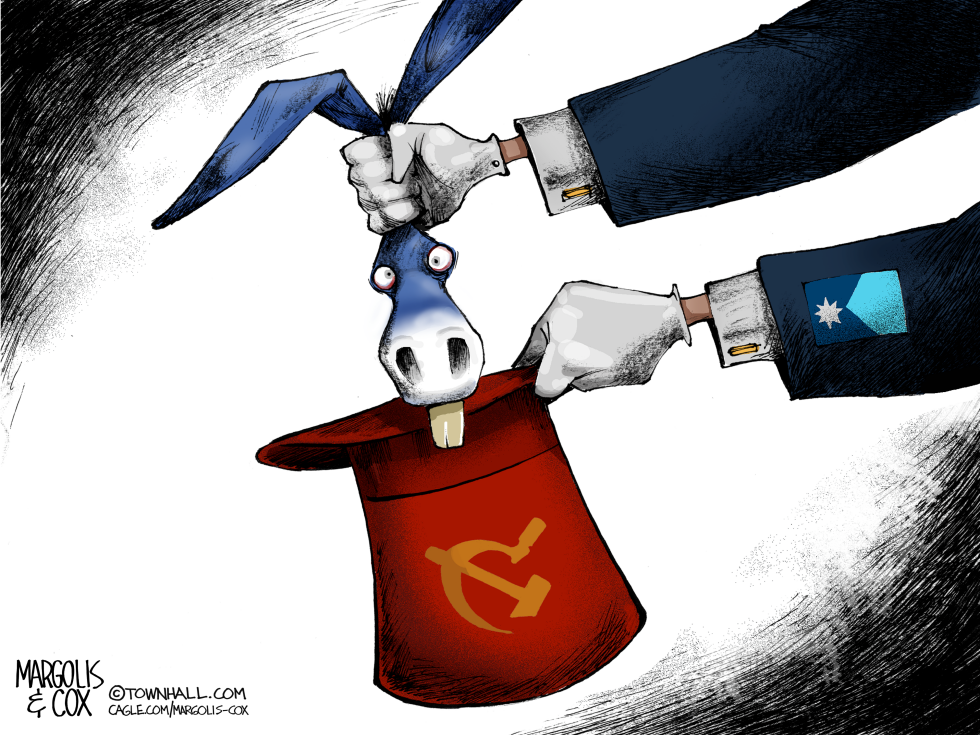
Accusations that Democratic policies carry communist undertones have persisted in partisan debate for years. The image frames the party as emerging directly from a communist emblem through a conjurer's reveal. This visual argument underscores ongoing conservative critiques that Democratic governance veers toward authoritarian economic controls rather than traditional American principles.
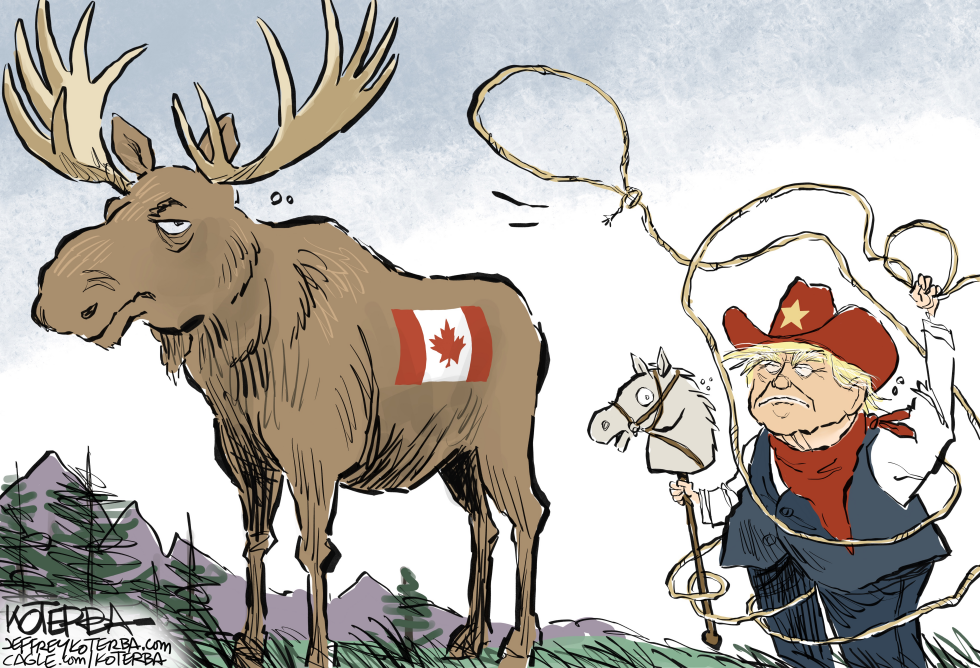
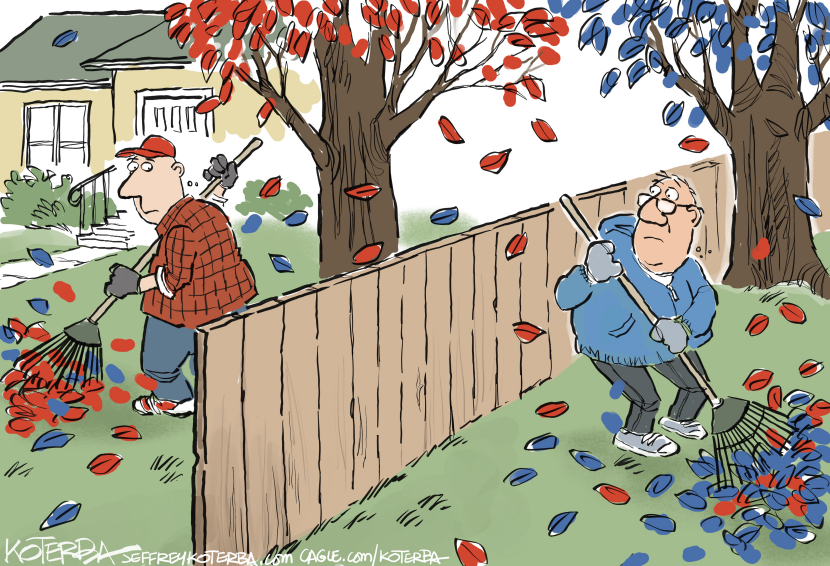
Donald Trump has renewed pressure on Canada over trade and border issues in recent weeks. The moves echo past tariff threats and comments about closer integration. The piece portrays these efforts as clumsy and self-defeating.
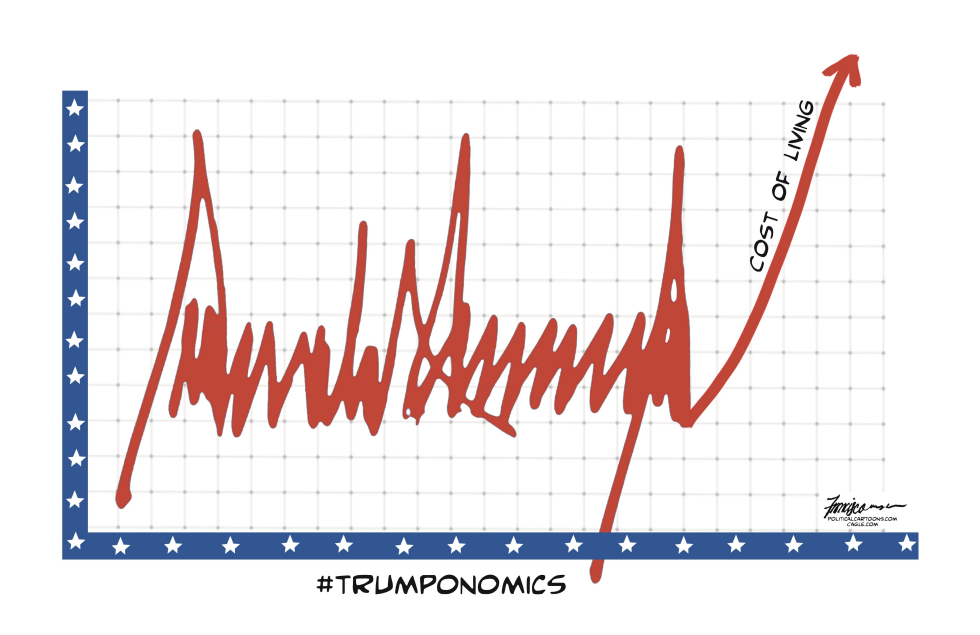
A new graph depicts the term Trumpnomics as a volatile red line that ends in a sharp upward spike labeled cost of living. The image responds to ongoing public concern over inflation and household expenses under the current administration. Critics argue that recent economic measures have failed to contain price growth. Supporters point to other factors such as global supply chains. The piece takes the position that Trumpnomics directly contributes to higher living costs.
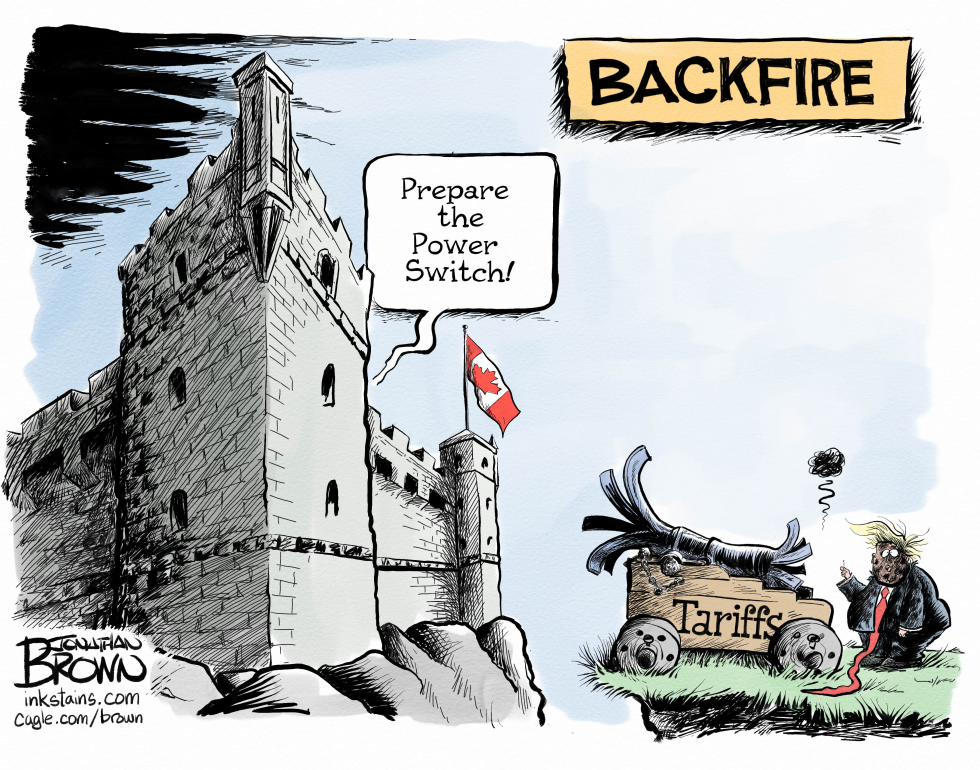
The cartoon shows a Canadian castle flying its flag while a cannon labeled Tariffs explodes backward toward a figure resembling Donald Trump. The scene responds to ongoing trade tensions where U.S. tariffs on Canadian goods prompted retaliatory measures. The visual emphasizes the policy rebounding on its originator rather than achieving intended pressure.
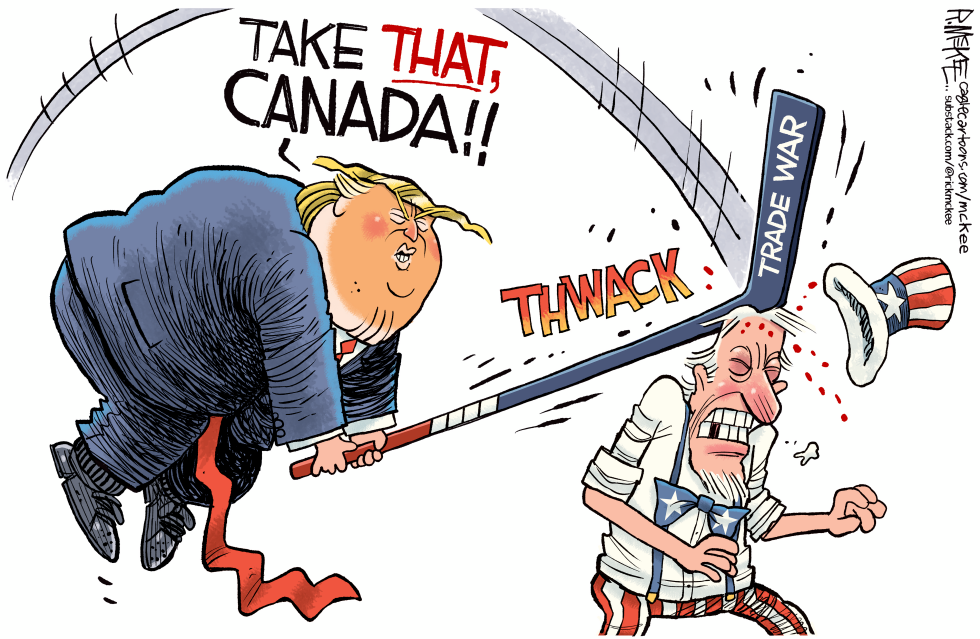
President Trump escalated trade tensions with Canada through new tariffs and barriers in August 2026. The moves targeted key sectors including lumber, dairy and autos. Domestic industries braced for retaliation while consumers faced higher prices. The action drew criticism for harming American interests alongside the intended foreign pressure. The cartoon portrays the policy as self-inflicted damage on the United States itself.