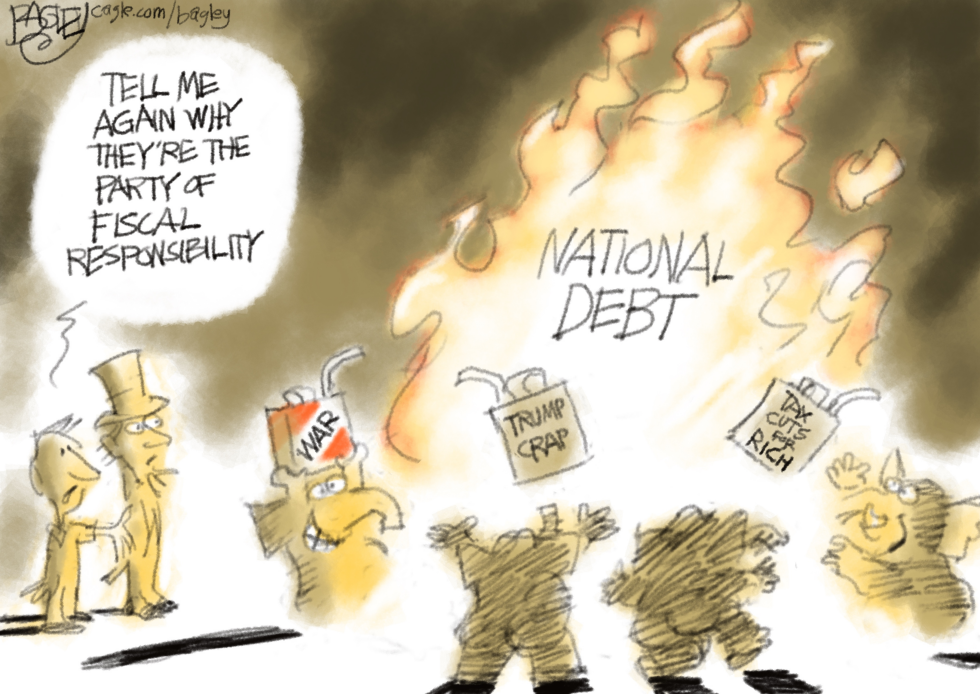
Republicans continue to promote themselves as the party of fiscal responsibility even as national debt rises sharply from sustained war spending and tax cuts favoring the wealthy. The editorial takes the position that these policies directly contradict the fiscal responsibility label.
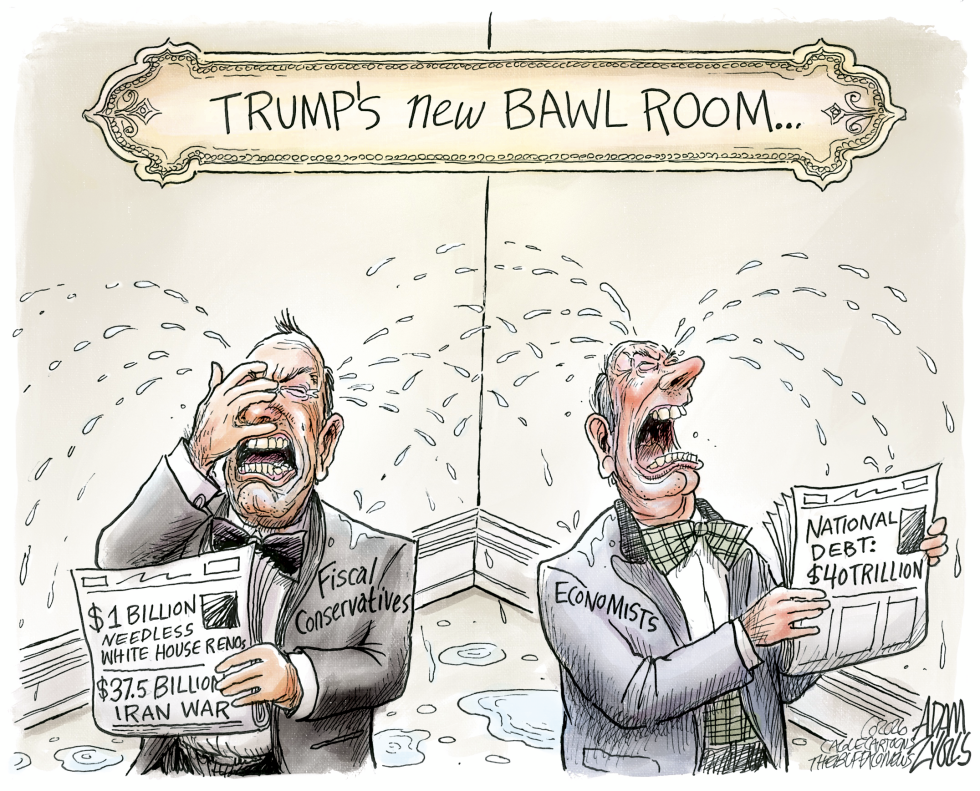
The cartoon depicts fiscal conservatives and economists weeping in a room labeled Trump's new bawl room. One holds documents citing a needless one billion dollar White House renovation and thirty seven point five billion dollar Iran war. The other displays a national debt of forty trillion dollars. The image highlights concerns over federal spending priorities.
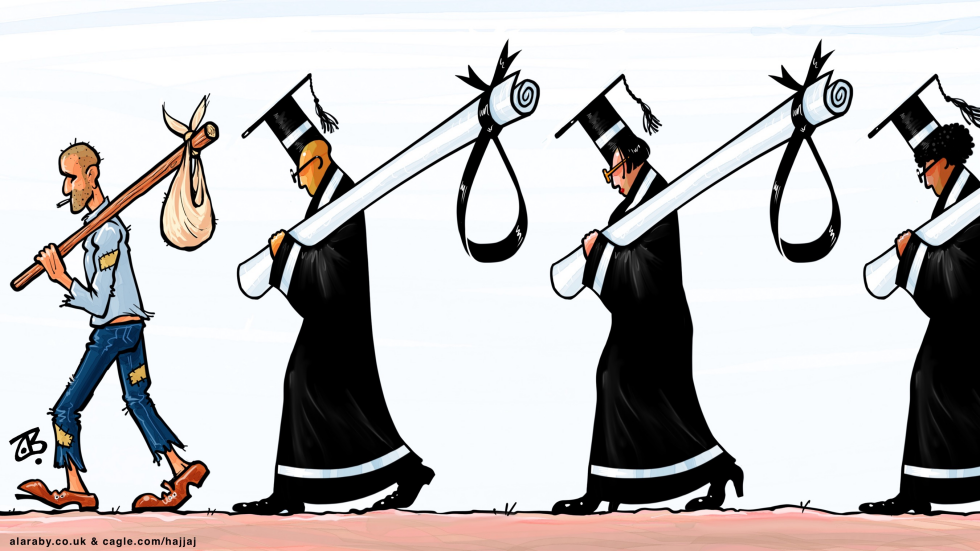
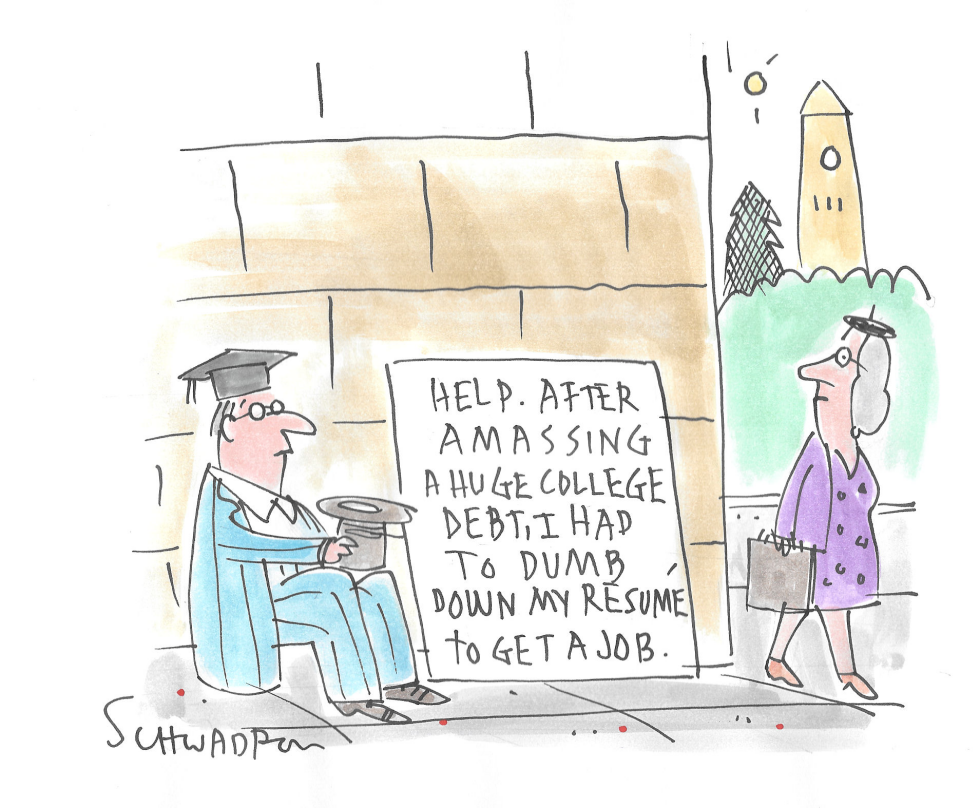
Graduates face mounting education costs that turn diplomas into symbols of debt. The image captures the procession of students weighed down by financial obligations after completing their studies. It critiques the ongoing burden placed on new degree holders.
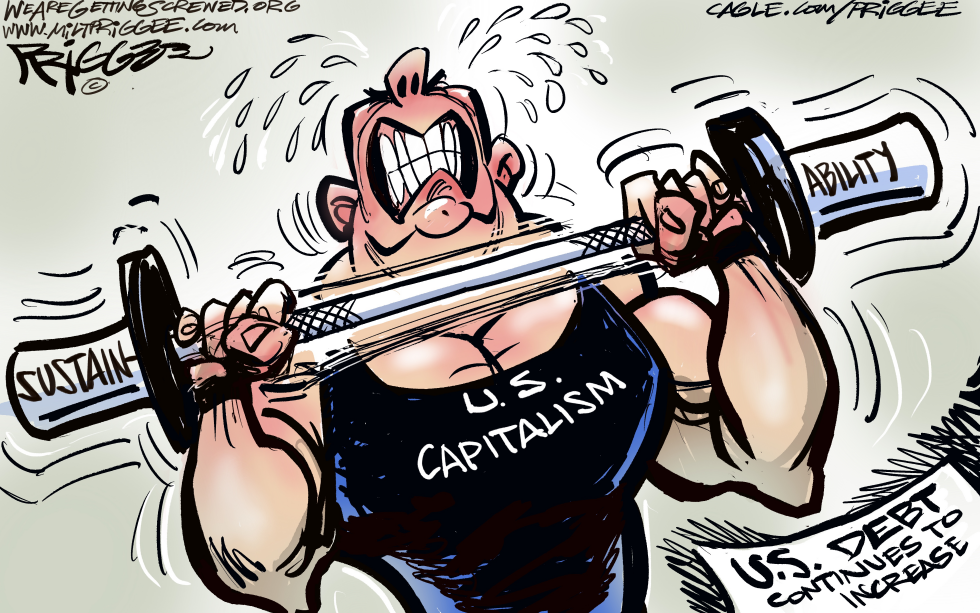
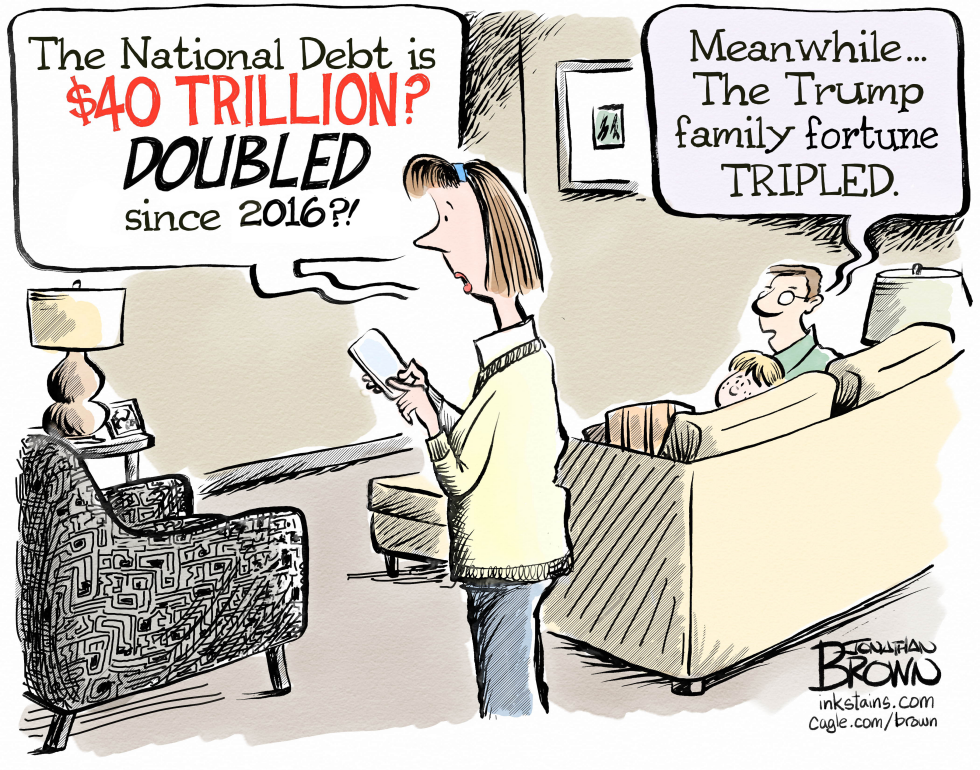
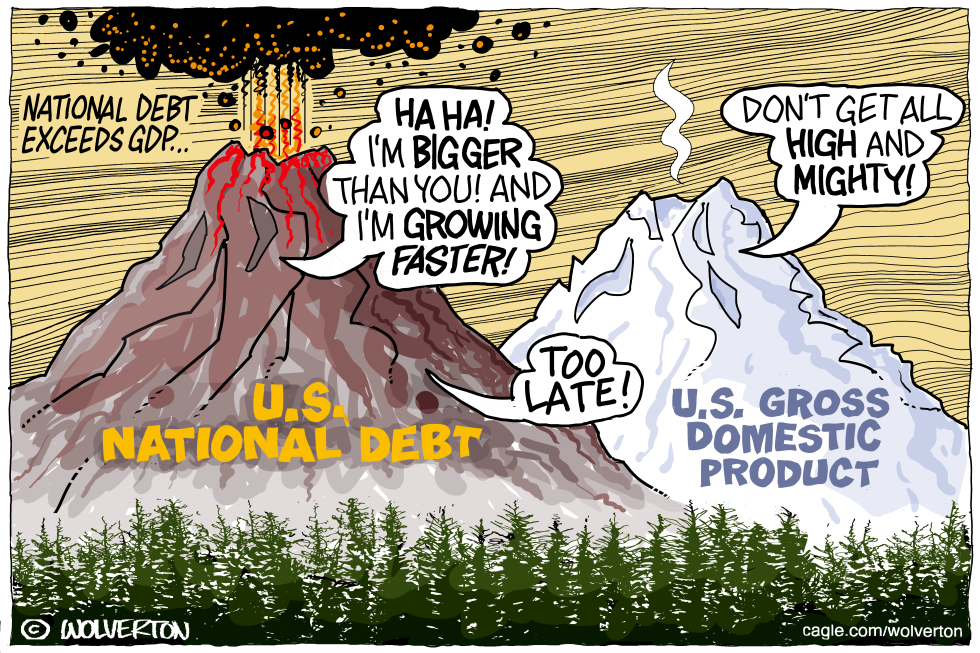
U.S. national debt keeps climbing with no immediate policy reversal in sight. The ongoing rise pressures economic sustainability and long-term fiscal capacity. The piece argues that American capitalism faces mounting strain from this persistent debt growth.
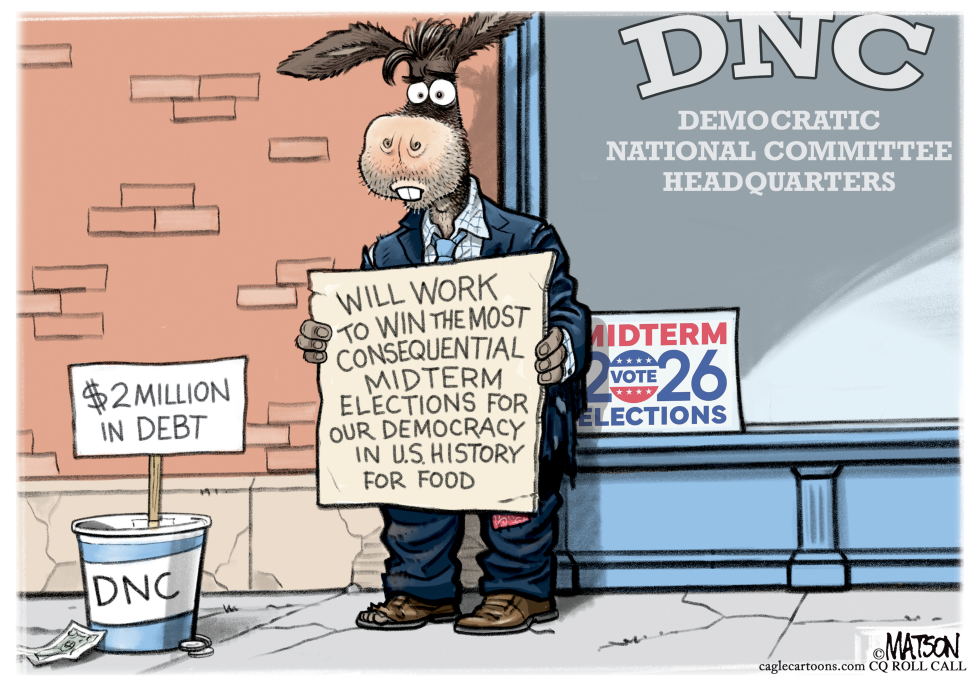
The Democratic National Committee faces a reported $2 million debt as it prepares for the 2026 midterm elections. The party headquarters displays signs of financial strain while promoting the contests as pivotal for democracy. The editorial position criticizes the DNC for prioritizing election rhetoric over addressing its fiscal problems.
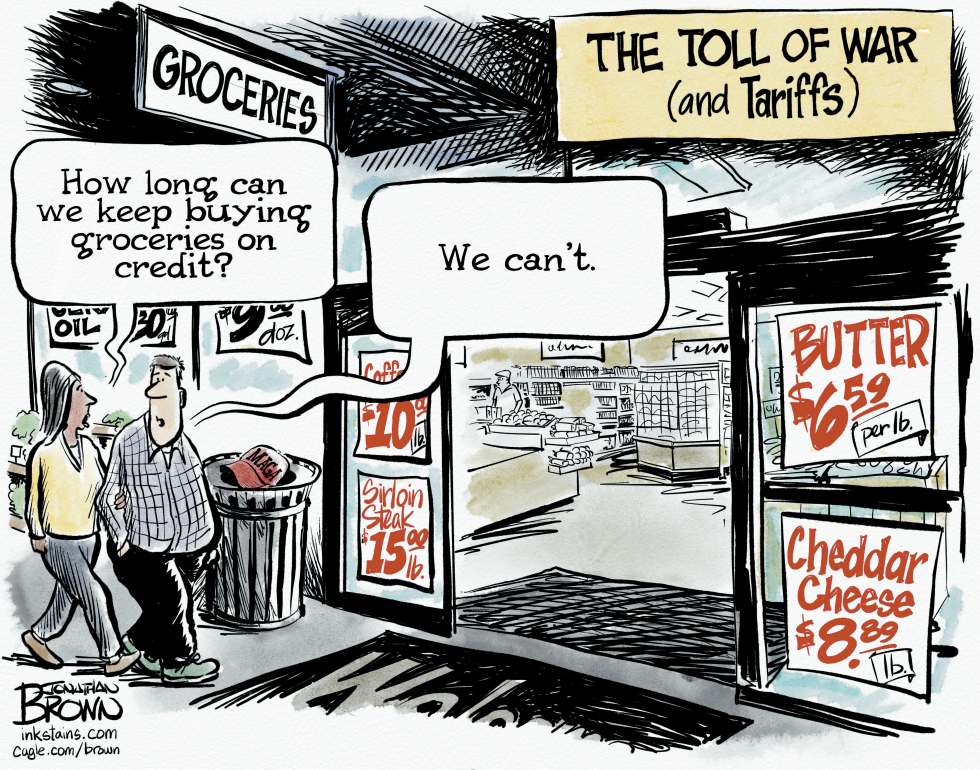
A political cartoon depicts a couple leaving a grocery store after learning they cannot continue buying food on credit. Signs inside show sharply higher prices for butter at $6.59 per pound, cheddar cheese at $8.89 per pound and sirloin steak at $15 per pound. A banner overhead reads The Toll of War (and Tariffs). The scene illustrates how ongoing conflict and trade barriers have driven up everyday food costs leaving households to rely on credit that is no longer sustainable.
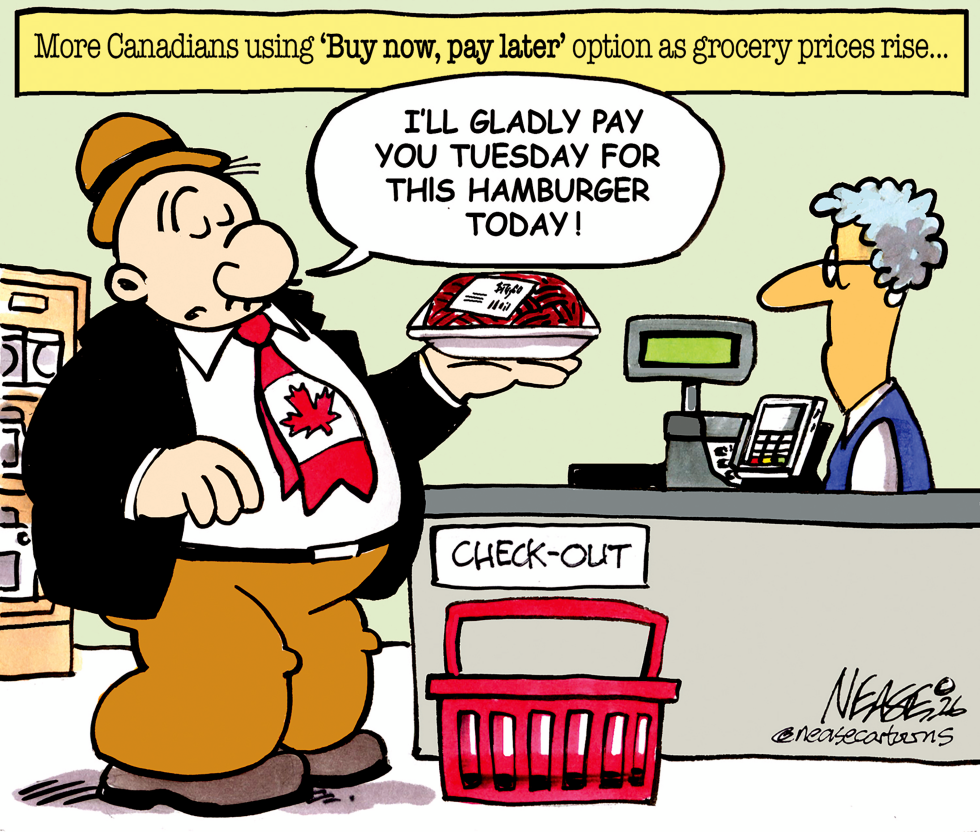
A cartoon published July 8, 2026, shows a Canadian shopper at a grocery checkout counter holding a package of hamburger meat while declaring he will gladly pay Tuesday for the item today. The scene references the classic Wimpy line and highlights growing use of buy now pay later services as grocery prices continue to climb in Canada.
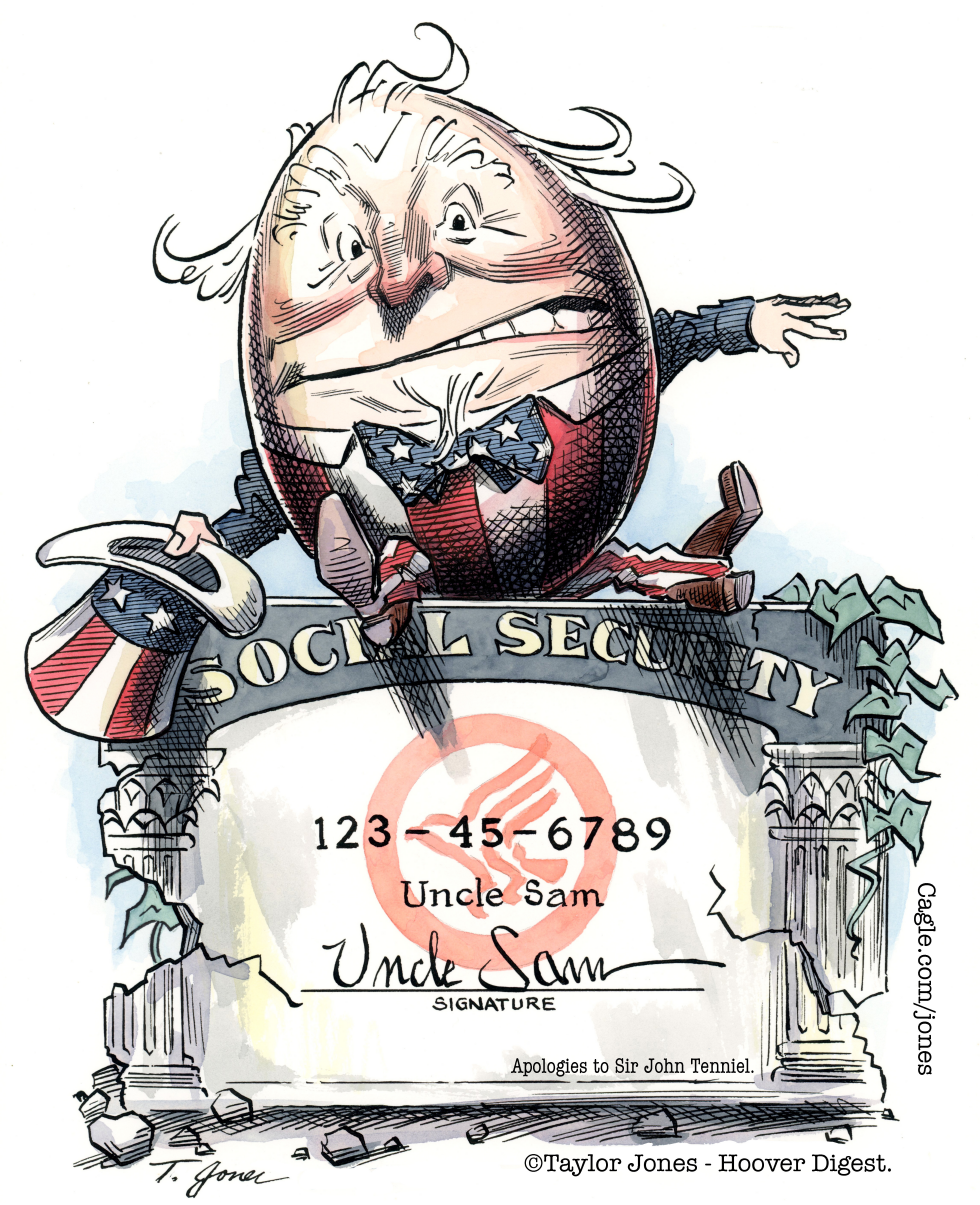
The cartoon shows Uncle Sam rendered as Humpty Dumpty perched on a crumbling Social Security arch while holding a canceled benefits card. It responds to ongoing concerns about the program's projected insolvency around 2032 driven by demographic shifts and rising national debt. The visual draws on the classic nursery rhyme and Tenniel illustration to highlight funding pressures facing retirement benefits for an aging population.
The image displays a woman standing with papers looking concerned next to a man seated in a recliner holding papers. Visible text in speech bubbles refers to credit cards being maxed out and a plan to add a reflecting pool. The title at the top reads about politicians operating as average Americans. A signature appears in the upper right.
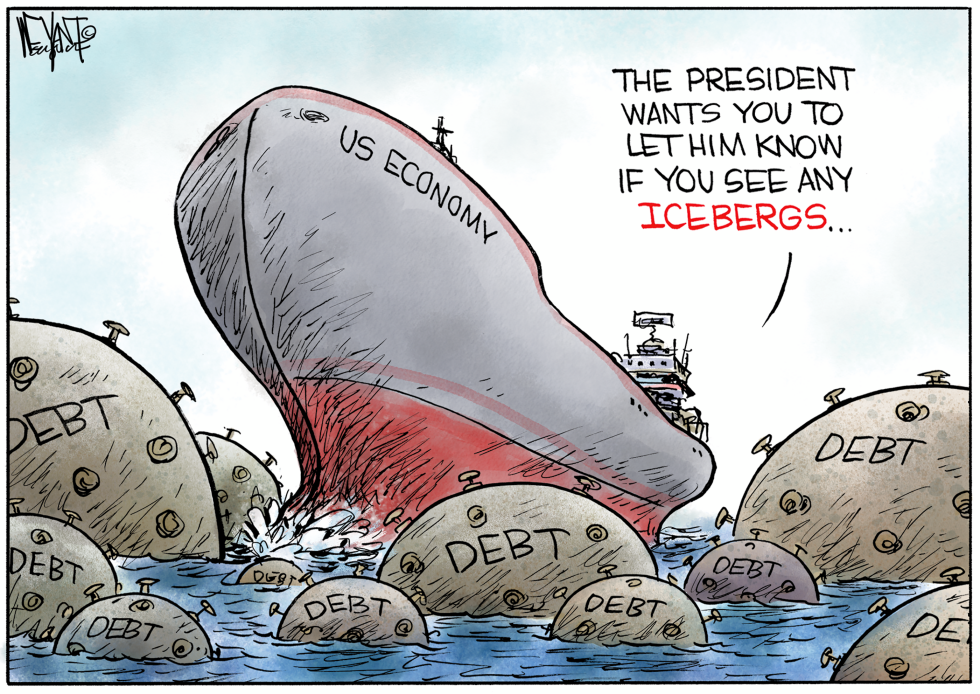
This political cartoon illustrates the US Economy as a massive ship labeled accordingly, dramatically sinking after colliding with numerous icebergs each marked 'DEBT.' A speech bubble from the ship warns to alert the president about icebergs, evoking the Titanic disaster in a clear metaphor for economic peril. Incorporating tags such as economy, debt, budget, inflation, prices, and costs, the image critiques fiscal irresponsibility. The artwork by Christopher Weyant uses simple lines and colors to emphasize the collision's impact, with water splashing and the ship's hull damaged. Such cartoons often highlight how mounting debt threatens stability, drawing parallels to historical maritime tragedies for satirical effect. The composition places the ship at an angle, surrounded by floating debt bergs, underscoring inevitable crisis if warnings go unheeded.