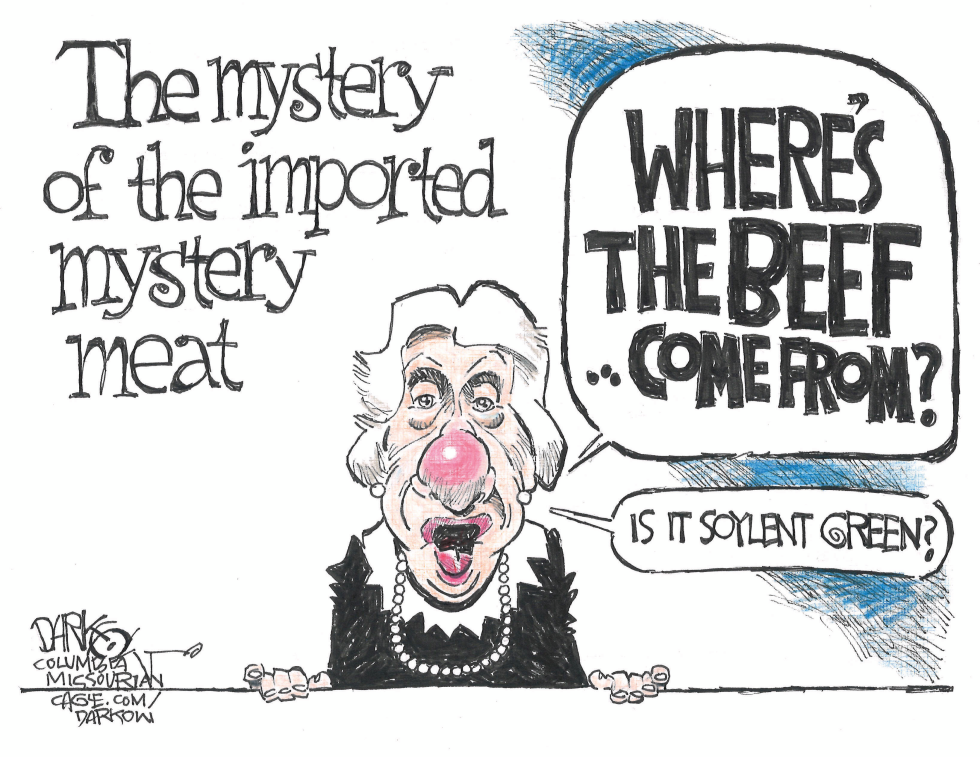
Questions about the origins and safety of imported beef have resurfaced amid broader debates over food supply chains. Regulators and consumers alike have raised concerns that labeling and inspection gaps allow lower-quality or misidentified products to reach shelves. The cartoon uses a classic slogan twist and a pop-culture reference to underscore public skepticism toward these imports. It argues that the lack of transparency turns everyday purchases into a guessing game with potential health risks. The piece positions the issue as one of accountability in trade and regulation rather than abstract policy.
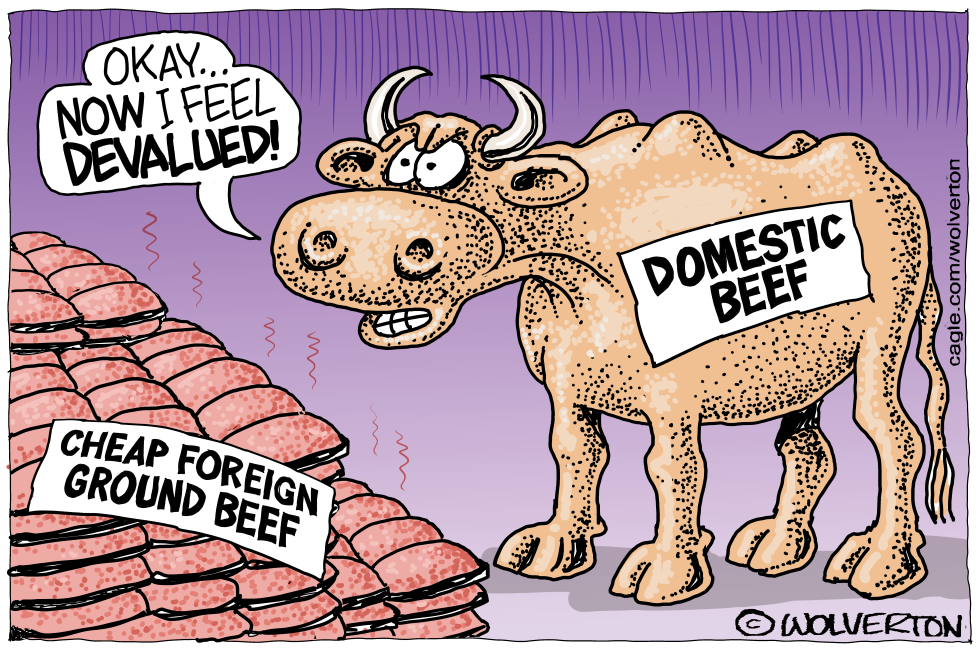
The cartoon depicts a domestic beef cow standing beside stacks of cheap foreign ground beef. The cow, labeled clearly, utters a speech bubble expressing feelings of devaluation. Artist Monte Wolverton uses the visual to address ongoing pressures on the US beef sector from lower-cost imports. The image was published on August 23, 2026. It reflects persistent concerns in agricultural markets where domestic producers compete with foreign supply. The composition places the cow in the foreground with the imported product shown as abundant and lower positioned.
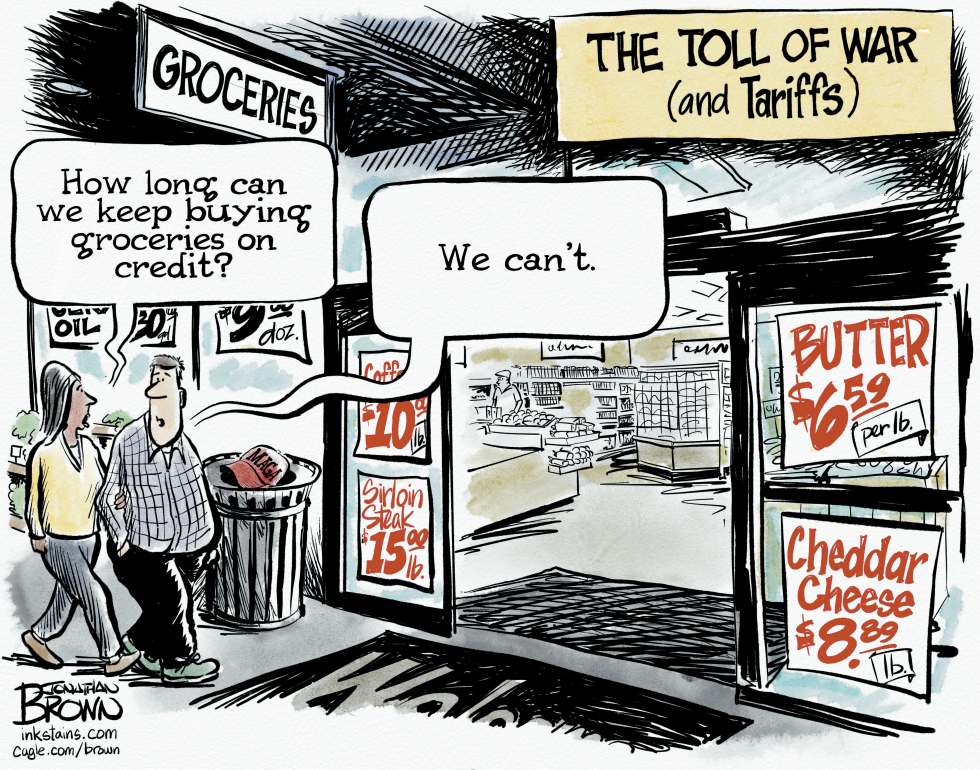
A political cartoon depicts a couple leaving a grocery store after learning they cannot continue buying food on credit. Signs inside show sharply higher prices for butter at $6.59 per pound, cheddar cheese at $8.89 per pound and sirloin steak at $15 per pound. A banner overhead reads The Toll of War (and Tariffs). The scene illustrates how ongoing conflict and trade barriers have driven up everyday food costs leaving households to rely on credit that is no longer sustainable.
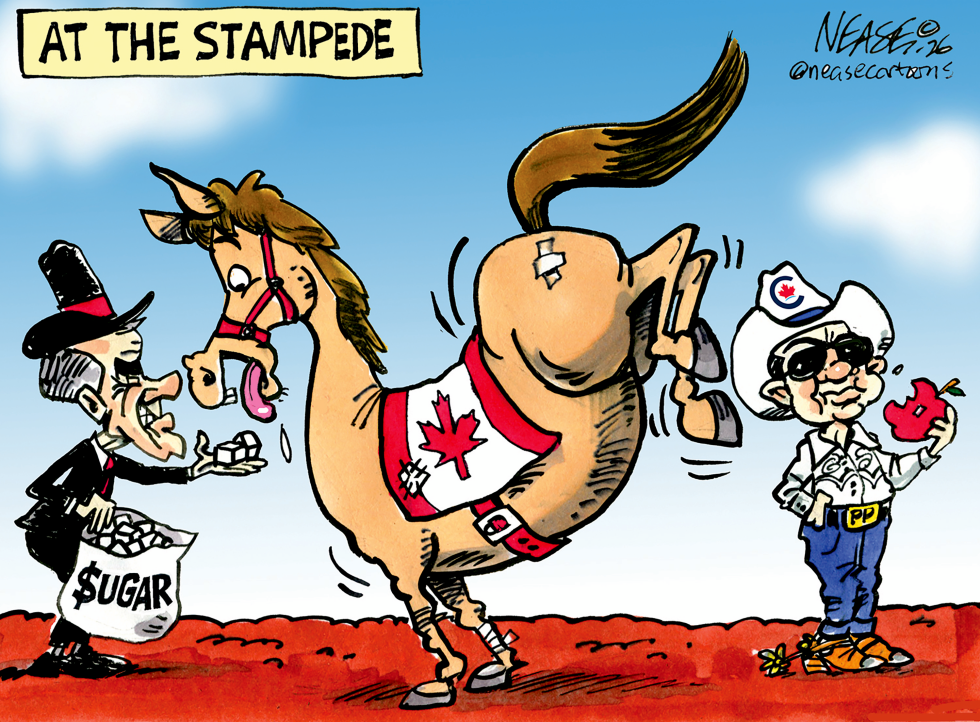
A horse wearing a Canadian flag blanket rears and kicks at the Calgary Stampede as a top-hatted figure extends sugar cubes from a bag marked $UGAR. A Mountie in cowboy attire stands nearby holding a bitten red apple and frowning. The cartoon, dated July 13 2026, depicts Canada turning away from the sweetener offer in favor of the fruit. The visual plays on the annual Stampede event and ongoing economic negotiations between Canada and its southern neighbor. The horse's bandaged hindquarters and the spilled sugar emphasize the abrupt refusal.
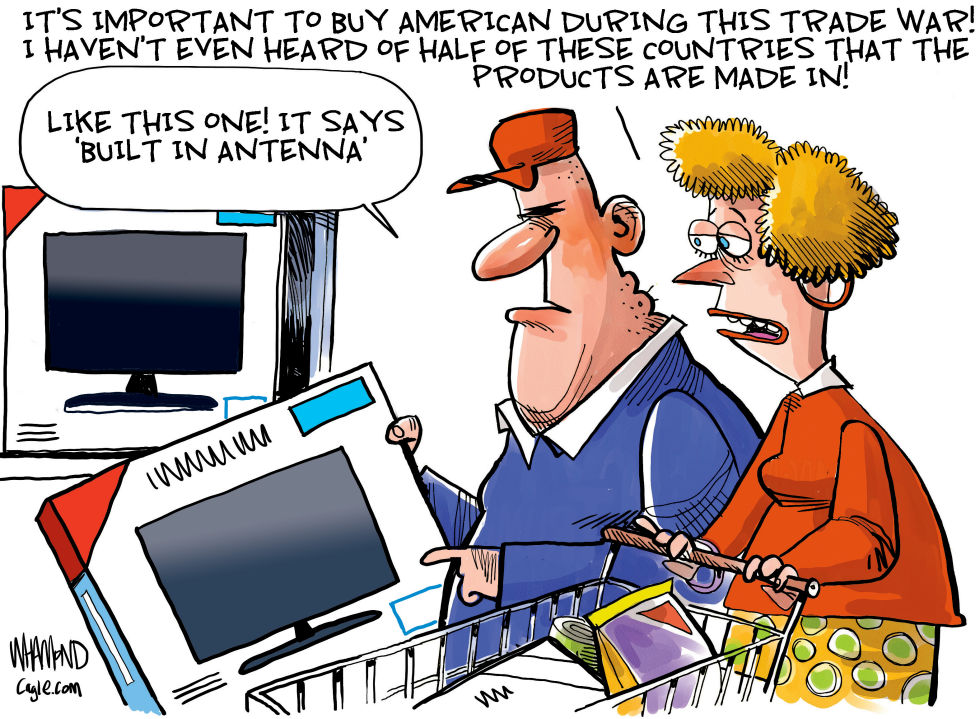
A couple shops for electronics in a store as the man points to a television box labeled built in antenna while declaring support for American goods during an ongoing trade war. The woman reacts with surprise at the label. Large text overhead stresses the importance of domestic purchases because many product origins remain unfamiliar. The scene reflects consumer reactions to tariffs and protectionist policies active in late 2025.
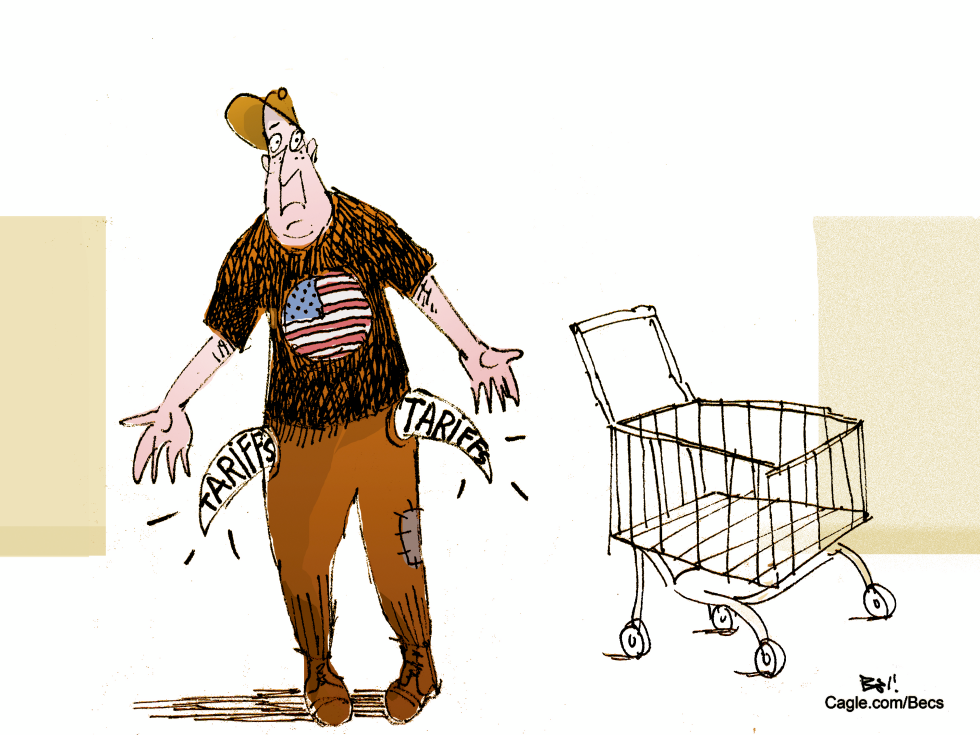
A figure wearing a tattered American flag shirt and brown pants labeled tariffs stands with empty hands next to an empty shopping cart. The scene responds to 2025 tariff increases under the Trump administration that have contributed to higher consumer prices and reduced purchasing power. The image highlights the direct effect on everyday Americans facing inflation and limited spending ability.
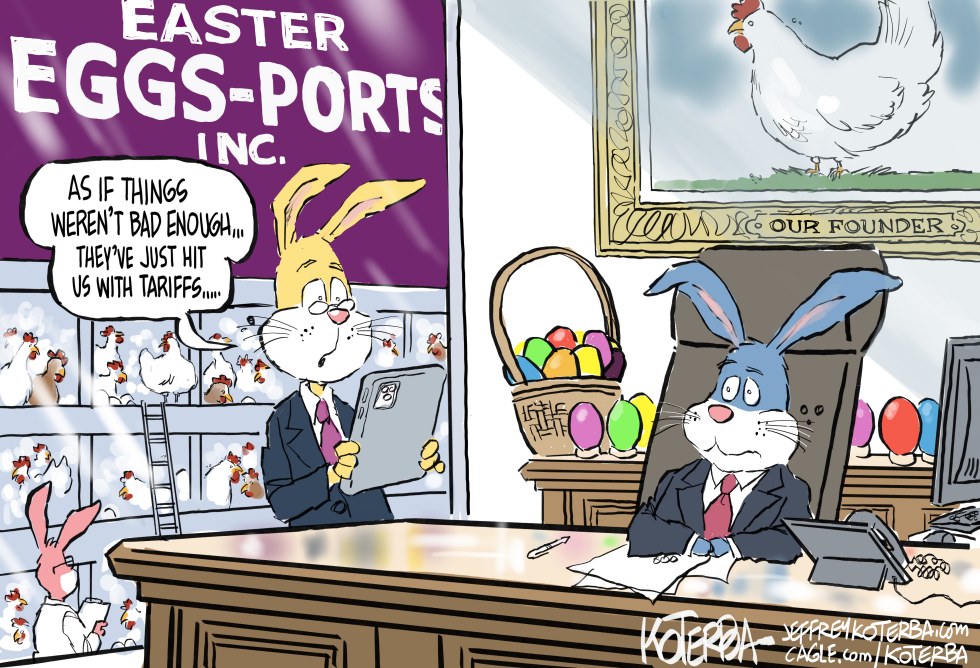
A cartoon depicts two suited rabbits at an Easter egg import company reacting to new tariffs. The yellow rabbit holds a tablet announcing the duties while the blue rabbit sits at a desk with a basket of eggs nearby. A painting of a chicken labeled our founder hangs on the wall. Chickens appear in background storage areas. The scene references ongoing egg supply challenges and trade policy effects on consumer goods.
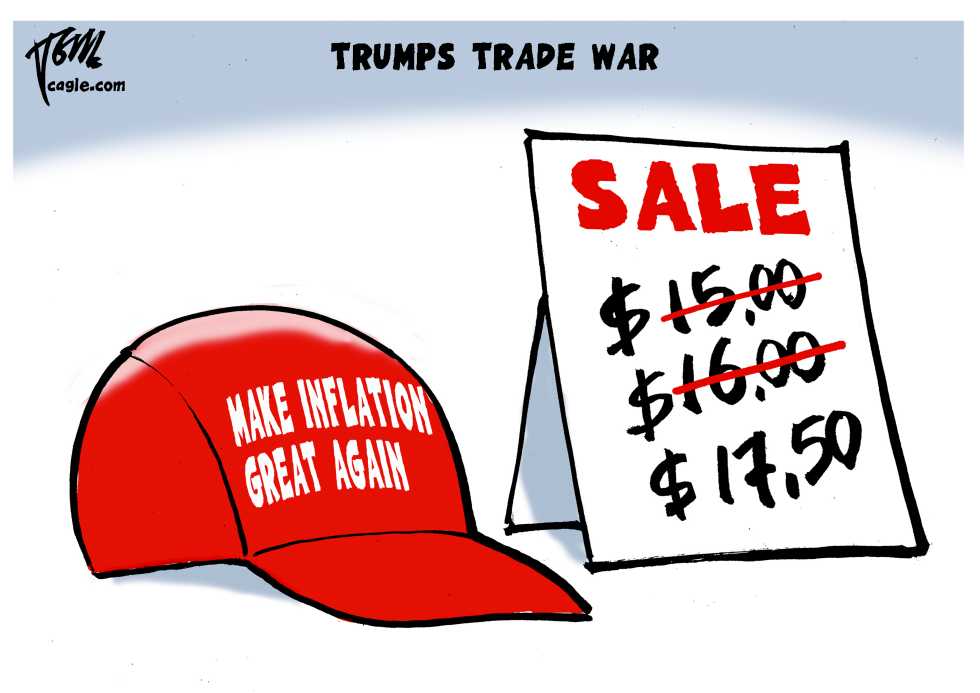
A red cap labeled Make Inflation Great Again rests beside a sale sign with prices crossed out and rising to 17.50. The image links proposed tariffs on imports from Canada and Mexico to increased consumer costs in early 2025.
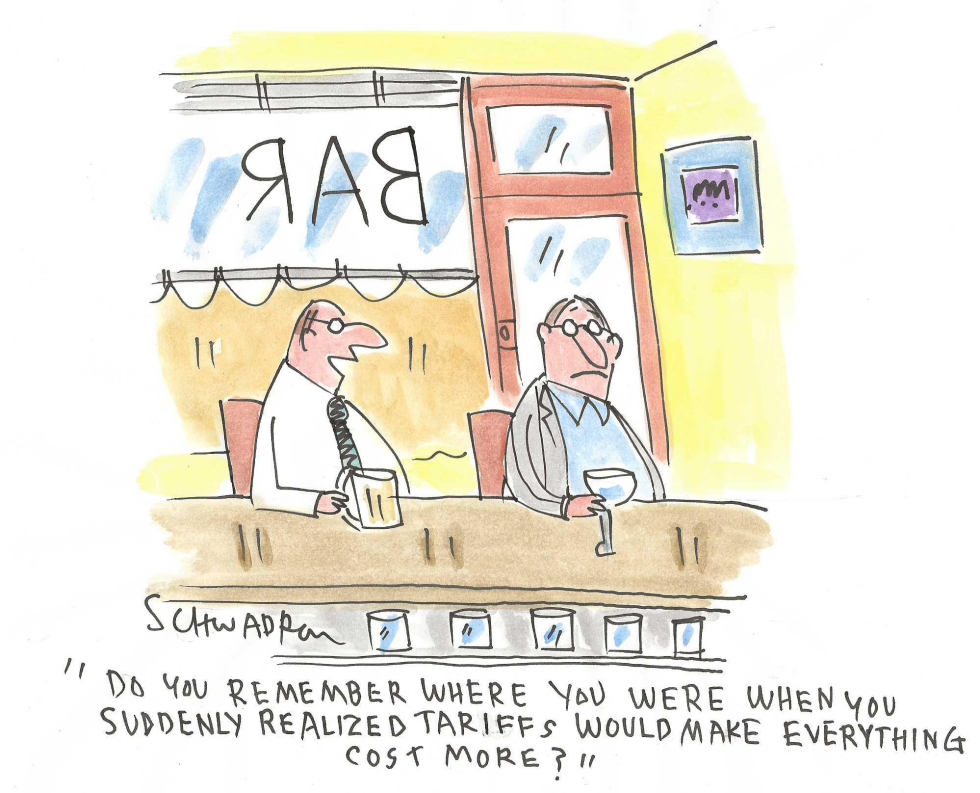
On January 14 2025 a cartoon depicts two men at a bar discussing the economic shock of import tariffs. The exchange focuses on the sudden awareness that duties on foreign goods drive up everyday costs. This reflects ongoing debates over trade policy and its effects on inflation and consumer spending.