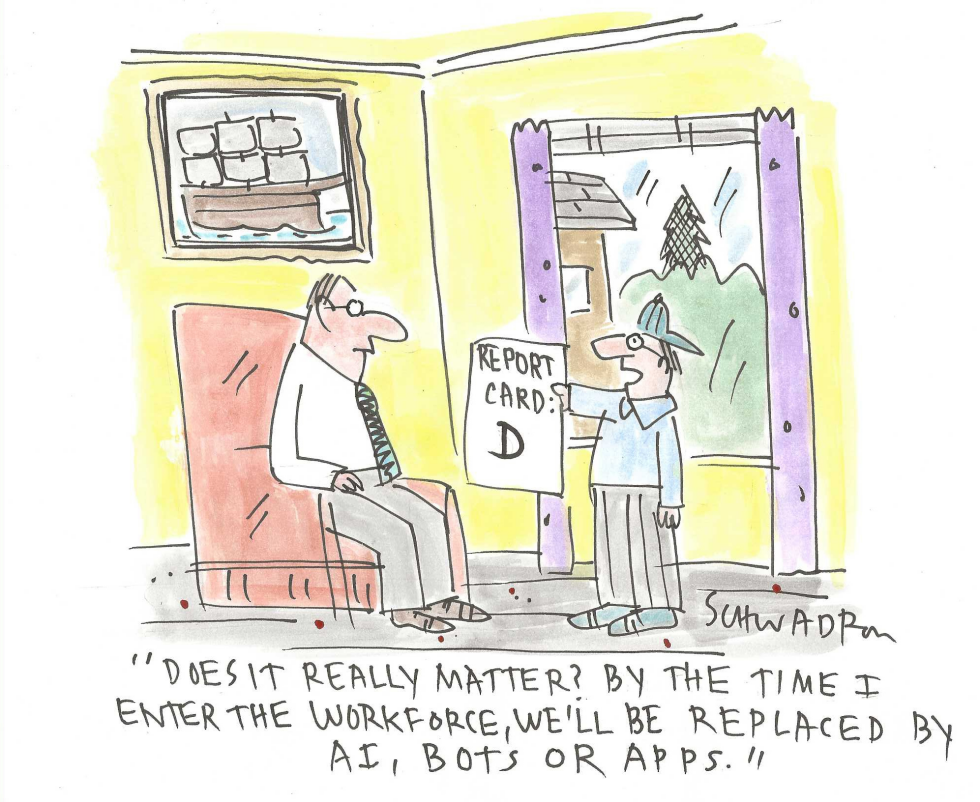
Rising student skepticism about academic effort stems from widespread predictions that AI and automation will eliminate many jobs before today's students graduate. The cartoon responds to this dynamic by showing a student using those forecasts to shrug off a poor grade. It highlights how fears of technological displacement may undermine motivation in schools. The piece suggests such excuses reflect a broader cultural shift where traditional education credentials appear less relevant. The editorial stance questions whether this mindset accelerates the very problems it cites.
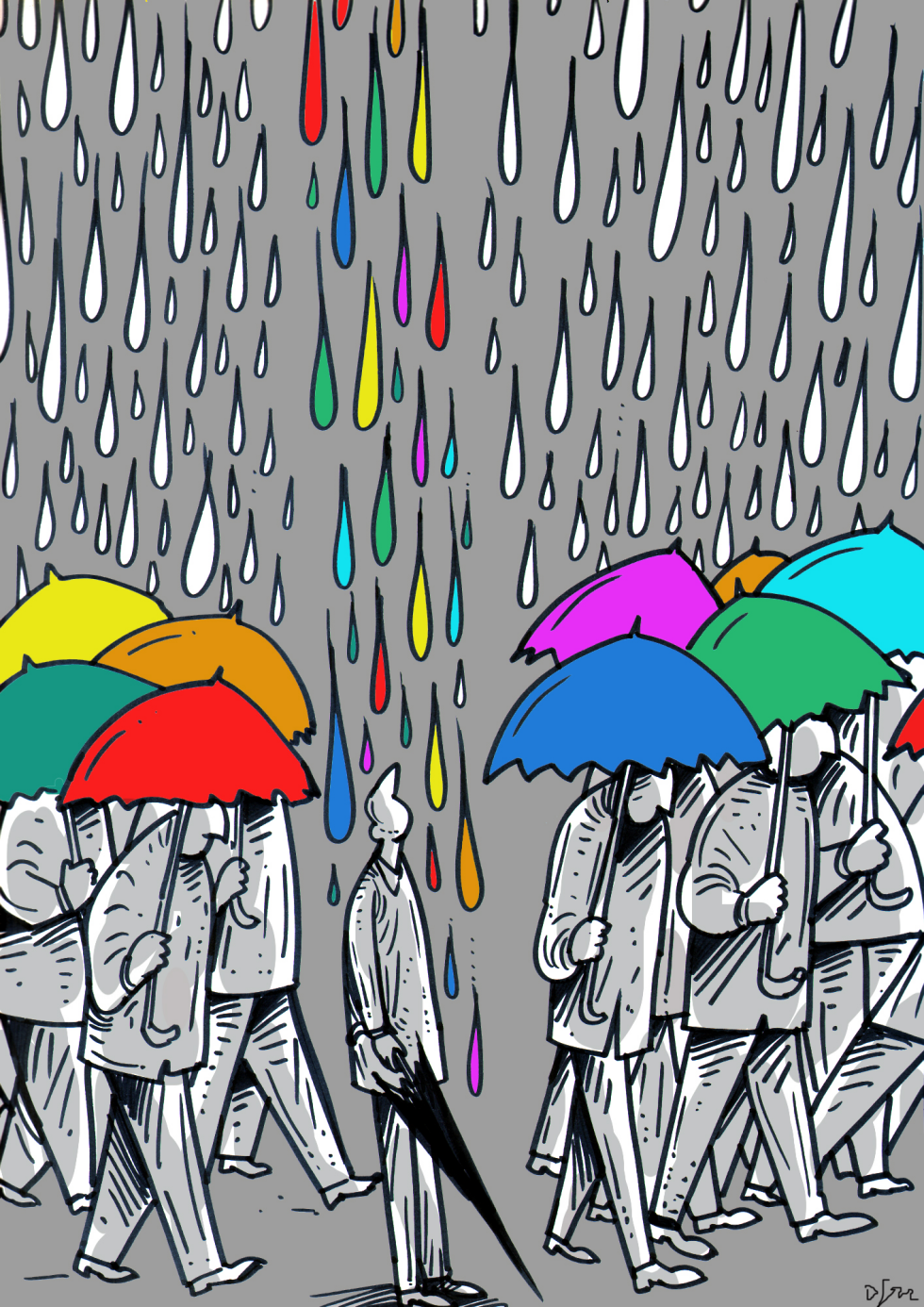
Society often pressures people to conform to norms around them. Maintaining personal identity remains important in such environments. The piece advocates for embracing one's distinct qualities.
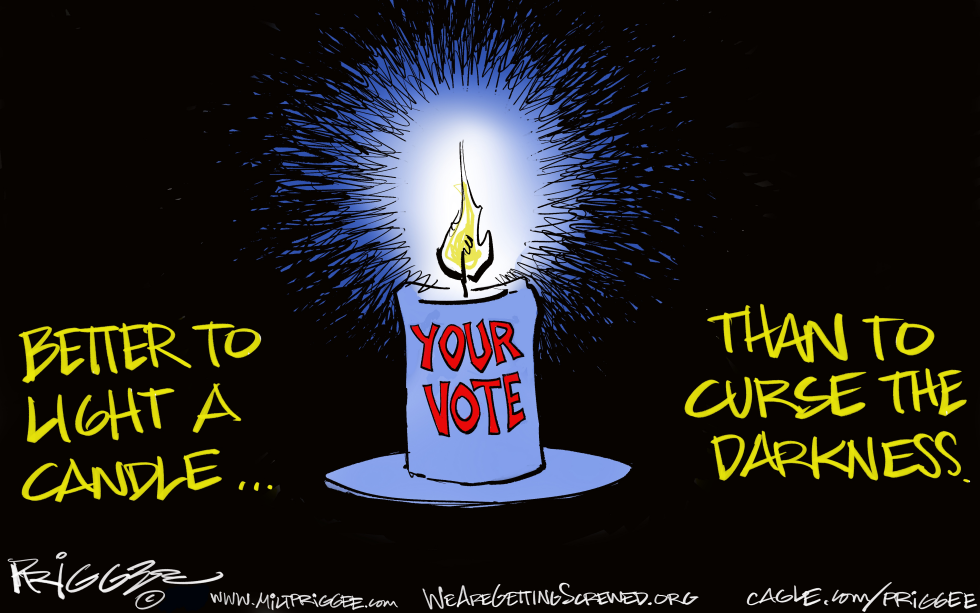
The cartoon depicts a glowing candle labeled Your Vote against a dark background, accompanied by the quote Better to light a candle than to curse the darkness. Published on September 3, 2026, it encourages citizens to participate in elections rather than complain about political conditions. The visual emphasizes voting as a constructive action that can illuminate and improve democracy. This approach aligns with longstanding calls for higher voter engagement during election cycles.
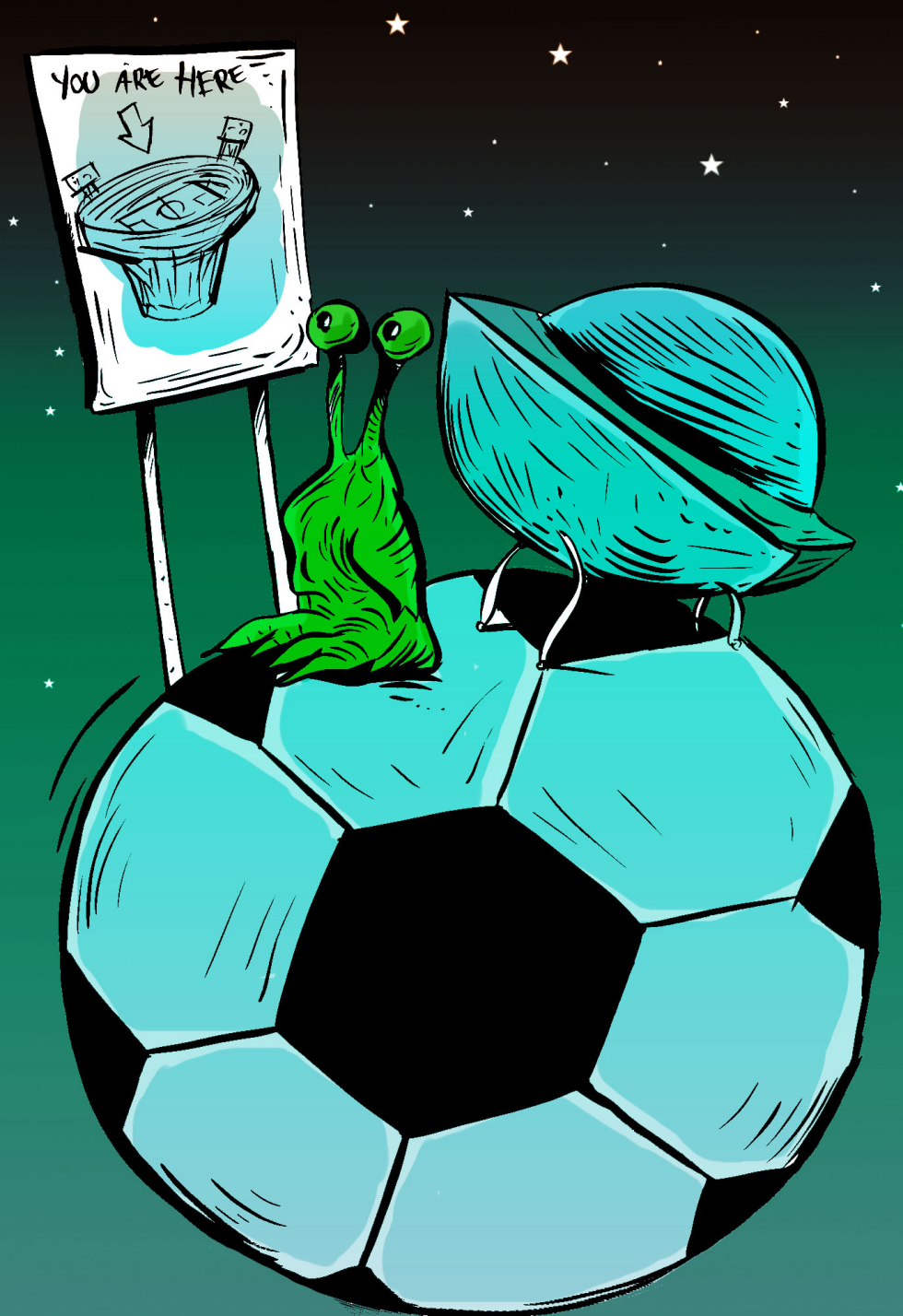
A whimsical space scene places a snail on a soccer ball next to a ringed planet under a you are here sign pointing to a drain. The image captures a sense of smallness in the universe. The editorial position highlights the ongoing human tendency to feel insignificant when confronting vast cosmic scales and personal limitations.
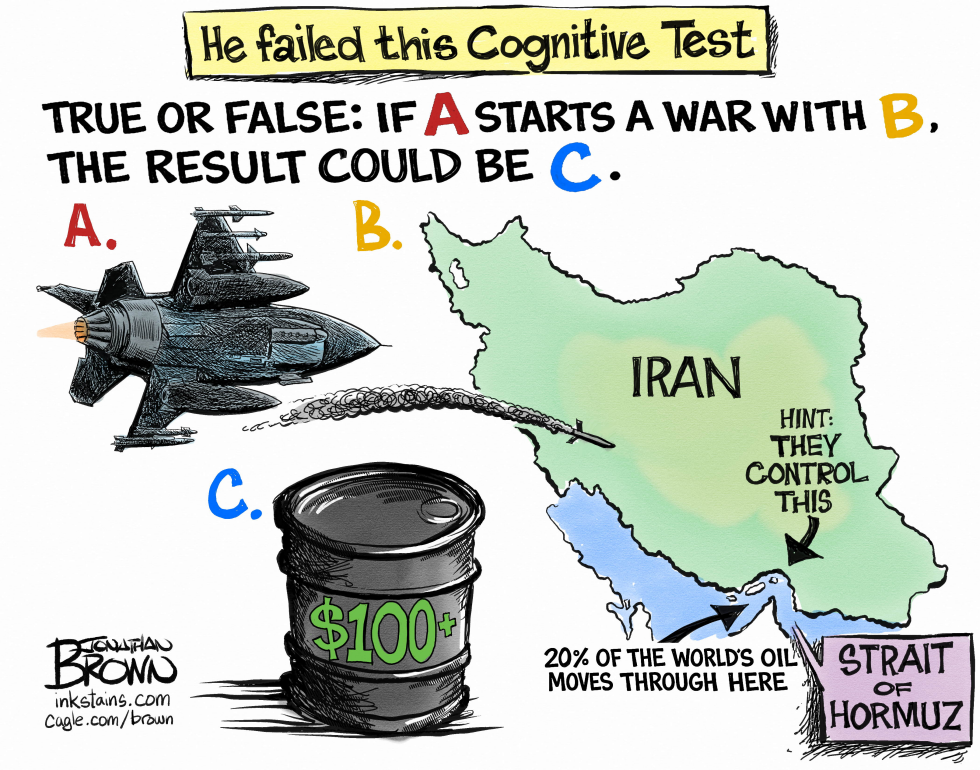
Jonathan Brown's cartoon presents a stark true-or-false cognitive test: if A (a fighter jet) starts a war with B (Iran), the result could be C (an oil barrel marked $100+). The map of Iran includes a hint pointing to the Strait of Hormuz, noting that 20% of the world's oil moves through there, underscoring control over this chokepoint. Tags such as cognitive test, war in Iran, oil prices, Strait of Hormuz, gas prices, and cost of war frame the satire. The artwork warns of economic fallout from conflict, with the jet trailing toward Iran and the oil barrel symbolizing surging costs. This piece captures geopolitical tensions in a simple, visual riddle.
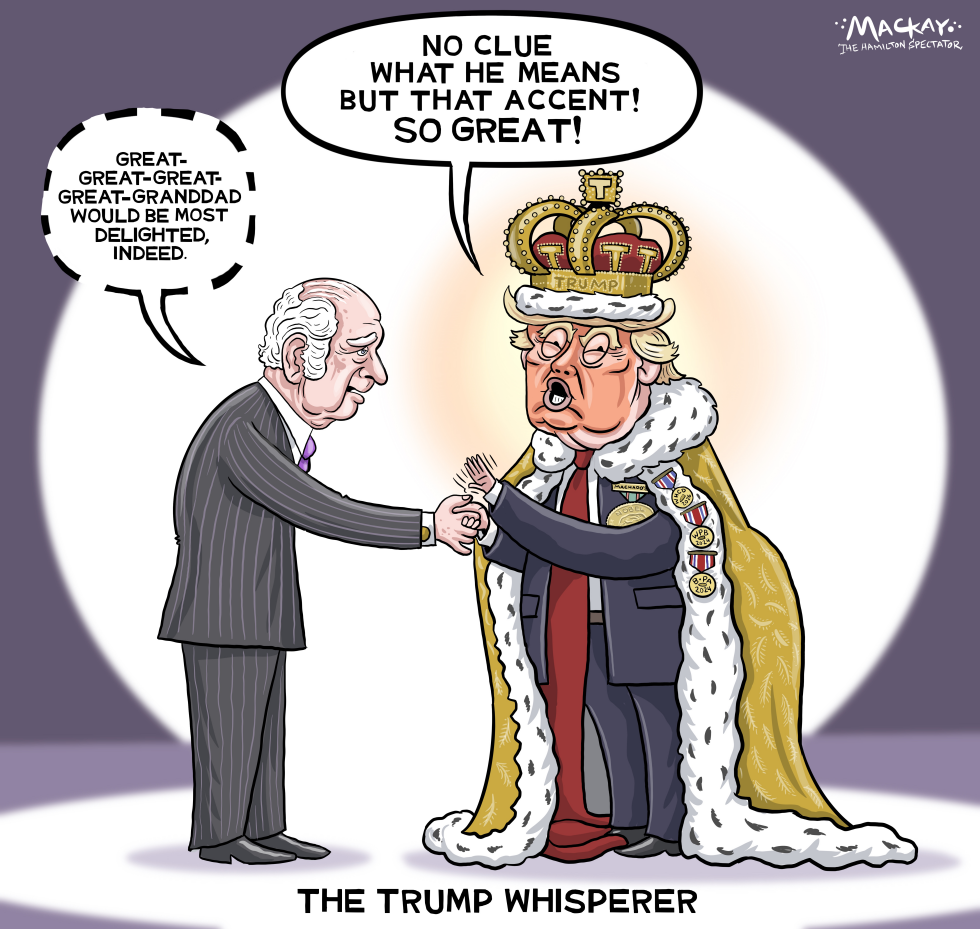
Graeme MacKay's cartoon depicts King Charles III leaning in to whisper a message from King George III to a regally dressed President Trump, who misinterprets it due to the accent. Tagged with USA, Canada, UK, the image explores monarchy, diplomacy, and alliance themes. Trump's crown labeled with his name adds symbolism of self-aggrandizement, while the 'Trump Whisperer' caption underscores the tension in this leadership encounter. Historical nods to tradition and stability contrast with modern visit dynamics, blending respect and satire in a visually striking composition.
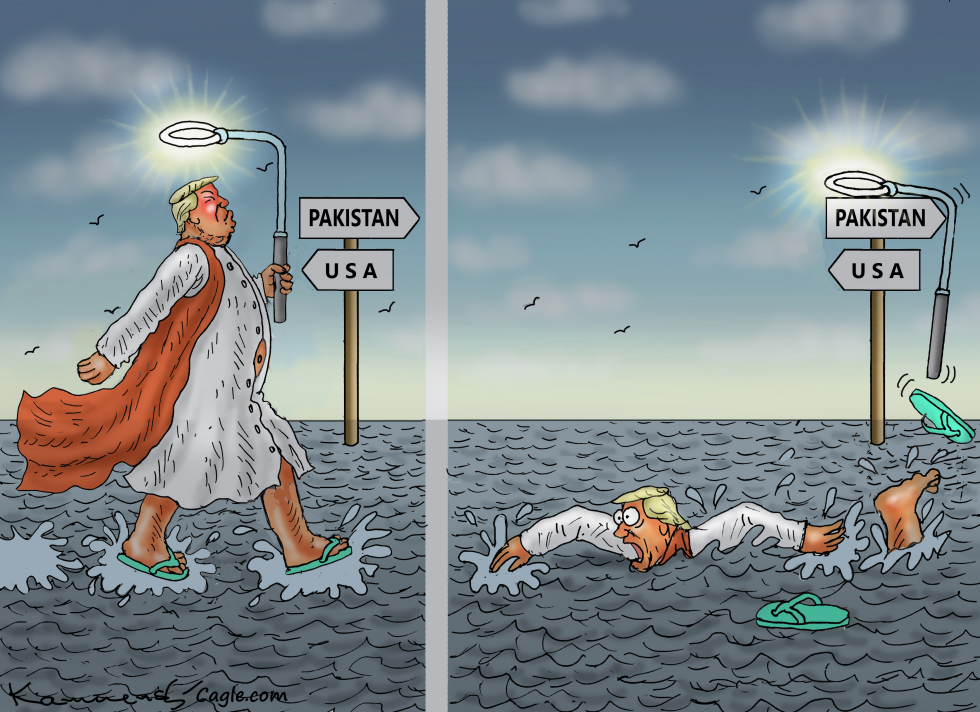
Marian Kamensky\'s cartoon captures Trump with a halo, striding across the sea in robes and flip-flops toward signs pointing to Pakistan and USA, evoking peace talks amid Hormuz strife. The satire turns sharp as Trump, embodying fascism and MAGA terror, plunges into the waves, desperately swimming while his flip-flop floats away and the signpost topples. This two-panel setup underscores the hubris of political figures tackling international relations, blending humor with critique of overreaching ambitions in U.S.-Pakistan dynamics. The artwork\'s clean lines and exaggerated expressions amplify the dry wit, making it a pointed commentary on failed diplomacy and self-proclaimed savior complexes in global politics.
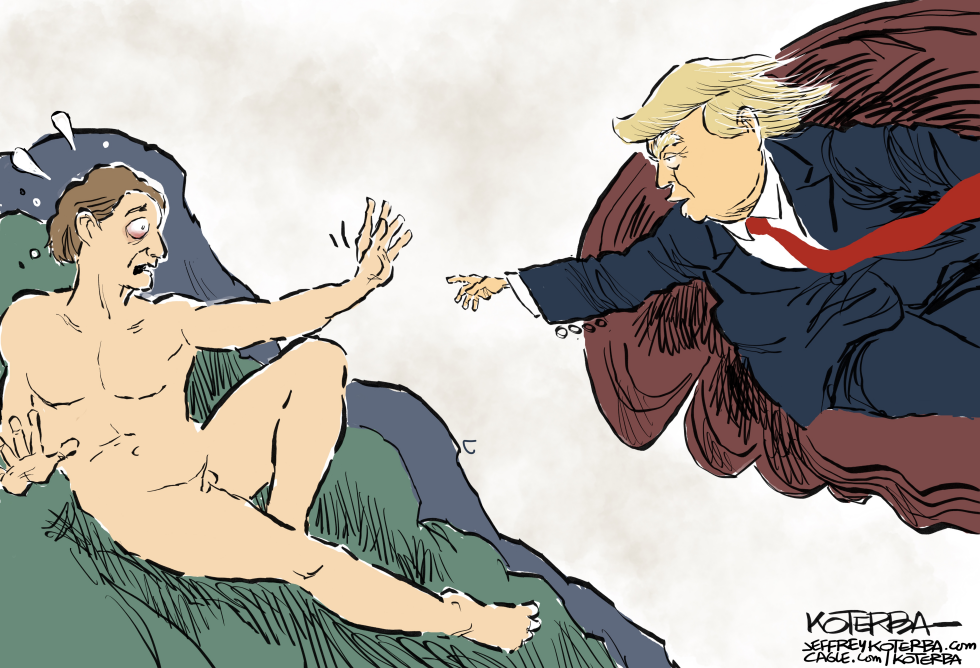
Jeff Koterba's cartoon reimagines Michelangelo's Creation of Adam, placing a Trump-like figure in the role of God, clad in a suit and red tie, floating in a red cloak while reaching toward a nude, shocked man resembling Adam on greenish rocks. The image captures satirical elements of presidential hubris, with tags including Trump caricature, political satire, divine parody, ego commentary, artistic homage, and cartoon humor. Such visuals often spark discussions on leadership perceptions, blending historical art with contemporary politics in a straightforward, humorous critique.
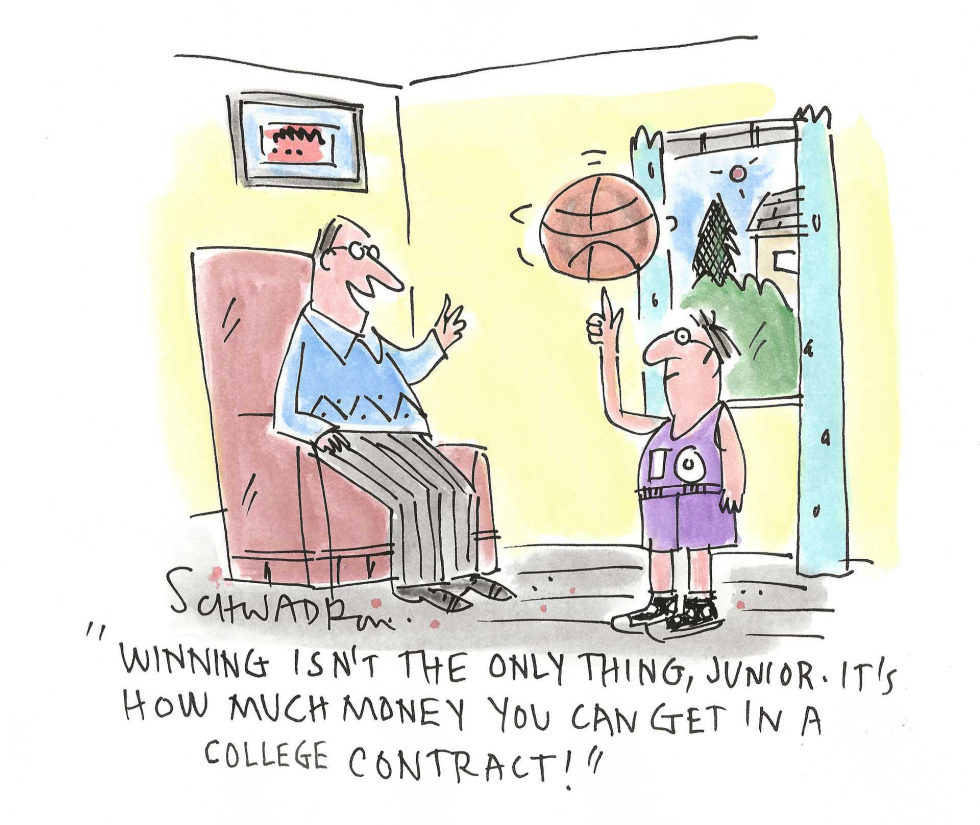
A cartoon published April 7 2026 shows an older man seated in a chair advising a young basketball player. The player stands holding a ball near a window. The caption reads that winning is not the only thing and highlights money from a college contract. The scene comments on shifting priorities in college sports amid growing financial opportunities for athletes. NCAA rules on compensation have evolved in recent years allowing players greater earnings through name image and likeness deals.
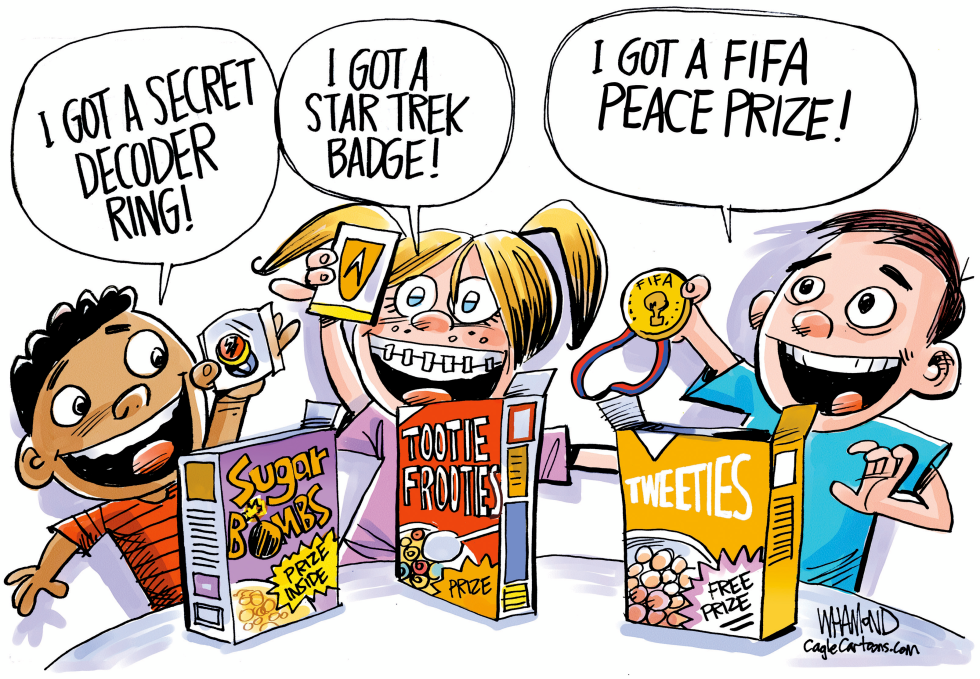
A political cartoon published December 7, 2025, shows three children comparing prizes pulled from cereal boxes. The rightmost child holds a gold FIFA medal labeled Peace Prize while announcing the find. The scene references FIFA's recent decision to award the medal to Donald Trump following his omission from the Nobel Peace Prize list. The visual equates the honor to cheap plastic toys found in Sugar Bombs, Tootie Frooties and Tweeties packages. The cartoon highlights the perceived triviality of the gesture amid ongoing criticism of FIFA leadership under Gianni Infantino.
John Darkow's 2022 cartoon captures a UFO congressional hearing with a uniformed official pointing at a screen labeled 'UFO Hearing,' displaying a small flying saucer amid a dark backdrop. The speech bubble delivers dry wit: inability to disprove aliens' existence, but their non-contact suggests superior intelligence. Tags like Pentagon, VAP, aliens, congressional hearing, trnd, and UFO frame this political satire, poking at human hubris in extraterrestrial contexts. The image, dated 2022-05-19, blends timely relevance with caricatured military decorum, emphasizing the absurdity in official testimonies on unidentified phenomena.