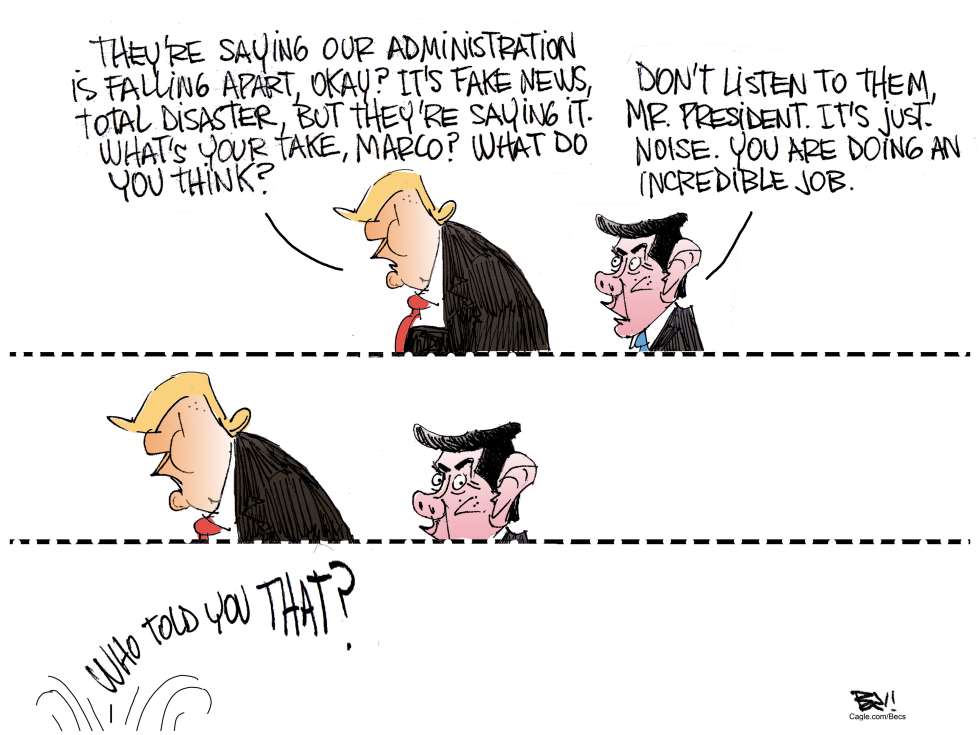
President Trump asked Senator Marco Rubio for his assessment of reports that the administration is in disarray, labeling them fake news. Rubio dismissed the reports as noise and praised Trump's performance. Trump responded by questioning who had told Rubio that assessment. The exchange highlights tensions over loyalty and information flow inside the administration. The cartoon portrays Rubio's positive reply as triggering suspicion rather than reassurance.
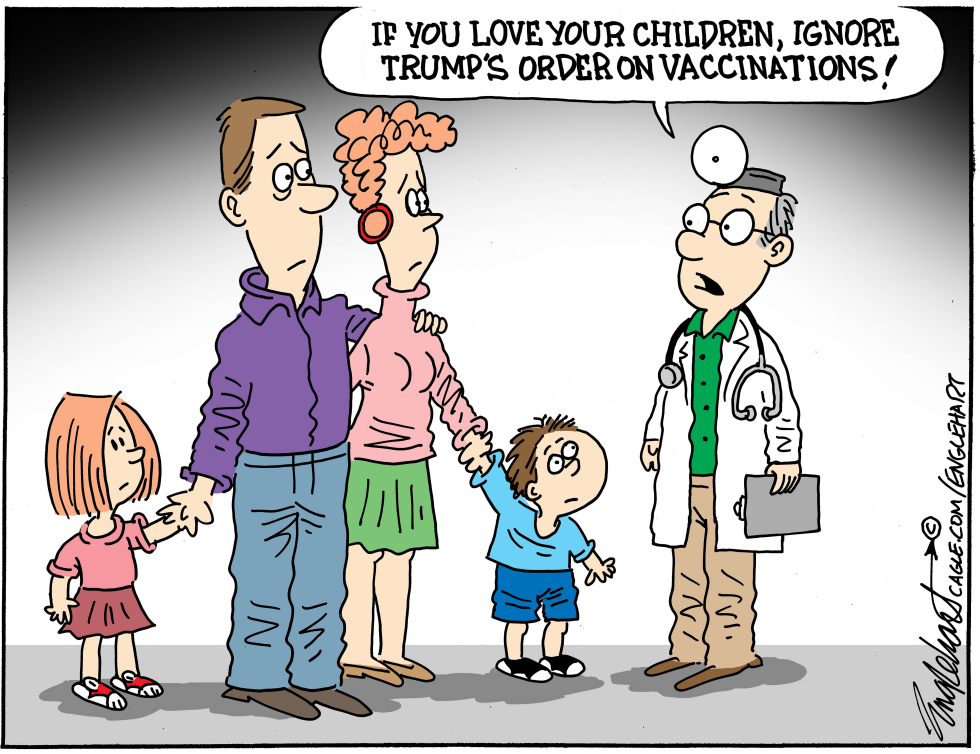
A doctor has publicly advised parents to disregard a presidential order on childhood vaccinations. The recommendation comes as the Trump administration advances new immunization policies. The stance highlights tensions between federal health directives and medical advice given directly to families. The piece presents the doctor's counsel as protective of children and critical of the order's approach.
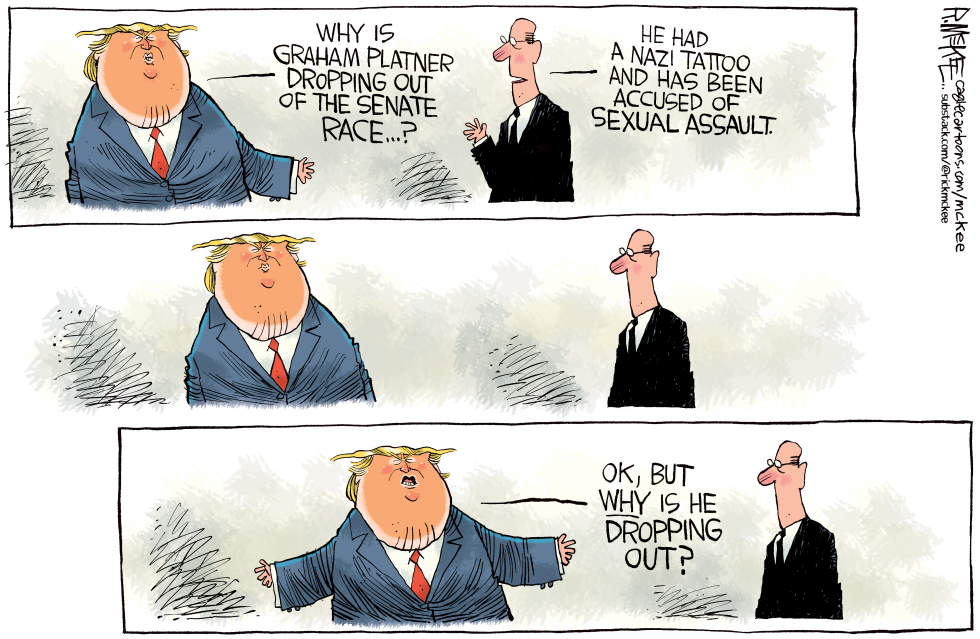
On July 10 2026 Rick McKee depicts Donald Trump questioning an aide about Graham Platner dropping out of a Senate race. The aide cites a Nazi tattoo and sexual assault accusation as reasons. Trump responds by asking again why the candidate is leaving the race. The exchange highlights the former president's focus on the withdrawal itself rather than the underlying controversies. Publication occurs during the 2026 election cycle when candidate viability and scandal impacts remain central topics in Senate contests.
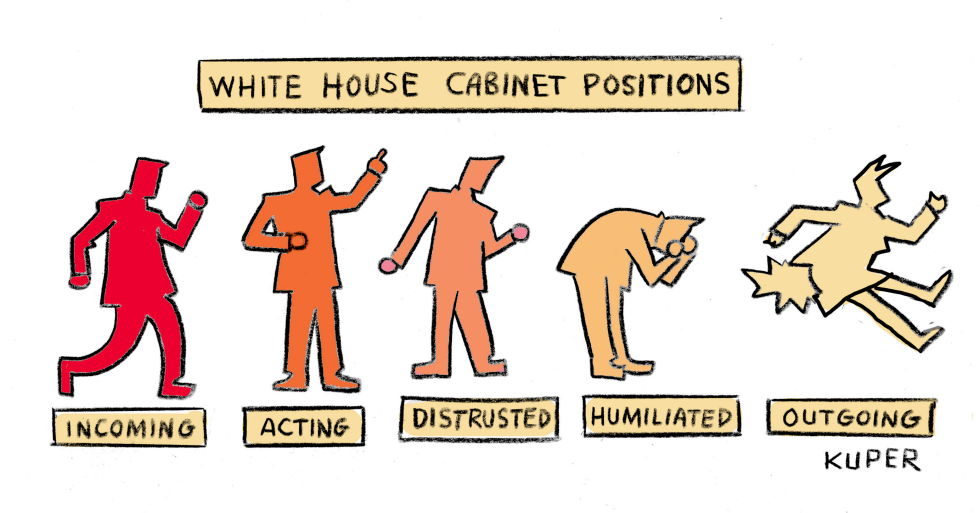
Peter Kuper nails the absurdity of Trump White House cabinet positions in this sharp cartoon. Five stylized figures march through stages: incoming in red, striding confidently; acting with a pointing gesture; distrusted standing still; humiliated bent over in shame; outgoing fleeing with a kick. Labels underscore the progression from promise to humiliation. Tags like cabinet turnover, political satire, administration instability, Trump firings, White House staff cycle, and executive distrust highlight the revolving door of appointments. It's a dry commentary on the chaos, where loyalty meets betrayal in quick succession. The simplicity amplifies the bite, making it perfect for syndication.
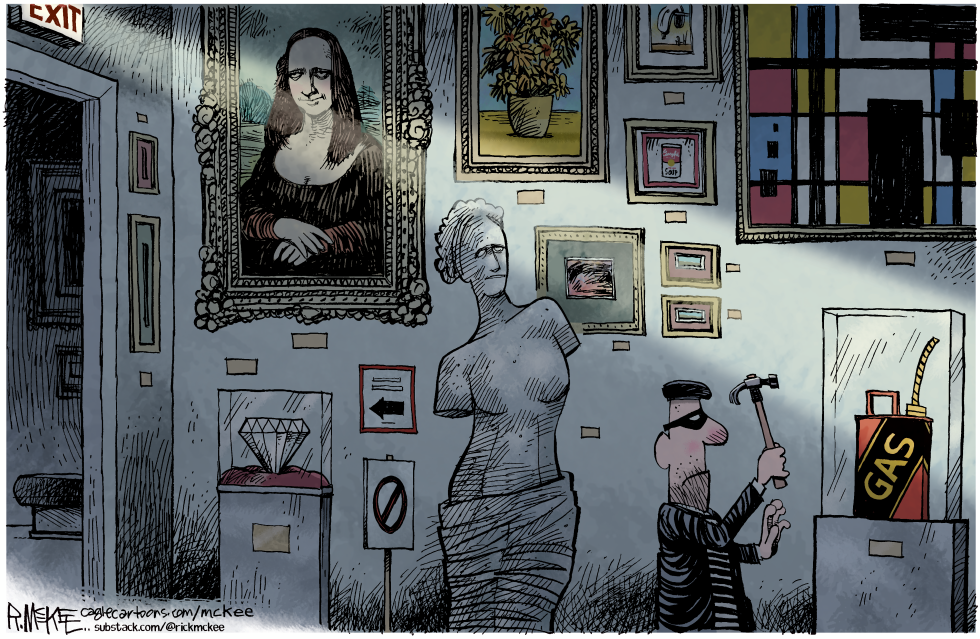
Rick McKee's cartoon depicts a dimly lit museum where a striped-shirted thief, masked and wielding a hammer, targets a display case with a red gas can marked 'GAS,' overlooking iconic pieces like the Mona Lisa portrait, Venus de Milo statue, a large diamond, Van Gogh-style sunflowers painting, abstract Mondrian-like art, and smaller framed works. An 'EXIT' sign glows above, and a 'no' symbol sign hangs nearby. The scene uses tags such as Trump, war, Iran, gas prices, oil, museum to comment on how escalating fuel costs make gasoline more valuable than cultural treasures, blending humor with commentary on energy crises.
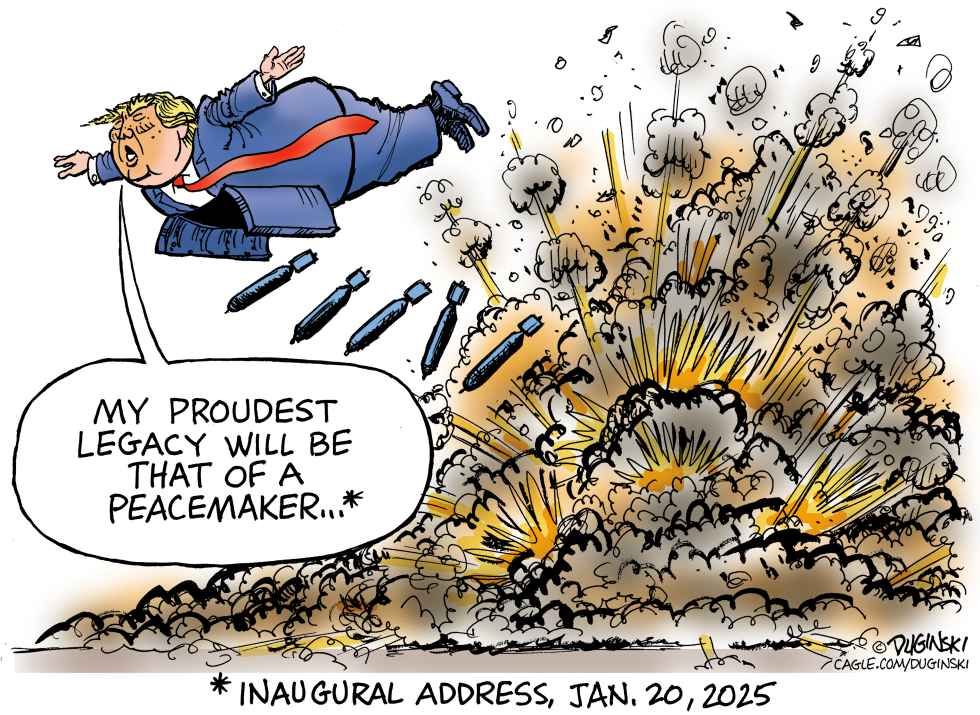
Duginski holds Trump accountable for his campaign promise to end wars within 24 hours of taking office. The Los Angeles Times illustrator catalogs the ongoing conflicts that remain unresolved. The broken promise imagery reflects sustained journalistic skepticism of Trump's foreign policy boasts.
Kevin Siers captures Donald Trump in a classic meme setup, seated at a table with a mug as fire engulfs the room, a king crown atop his head, uttering \'This is beautiful.\' The tags include tariffs, border, polls, the press, judges, and references to the KC Green \'This is fine\' meme. This political cartoon from 2025 highlights a satirical take on the president\'s first 100 days, showing him oblivious to surrounding destruction. The dry humor underscores denial amid crisis, with the crown symbolizing monarchical pretensions. Apologies to KC Green nod to the original work, blending current events like polls and the press into a visually striking commentary.
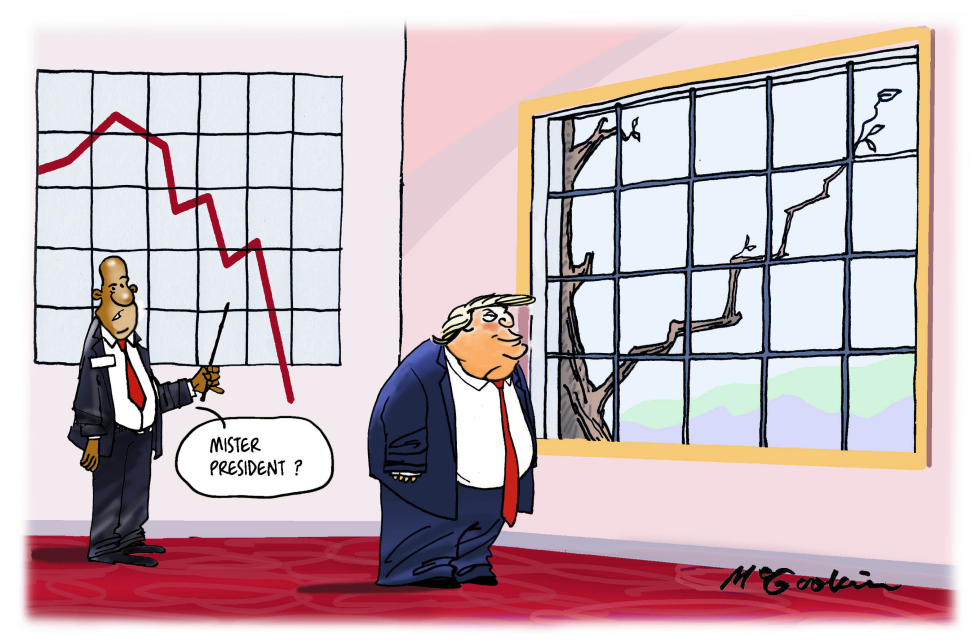
Malcolm McGookin's cartoon captures Trump polls in a humorous light, showing the former president gazing at a tree branch outside a window that mimics an upward approval rating graph, complete with small leaves. Meanwhile, an aide in a suit points to a wall chart with a red line plummeting downward, labeled under tags like stock market and tariffs. The scene, set on a red carpet in a pink room, pokes fun at perceptions of dementia, as the aide calls out 'Mister President?' The overall satire underscores Trump's potential confusion between reality and wishful thinking, blending elements of political humor with visual puns on economic indicators.