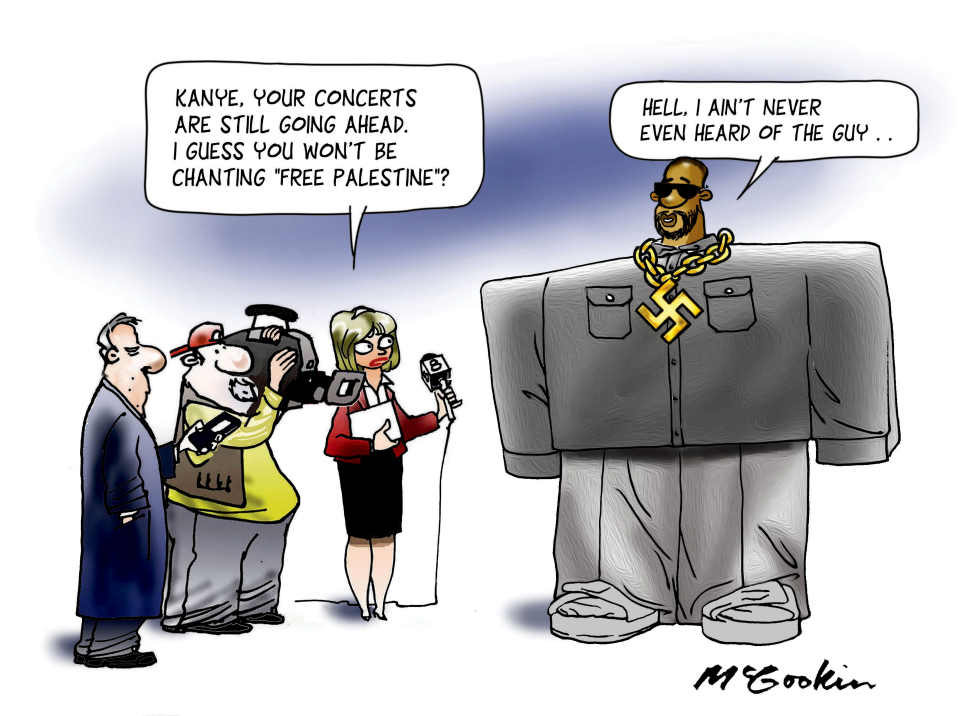
Reports indicate Macklemore faced professional setbacks tied to his expressions of support for Palestinian causes, while Kanye West maintained concert bookings and public appearances despite a documented history of antisemitic remarks. The disparity highlights selective enforcement within entertainment industry and media circles. The piece argues that such inconsistency undermines claims of principled accountability and reveals selective outrage based on the individual's profile rather than the content of the statements.
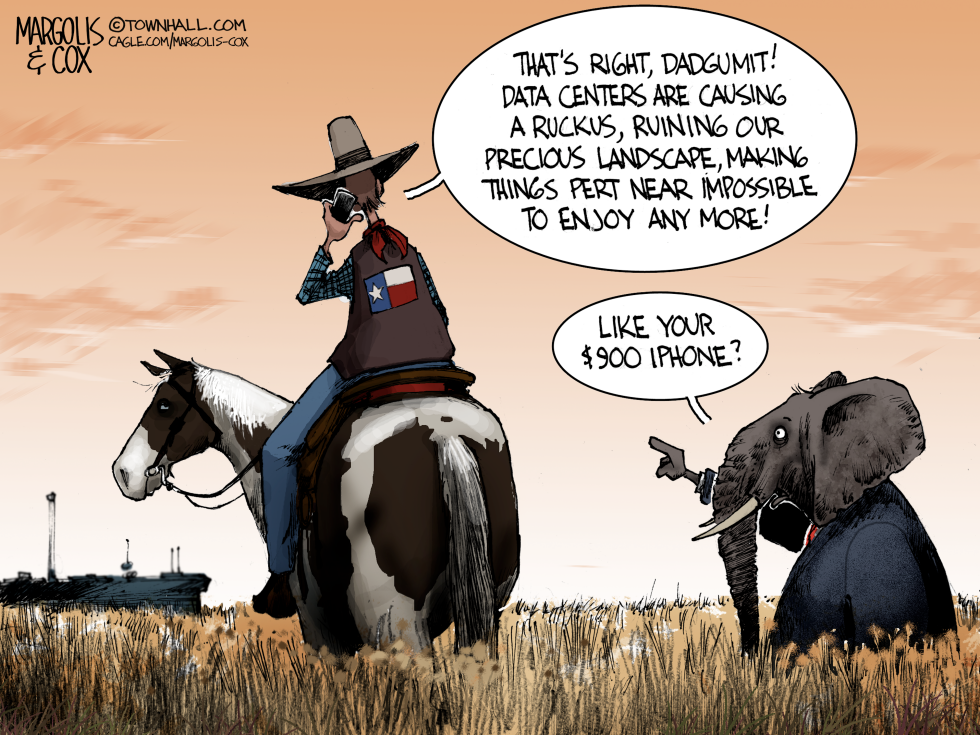
Data centers are expanding rapidly across Texas to support growing digital demands, drawing complaints from local residents and officials over land use and visual impact. Republicans in the state have voiced concerns about the facilities altering rural scenery and affecting quality of life. The cartoon highlights the inconsistency in such criticism given widespread reliance on smartphones and other tech products that necessitate these centers.
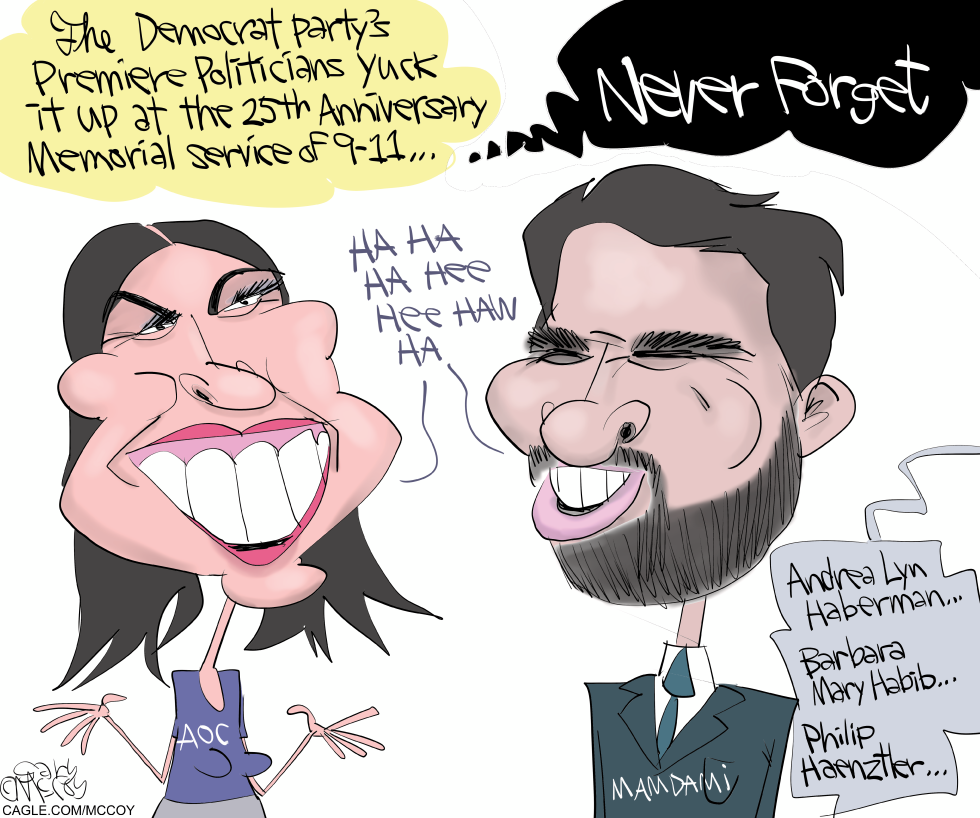
On the 25th anniversary of the September 11 attacks, prominent Democrats faced accusations of inappropriate levity at memorial events. The cartoon depicts AOC and Zohran Mamdani laughing while a thought bubble reading Never Forget trails off, underscoring claims that party leaders have grown detached from the solemnity of the occasion. The piece argues that such behavior reveals a broader erosion of respect for national tragedies among Democratic elites.
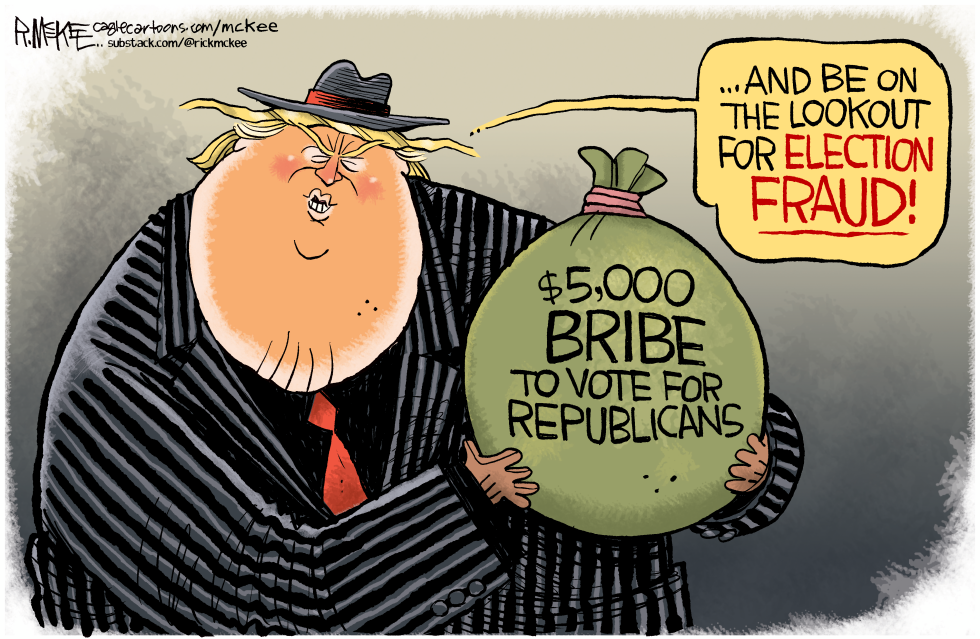
Donald Trump has repeatedly claimed that elections are rigged against Republicans and urged vigilance against fraud. The cartoon responds to this pattern by depicting him offering cash incentives to secure votes for his party. It underscores the perceived double standard in ongoing debates over voting access and integrity ahead of the 2026 midterms. The piece takes the position that such rhetoric from Trump undermines genuine concerns about election security.
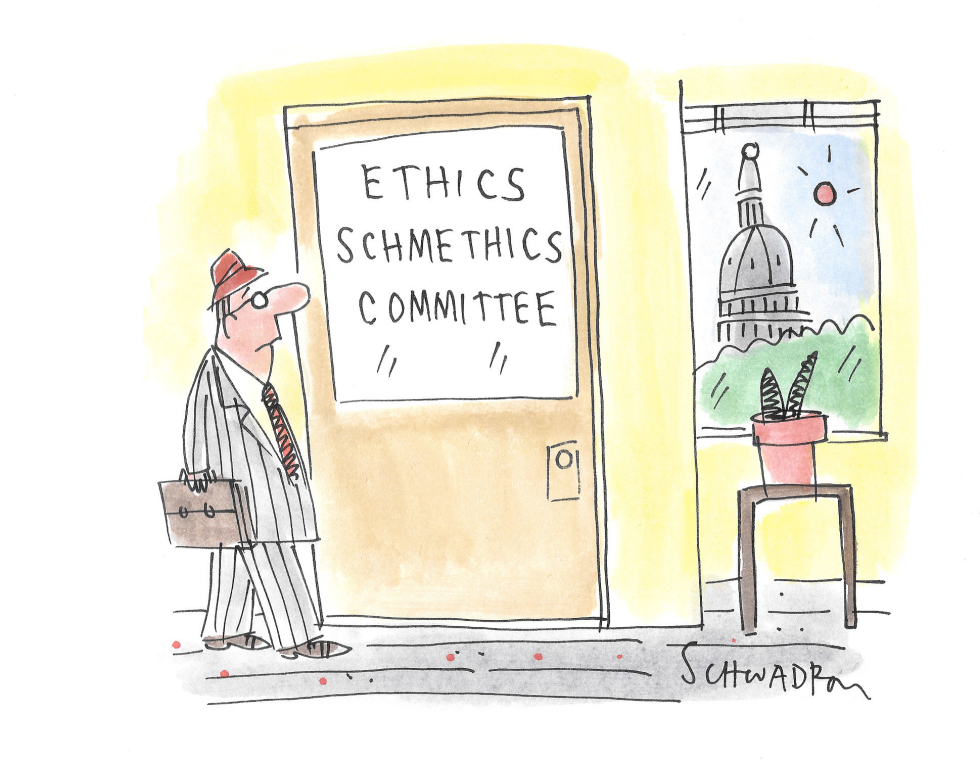
Congress continues to sideline meaningful ethics oversight, with lawmakers showing little interest in strengthening or even respecting the chamber's ethics committee. The panel exists on paper but carries little practical weight in daily operations. This dynamic matters because weak internal standards erode public trust in legislative institutions and invite outside influence. The cartoon captures the prevailing attitude that ethics rules are an afterthought rather than a core responsibility.
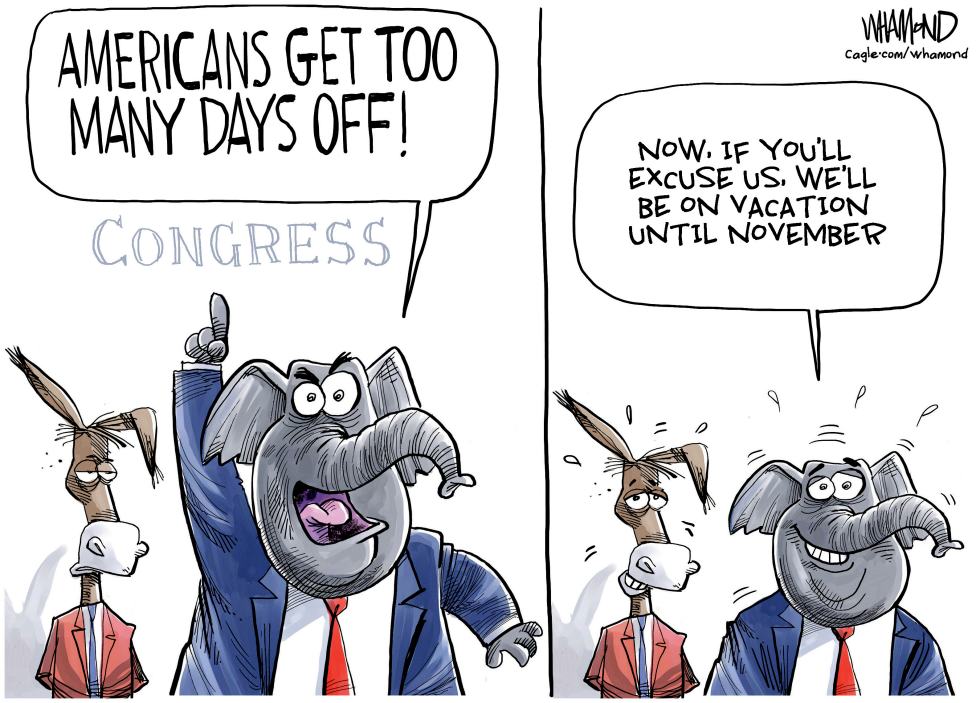
Congressional leaders from both parties have drawn criticism for lecturing American workers about taking too many days off while preparing to recess until November. The move comes as lawmakers face questions over productivity and priorities in an election year. The cartoon highlights the perceived double standard between public statements on labor and the actual schedule of elected officials.
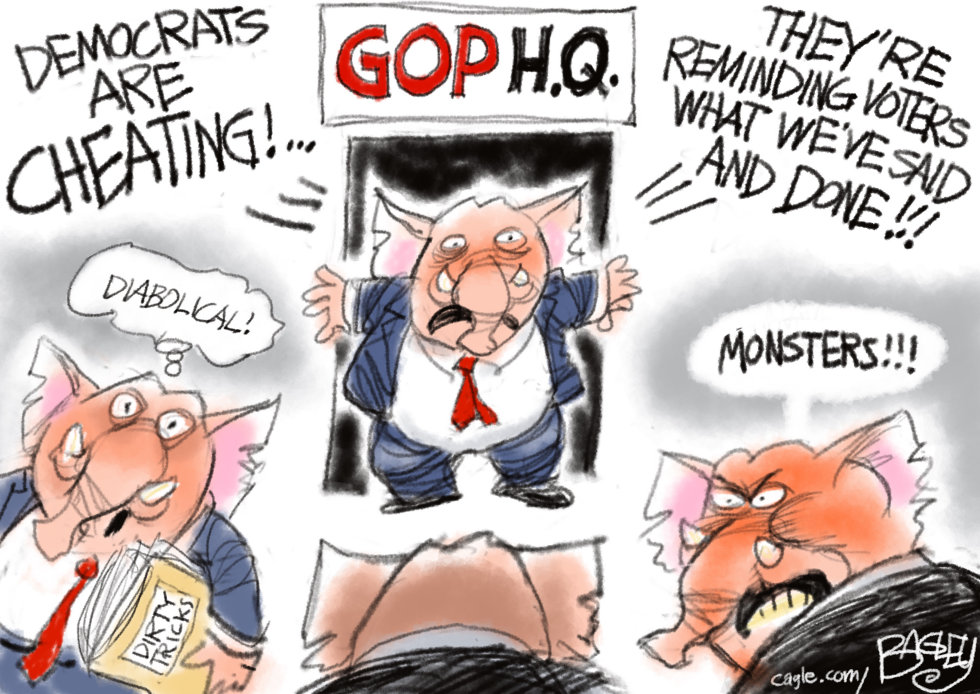
Republicans have renewed accusations that Democrats are cheating in elections, a charge that echoes long-standing GOP concerns over voter fraud. The claims come as the party faces scrutiny over its own past efforts to influence outcomes through restrictive laws and legal challenges. The cartoon argues that these accusations serve mainly to distract from the Republicans' documented history of similar or more aggressive tactics.
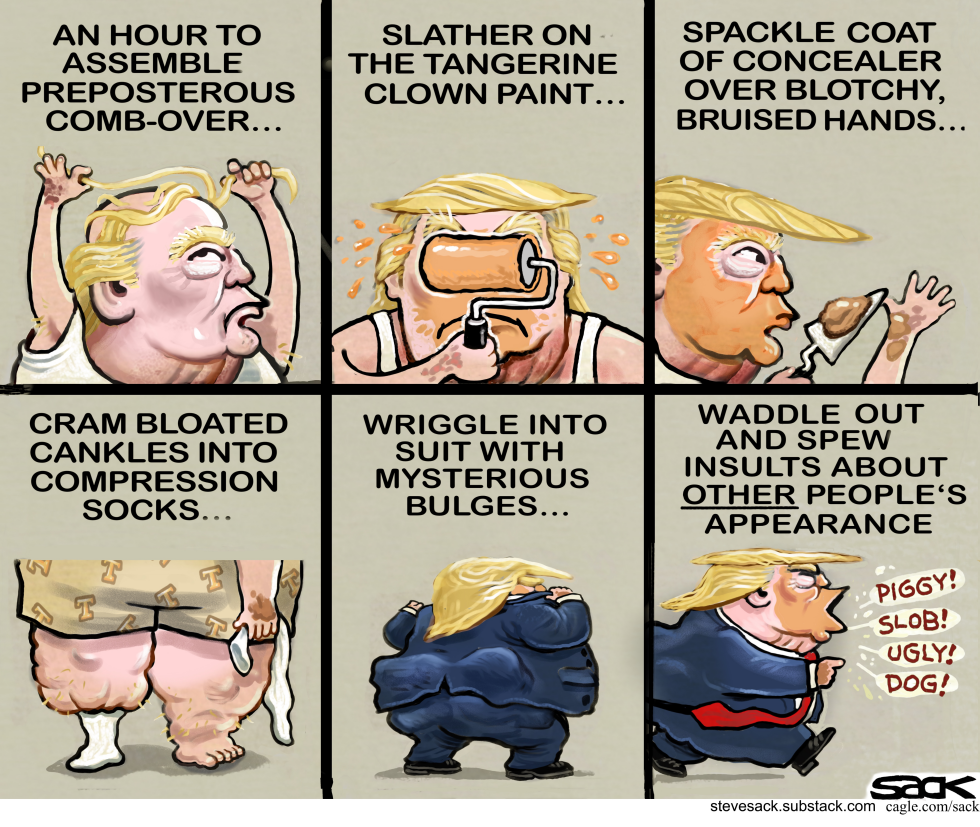
Donald Trump maintains a detailed personal grooming regimen that includes assembling a comb-over, applying tangerine-toned makeup, concealing skin issues, using compression socks, and adjusting his suit. This preparation precedes his public remarks criticizing the appearances of others. The piece presents the contrast as evidence of inconsistent standards in political discourse.
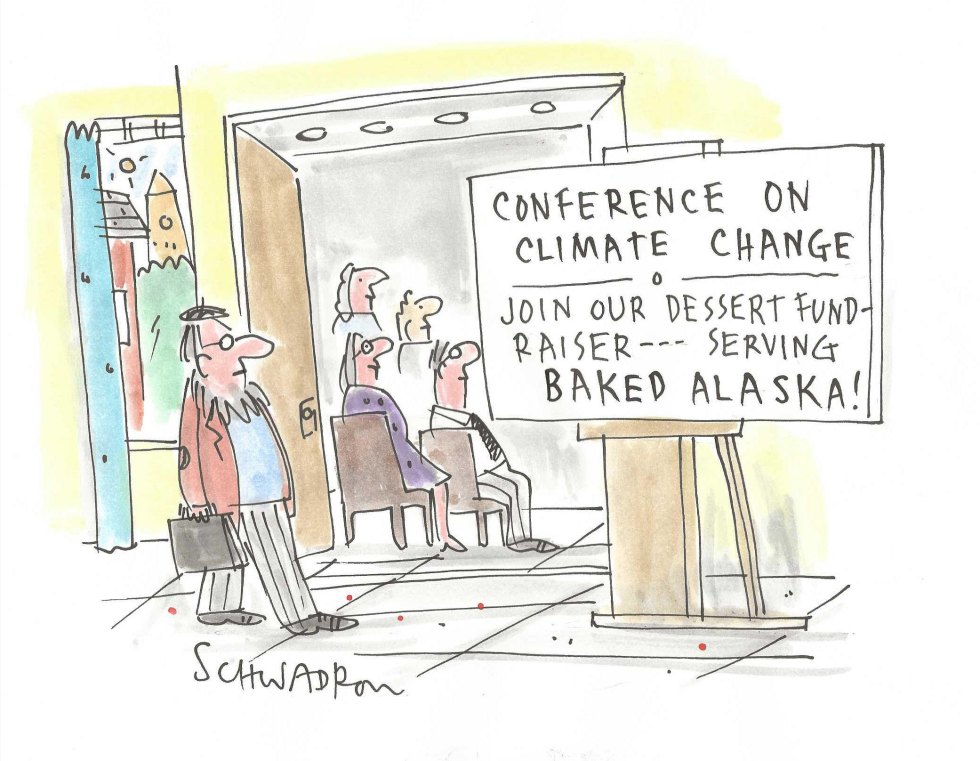
Climate conferences continue to draw scrutiny over perceived inconsistencies between stated goals and on-site activities. Organizers promote a dessert fundraiser featuring baked Alaska at an event focused on environmental issues. The piece highlights the tension between messaging and execution in ongoing climate policy discussions.
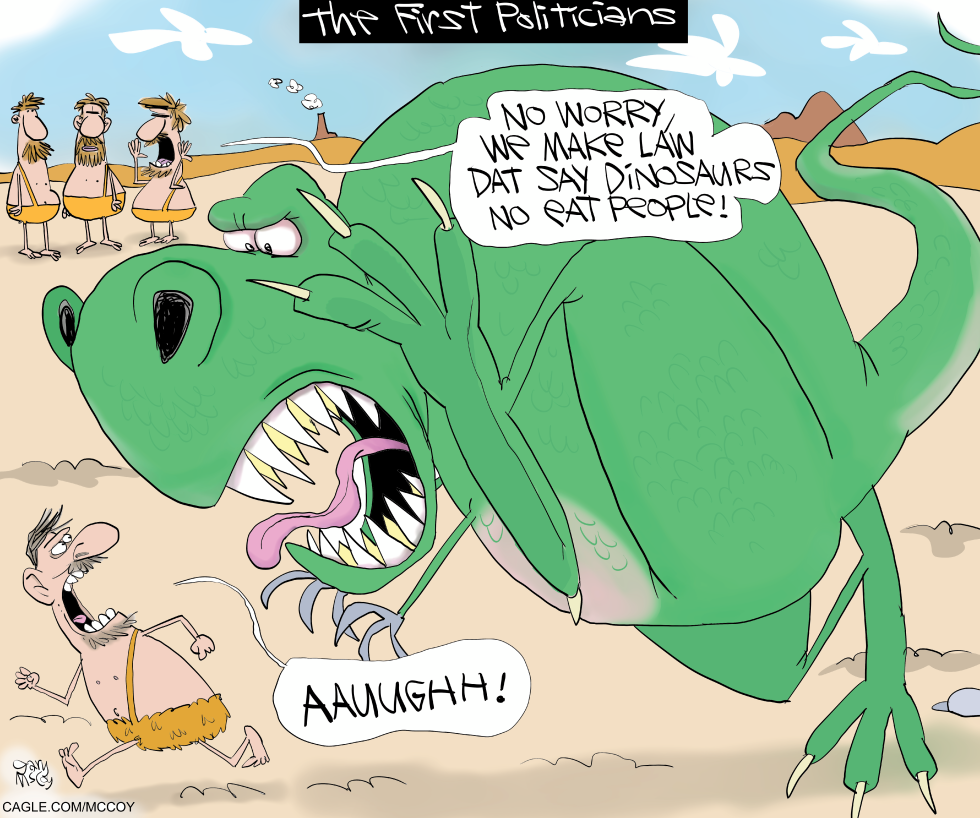
Politicians in prehistoric times promise a law banning dinosaurs from eating people. The pledge comes as a T-Rex looms over a fleeing caveman. The move highlights how leaders often make rules they have no intention of following. The piece takes the position that such assurances are empty and self-serving.
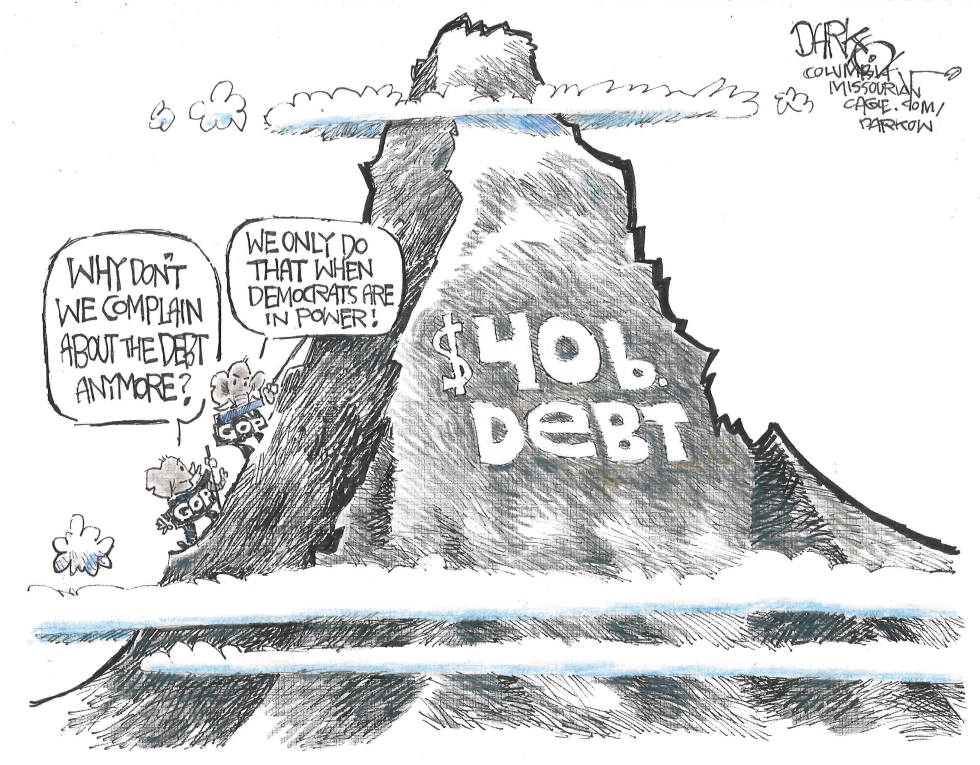
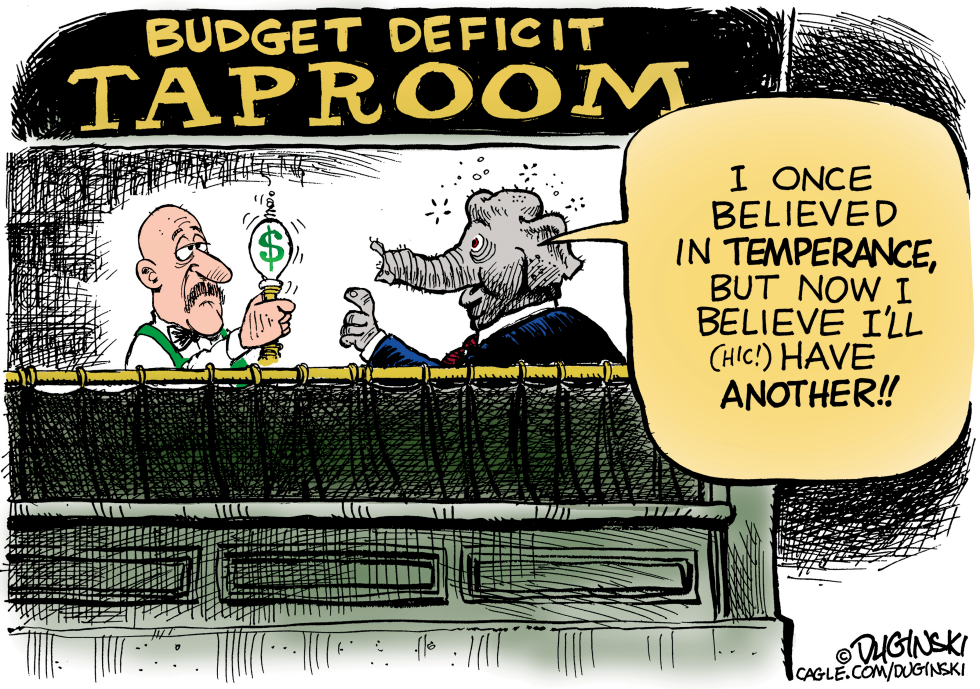
Republicans in power have stopped raising alarms over the national debt, a reversal from their stance during Democratic administrations. The shift highlights how fiscal concerns often serve partisan purposes rather than consistent policy priorities. The piece critiques this selective approach to government spending and borrowing.
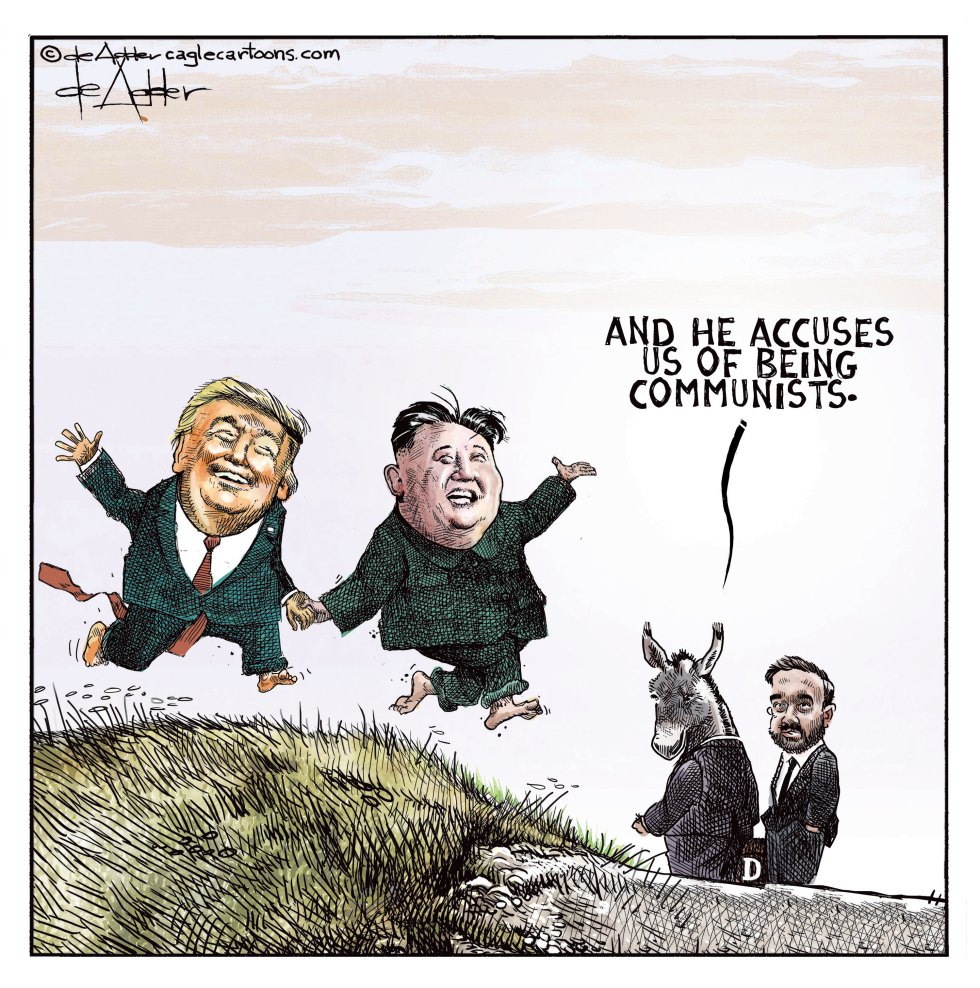
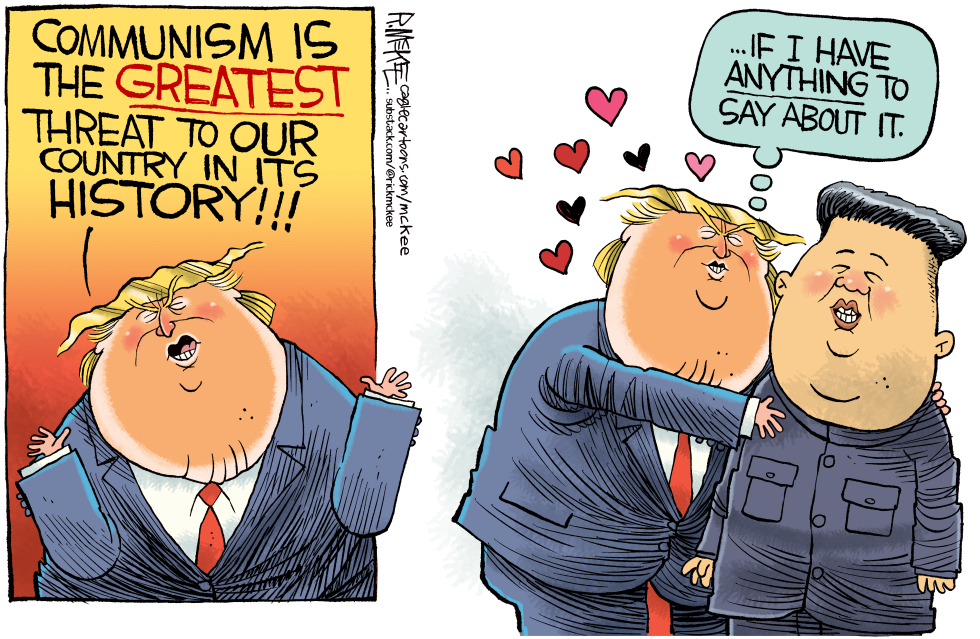
Donald Trump and Kim Jong Un appear together in a political scene accusing Democrats of communist leanings. The depiction highlights their joint action amid ongoing partisan rhetoric. The editorial position frames the accusation as inconsistent given the shared leap.
Republicans have long criticized deficit spending under Democratic administrations yet continue to support policies that expand federal borrowing when in power. The pattern reflects ongoing tension between stated fiscal restraint and actual legislative priorities on taxes and spending. The cartoon argues that the party has abandoned earlier commitments to balanced budgets in favor of repeated deficit increases.
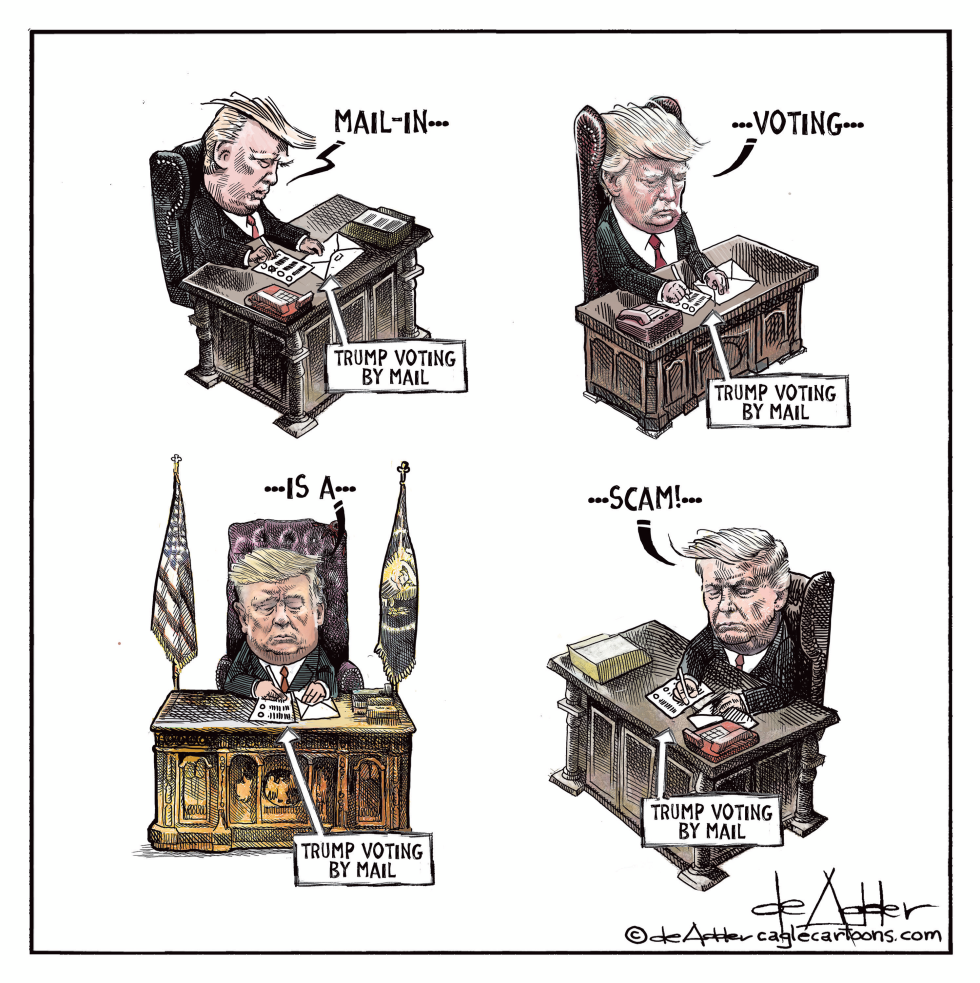
A four-panel cartoon by Michael de Adder published August 18, 2026, shows Donald Trump seated at desks completing mail-in ballots. Text builds across panels to spell MAIL-IN VOTING IS A SCAM while each scene is labeled TRUMP VOTING BY MAIL. The work responds to ongoing debates over mail voting ahead of the 2026 midterms. Trump has repeatedly questioned the security of mail ballots in public statements. The cartoon uses repetition to highlight the contrast between those statements and the depicted actions. No specific new event from the prior month is named in the image itself.
Donald Trump publicly labeled communism the greatest threat to the country before embracing North Korean leader Kim Jong Un. The image captures the shift in tone through contrasting scenes of protest and affection. The editorial position criticizes the inconsistency in the approach to the regime.