The cartoon depicts two U.S. soldiers outside a weapons depot labeled U.S. Military Weapons Depot. One soldier states the facility is running low on munitions in Iran. The second replies that domestic fronts are out of weapons against food and gas prices, healthcare costs and housing affordability. The image responds to ongoing debates over U.S. military aid commitments abroad and competing budget pressures at home as of the August 2026 publication date. It uses the depot setting and dialogue to contrast foreign military demands with economic challenges facing American households.
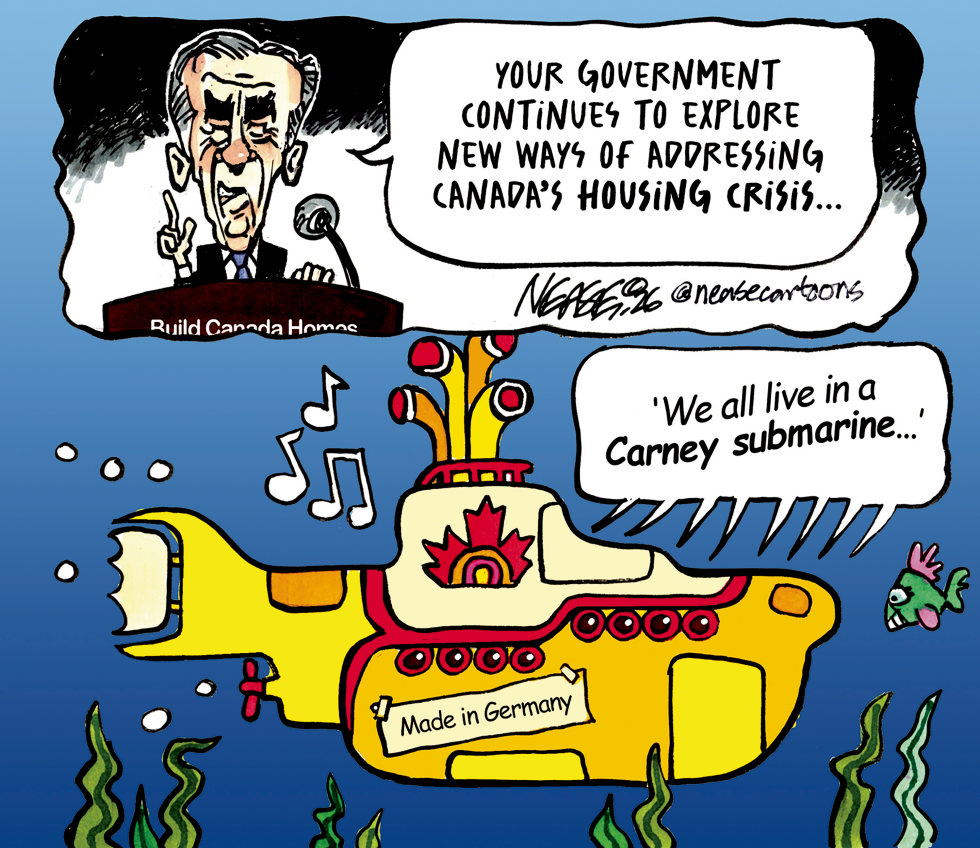
On July 7 2026 Mark Carney speaks from a Build Canada Homes podium about ongoing government efforts to address the national housing crisis. Below the surface a yellow submarine marked Made in Germany and bearing a maple leaf emblem carries the slogan We all live in a Carney submarine. The scene references the Beatles song while depicting policy exploration through underwater imagery with musical notes and a small fish observer.
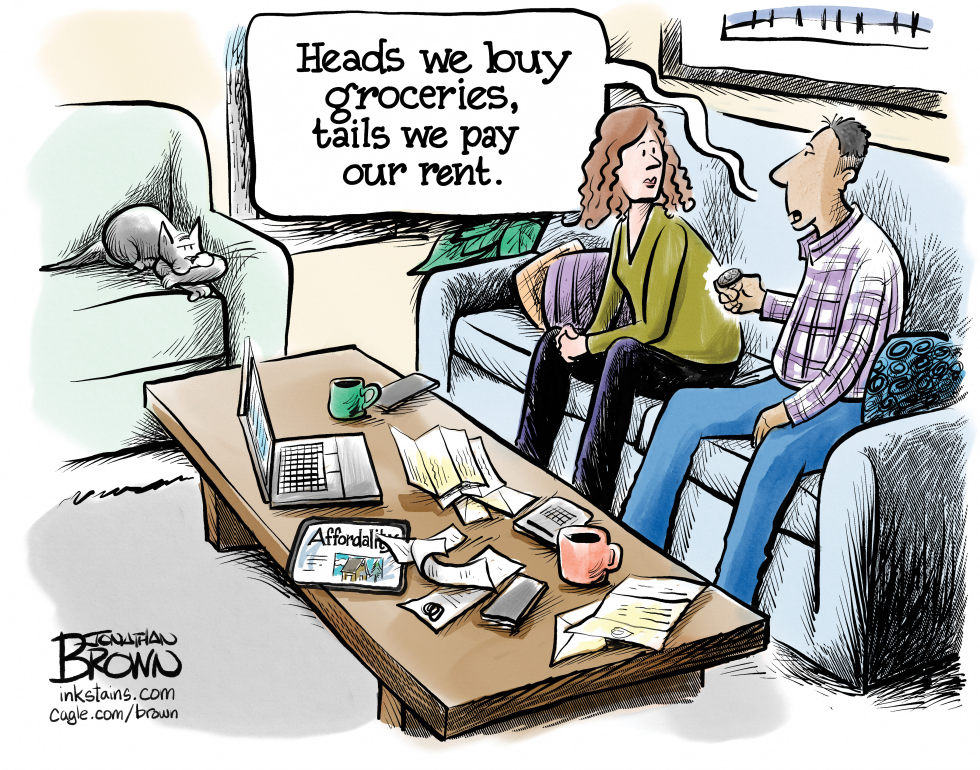
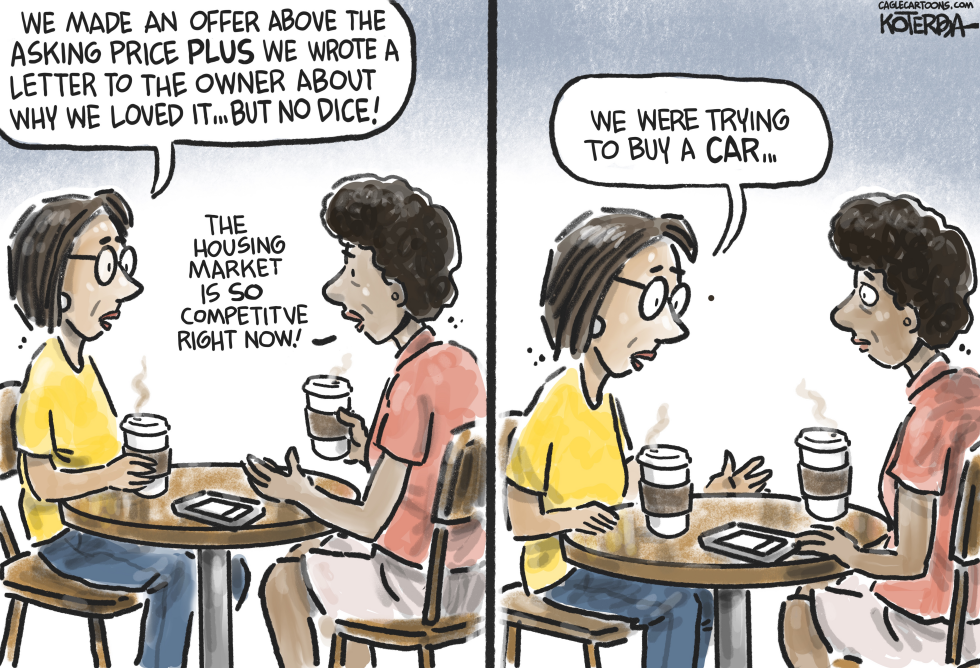
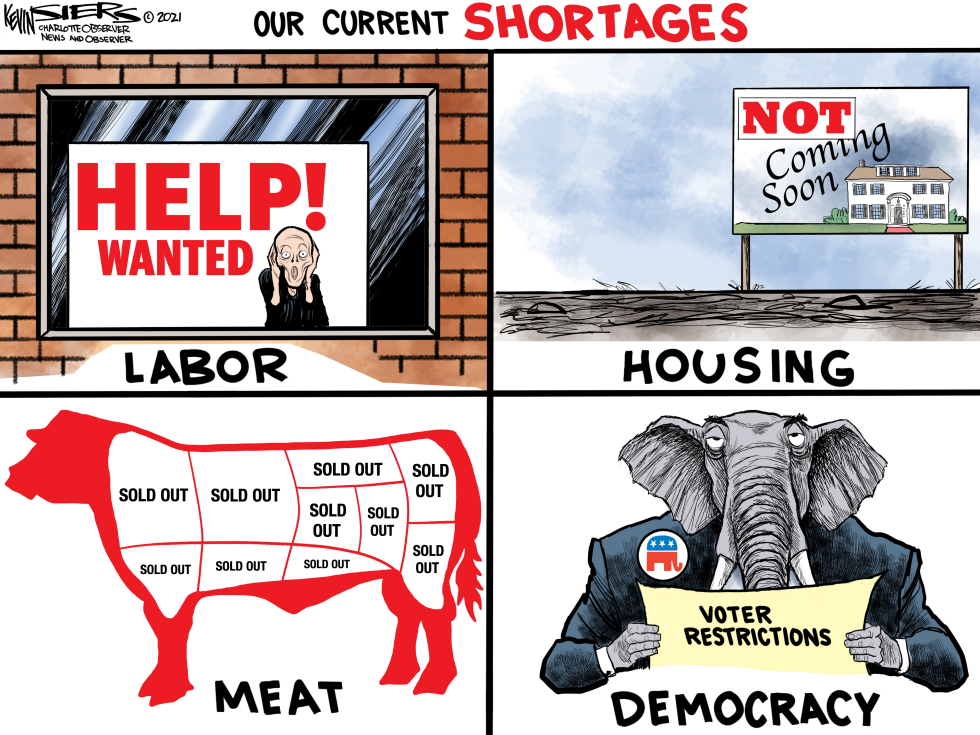
Families across the country continue facing simultaneous spikes in housing costs and grocery prices that force difficult tradeoffs in monthly spending. The pressure stems from persistent inflation and limited housing supply that have kept rents elevated even as other prices moderate. The piece highlights how ordinary households must choose between basic needs rather than afford both comfortably.
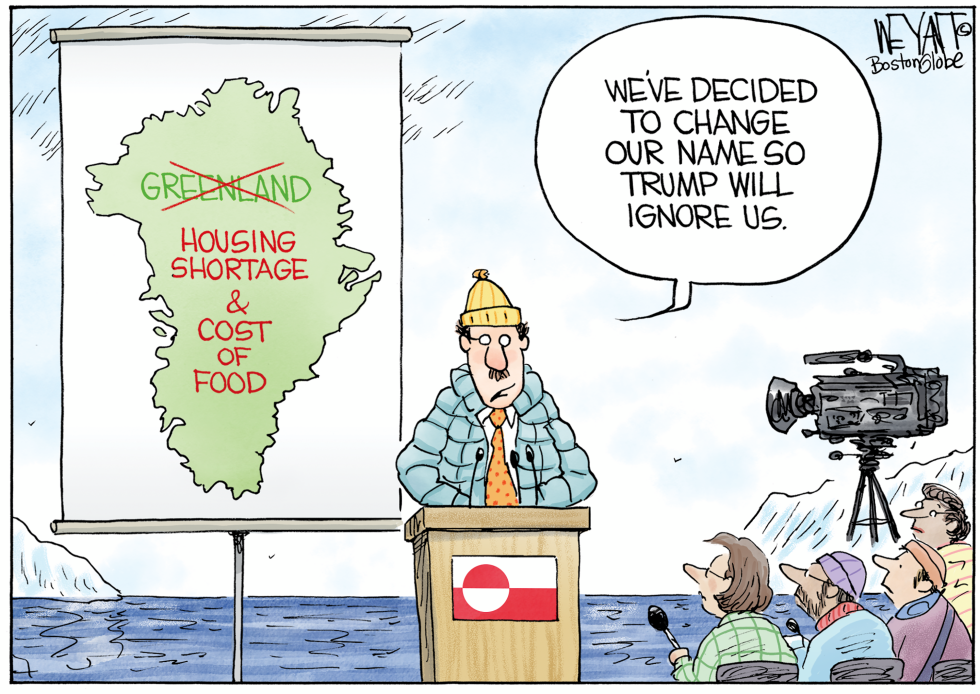
A new report released in late December 2024 showed homelessness rising 18 percent in major U.S. cities, driven by housing shortages and higher rents. President-elect Donald Trump, preparing for his January 2025 inauguration, viewed the gathered people as supporters until corrected. The cartoon highlights the disconnect between political spectacle and the ongoing urban housing emergency that cities have struggled to address.
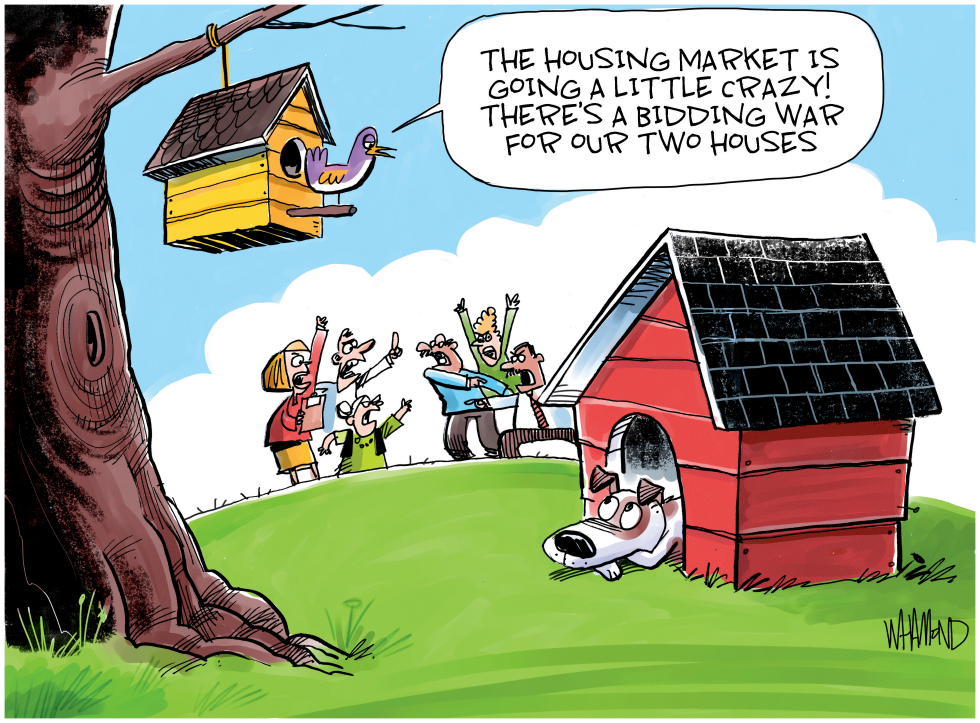
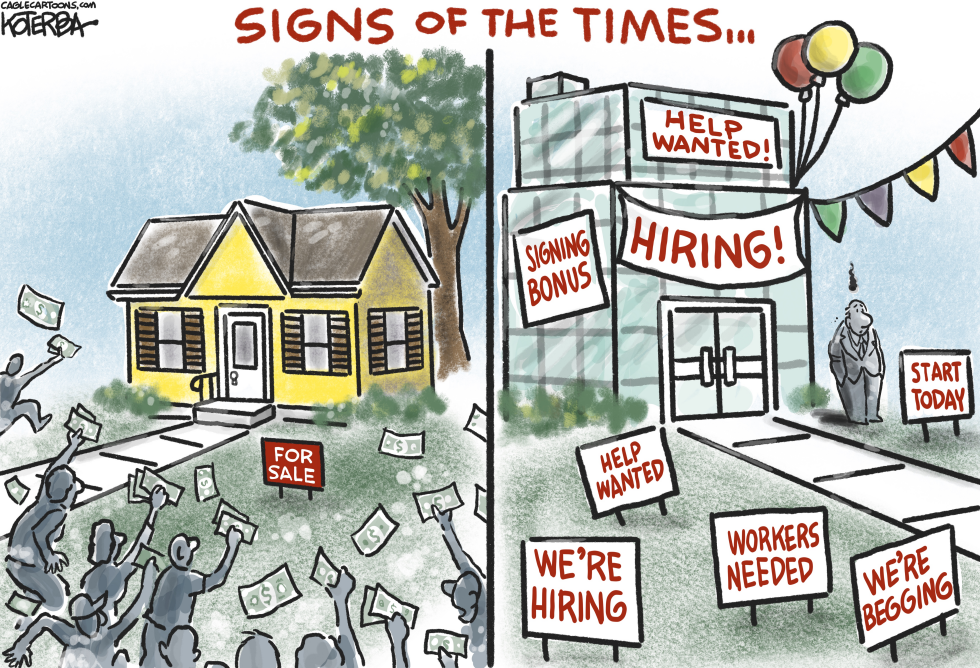
In summer 2021 the U.S. housing market saw record-low mortgage rates and strong demand collide with limited inventory, producing rapid price gains and frequent bidding wars. Multiple offers above asking price became common in many metro areas. The cartoon uses the birdhouse and doghouse to illustrate how even the smallest properties drew intense competition from buyers. The editorial position highlights the unsustainable pace of the surge and the pressure it placed on ordinary owners.
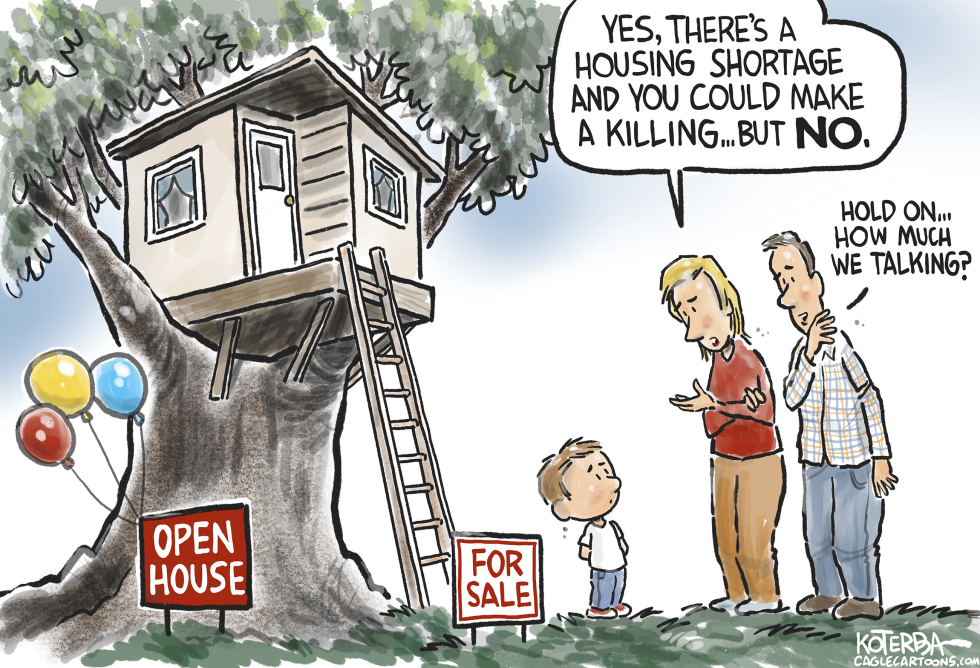
In spring 2021 the U.S. housing market faced acute inventory shortages that drove prices higher and left many buyers competing for limited stock. Families explored every available option, including unconventional properties. The editorial highlights how the shortage tempted some sellers to list even modest structures while underscoring buyer hesitation over practicality and cost.