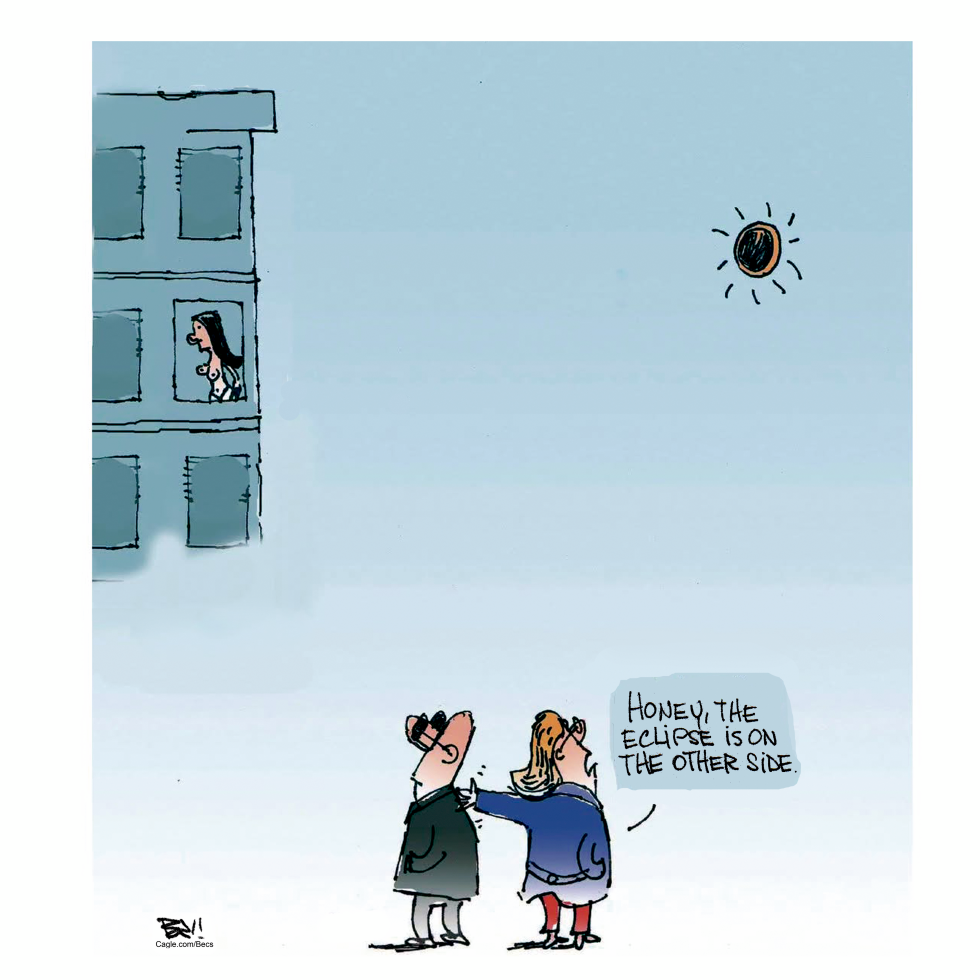
A domestic scene plays out around a simple pun on eclipses and visible marks. The exchange highlights everyday relationship dynamics where one party redirects attention from an apparent injury. The piece presents the interaction without broader political framing.
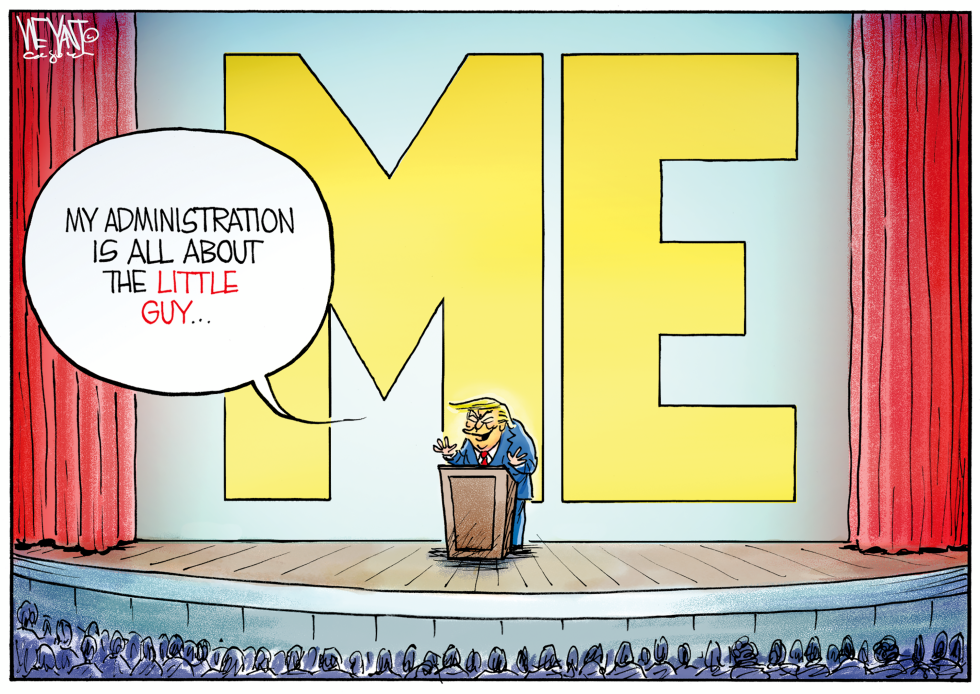
Donald Trump has repeatedly positioned his administration as champion of ordinary Americans during public addresses. The claim comes amid ongoing debates over policy priorities and personal branding in the White House. The piece portrays the rhetoric as centered on the speaker rather than the public.
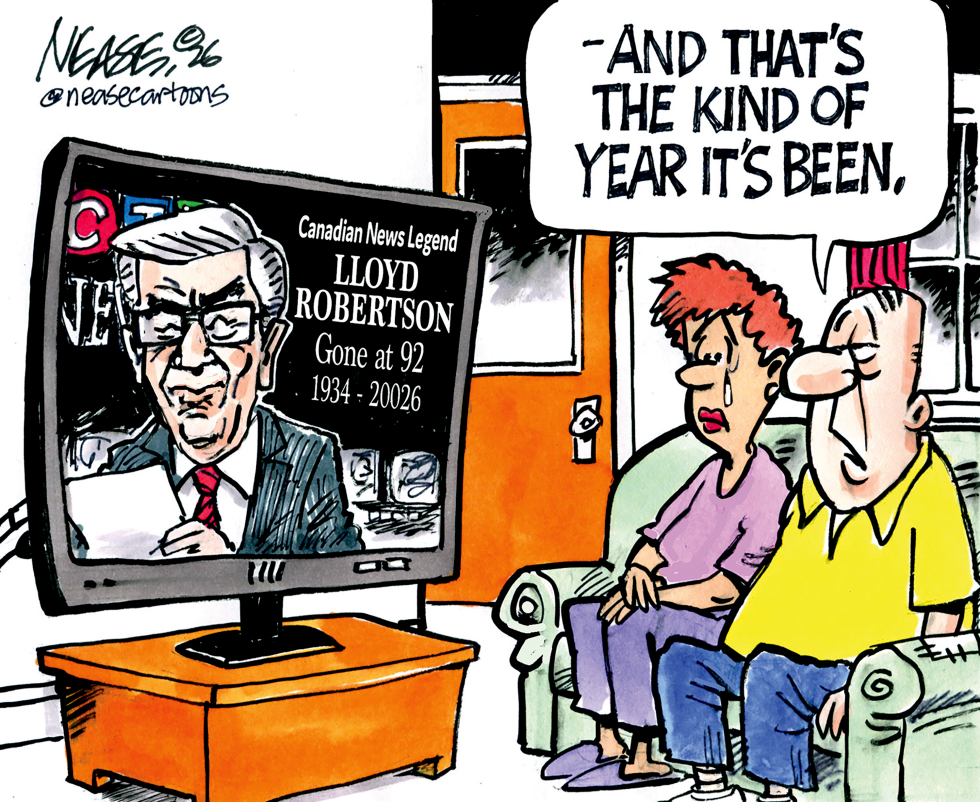
Canadian broadcasting icon Lloyd Robertson died in 2026 at age 92 after a long career as a news anchor. The announcement prompted widespread reflection on a year filled with notable passings and challenges. The editorial takes the position that such losses underscore the cumulative weight of difficult events.
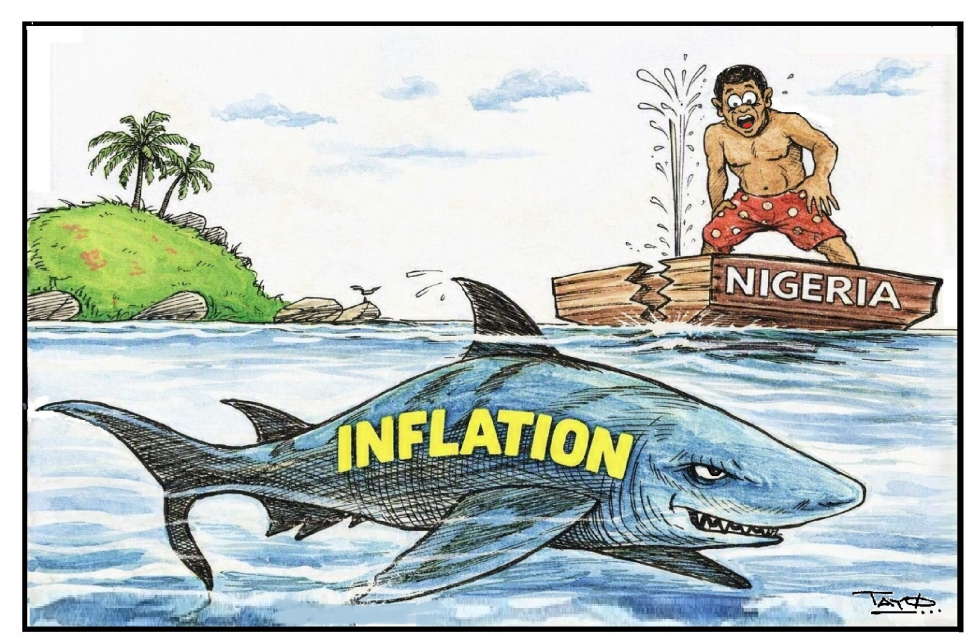
Nigeria continues to contend with sustained inflation and rising living costs. The piece responds to persistent price pressure on households and the strain it places on the wider economy. It presents inflation as a predatory force circling a vessel already taking on water.
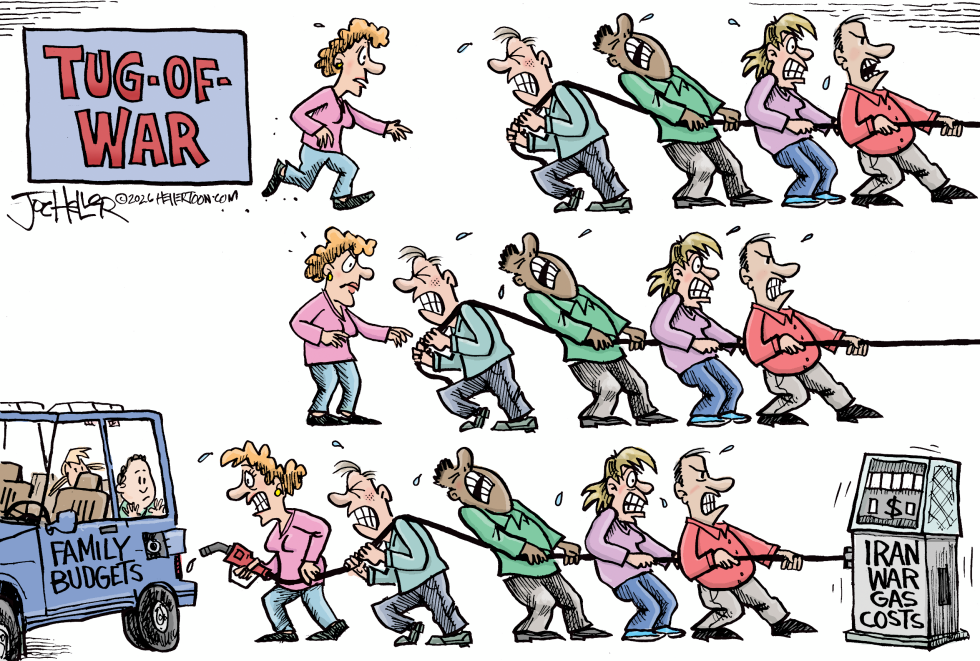
Rising gas prices linked to potential conflict with Iran are pressuring household budgets across the country. The cartoon illustrates the direct economic tug between military action abroad and everyday costs at the pump, arguing that families bear the immediate burden of such decisions.
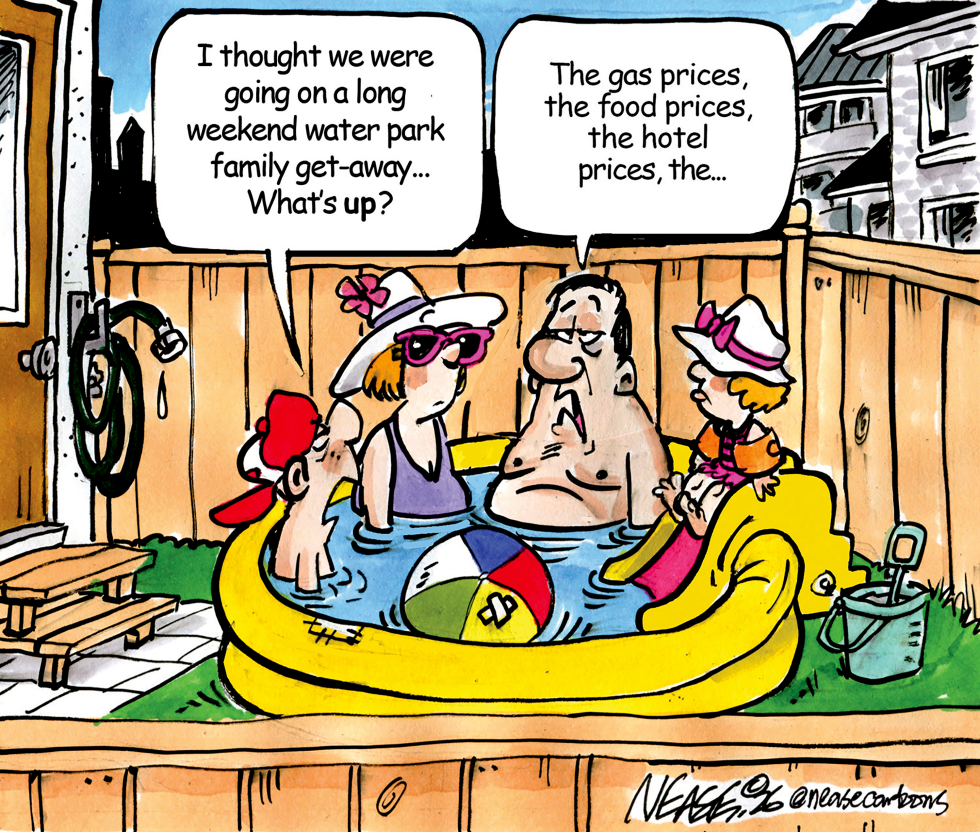
Families planning summer getaways face steep increases in gas, food, and hotel costs that disrupt long weekend plans. The piece highlights how these expenses push households toward simpler backyard alternatives while underscoring the persistent strain inflation places on everyday leisure.
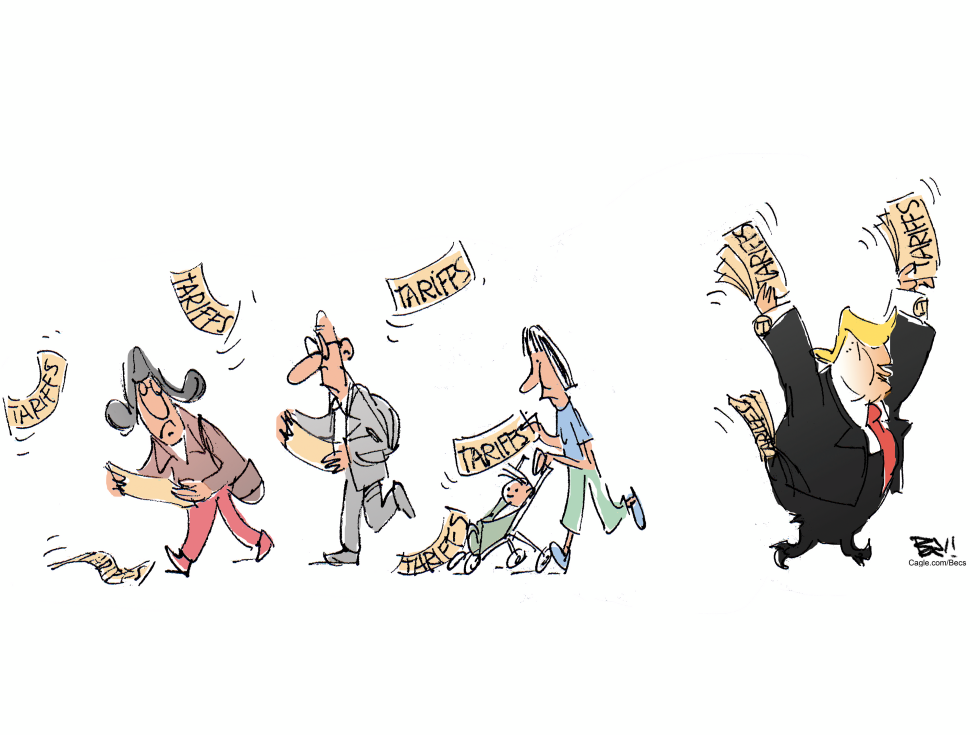
Donald Trump expanded tariffs across trading partners in mid-2026, triggering immediate market volatility and diplomatic pushback. The move raised costs for consumers and businesses reliant on imports. The piece portrays the policy as an indiscriminate barrage that disrupts daily life and global commerce.
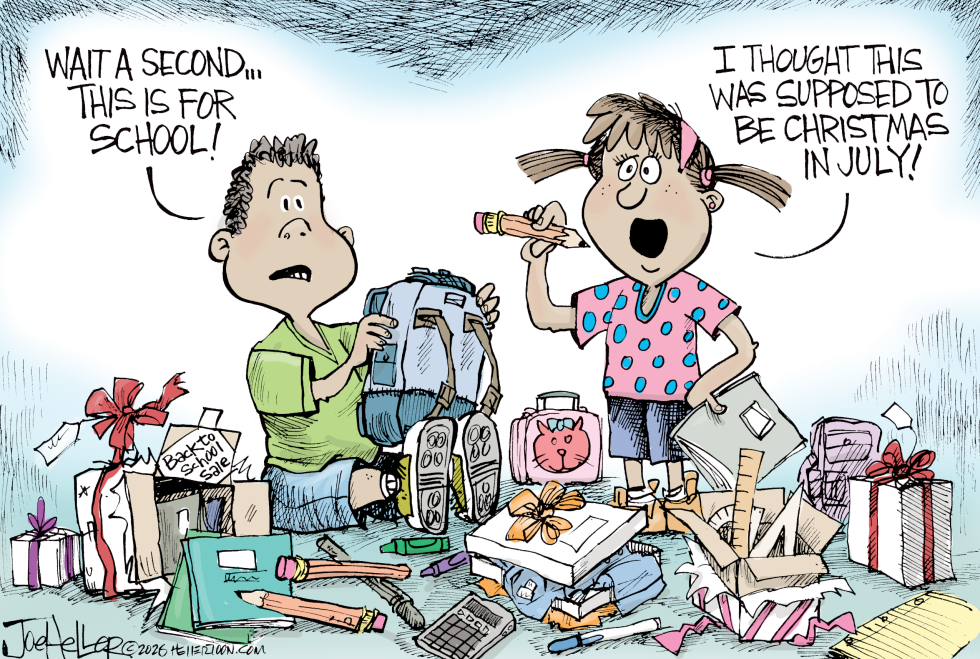
Retailers launched back-to-school promotions in late July, prompting families to stock up on supplies weeks ahead of the academic calendar. The timing overlaps with summer clearance events that mimic holiday marketing tactics. Parents and students face added pressure to buy early amid rising costs for essentials. The piece highlights how commercial calendars compress traditional shopping seasons and shift family routines.
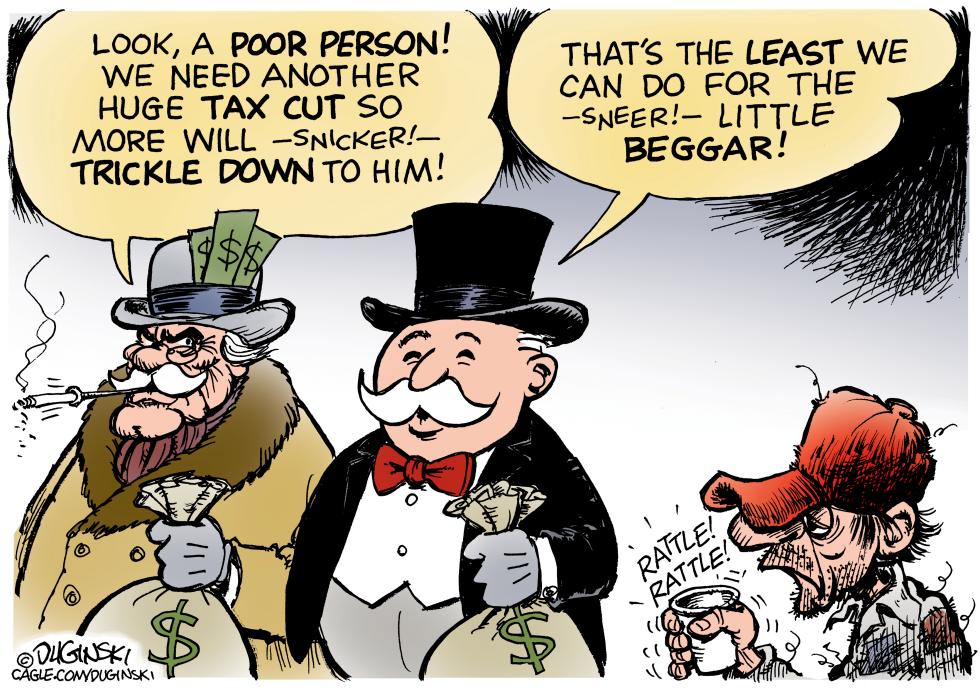
Wealthy interests continue to advocate additional tax reductions framed as broad-based relief. Critics note that such measures primarily benefit high earners while leaving lower-income households with minimal gains. The piece highlights the disconnect between policy promises and visible outcomes for those at the bottom.
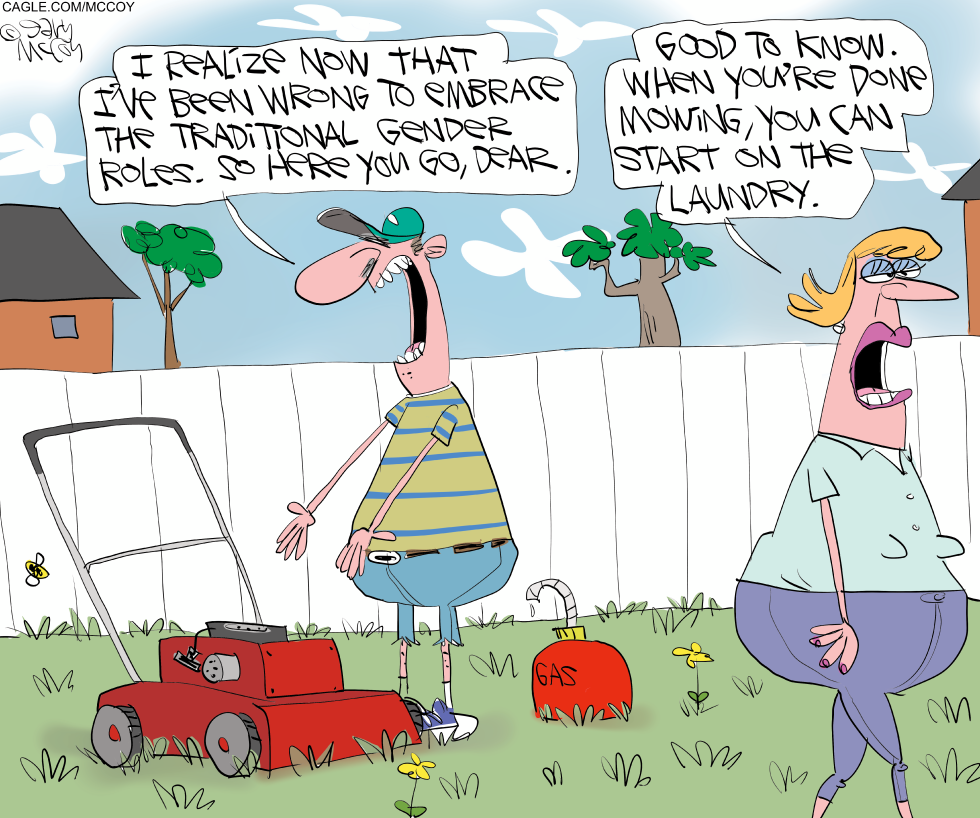
A man publicly rejects traditional gender roles and hands over the lawn mower in a suburban backyard. The woman responds by directing him to laundry afterward. The piece highlights ongoing cultural friction over household task divisions and expectations around gender.
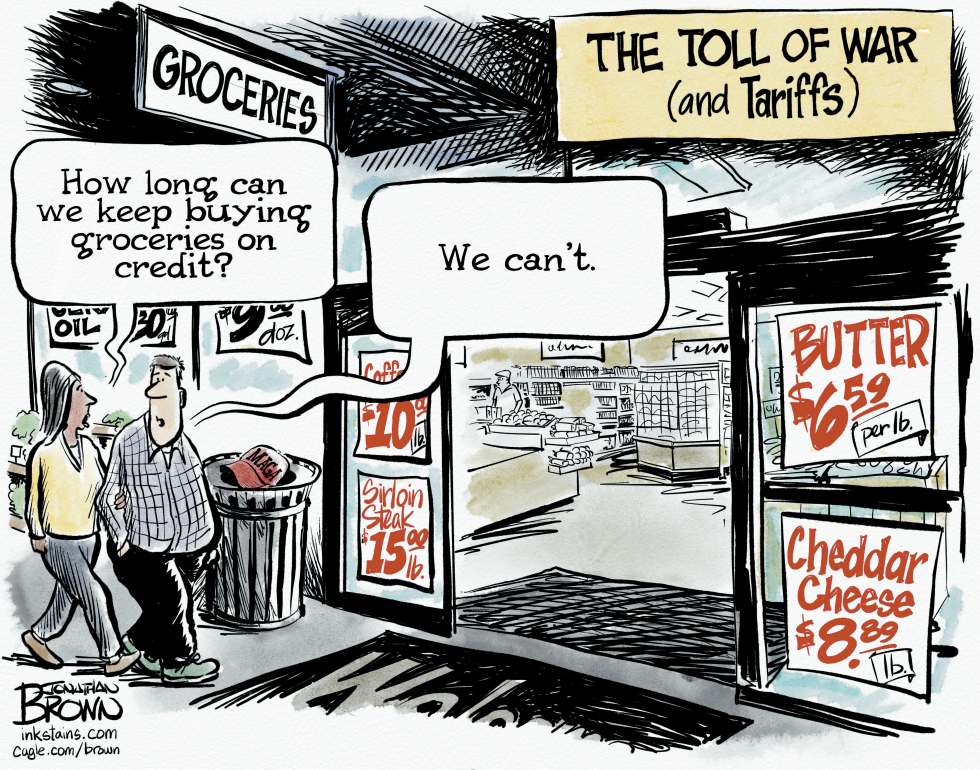
A political cartoon depicts a couple leaving a grocery store after learning they cannot continue buying food on credit. Signs inside show sharply higher prices for butter at $6.59 per pound, cheddar cheese at $8.89 per pound and sirloin steak at $15 per pound. A banner overhead reads The Toll of War (and Tariffs). The scene illustrates how ongoing conflict and trade barriers have driven up everyday food costs leaving households to rely on credit that is no longer sustainable.
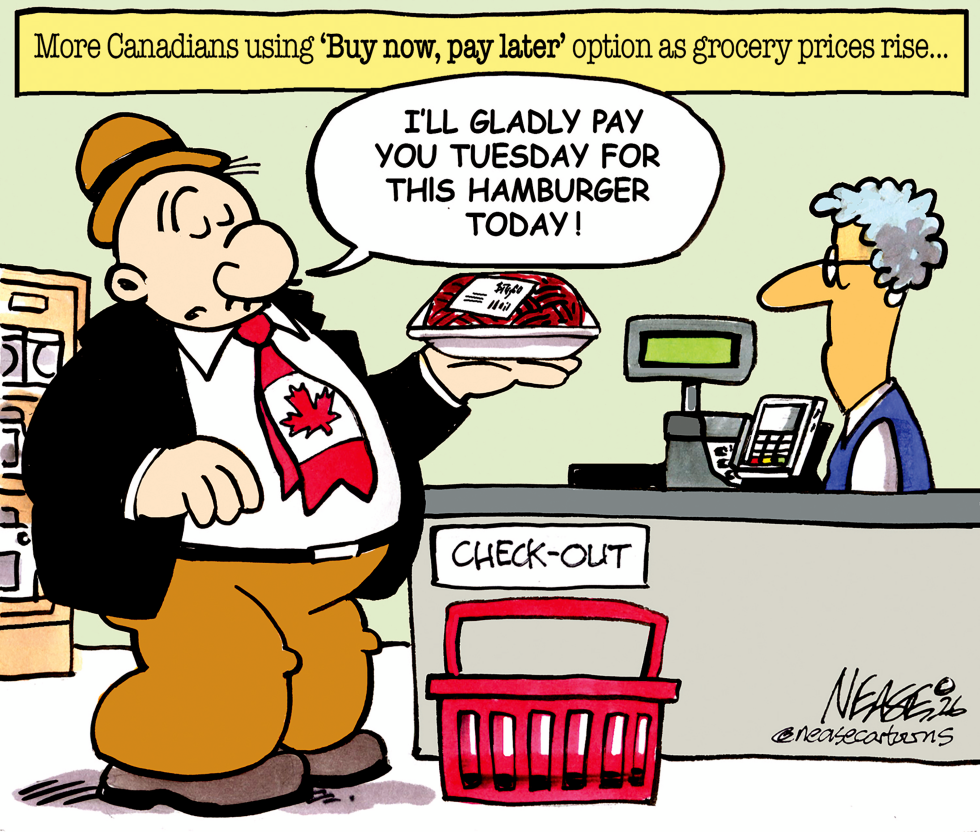
A cartoon published July 8, 2026, shows a Canadian shopper at a grocery checkout counter holding a package of hamburger meat while declaring he will gladly pay Tuesday for the item today. The scene references the classic Wimpy line and highlights growing use of buy now pay later services as grocery prices continue to climb in Canada.
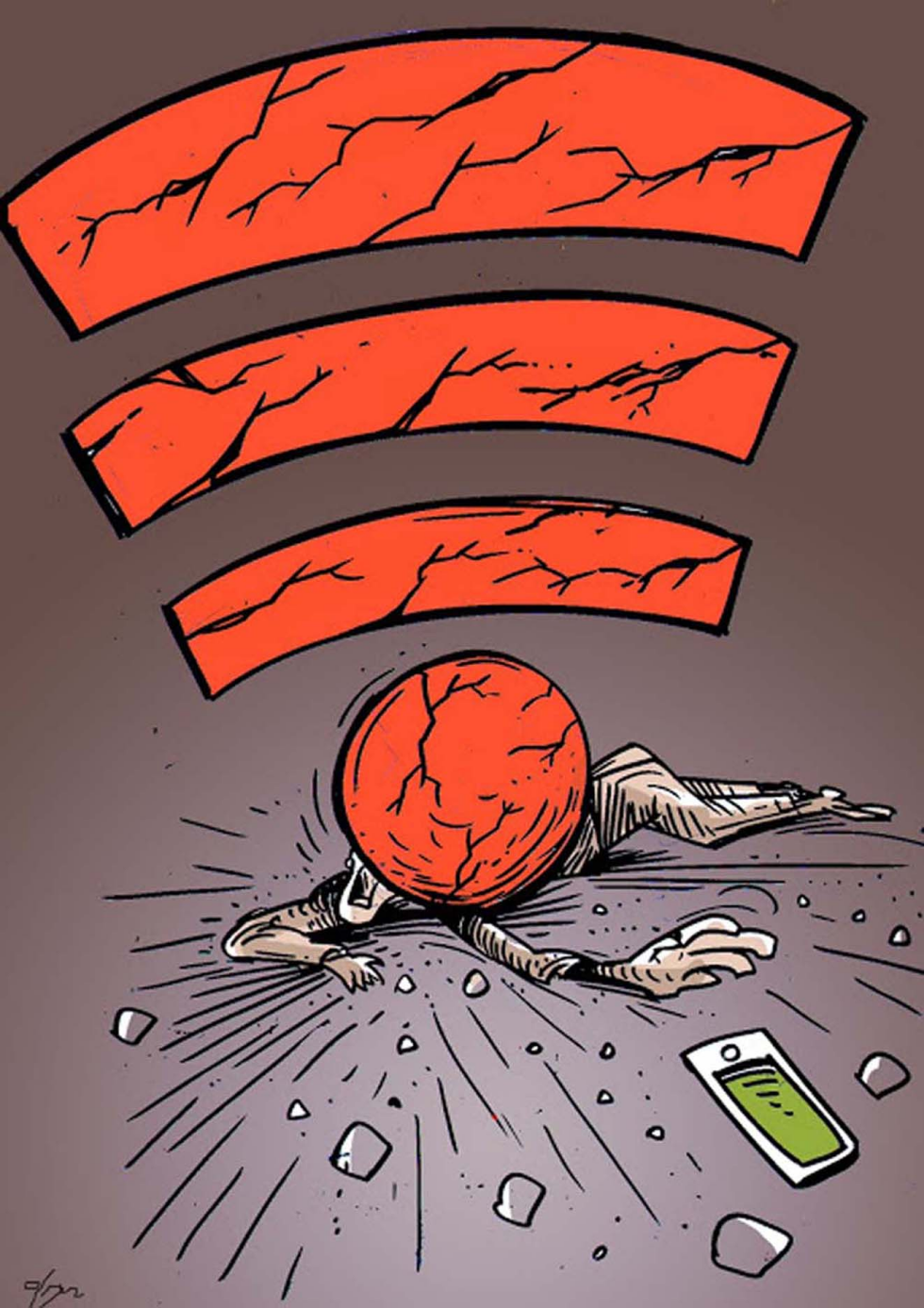
Wireless networks face mounting pressure from rising demand and aging infrastructure, leaving users stranded when signals falter. A dead phone battery compounds the isolation during outages. The piece frames this as a cautionary view of overreliance on fragile digital systems that can collapse without warning.
Daryl Cagle's political cartoon cleverly twists the classic monster under bed scenario into a commentary on immigration fear, with a parent assuring a terrified child that there are no ICE agents lurking below. The image captures the essence of deportation fears plaguing families amid strict border enforcement and Trump era politics. Through satirical humor, it highlights childhood anxiety amplified by real-world immigration policy, family separation, and immigrant rights concerns, making a poignant statement on how political decisions invade even the sanctity of bedtime stories.
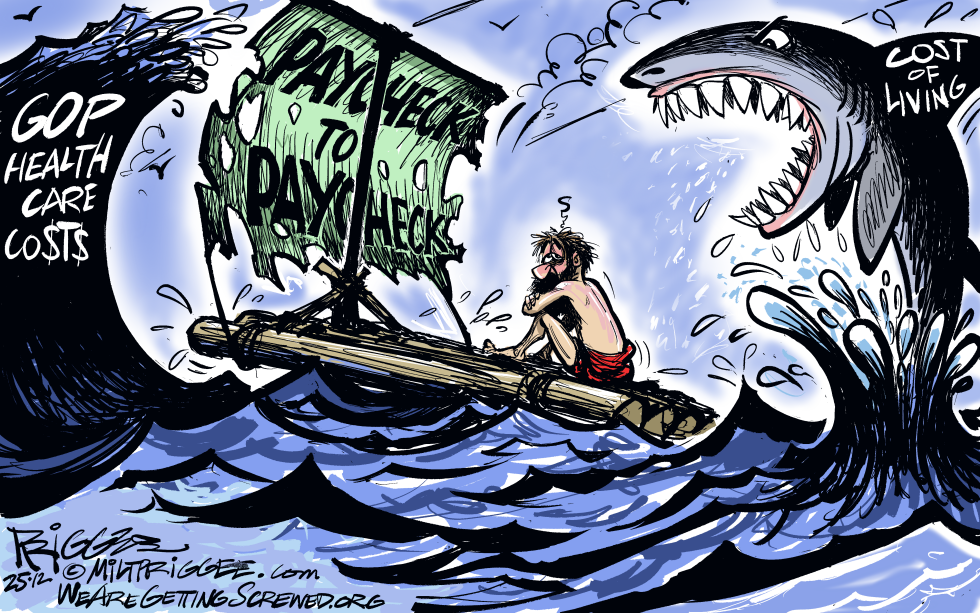
A man on a raft labeled paycheck to paycheck navigates rough seas. One wave carries the label GOP health care costs while a shark marked cost of living approaches from the other side. The image from January 2026 captures ongoing concerns over healthcare expenses and daily living costs for working families.