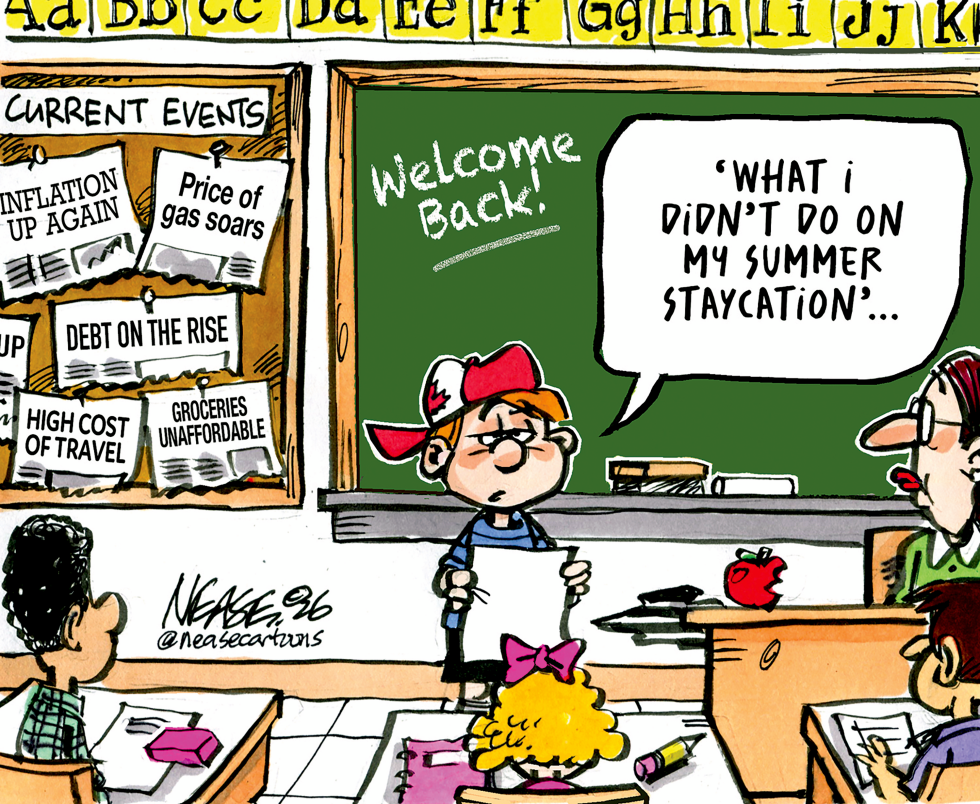
Rising inflation, gas prices, and household debt have made traditional summer vacations unaffordable for many families, leading to increased staycations as the new school year starts. The cartoon captures this cost-of-living squeeze through a classroom presentation on what students did not do over the break. It underscores how everyday expenses now dominate family decisions and limit leisure options.
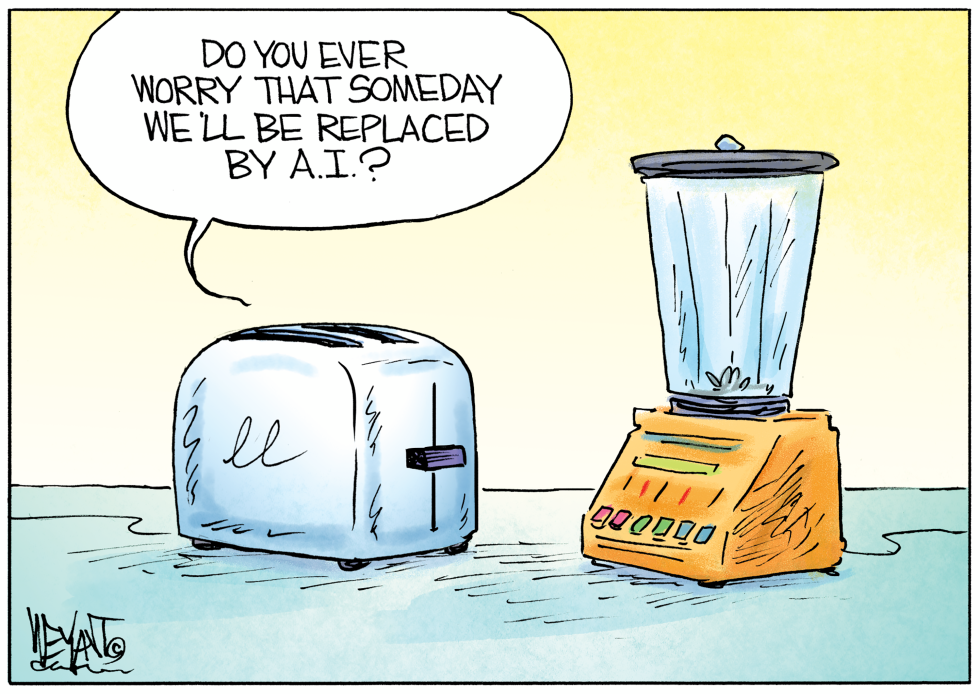
Anxiety about artificial intelligence replacing human work has spread across industries. The piece responds to widespread uncertainty over which roles automation will absorb next. It treats the worry as universal enough to reach even household appliances.
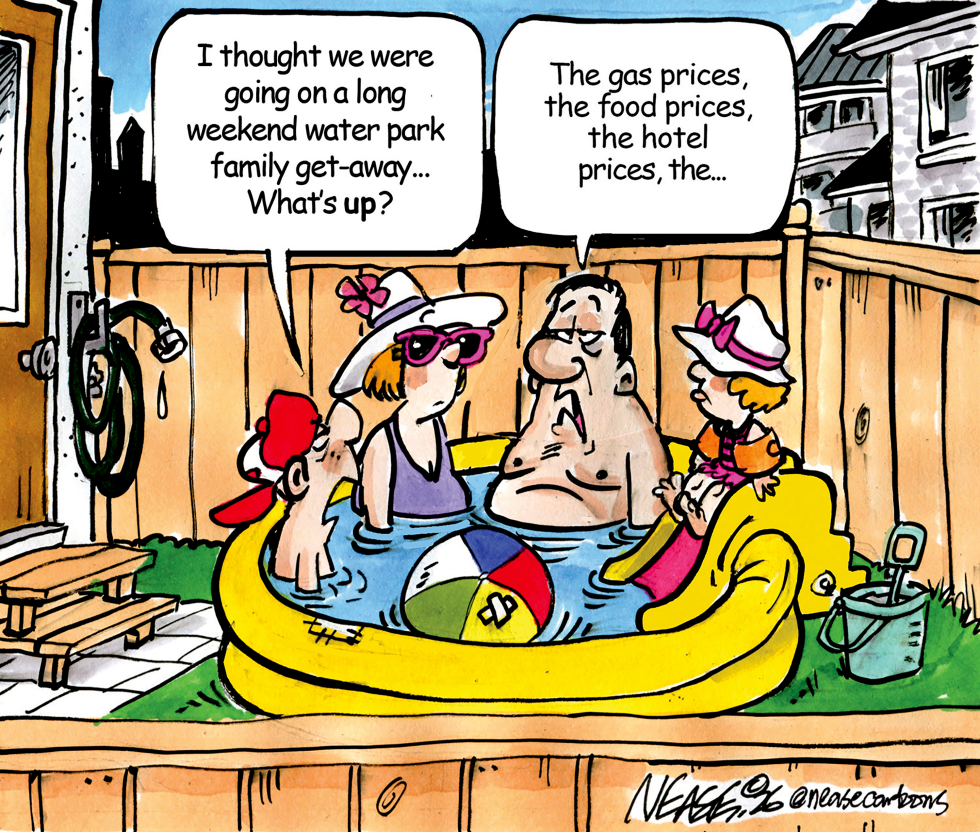
Families planning summer getaways face steep increases in gas, food, and hotel costs that disrupt long weekend plans. The piece highlights how these expenses push households toward simpler backyard alternatives while underscoring the persistent strain inflation places on everyday leisure.
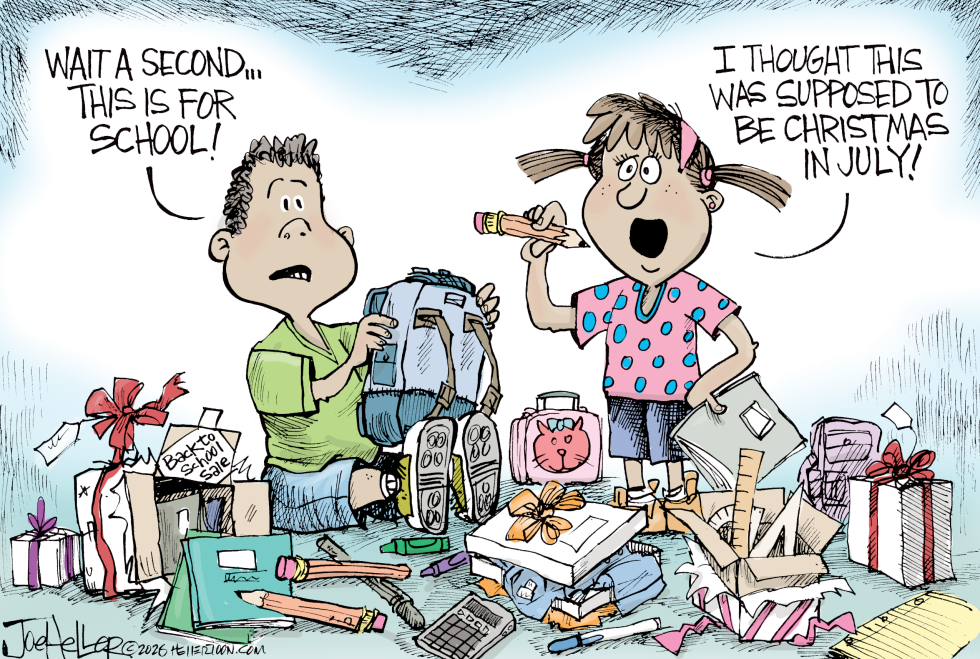
Retailers launched back-to-school promotions in late July, prompting families to stock up on supplies weeks ahead of the academic calendar. The timing overlaps with summer clearance events that mimic holiday marketing tactics. Parents and students face added pressure to buy early amid rising costs for essentials. The piece highlights how commercial calendars compress traditional shopping seasons and shift family routines.
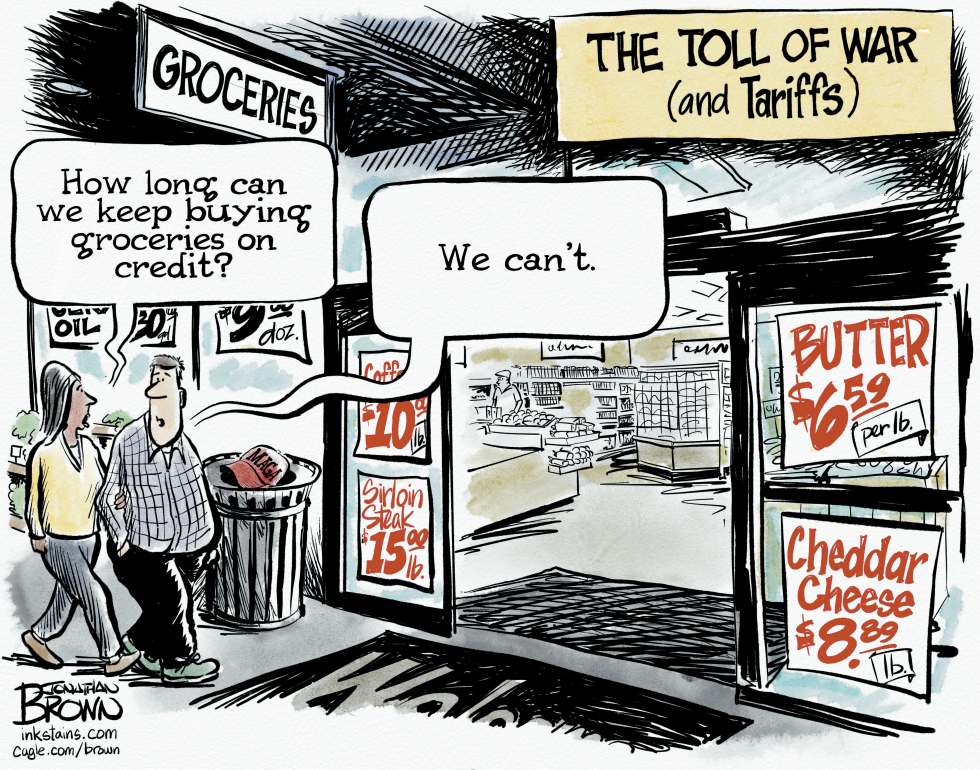
A political cartoon depicts a couple leaving a grocery store after learning they cannot continue buying food on credit. Signs inside show sharply higher prices for butter at $6.59 per pound, cheddar cheese at $8.89 per pound and sirloin steak at $15 per pound. A banner overhead reads The Toll of War (and Tariffs). The scene illustrates how ongoing conflict and trade barriers have driven up everyday food costs leaving households to rely on credit that is no longer sustainable.
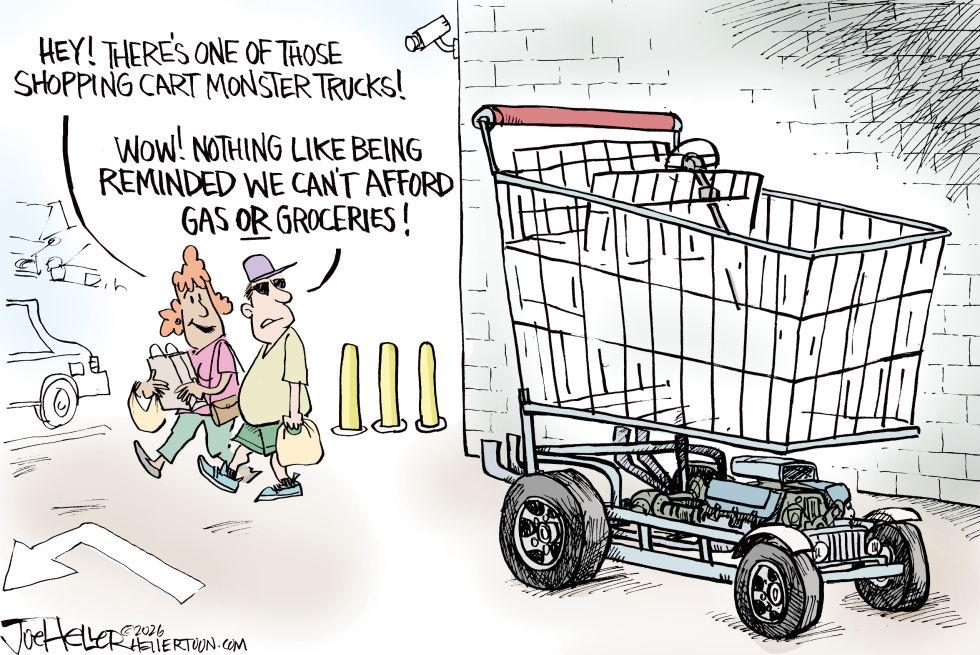
A modified shopping cart on large wheels draws comments from passersby about unaffordable gas and groceries. The scene on July 10 2026 captures ongoing economic strain from higher living costs. Passersby note the reminder of tight budgets for fuel and food. The image reflects persistent inflation concerns affecting household spending.
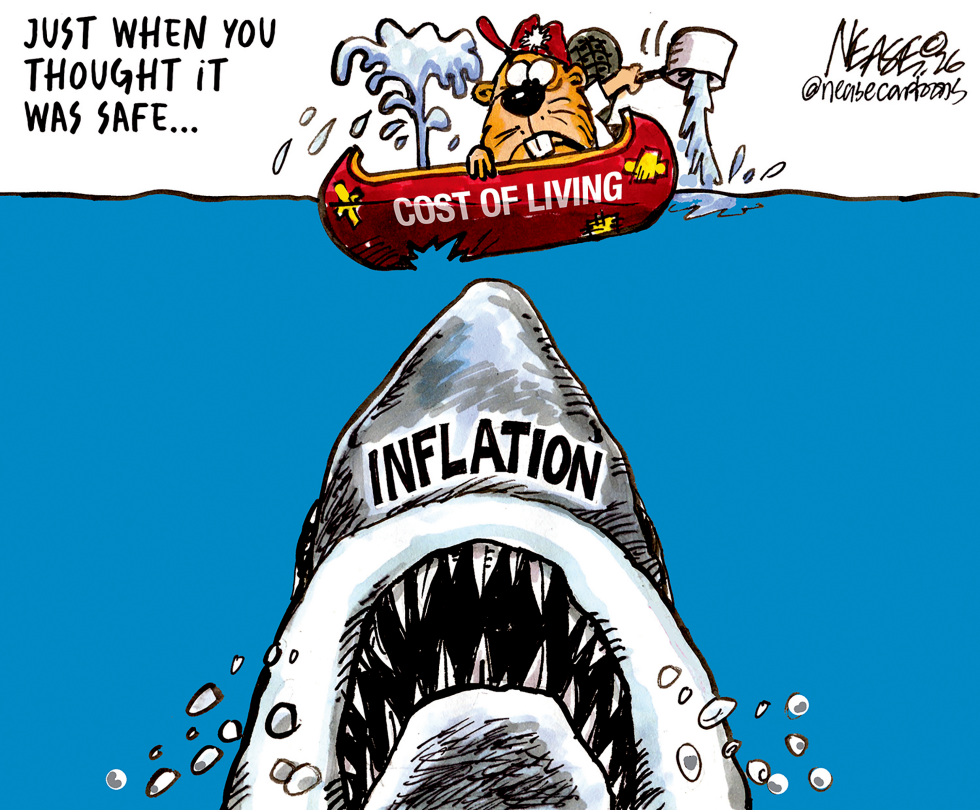
Steve Nease cartoon from June 22 2026 depicts a large shark labeled INFLATION approaching a red canoe marked COST OF LIVING. A beaver-like figure sits inside the vessel with a paddle raised. Text above reads JUST WHEN YOU THOUGHT IT WAS SAFE. The image uses a water setting to illustrate ongoing economic strain on household budgets.
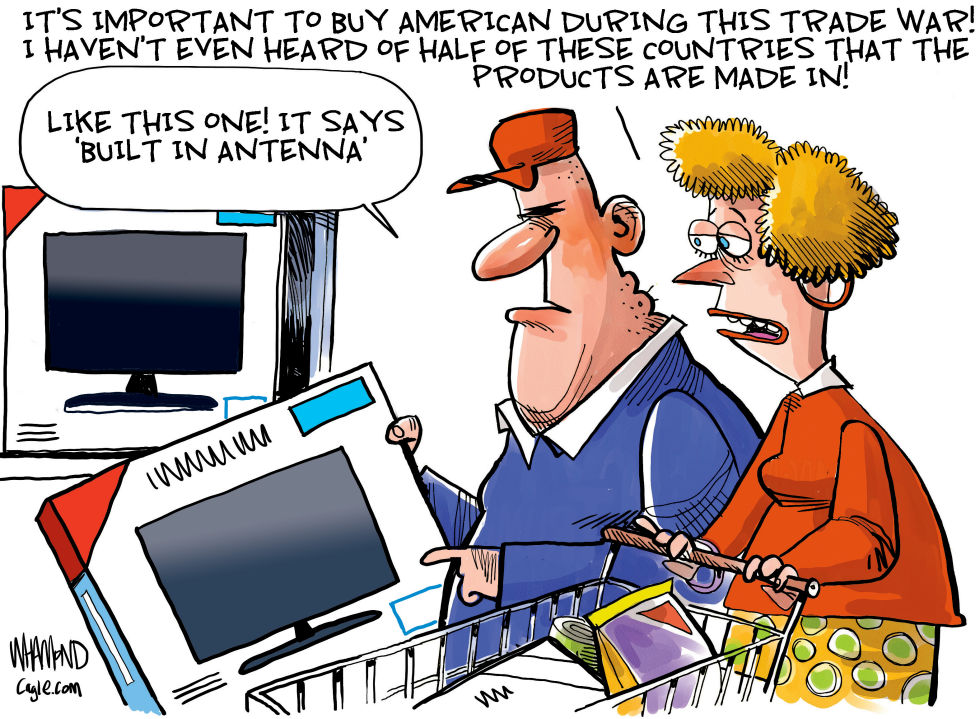
A couple shops for electronics in a store as the man points to a television box labeled built in antenna while declaring support for American goods during an ongoing trade war. The woman reacts with surprise at the label. Large text overhead stresses the importance of domestic purchases because many product origins remain unfamiliar. The scene reflects consumer reactions to tariffs and protectionist policies active in late 2025.
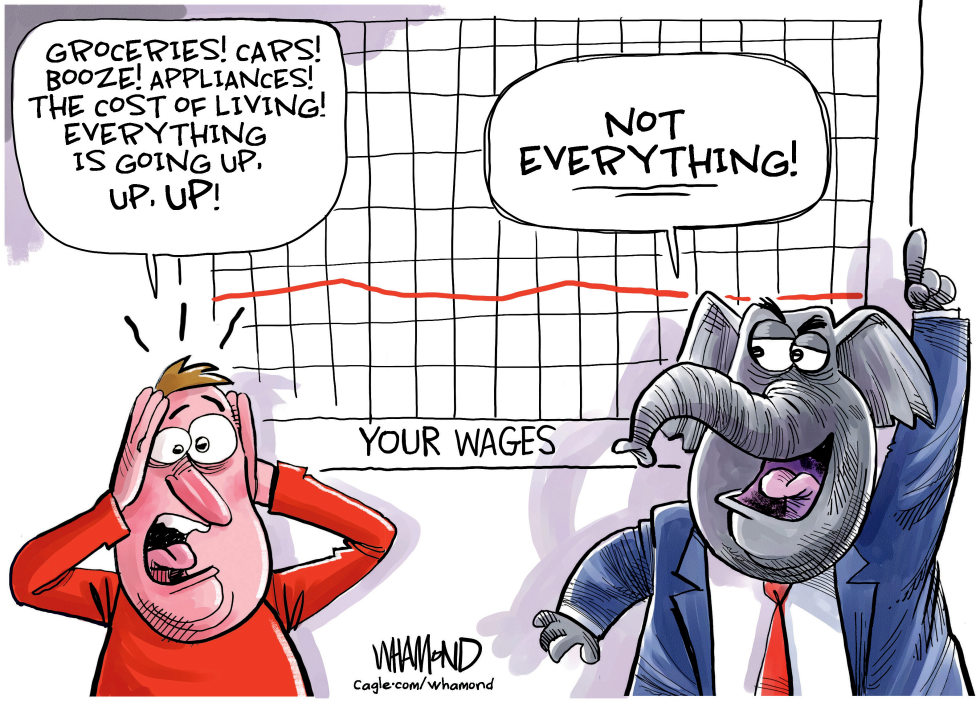
A man clutches his head in distress as an elephant in a suit points upward. Speech bubbles list rising costs for groceries, cars, booze and appliances. A graph line stays flat under the label your wages while the elephant declares not everything.
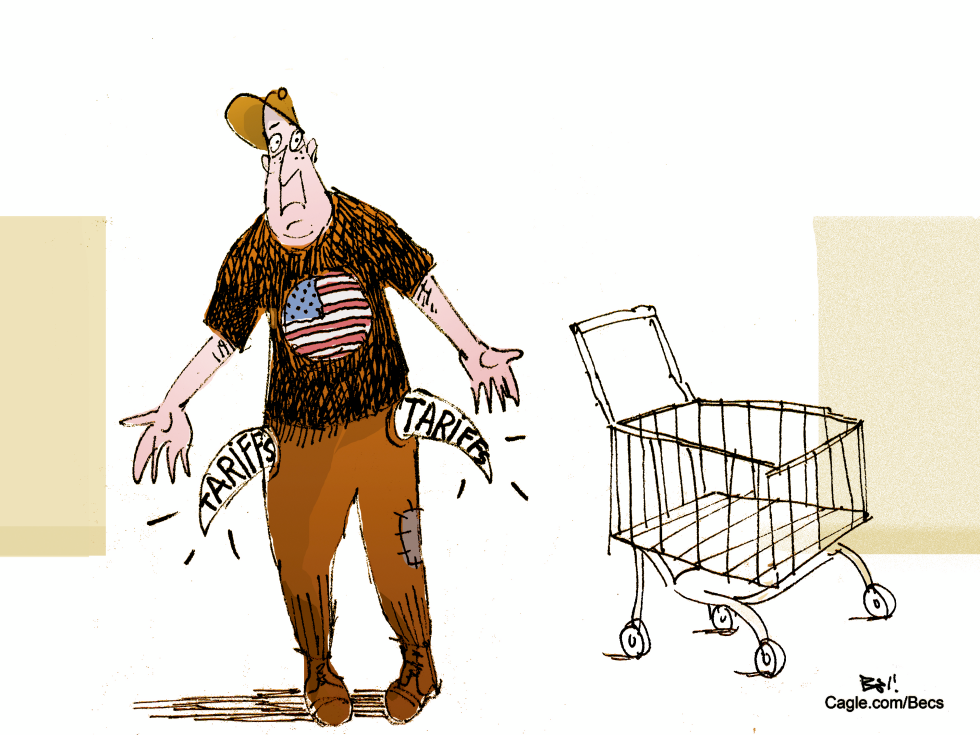
A figure wearing a tattered American flag shirt and brown pants labeled tariffs stands with empty hands next to an empty shopping cart. The scene responds to 2025 tariff increases under the Trump administration that have contributed to higher consumer prices and reduced purchasing power. The image highlights the direct effect on everyday Americans facing inflation and limited spending ability.
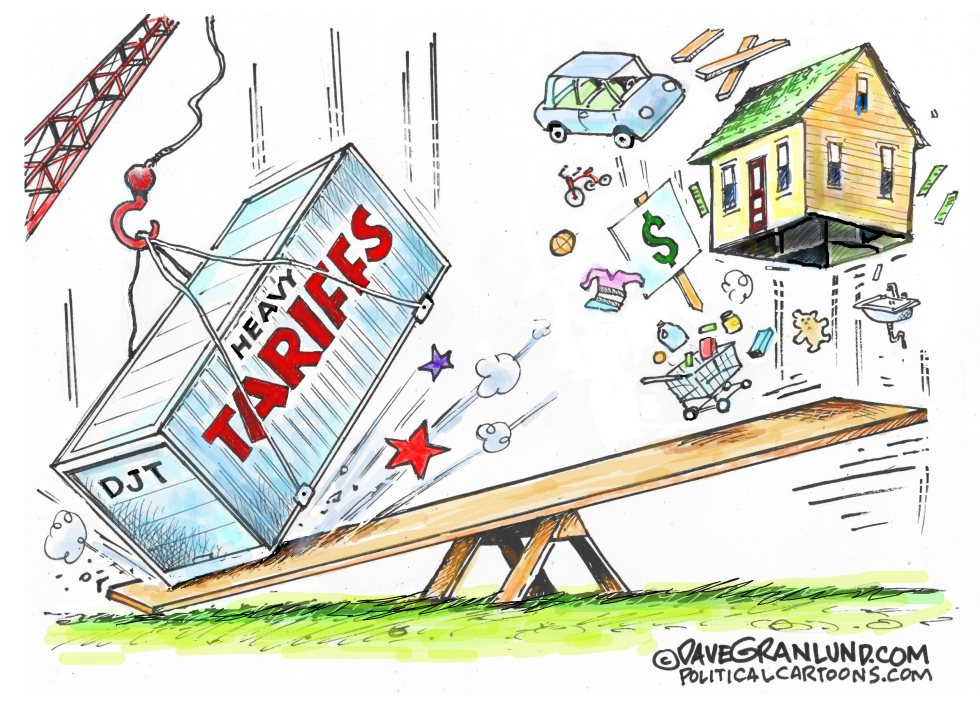
The cartoon depicts a seesaw with a heavy tariffs crate marked DJT on the descending side. Everyday goods including vehicles and homes fly upward on the opposite end. This illustrates how tariffs increase costs for middle income households and farmers in 2025.
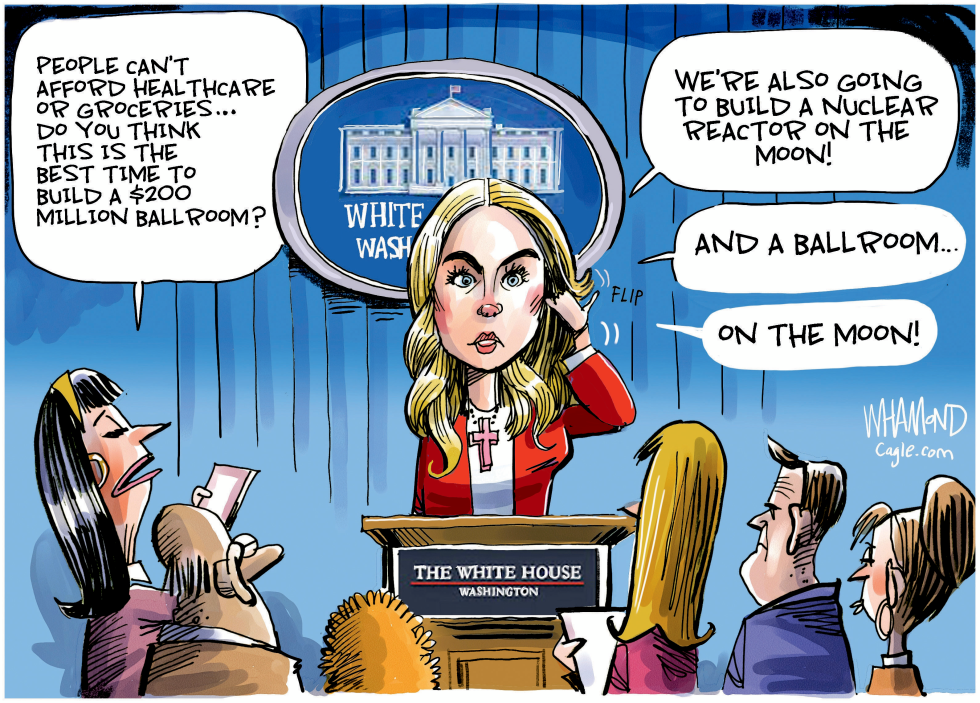
On August 7, 2025, White House Press Secretary Karoline Leavitt faced pointed questions at the podium about a proposed $200 million ballroom renovation. Critics in the room highlighted ongoing struggles with grocery prices and healthcare access. Leavitt responded by pivoting to separate administration plans for a nuclear reactor and ballroom on the moon. The exchange underscored tensions over federal spending priorities during a period of reported financial pressure on American households. The cartoon captures the disconnect between ambitious lunar projects and immediate domestic concerns.
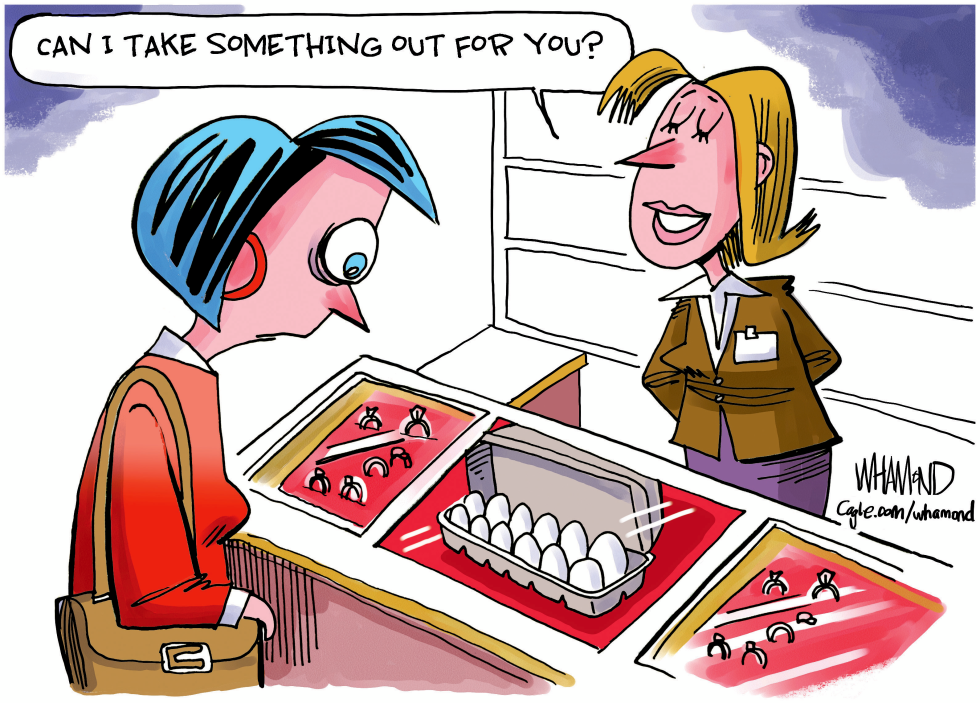
A jewelry store scene places an open egg carton between ring displays. The customer asks the clerk if she can take something out. The image responds to 2025 price spikes in groceries tied to tariffs and supply issues. Egg prices feature prominently in recent economic reports. The visual places everyday food items in a luxury setting to underscore cost pressures on households.
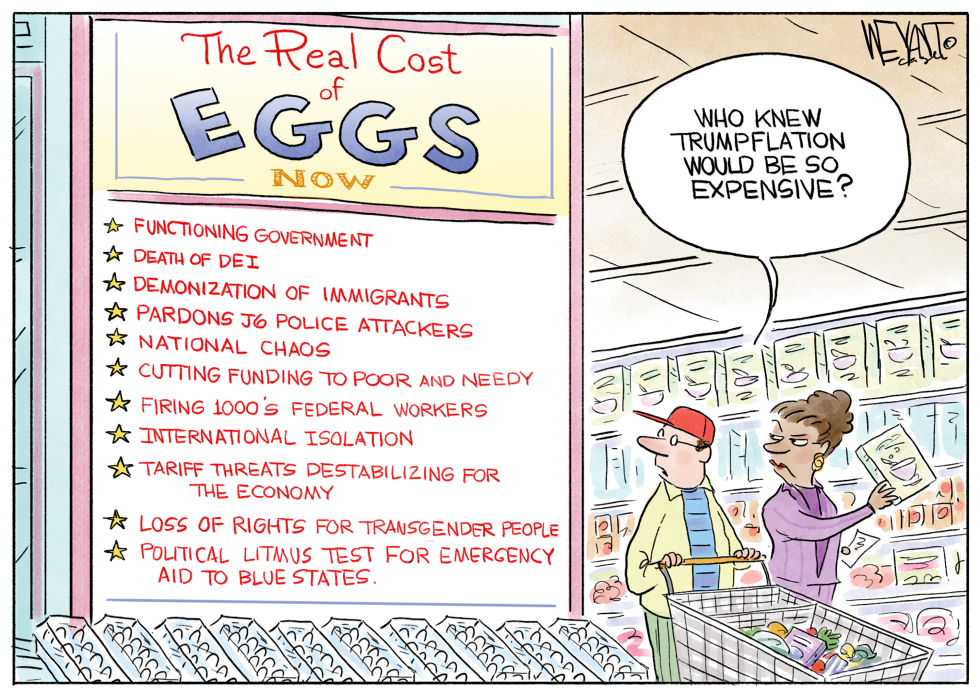
A February 2025 cartoon depicts supermarket shoppers confronting a sign listing the political price of eggs under President Trump. Items range from functioning government and DEI elimination to J6 pardons, tariff threats, and transgender rights losses. The visual ties everyday grocery costs to recent executive actions and congressional moves since the inauguration.
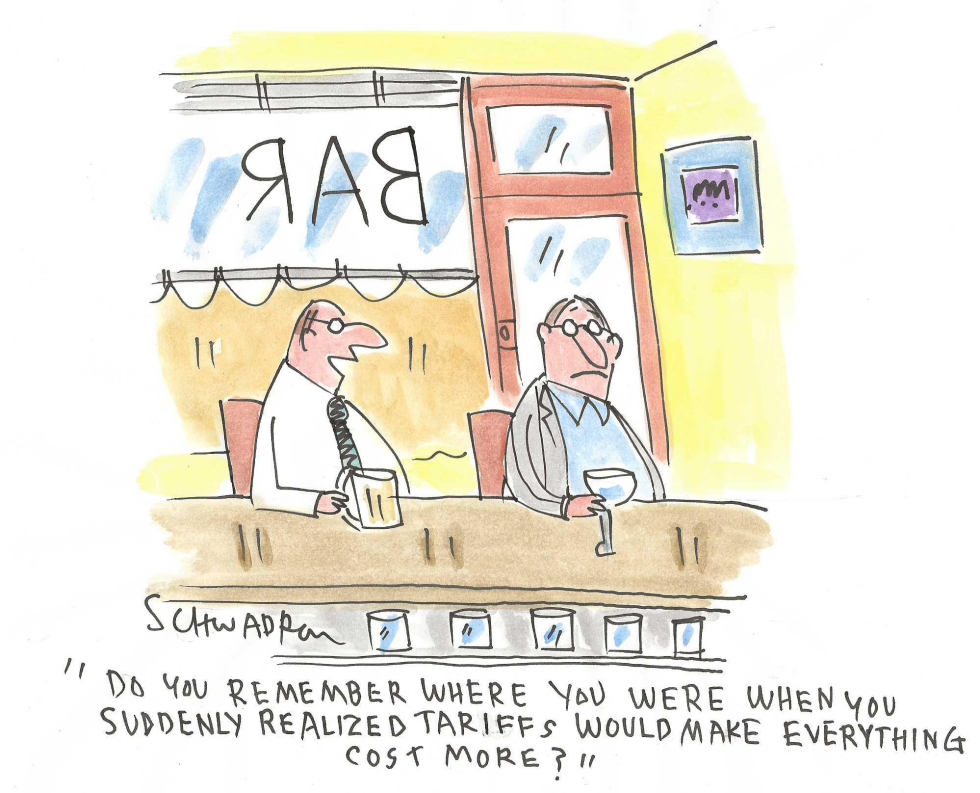
On January 14 2025 a cartoon depicts two men at a bar discussing the economic shock of import tariffs. The exchange focuses on the sudden awareness that duties on foreign goods drive up everyday costs. This reflects ongoing debates over trade policy and its effects on inflation and consumer spending.