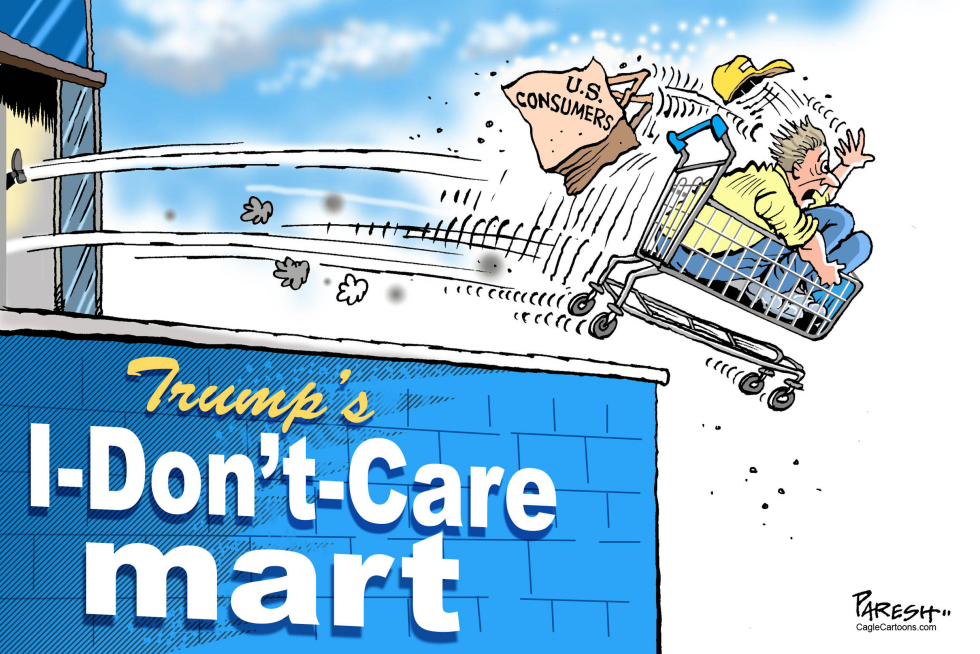
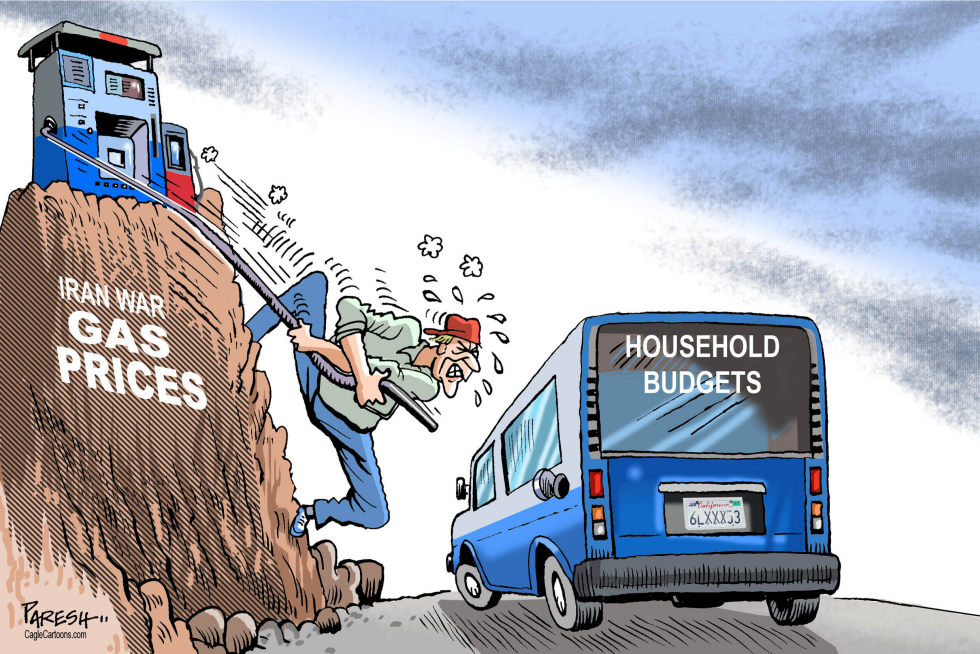
Trump administration policies on trade and spending have contributed to higher prices for everyday goods. American households face increased costs at stores as tariffs and other measures take effect. The cartoon argues these policies prioritize other goals over consumer welfare and leave families paying more.
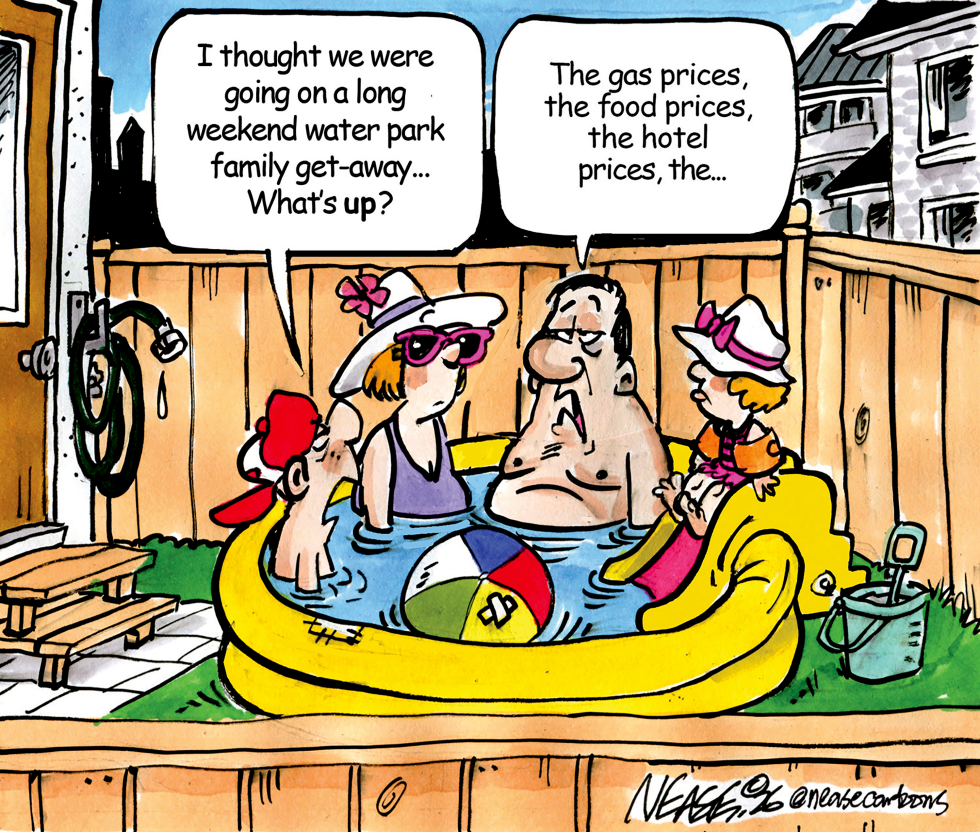
Families planning summer getaways face steep increases in gas, food, and hotel costs that disrupt long weekend plans. The piece highlights how these expenses push households toward simpler backyard alternatives while underscoring the persistent strain inflation places on everyday leisure.
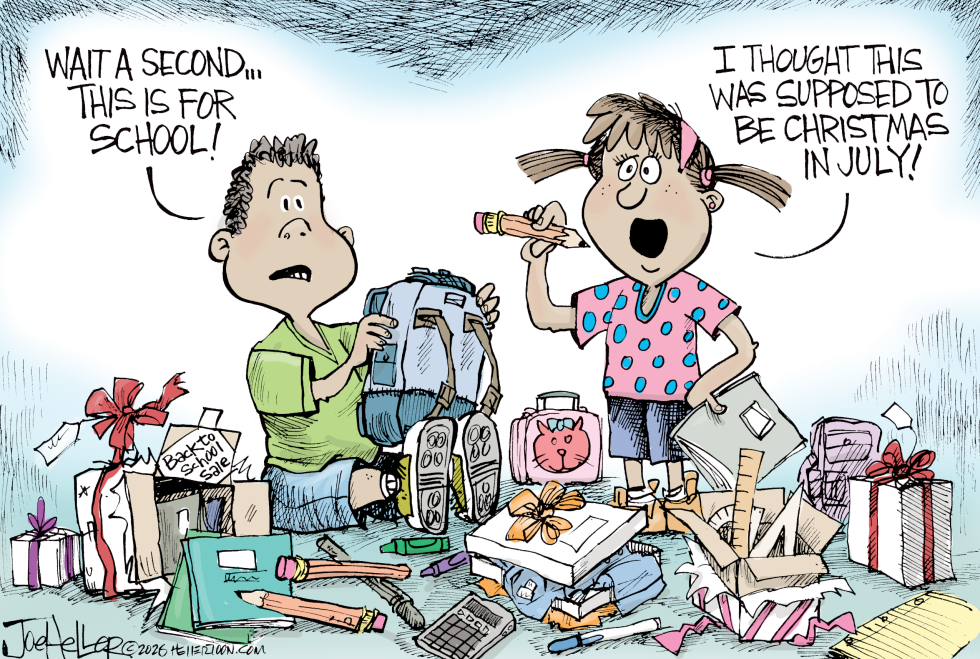
Retailers launched back-to-school promotions in late July, prompting families to stock up on supplies weeks ahead of the academic calendar. The timing overlaps with summer clearance events that mimic holiday marketing tactics. Parents and students face added pressure to buy early amid rising costs for essentials. The piece highlights how commercial calendars compress traditional shopping seasons and shift family routines.
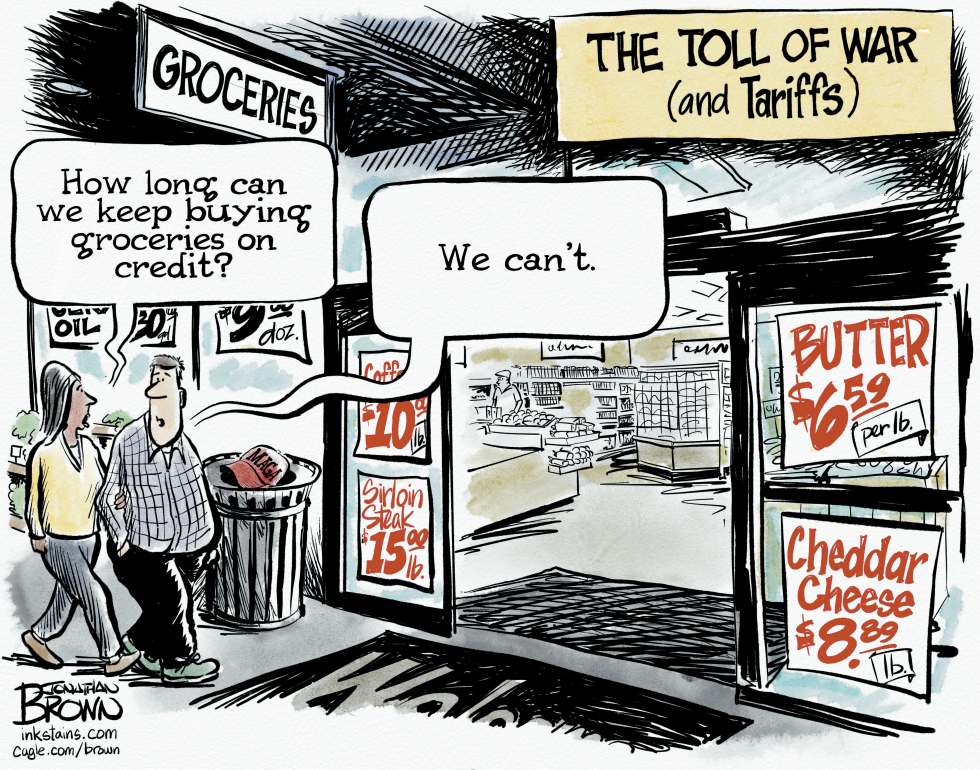
A political cartoon depicts a couple leaving a grocery store after learning they cannot continue buying food on credit. Signs inside show sharply higher prices for butter at $6.59 per pound, cheddar cheese at $8.89 per pound and sirloin steak at $15 per pound. A banner overhead reads The Toll of War (and Tariffs). The scene illustrates how ongoing conflict and trade barriers have driven up everyday food costs leaving households to rely on credit that is no longer sustainable.
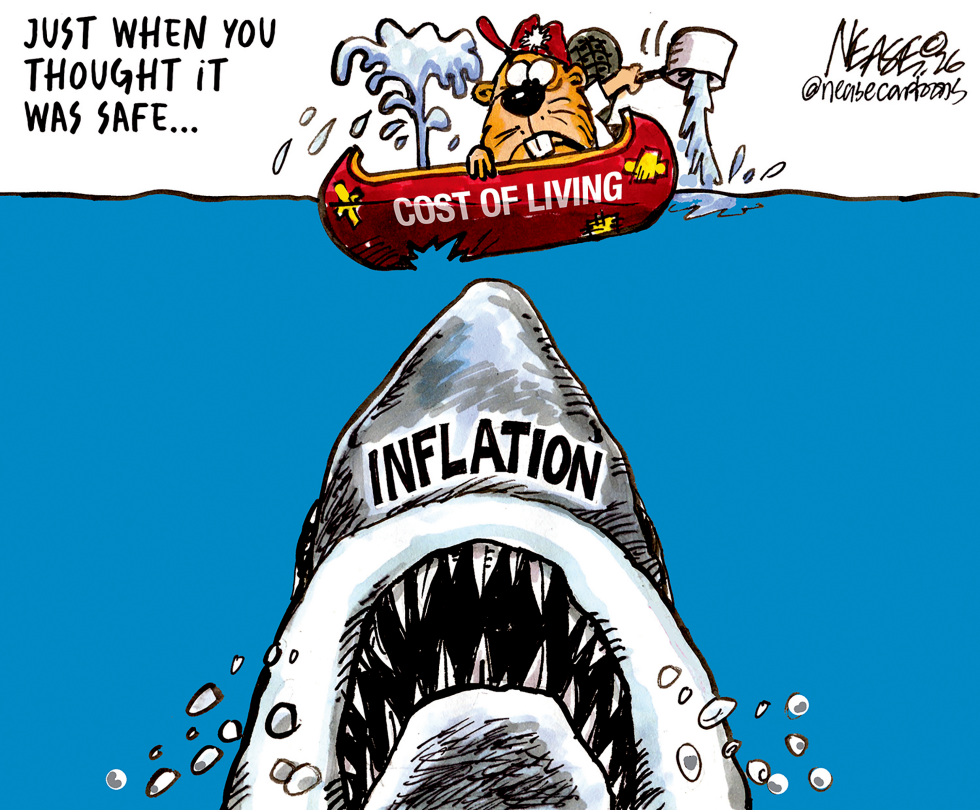
Steve Nease cartoon from June 22 2026 depicts a large shark labeled INFLATION approaching a red canoe marked COST OF LIVING. A beaver-like figure sits inside the vessel with a paddle raised. Text above reads JUST WHEN YOU THOUGHT IT WAS SAFE. The image uses a water setting to illustrate ongoing economic strain on household budgets.
The image displays a woman standing with papers looking concerned next to a man seated in a recliner holding papers. Visible text in speech bubbles refers to credit cards being maxed out and a plan to add a reflecting pool. The title at the top reads about politicians operating as average Americans. A signature appears in the upper right.
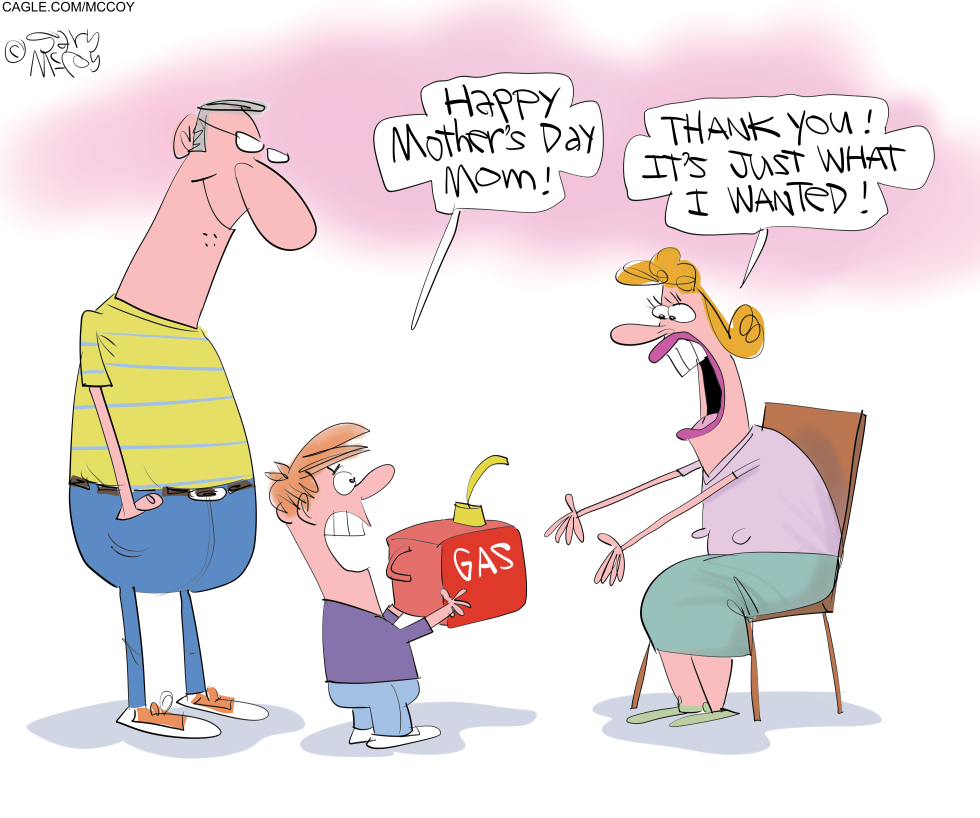
Gary McCoy's cartoon captures a family moment where a young son hands his mother a lit bomb marked GAS, exclaiming Happy Mother's Day, while she thanks him enthusiastically. The image ties into tags like Mom, mother, Mothers Day, gas, oil, petro, prices, economy, inflation. It highlights the burden of rising energy costs on families, with the explosive gift symbolizing volatile fuel markets. Amid references to Iran, strait of hormuz, Trump, the satire underscores how global tensions affect everyday life, blending holiday cheer with economic reality in a straightforward, exaggerated style typical of political cartoons.
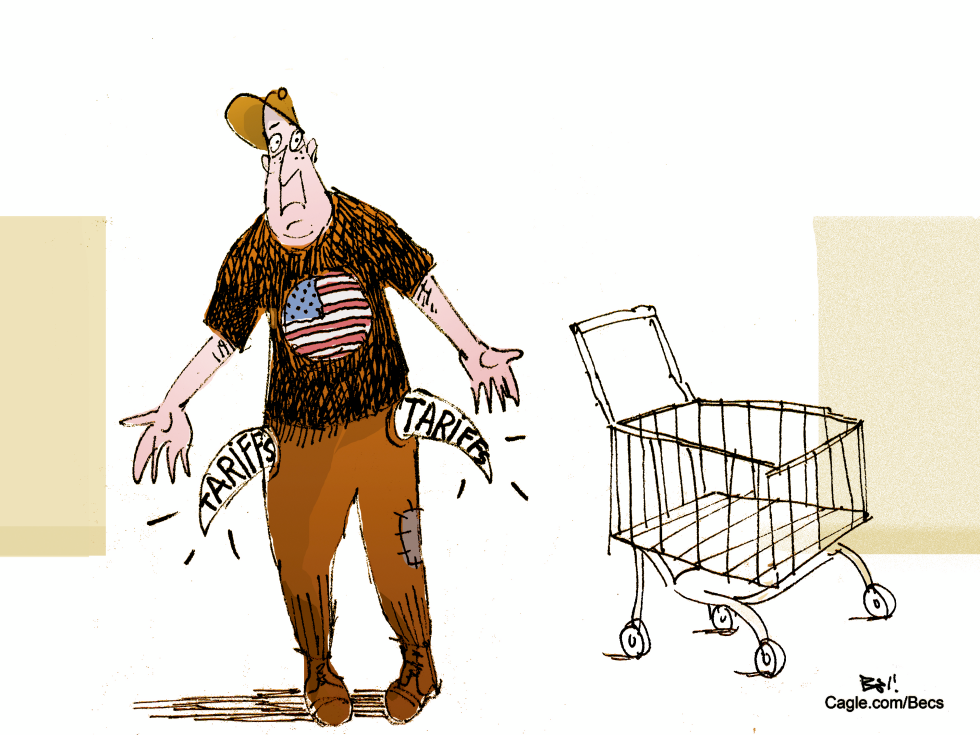
A figure wearing a tattered American flag shirt and brown pants labeled tariffs stands with empty hands next to an empty shopping cart. The scene responds to 2025 tariff increases under the Trump administration that have contributed to higher consumer prices and reduced purchasing power. The image highlights the direct effect on everyday Americans facing inflation and limited spending ability.
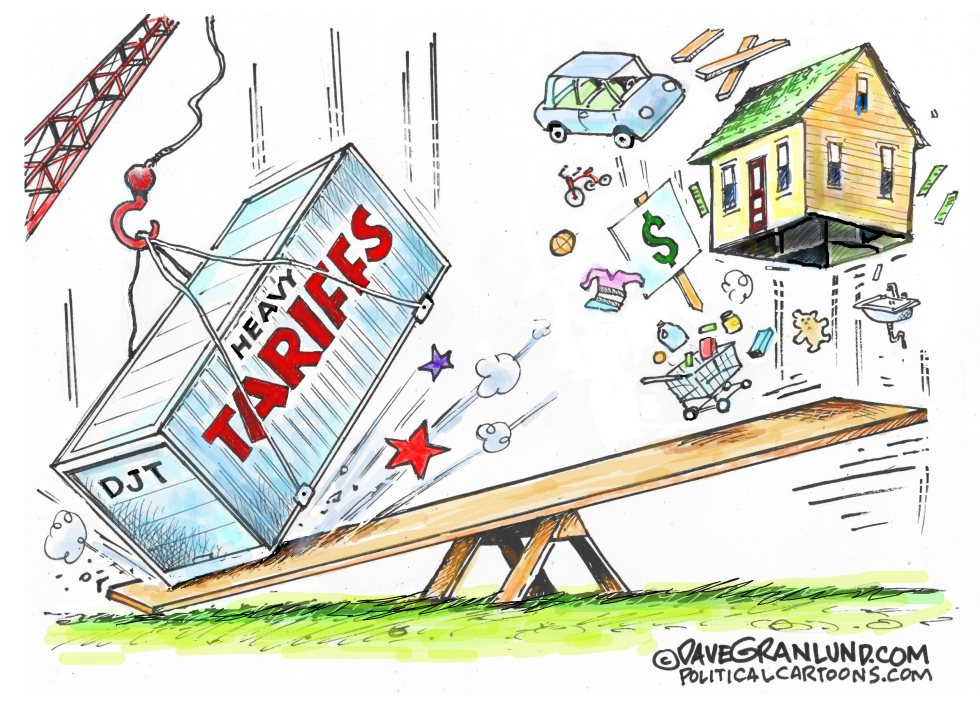
The cartoon depicts a seesaw with a heavy tariffs crate marked DJT on the descending side. Everyday goods including vehicles and homes fly upward on the opposite end. This illustrates how tariffs increase costs for middle income households and farmers in 2025.
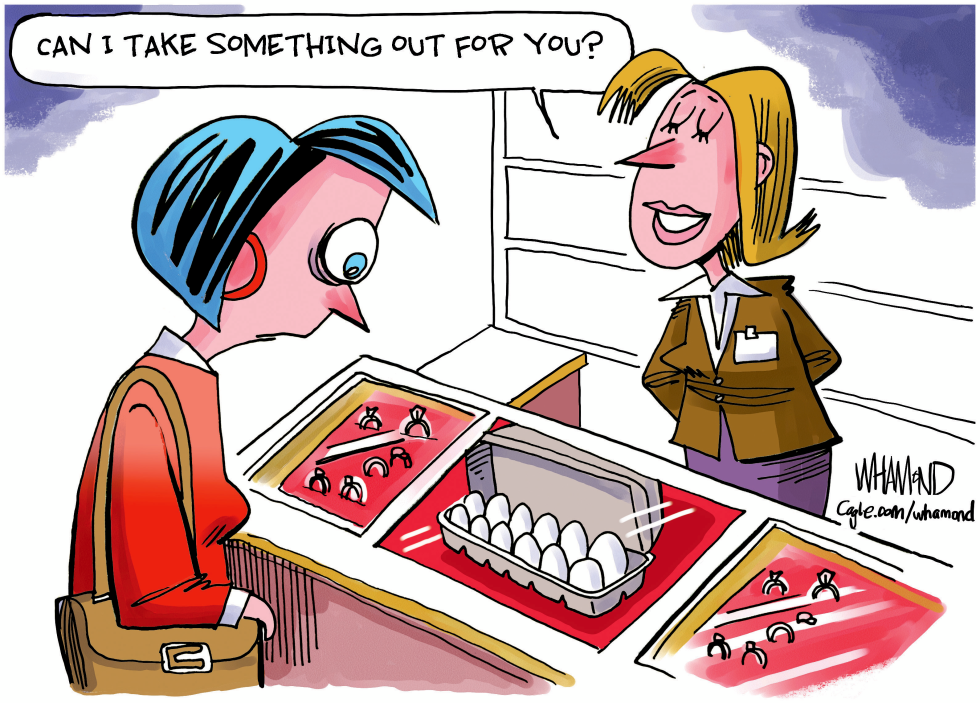
A jewelry store scene places an open egg carton between ring displays. The customer asks the clerk if she can take something out. The image responds to 2025 price spikes in groceries tied to tariffs and supply issues. Egg prices feature prominently in recent economic reports. The visual places everyday food items in a luxury setting to underscore cost pressures on households.
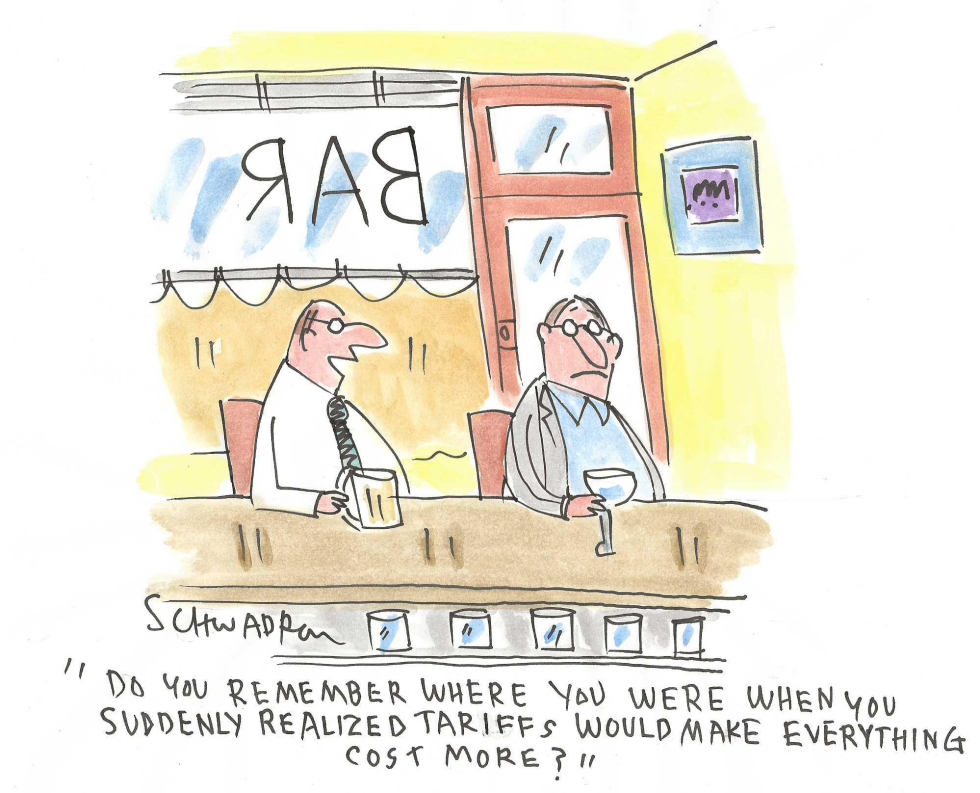
On January 14 2025 a cartoon depicts two men at a bar discussing the economic shock of import tariffs. The exchange focuses on the sudden awareness that duties on foreign goods drive up everyday costs. This reflects ongoing debates over trade policy and its effects on inflation and consumer spending.
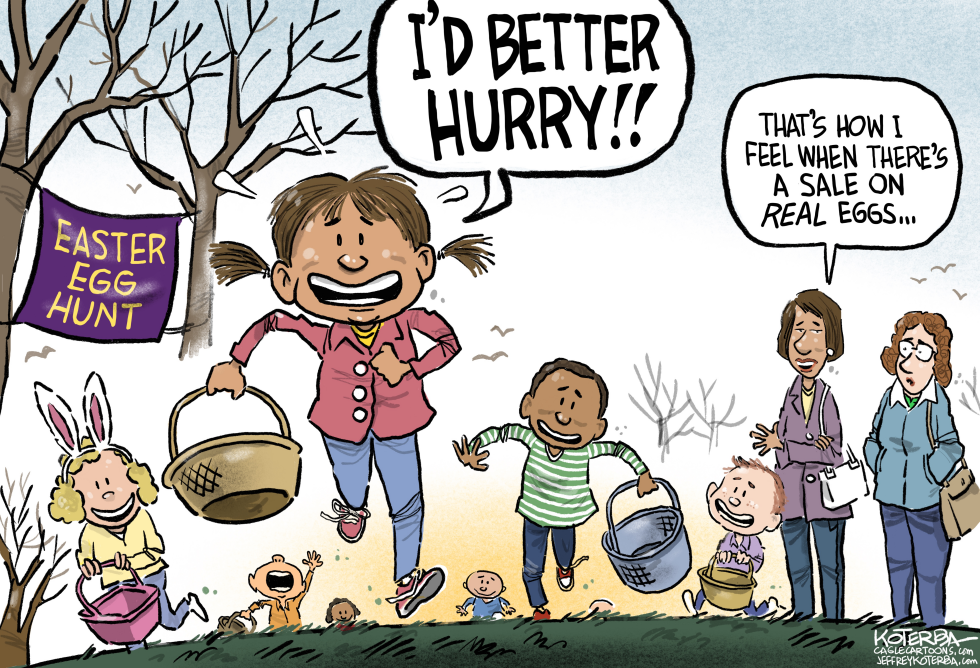
On April 4 2023 families gather for an Easter egg hunt with children carrying baskets and running on grass. A large speech bubble from a girl states I would better hurry. Another bubble from an adult notes feeling the same during a sale on real eggs. A purple banner reads Easter egg hunt. The scene ties the holiday activity to ongoing high prices for eggs at grocery stores.
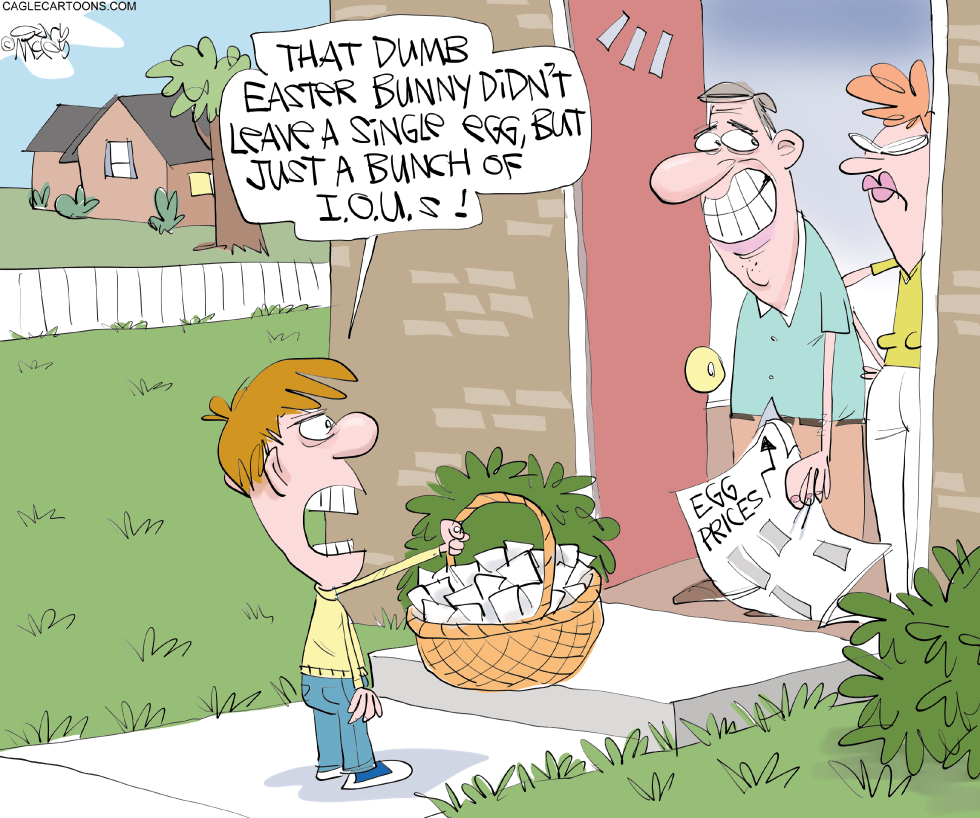
A young boy stands on a suburban lawn holding an Easter basket filled with IOUs instead of eggs. His speech bubble expresses disappointment in the Easter Bunny. Two adults stand in a doorway reviewing a newspaper headlined EGG PRICES with an upward arrow. The scene reflects the sharp rise in egg prices during spring 2023 driven by avian flu and supply issues.
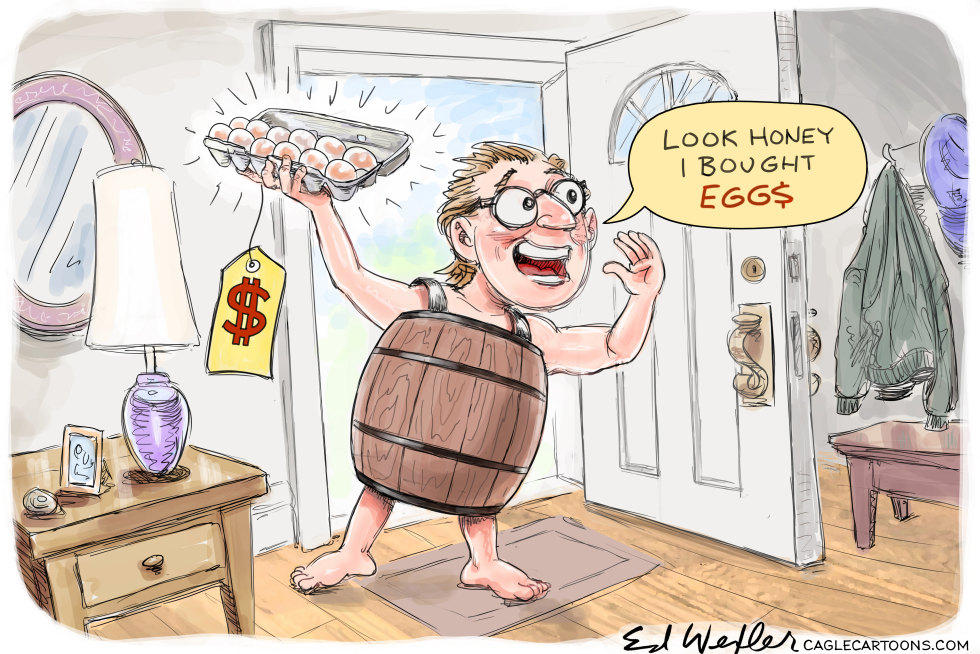
A barefoot man wearing only a wooden barrel bursts through the front door holding a carton of eggs aloft. His speech bubble reads 'LOOK HONEY I BOUGHT EGGS' with a dollar sign replacing the final letter. A large yellow price tag marked with a dollar sign hangs from a nearby lamp. The January 2023 scene highlights the sharp rise in egg prices driven by avian flu outbreaks and broader inflation affecting American households.