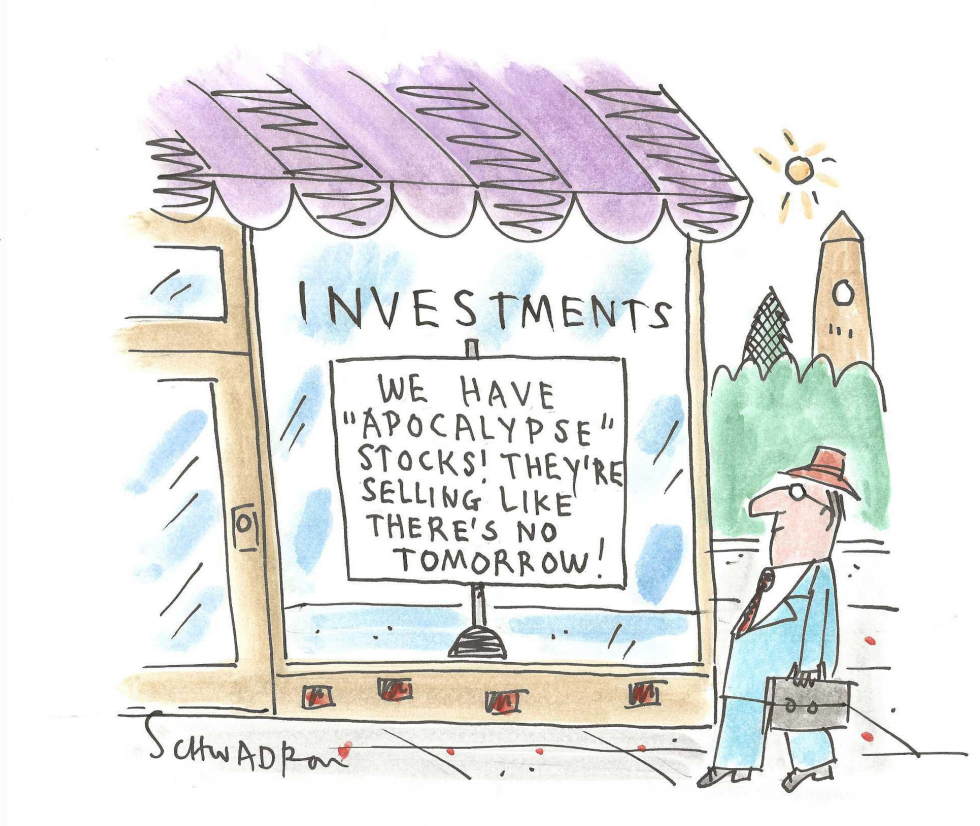
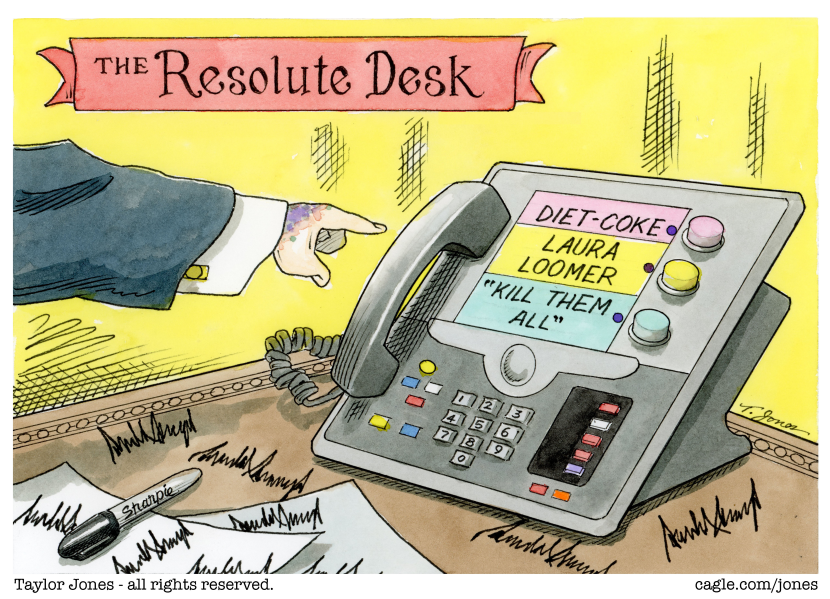
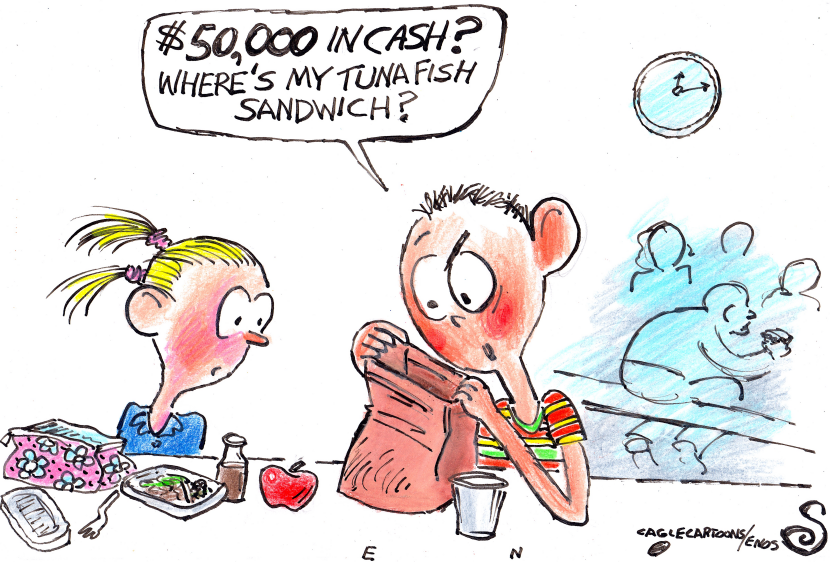
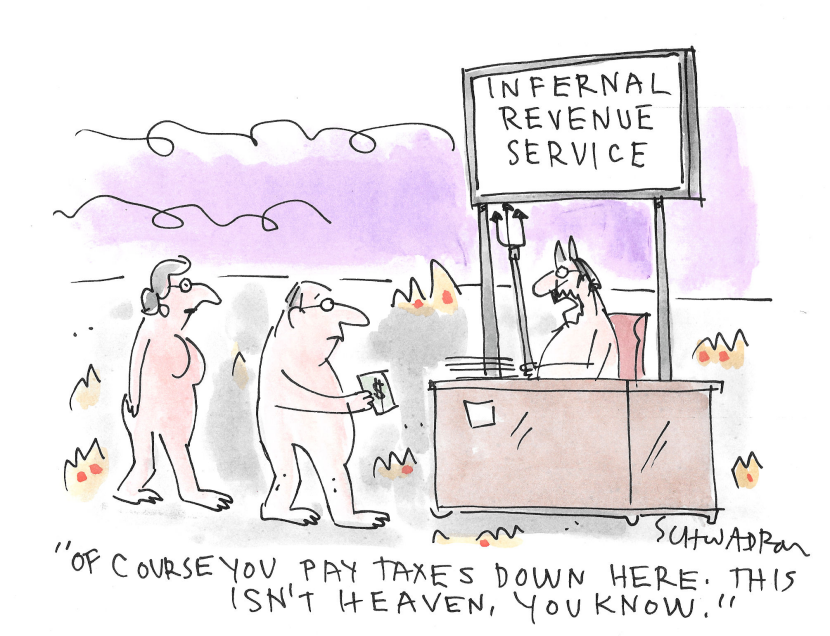
Investor interest in so-called apocalypse stocks has risen as markets reflect broader economic uncertainty. The trend highlights how some traders position for worst-case scenarios in business and finance. The cartoon underscores the ironic appeal of such products, suggesting hype around end-times investing reveals deeper anxieties about stability.
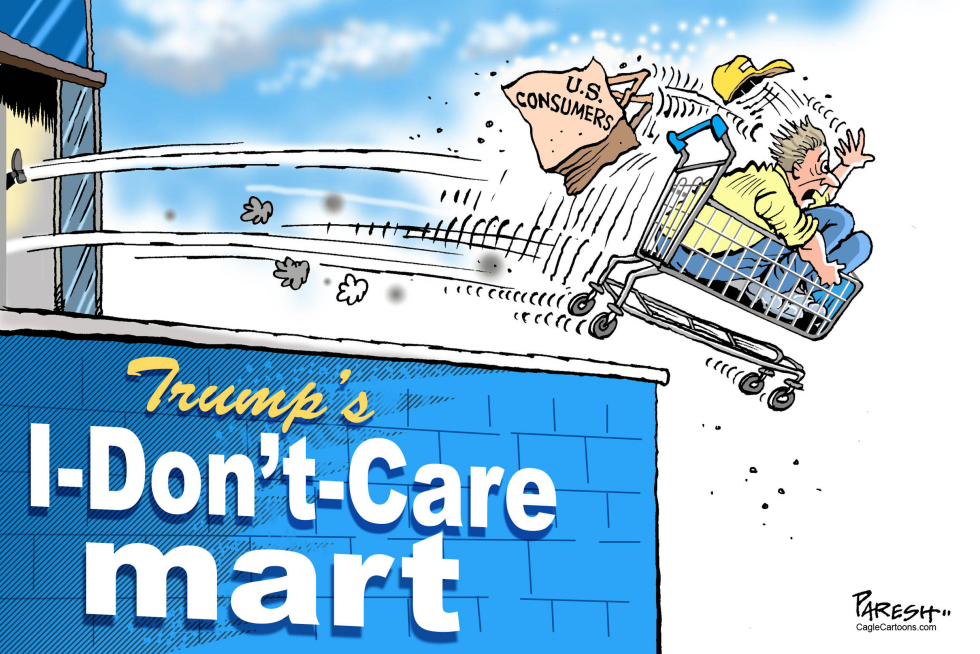
Trump administration policies on trade and spending have contributed to higher prices for everyday goods. American households face increased costs at stores as tariffs and other measures take effect. The cartoon argues these policies prioritize other goals over consumer welfare and leave families paying more.
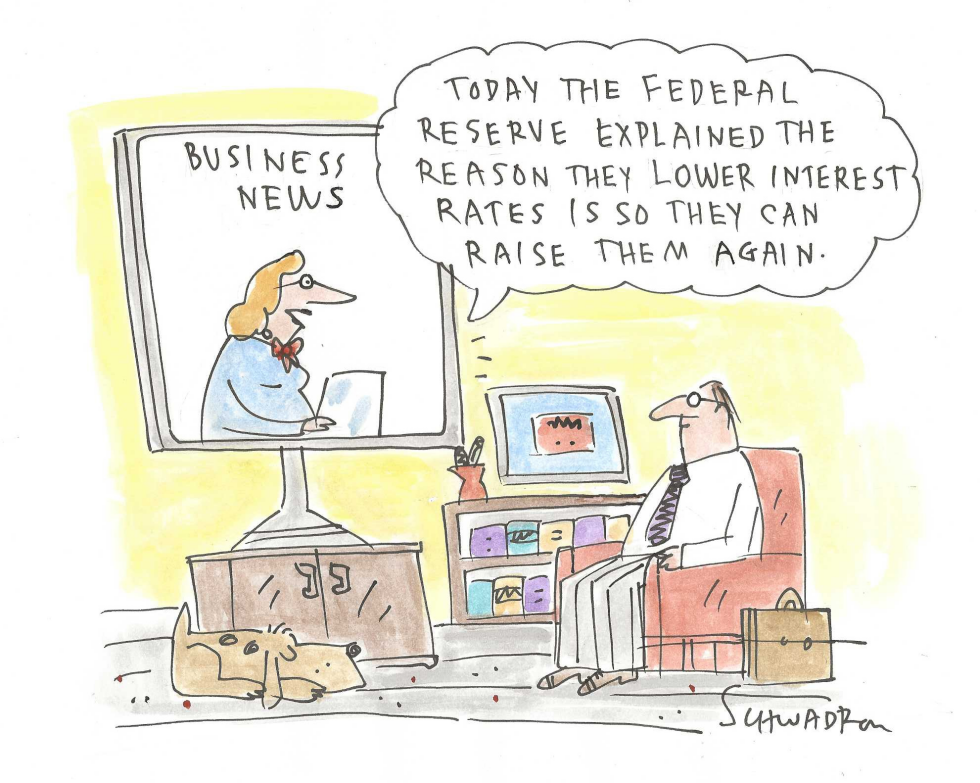
The Federal Reserve announced interest rate reductions in late summer 2026 to support economic conditions. Observers noted the central bank's stated goal of eventual rate increases created confusion about policy direction. The move affects borrowing costs for businesses and households nationwide. Markets reacted with mixed signals on inflation control and growth prospects. The cartoon presents the explanation as self-contradictory, underscoring public doubt about the clarity of Fed communications.
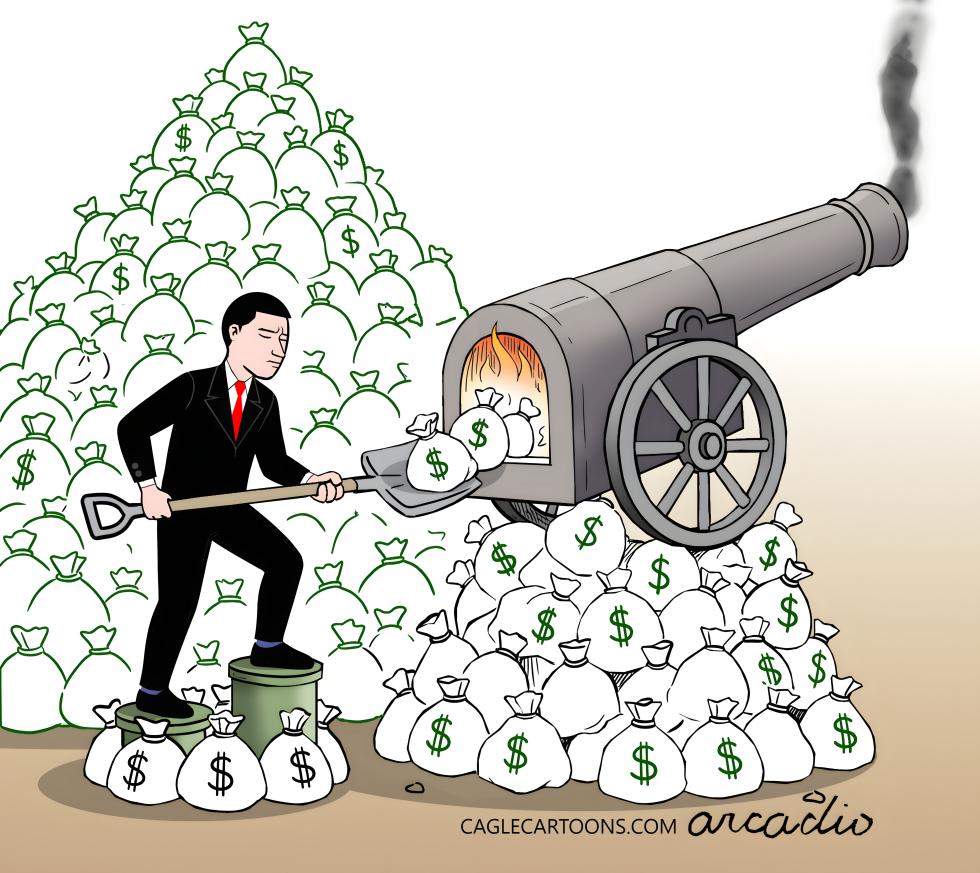
Business leaders continue to allocate large sums toward unproductive or destructive ends, drawing criticism for prioritizing short-term displays over sustainable practices. The pattern reflects ongoing concerns about corporate priorities where substantial resources vanish without clear returns. The piece argues that such spending represents a fundamental misallocation that harms long-term stability.
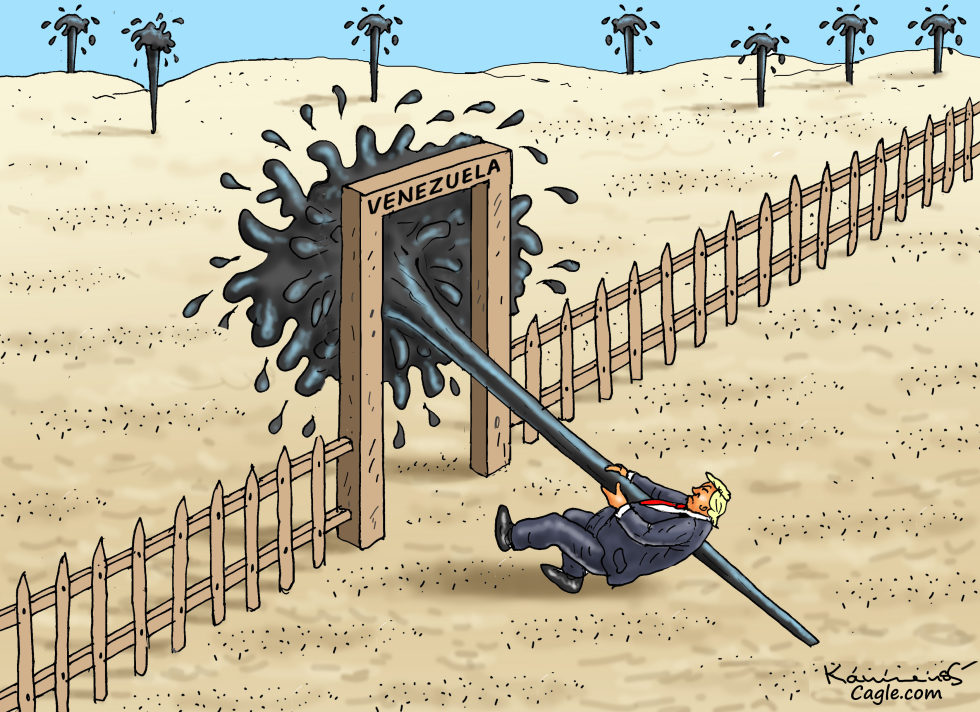
US policy toward Venezuelan oil exports shifted in 2026 as the Trump administration eased certain sanctions. This allowed increased crude shipments to reach American markets. The change raised questions about energy security and relations with Caracas. Critics argued the move undermined prior pressure on the Maduro government. The cartoon depicts the oil surge directly impacting Trump, suggesting the policy backfired on its architect.
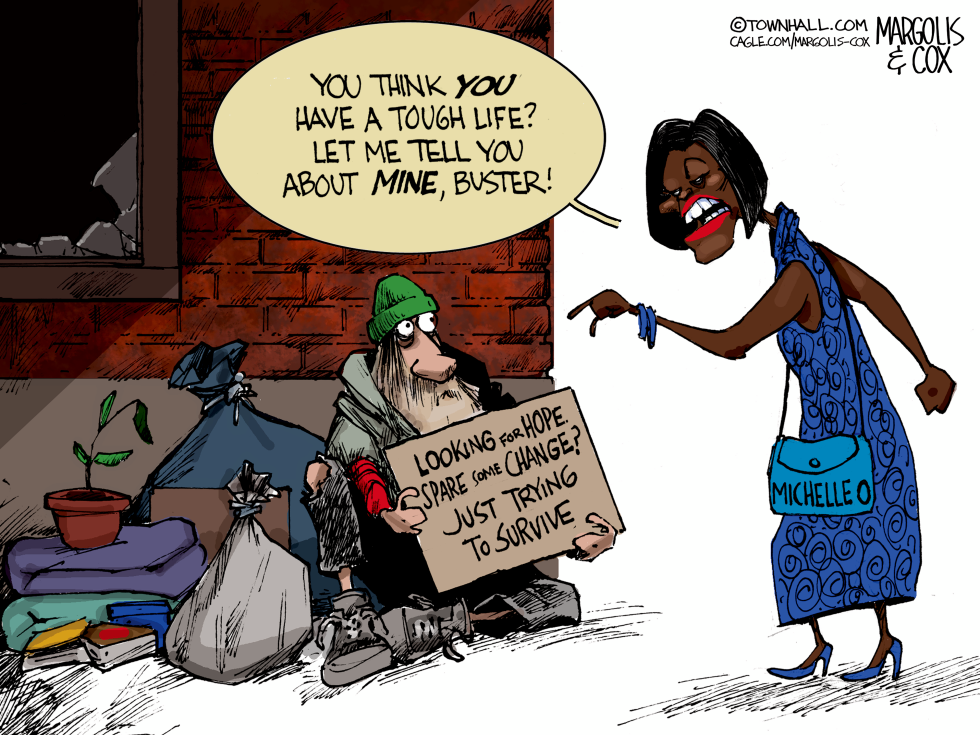
A cartoon depicts Michelle Obama confronting a homeless man on the street, with her declaring her own life tougher than his. The piece highlights perceived disconnects between political elites and everyday struggles with poverty. It critiques the tendency of prominent figures to center their personal narratives even in encounters with those facing severe hardship.
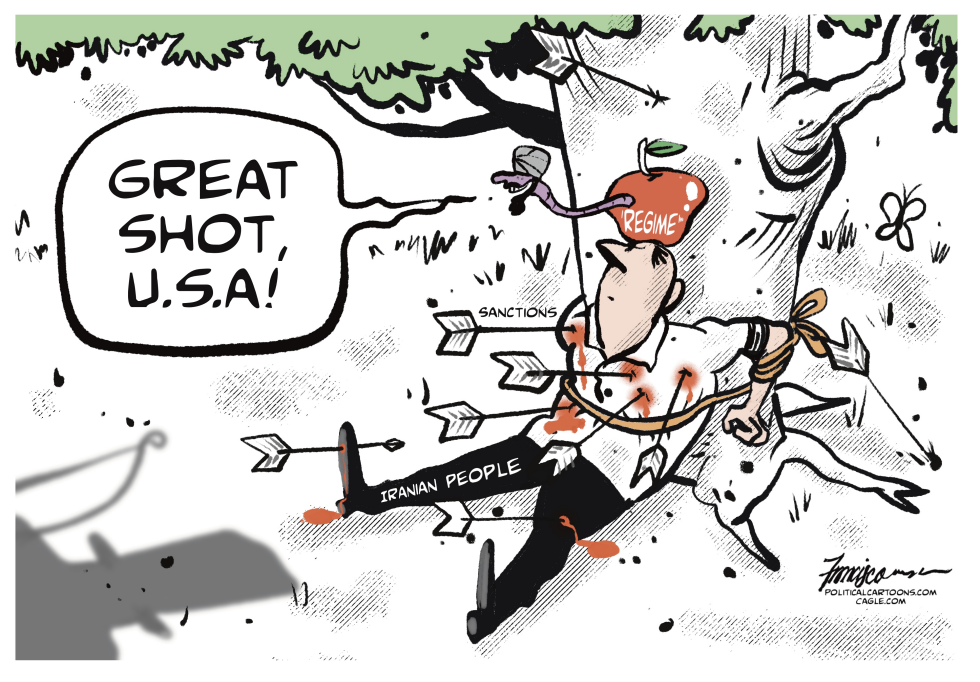
A political cartoon published August 30, 2026, illustrates US sanctions on Iran striking the Iranian people rather than the regime. The image shows a prone figure with an apple marked regime on its head and arrows labeled sanctions embedded in the body marked Iranian people. A speech bubble from the figure praises the shot by the USA. The work comments on the collateral effects of sanctions policy amid ongoing tensions between Washington and Tehran.
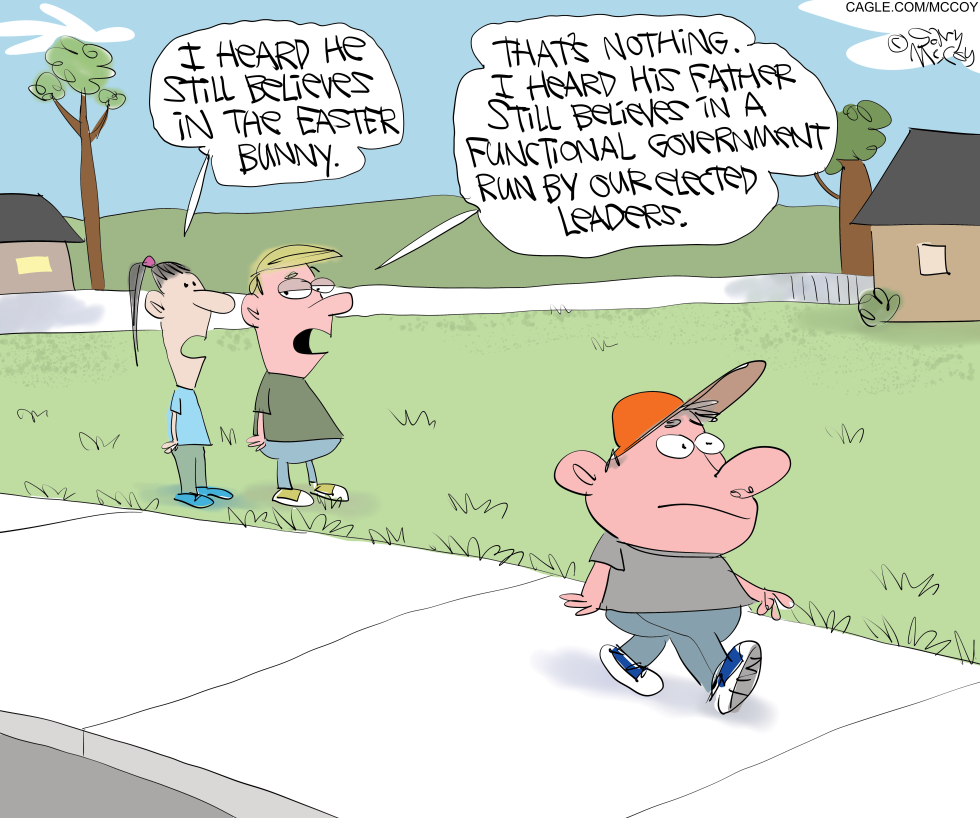
Public distrust in government institutions remains high as citizens question whether elected leaders can deliver effective results. Recent polls show widespread doubt about Congress and the executive branch functioning as intended. The cartoon captures this sentiment by likening such belief to childhood myths. It takes the position that expecting competent governance from current leaders is naive and unrealistic.
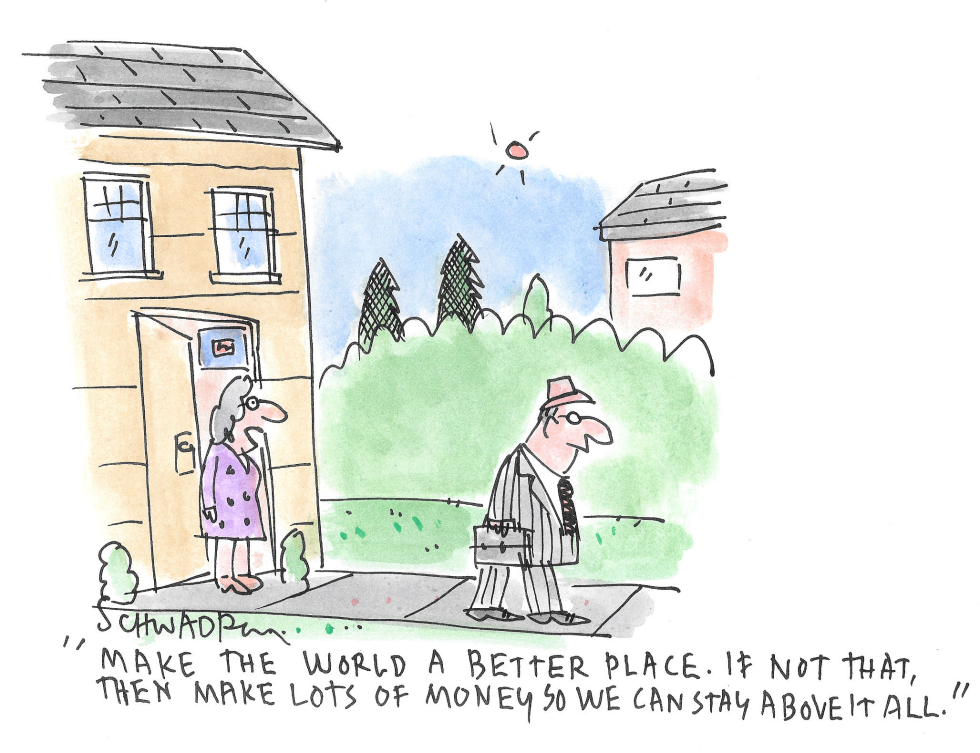
A homeowner delivers blunt counsel to a suited visitor about choosing financial success when efforts to improve the world fall short. The exchange highlights a common tension between altruism and self-preservation in daily decision making. The piece presents the advice as straightforward guidance rather than critique.
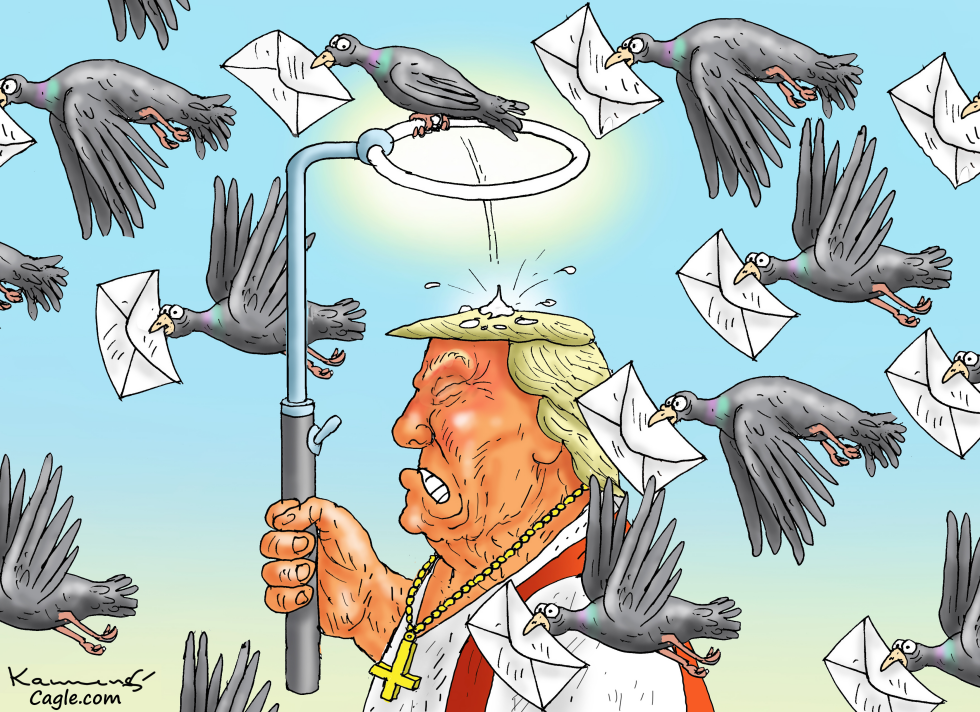
Donald J. Trump continues to draw intense public and political attention in 2026. Recent developments around mail services and communications have placed him at the center of fresh criticism. Observers note the volume of correspondence and commentary directed at him. The editorial position frames these pressures as deserved scrutiny over his conduct and influence.
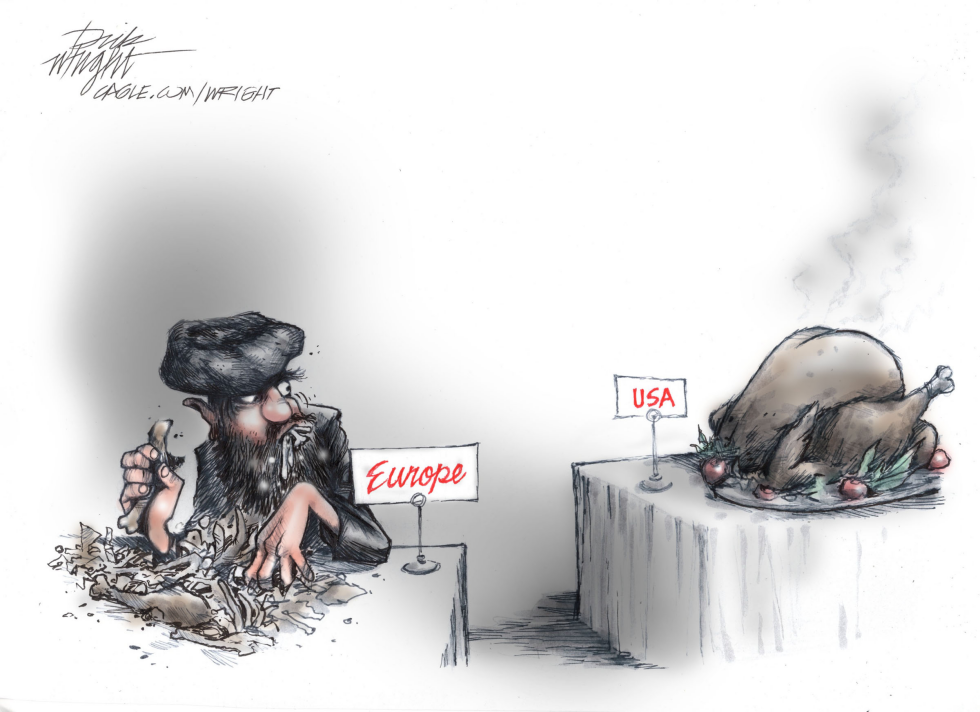
A foreign leader has stripped Europe bare and now eyes the United States as the next prize. The piece argues that unchecked expansionist momentum threatens American security and global stability.
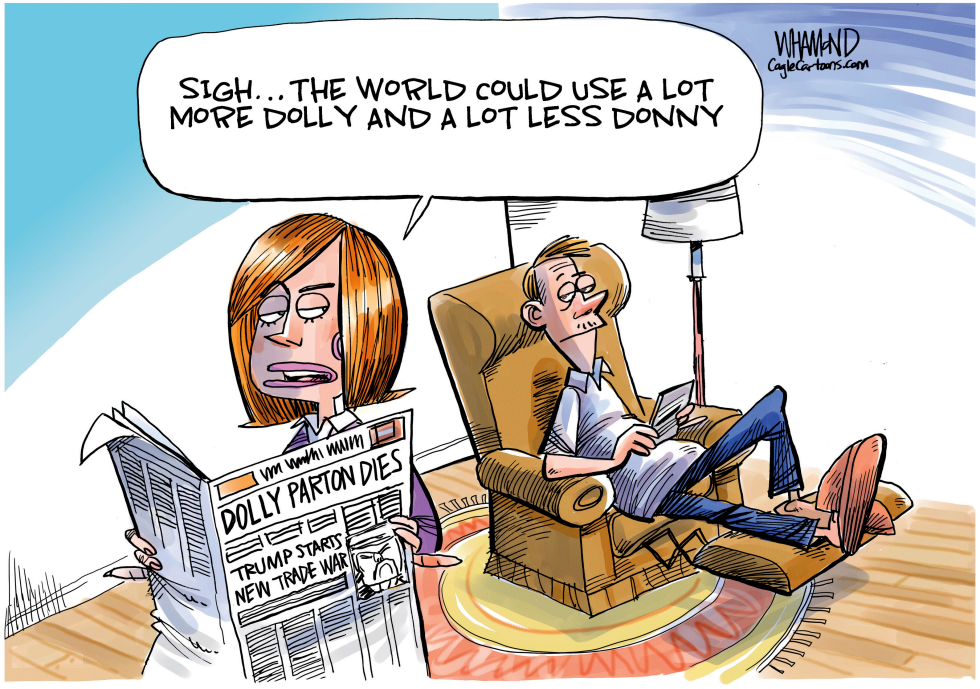
Donald Trump initiated a new trade war, coinciding with the reported death of Dolly Parton. The development drew public reactions contrasting the entertainer's legacy with the president's economic policies. The piece portrays a citizen preferring more of Parton's influence and less of Trump's.
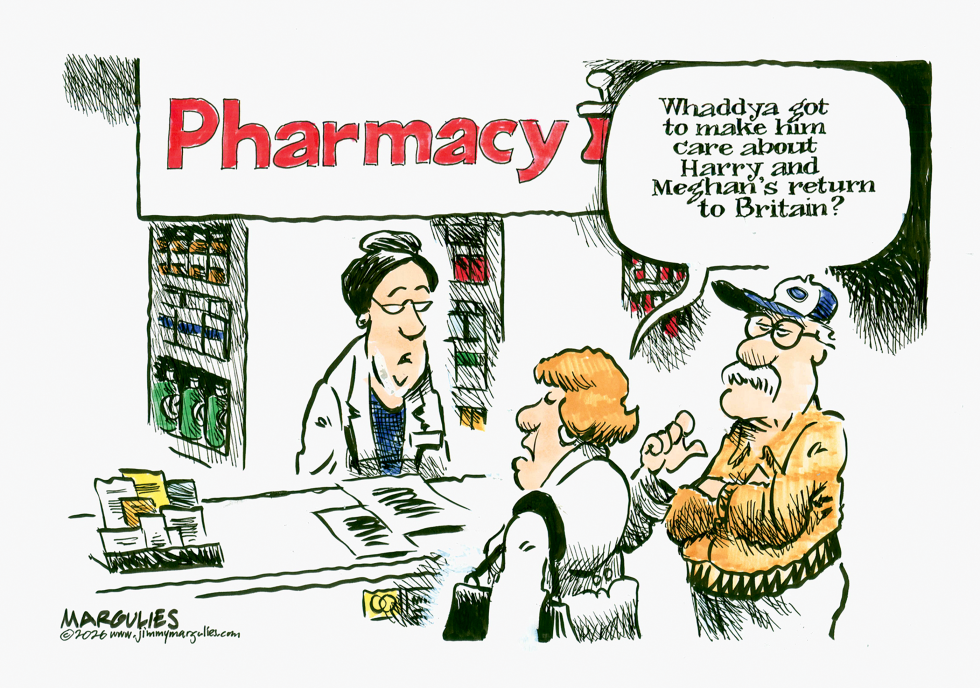
A customer at a pharmacy counter asks the pharmacist what remedy exists to generate interest in Prince Harry and Meghan Markle's return to Britain. The exchange underscores ongoing public fatigue with the couple's media coverage and royal family dynamics. The piece frames the query as a symptom of broader disengagement from the story.
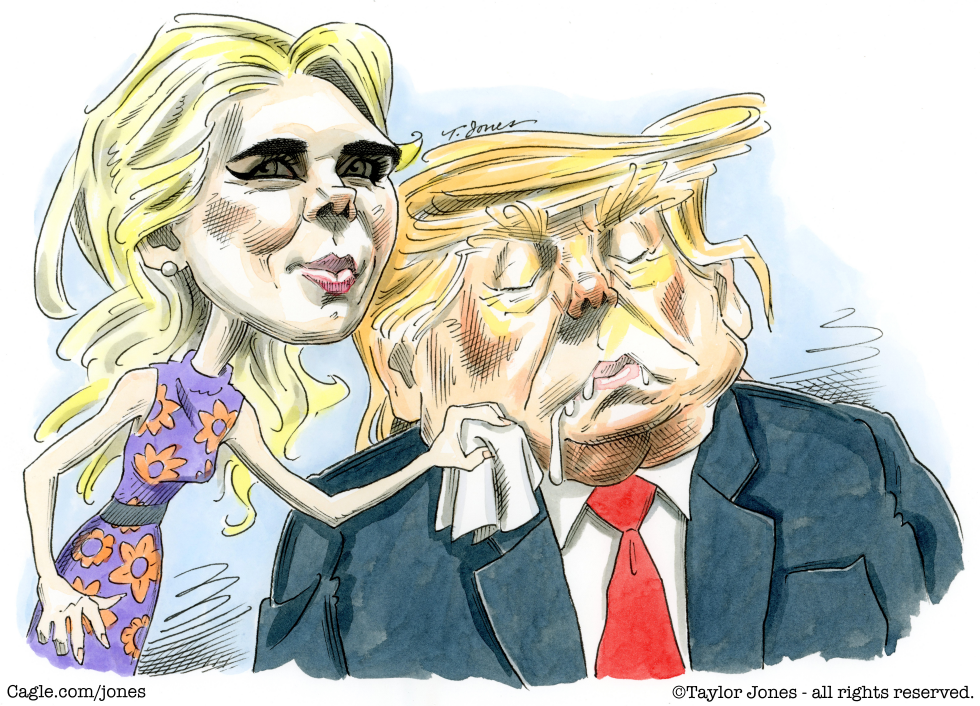
Donald Trump appears in a vulnerable state during a public or staff interaction in 2026. Natalie Harp, a known associate, tends to him by wiping drool from his face. The moment highlights ongoing scrutiny of the former president's health and stamina. Observers note the personal nature of the assistance amid continued political activity. The piece presents the scene as evidence of reliance on close aides.
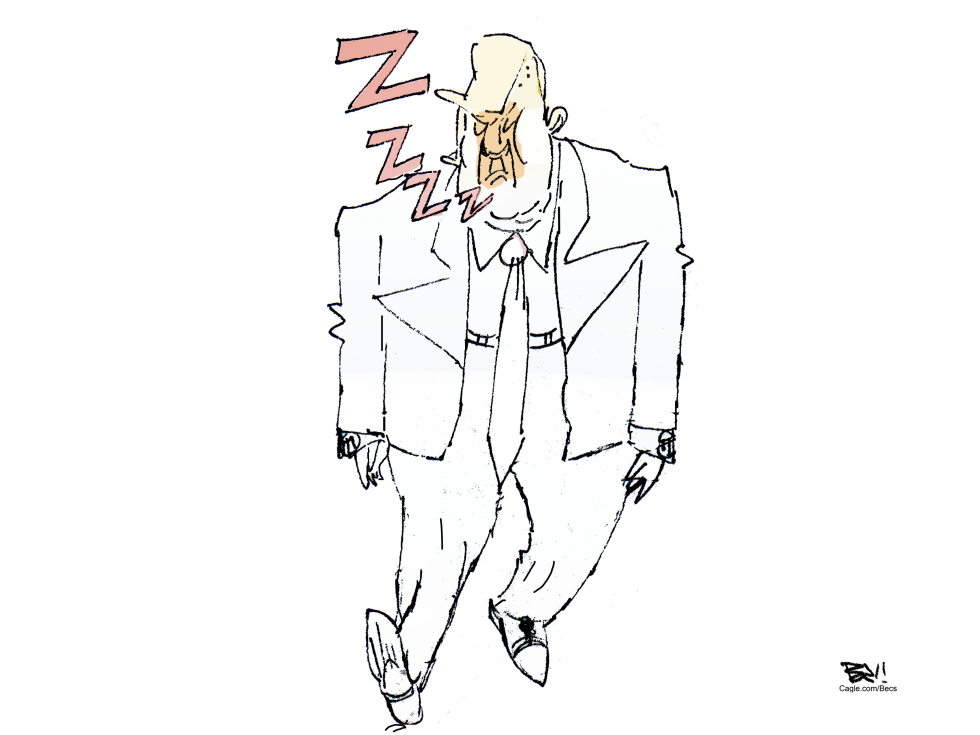
No specific news event ties to this generic image of a sleeping suited man. The depiction captures an ongoing dynamic of officials appearing disengaged from duties amid routine public appearances.