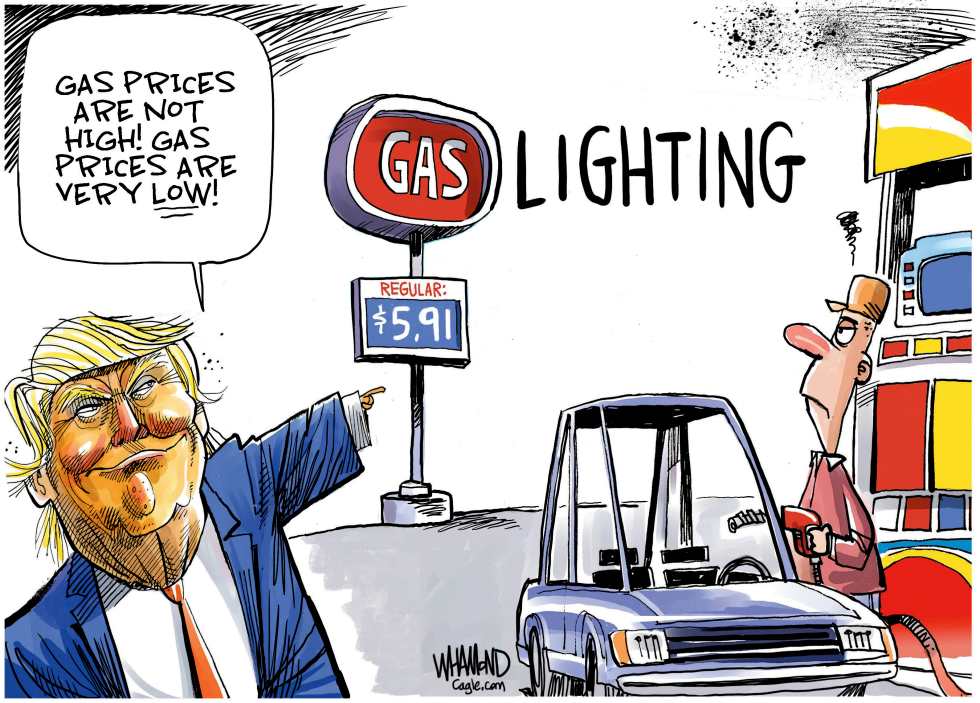
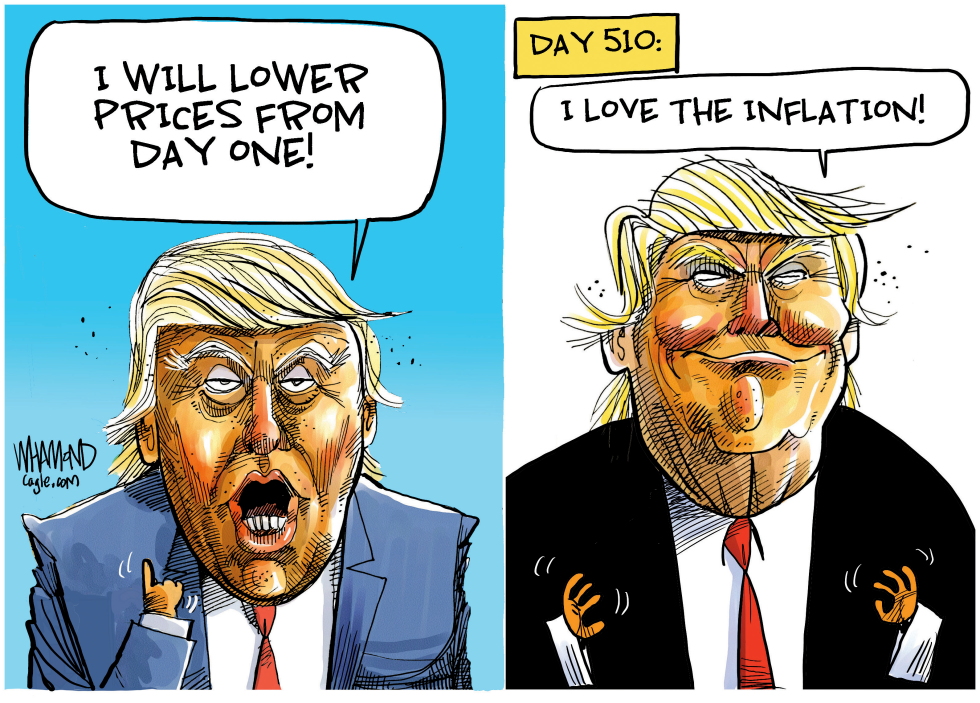
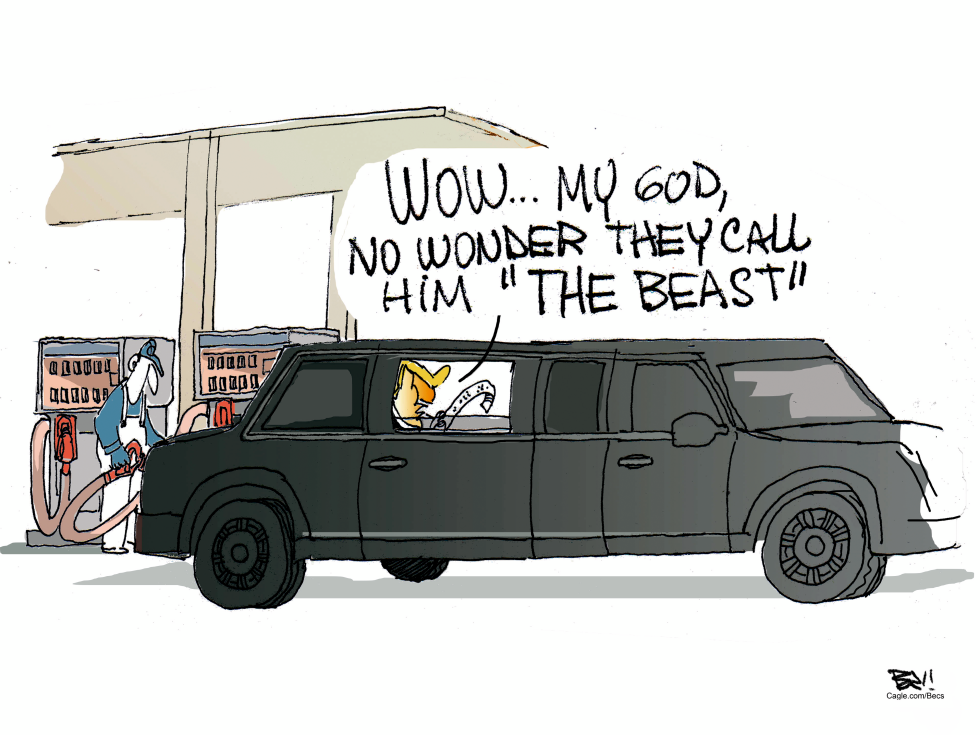
Donald Trump has repeatedly asserted that gas prices are very low even as national averages hover near record territory. The statement comes amid ongoing public frustration with energy costs that have remained elevated for months. The editorial takes the position that such denials amount to deliberate misdirection rather than engagement with economic data.
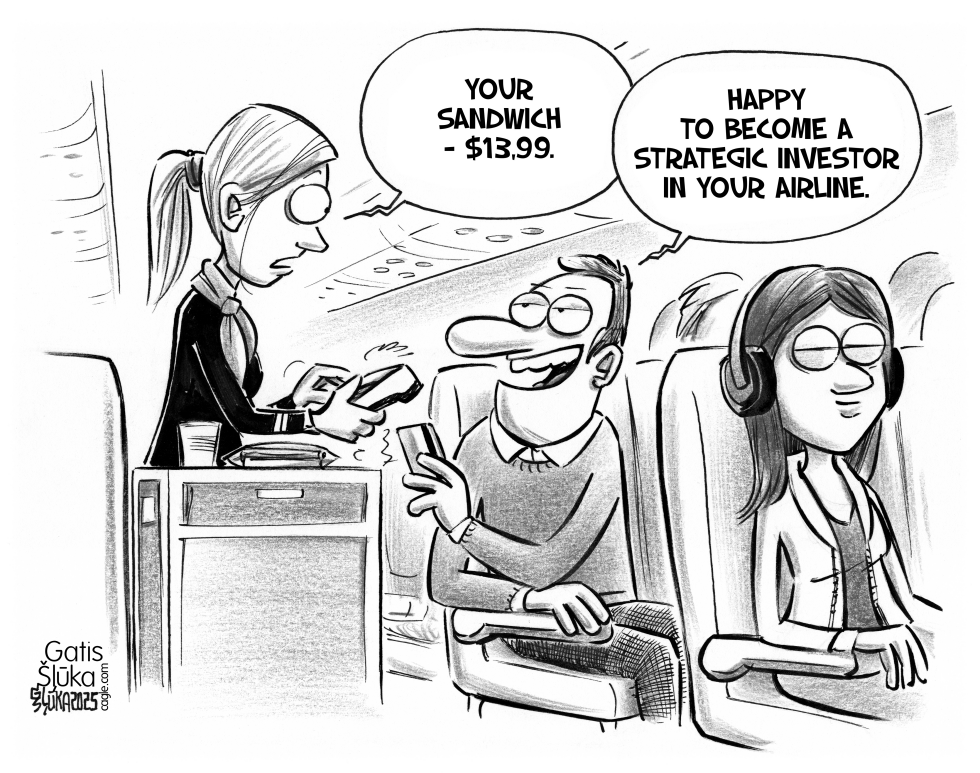
A passenger on a commercial flight faces a $13.99 charge for a sandwich from the flight attendant. Rather than pay, the passenger offers to become a strategic investor in the airline. The exchange occurs in the cabin with another traveler seated nearby. The scene captures common complaints about elevated prices for basic in-flight items. It reflects ongoing passenger frustration with airline ancillary fees and service costs.
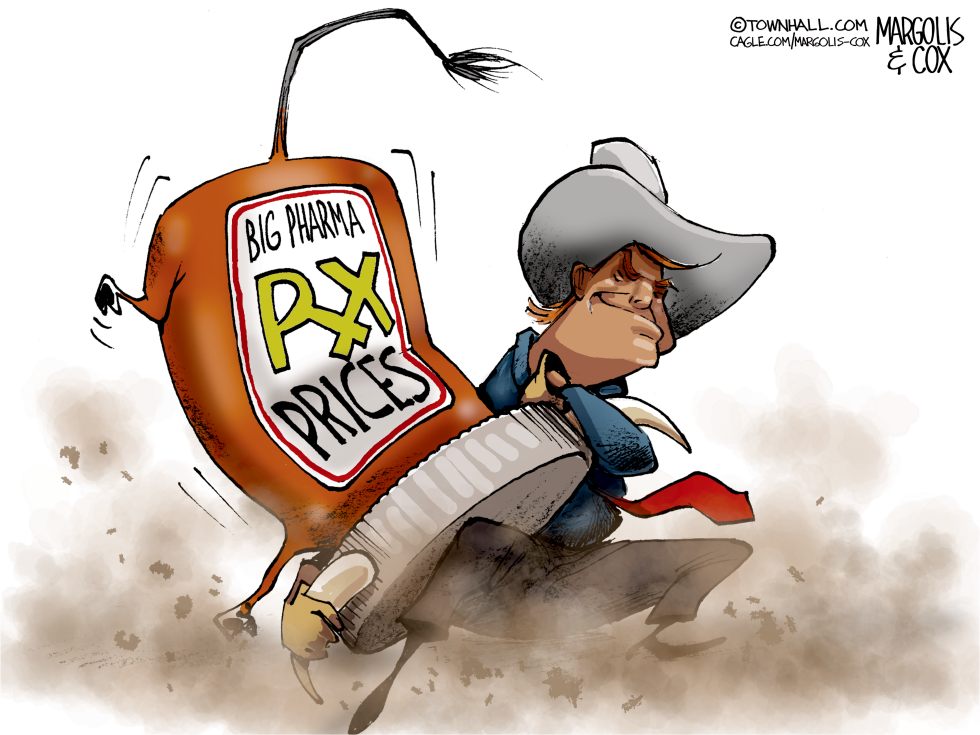
Ongoing debates over high prescription drug costs from major pharmaceutical companies continue to draw political attention. Lawmakers and regulators have pushed measures aimed at lowering prices for consumers. The cartoon depicts the challenge of reining in those costs as a high-stakes contest. It takes the position that aggressive action is needed to bring relief despite industry resistance.
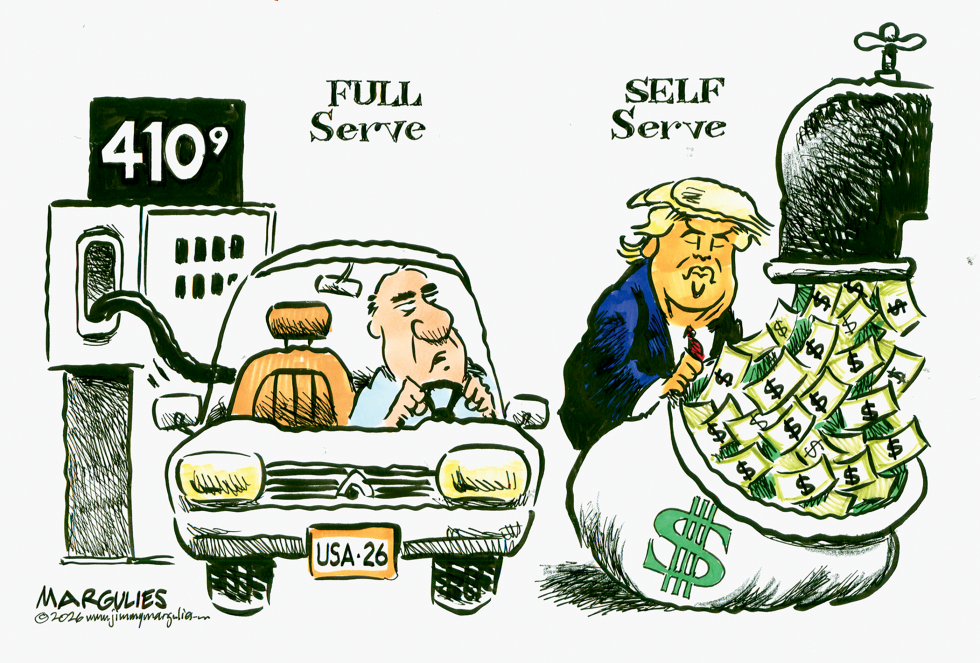
High gas prices remain a flashpoint in 2026 with pumps displaying figures above four dollars. Trump is shown collecting direct profits from the self-serve lane while a driver idles at full serve. The piece argues that the former president benefits personally from elevated energy costs rather than working to lower them for consumers.
Elon Musk's public commentary on cryptocurrency markets continues to drive price swings and investor attention in 2026. His recent statements coincide with renewed volatility in Bitcoin trading. The editorial takes a critical view of how such high-profile interventions amplify market instability rather than stabilize it.
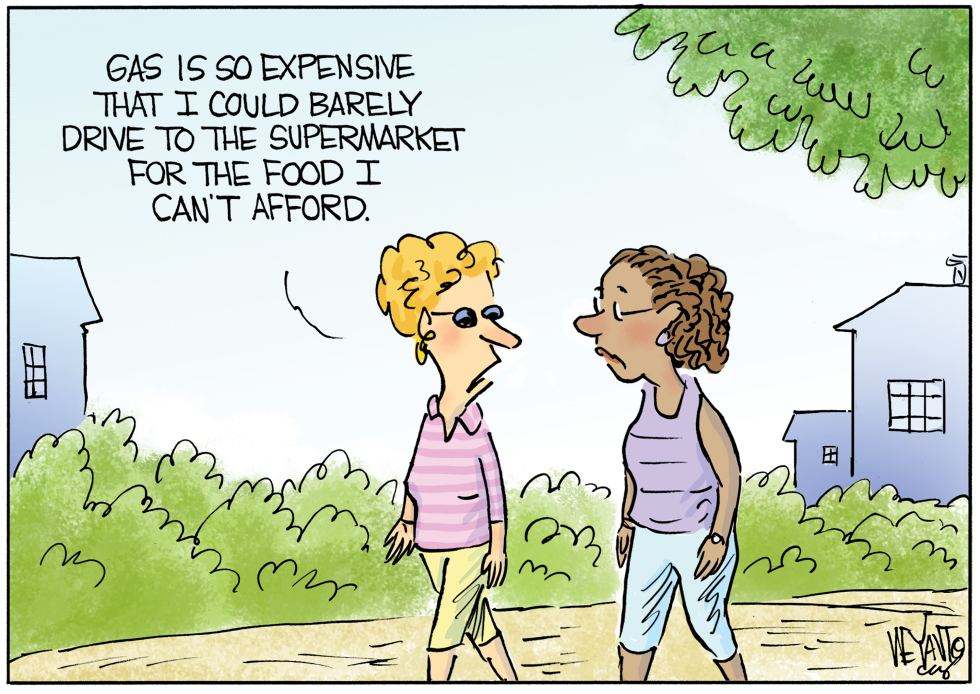
Elevated gasoline prices continue to squeeze household budgets by raising the cost of essential travel for groceries. Families report that filling the tank now competes directly with buying food, amplifying the effects of broader inflation on daily necessities. The editorial highlights how these intertwined expenses limit mobility and purchasing power for average consumers.
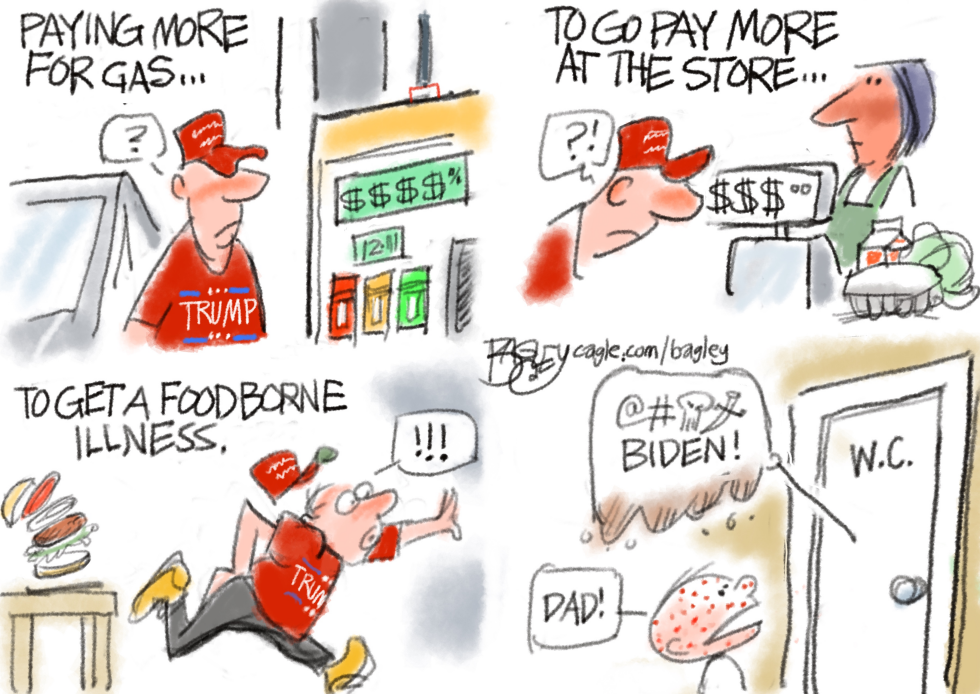
A Trump supporter encounters higher costs at the gas pump and grocery store plus a foodborne illness before directing blame toward Biden. The episode reflects persistent economic pressures on households and partisan finger-pointing that continues well after the 2024 election cycle. The cartoon highlights how some voters tie every inconvenience directly to the prior administration regardless of other factors at play.
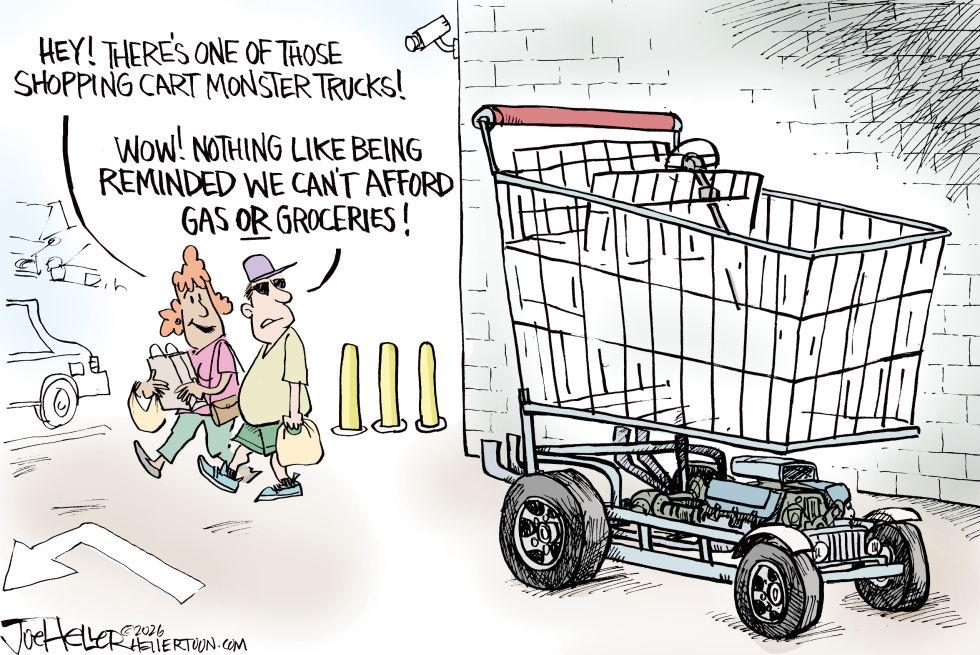
A modified shopping cart on large wheels draws comments from passersby about unaffordable gas and groceries. The scene on July 10 2026 captures ongoing economic strain from higher living costs. Passersby note the reminder of tight budgets for fuel and food. The image reflects persistent inflation concerns affecting household spending.
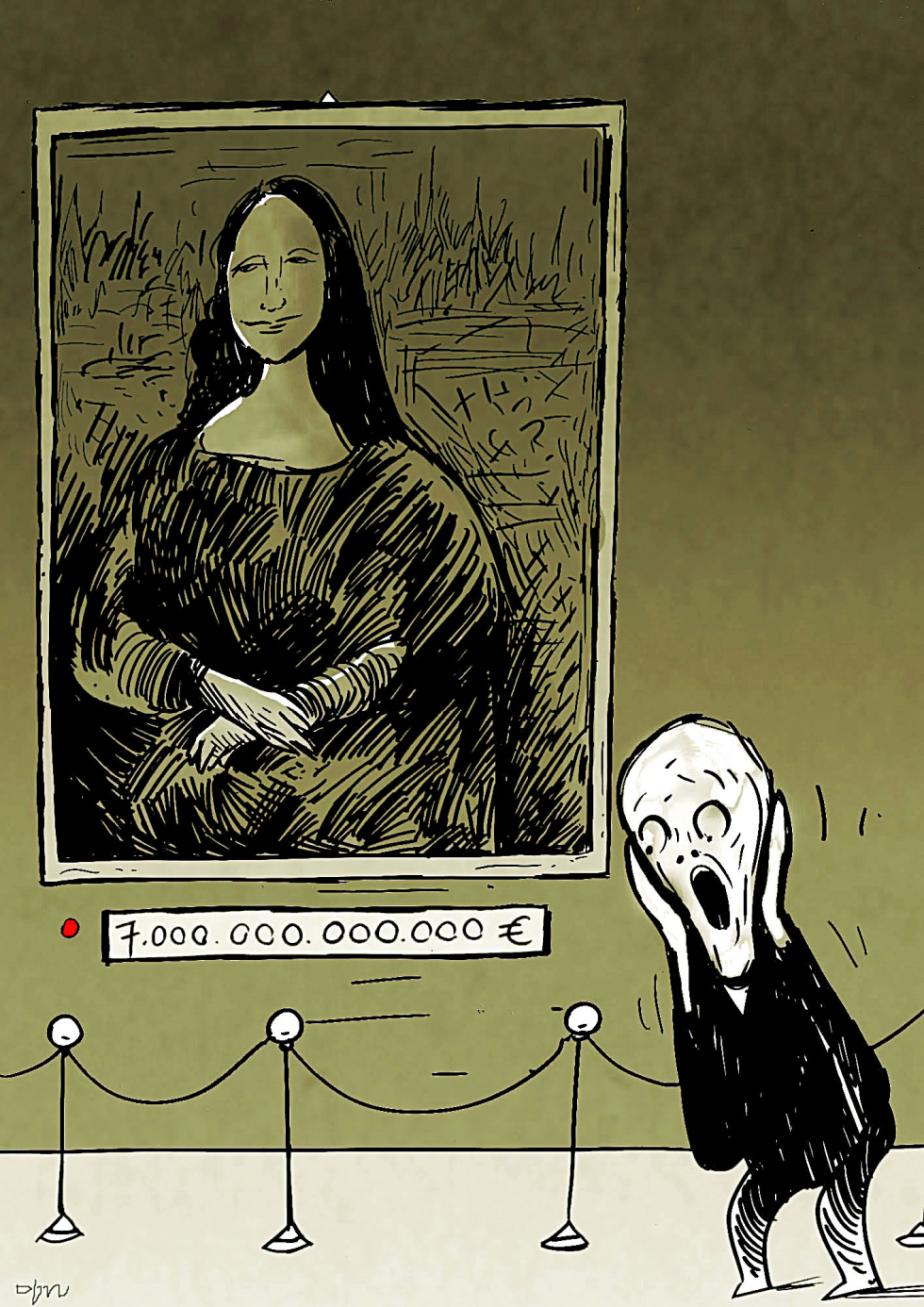
The Mona Lisa receives an eye-popping valuation of seven trillion euros in a museum setting. The figure in the image conveys immediate disbelief at the figure. The piece highlights ongoing debates over astronomical art market prices for cultural treasures.
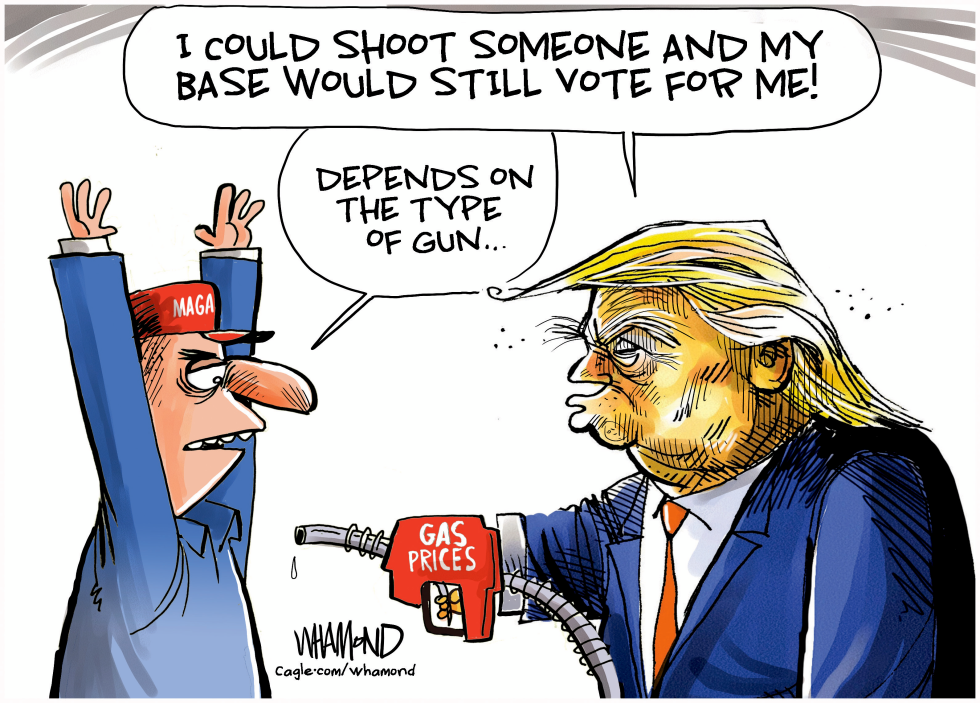
The cartoon shows Donald Trump with a gas pump labeled GAS PRICES aimed toward a man wearing a red MAGA hat who has both hands raised. Trump states his base would still vote for him even if he shot someone, and the supporter responds that it depends on the type of gun. The artist signature WHAMOND and cagle.com/whamond appear at the bottom.
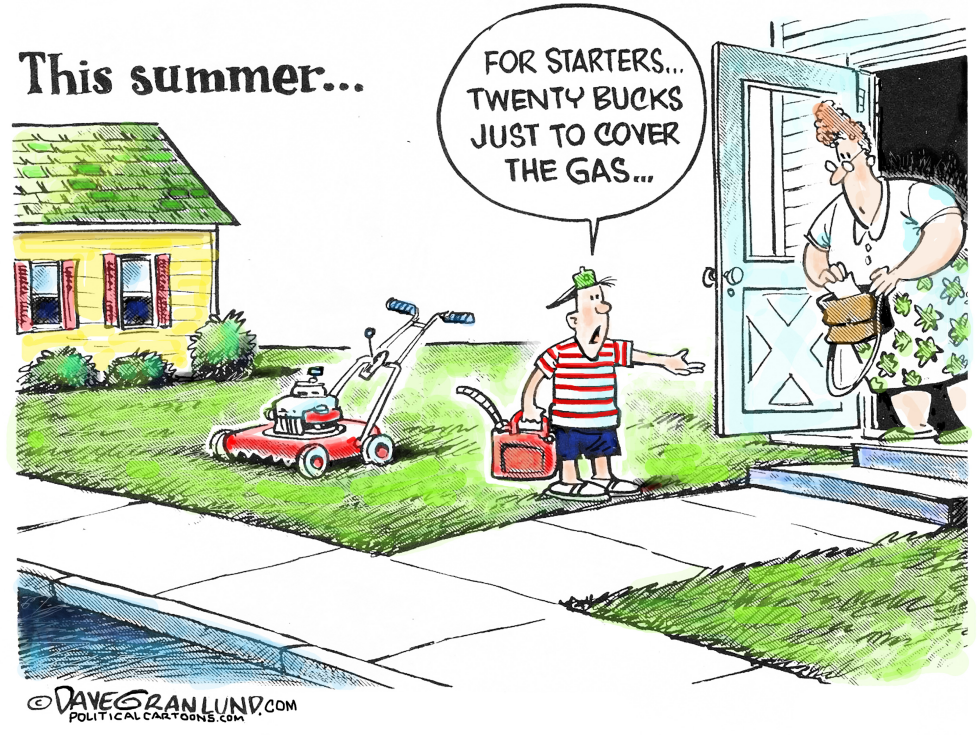
Dave Granlund's cartoon captures the everyday sting of high gas prices, where a kid pushing a red lawnmower demands twenty bucks just to cover the gas from a woman at her door. The scene, set in a suburban yard with the text 'This summer...', highlights expensive gas and fuel prices up, tying into broader issues like oil prices up and gas spikes from geopolitical tensions such as Iran war and Strait of Hormuz blockade. Everything is higher, from household chores to basic services, as the boy's striped shirt and gas can emphasize the absurdity. The dry humor underscores how these economic pressures trickle down to neighborhood lawns, making even lawn care a victim of rising costs. Granlund's straightforward style drives the point home without overcomplicating the satire.
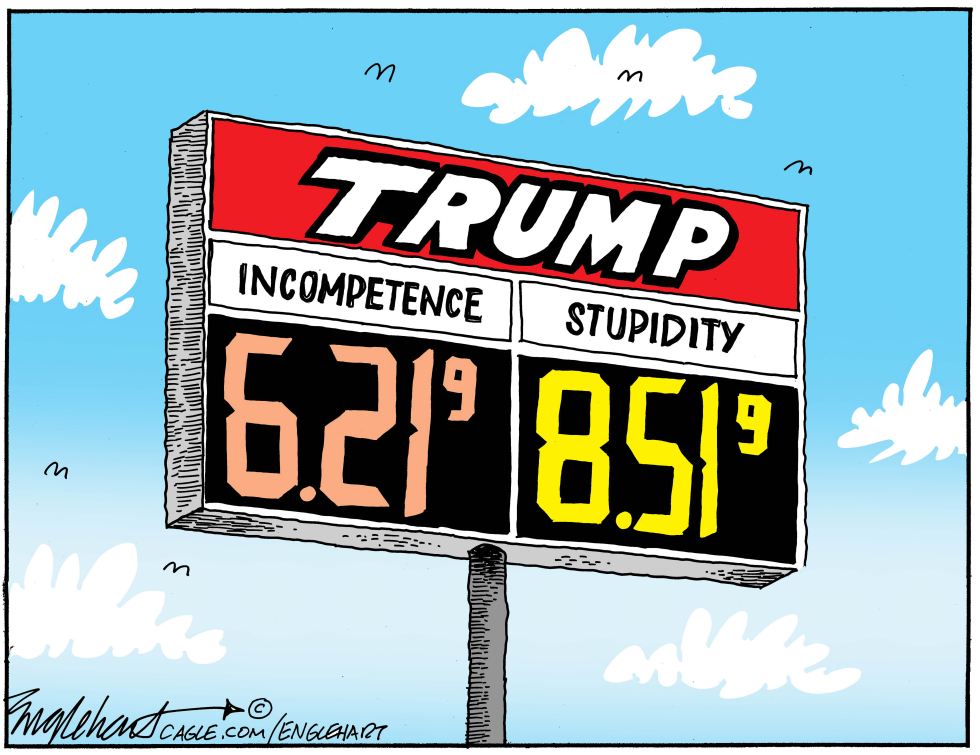
Bob Englehart's cartoon features a gas station sign with Trump at the top, showing prices for incompetence at 6.21⁹ and stupidity at 8.51⁹ against a blue sky with clouds. The tags Trump, Iran War, gas prices, gasoline, and gallon frame the visual pun. Such cartoons often tie political figures to everyday economic pains like fuel costs. The dry humor lands on how leadership flaws inflate prices, making it relatable for readers hit by pump shocks. With no characters, just the sign, it keeps the message direct. Tags like incompetence and stupidity drive the satire home, poking at perceived policy missteps without overcomplicating the scene.