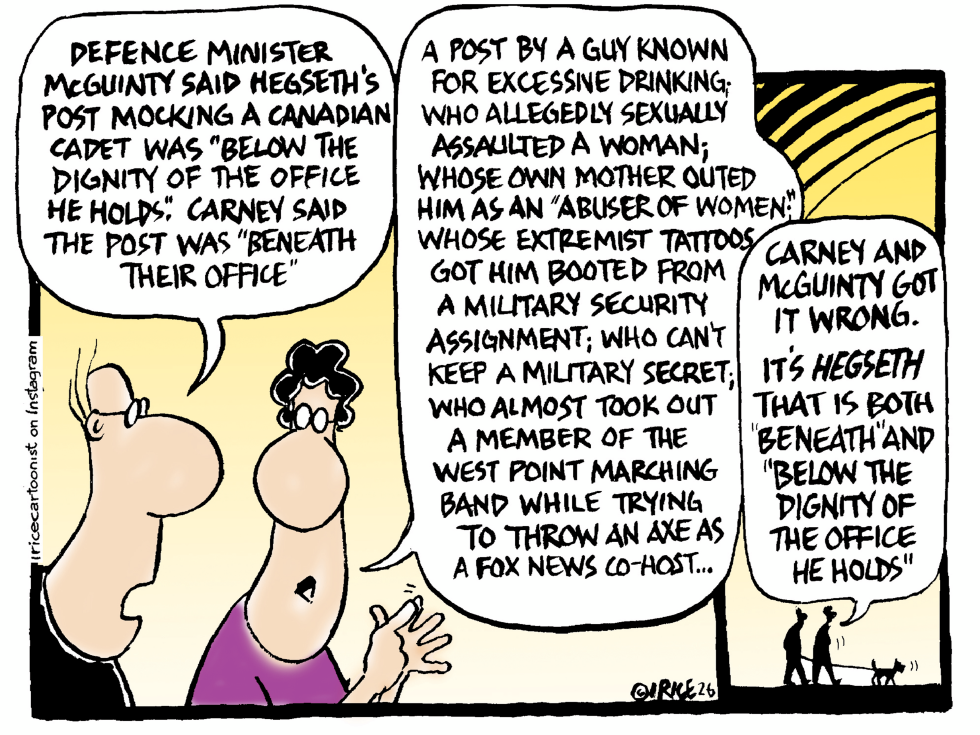
Canadian Defence Minister David McGuinty and Mark Carney publicly condemned a social media post by Pete Hegseth mocking a Canadian cadet, calling it beneath the dignity of the office. The remarks came amid Hegseth's nomination process for a senior U.S. defense position. The cartoon argues the ministers have the assessment backward, pointing instead to Hegseth's history of alleged misconduct, security clearance problems, and public incidents as the true disqualifiers. This reflects ongoing debate over nominee vetting standards and cross-border political commentary on U.S. appointments.
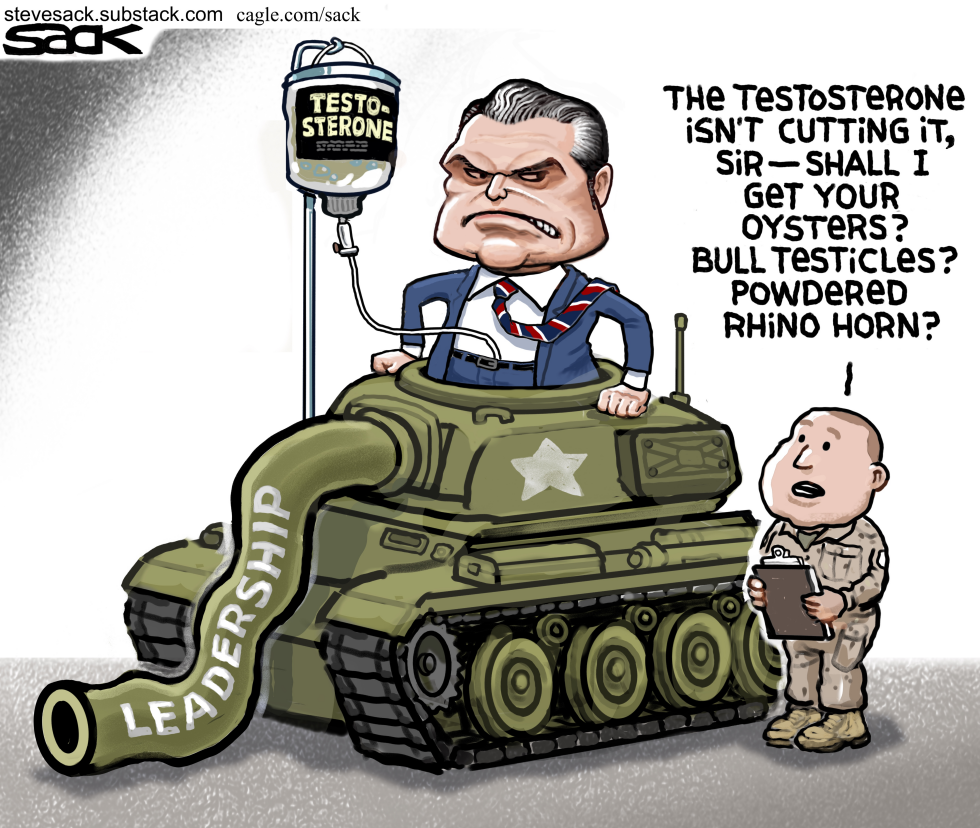
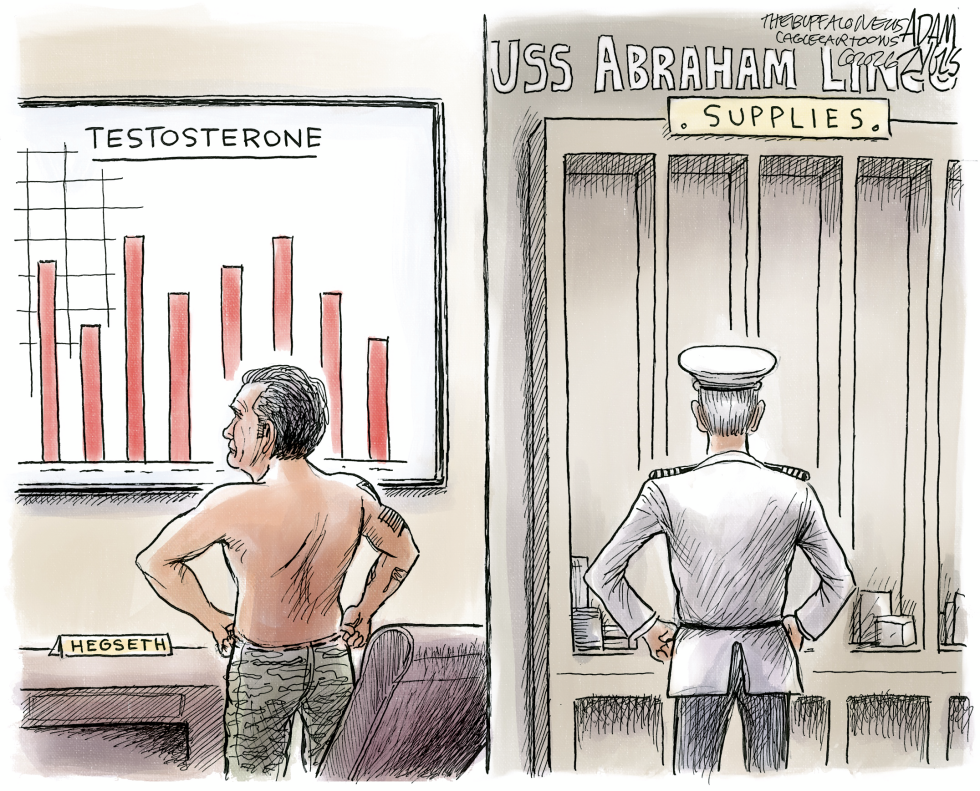
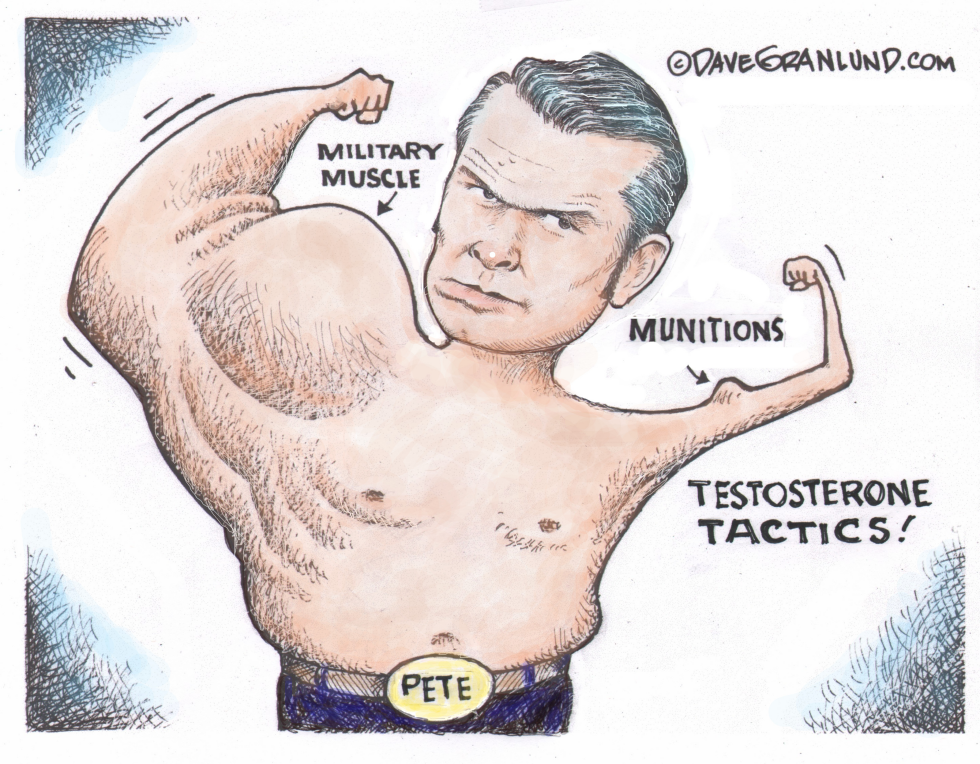
Pete Hegseth's nomination and early actions as a top defense official have spotlighted his emphasis on testosterone levels as a solution to perceived military leadership gaps. The approach has prompted questions from within the ranks about whether hormone supplements address core readiness and command issues. The cartoon portrays the policy as misguided and ineffective.
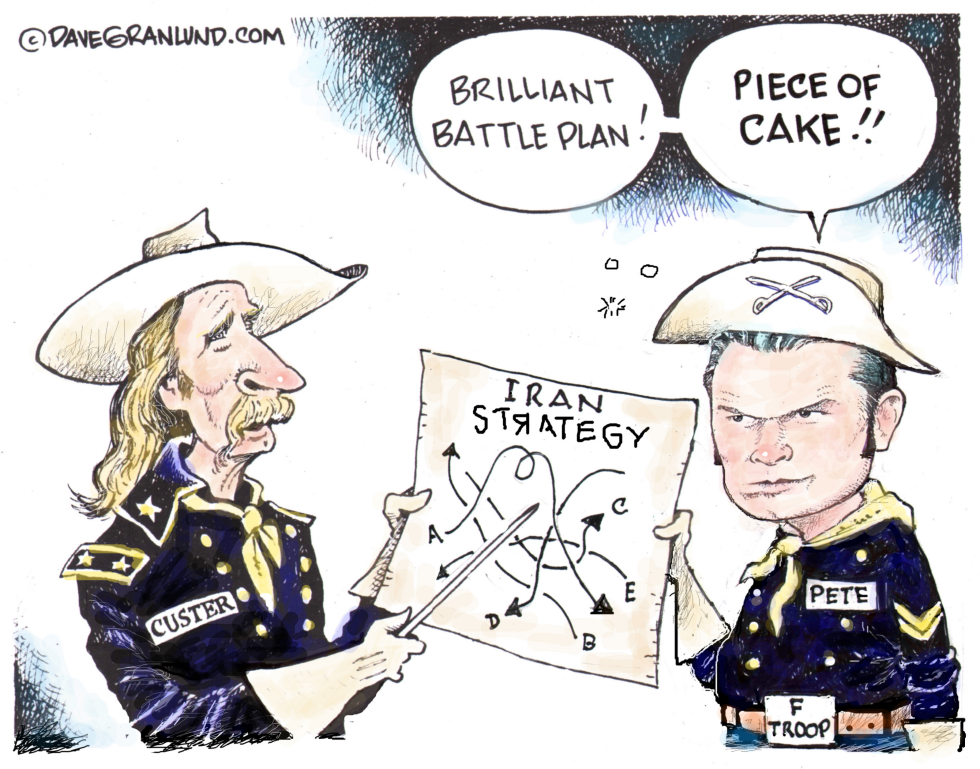
The cartoon depicts two uniformed figures labeled Custer and Pete examining a document titled Iran Strategy. Speech bubbles show them calling the plan brilliant and a piece of cake. The drawing uses the F Troop label and Custer reference to highlight risks of overconfidence in military planning for Iran. The publication date places the work in a period of ongoing discussion about US approaches to Iran. The visual argument centers on the disconnect between stated optimism and known historical outcomes for similar ventures.
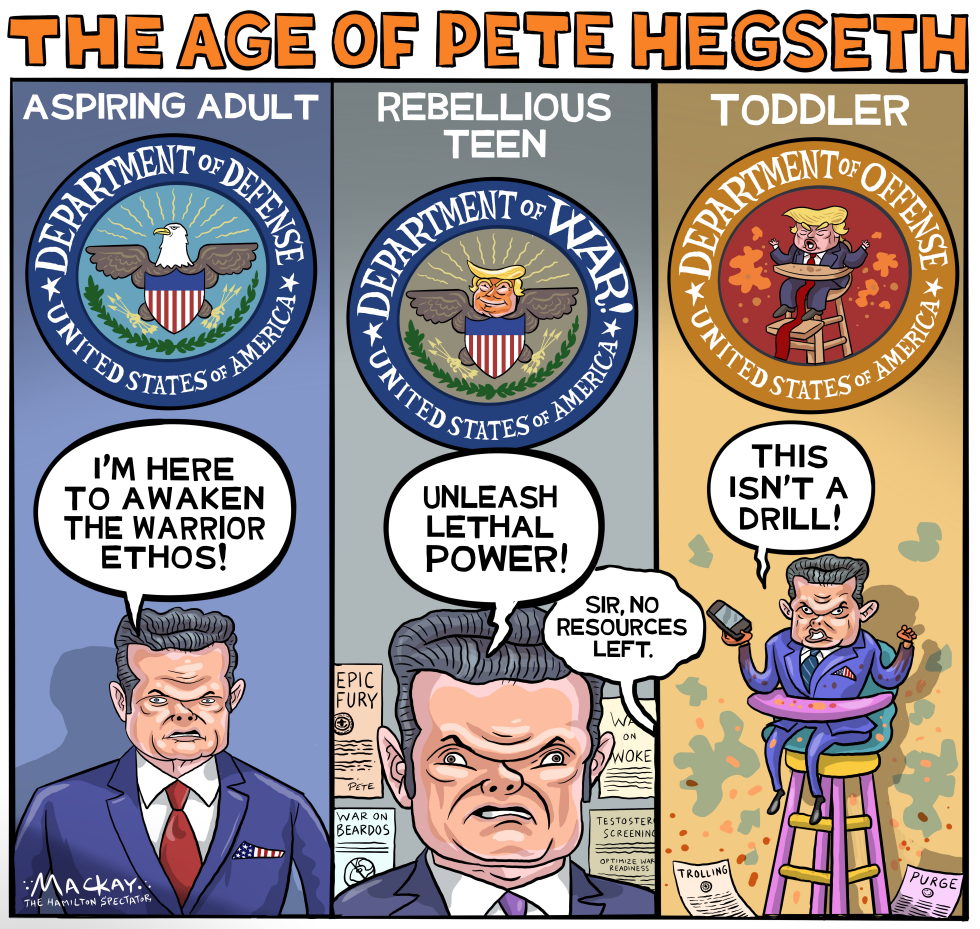
The cartoon by Graeme MacKay portrays Pete Hegseth's progression through three stages at the Pentagon under President Trump. In the first panel Hegseth pledges to awaken the warrior ethos at the Department of Defense. The middle panel shows him calling to unleash lethal power while an aide reports no resources remain. The final panel depicts a toddler Trump at the Department of Offense with Hegseth as a frantic aide amid papers about testosterone screening and purges. The work comments on the Trump administration's approach to military leadership and policy priorities as of September 2026.
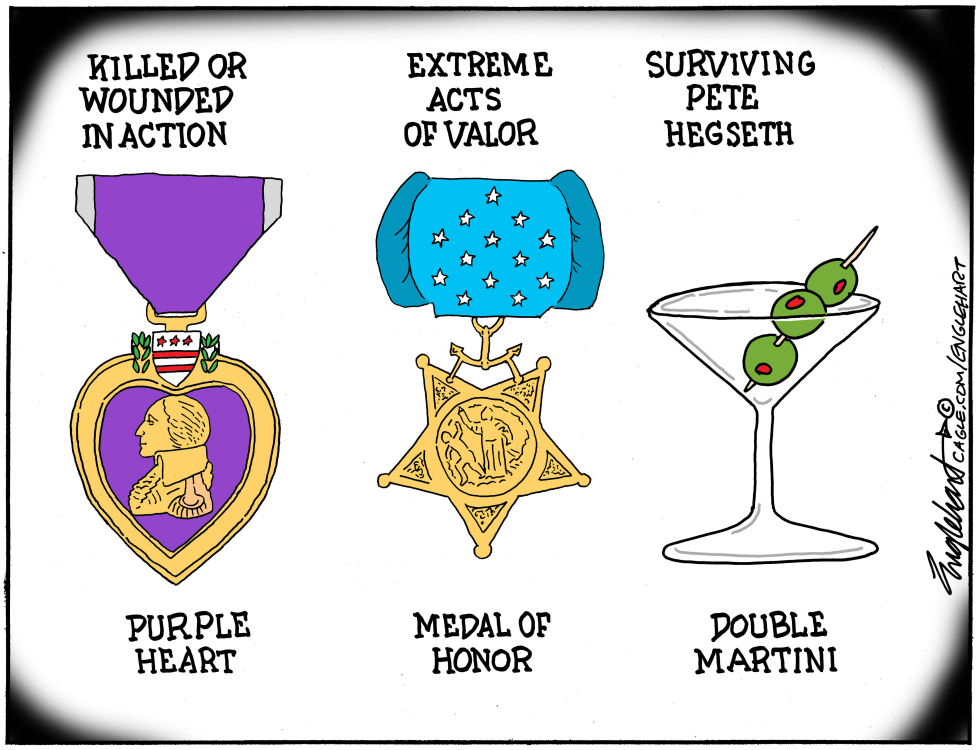
Pete Hegseth's nomination for a senior defense post in 2026 revived questions about his military service record and personal conduct. Critics highlighted past statements and behavior that some viewed as disqualifying for oversight of the armed forces. The cartoon responds by equating endurance under Hegseth with a dubious achievement on par with battlefield valor awards.
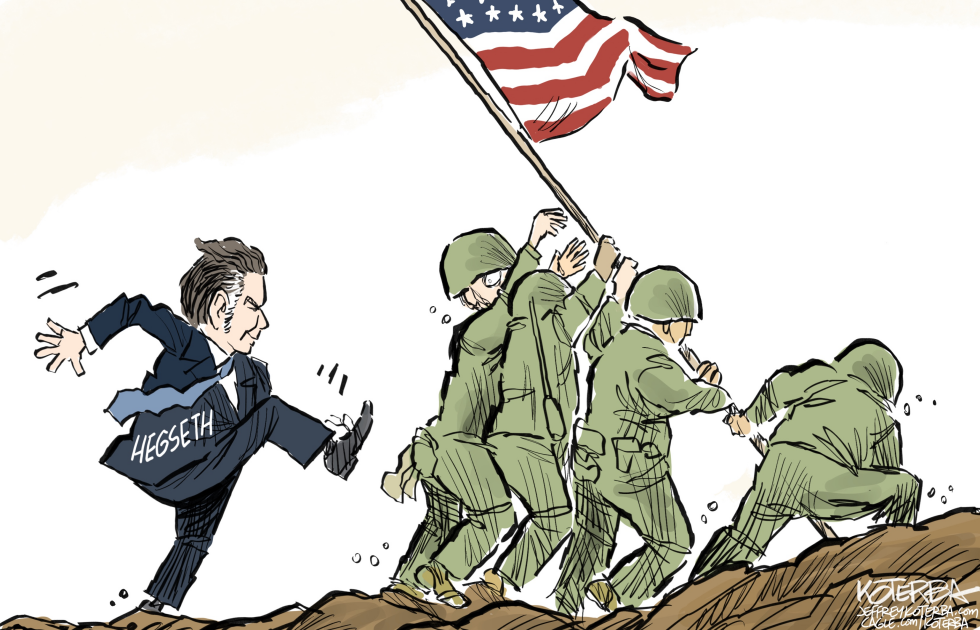
Pete Hegseth's conduct as a defense figure has drawn scrutiny for its effects on military readiness. Reports and commentary point to internal friction and lowered morale within the armed forces. The cartoon frames these developments as direct interference that leaves troops struggling to maintain core functions. Critics argue the pattern reflects broader leadership shortcomings at a time when force preparedness faces external pressures. The piece takes the position that Hegseth's approach actively harms the institution rather than strengthening it.
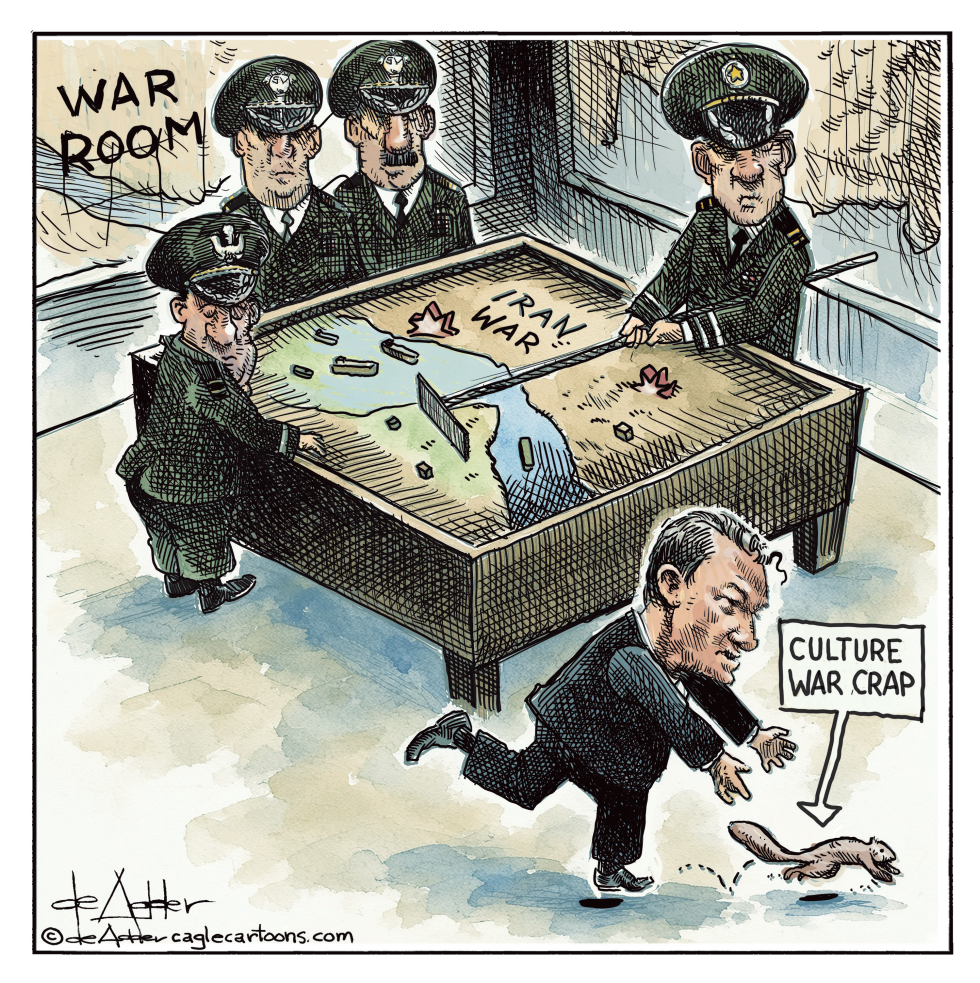
Defense Secretary Pete Hegseth has drawn scrutiny for emphasizing culture war issues while military planners address potential Iran contingencies. The cartoon depicts him pursuing a squirrel marked culture war crap instead of joining officers at the Iran war table. Critics argue this reflects a pattern of prioritizing domestic cultural battles over strategic readiness. The piece suggests such focus undermines effective leadership in the Pentagon. It critiques the administration's approach to balancing internal politics with national security demands.
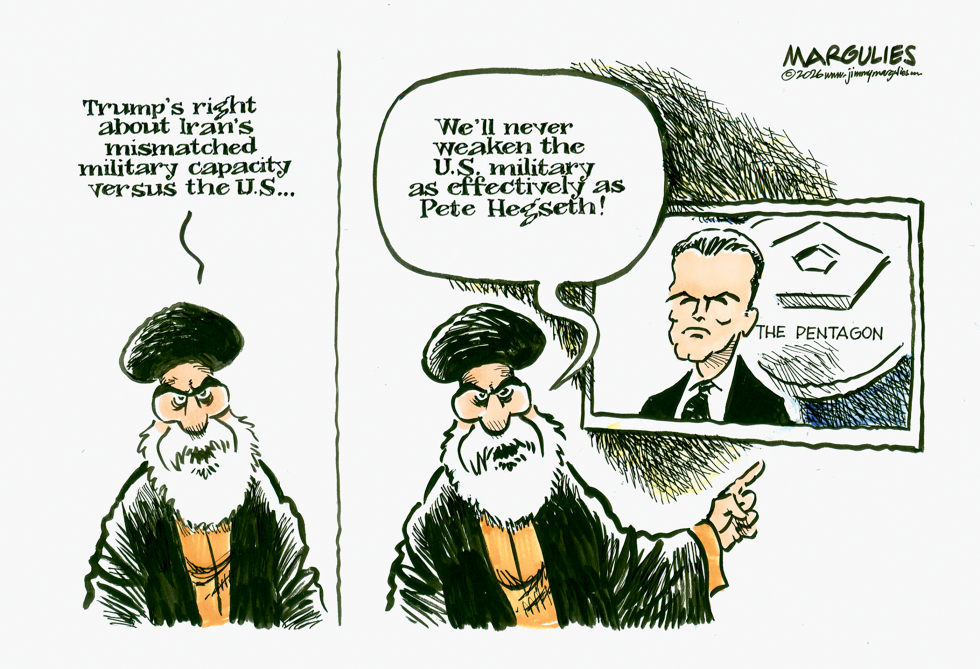
On September 2, 2026, an editorial cartoon shows Iran's Ayatollah endorsing Pete Hegseth's leadership at the Pentagon by claiming he weakens the US military more effectively than Iran could. The piece references Trump's prior assessment of Iran's inferior military capacity. It highlights concerns over Hegseth's qualifications and potential damage to US defense readiness under the Trump administration. The cartoon argues that Hegseth's appointment poses a greater internal threat to American military strength than external adversaries like Iran.
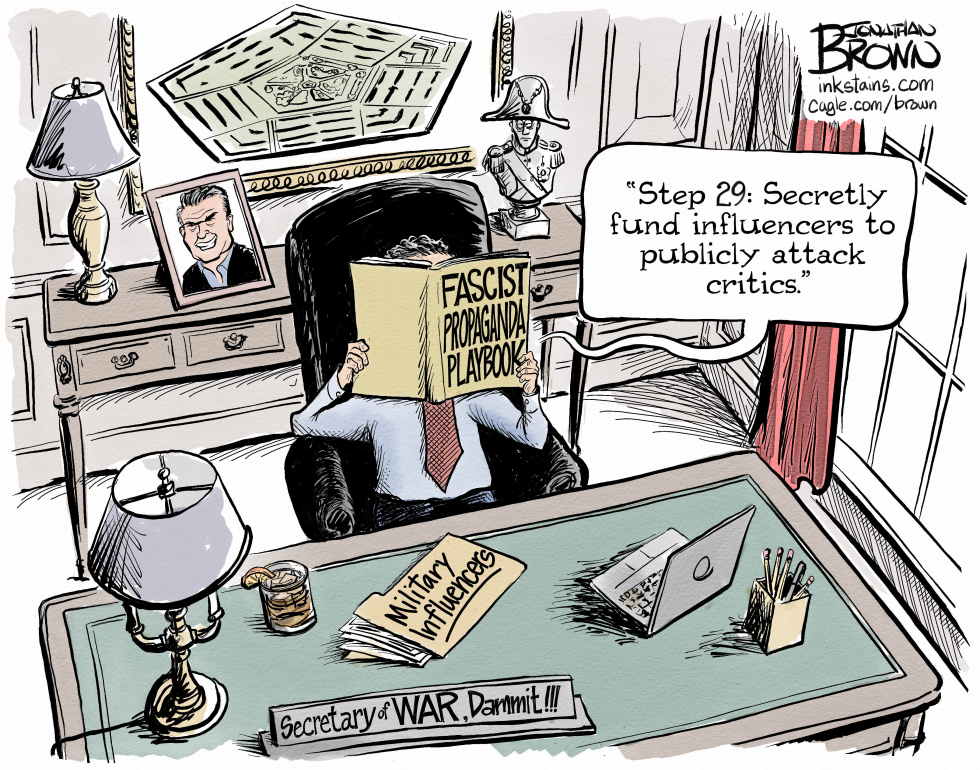
The cartoon shows a government official identified as the Secretary of War seated at a desk while holding open a book labeled Fascist Propaganda Playbook. A speech bubble lists Step 29 about secretly funding influencers to attack critics. Papers on the desk are labeled Military Influencers and a nameplate reads Secretary of WAR, Dammit. The scene includes office items such as lamps, a laptop, and a framed photo. The image responds to concerns over use of military-related influence operations in domestic political disputes.
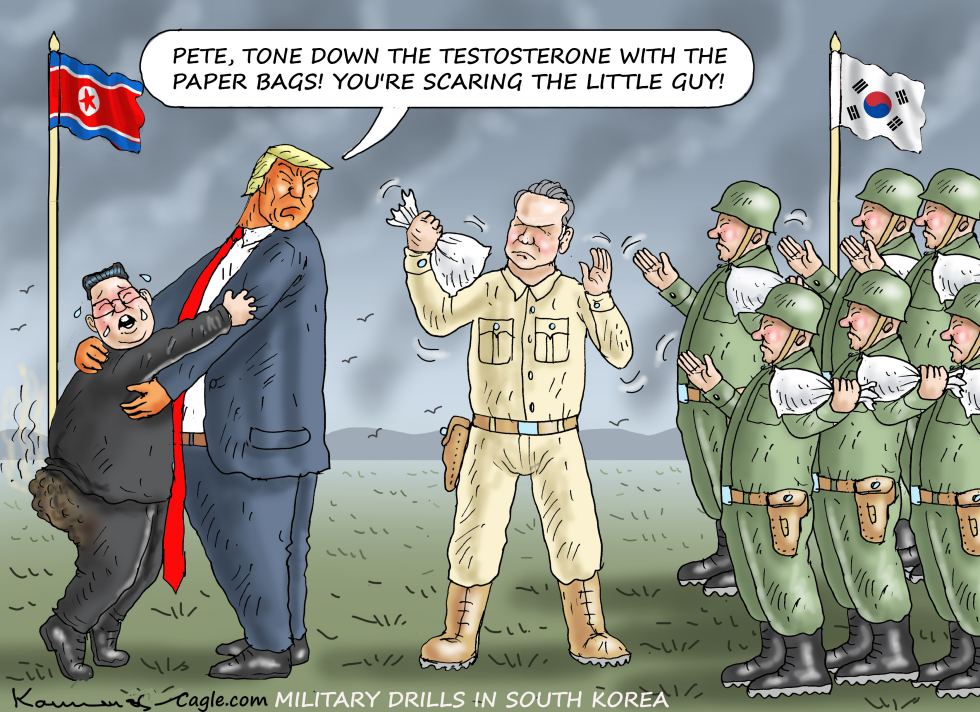
US and South Korean forces conducted joint military drills in mid-August 2026, prompting sharp North Korean protests over perceived threats. Donald Trump appeared at the scene restraining Kim Jong-un while a uniformed figure urged restraint with paper bags to calm the North Korean leader. The image frames the drills as overly provocative and mocks the testosterone-driven posturing on all sides.
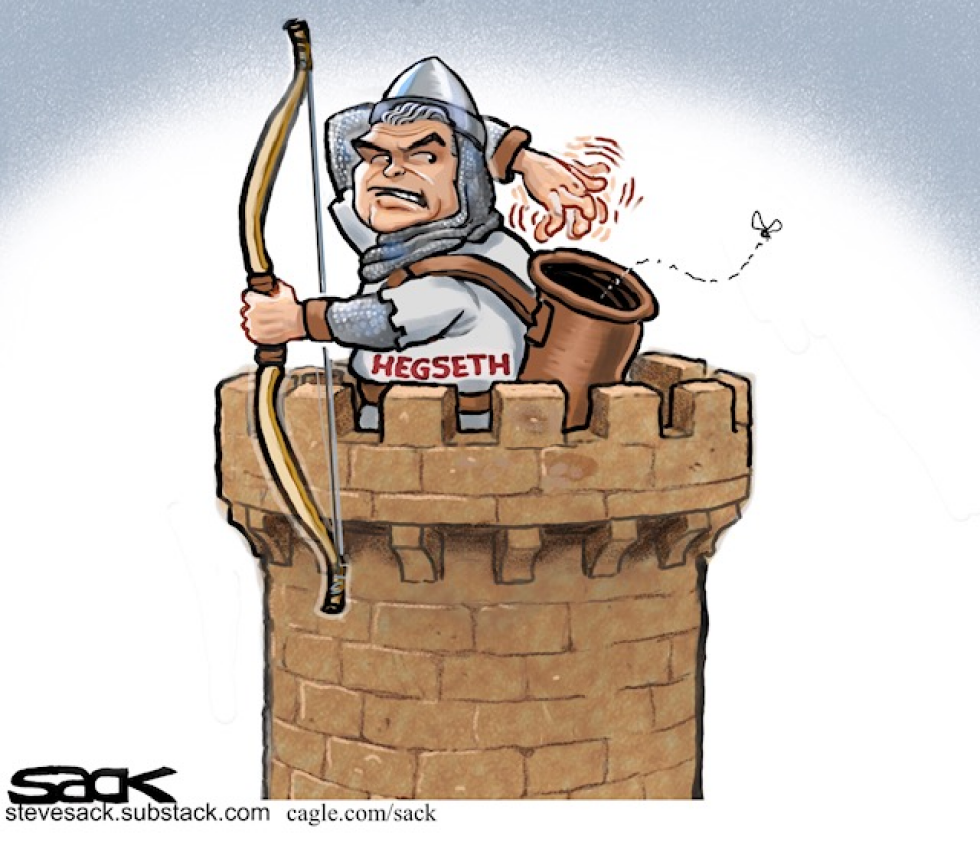
Pete Hegseth serves in a senior defense role under the current administration. Recent internal frictions have drawn attention to his position and decision-making. The piece portrays him as an archer under pressure from behind while attempting to maintain his post.
Pete Hegseth, positioned for a senior defense role, has drawn attention for emphasizing robust military capabilities and direct action. The approach signals a shift toward assertive posture in national security planning. The piece portrays this emphasis as centered on physical strength and munitions focus rather than broader strategy.
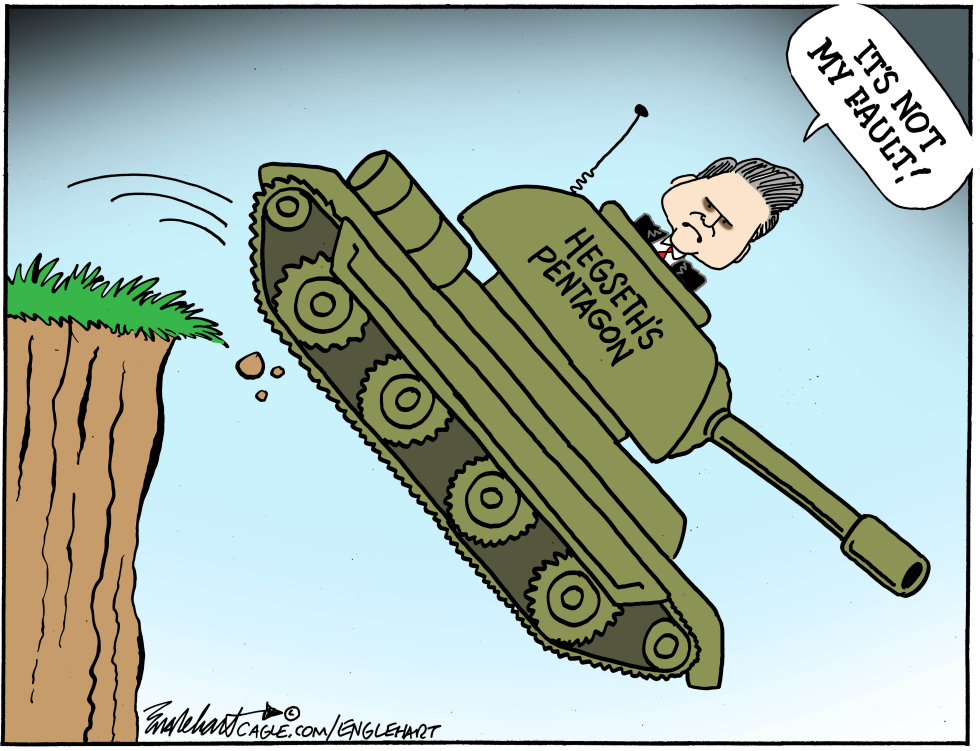
Pete Hegseth serves as Defense Secretary in 2026 amid ongoing questions about Pentagon management and readiness. The tank labeled with his name edges toward a cliff, reflecting institutional instability. The piece argues that leadership accountability remains absent despite visible risks to the department.