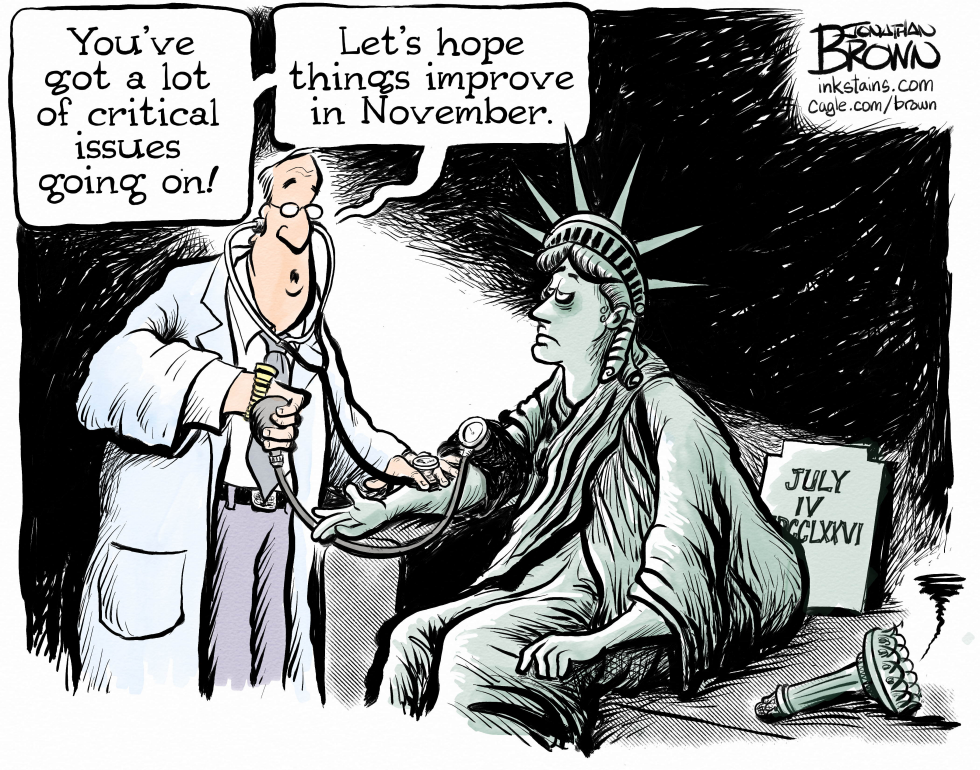
The cartoon depicts a doctor examining the Statue of Liberty's blood pressure and noting numerous critical issues. The Statue responds with hope that things will improve in November. A sign references July 4, 1776, and a broken torch rests on the ground. Published on September 15, 2026, the image uses the iconic figure to comment on the state of the nation ahead of upcoming elections. The visual metaphor highlights concerns about American institutions and public sentiment.
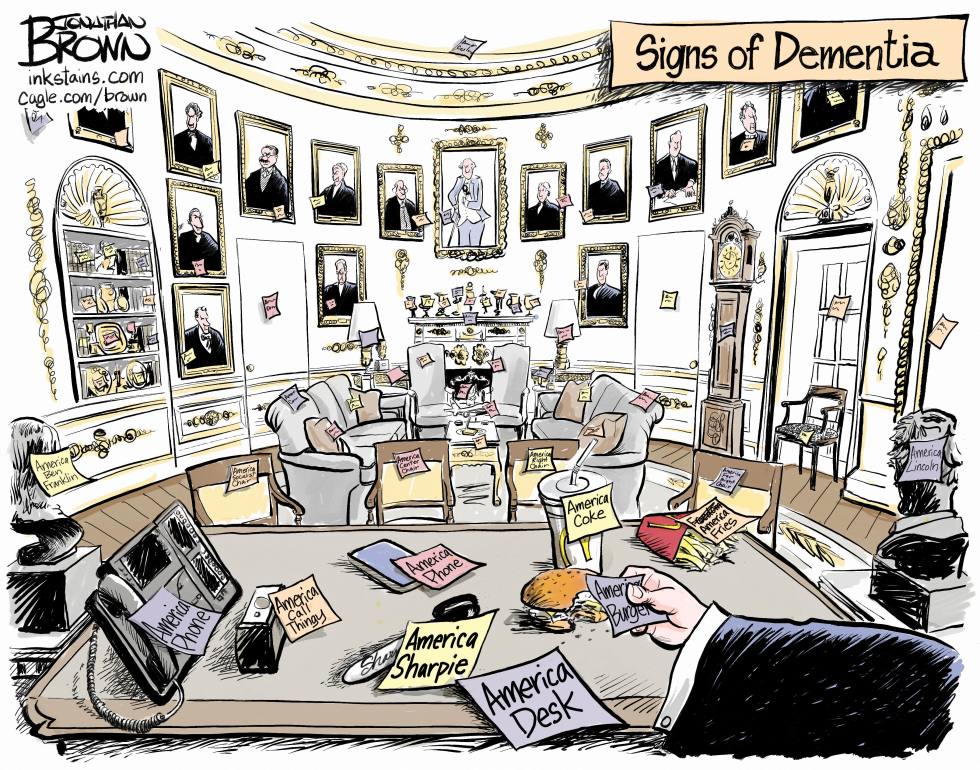
A new editorial cartoon depicts the Oval Office overrun with sticky notes labeling everyday items as America. The scene highlights signs of dementia through repeated branding on phones, desks, food and furniture. Published on September 9, 2026, the work comments on ongoing concerns about cognitive fitness in the presidency. The visual uses the familiar setting of the White House to underscore confusion and memory issues. Observers note the cartoon captures public debate over leadership capacity without naming specific individuals.
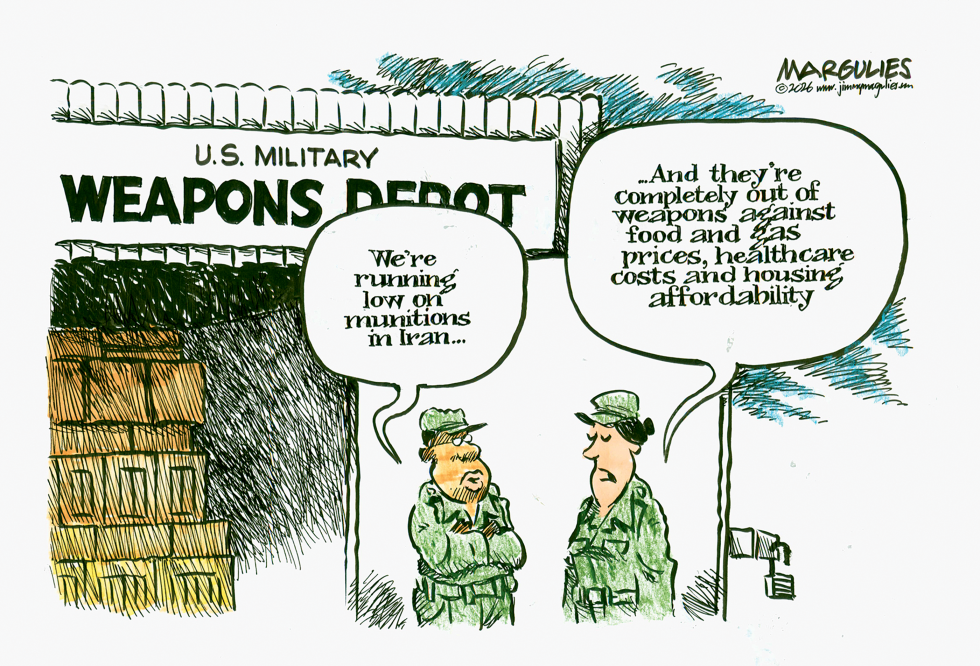
The cartoon depicts two U.S. soldiers outside a weapons depot labeled U.S. Military Weapons Depot. One soldier states the facility is running low on munitions in Iran. The second replies that domestic fronts are out of weapons against food and gas prices, healthcare costs and housing affordability. The image responds to ongoing debates over U.S. military aid commitments abroad and competing budget pressures at home as of the August 2026 publication date. It uses the depot setting and dialogue to contrast foreign military demands with economic challenges facing American households.
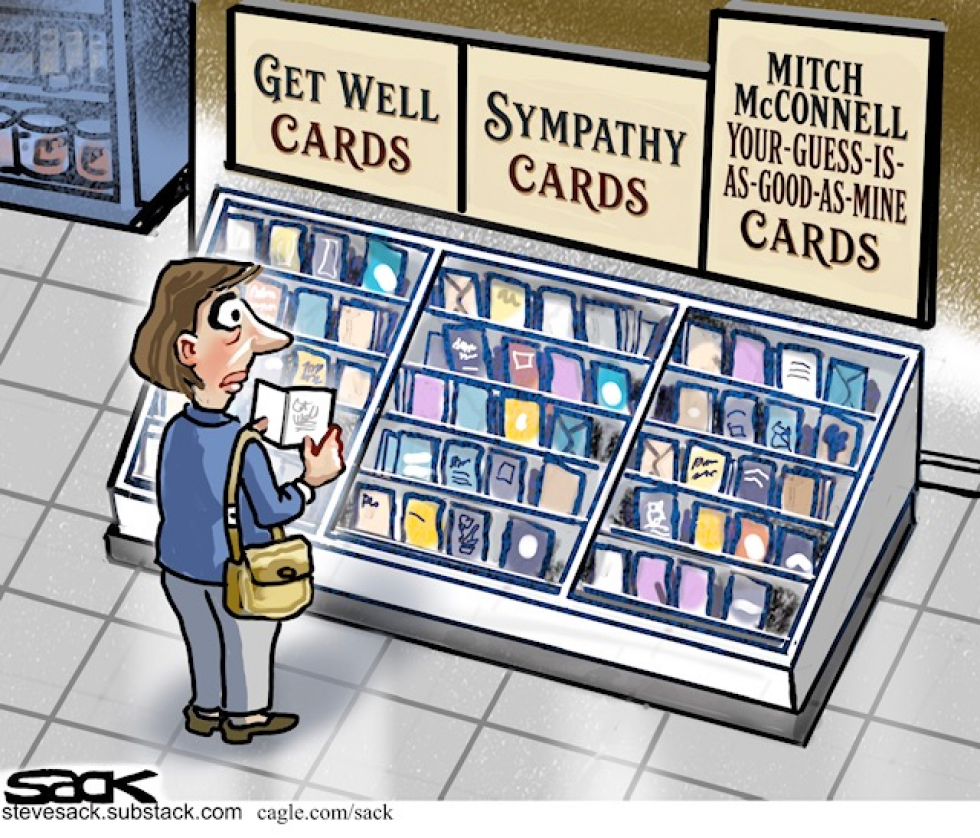
Questions about Mitch McConnell's health and future in Senate leadership have persisted into mid-2026. The Kentucky Republican has faced repeated absences and public episodes that fuel speculation about his capacity to continue. Colleagues in both parties watch closely because his position influences committee assignments and floor strategy. The uncertainty affects legislative timelines on appropriations and judicial matters. The piece argues that the situation leaves observers with little reliable information and treats the ambiguity itself as the central story.
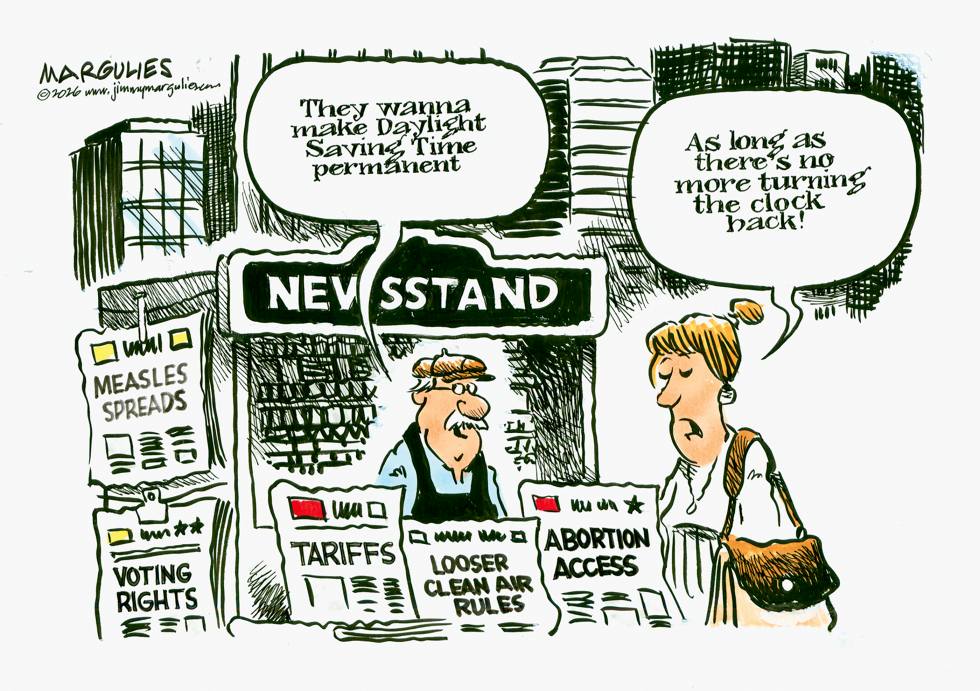
Proposals to make daylight saving time permanent coincide with debates over tariffs, abortion access, voting rights and environmental rules. The cartoon frames these as part of a broader pattern of policy shifts that some view as steps backward.
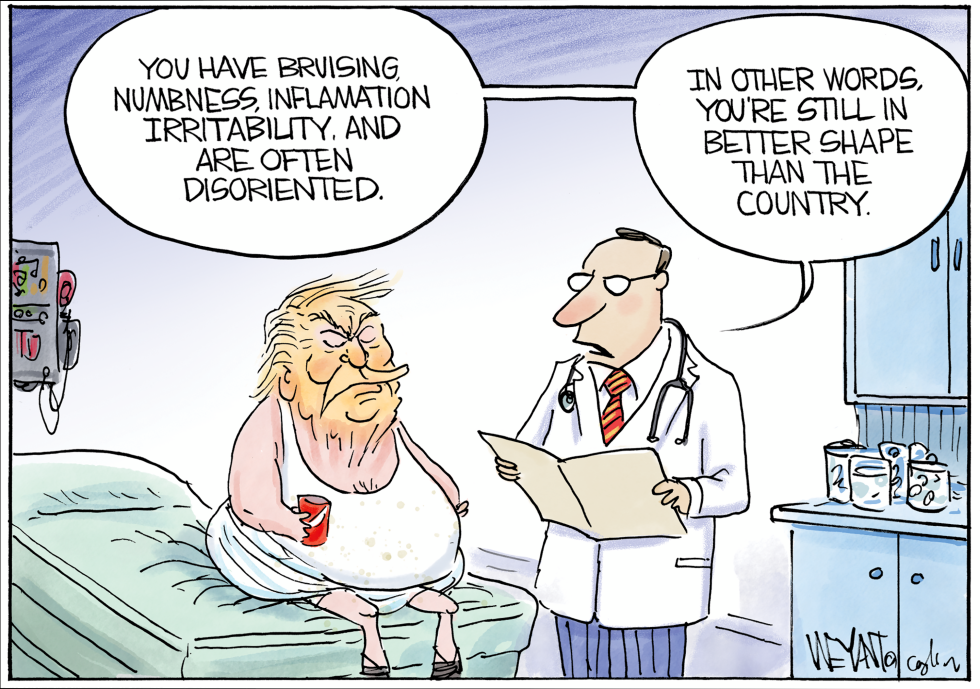
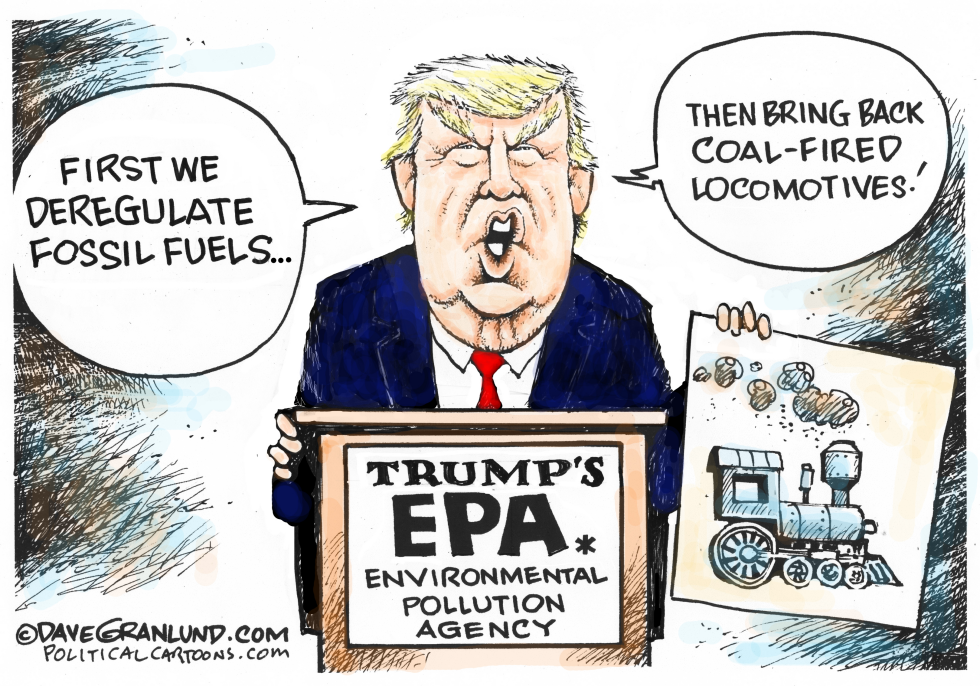
The image shows Donald Trump as a patient receiving a diagnosis of bruising, numbness, inflation, irritability and disorientation from a doctor. The response notes the patient remains in better shape than the country amid economic indicators like inflation and unemployment.
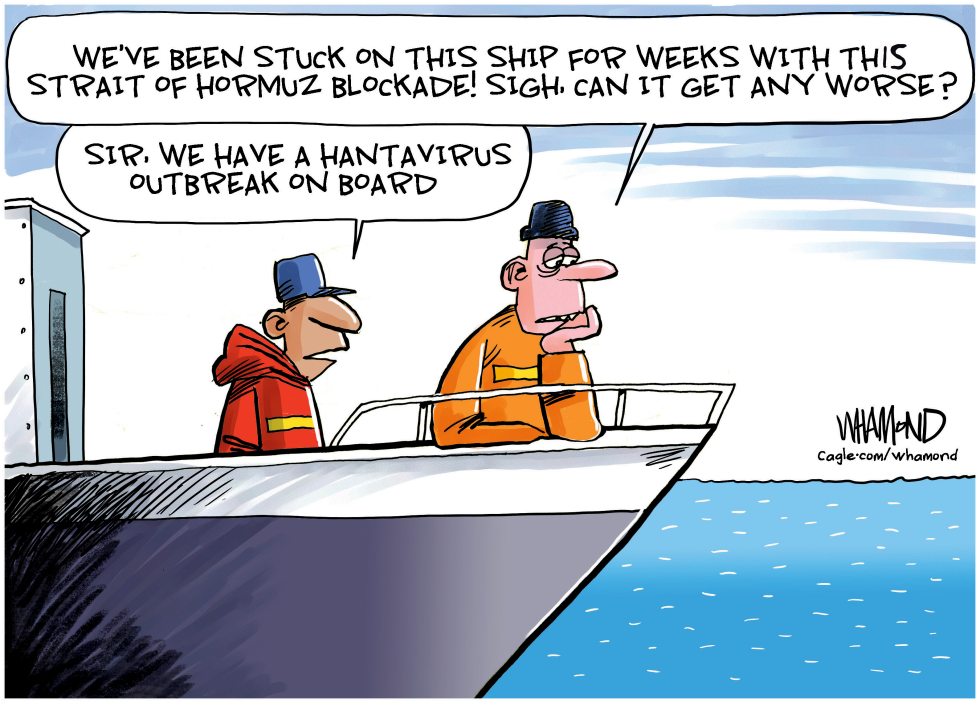
The cartoon depicts two sailors aboard a ship trapped in the Strait of Hormuz due to a naval blockade. One laments the weeks-long delay and wonders if conditions can worsen. The other reports a hantavirus outbreak on board. The image responds to ongoing tensions involving Iran and disruptions to global oil routes. As of the May 2026 publication date, the blockade has halted tanker traffic and strained energy markets. The added health crisis underscores the compounding risks for crews and supply chains. The visual ties geopolitical conflict directly to immediate human and economic consequences.
Monte Wolverton\'s cartoon depicts a doctor holding up an xray that reveals an intestine shaped like the Strait of Hormuz, complete with stars indicating blockages and inflammation. Trump peers over the top, his distinctive hair visible, as the doctor diagnoses intermittent blockages, polyps, and suggests consuming more fiber while cutting back on fast food. Tags like Iran War and blockade tie into the visual pun, turning a geopolitical chokepoint into a medical ailment. The piece uses dry humor to highlight discomfort in a straightforward way, with the xray\'s pinkish intestine contrasting against the black background. Artistic elements include the doctor\'s pointing finger and Trump\'s curious pose, emphasizing the satire without overcomplicating the scene.
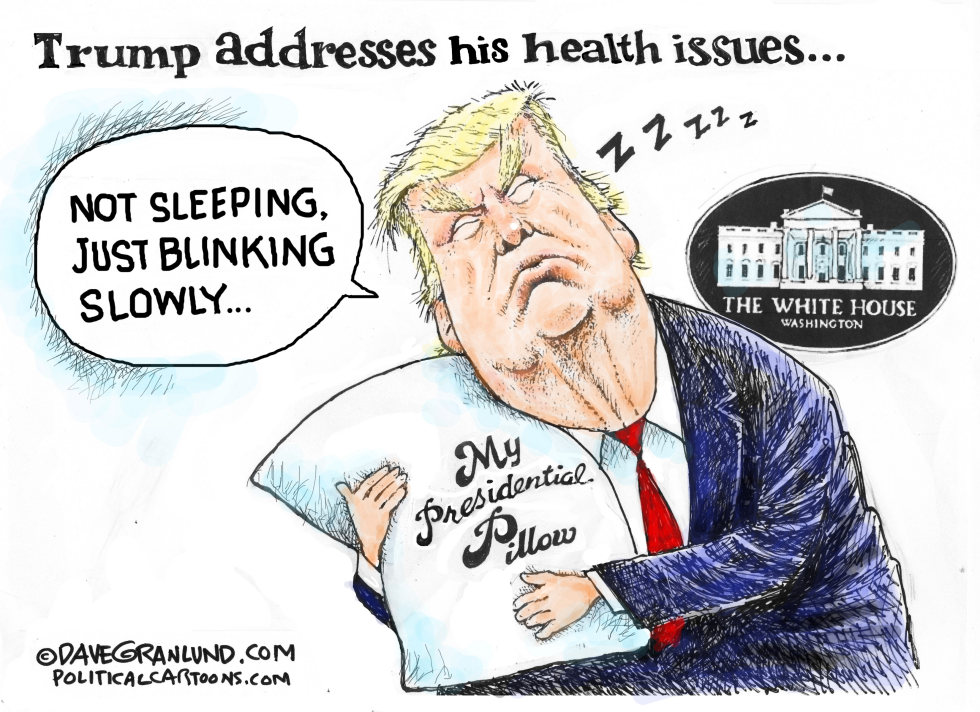
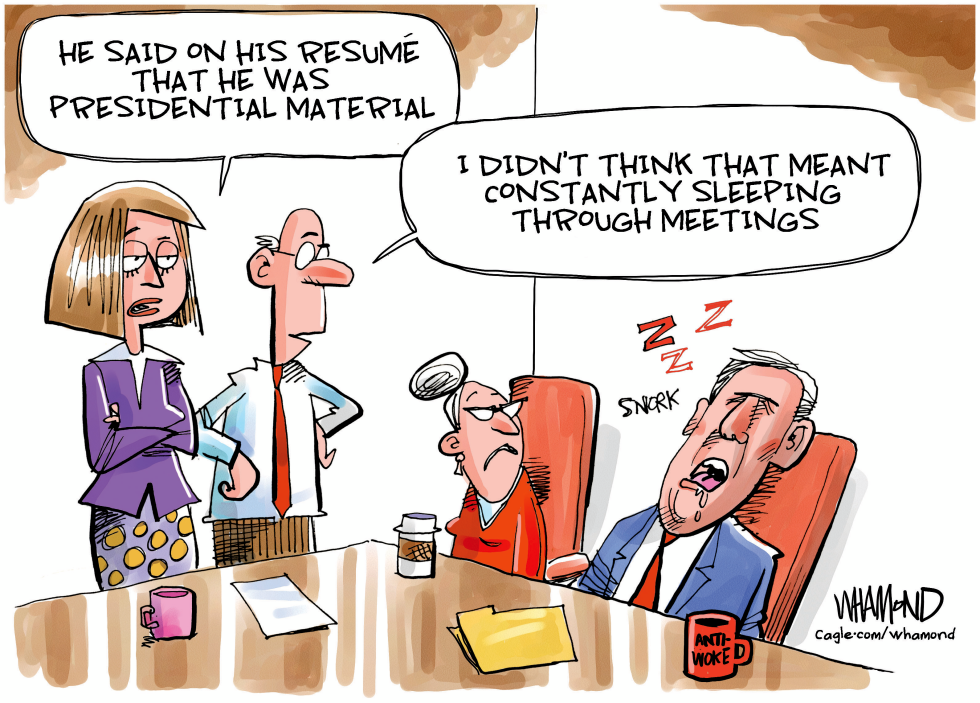
The cartoon depicts Donald Trump asleep in a meeting room chair with snoring sounds. Two staff members stand nearby commenting on his resume listing presidential material. The scene references ongoing questions about his energy and meeting attendance in late 2025.
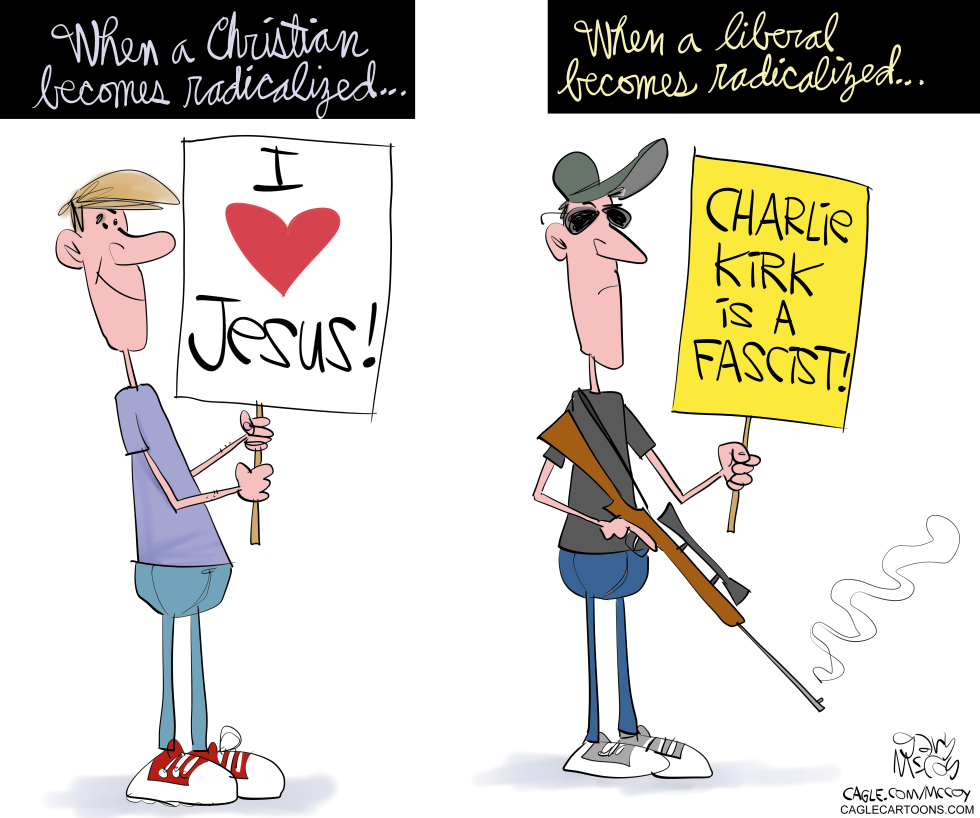
Gary McCoy's cartoon from 2025 divides the frame into two scenarios on radicalization. On the left, a figure in a cap holds a sign declaring 'I ♥ Jesus!' under the label 'When a Christian becomes radicalized...'. The right side shows a sunglasses-wearing man with a rifle emitting smoke, gripping a yellow sign that reads 'CHARLIE KIRK IS A FASCIST!' labeled 'When a liberal becomes radicalized.'. Tags like MAGA, Jesus, radicalized, Christian, liberal, Charlie Kirk, gun control, mental health, religion, Donald Trump, social media, and science frame the visual commentary. The piece highlights perceived disparities in how extremism manifests across ideological lines, with the Christian side shown as affectionate and the liberal as potentially violent.