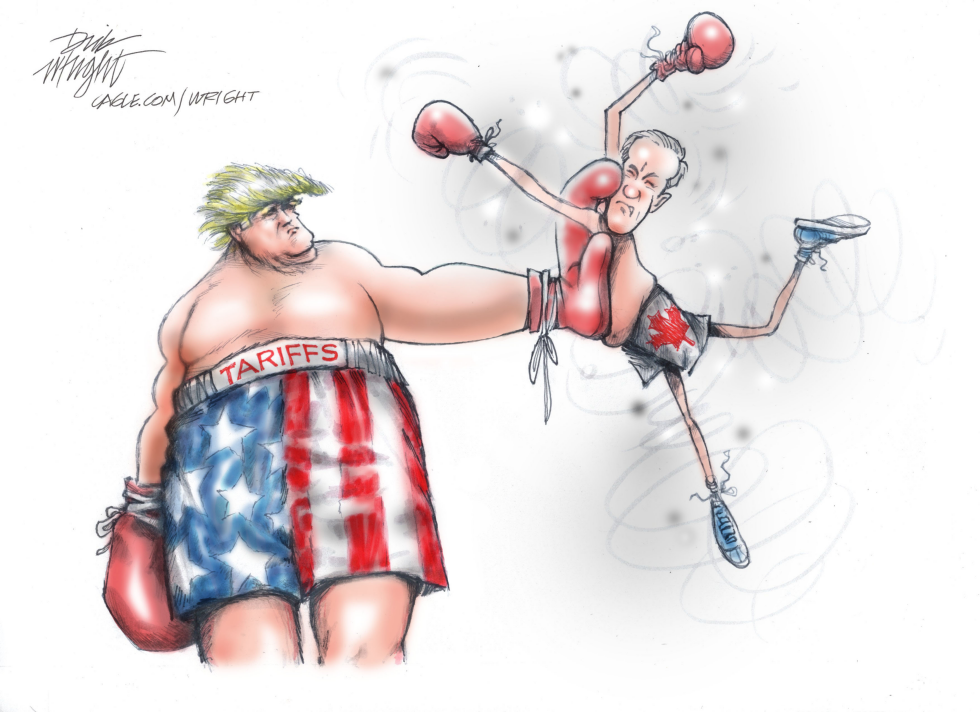
President Trump imposed new tariffs targeting Canadian goods in August 2026, escalating bilateral trade friction over lumber, dairy and autos. The measures aim to protect U.S. industries and renegotiate terms. Markets reacted with volatility in both countries. The editorial argues the tariffs represent necessary leverage that weakens Canada's position and forces concessions.
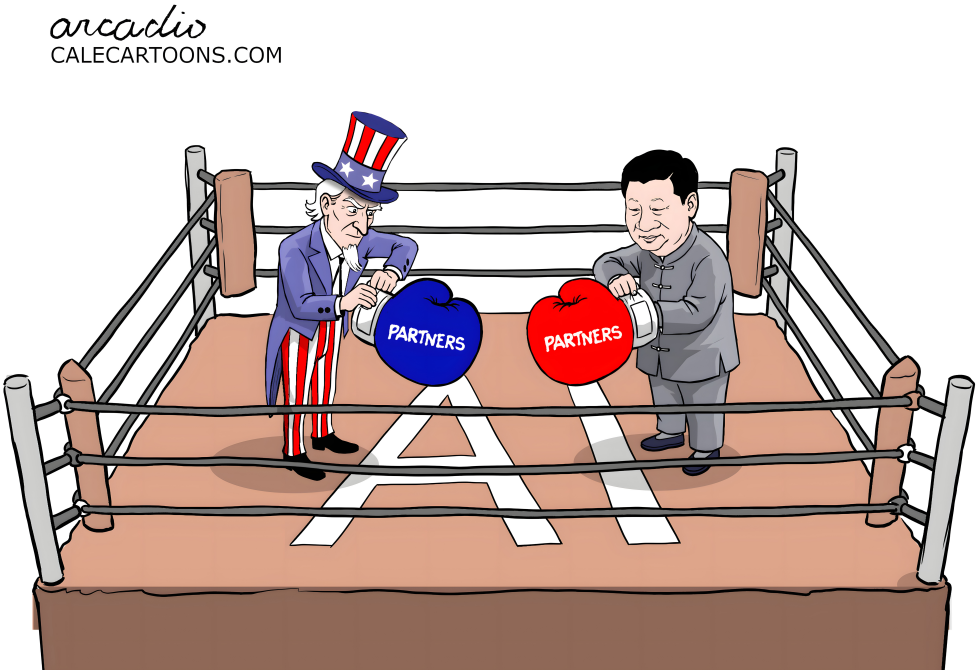
The United States and China continue their contest for leadership in artificial intelligence development. Both nations invest heavily in research and infrastructure to secure advantages in computing power and applications. The competition carries implications for economic growth, military capabilities, and global standards. Recent policy moves on export controls and domestic incentives underscore the stakes. The editorial position frames the dynamic as a direct contest where surface cooperation masks deeper rivalry.
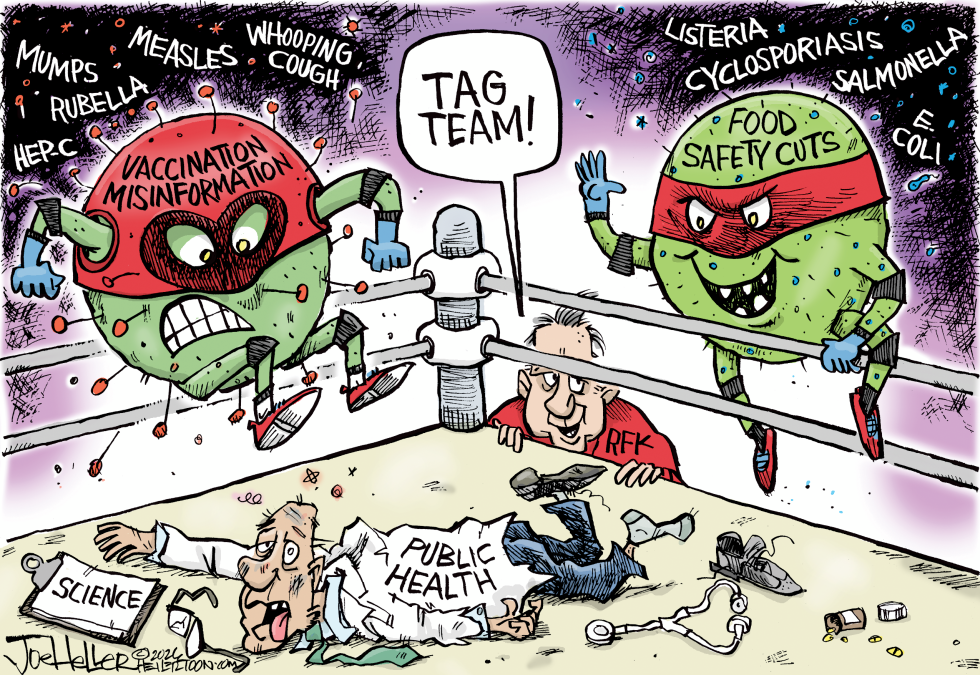
Robert F. Kennedy Jr., serving as a senior health official in 2026, has promoted vaccine skepticism and supported reductions in food safety oversight. These positions coincide with rising cases of preventable diseases and foodborne illnesses. The developments raise concerns about weakened federal protections for public health. The cartoon depicts these elements as a coordinated assault that leaves core safeguards defeated.
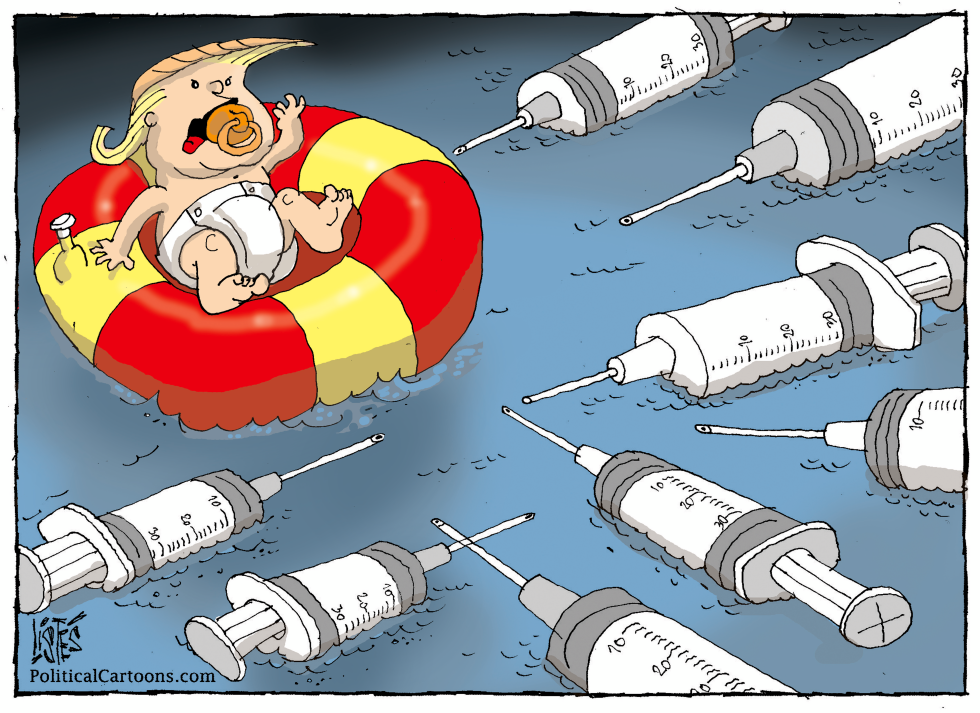
Donald Trump has maintained vocal opposition to certain vaccine mandates and public health measures in recent political discourse. The piece frames this stance through an infant metaphor to underscore perceived vulnerability and fear. It critiques the position as immature amid ongoing public health debates.
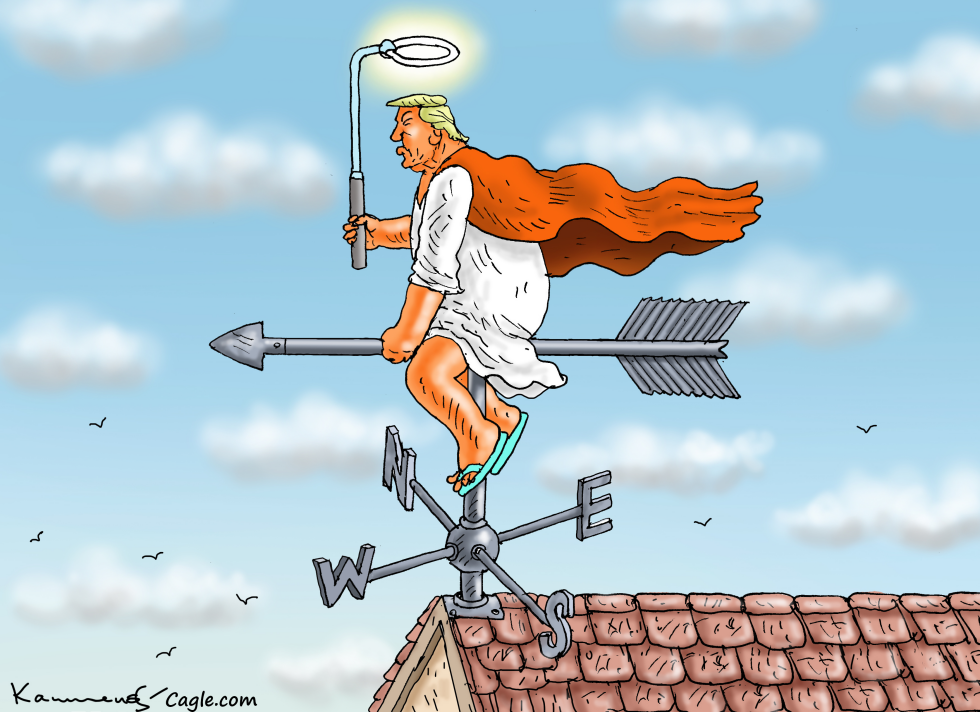
Donald Trump appears in public commentary as a changeable political presence. The depiction places the former president on a rooftop weather vane, suggesting ongoing shifts in position or influence. No single recent policy action or vote anchors the image. The visual argument frames Trump as responsive to prevailing directions rather than fixed in stance. This reflects broader debates over consistency in leadership and public perception of adaptability.
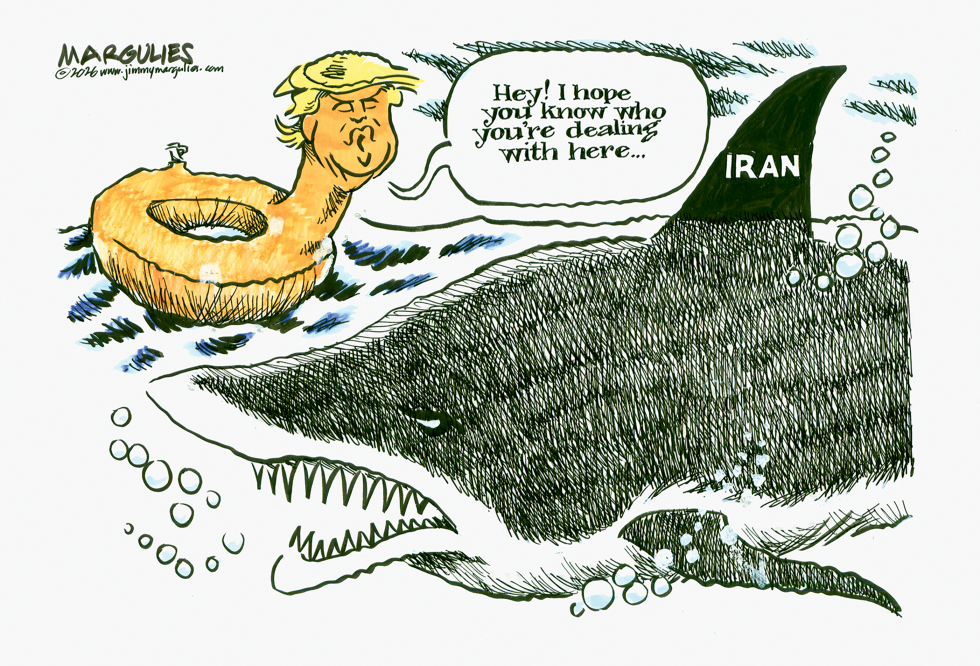
On July 10 2026 Jimmy Margulies depicts Donald Trump floating in an inflatable ring while confronting a large shark fin labeled Iran. The president issues a direct warning through a speech bubble asserting his identity and authority in the confrontation.
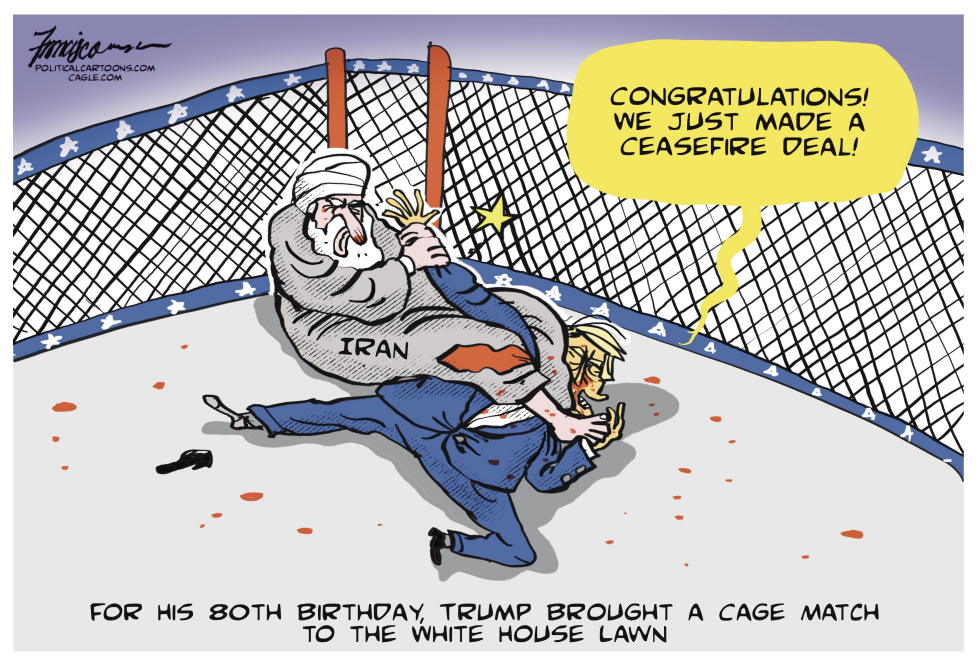
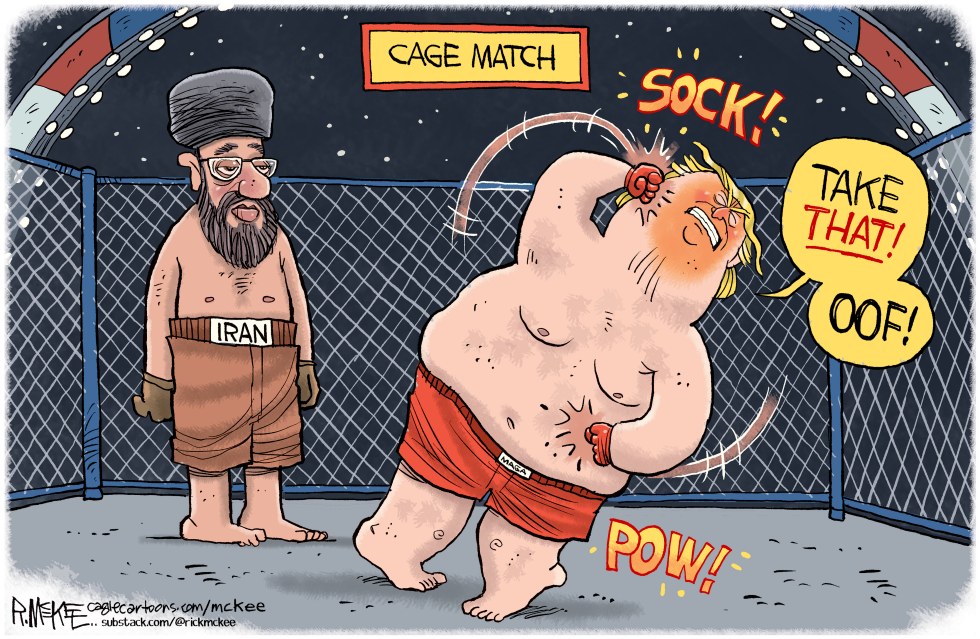
A cage match between the United States and Iran over a potential ceasefire deal has drawn attention amid ongoing Middle East tensions. The confrontation highlights the high stakes of direct engagement between the two nations. The piece portrays the encounter as a chaotic personal brawl rather than a measured diplomatic effort.
A political cartoon published June 12, 2026, portrays a cage match between a caricature of Donald Trump labeled America and a figure labeled Iran. Trump appears to be on the receiving end of punches with onomatopoeic sound effects. The image uses the fighting ring setting to illustrate the confrontational nature of relations between the United States and Iran during this period.
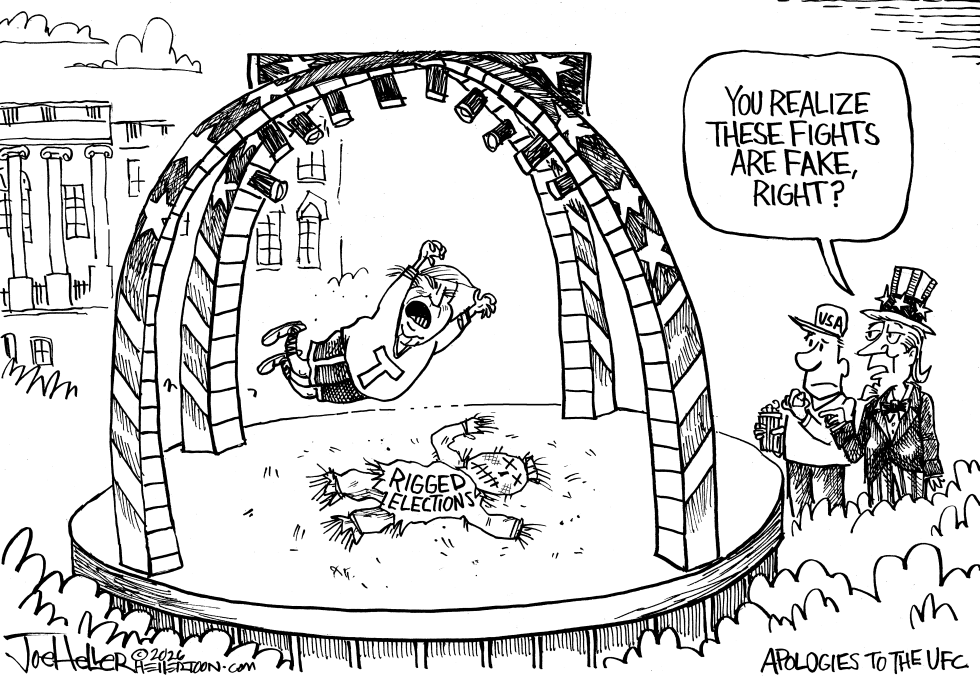
A wrestling ring scene shows a Trump figure thrown onto a mat labeled rigged elections while Uncle Sam remarks that the fights are fake. The image responds to ongoing 2026 election integrity debates with a direct visual comparison to staged matches.
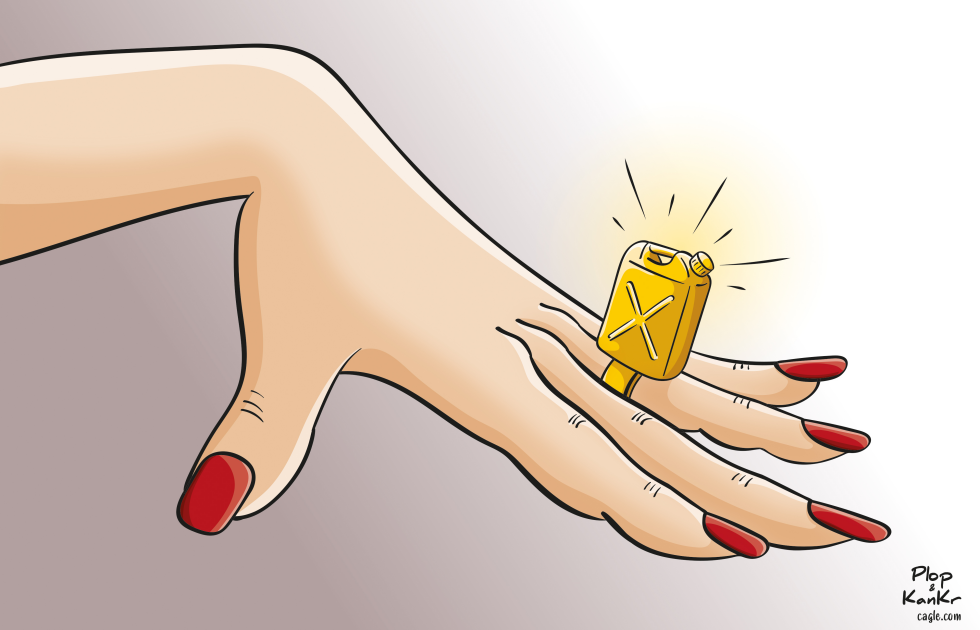
The cartoon shows a hand extended, wearing a ring shaped like a yellow gas can with an X, sparkling as if it's a precious diamond. Red nails add a touch of glamour to the scene against a plain background. This straightforward image pokes fun at oil prices skyrocketing, turning everyday fuel into something as valuable as jewelry. Tags like fuel luxury, energy satire, gasoline bling, petroleum parody, high costs humor, and economic pun capture the dry wit here. Cartoonists Plop and KanKr keep it simple, letting the visual speak without overcomplicating the message. It's a classic setup for editorial pages, reminding readers how energy crises make basics feel extravagant.
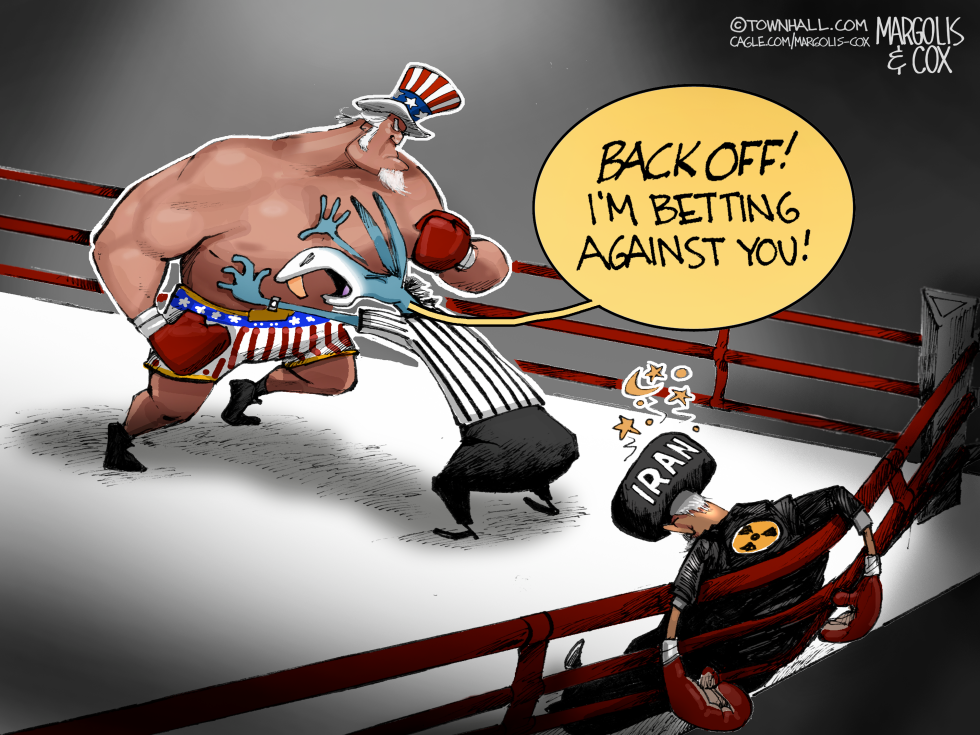
The cartoon depicts a boxing ring where Uncle Sam, wearing a top hat and patriotic shorts, advances aggressively, punching a referee in striped shirt who clutches a white dove. The referee's arm extends to halt the fight, but Uncle Sam shouts 'BACK OFF! I'M BETTING AGAINST YOU!' Meanwhile, the opponent, labeled 'Iran' with a nuclear symbol on his back, sprawls knocked out on the canvas. Stars indicate the impact. This setup uses boxing metaphor to satirize US foreign policy toward Iran, portraying America as betting against peace interventions, possibly represented by the dove-bearing referee. The artwork by Margolis & Cox captures tensions with dry humor, emphasizing unchecked aggression in international relations.