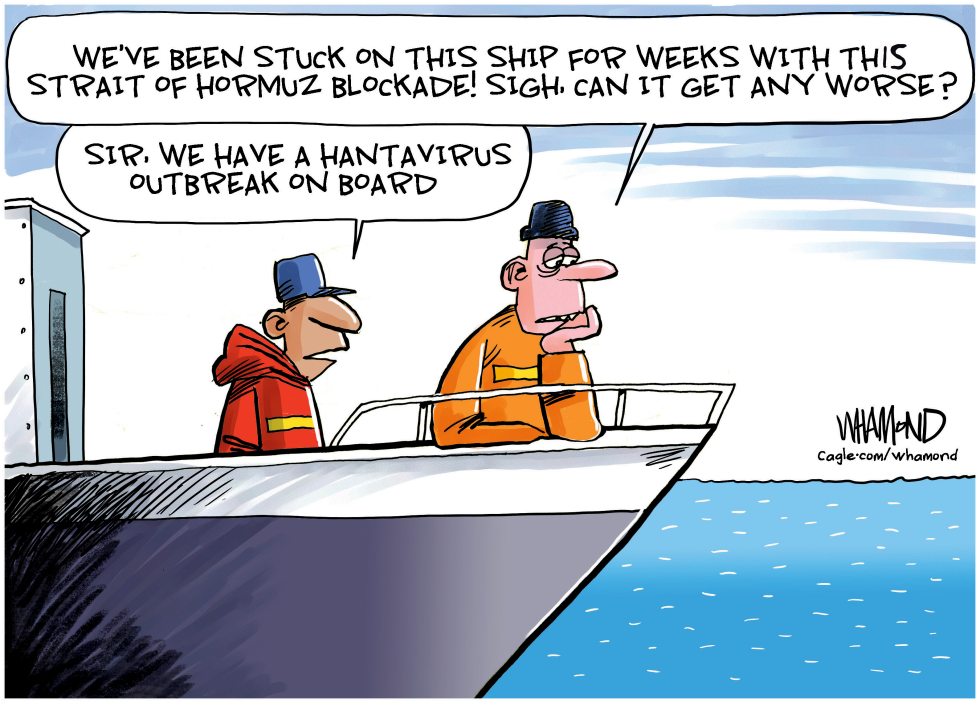
The cartoon depicts two sailors aboard a ship trapped in the Strait of Hormuz due to a naval blockade. One laments the weeks-long delay and wonders if conditions can worsen. The other reports a hantavirus outbreak on board. The image responds to ongoing tensions involving Iran and disruptions to global oil routes. As of the May 2026 publication date, the blockade has halted tanker traffic and strained energy markets. The added health crisis underscores the compounding risks for crews and supply chains. The visual ties geopolitical conflict directly to immediate human and economic consequences.
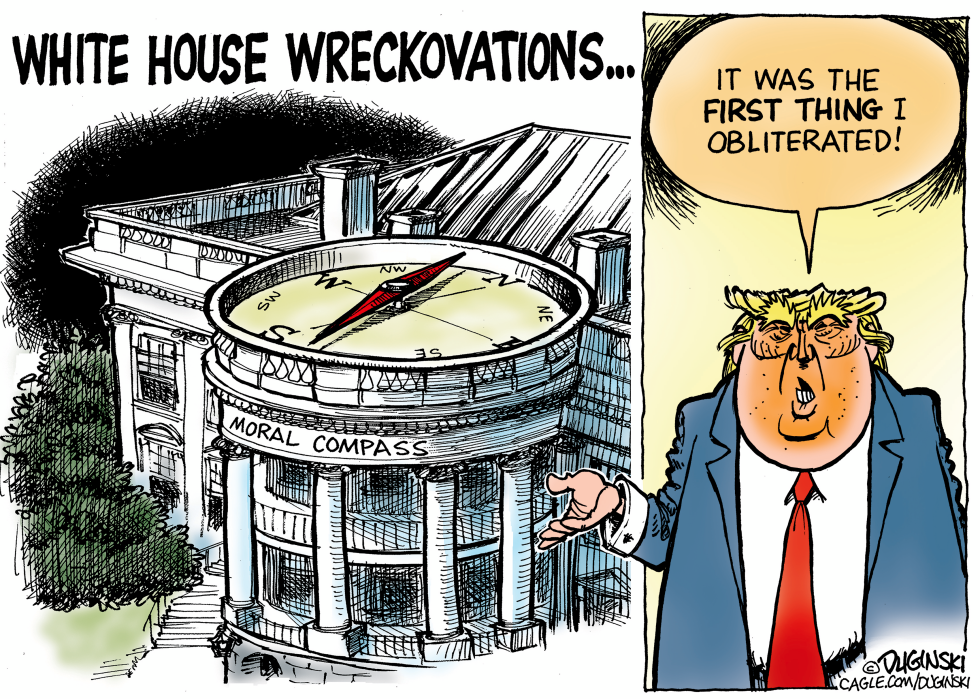
Paul Duginski's cartoon shows a caricatured Trump gesturing proudly while speaking about obliterating the moral compass, a large dome-like structure labeled 'Moral Compass' with directional arrows, placed on the White House roof. The title 'White House Wreckovations' plays on renovations, suggesting destructive changes. Tags including president, MAGA, White House, demolition, morality, ethics, obliteration, Republicans, and Iran war frame the image as a critique of ethical standards in politics. The scene captures a dark night setting with part of the building and trees visible, emphasizing the theme of moral destruction in Washington.
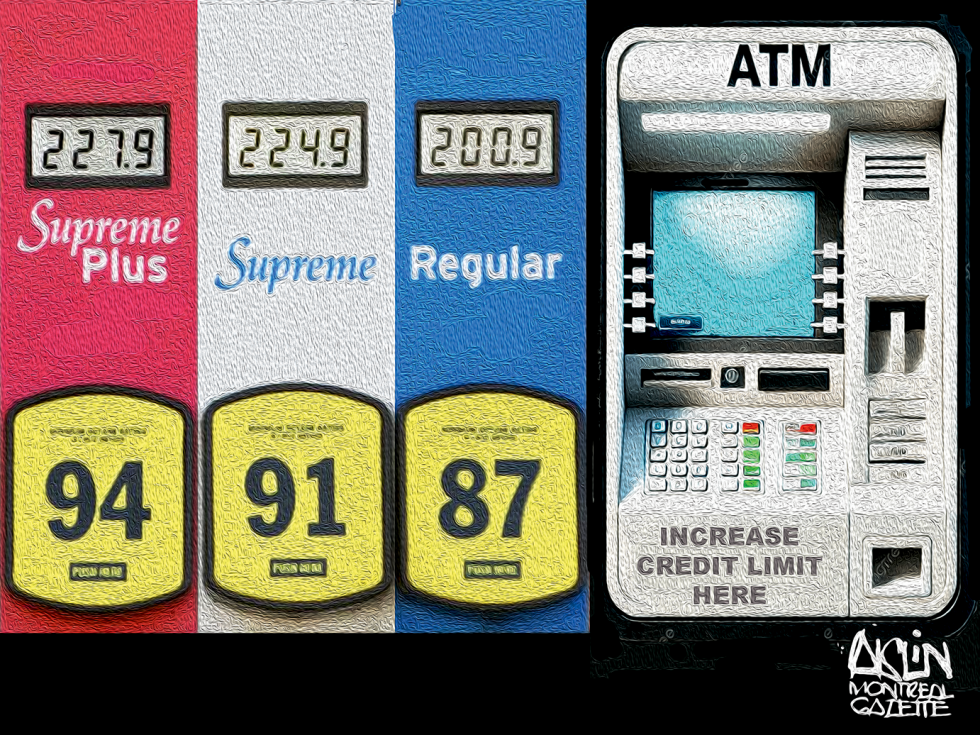
The cartoon shows a gas pump price board with supreme plus at 2.279 per gallon and 94 octane, supreme at 2.249 with 91 octane, and regular at 2.009 with 87 octane. Next to it sits an ATM labeled to increase credit limit here, poking at high gas prices and the economy's push toward more credit. Tags like gas, prices, cost, economy, credit, and pump underline the visual joke on affording fuel through debt. This setup captures the frustration with rising fuel costs without words, relying on the absurdity of blending a gas pump with credit services. Cartoonists often use such direct imagery to comment on everyday economic strains.
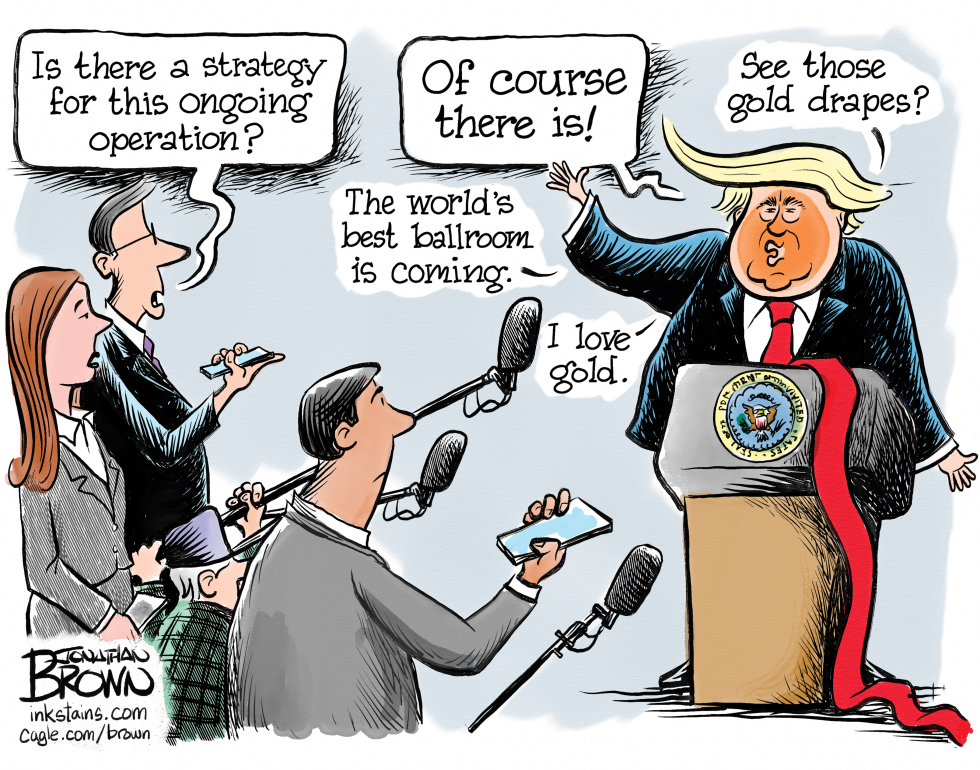
Jonathan Brown's cartoon captures a press conference scene where a figure resembling Trump stands at a podium with a presidential seal, gesturing toward imagined gold drapes. Reporters ask about strategy for an ongoing operation, likely tied to tags like War in Iran and Iran War. The response shifts focus to a coming ballroom, emphasizing love for gold in a White House setting. This satirical piece uses dry humor to point out misplaced priorities in strategy discussions. The artwork features exaggerated features and speech bubbles, common in political cartoons, poking fun at leadership styles amid tags like Strategy and Ballroom.
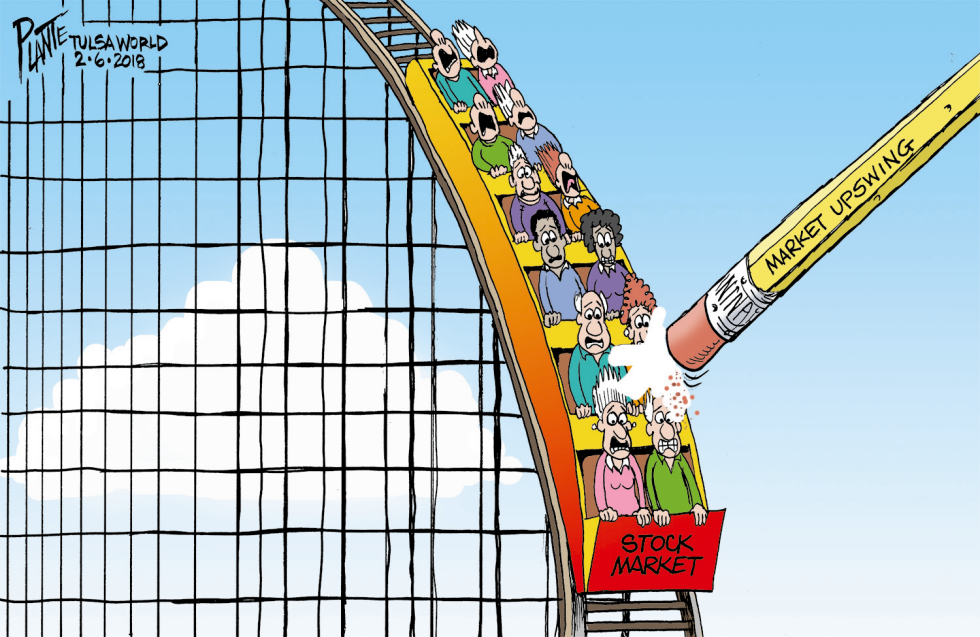
Bruce Plante's 2018 cartoon captures the stock market's wild ride on a roller coaster plunging steeply, with passengers in panic. A giant pencil labeled 'market upswing' erases the upward track, highlighting Wall Street volatility and the erasure of gains. Tags like stock market, roller coaster, Wall Street, stock-market-2018, market upswing, and investor fear underscore the satire on financial instability. The image uses simple lines and exaggerated expressions to convey the terror of sudden downturns, a common theme in economic cartoons that resonates with audiences watching their portfolios tumble.
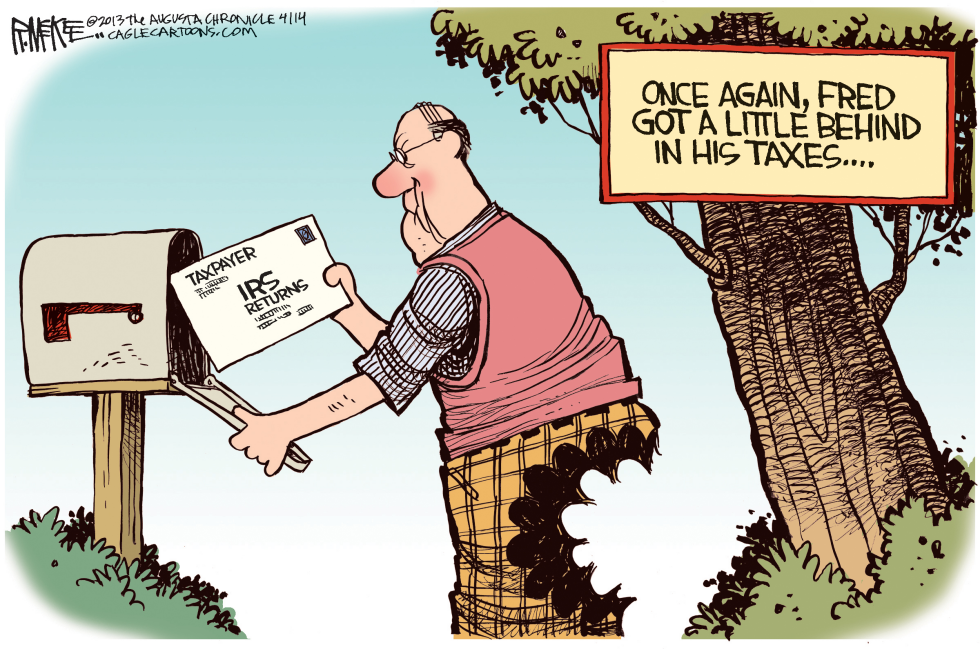
Rick McKee's 2013 cartoon captures the essence of tax day woes with a man named Fred mailing his IRS return while a large bite is taken out of his plaid pants, exposing his behind. The sign on the tree reads that Fred once again got a little behind in his taxes, playing on the pun of being late with payments and the visual bite. Tags like taxes, tax day, April 15, IRS, bite, government, and behind underscore the satirical take on taxpayer burdens. The image keeps it light with dry humor, showing the mailbox labeled for taxpayer returns amid a simple outdoor scene. Such cartoons resonate with audiences feeling the annual sting of filing deadlines.