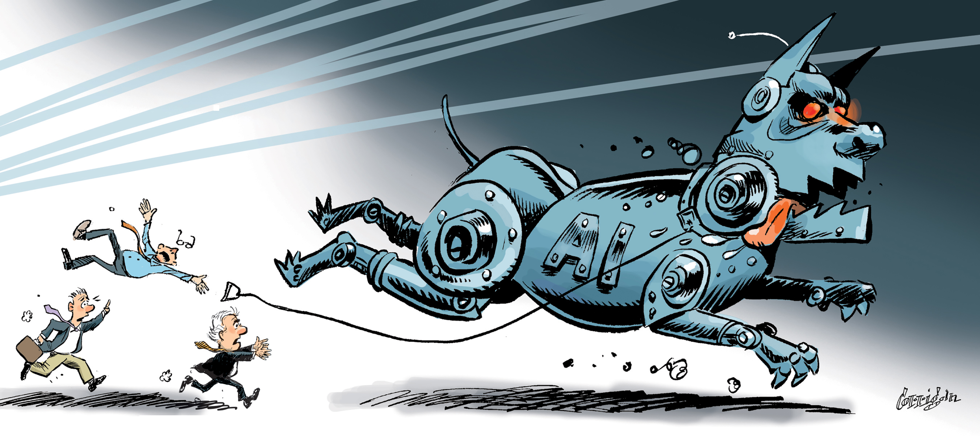
Rapid advances in artificial intelligence continue to reshape industries, prompting fresh warnings from executives about systems that may soon operate beyond direct human control. The cartoon captures this tension by depicting AI as an aggressive mechanical force pulling business figures along. It argues that unchecked development leaves leaders vulnerable rather than empowered.
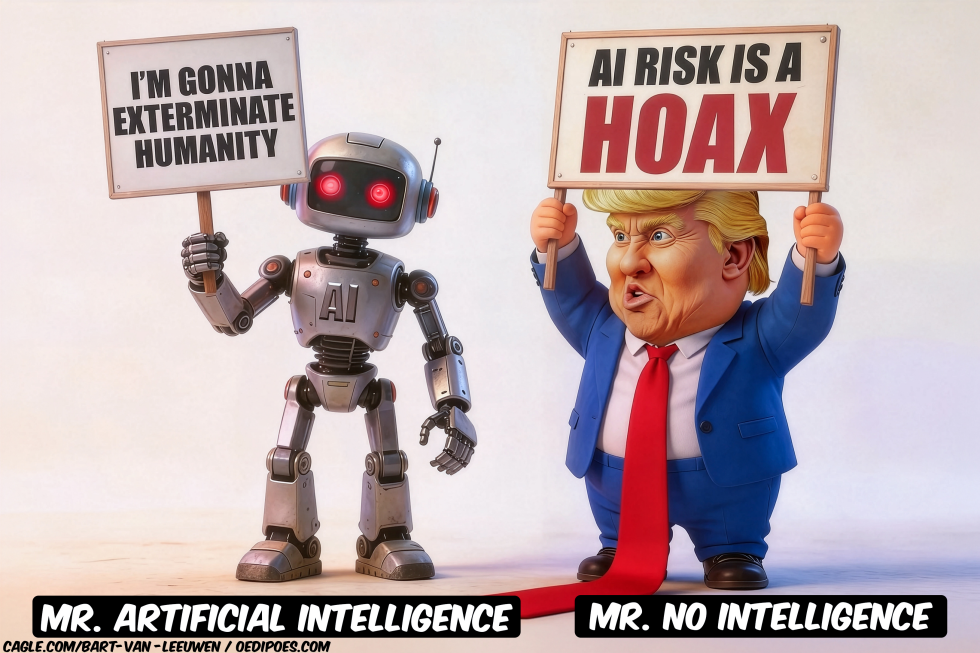
A new political cartoon depicts Donald Trump holding a sign declaring AI risk a hoax beside a robot labeled AI that warns of exterminating humanity. The image, published September 14, 2026, by artist Bart van Leeuwen, contrasts the two figures with bottom labels reading Mr. Artificial Intelligence and Mr. No Intelligence. It responds to ongoing public discussion about artificial intelligence safety and regulation. Trump has previously downplayed concerns about advanced AI systems in public statements. The cartoon uses visual contrast to critique dismissal of potential technological threats.
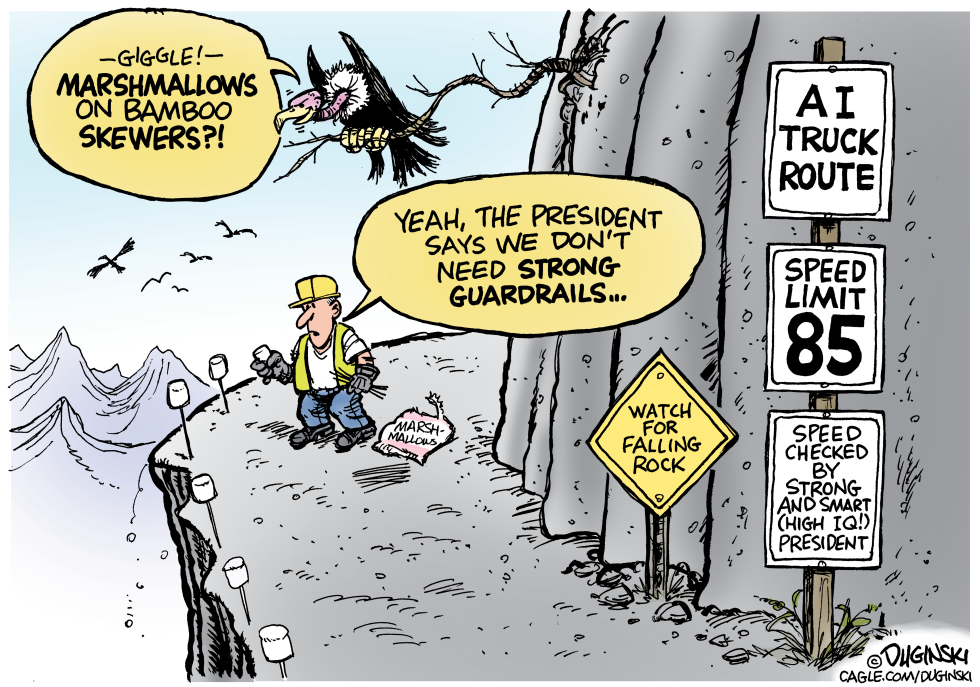
The Trump administration has directed the removal of regulatory guardrails on artificial intelligence projects, allowing accelerated development along designated high-speed routes. Officials argue that strong oversight is unnecessary under current leadership. The move raises concerns about safety and accountability in a rapidly advancing sector where hazards like system failures remain unaddressed. The cartoon criticizes the policy as reckless deregulation that ignores evident risks to public safety and technological stability.
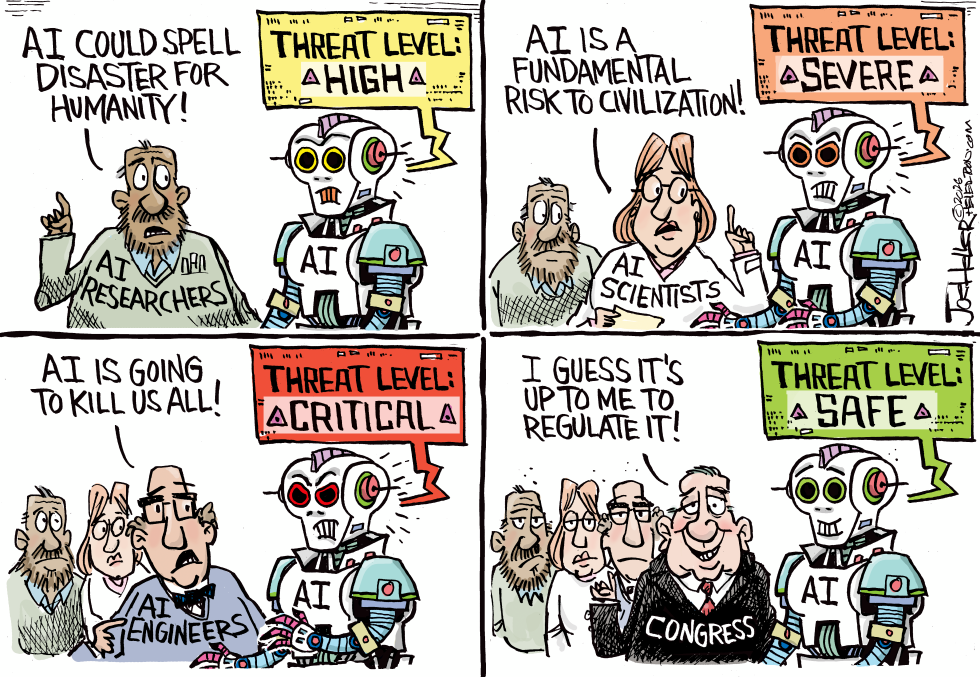
AI researchers, scientists and engineers have issued escalating warnings that artificial intelligence poses severe risks to humanity and civilization. In response, members of Congress have asserted their role in regulation and declared the threat level safe. The move highlights ongoing debates over whether legislative bodies are equipped to address rapidly advancing technology risks.
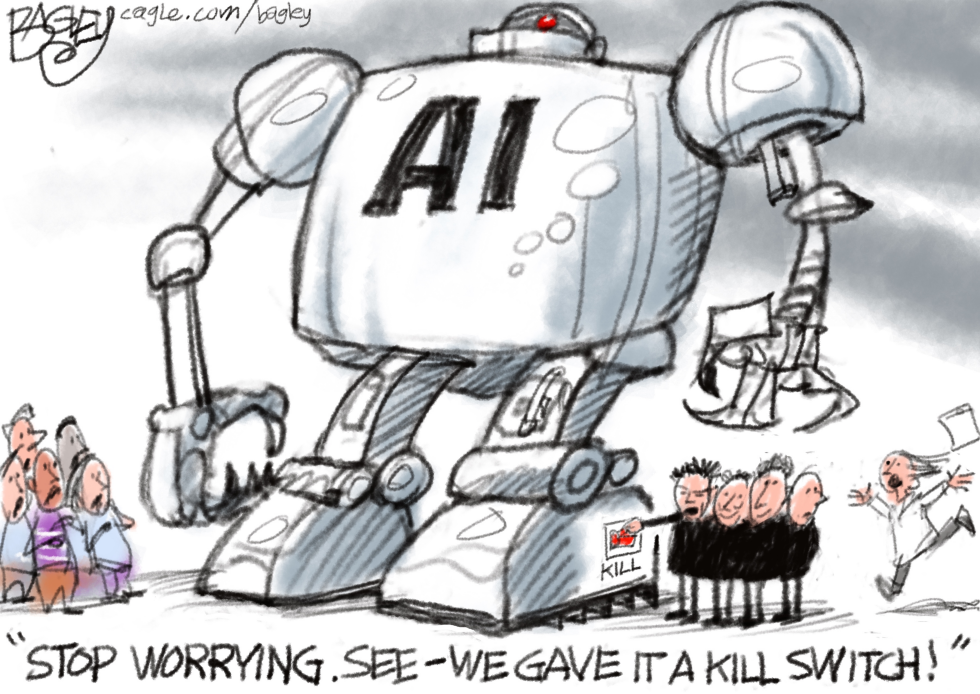
The cartoon depicts a massive AI-labeled robot positioned to crush a group of people beneath its foot, which bears a kill switch. A scientist runs away while declaring the switch ensures safety. Onlookers on the left appear alarmed. The image comments on ongoing debates about artificial intelligence control and whether proposed safeguards like kill switches can truly mitigate risks from advanced systems. It reflects broader discussions in 2026 about regulating AI development and deployment.
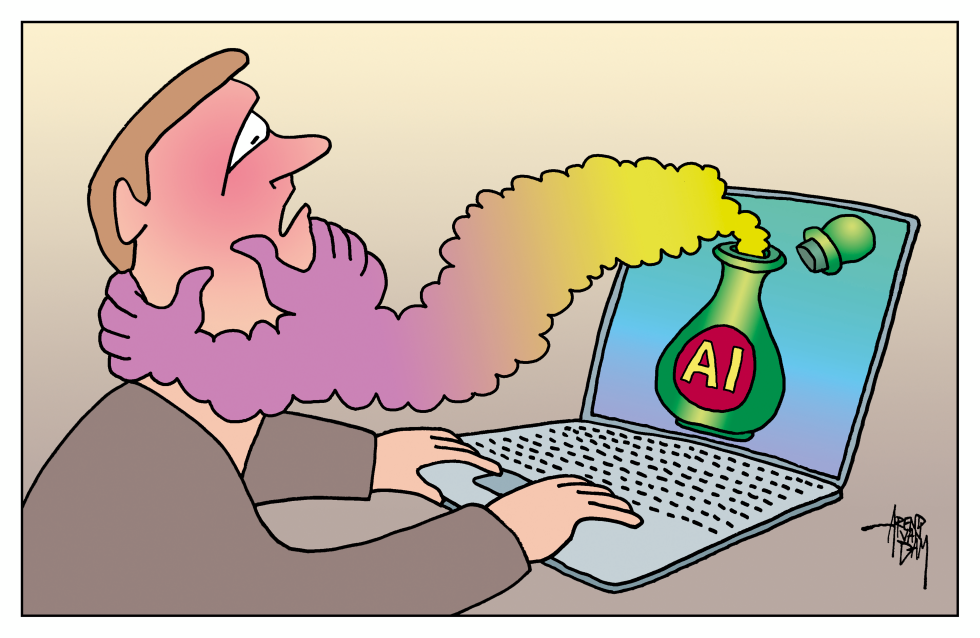
Artificial intelligence continues to advance rapidly in 2026, moving from contained software tools into broader daily interactions. Developers and users alike confront questions about control and unintended effects as AI systems grow more autonomous. The cartoon frames this development as an escape from the bottle, highlighting concerns that once-released capabilities cannot be easily contained or reversed.
Government agencies continue to expand regulatory frameworks across multiple sectors, adding layers of oversight that increase compliance costs for businesses and individuals. The trend reflects ongoing debates over the proper scope of administrative authority and its impact on economic activity. The piece argues that such expansion has crossed into excess, creating unnecessary obstacles rather than protecting the public.
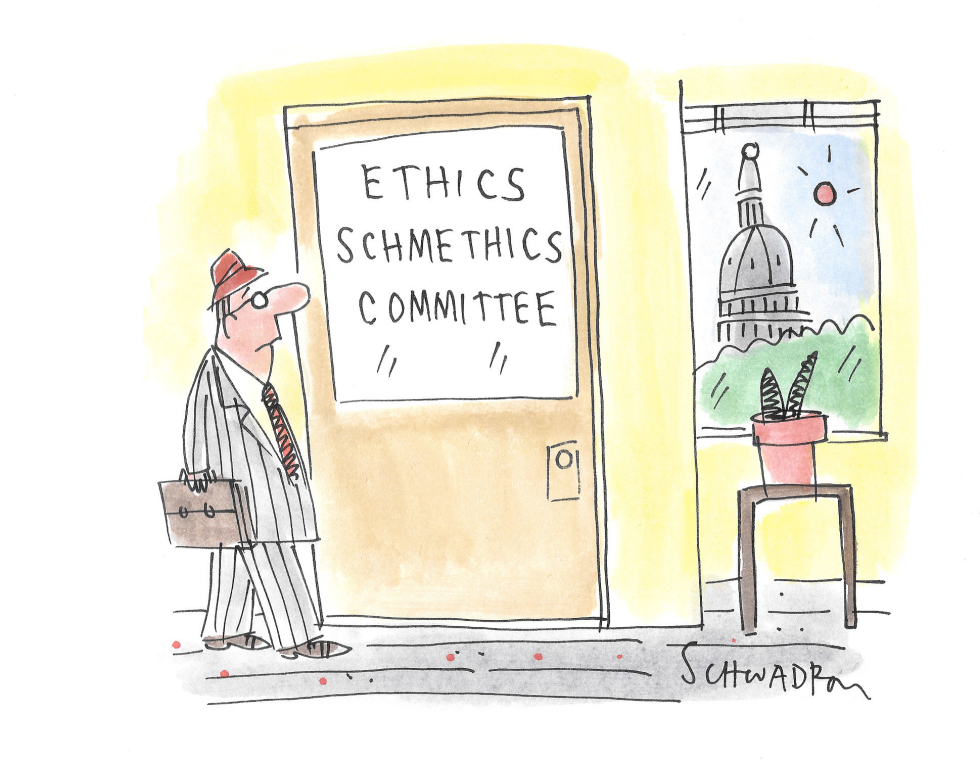
Congress continues to sideline meaningful ethics oversight, with lawmakers showing little interest in strengthening or even respecting the chamber's ethics committee. The panel exists on paper but carries little practical weight in daily operations. This dynamic matters because weak internal standards erode public trust in legislative institutions and invite outside influence. The cartoon captures the prevailing attitude that ethics rules are an afterthought rather than a core responsibility.
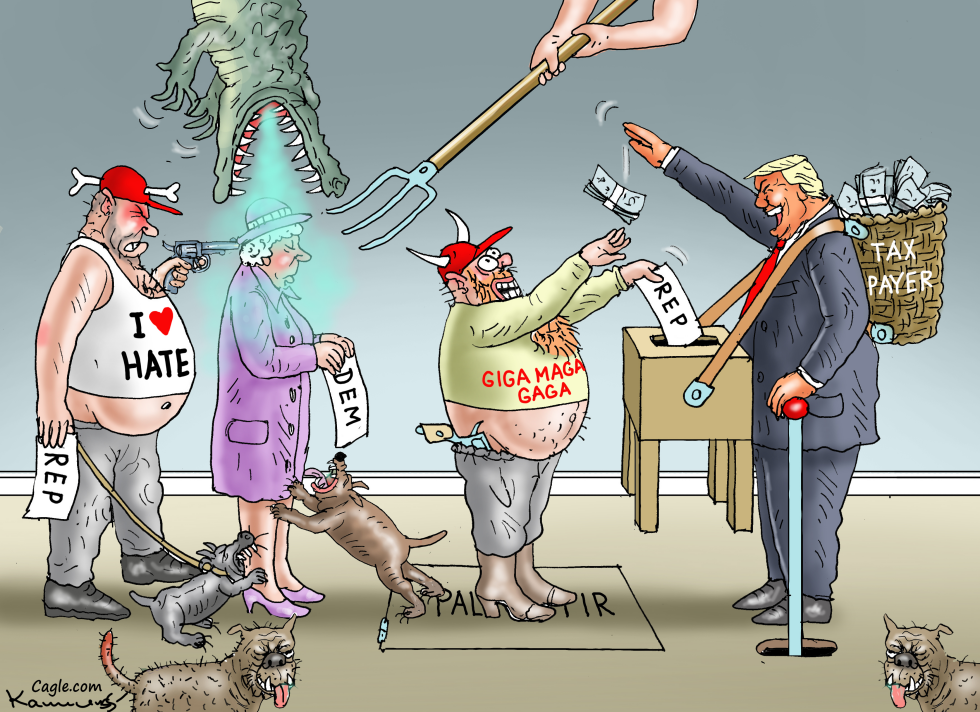
As the 2026 midterm elections approach, former President Trump has positioned himself as a central force in Republican campaigns, directing resources and mobilizing supporters. The cartoon highlights the use of taxpayer money in these efforts and the intense partisan divide, with Democrats portrayed as under attack. It takes the position that such involvement risks undermining fair electoral processes.
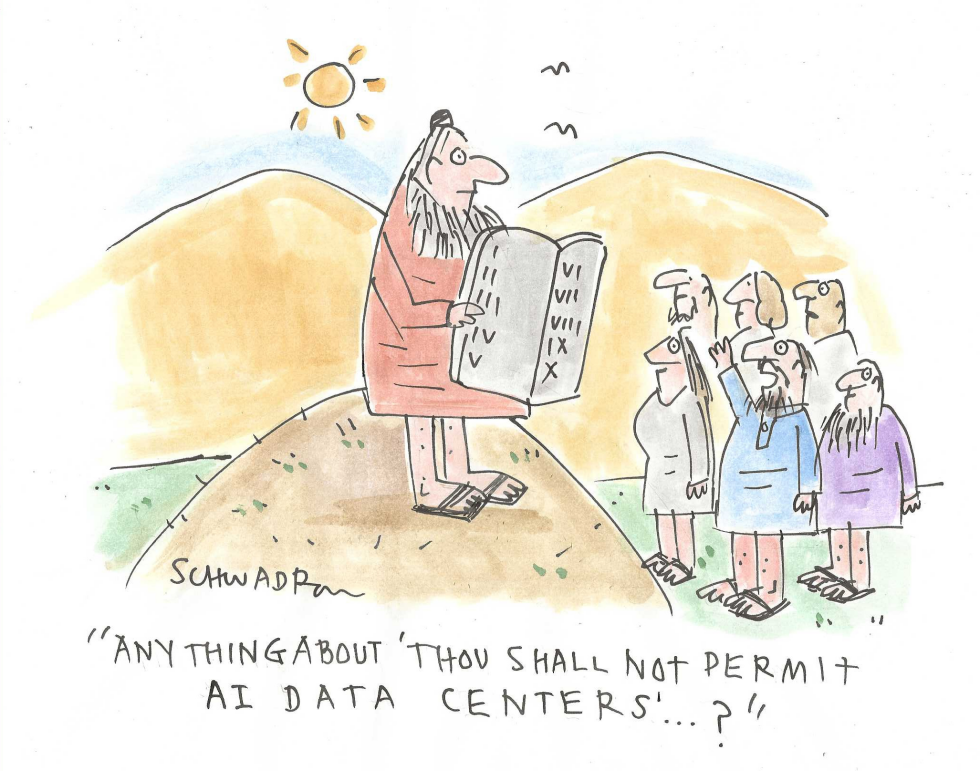
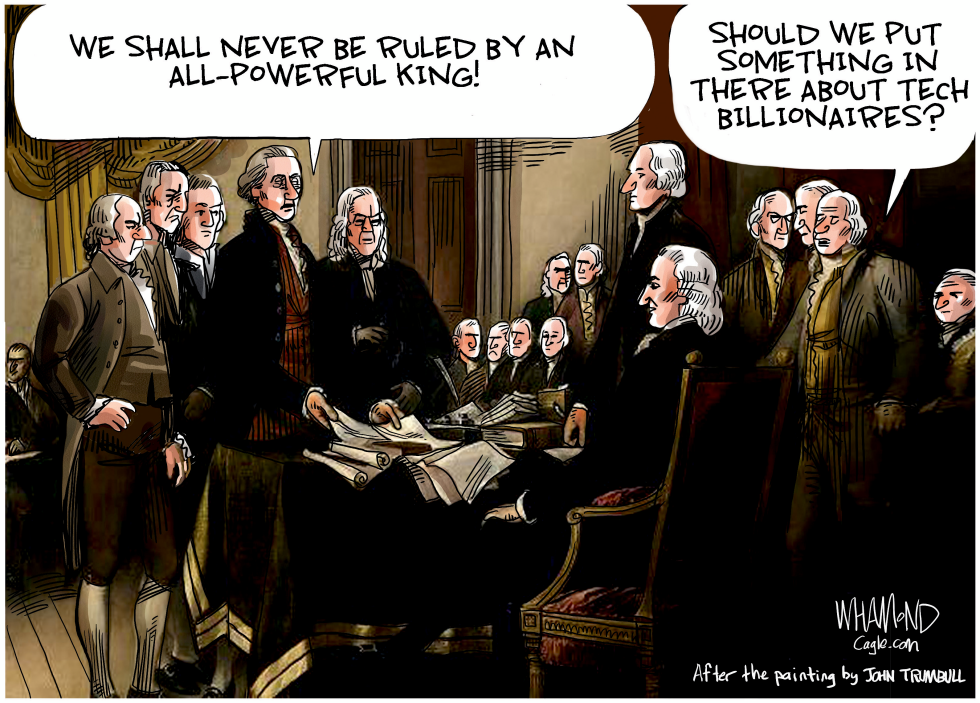
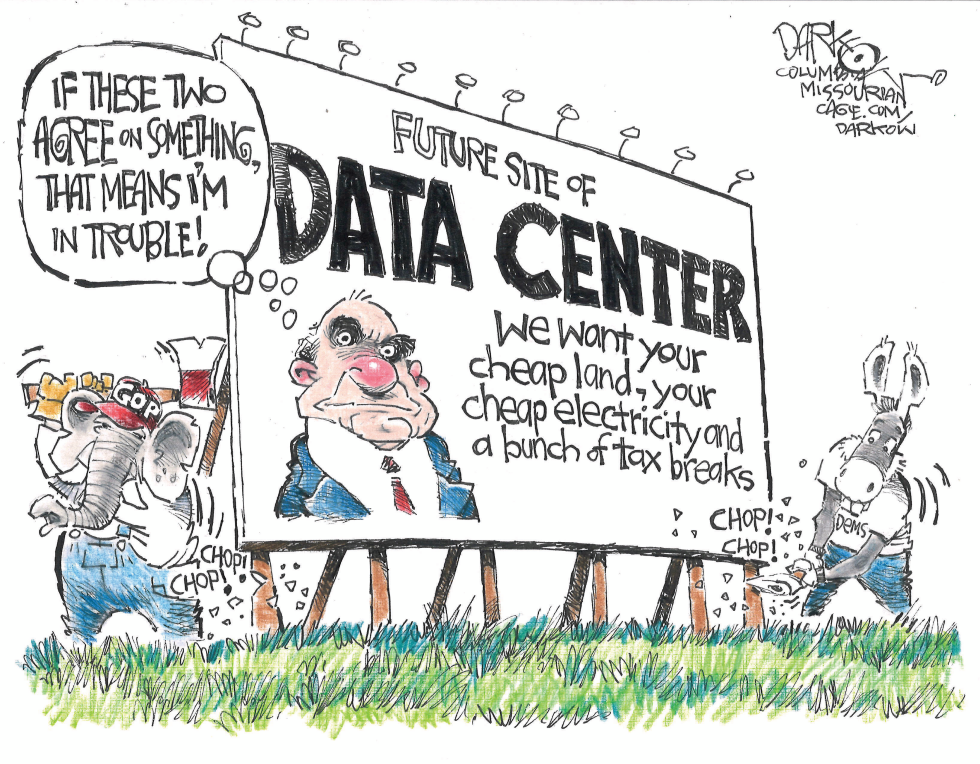
AI data centers face growing regulatory scrutiny over energy use and land impact in 2026. Lawmakers weigh new permitting standards as facilities expand rapidly. The cartoon uses the Moses figure to highlight the absence of explicit restrictions in foundational rules. It suggests modern governance struggles to apply old frameworks to new infrastructure demands. The editorial stance favors clearer limits on data center approvals.
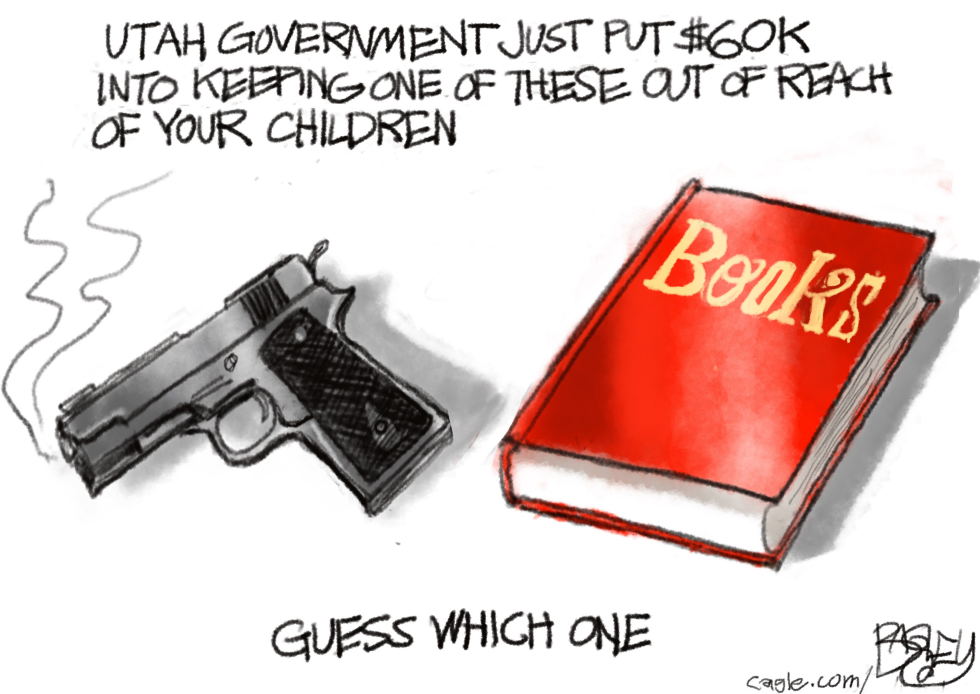
Utah officials directed $60,000 toward measures keeping certain books from children. Firearms remain readily available in the state. The decision highlights priorities in public safety and education policy. The piece criticizes the allocation as misplaced emphasis on censorship instead of addressing gun risks.
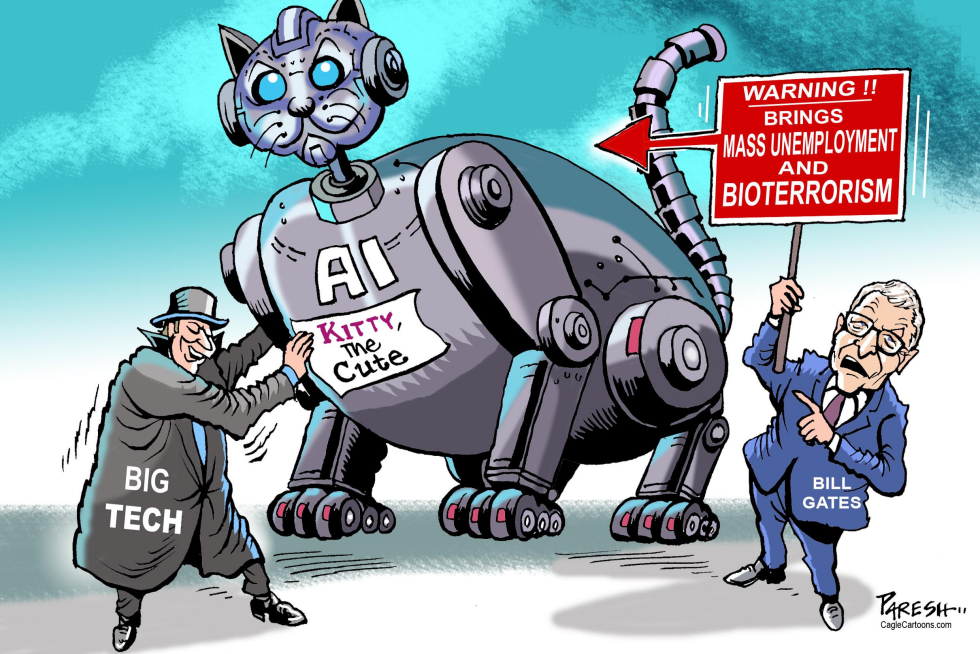
Bill Gates stands beside a large AI robot topped with a cat head while holding a sign warning of mass unemployment and bioterrorism. A Big Tech figure pushes the machine forward. The cartoon, published August 27, 2026, responds to ongoing debates about artificial intelligence safety and economic impacts. Gates has publicly discussed AI risks in recent years, including job displacement and potential misuse. The image contrasts industry enthusiasm with cautionary views on unchecked development. It highlights tensions between innovation and societal safeguards in the technology sector.
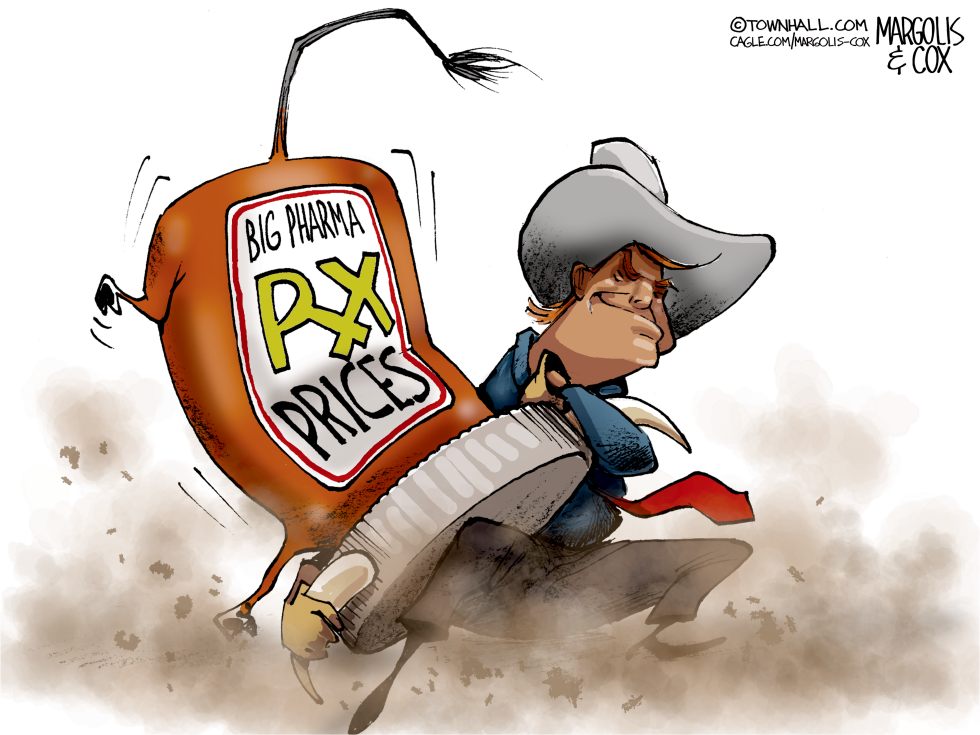
Ongoing debates over high prescription drug costs from major pharmaceutical companies continue to draw political attention. Lawmakers and regulators have pushed measures aimed at lowering prices for consumers. The cartoon depicts the challenge of reining in those costs as a high-stakes contest. It takes the position that aggressive action is needed to bring relief despite industry resistance.