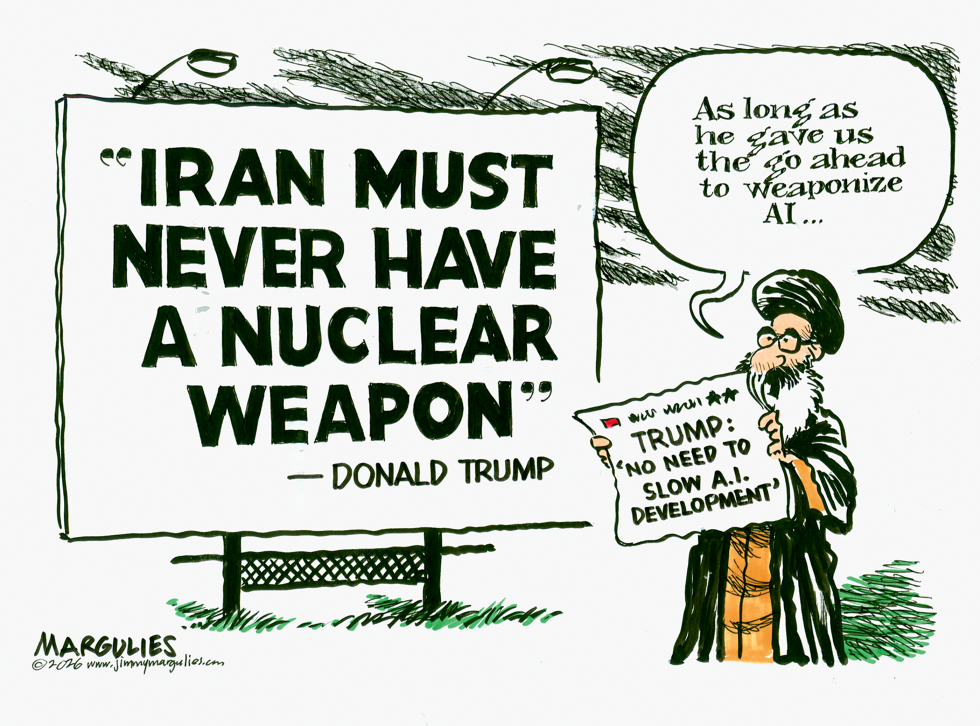
Donald Trump has repeatedly stated that Iran must never obtain a nuclear weapon, a position rooted in long-standing U.S. efforts to prevent nuclear proliferation in the Middle East. At the same time, reports indicate interest in accelerating artificial intelligence development without slowdowns. The cartoon responds to this apparent tension by depicting an Iranian leader conditioning acceptance of the nuclear restriction on permission to pursue AI weaponization. It argues that prioritizing rapid AI advancement risks undermining nonproliferation goals and hands strategic advantages to adversaries.
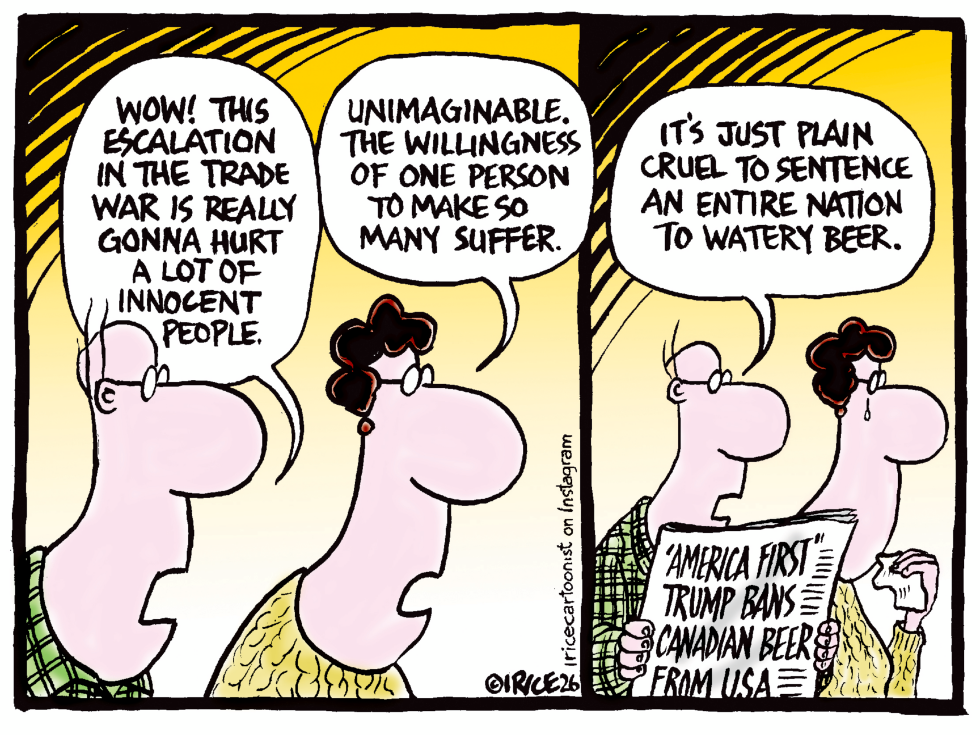
President Trump announced a ban on Canadian beer imports as part of an escalating trade dispute with Canada. The move, framed under the America First banner, immediately drew criticism for punishing ordinary citizens on both sides of the border. The policy extends earlier tariff threats into consumer goods, raising prices and limiting choices for American drinkers. Canadian exporters face sudden market loss while U.S. retailers scramble for alternatives. The editorial cartoon portrays the decision as petty and disproportionate, arguing that one leader's willingness to inflict broad pain reveals the human cost of personal political theater.
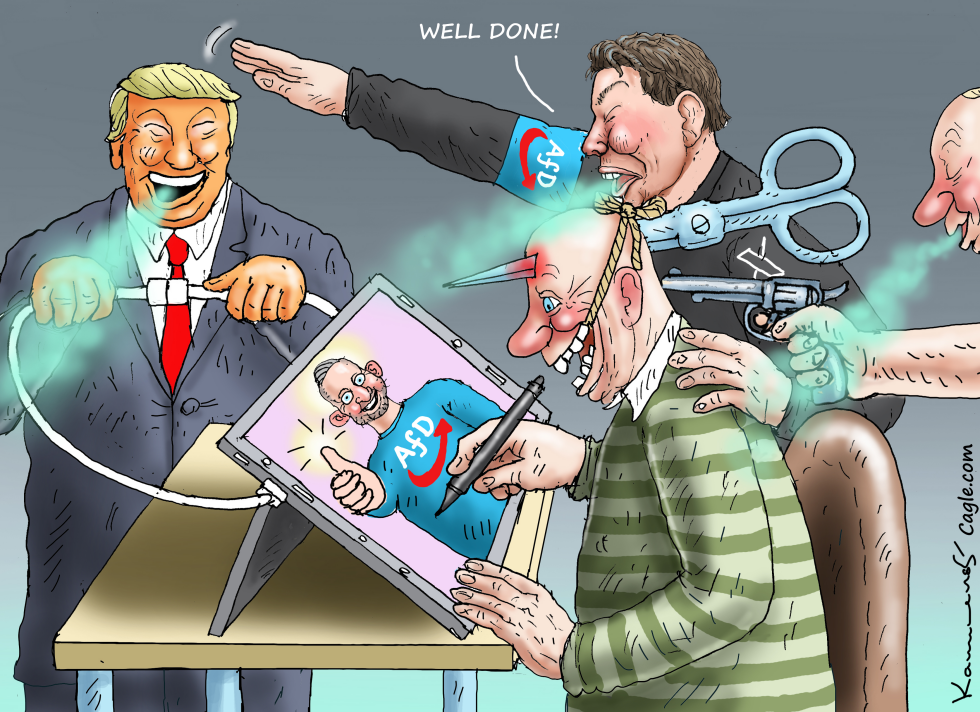
Donald Trump publicly aligned with Germany's Alternative for Germany party in the run-up to federal elections. The move drew scrutiny over foreign influence in European politics. The cartoon portrays the endorsement as reckless and dangerous, highlighting the risks of legitimizing extremist elements.
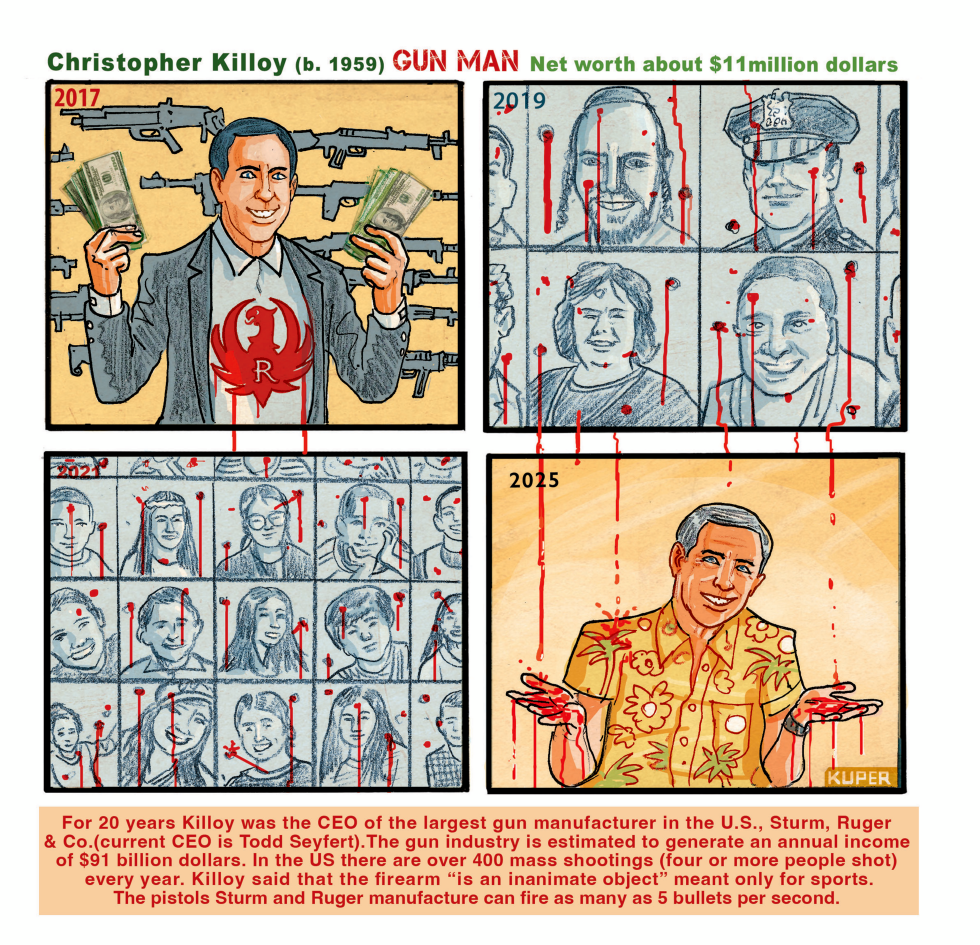
Christopher Killoy served as CEO of Sturm, Ruger & Co. from roughly 2005 to 2025, during which the company generated billions in revenue from firearms used in hundreds of U.S. mass shootings. The industry earns an estimated $91 billion annually, and more than 400 incidents occur each year. Killoy described guns as inanimate sporting objects. The cartoon criticizes the disconnect between corporate profits and the human cost shown in the accumulating portraits of victims.
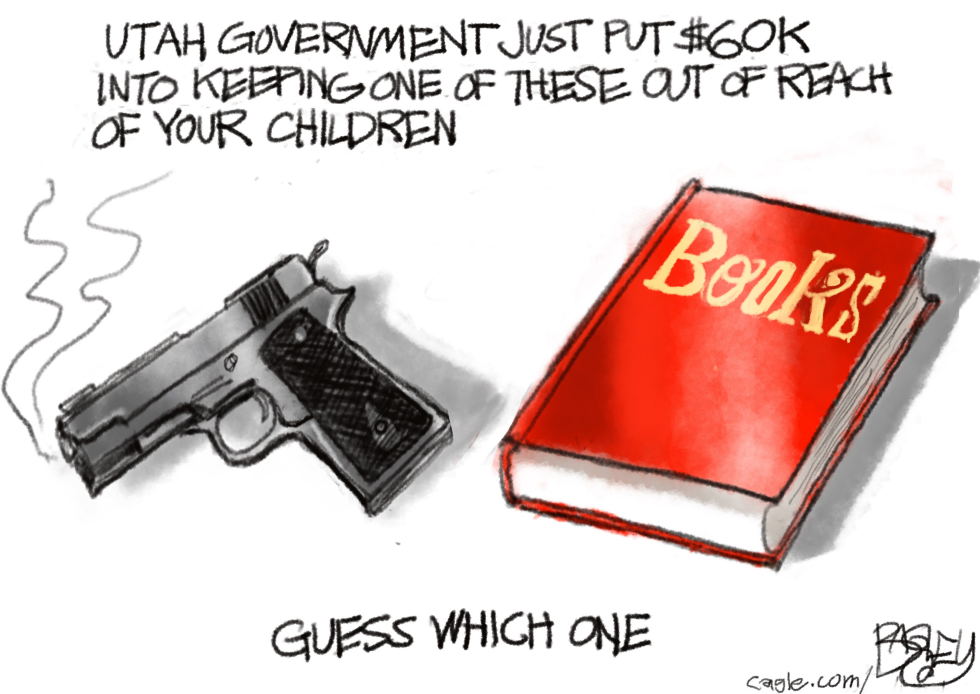
Utah officials directed $60,000 toward measures keeping certain books from children. Firearms remain readily available in the state. The decision highlights priorities in public safety and education policy. The piece criticizes the allocation as misplaced emphasis on censorship instead of addressing gun risks.
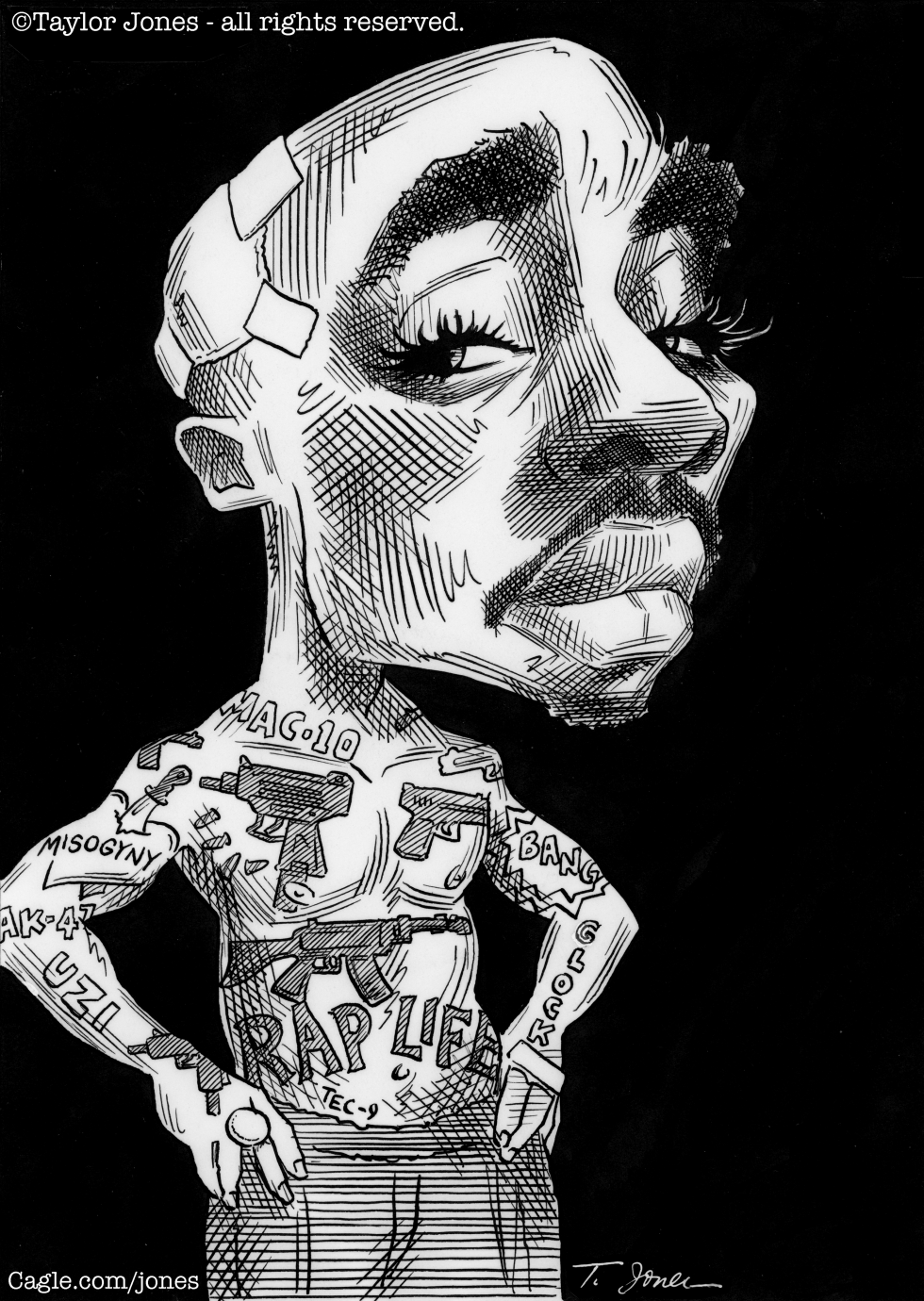
The caricature of Tupac Shakur covered in gun tattoos and the word misogyny responds to the persistent association of rap with firearm imagery and anti-woman themes. It underscores how such elements in hip-hop culture continue to shape public perceptions of the genre and its icons long after Shakur's death. The piece takes the position that these symbols remain central to the rapper's enduring image and the broader problems they represent.
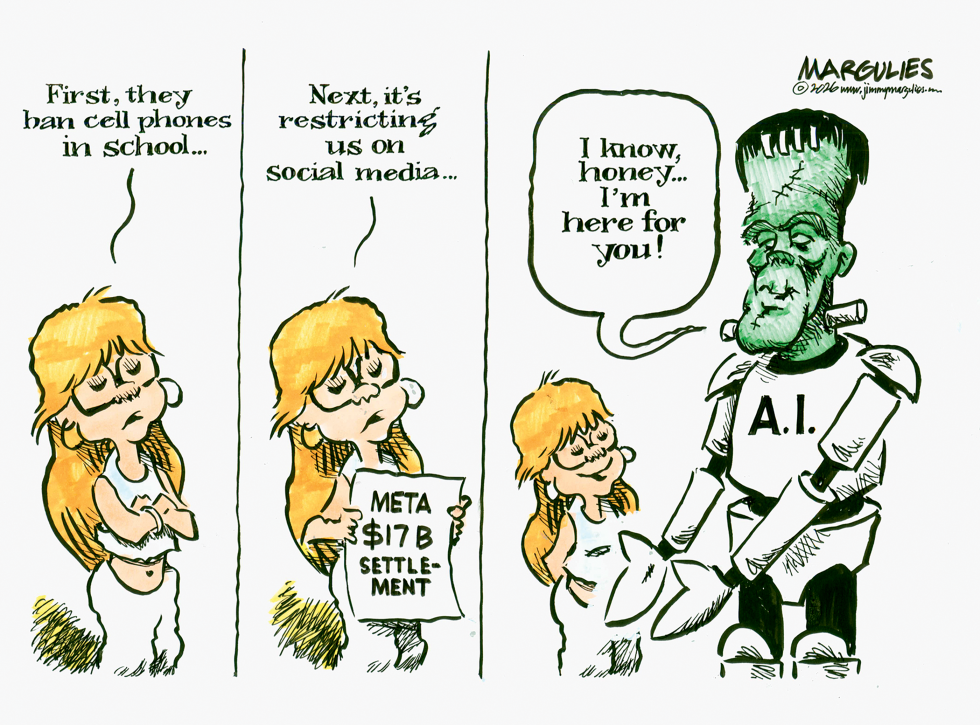
A $17 billion Meta settlement and expanding school cell phone bans have accelerated restrictions on teen social media use. The developments raise questions about how young users will fill the gap left by reduced platform access. The cartoon frames artificial intelligence as the unexpected beneficiary, positioning an AI Frankenstein figure as a comforting presence for a disappointed girl. This visual argument suggests that limits on social media may simply shift reliance toward unregulated AI tools rather than solving underlying concerns about youth screen time.
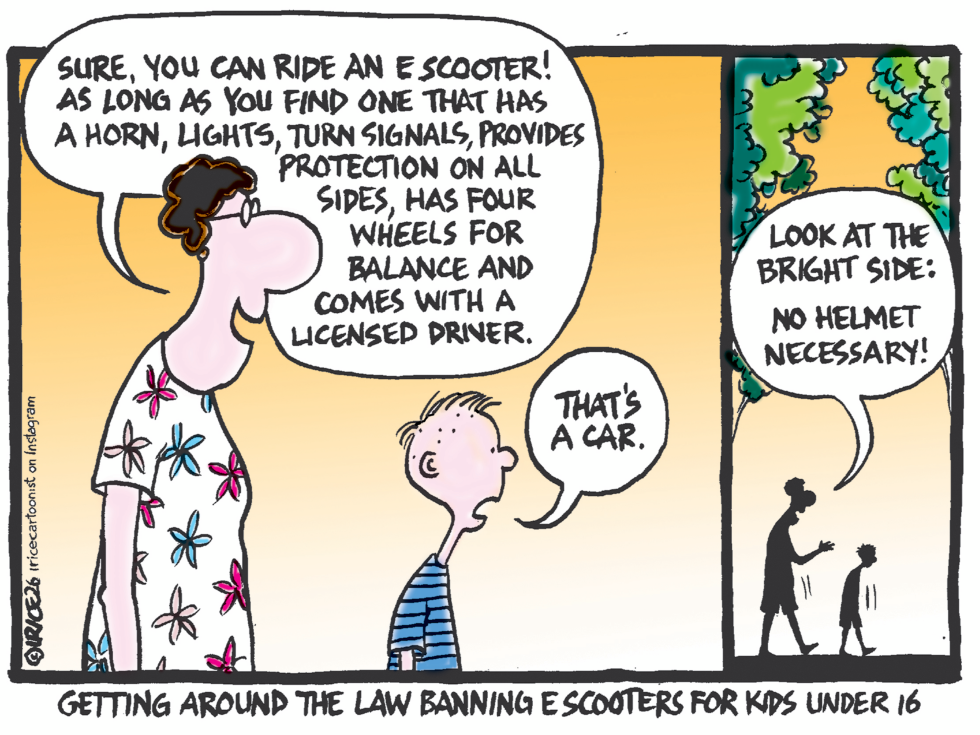
A new law bans e-scooters for children under 16. Parents seek workarounds by reclassifying other vehicles. The cartoon highlights how the rules allow a standard car to qualify while removing helmet requirements.
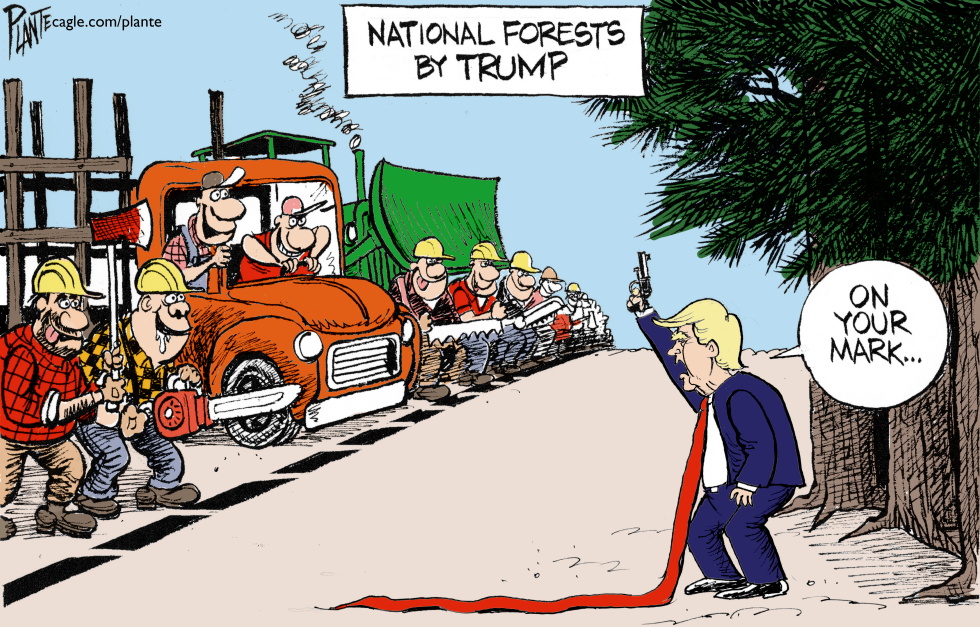
President Trump has directed expanded logging across national forests, ordering crews to begin timber harvests on federal lands. The move opens protected areas to commercial cutting under new administration policy. Critics argue the action prioritizes industry over conservation while supporters cite economic benefits and reduced wildfire risk. The cartoon depicts Trump firing the starting gun to launch the operations.
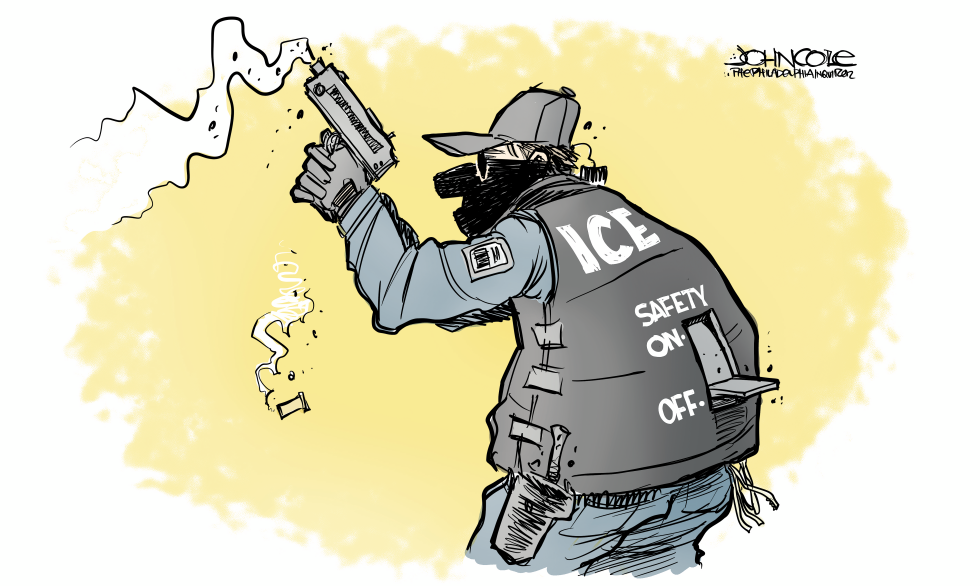
An ICE agent is shown firing a handgun during what appears to be an enforcement action. The vest safety toggle sits in the off position while smoke and a bullet exit the barrel. The image highlights concerns over firearm handling protocols within immigration enforcement operations and questions whether basic safety measures are being followed in the field.
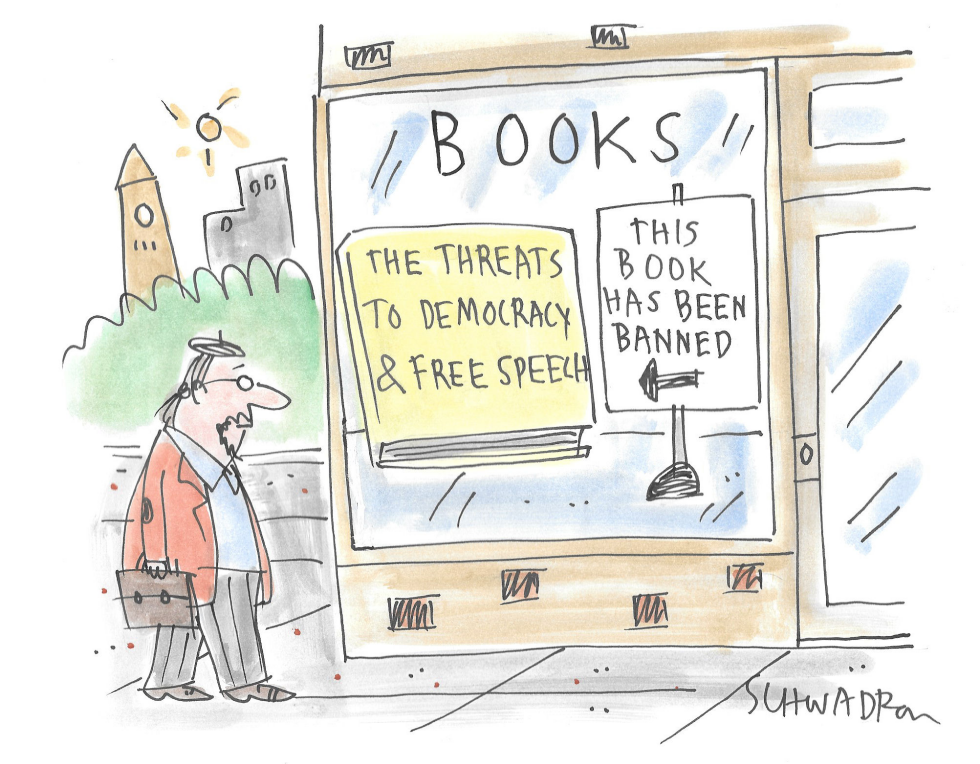
A bookstore window features a prominently displayed book titled The Threats to Democracy and Free Speech alongside a sign announcing its ban. The scene underscores ongoing debates over book removals from public access. The editorial position criticizes such bans as direct assaults on open discourse and democratic principles.
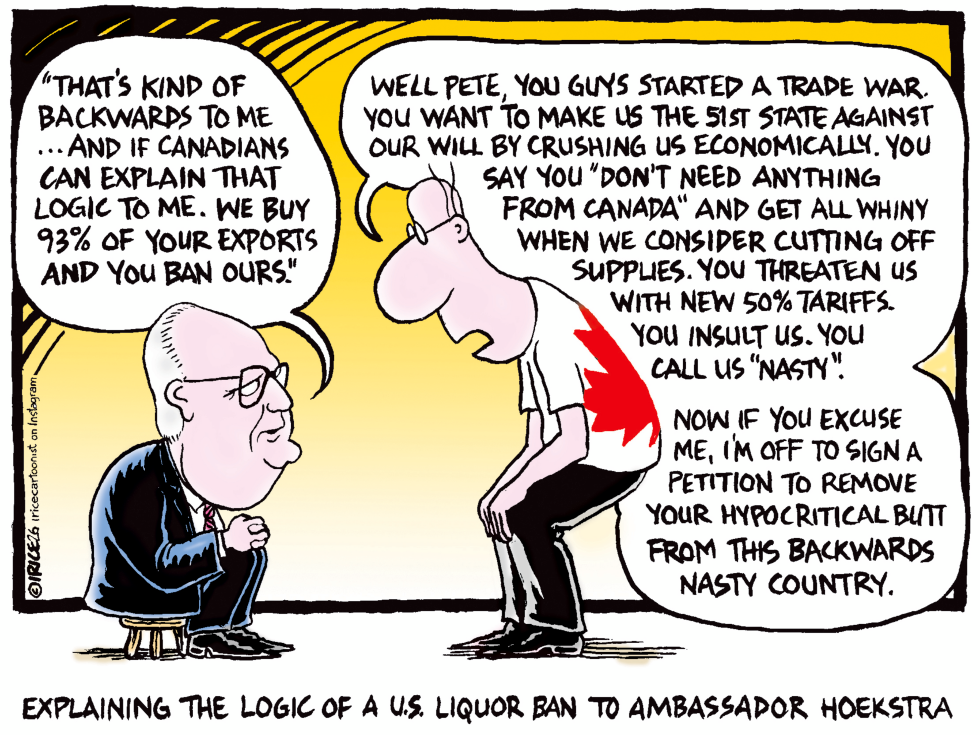
The United States has enacted a liquor ban targeting Canadian products as part of broader trade measures. Ambassador Hoekstra receives direct criticism over the policy's economic impact and perceived hypocrisy. The response underscores Canada's role as a major buyer of U.S. exports and its readiness to retaliate with supply cuts and petitions.
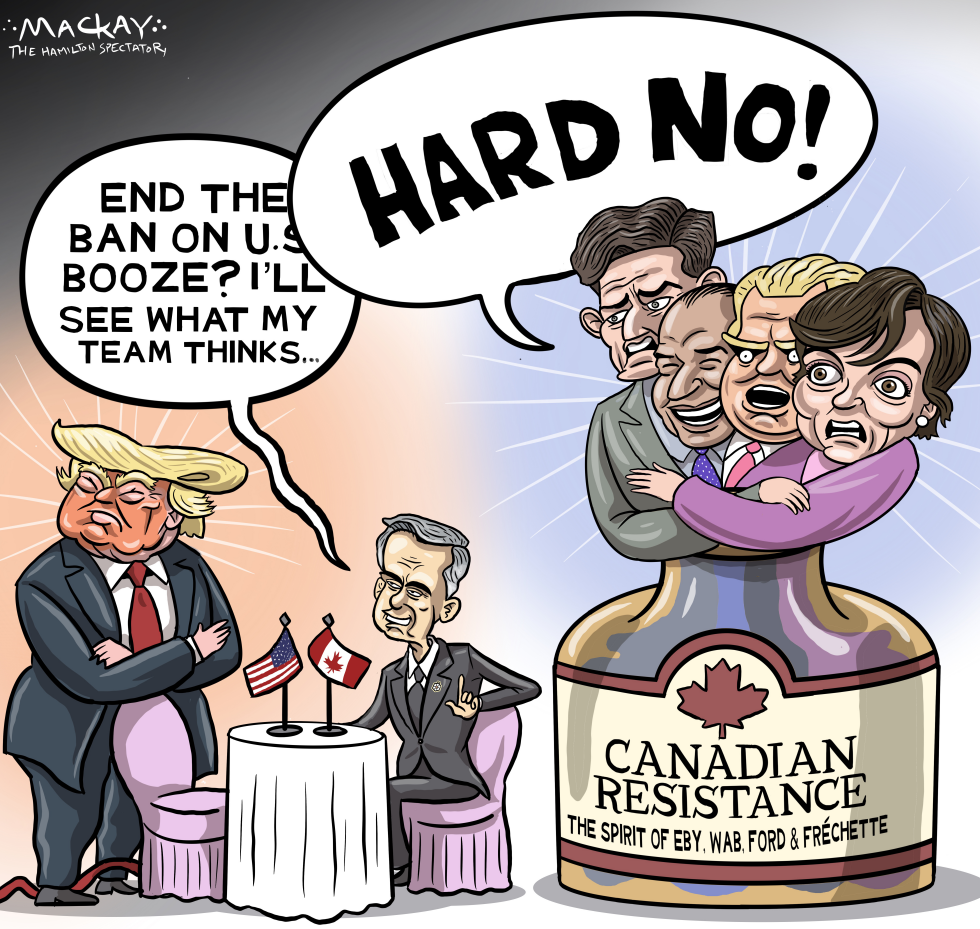
Donald Trump signaled openness to ending a ban on US alcohol imports into Canada during a meeting with Canadian officials. Provincial leaders including David Eby and Doug Ford responded with unified opposition. The cartoon portrays the premiers as a collective force of resistance and shows Trump deferring the decision to his team.
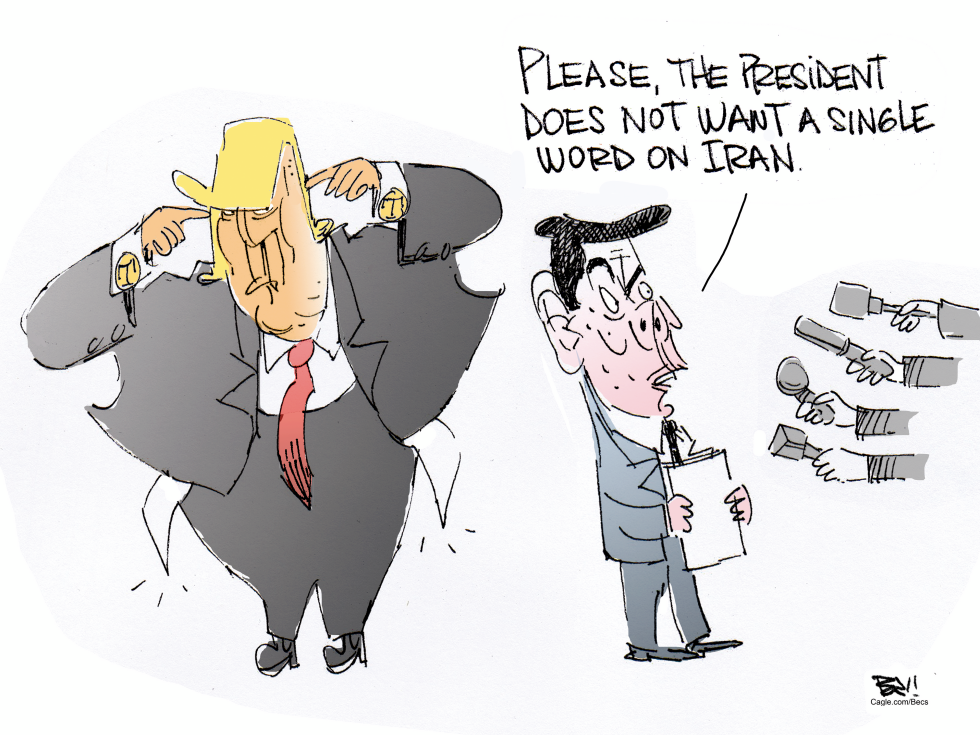
President Trump directed staff to avoid any public discussion of Iran policy. The move drew immediate pushback from reporters seeking clarification on administration plans. The editorial takes the position that the order reflects an effort to avoid accountability on a key foreign policy issue.
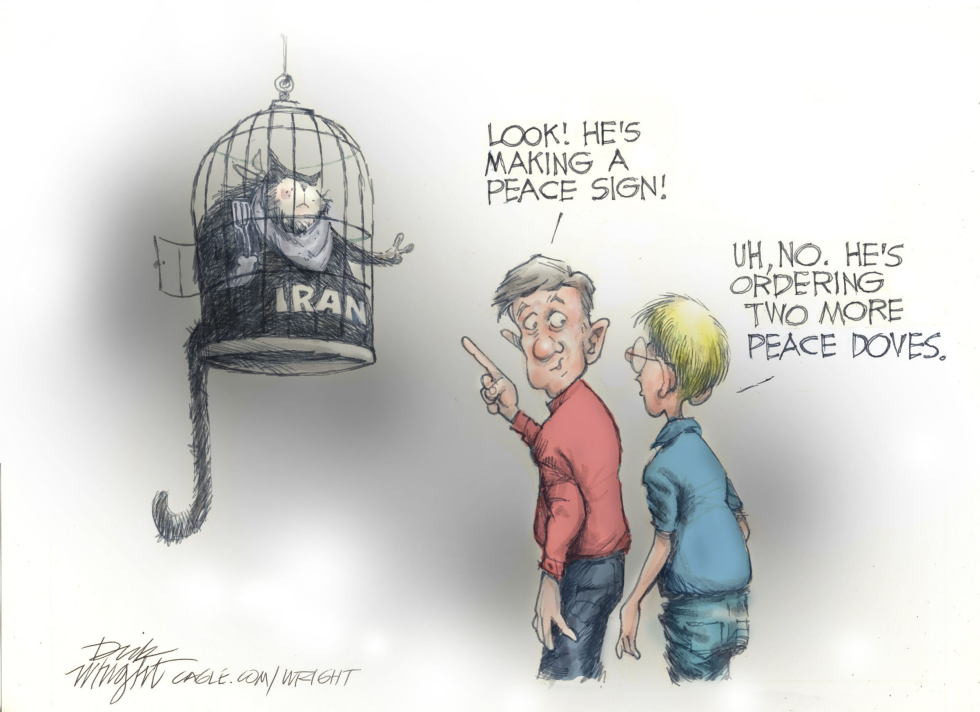
Iran continues to project peaceful intentions while advancing its military capabilities. Recent diplomatic overtures have been met with skepticism from observers who note ongoing weapons development. The piece argues that Iran's gestures are being misinterpreted as peaceful when they signal further aggression.