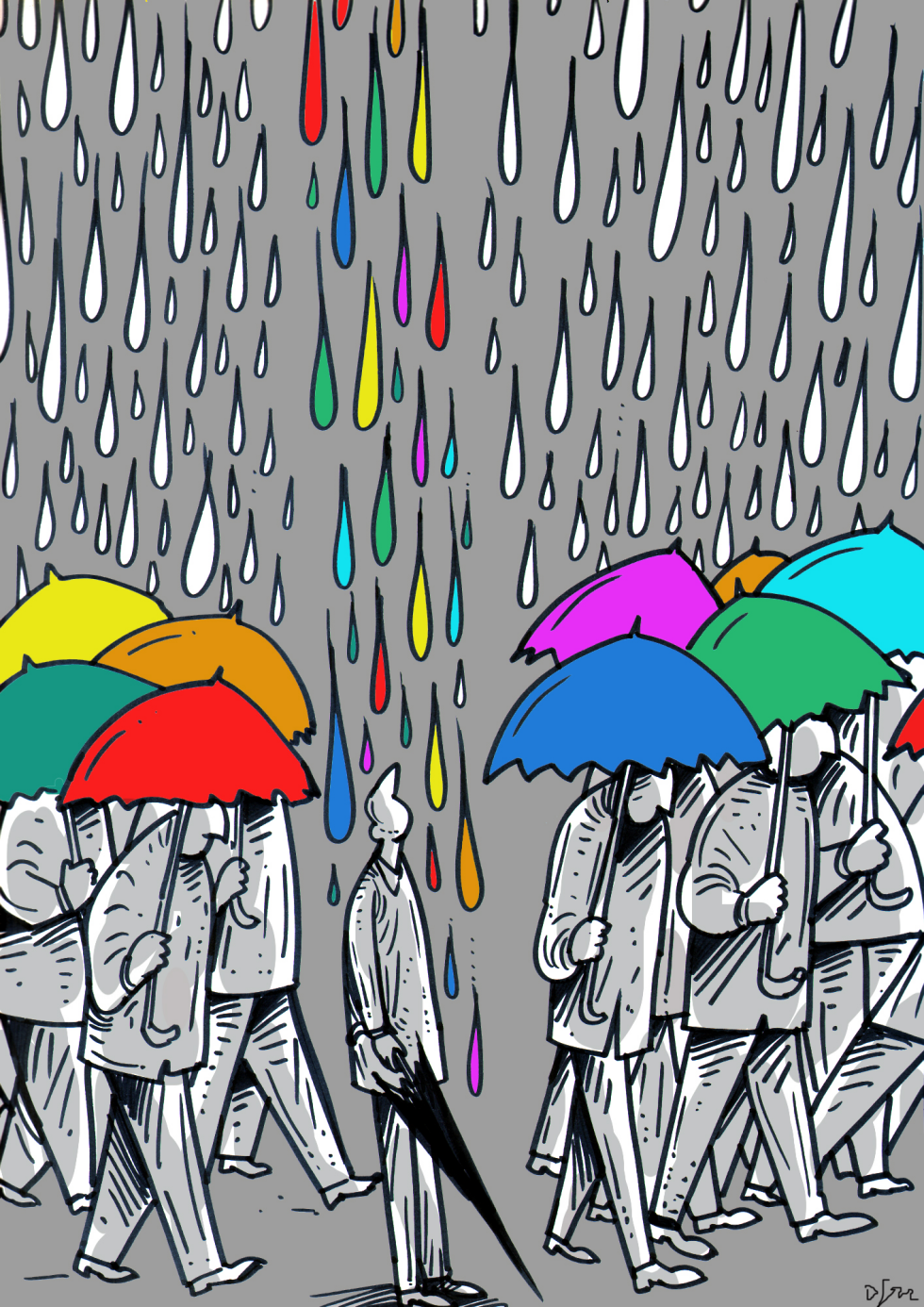
Society often pressures people to conform to norms around them. Maintaining personal identity remains important in such environments. The piece advocates for embracing one's distinct qualities.
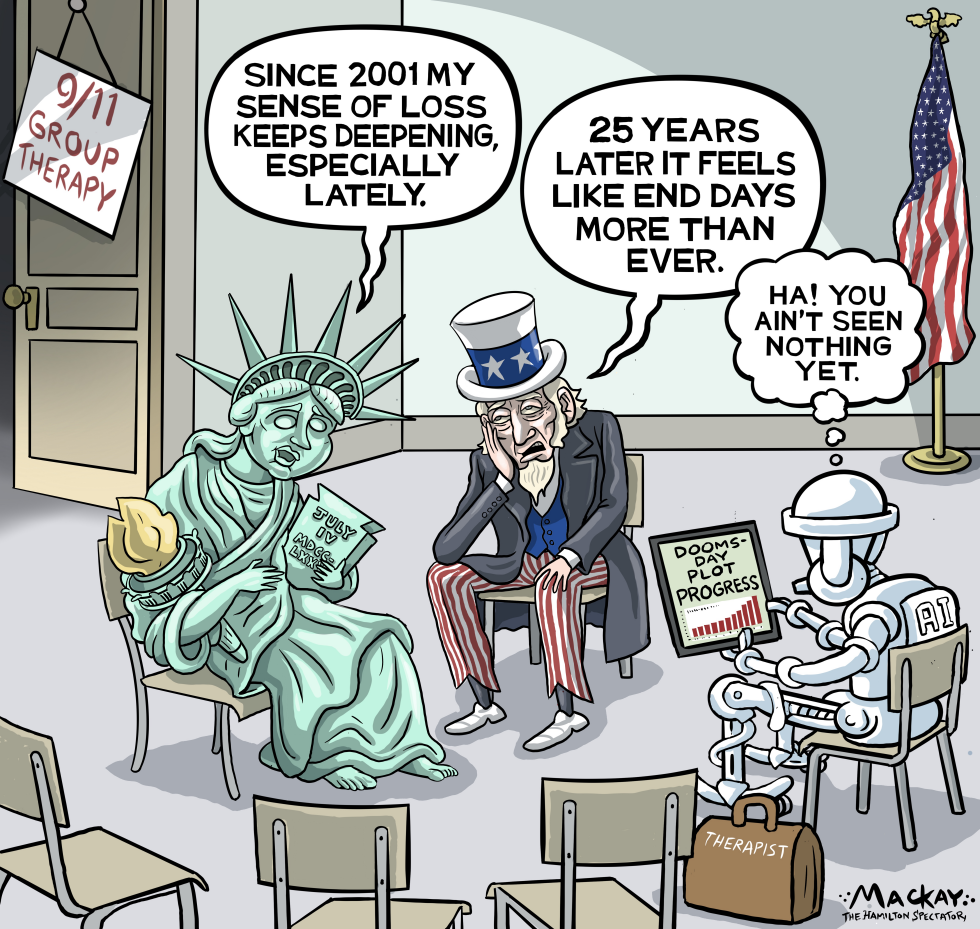
The cartoon depicts the Statue of Liberty, Uncle Sam and an AI robot seated in a 9/11 group therapy session on the 25th anniversary of the attacks. The Statue of Liberty holds a book marked July IV MDCCLXXVI and speaks of deepening loss since 2001. Uncle Sam echoes the sentiment of end days. The AI figure, labeled with a rising doomsday plot progress chart, retorts that the others have seen nothing yet. The scene uses national symbols to reflect persistent national trauma and emerging technological threats two and a half decades after the September 11 attacks.
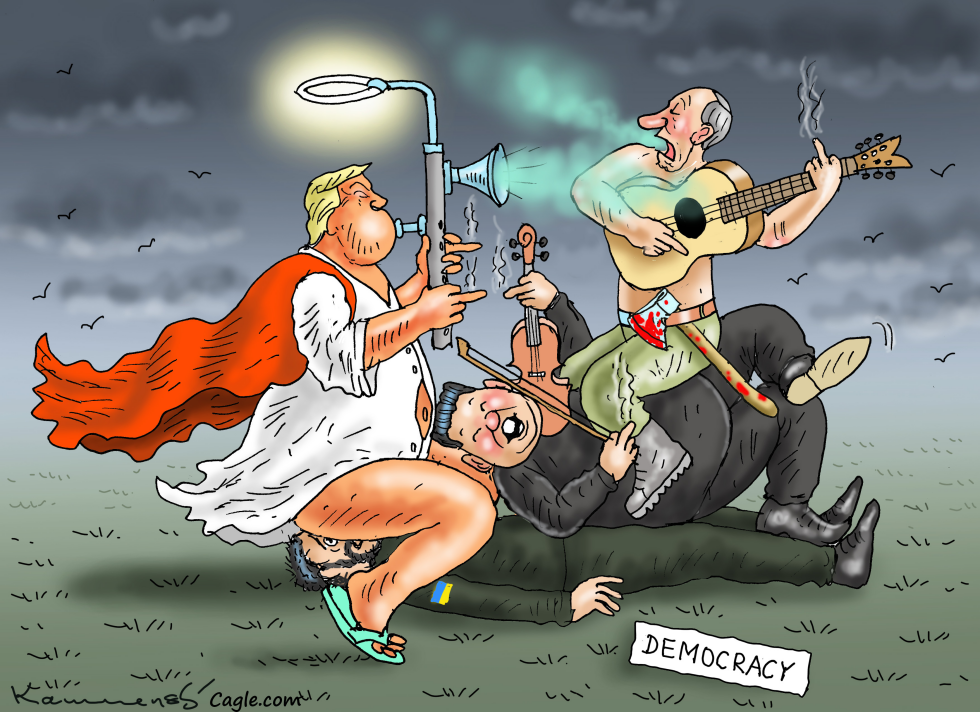
On August 21, 2026, the ongoing Ukraine conflict continued with no resolution in sight as U.S., Russian and Ukrainian leaders remained locked in diplomatic friction. The cartoon responds by depicting the three men as musicians whose finger-pointing and instruments create discord rather than harmony, underscoring the editorial view that personal posturing has overtaken substantive progress toward peace.
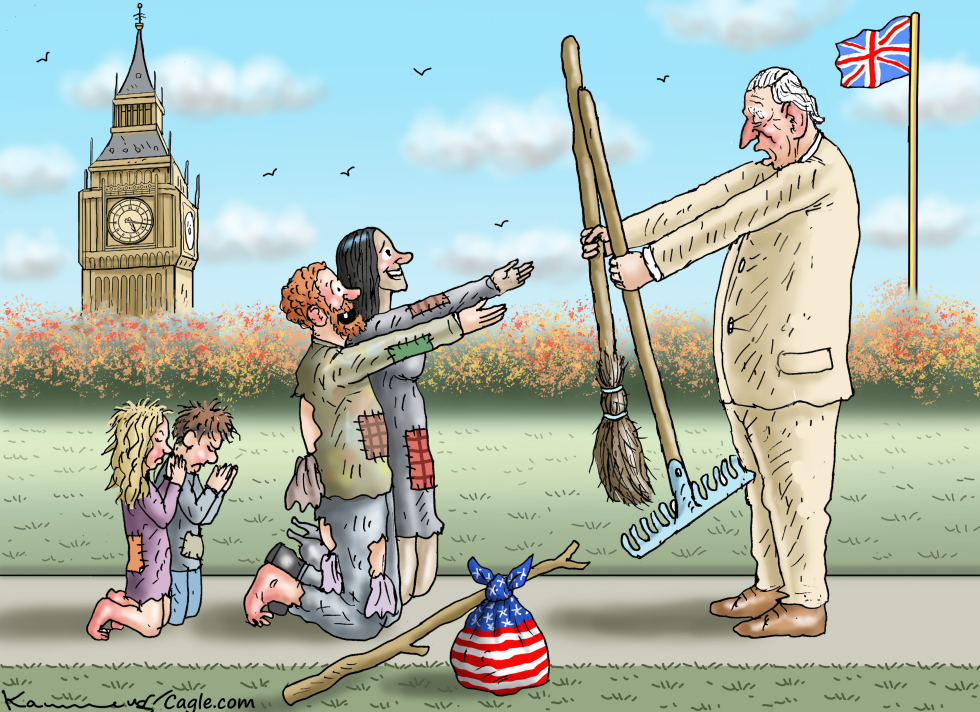
Prince Harry and family appear in tattered clothing seeking reentry to Britain as King Charles stands with a broom marked welcome near the Houses of Parliament. The scene reflects ongoing tensions over the couple's status after their move to the United States.
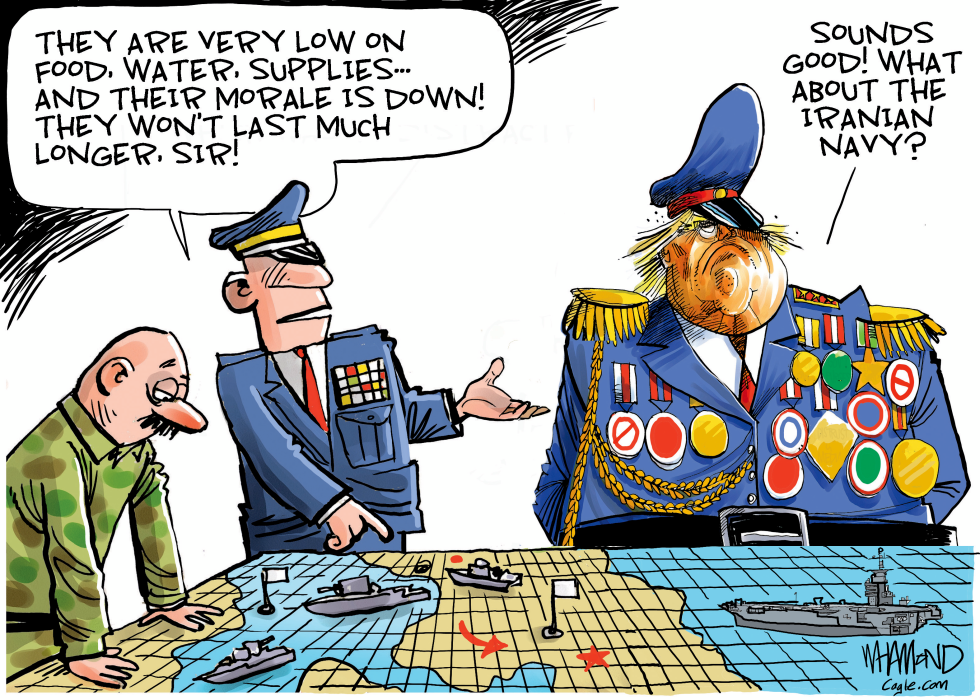
A U.S. Navy carrier faces reported shortages of food, water and supplies along with declining morale in mid-2026. Senior officers brief the president on the situation. The president responds by inquiring about the Iranian Navy instead. The piece portrays the administration as detached from operational readiness concerns in the region.
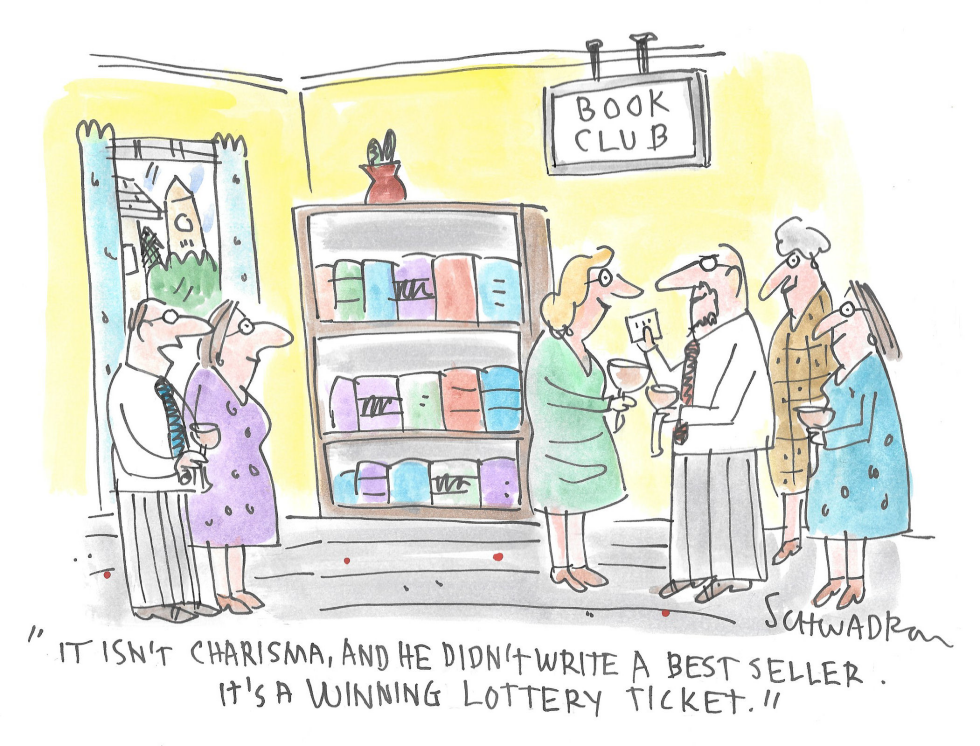
A book club gathering turns on a revelation about its leader's success. Members learn that a winning lottery ticket, not literary achievement or personal charisma, explains the group's draw. The situation highlights how unexpected windfalls can shape social circles and perceived status in casual settings. The piece presents the discovery as a straightforward explanation that undercuts assumptions about talent or appeal driving group interest.
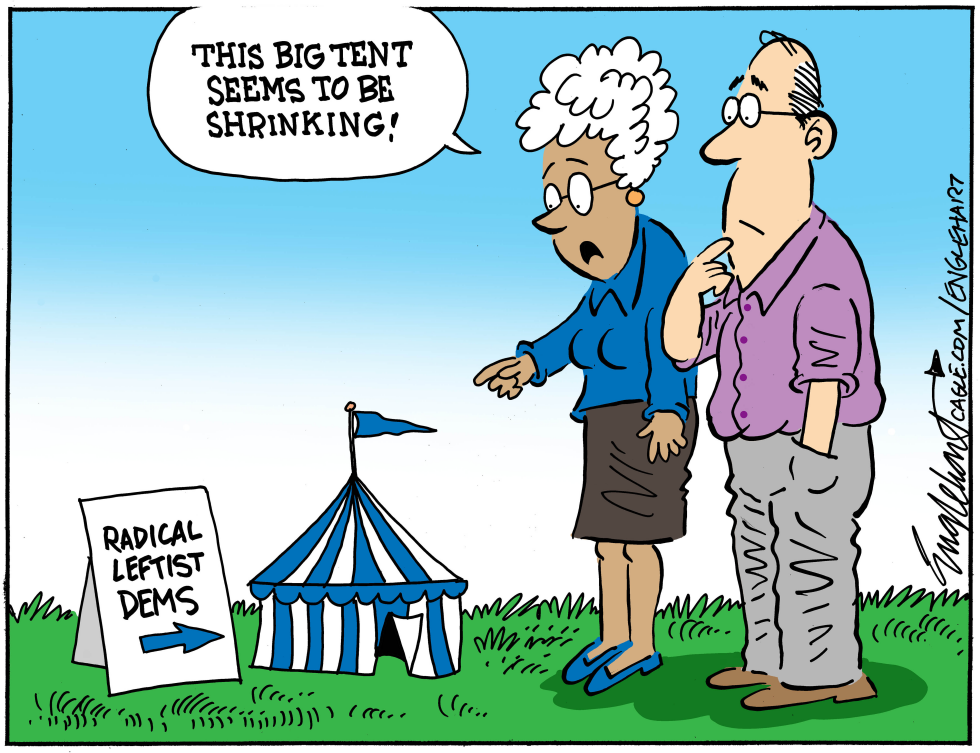
Democratic Party figures have grown concerned that the traditional big tent coalition is contracting as radical leftists consolidate control over the party's direction and messaging. The shift sidelines moderates and narrows the range of acceptable views within the organization. This dynamic raises questions about the party's ability to maintain broad electoral appeal in upcoming cycles. The editorial takes the position that the exclusionary turn is self-defeating and accelerates the party's isolation from mainstream voters.
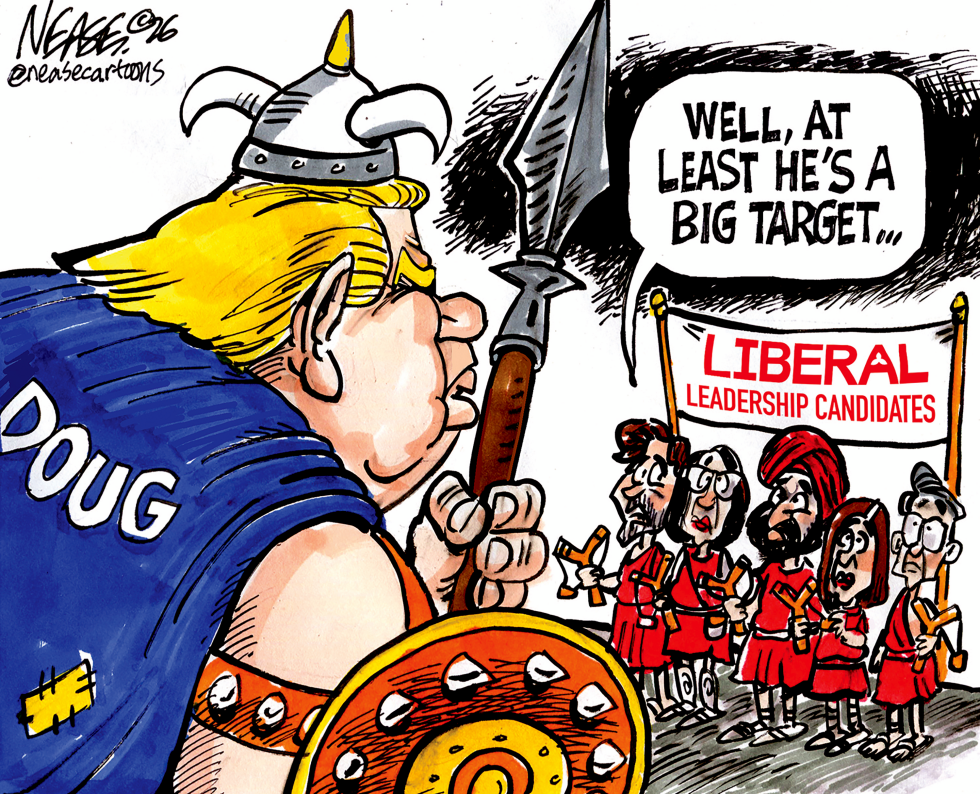
Liberal leadership candidates have identified a prominent opponent as their primary focus in an ongoing contest. The opponent, labeled Doug, appears as a large and visible figure in the political landscape. This dynamic highlights how one individual can dominate attention during a party’s internal selection process. The piece presents the situation as an opportunity for the candidates to rally around a clear adversary rather than internal divisions.
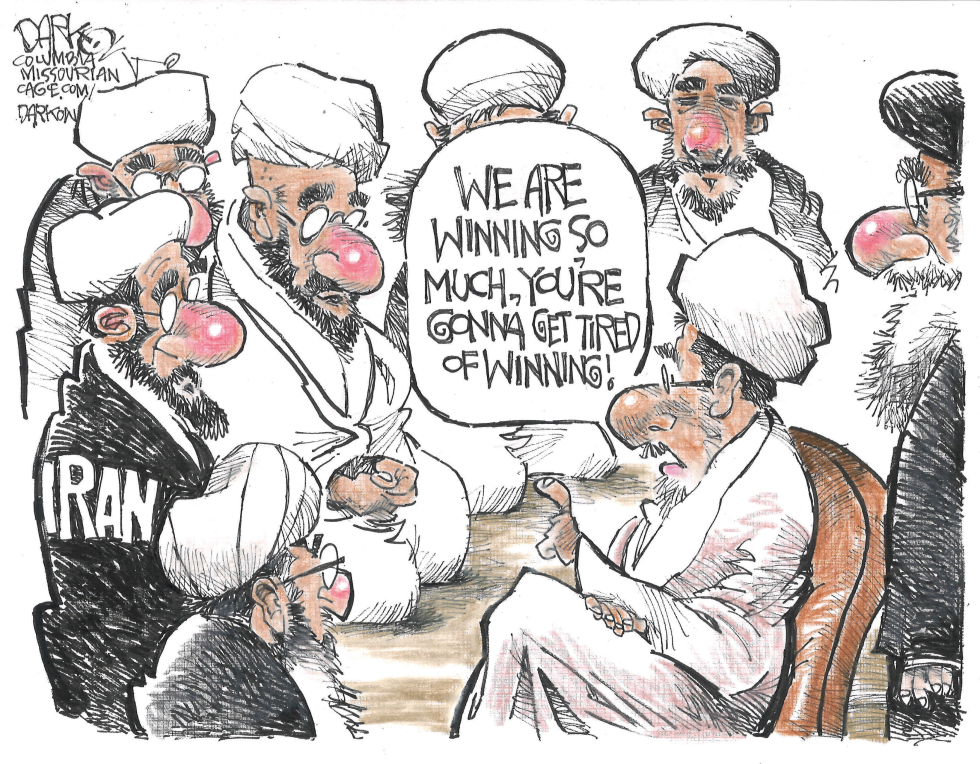
Iranian leaders have repeatedly asserted military and political successes in public statements despite international sanctions and regional conflicts. The claims come as the country navigates tensions with Western powers and neighbors over nuclear issues and proxy activities. Such messaging aims to project strength to domestic audiences. The piece portrays these assertions as overstated and tiresome, drawing a parallel to familiar political rhetoric to underscore their lack of credibility.
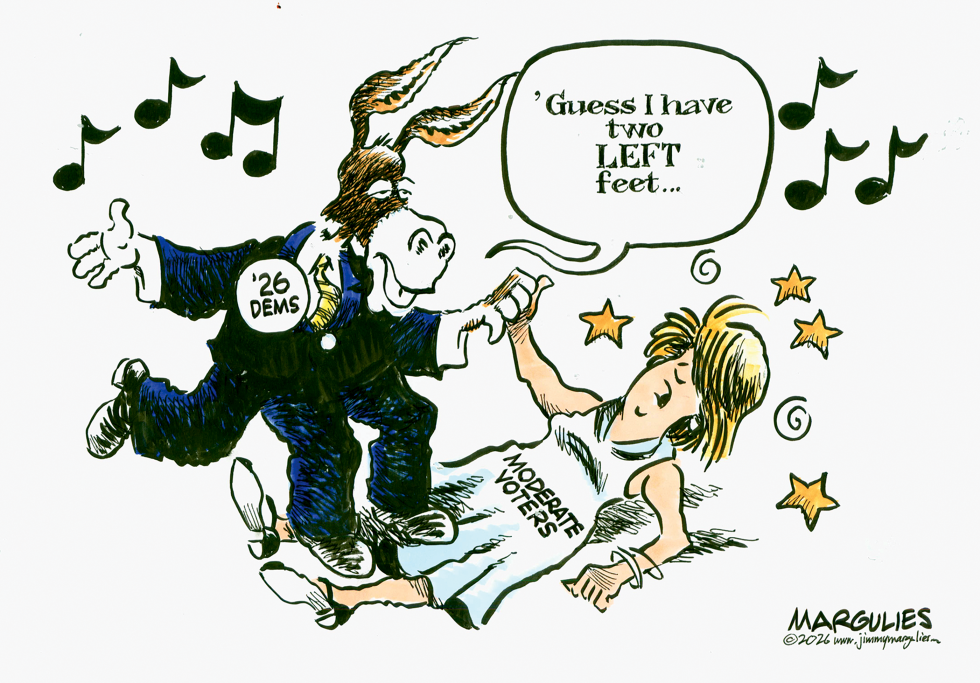
Democrats heading into the 2026 midterms face internal pressure to energize their base with progressive policies, yet this risks further distancing moderate voters essential for broader electoral success. The party has advanced left-leaning positions on issues like spending and social policy in recent cycles. Critics argue this approach prioritizes ideological purity over coalition building. The piece portrays the Democratic donkey as stepping on moderates while acknowledging its own missteps, highlighting the tension between base mobilization and centrist appeal.
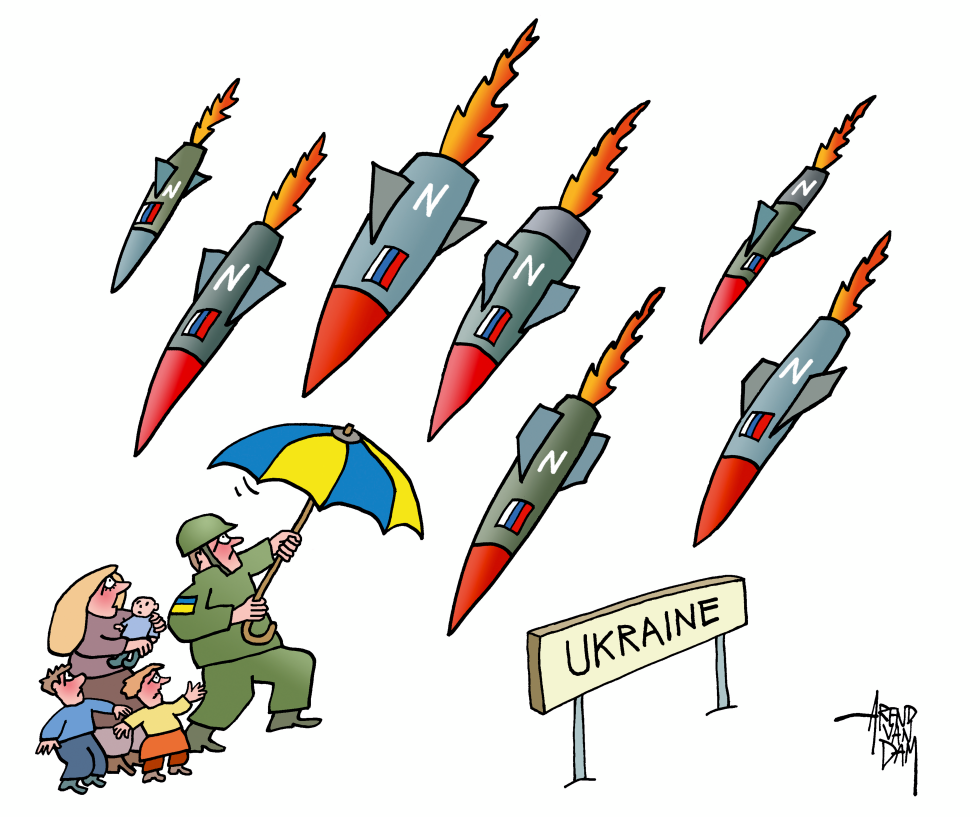
Russia has escalated its campaign against Ukraine with ballistic missiles carrying nuclear markings. The strikes heighten risks to civilian populations already under sustained attack. The editorial argues that such threats underscore the need for stronger defensive measures and international resolve to deter further escalation in the protracted conflict.
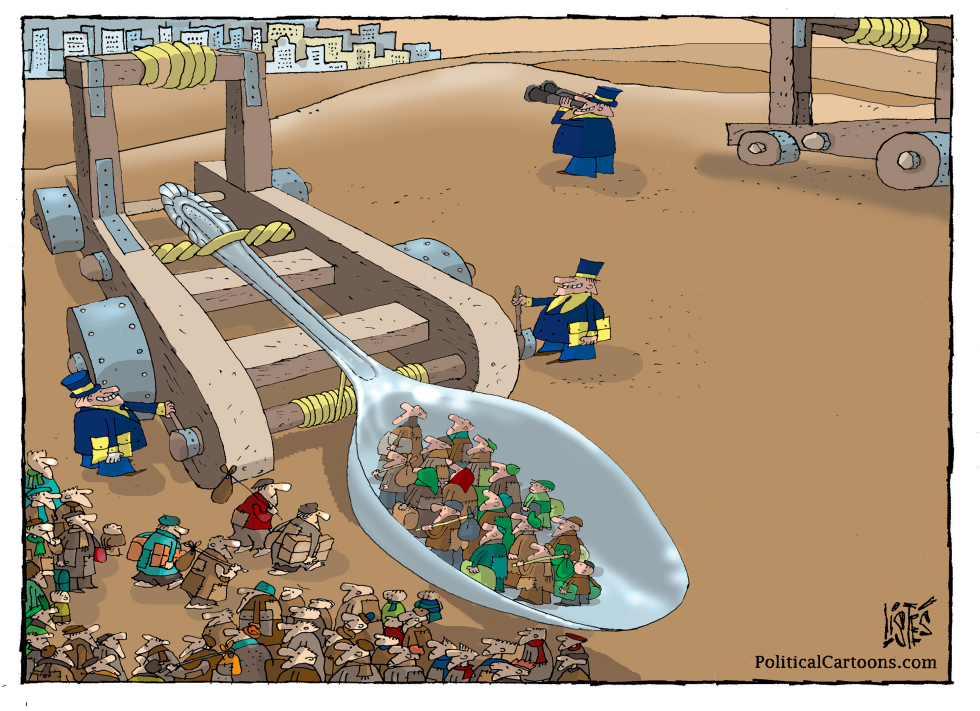
Border authorities continue to manage large inflows of refugees heading into major cities through various channels. The situation highlights ongoing debates over entry methods and urban capacity. Officials monitor the process closely as numbers rise. The piece argues that current approaches resemble mechanical ejection rather than orderly integration.
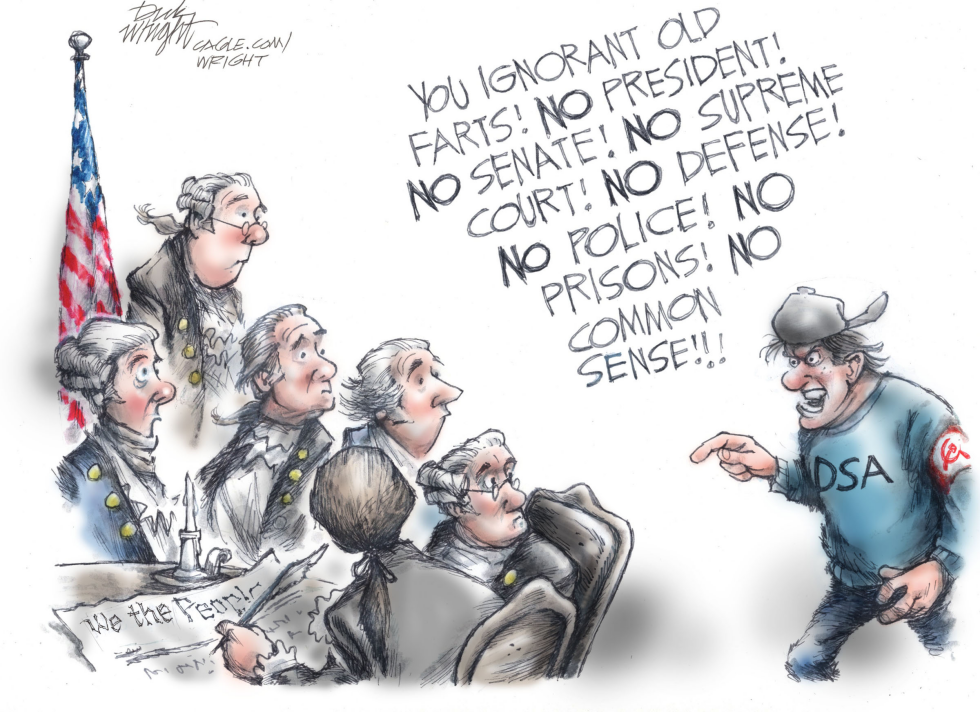
A DSA activist publicly rejects the presidency, Senate, Supreme Court, defense forces, police and prisons while addressing figures associated with the Constitution's creation. The exchange highlights ongoing tensions between socialist activists and defenders of established American governmental structures. The position frames these institutions as unnecessary and lacking basic logic.
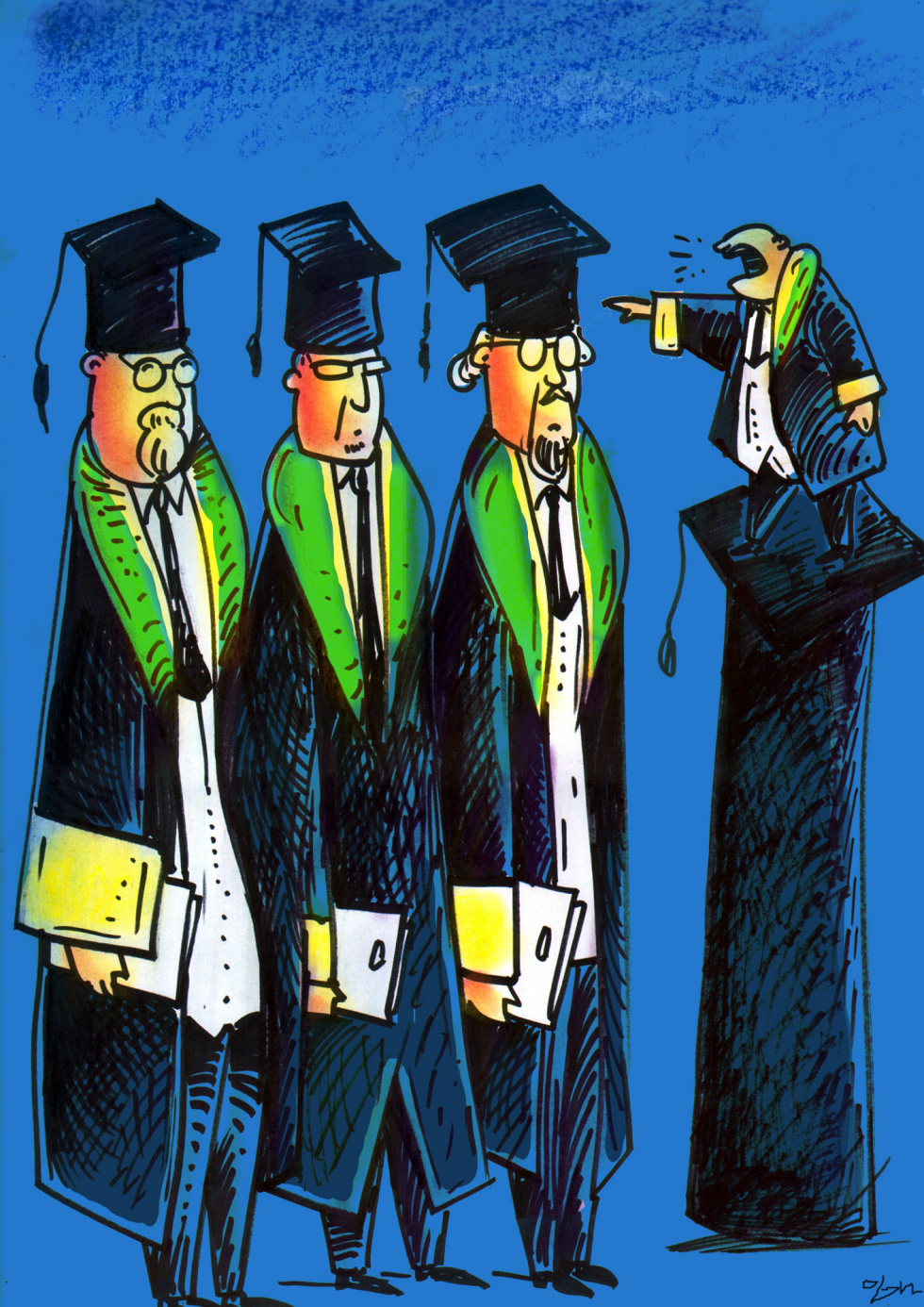
A university ceremony draws attention as an official delivers pointed remarks to administrators in academic attire. The exchange highlights ongoing tensions over leadership accountability and campus governance. The piece portrays the speaker as assertive in pressing the group on their responsibilities.
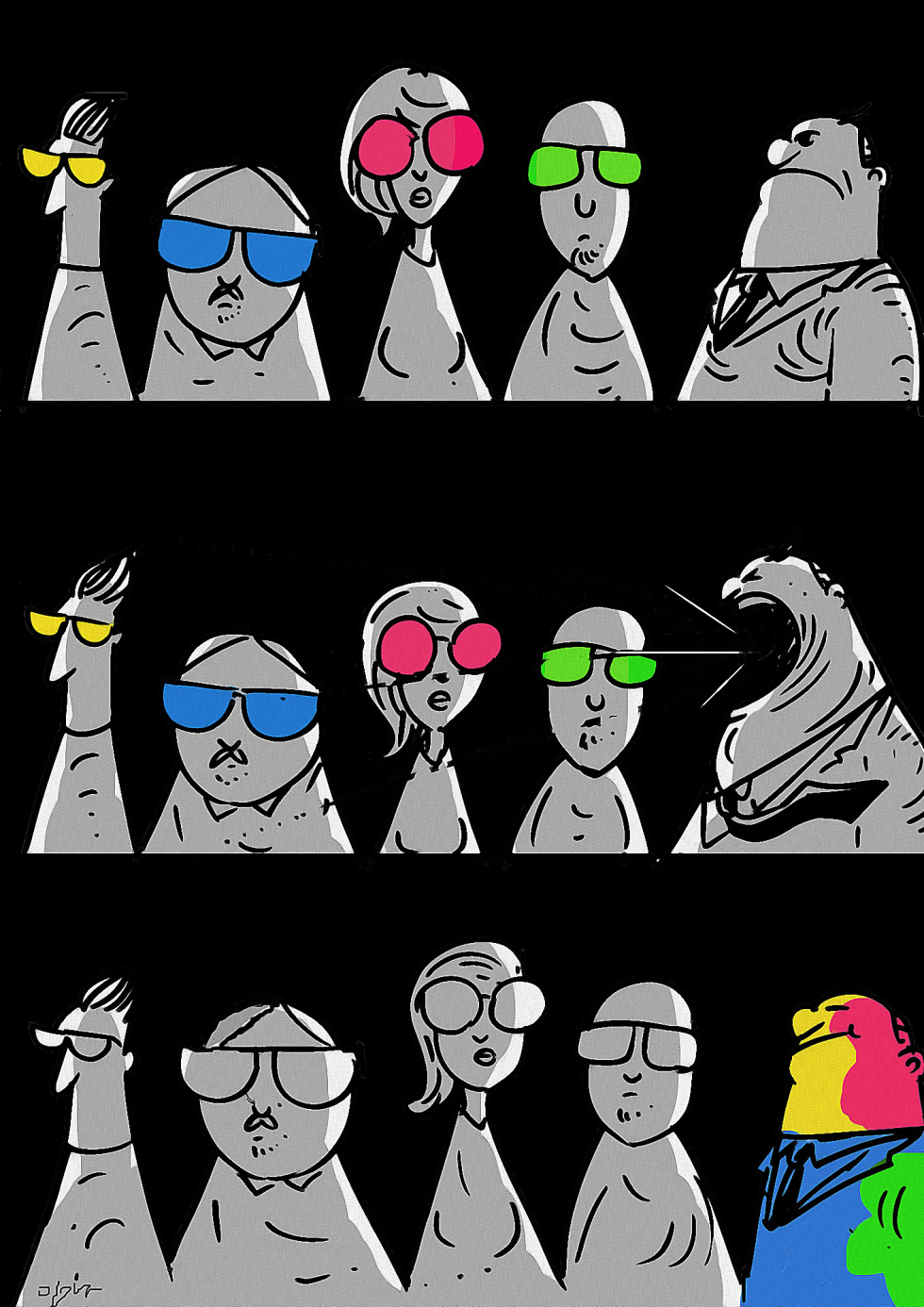
A series of panels depicts rows of figures wearing sunglasses in varying hues. The images suggest that personal filters shape what people see and react to. The final panel introduces a multicolored figure that stands apart from the rest. The work comments on how individual perspectives diverge even within similar groups. It highlights the contrast between uniform appearances and sudden breaks in pattern.