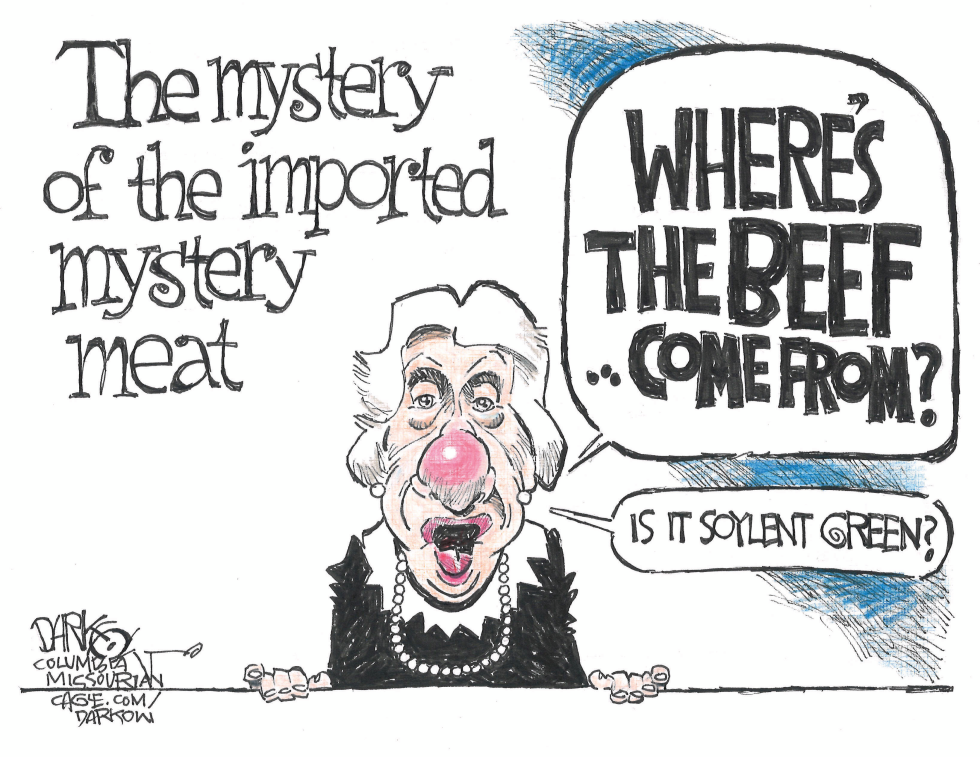
Questions about the origins and safety of imported beef have resurfaced amid broader debates over food supply chains. Regulators and consumers alike have raised concerns that labeling and inspection gaps allow lower-quality or misidentified products to reach shelves. The cartoon uses a classic slogan twist and a pop-culture reference to underscore public skepticism toward these imports. It argues that the lack of transparency turns everyday purchases into a guessing game with potential health risks. The piece positions the issue as one of accountability in trade and regulation rather than abstract policy.
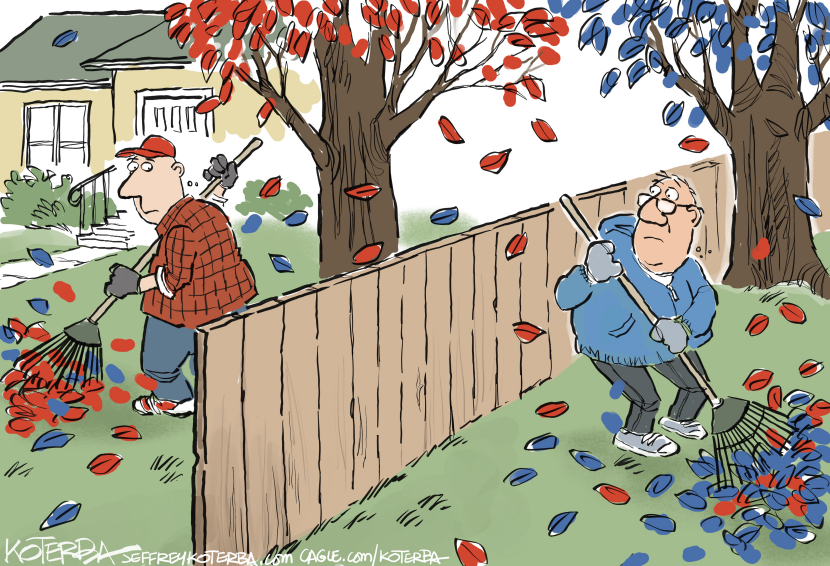
Resource containment issues persist across households and institutions as minor failures compound into larger losses. The piece maintains a neutral stance on the visual representation of such dynamics.
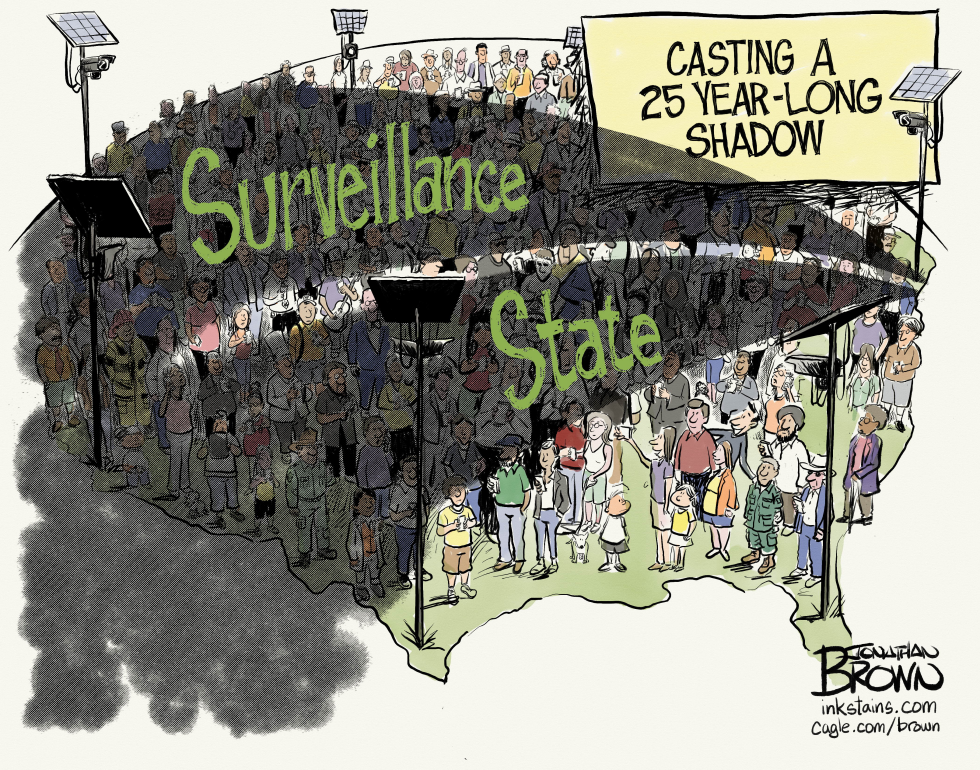
The cartoon depicts a dense crowd of Americans standing on a map of the United States, partially obscured by a large dark shadow cast by surveillance cameras mounted on poles. The words 'Surveillance State' appear prominently in green lettering across the scene, while a sign in the upper right reads 'CASTING A 25 YEAR-LONG SHADOW.' The image comments on the lasting effects of expanded government surveillance programs that began after the September 11 attacks, now spanning a quarter century. It illustrates how these measures continue to influence daily life and public spaces in 2026.
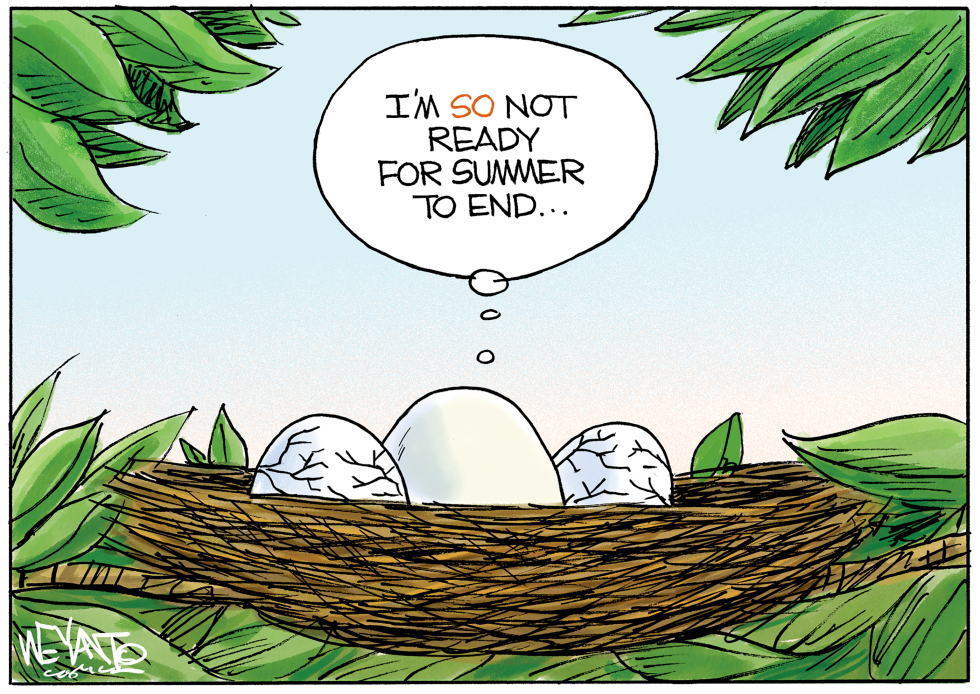
As summer draws to a close in late August, many express reluctance to embrace the coming autumn. The seasonal transition brings cooler weather and shorter days, prompting widespread nostalgia for warm months. This dynamic highlights common human resistance to change and the end of leisure periods. The piece captures that sentiment through a simple natural scene, underscoring the universal desire to prolong summer.
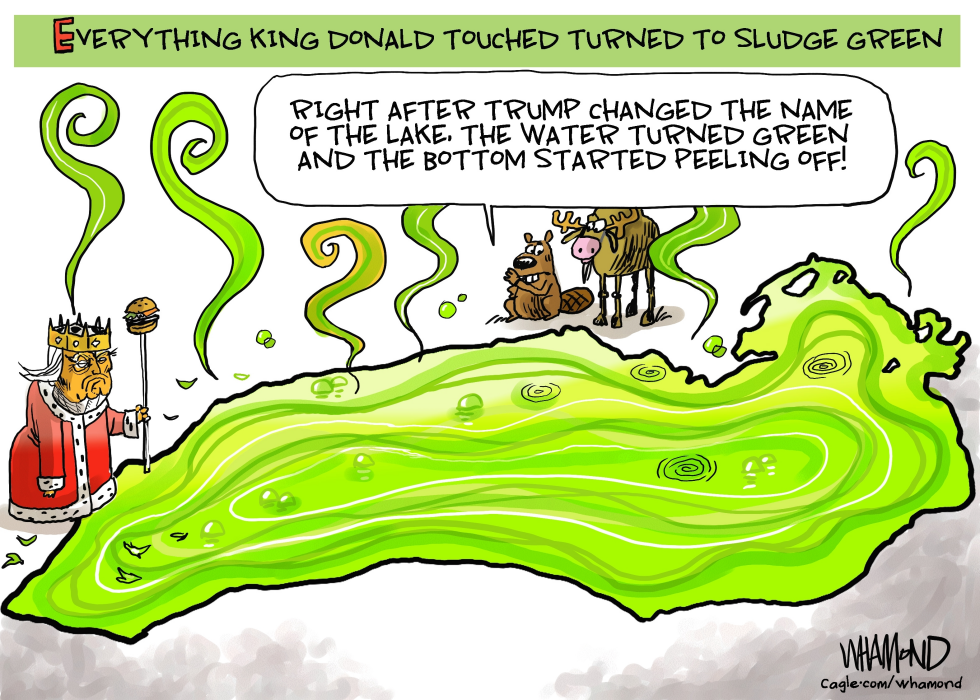
Donald Trump, depicted as a king, changes the name of a lake, after which the water turns green with sludge and the bottom begins peeling. Wildlife observers connect the timing directly to the renaming. The development raises concerns about environmental damage tied to executive actions. The piece portrays the outcome as an inevitable result of Trump's influence, turning natural areas into polluted sludge.
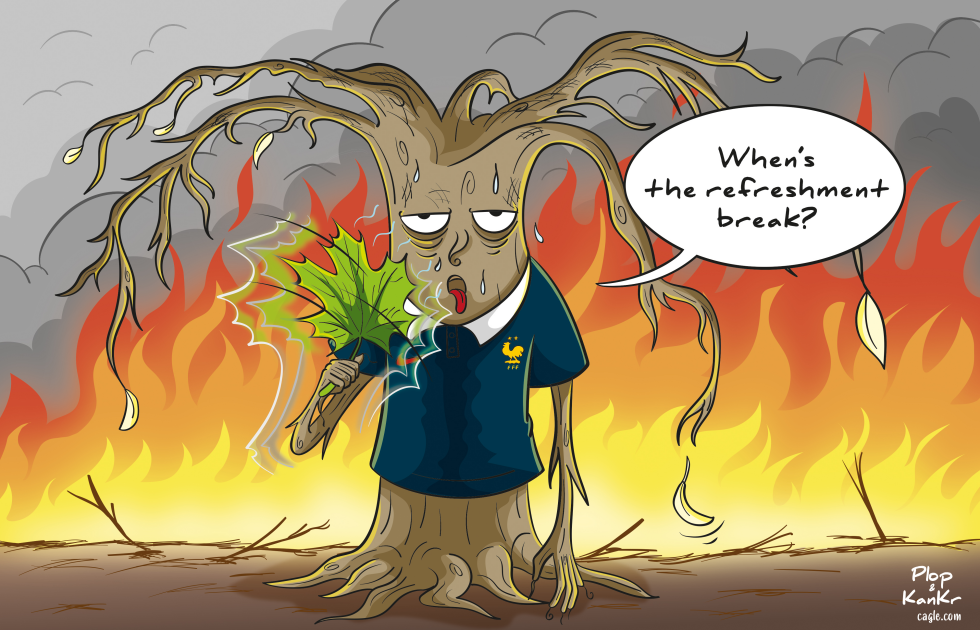
A tree figure dressed in a French national football jersey stands engulfed in flames while holding a smoking maple leaf. The figure sweats heavily and asks in a speech bubble when the refreshment break will occur. The scene uses fire and withered branches to depict environmental stress on a sports-themed character.
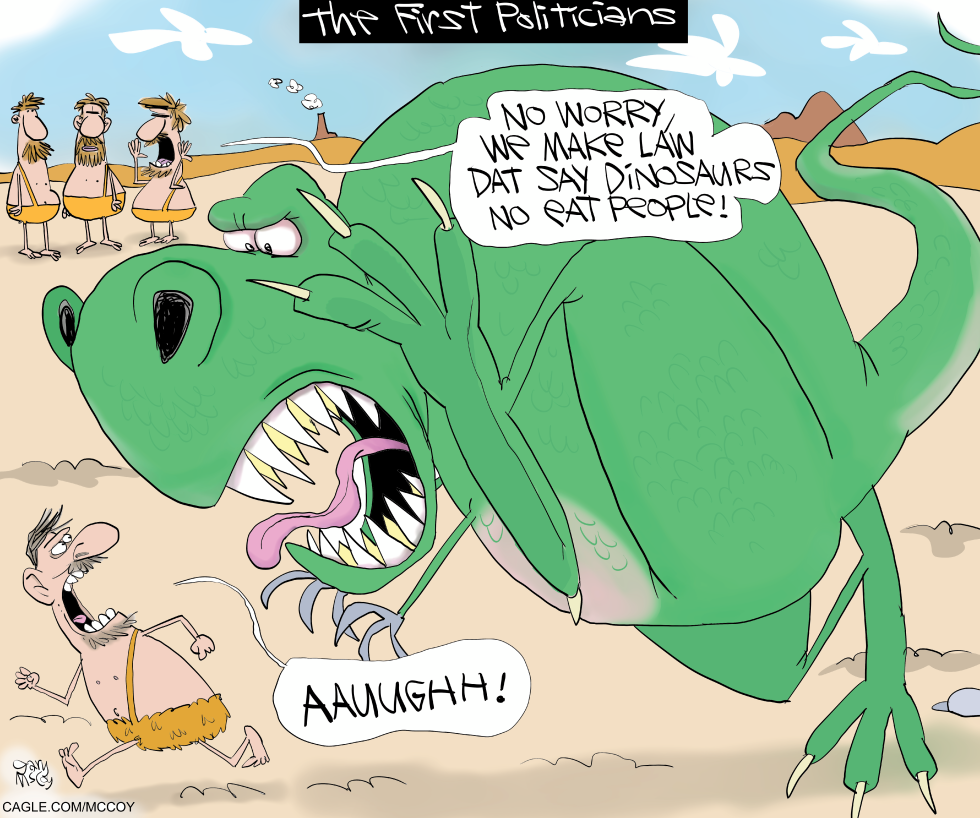
Politicians in prehistoric times promise a law banning dinosaurs from eating people. The pledge comes as a T-Rex looms over a fleeing caveman. The move highlights how leaders often make rules they have no intention of following. The piece takes the position that such assurances are empty and self-serving.
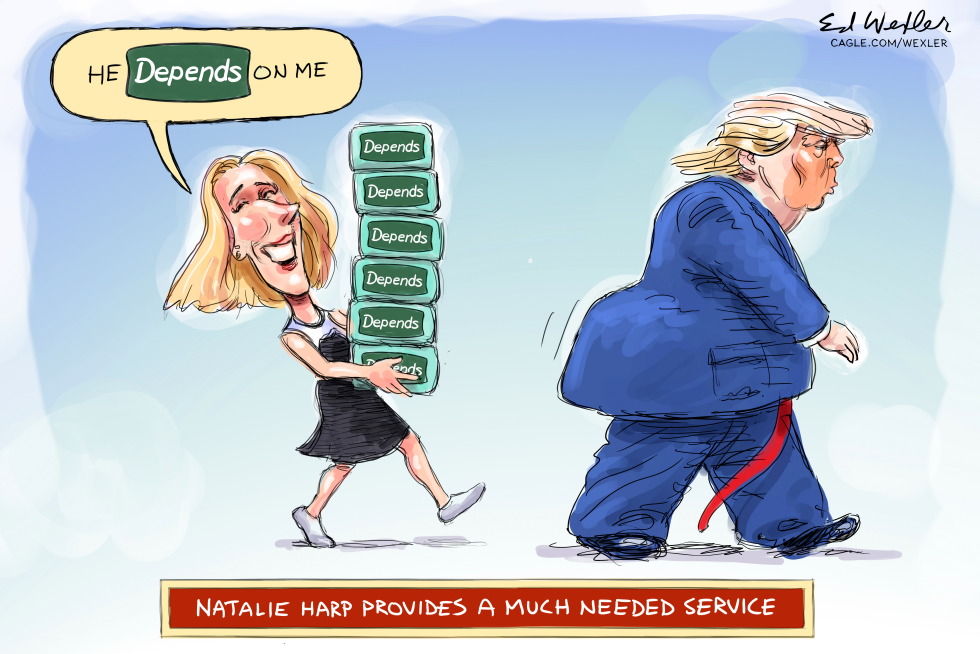
Natalie Harp, a Trump associate, is depicted supplying adult diapers to Donald Trump. The image responds to ongoing public discussion of Trump's age and physical condition during his 2024 campaign and subsequent activities. No specific new event occurred in the days before August 22 2026. The piece takes the position that Trump requires such assistance and that Harp fulfills that role.
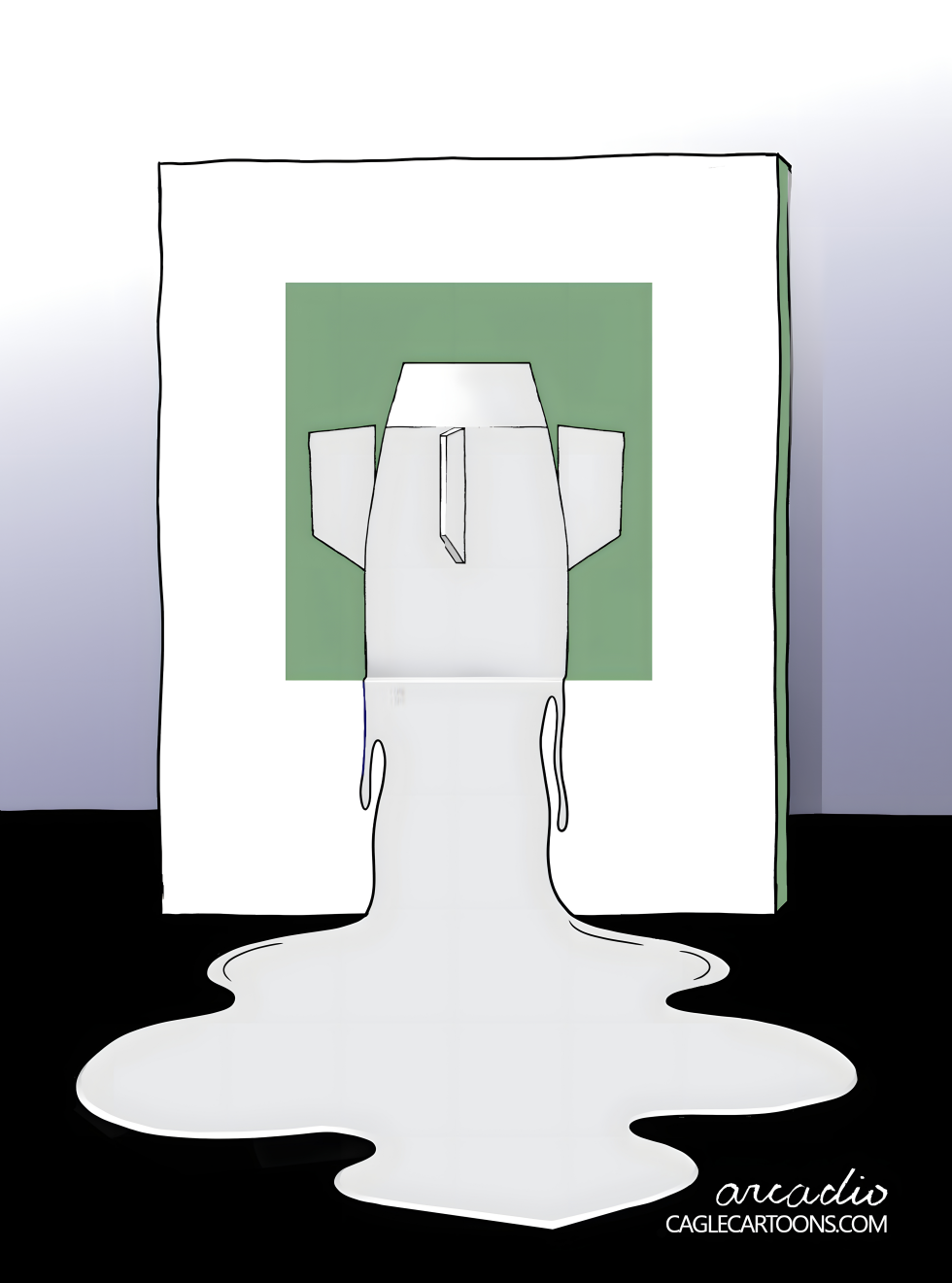
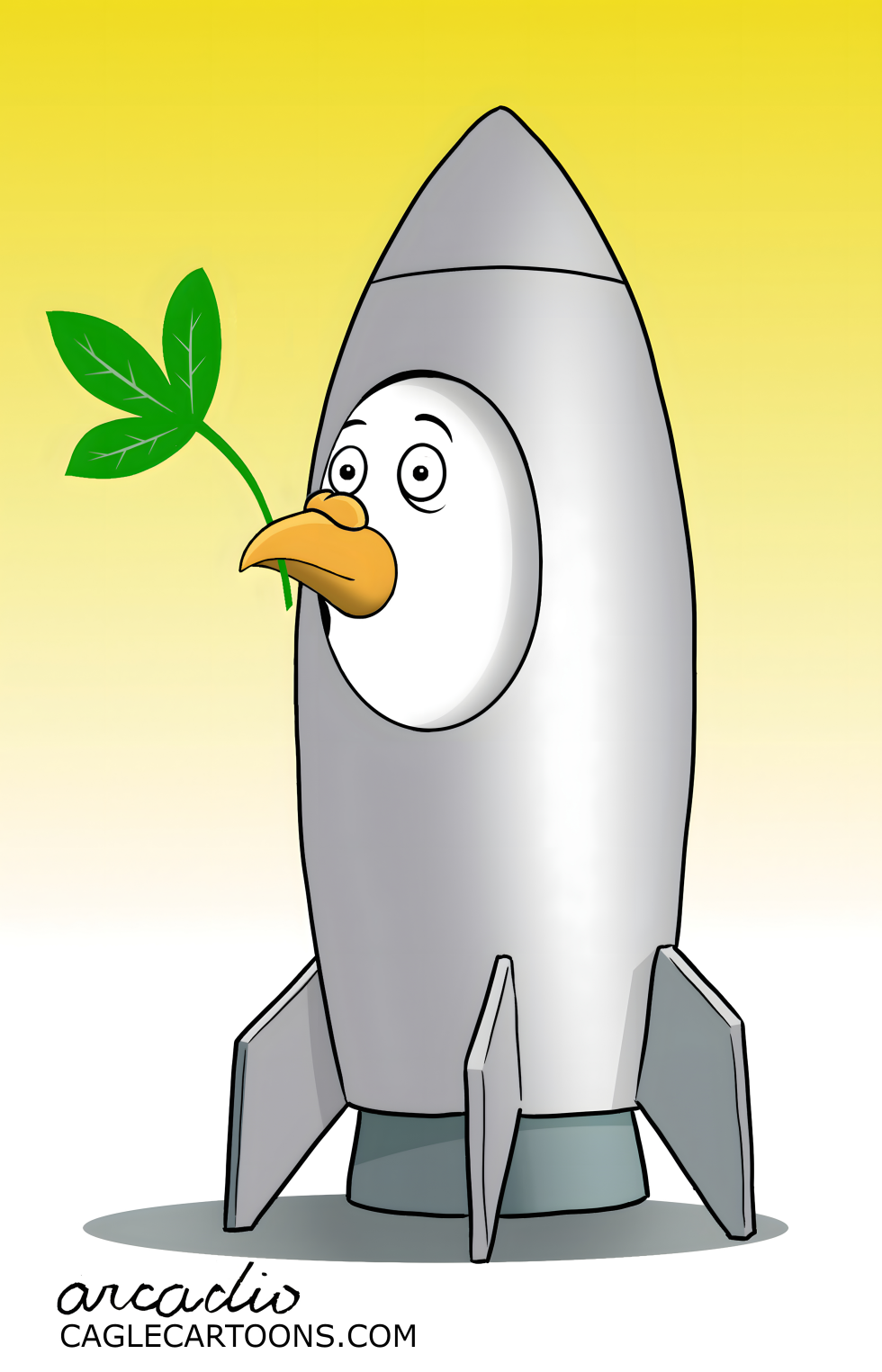
A hybrid rocket and dove figure holding an olive branch appears in editorial imagery dated August 2026. The visual merges symbols of military technology and peace efforts amid ongoing global tensions over defense systems and diplomatic initiatives. The piece presents the combined image as a commentary on attempts to balance strength with reconciliation in international affairs.
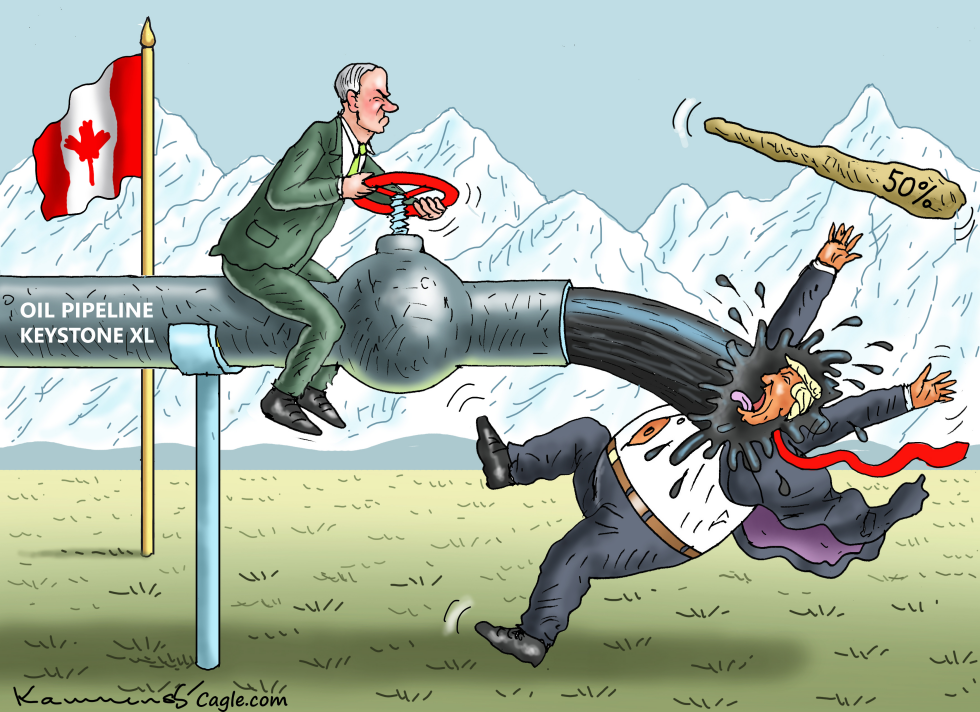
Canadian Prime Minister Mark Carney moves to restrict the Keystone XL pipeline in a direct action affecting U.S. interests tied to Donald Trump. The decision carries implications for cross-border energy flows and bilateral relations. The piece portrays the move as a targeted setback delivered through the pipeline controls.
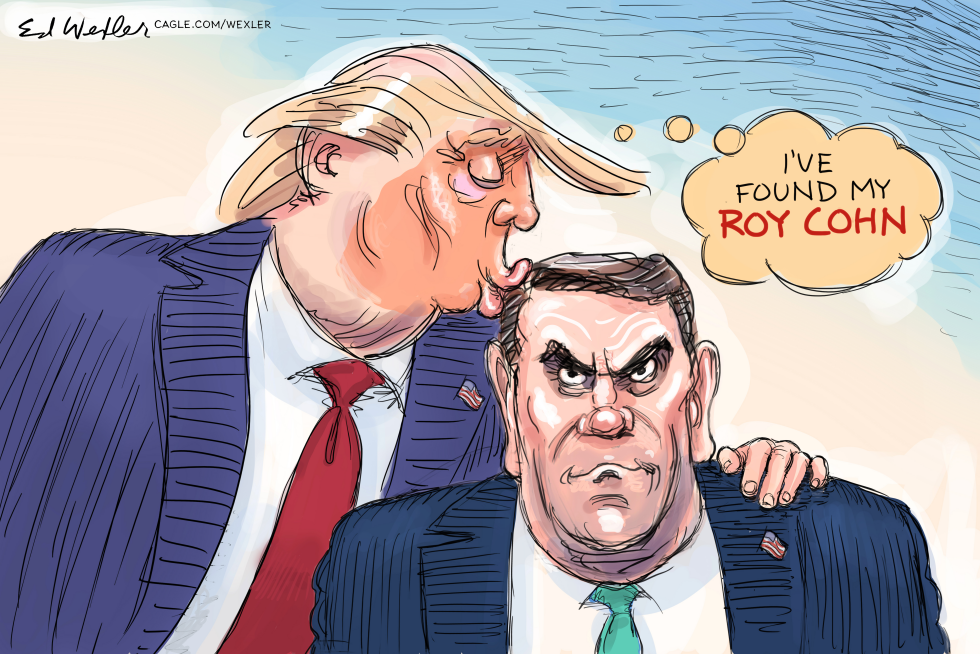
Donald Trump has publicly signaled interest in securing a new legal or political advisor modeled on his late attorney Roy Cohn. The reference revives memories of Cohn's aggressive tactics during Trump's early career. The development matters because it underscores Trump's preference for confrontational representation amid legal and political pressures. The piece portrays this choice as a deliberate return to combative strategy rather than measured counsel.
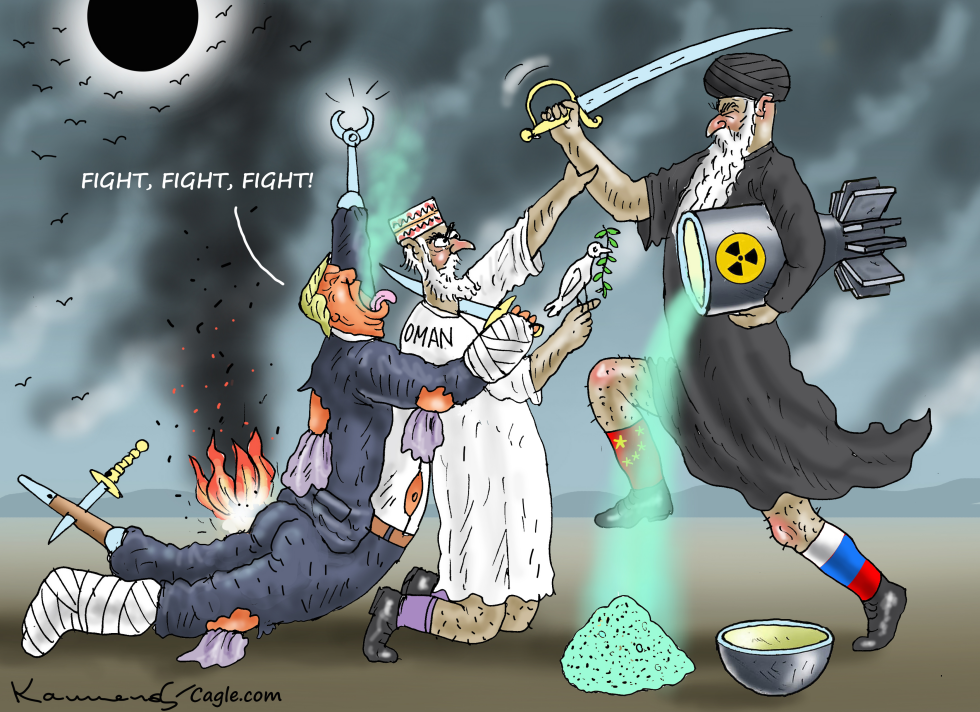
A confrontation involving the former president unfolded in Oman amid regional tensions with a nuclear capable participant. The incident highlights ongoing friction in Middle East diplomacy and arms concerns. The piece portrays the event as a chaotic clash where peace efforts compete with aggressive posturing.
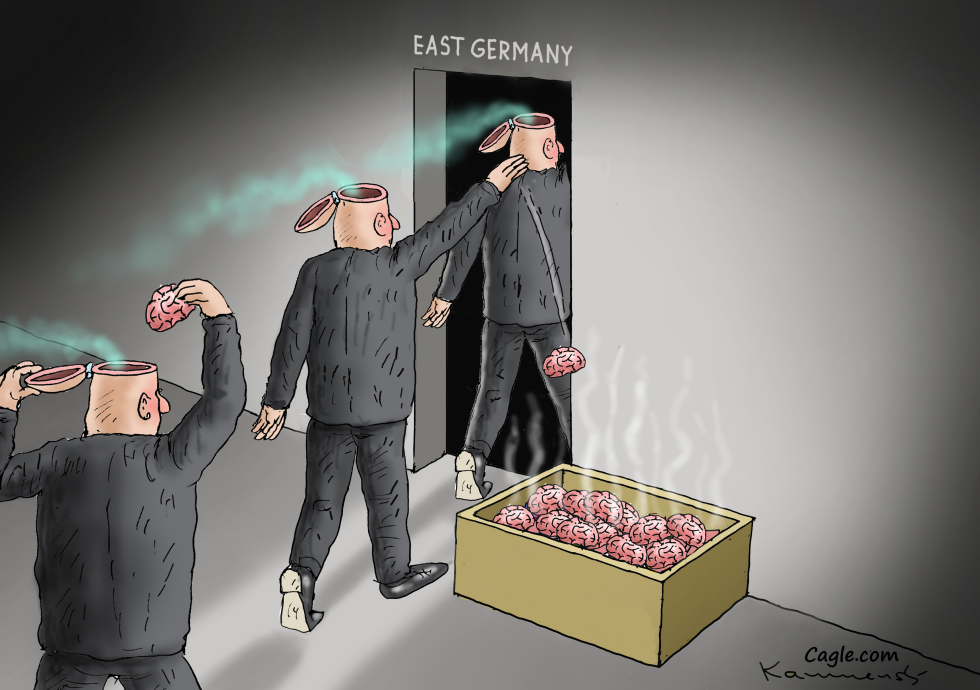
The cartoon responds to the enduring perception of East Germany as a place where independent thought is incompatible with entry. It depicts men voluntarily removing their brains before crossing the threshold. The editorial position frames the regime as one that demands the surrender of reason.
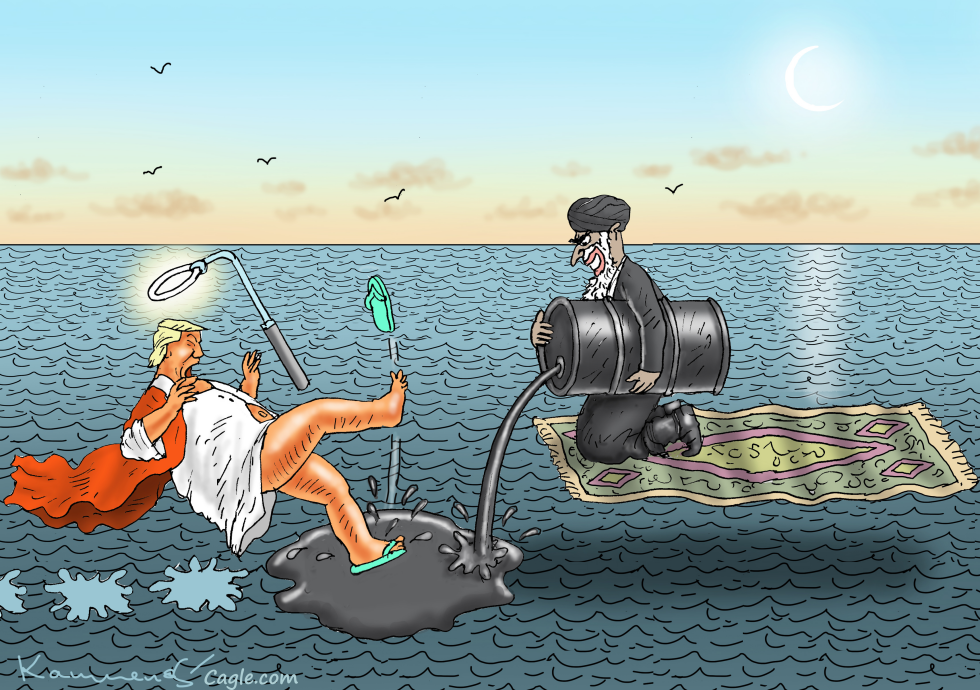
Donald Trump faces renewed friction with Iran over oil exports and sanctions enforcement. The administration's approach to Tehran has drawn criticism for mixed signals on energy deals and regional stability. The piece portrays the encounter as a self-inflicted setback for U.S. policy.
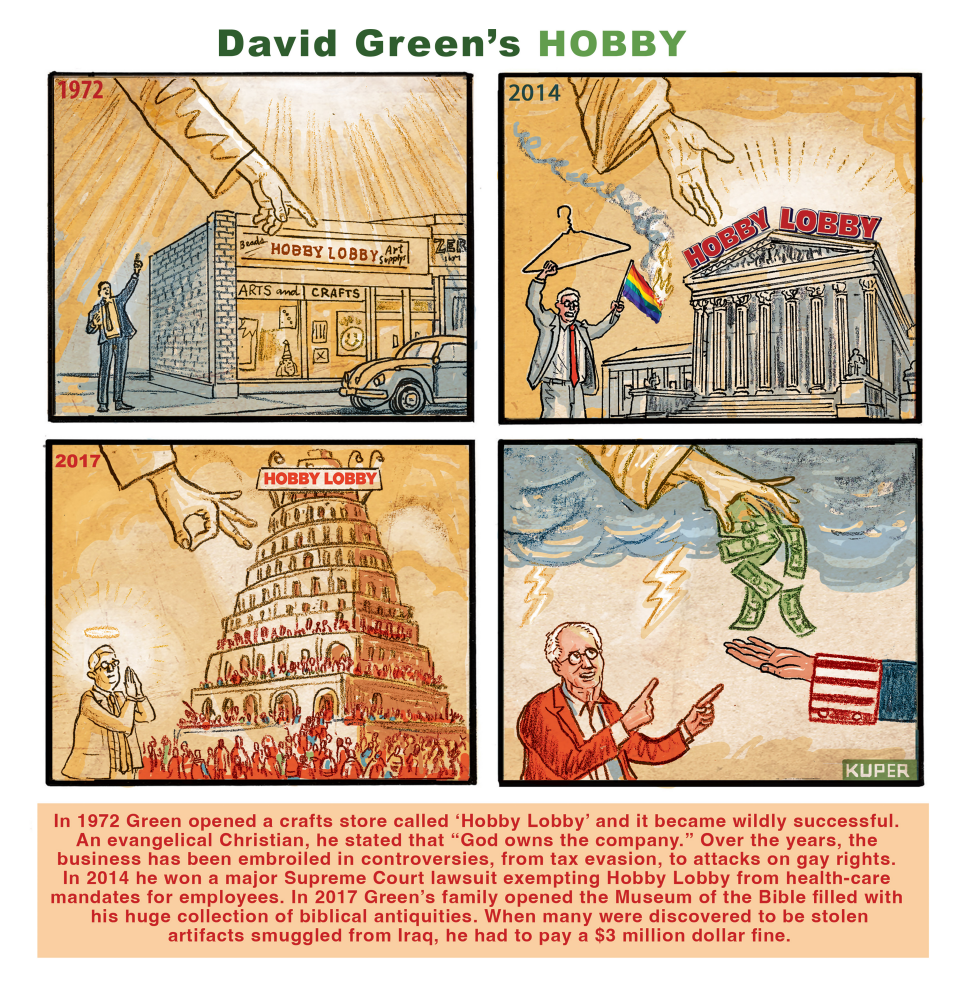
David Green opened Hobby Lobby in 1972 and built it into a major chain while declaring God owns the company. The business faced repeated controversies including a 2014 Supreme Court case on health care mandates and a 2017 Bible Museum scandal involving smuggled Iraqi artifacts that resulted in a $3 million fine. The piece presents these events as a pattern of legal and ethical issues tied to the company's evangelical leadership.