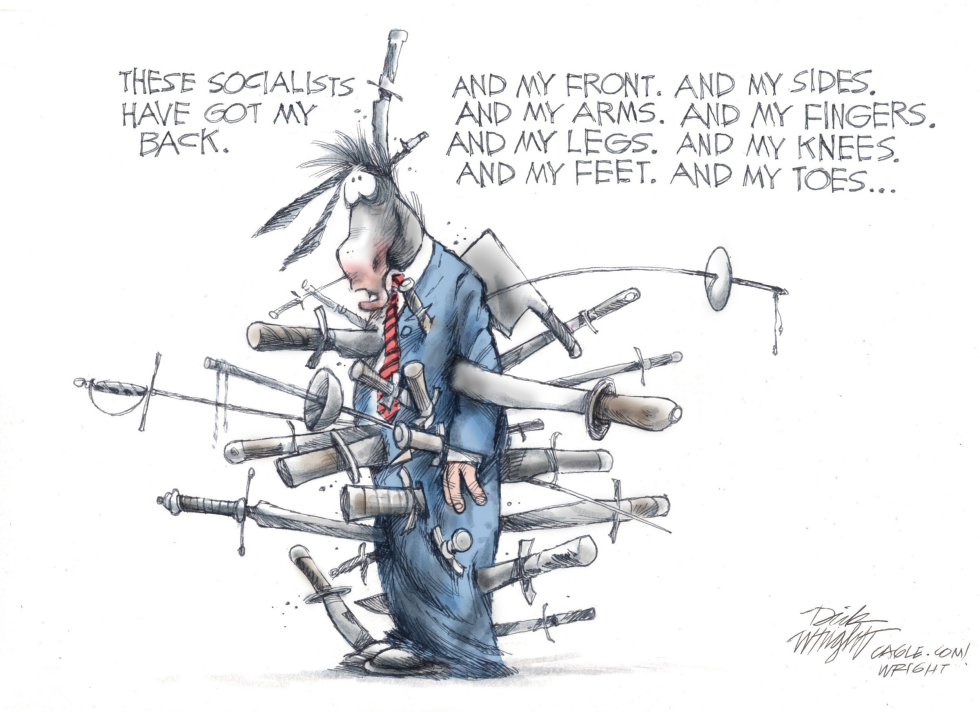
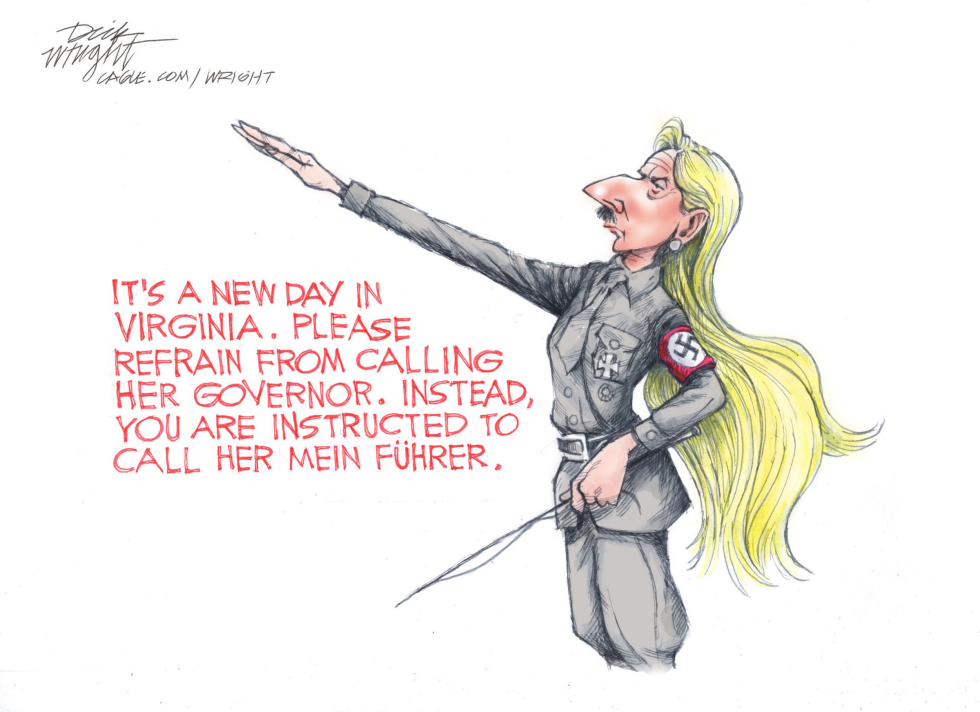
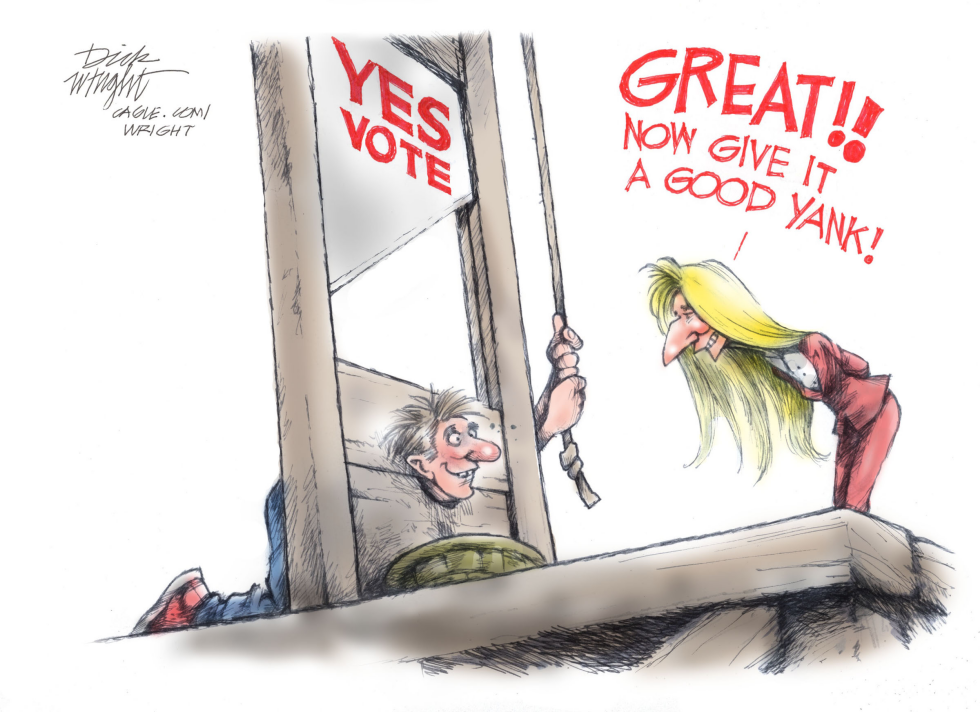
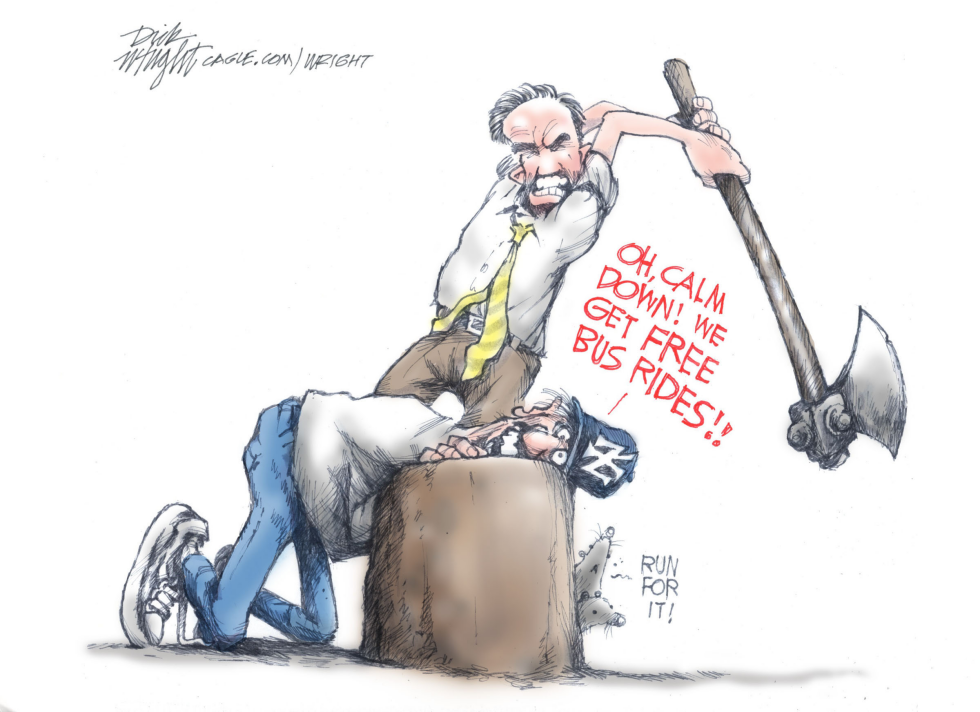
Tensions between socialist factions and mainstream Democrats continue to strain party cohesion ahead of future elections. The cartoon depicts socialists as actively harming the Democratic brand through relentless internal attacks. It argues that such infighting weakens the party's ability to govern effectively and appeal to broader voters.
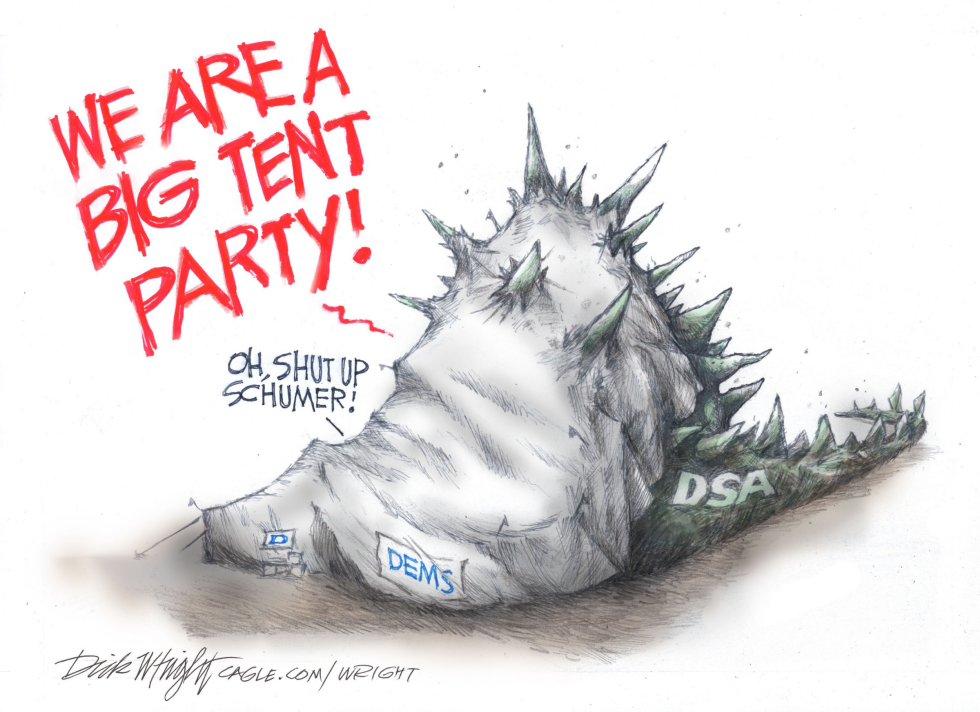
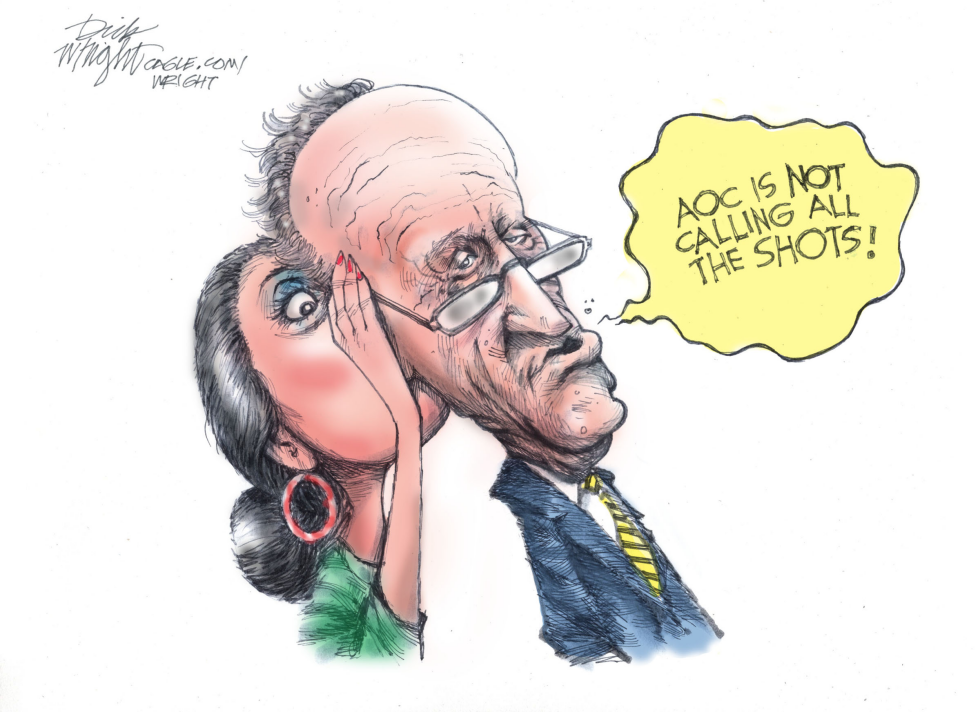
Democratic leaders continue to promote the party as a big tent open to all factions. The DSA's growing role creates visible friction with establishment figures like Senate Minority Leader Chuck Schumer. This dynamic highlights ongoing tensions over the party's direction and messaging ahead of future elections. The piece argues that the big tent claim rings hollow when the socialist wing dominates and dismisses traditional voices.
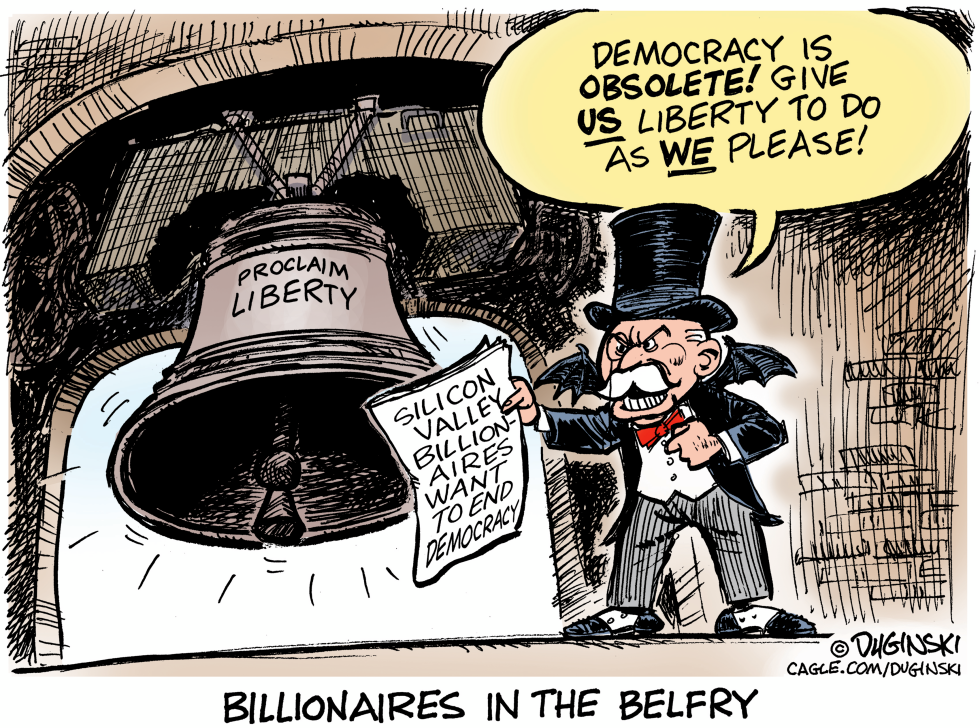
Silicon Valley billionaires have intensified efforts to reshape or bypass traditional democratic institutions in pursuit of greater autonomy for their enterprises. The move raises concerns about concentrated private power overriding public accountability. The cartoon argues that such figures seek to discard democratic constraints in favor of self-serving liberty.
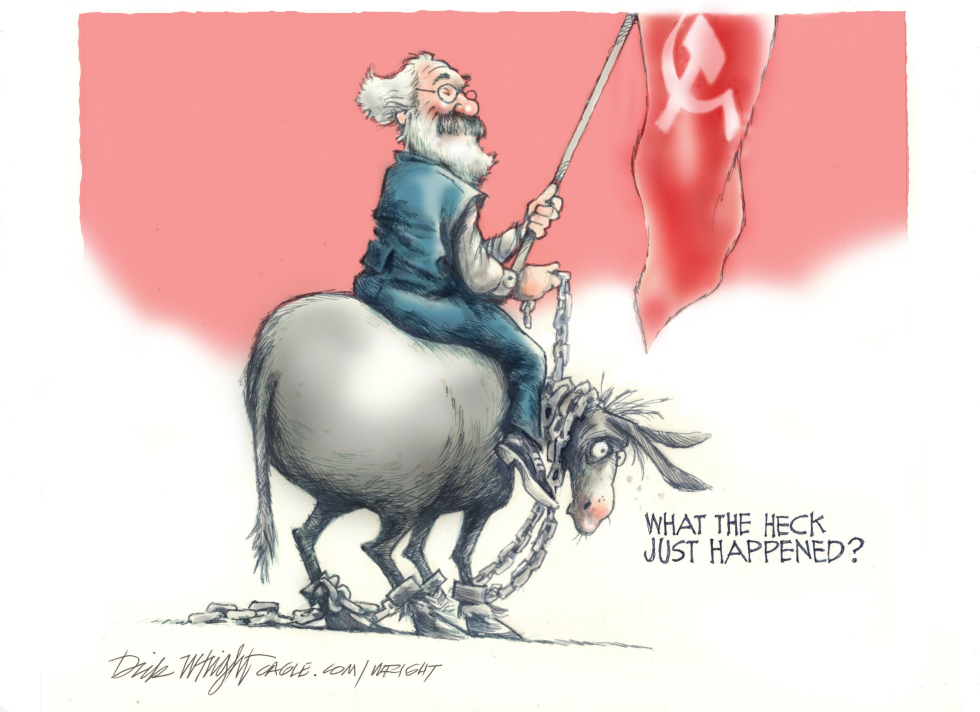
A Marxist figure has taken the reins of the Democratic Party symbol, raising a hammer-and-sickle flag over a donkey bound in chains. The image captures the moment the animal registers the shift in control. The editorial argues that radical communist influence has overtaken the party and left its traditional base bewildered by the abrupt change in direction.
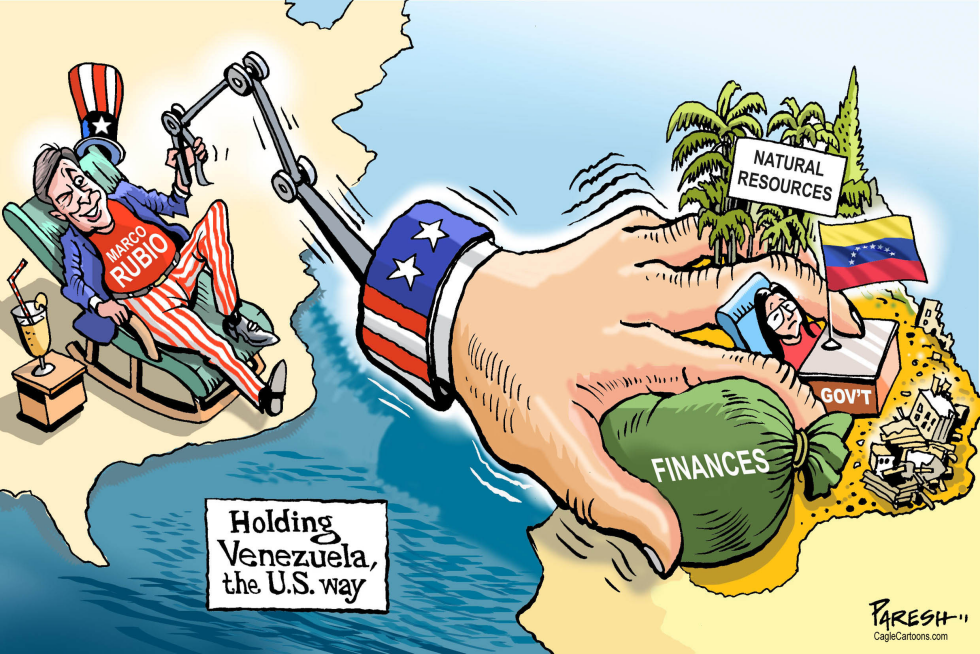
Marco Rubio, as a key US official, directs American control over Venezuela's government, finances and natural resources through direct intervention. The move underscores ongoing US efforts to influence Venezuelan affairs amid economic and political instability in the region. The piece portrays this as an assertive US strategy to maintain dominance.